
The Biden administration officially jettisons effort to protect old-growth forests – Here’s why. The move is supported by Republican Senators and industry, and now environmental groups are holding out for the update to the 1994 Northwest Forest Plan. All groups agree that shelving the proposal was the best option.
In Forestry news: While British Columbia faces 7 big environmental decisions this year, today it is all about water – a lawsuit look to protect licensing rights in the Shuswap; a First Nation on Vancouver Island sues for repeated flooding; and a private timber company sells it’s working forest to the Capital Regional District to help protect water supply.
In Business news: worry and disbelief surround tariff rhetoric; a second US port strike is avoided; and Oregon approves a key permit for the biofuels industry. In Canada, $2.5 million is secured for a biofuel refinery in Ontario; and a perfect t-shirt from lumber is developing.
In wildfire news: how climate change is fuelling the Southern California fires in January, Canadian firefighting equipment is in Los Angeles; and the health risks of wildfire smoke continue to grow.
Finally, a look back at Jimmy Carter and the sad saga of a 9-ton Northern California peanut.
Suzanne Hopkinson, Tree Frog Editor
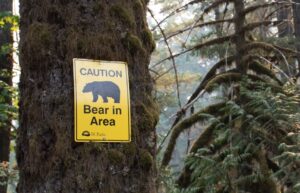 Human recreation on mountain trails is displacing grizzly bears and wolves from their natural habitats, even when the trails are hundreds of metres away, according to a new study from the University of Alberta. The research underscores the need for more effective planning to ensure that recreationists and wildlife can coexist, particularly in the busy Bow River Valley, which has long served as a natural corridor connecting the prairies to the Continental Divide… Though trails that never receive any use from humans have little to no effect on wildlife, only half of grizzlies studied would venture within 300 metres of trails with the highest human use. This effect was more pronounced in wary wolves, whose radius of comfort extended to 600 metres from the busiest trails. “We initially thought bears might use hiking trails as efficient routes when humans weren’t around, but they actually avoid these areas altogether,” says the author.
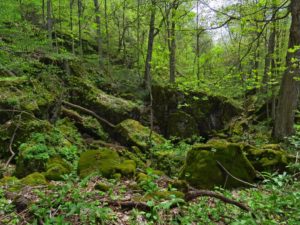 Forests may be more resilient to climate change than previously thought. A team of international researchers have found that increased inputs from plant roots can keep carbon levels in soil stable even as temperatures and nitrogen deposits in the atmosphere rise. The collaborative research project,
 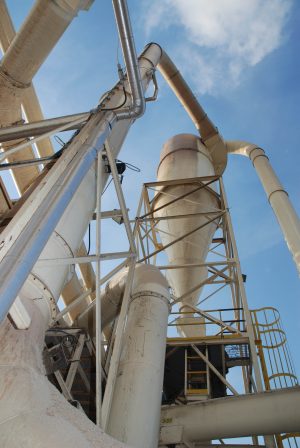 In 2023, Expander Energy Inc., and Rocky Mountain Clean Fuels Inc., announced a project to produce low carbon bio-synthetic diesel fuel by combining pieces of waste wood and synthetic gas using a patented gasification process. Expander Energy CEO Gord Crawford said his company is working on a feasibility study funded by the federal government’s Clean Fuels Fund to determine new locations for future gasification plants that turn forest products into fuel. Northern BC is being considered as a potential plant site. “These plants won’t be located in Vancouver, they’ll be in Prince George, Fort St.. John, places like Fort St. James, rural and remote.”… Northern BC has all the elements needed to support a carbon-neutral project, including fibre supply, renewable energy from the electrical grid and an existing track record of industrial development.
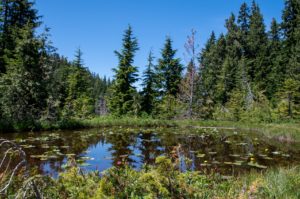 An American company that controls some large patches of forest northwest of Thunder Bay is considering the potential sale of its timberlands for use as a carbon offset initiative… Wagner Forest Management – based in New Hampshire – owns 195,000 hectares of forest in eight former Abitibi-Consolidated freehold blocks located roughly between the Dog Lake area, Graham and Sioux Lookout. It purchased the blocks from Abitibi in 2005 in a bidding process in which the Ontario government also participated. Last July the company extended an invitation to investors interested in the potential development of its holdings as “one of the largest nature-based carbon removal projects in the Voluntary Carbon Market.”.. Wagner’s forest management practices are currently certified through the Sustainable Forestry Initiative.
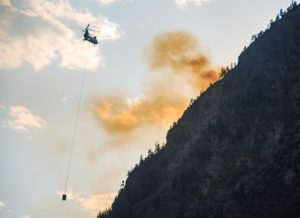 The impact of a changing climate is evident in the bigger picture for the state. California has experienced a decades-long drought that ended just two years ago. The resulting wet conditions since then have seen the rapid growth of shrubs and trees, the perfect fuel for fires. However last summer was very hot and was followed by dry autumn and winter season – downtown Los Angeles has only received 0.16 inches of rain since October, more than 4 inches below average. Researchers believe that a warming world is increasing the conditions that are conducive to wildland fire, including low relative humidity. These “fire weather” days are increasing in many parts of the world, with climate change making these conditions more severe and the fire season lasting longer in many parts of the world, scientists have shown.
 USA BioEnergy (USABE) announced it has closed on the acquisition of 1,600+ acres of land in East Texas for its new $2.8-B advanced biorefinery, designed to convert wood waste into sustainable, net-zero aviation fuel (SAF). The landmark SAF facility already secured a 20-year offtake agreement with Southwest Airlines and is at the forefront of advancing ultra-low-carbon fuel, which is much needed in the future of aviation… Once blended with conventional jet fuel, the SAF could produce the equivalent of 2.59 billion gallons of net-zero fuel and avoid 30 million metric tons of CO2 over the offtake agreement term. According to USABE calculations this will enable approximately 112,000 short (less than three hours) or 7,000 long haul (more than 10 hours) net-zero airline flights per year.
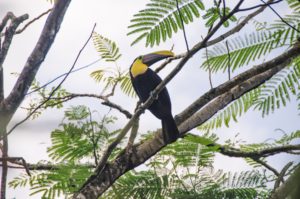 A research team led by the University of Oxford has carried out the most comprehensive assessment to date of how logging and conversion to oil palm plantations affect tropical forest ecosystems. The results demonstrate that these have significantly different and cumulative environmental impacts – and that logged forests should not be immediately ‘written off’ for conversion to oil palm plantations. The findings have been published in
  Here is some of the latest climate research:
 A division of a forestry and construction company with an office in Prince George lost a review of an arbitrator’s decision that awarded fallers $4,000 each for breach of privacy. At issue was the installation of dash cameras in the company’s four-wheel drive pickups in Campbell River… They began installing the dash cameras in February 2023, prompting the United Steelworkers, Local 1-1937 (USW) to file a grievance. They stated the purpose for the rear-facing dash camera included “road conditions not seen by the forward-facing camera” and monitoring “distractions in cab – eating, texting, smoking, horseplay.” USW did not take issue with collection of GPS information or video from the forward-facing cameras while the crew bus was in motion. Its grievance was about the audio and video collected by the rear-facing camera and video by the forward-facing camera while the vehicle was idle.
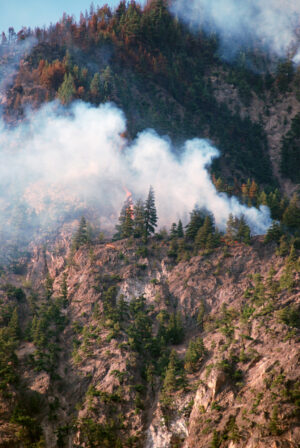 Fires burning homes and businesses in Los Angeles for a week have killed at least 24 people, displaced thousands of others and destroyed more than 12,000 buildings in what might be the most expensive conflagrations in the nation’s history. The blazes started Jan. 7, fueled by fierce Santa Ana winds that have posed problems for the large forces of firefighters deployed across several areas of the sprawling city. Cal Fire reported that the Palisades, Eaton, Kenneth and Hurst fires have consumed about 63 square miles (163 square kilometers). Investigators are still trying to determine what sparked the fires. They could be the nation’s costliest ever.