 Homeowners rejoice as Canada cuts interest rate, but US inflation remains sticky despite easing housing costs. In related news: Quebec is scrutinized by the Assembly of First Nations of Newfoundland and Labrador (again); a US apprenticeship program is developed to focus on recruitment through technical forestry roles; the USDA prioritizes private landowners to store carbon; and more details on why Oregon can’t pay for wildfire work. Meanwhile: spruce budworm outbreaks has Maine officials worried; salamanders are of top concern in Virginia; Sweden takes another look at moose damage; and recent NASA research examines precipitation effects on vegetation.
In other news: the University of British Columbia targets remote Indigenous Communities for bioenergy production; Vancouver Island residents find value in construction waste; Drax moves forward to produce sustainable jet fuel; New Zealand’s dairy producers will be powered by wood pellets; and the inventor of ‘plastic lumber’ is honoured.
Finally, an oldie but a goodie – watch a dry Christmas Tree erupt in flames and review the safety steps in your own home this holiday season!
Suzi Hopkinson, Tree Frog Editor
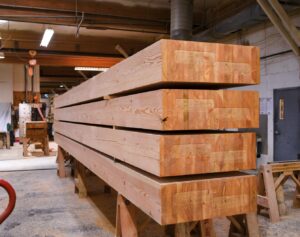 The Forest Service sells timber that can be used to build homes and make paper products, among other things… Goals for timber sales are set yearly but the Forest Service has missed those goals by about 10% in recent years. According to the agency, factors such as staffing and buyer interest affected timber sales… The Forest Service’s average timber target was about 6,281,000 hundred cubic feet (CCF) per year, and its average amount of timber sold was about 5,590,000 CCF per year, from fiscal years 2014 through 2023. The Forest Service did not meet its targets for the amount of timber sold for any of the years from fiscal years 2014–2023. Full report available
 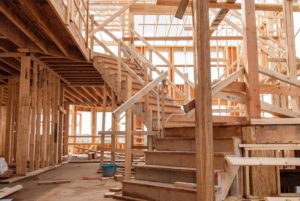 In 2024, the Canadian government released a new housing plan aimed at building more homes and addressing housing unaffordability. As part of that plan, Prime Minister Justin Trudeau announced that $600 million in funding will be provided to build homes cheaper and quicker using “innovative technologies.” The funding is earmarked for building more housing, including prefab and modular homes, by automating processes and using materials like mass timber construction, robotics and 3D printing… Building materials like mass timber, including cross-laminated timber, offer a renewable low-carbon substitute for conventional materials, reducing a building’s carbon footprint. These modern methods have been successful internationally, producing quality construction that is quickly completedHowever, systematic obstacles like governmental inertia and mismatched incentives must also be tackled to unlock their full potential in Canada.
 For several years, McMillan LLP has been a go-to law firm for the Paper Excellence corporation. This large Canadian forestry company has been represented by McMillan on transactions worth over $6 billion. The ethical problem arose when McMillan took on a new retainer, for the Forest Stewardship Council (FSC). That client’s main work is administering the “FSC” certification, which you may have seen stamped on some wood products… One of FSC’s rules is that, in order to remain certified, a company must not only avoid destructive forest practices, but must also not be “indirectly involved” with companies that do so… In November 2023, Greenpeace alleged that Paper Excellence was effectively a corporate sibling of Asia Pulp & Paper, insofar as both were controlled by Indonesian forestry company Sinar Mas. That allegation was contested by Paper Excellence, and so the FSC sought corporate law expertise to conduct a review. The firm that FSC hired was none other than McMillan LLP.
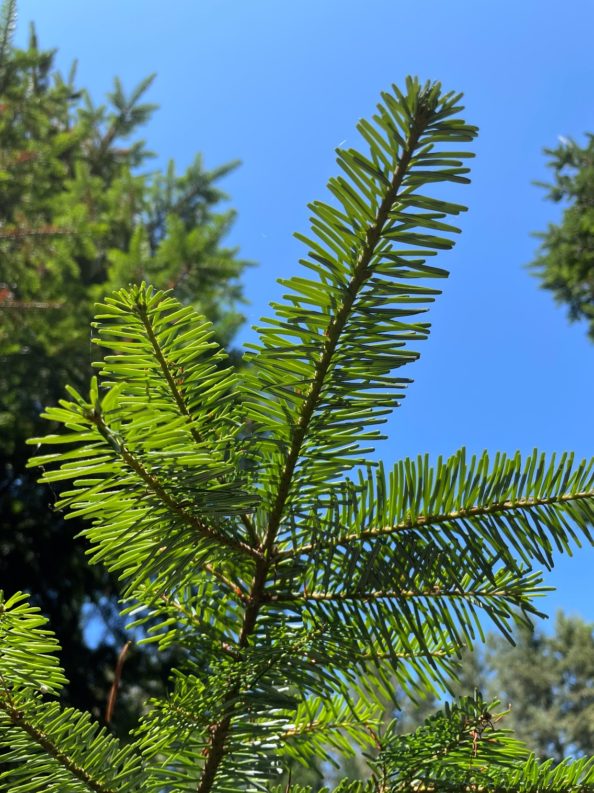 A call for international alignment on nature protection Canada and other wealthy countries for “double standards” in managing their forests, just as a new poll reveals most Canadians support stronger safeguards for nature at home. But that support may not be enough to sway their voting decisions… New polling data suggests most Canadians agree that stronger safeguards are needed at home—but opinions diverge when it comes to how platform and policy influence voting choices… 84% of respondents across the political spectrum agreed the government should take stronger action to protect forests and wildlife. About two-thirds, or 68%, said they would be reluctant to vote for a party that made no commitments to safeguard nature.
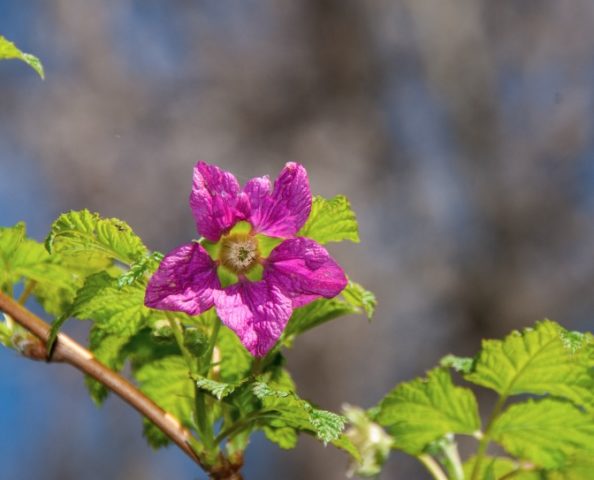 For decades, forestry companies in B.C. have used chemical herbicides like glyphosate to kill off plants that might compete with trees destined for timber. Trembling aspen, named for its almost heart-shaped leaves that seem to quiver in the wind, is often on the hit list. But after years of destructive wildfires that have wiped out whole neighbourhoods and sometimes whole towns, more and more people are questioning the wisdom of killing off this tree. Because when wildfires sweep across the landscape, aspen can help calm the flames… “Anytime we apply herbicides, we are changing potential fire behaviour,” wildland fire ecologist Robert Gray explains… in areas where aspen and other deciduous trees are killed, a natural fire break is lost too.
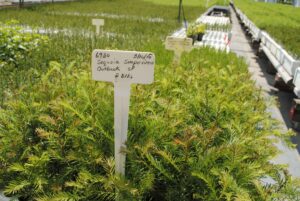 People around the world are adorning homes and businesses with festive holiday decor, which typically means an abundance of Christmas trees are on display. In the U.S., they pop up everywhere from the average living room to the Rockefeller Center plaza in Manhattan and the White House in Washington, D.C. But climate change threatens to complicate the tradition. Christmas trees, like any other crop, are affected by the general rise in temperature associated with global warming and the extreme weather events that result from it…
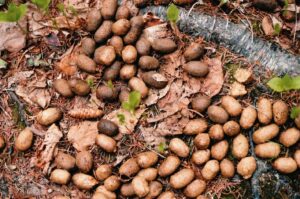 A new report, “Browsing Damage – What is Happening in the Forest and What Happens in the Statistics?”, published by the Swedish Forest Agency, provides new insights on the ongoing debate surrounding moose management and its impact on Sweden’s forests… The report challenges the prevailing conclusion that increasing pine tree densities is the most effective way to reduce browsing damage and suggests that moose density plays a more significant role. The study uses an extensive database and an updated calculation model and demonstrates that moose density has a greater impact on browsing damage than pine density… By comparing observations with spatially matched estimates of moose densities, the study reveals a noticeable browsing damage reduction as moose density dropped and pine density increased over the years.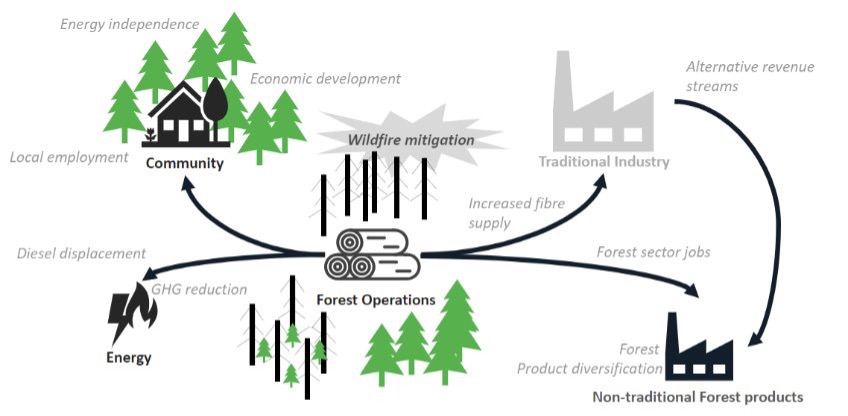
 There’s no quick fix for decarbonizing medium- and long-distance flights. Batteries are typically too heavy, and hydrogen fuel takes up too much space to offer a practical solution, leaving sustainable aviation fuels made from plants and other biomass, recycled carbon, or captured carbon as the primary options… That creates an opportunity for developers of second-generation sustainable aviation fuel technologies, which involve making jet fuel out of captured carbon or alternate biomass sources, such as forest waste. These methods are not yet mature enough to make a significant dent in 2030 targets… But this tech will need to be a big part of the equation in order to meet the aviation sector’s overall goal of net zero emissions by 2050, as well as the EU’s sustainable fuels mandate.
 On December 16th, a log truck driver was fatally injured during an attempt to tow a log truck that had spun out on an icy road. This incident occurred in an area near Logan Lake, BC. WorkSafeBC and the Coroners Service are investigating this incident. We extend our condolences to the family and friends of the deceased and our sympathies to all those affected by this incident. This is the second harvesting fatality of 2024… We extend our condolences to the family and friends of the deceased and our sympathies to all those affected by this incident.