
Wab Kinew
Manitoba Premier Wab Kinew accused a group of Republicans of throwing a “timber tantrum” and playing “political games” after they called out Canada over wildfires sending smoke billowing across the international border into their states. “These are attention-seekers who can’t come up with a good idea on health care or on making life more affordable,” Kinew said. “So they’re playing games with something that’s very serious.” Kinew said he doesn’t “generalize these attention-seekers’ misguided words to all Americans.” He noted that American firefighters have been helping to fight Canada’s wildfires and Canadian firefighters were on the ground and in the air during California’s devastating wildfire season. …In a Wednesday news release, Wisconsin state Rep. Calvin Callahan joined other Republican state lawmakers in filing a formal complaint against Canada.

 A $1.2-billion lifeline from Ottawa that’s being thrown to the forest industry is welcome news to northwestern Ontario mayors and the Canadian Wood Council. …The 37-member Northwestern Ontario Municipal Association (NOMA) called it a “significant and timely commitment to ensuring the long-term competitiveness of the forest sector” and comes at a crucial time when local jobs, economic growth and municipal stability is on the line. …“These measures recognize the vital role of forestry in Northwestern Ontario and across Canada,” said Marathon Mayor and NOMA president Rick Dubas in a statement, “helping our sector adapt to ongoing trade challenges, protect local jobs, and create opportunities for both Indigenous and non-Indigenous communities.”


 President Donald Trump said the US will put a 35% tariff on some imports from Canada, escalating the tensions between two countries that have impaired one of the world’s largest trading relationships. The new rate represents an increase from the 25% tariffs Trump imposed in early March under an emergency law. …But the US administration kept in place an exemption for goods traded under the rules of the US-Mexico-Canada trade agreement. US automakers and other companies with integrated North American supply chains had pushed for that carve-out, which has allowed US importers to continue bringing in the bulk of Mexican and Canadian products without duties. Because of the USMCA exemption, the effective tariff rate on US imports of Canadian goods was around 5%. …Trump signaled that he would be open to further talks with Carney. …Hours before raising Canada’s tariffs, Trump agreed to extend current tariffs on Mexico for 90 days.

 BURNABY, BC – The United Steelworkers union (USW) District 3 and the USW Wood Council are calling on the federal government to take urgent action in response to the latest escalation in the softwood lumber trade dispute. …“This latest increase, along with other threatened tariffs, is yet another blow to workers, communities and the long-term sustainability of our industry,” said Scott Lunny, USW Western Canada Director. “We represent thousands of loggers and mill workers… and their families, are at risk – governments need to act now.” …“It’s a constant attack on our industry and our workforce from the US administration. ….In addition to calling for a deal on softwood lumber to be a priority for Canada in trade talks with the US. …“These duties are unfair and will only drive up housing costs for U.S. consumers, while putting thousands of Canadian jobs at risk,” said Jeff Bromley, USW Wood Council Chair.
 BC’s independent wood product makers say hundreds of small- and medium-sized manufacturers may be forced to shut down in light of the latest decision from the US to raise anti-dumping duties on Canadian softwood… [which] includes a requirement for Canadian companies to retroactively remit duties for products shipped to the US since Jan.1, 2023. Association chair Andy Rielly says that requirement could not only force small BC producers to shut down, but may also threaten operators’ personal assets as they may have to risk using their homes as collateral to secure bonds to pay. …Association executive director Brian Menzies describes independent wood product producers as “collateral damage” in the trade war.” …“We acquire logs and lumber at ‘arm’s length’ from various suppliers on the open market, just like claims made by members of the US Lumber Coalition, and yet our Canadian companies along with U.S. consumers must pay these unfair and costly duties.”

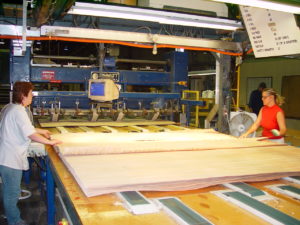 A BC manufacturer that says it’s facing closure is accusing the provincial government of hypocrisy after the premier recently touted a product it had a hand in. BC Veneer Products provided the wood fibre that UBC designers used to fabricate a soccer ball out of innovative “wood leather,” something which Premier Eby promoted while on a June trade mission to Japan. …The problem, Gunia explained, is the company hasn’t been able to secure more logs to keep his plant and its 17 employees working. The forestry company he works with on Vancouver Island has already reached its maximum allowable cut for the year. The operator has another block it can harvest in January, but Gunia says that will be too late. …Gunia said his company’s troubles are particularly galling, given the emphasis the premier and the province have put on promoting value-added wood products.
 Kalesnikoff Mass Timber has been recognized by the federal government for its role in advancing Canada’s housing goals. In June, Kalesnikoff opened North America’s first mass timber pre-fabrication and modular facility, expanding its product for use in multi-storey affordable and market housing, schools, workforce housing, and more. The facility aligns closely with Prime Minister Mark Carney’s new Build Canada Homes Program, which he discussed during a stop in Kelowna on Aug. 5. Carney plans to launch the program this fall, offering federal financing to homebuilders who use Canadian materials, as the government aims to develop around 500,000 homes per year. He praised Kalesnikoff as a catalyst for this effort, while announcing several other initiatives aimed at increasing housing supply and market diversification – including a $25-billion commitment for private builders who prioritize Canadian materials in housing and infrastructure projects.


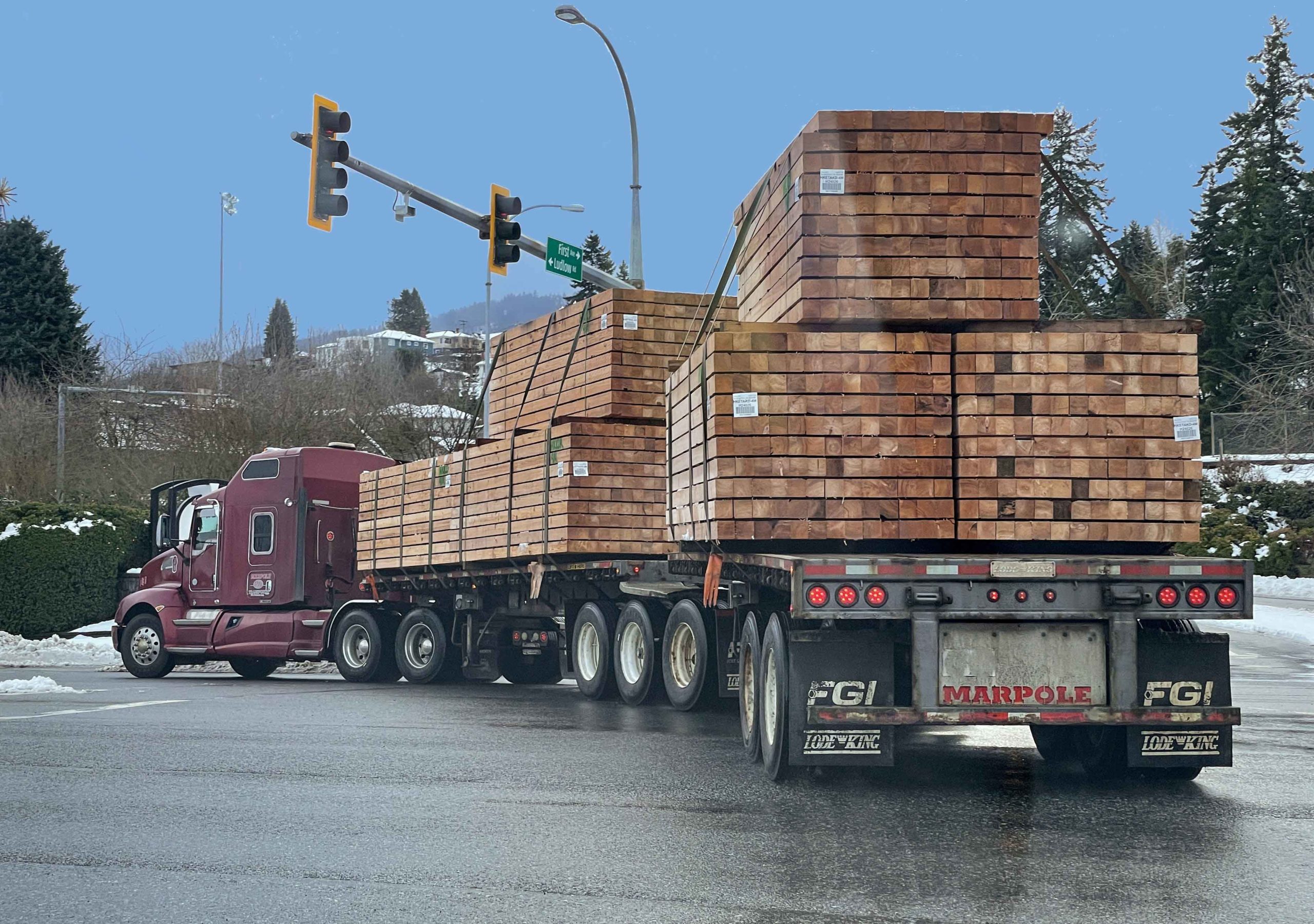 British Columbia’s forestry leaders offer a mix of praise and caution following the announcement of federal aid for Canada’s lumber industry. While both welcomed the support, they emphasized the urgent need for fiber access and resolving the US trade dispute. B.C. Forestry Minister Ravi Parmar called the federal funding package “really good news” and a long-overdue show of federal support for a sector that has long felt sidelined in Ottawa. …Parmar emphasized that B.C., as the world’s second-largest exporter of softwood lumber, must receive a proportional share of the funding to modernize its mills and build new global partnerships. …B.C. Conservative forestry critic Ward Stamer, welcomed the funding as a positive sign of federal commitment but warned that the underlying problems plaguing B.C.’s forestry industry remain unaddressed. …“It shows the federal government understands how important the forest industry is not just to B.C., but to the whole country,” said Stamer.

 VICTORIA — BC’s minister of jobs and economic growth is urging the federal government to stand firm and “negotiate hard” when trying to find a solution to tariffs imposed by President Trump. …He said he believes Carney and Canada-US Trade Minister Dominic LeBlanc are taking the right approach, “which is keeping their head down… and not getting distracted by the day-to-day swings of the president of the United States.” He said he would also highlight the importance of the softwood lumber industry for BC, which is just as crucial as the auto industry is to Ontario. …Both Eby and Kahlon have repeatedly argued that the long-running softwood lumber dispute with the United States should be part of a larger deal. Brian Menzies, executive director of the Independent Wood Processors Association, said he is “not very optimistic” that a future deal would also resolve the softwood dispute.
 BURNABY, B.C. – The United Steelworkers union (USW) District 3 and the USW Wood Council are calling on the federal government to take urgent action in response to the latest escalation in the softwood lumber trade dispute. Following the U.S. Department of Commerce’s decision to increase anti-dumping duties on Canadian softwood lumber exports to 20.56%, the USW is demanding immediate support for forestry workers and communities across the country. …“Our prime minister says softwood lumber is a priority in trade talks, but what forest workers need now is action,” said Scott Lunny, USW Western Canada Director. …In addition the USW is calling for a comprehensive support package for forest workers, including wage subsidies, loan guarantees for affected businesses and other targeted resources to support provinces, regional and local communities to sustain critical infrastructure and services through this unprecedented uncertainty.
 In British Columbia’s forestry sector, logging and trucking businesses are beginning to take a closer look at how they manage and report fuel use. While the Motor Fuel tax rules themselves haven’t changed, recent enforcement has prompted many operators to reassess long-standing practices — particularly when it comes to using coloured fuel in mixed on- and off-highway operations. For businesses that rely on marked fuel in remote areas or cross between forest roads and public highways, assessments are surfacing more frequently and creating uncertainty around compliance. If you’ve received a notice — or aren’t sure whether your operations could be affected — there are steps you can take to reduce the impact and protect your business. …Increased enforcement of the B.C. Motor Fuel Tax rules has created a layer of complexity that many forestry businesses weren’t prepared for. …the consequences of misunderstanding the rules, especially around fuel eligibility, have become more serious.
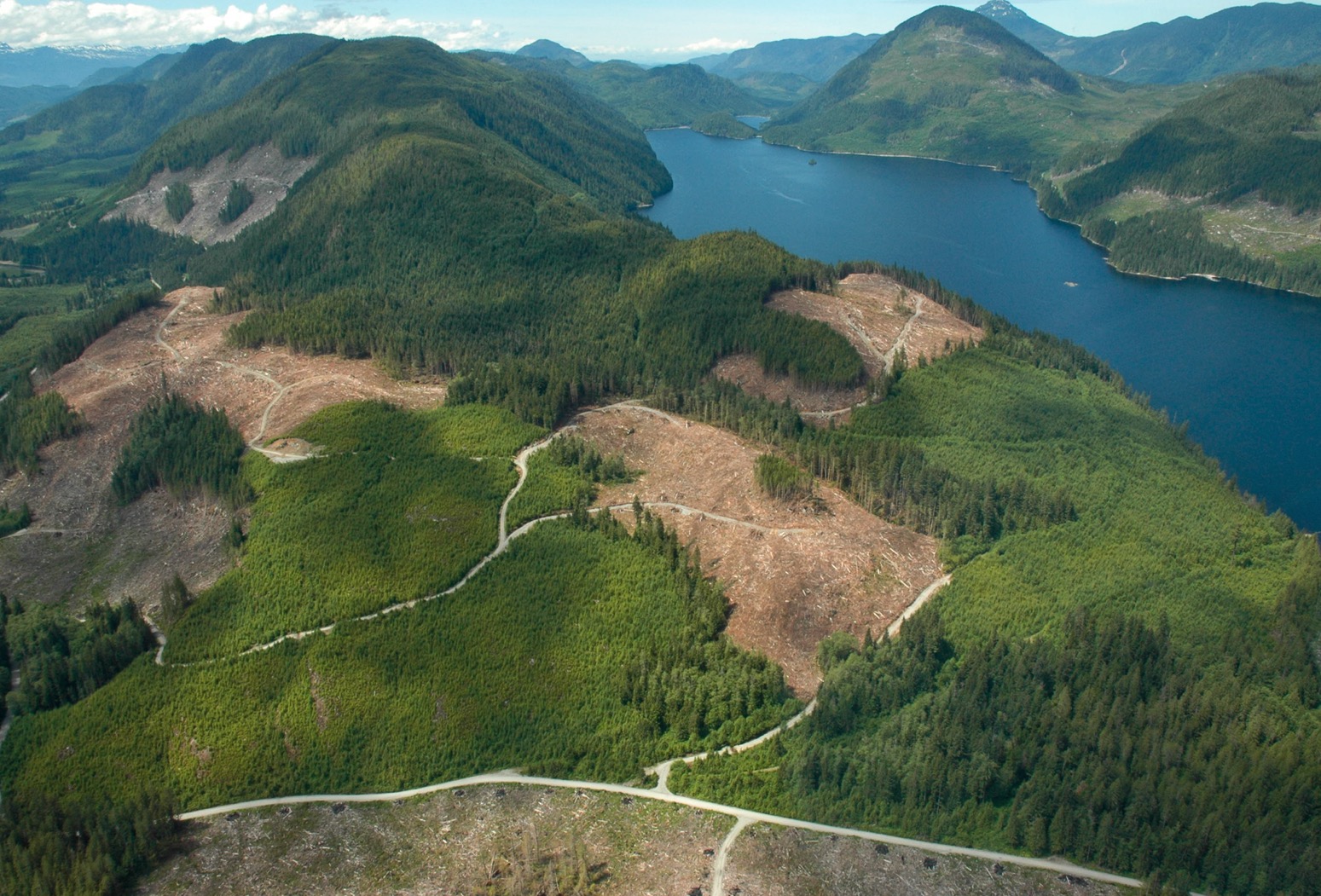 Campbell River Mayor Kermit Dahl sent an open letter to Premier David Eby, calling for immediate action to address issues within B.C.’s coastal forestry sector. Dahl warns continued inaction could result in further mill closures, job losses and the collapse of the coastal forestry industry. According to Dahl, coastal harvest volumes have dropped by over 40 per cent since 2019, with more than 5,400 direct forestry jobs lost since 2022. The 2025–26 budget projects a harvest of 32 million cubic metres … an estimated $275 million in lost revenue. The mayor says Premier Eby pledged to “protect jobs and the economy” when reshuffling his cabinet and says “those words ring hollow for thousands of coastal forestry workers watching their industry collapse—… from policy paralysis and regulatory misfires.” Dahl argues the crisis is not caused by … internal delay. “When harvest approvals that once took six months now take two years or more, that’s not a tariff issue—it’s a made-in-B.C. problem,” Dahl says.
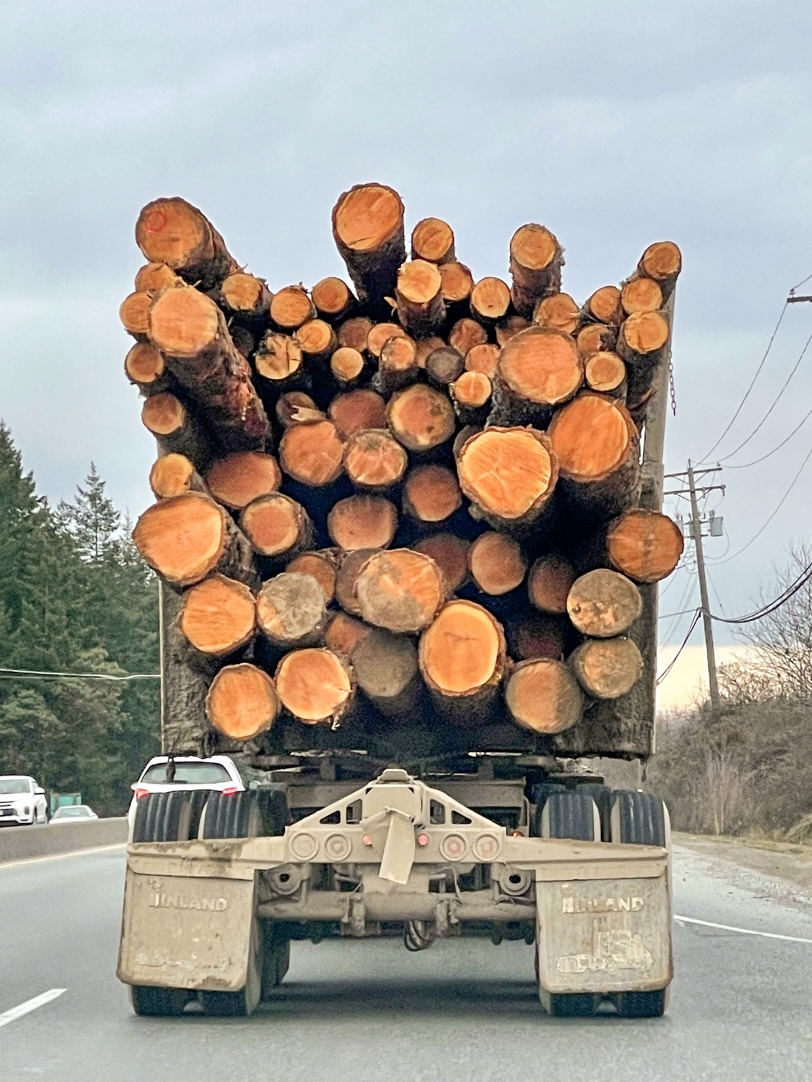 VICTORIA — The Council of Forest Industries wrote a letter to the New Democrats earlier this month, outlining more than a dozen proposals to rescue a struggling industry. “B.C.’s forest industry is in crisis,” wrote COFI President Kim Haakstad in the July 14 letter to Forests Minister Ravi Parmar. “Fibre availability is at historic lows, permitting systems are gridlocked, and investment is retreating in the face of prolonged uncertainty. The risk is not gradual decline — but accelerated facility closures, job losses, and the permanent erosion of forest industry capacity.” Haakstad was responding to Premier David Eby’s announcement of a “major project” to restore the industry in a speech to this year’s COFI’s convention. …I asked the government last week for a response to the proposals set out in the COFI letter. I got back a general statement from Parmar, which pretty much brushed aside the notion of a crisis in the industry.
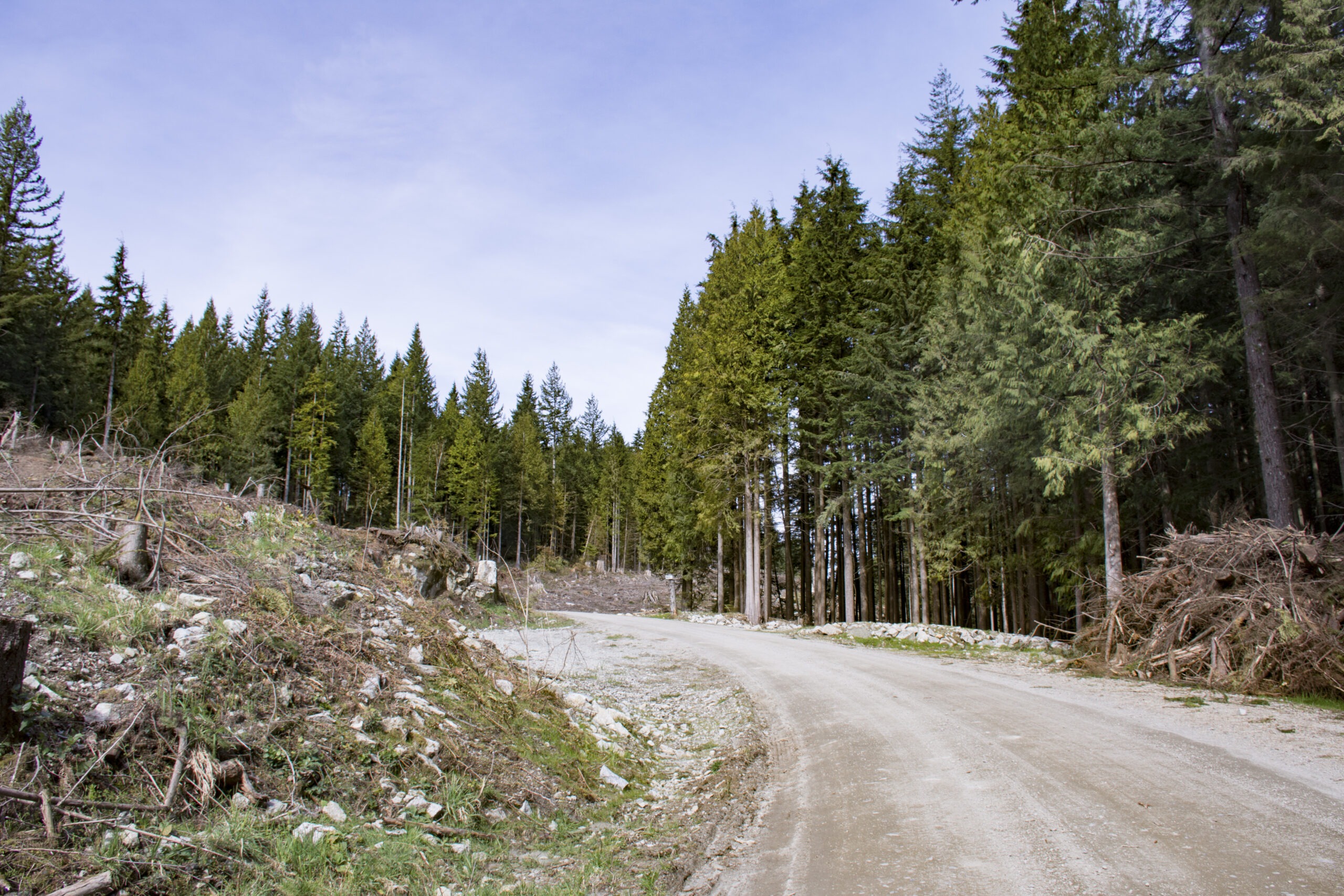 A new report warns the impacts on B.C.
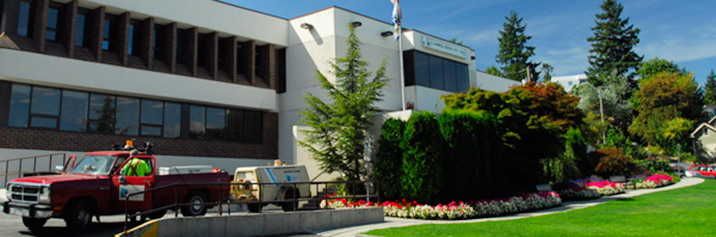

 BC’s forestry sector would have been brought to its knees Friday by new American duties on Canadian softwood lumber, if it wasn’t already flat on its back from being hammered by years of provincial government policies. …But even before the new duties, B.C.’s forestry sector was in a crisis. Annual harvest volumes are down by tens of millions of cubic metres, lumber production and exports have shrunk dramatically, export revenues have fallen, thousands of jobs have been lost, and dozens of mills have been curtailed or shuttered. The industry has blamed various BC NDP policies, including new old-growth logging deferrals… and extraordinarily long permitting delays. …If New Democrats are serious about saving the industry from ruin, now would seem to be the time to shelve the never-ending reviews and actually do something. The government could spin a pivot to pro-forestry policies not as a retreat, but as a made-in-BC response to American trade aggression.

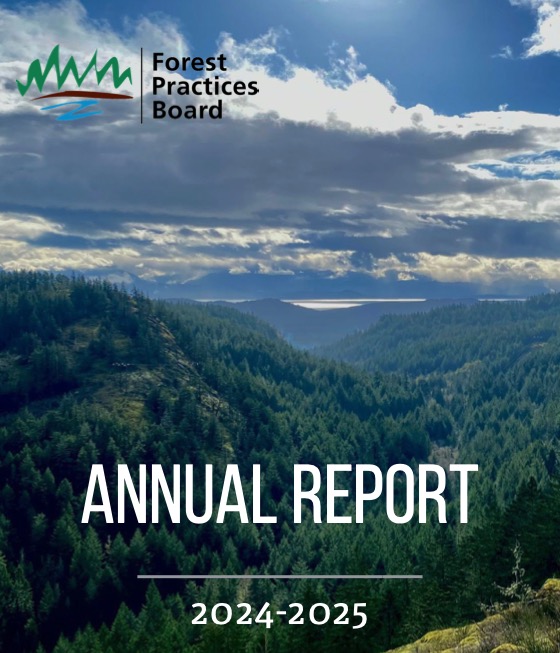 VICTORIA – The Forest Practices Board has released its 2024-25 annual report, highlighting nearly three decades of independent oversight and a continued commitment to sound forest and range practices throughout British Columbia. This year’s report reflects a sector in transition with growing pressures from climate change, wildfires and the need to modernize land management — all requiring strong oversight and innovative responses. Highlights include:


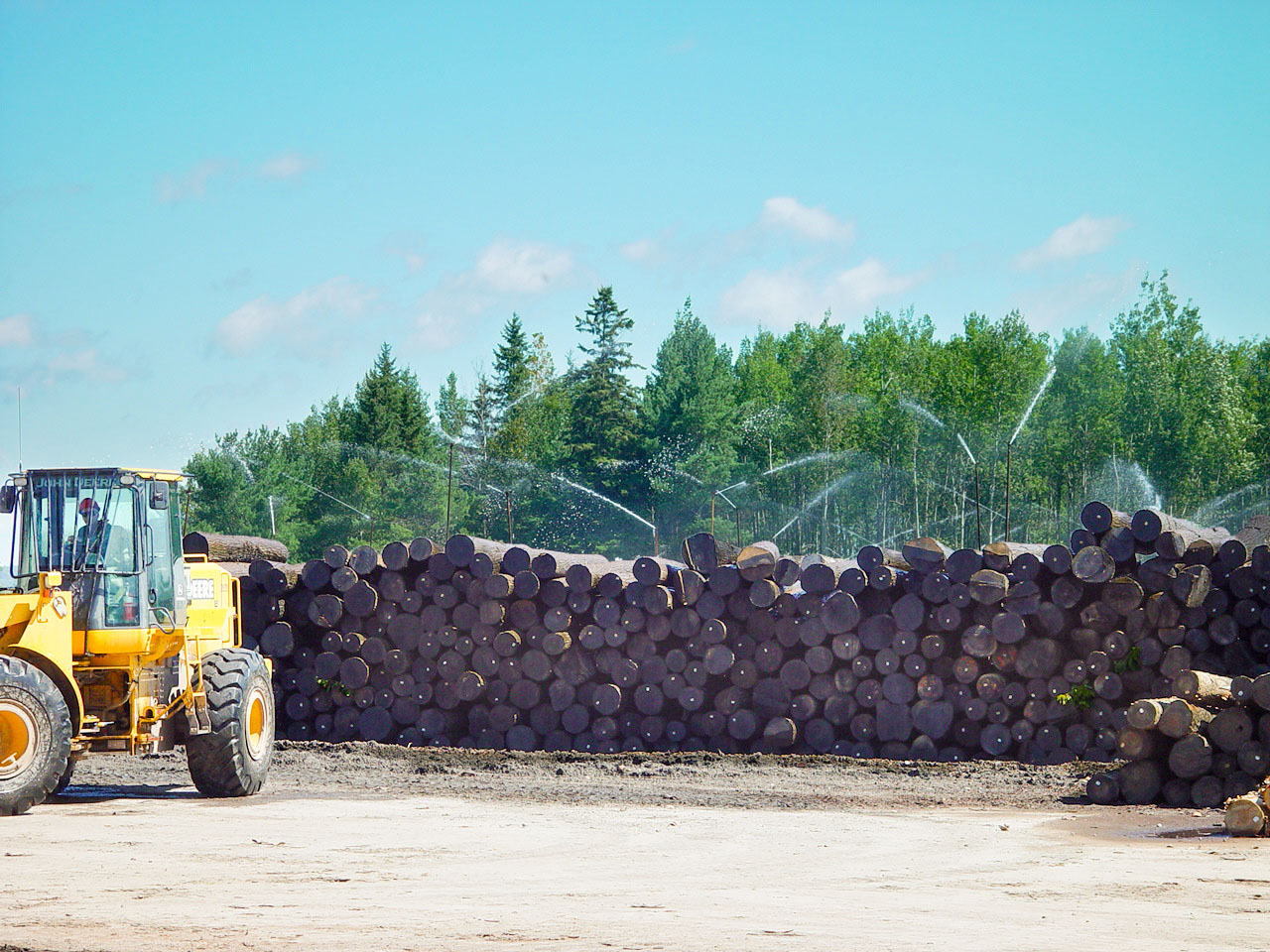 Mushkegowuk-James Bay MPP Guy Bourgouin is calling on the province to take immediate action to protect Ontario’s forestry sector in the wake of new U.S. tariffs on Canadian lumber. Bourgouin said the impact of the tariffs imposed by U.S. president Donald Trump could be devastating for northern communities that depend on the industry. “The anti-dumping tariffs imposed by Trump will devastate our lumber industry. Condemning Trump’s actions isn’t enough. We saw it with the auto sector, with steel, and now with lumber — the Premier’s ‘wait and see’ approach is leaving thousands of workers vulnerable to layoffs.” Bourgouin criticized the Ford government for failing to present a concrete strategy, calling their approach “an afterthought” for northern Ontario’s economy. …Ontario NDP party argues that using Ontario-produced wood could tackle multiple challenges at once, safeguarding forestry jobs, boosting local economies, and addressing the province’s housing shortage with “made-in-Ontario” solutions.
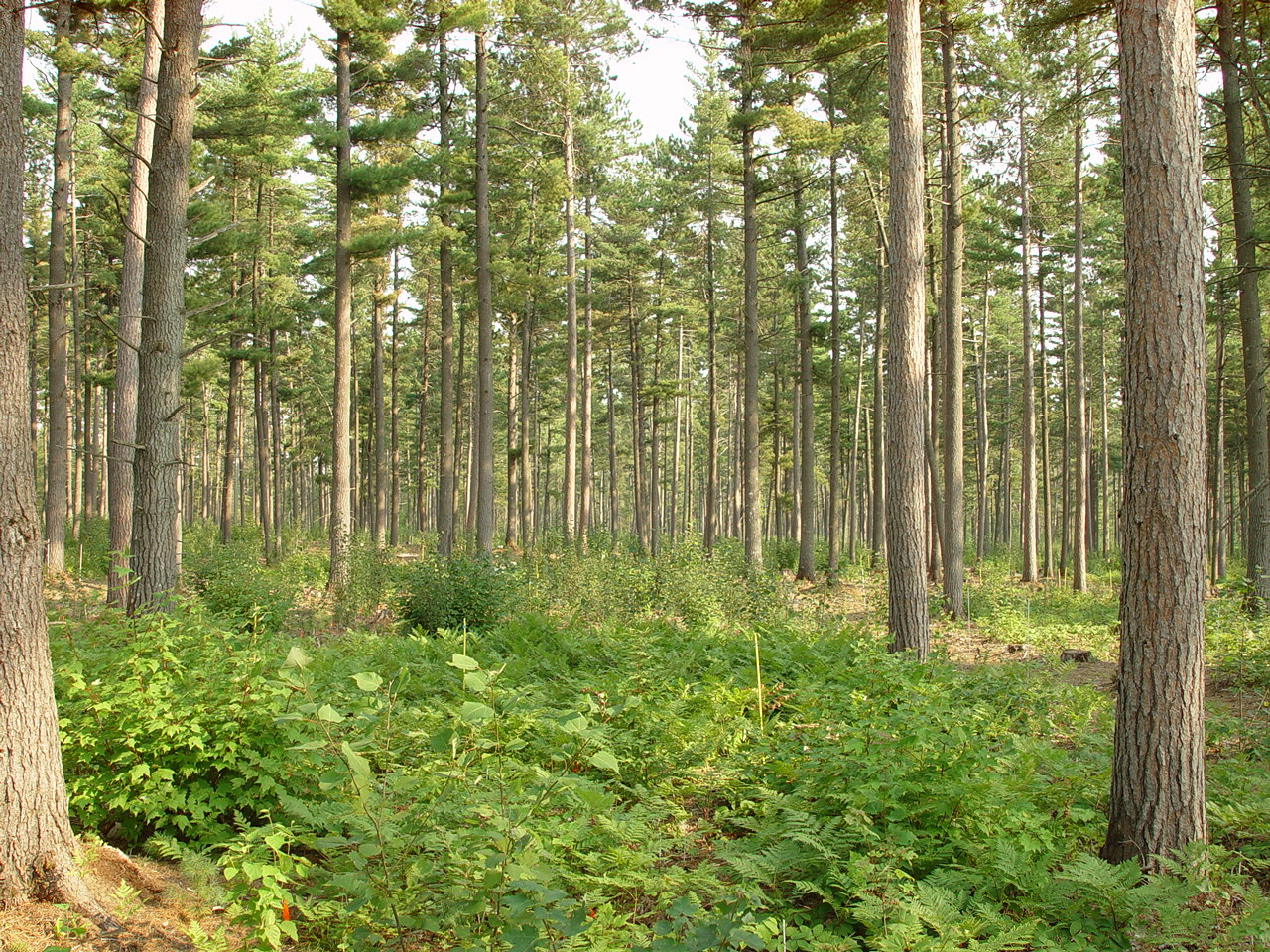 Members of the forest industry and the provincial government weighed in Monday on the Trump administration’s decision to raise tariffs on Canadian softwood lumber. Last week, the U.S. Commerce Department decided to raise anti-dumping duties on Canadian softwood to 20.56 per cent. A news release stated the province’s forest industry is “deeply troubled” by the decision to increase the duties by over 14 per cent. “Increasing anti-dumping duties to 20.56 per cent from the current average rate of 7.66 per cent is unjustified,” read the statement. “New Brunswick’s softwood lumber producers already face punitive and unfair anti-dumping and countervailing duties.” According to the statement, when combined with an anticipated rise in countervailing duties, the new increase to anti-dumping duties will mean an expected new total of 34 per cent by the middle of August.
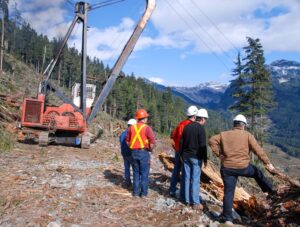 A cornerstone industry of northwestern Ontario is at risk, says a regional municipal group, with the decision by the U.S. Department of Commerce to raise anti-dumping duties on Canadian softwood lumber to 20.56 per cent. “Forestry is the economic lifeblood of communities across northwestern Ontario,” said Rick Dumas, president of the Northwestern Ontario Municipal Association (NOMA), in a July 28 statement. “This unjustified and protectionist action will have a direct and harmful impact on workers, families, Indigenous communities, and local economies throughout our region.” The provincial government called the U.S. commerce department’s decision to increase duties on Canadian softwood lumber exports an “unjust burden” on American consumers that will raise construction costs in the U.S., make homes less affordable, and negatively impact economic growth on both sides of the border. “We remain firm in our position that these duties should be lifted entirely, for the benefit of workers and families on both sides of the border.”
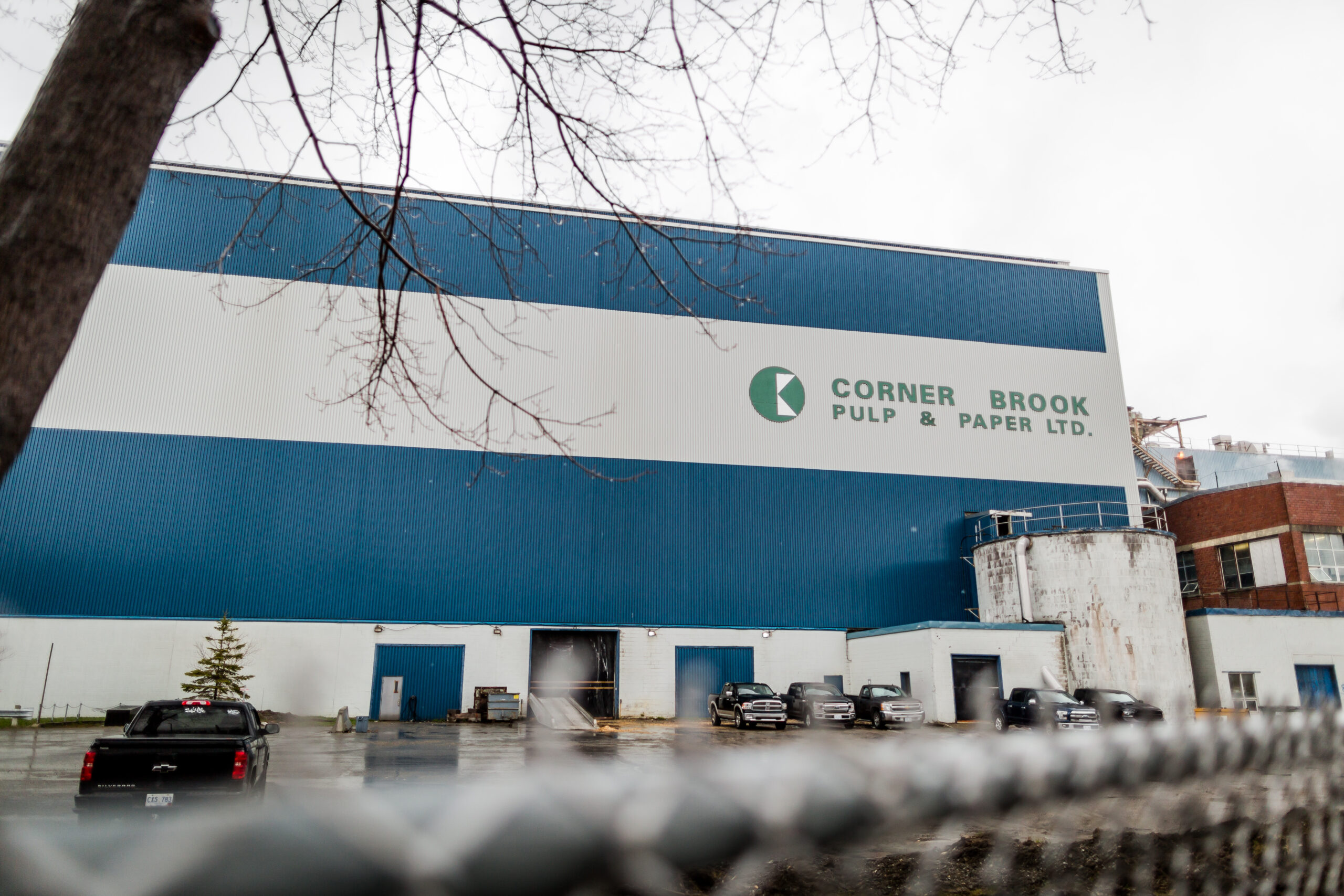
 Northern Pulp is abandoning its plans in Nova Scotia, but the province is still counting on the company to decommission its old mill and clean up the site in Pictou County that was used for heavy industrial activity for more than half a century. Environment Minister Tim Halman says his department is waiting for the company to file a reclamation plan. …Northern Pulp had been pursuing a new mill in Liverpool, and had said it would maintain the old mill for “potential logistics operations.” But the plan for a new mill was abandoned earlier this month. In a settlement agreement, Northern Pulp agreed to pay up to $15 million to the province for the mill’s closure and any necessary cleanup. …(However), it must first pay off hundreds of millions of dollars owed to its creditors as part of an insolvency process being handled in a BC court.
 WASHINGTON — More Republican lawmakers are calling out Canada because of wildfires sending smoke billowing across the international border into their states. Wisconsin state Rep. Calvin Callahan has joined other Republican state lawmakers from Iowa, Minnesota and North Dakota in filing a formal complaint against Canada to the U.S. Environmental Protection Agency and the International Joint Commission. In a news release issued today, Callahan says that “if Canada can’t get these wildfires under control, they need to face real consequences.” He joins a chorus of Republican politicians at other levels of government who have been voicing concerns about Canada’s wildfires. Michigan Rep. Jack Bergman sent a letter to Canadian Sen. Michael MacDonald on Monday calling for stronger forest management policies and more accountability from Canadian officials. Michigan Rep. John James sent a letter to Prime Minister Mark Carney last week saying his constituents are choking on toxic wildfire smoke.
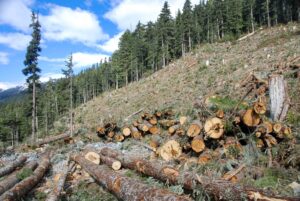 Wyoming’s few remaining lumber mills have been struggling, but a shift in federal and state timber policy might herald a new era for the industry here. Gov. Mark Gordon on Friday signed an executive order calling for an “increase of active forest management in Wyoming.” It mirrors President Donald Trump’s March 1 executive order for “immediate expansion of American timber production.” That might be the break that Wyoming logging companies and timber mills have for years been anxiously awaiting, Jenny Haider, of the Evanston-based Smith & Jones Timber Company, told Cowboy State Daily on Monday. The fourth-generation family-owned business has been going for 80 years but barely survived the past few, she said. …Trump’s order, coupled with tariffs on Canadian timber being imported into the US could be a game-changer for logging operations and mills in Wyoming. …Now, Wyoming timber companies are “using the word ‘hope’ again,” she added.
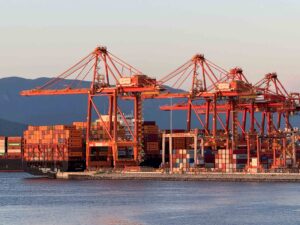 President Trump’s expanded reciprocal tariffs will not apply to any products loaded onto a vessel for transport into the US before 12:01 a.m. New York time on Thursday, according to guidance issued by
 A panel of appeals court judges on Thursday voiced deep skepticism with the Trump administration’s attempt to justify sweeping tariffs based on a national emergency. The US Court of Appeals for the Federal Circuit is hearing arguments Thursday over whether Trump’s sweeping tariffs are lawful. A group of small businesses and a coalition of states are asking the appeals court to invalidate the bulk of Trump’s tariffs, arguing that Trump overstepped his power when he invoked the rarely used International Emergency Economic Powers Act (IEEPA). At the start of Thursday’s hearing, judges on the appeals court panel questioned why Trump is relying on a law that has never been used to justify tariffs, saying that the law itself never mentions the word “tariffs” and voicing concern that the president justifying the unilateral action based on an emergency could amount to “the death knell of the Constitution.”

 SPRINGFIELD, Illinois — The US Department of Agriculture will move thousands of employees out of the nation’s capital in a reorganization the agency says will put them closer to customers while saving money, Agriculture Secretary Brooke Rollins said Thursday. Around 2,600 workers — more than half the Washington, D.C. workforce — will be moved to five hubs stretching from North Carolina to Utah, Rollins said. The union representing federal workers immediately criticized the plan as a ploy to cut federal jobs, pointing out that some 95% of the department’s employees already work outside Washington. The move is part of President Donald Trump’s effort to make the federal government slimmer and more efficient, which received a Supreme Court boost this month. Sen. Amy Klobuchar demanded that department officials appear before the Senate to explain their thinking.” …In the Washington region, the department will vacate three buildings and examine the best use of three others.


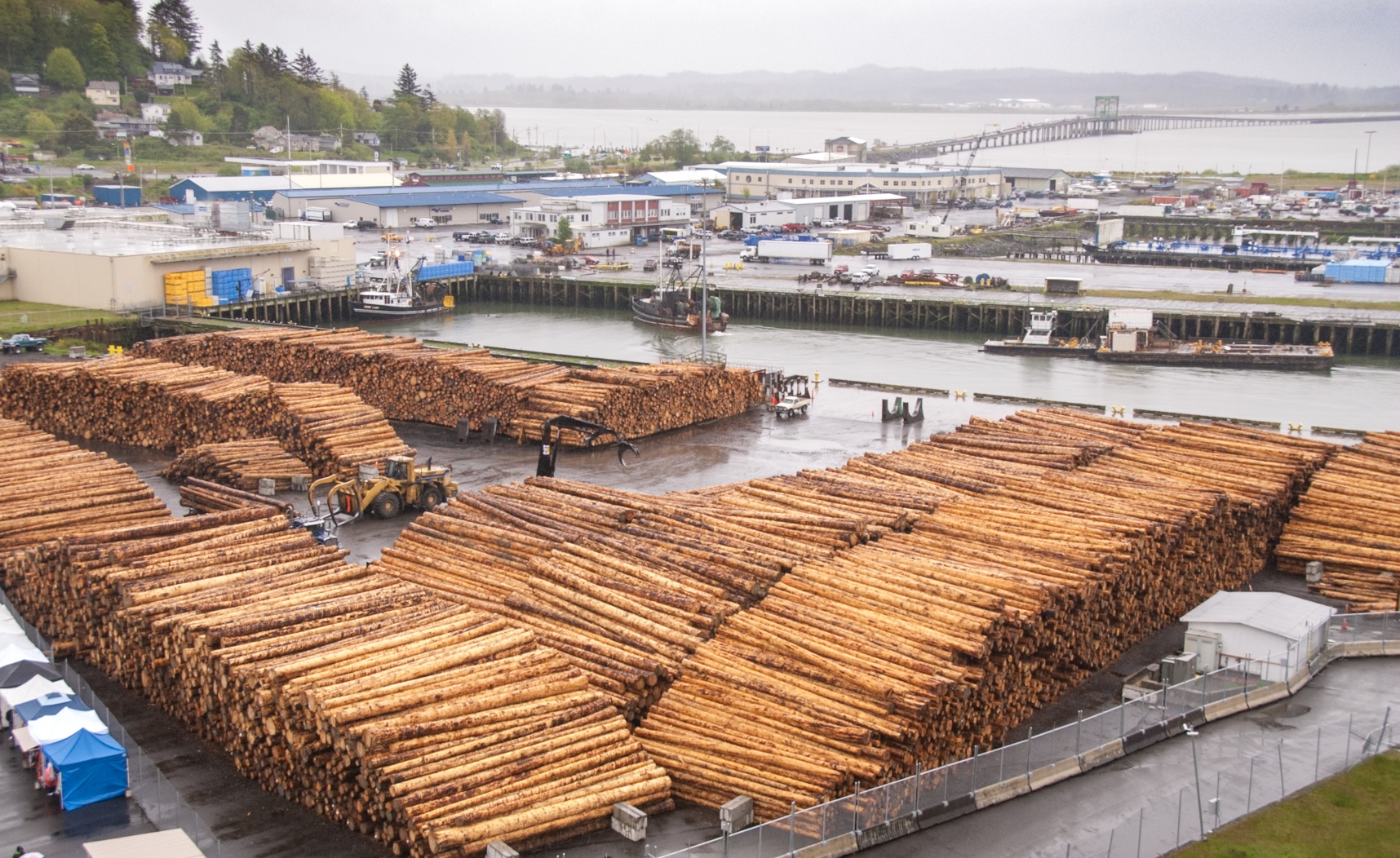 SKAMANIA COUNTY, Washington — Sawmills have been closing across the Pacific Northwest over the past 30 years. There is just one left in Skamania County, down from six during its logging heyday. Limited log supply from the region’s national forests has cut off their raw material, while cheap lumber from Canada has taken market share for their finished product. Owners of the remaining mills have high hopes that President Trump will deliver relief by increasing logging in national forests and raising trade protections against Canadian exports. Although the latter can be achieved with a stroke of the president’s pen, meaningfully boosting the federal timber harvest could take years and be impeded by litigation and red tape. …US sawyers have argued successfully in trade cases that their Canadian competitors are supplied with subsidized government logs, and that they offer two-by-fours over the border for less than they sell them at home. [to access the full story a WSJ subscription is required]
 KINGSPORT, Tennessee — Vera Gilmer, a 30-year Kingsport resident, arrived at the Kingsport Economic Development Board meeting for the update on Domtar’s packaging mill. She shared her frustration with the board about the mill’s odor over the last month. …Gilmer stressed that the smell has worsened recently. …Domtar mill manager Troy Wilson gave an update on the digester’s construction and addressed what could possibly worsen Domtar’s odor in the meantime. …Wilson said worsening odor is likely attributable to Domtar’s current wastewater treatment system, a lagoon system which he described as “antiquated” and sensitive to the weather. He also shared that the rainstorm that passed over Kingsport Wednesday last week put a strain on the wastewater system. …Domtar has spent $20 million on the digester so far. At its peak, the digester project will employ 140 people, according to Wilson.
 The Maine State Chamber of Commerce has been following the Trump administration’s actions on tariffs since the start of the year, said President and Chief Executive Officer Patrick Woodcock. …Woodcock said Monday that some individual companies and industries are already seeing a “dramatic impact.” For example, he said lumber product prices have increased. … In Maine, “our forest products industry is the one that is most affected with these specific industry, sector-level tariffs,” Woodcock said. The state imports 2.3 million tons of wood products annually, most of which comes from Canada, according to a Maine Forest Service