 President Trump’s promised tariffs on softwood lumber risk disrupting the supply chain for something nobody wants to be caught without: toilet paper….While Trump advocates for new tariffs partly to bolster US manufacturing, they may also hit the availability of northern bleached softwood kraft pulp, or NBSK, a key component in making toilet paper and paper towels. NBSK constitutes about 30% of standard U.S. bathroom tissue and half of a typical paper towel, and is currently sourced primarily from Canada, said Brian McClay, chairman of TTOBMA. He added that the U.S. imported about 2 million tons of Canadian NBSK last year, highlighting the longstanding reliance of American paper-goods producers on pulp from their northern neighbour. …“If Canadian pulp mills close because they don’t have the fibre supply, I can’t think of any other option for them — they just can’t switch the recipe around,” he said. The scenario risks reviving painful memories of pandemic-era toilet paper shortages.
 Yesterday, we featured Part II of our in-depth Q&A with political risk expert Robert McKellar, a follow-up to an August
 As a federal election kicks off, the trade war with the US is casting a long shadow over voters’ choices, and whoever forms the next government will have the tall order of trying to draw this conflict to a close. …International trade experts say that will be much easier said than done. The two economies are more integrated than ever before, and President Donald Trump’s chaotic governing style makes it extremely difficult to know how to even begin to unravel this dispute. …Carney met with the country’s premiers and leaders from long-time allies in other countries to chart a short- and long-term response to the tariffs. He has conceded there’s a limit to how much Canada can do to respond. …Russell Williams at Memorial University said because Trump keeps threatening Canada’s existence, a political, rhetorical de-escalation is essential before any compromise on trade can be reached.
 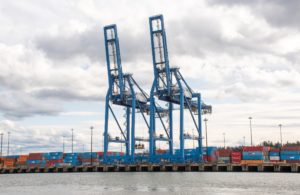 US President Donald Trump’s coming wave of tariffs is poised to be more targeted than the barrage he has threatened, aides and allies said. …The White House is narrowing its approach to take effect on April 2, likely omitting a set of industry-specific tariffs while applying reciprocal levies on a targeted set of nations that account for the bulk of foreign trade with the US. …The White House is still planning to unveil the reciprocal -tariff action on that day, though. …The fate of the sectoral tariffs, as well as tariffs on Canada and Mexico that Trump said were justified by fentanyl, remains uncertain. …The administration is now focusing on applying tariffs to about 15% of nations with persistent trade imbalances with the US… such as Australia, Brazil, Canada, China, the European Union, India, Japan, South Korea, Mexico, Russia, and Vietnam.
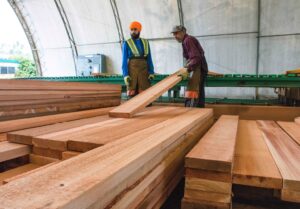 US builders pay a premium for the spruce, pine and fir (SPF) lumber that BC produces and could soon face additional tariffs after Trump’s proclamation that America doesn’t need the province’s wood. They like it, particularly for framing walls because SPF is lighter, stronger and tighter-grained than the more abundant southern yellow pine lumber that has a reputation for warping. …“There’s just this gap between what the U.S. can supply and what their demand is,” said Kurt Niquidet, president of the B.C. Lumber Trade Council. ..“There’s no way American supply, in the short-term, can do anything but rely on Canadian lumber,” Russ Taylor said. “Tariffs are just going to push the price up and create shortages,” Taylor said. “It’s just going to be market chaos, as it will be with OSB panels as it will be with pulp and newsprint.”
 COFI 2025 – April 2-4 in Prince George, BC — As BC’s forest sector grapples with significant turbulence – including US tariffs, geopolitical uncertainty, and sector-wide challenges in BC – strong leadership and collaboration are essential to securing a sustainable and competitive future. The “Calm, Cool, & Collaborative: Leadership for Turbulent Times” panel at the 2025 COFI Convention will bring together senior decision-makers from industry, government, and First Nations. These influential voices will share their insights on navigating market uncertainty, shaping effective policies, and strengthening community resilience. Jon our panelists: Hon. Ravi Parmar, Minister of Forests, Province of BC; Chief Councillor John Jack, Huu-ay-aht First Nations; Juan Carlos Bueno, President & CEO, Mercer International; and Lisa Dominato, Councillor, City of Vancouver for a lively discussion moderated by Greg Stewart, President, Sinclar Group Forest Products Ltd. & Chair, COFI Board of Directors.
  COFI 2025 Convention: April 2-4, Prince George, BC — The global trade landscape is evolving rapidly. Economic uncertainty, shifting regulations, and geopolitical challenges are reshaping market access for Canadian forest products. Staying competitive requires a clear understanding of emerging risks and strategic opportunities. At the COFI 2025 Convention, a panel of industry experts will examine the forces shaping international trade and explore actionable strategies to enhance industry resilience. Presenter and Moderator Russ Taylor, President, Russ Taylor Global will lead the discussion with panelists: Kate Lindsay, Senior VP & Chief Sustainability Officer, Forest Products
 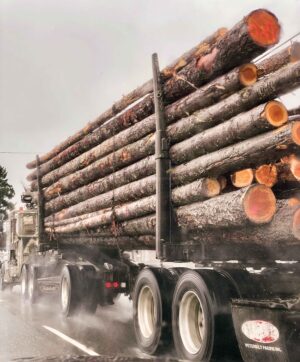 The two BC regions that include resource-reliant communities like Smithers, Vanderhoof and Terrace stand to lose the most from tariffs, according to new research from the Institute for Research on Public Policy. …While BC stands to be the least affected province, tariffs are likely to cause the greatest disruptions in regions of Bulkley-Nechako and the Kitimat-Stikine. The first region depends heavily on forestry, while the second includes Rio Tinto’s aluminum smelter in Terrace. Counting existing countervailing duties, BC forest products could face tariffs exceeding 50 per cent, if not higher. …Almost three-in-10 workers in Bulkley-Nechako hold jobs in export-oriented industries with about 5.6% of the total work exposed to US tariffs. …Rounding out of the Top 5 are the Peace River and Cariboo (both 5.5%) and Kootenay-Boundary (5.4%). Regions potentially least affected by the tariffs include the Capital Region (1.5%), Squamish-Lillooet (1.4%) and the Central Coast (1.2%). Greater Vancouver’s exposure is 2.8% and the fast-growing Fraser Valley is 4%.
 As Canada faces an urgent need for housing, BC’s forest sector has a critical role in meeting this demand with sustainable, high-quality wood products. Developing new strategies for how we generate and move wood fibre across the supply chain in partnership with First Nations, utilize the right wood in the right buildings, and deploy innovative pre-fab and off-site construction methods will be essential to increasing the domestic use of wood. Don’t miss this conversation on how we can help address Canada’s housing needs while driving economic growth and supporting sustainable forestry. Panelists:
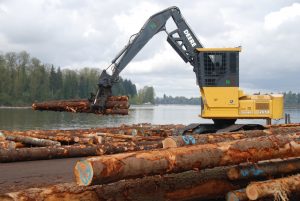 The federal government is providing about $20 million in funding to support BC’s forestry sector. Energy Minister Jonathan Wilkinson says it’s more important than ever to support the sector, which is subject to American duties on softwood lumber and now faces the additional threat of steep tariffs. NRCan says the funding will support 67 projects. …About $11.3 million will flow through the Investments in Forest Industry Transformation program for six projects that are adopting new technologies. More than $7 million will go through the Indigenous Forestry Initiative to 50 projects advancing economic development opportunities. Another $1.6 million will go to nine projects promoting the commercialization of wood-based products in the construction sector, while $600,000 will go to projects aimed at strengthening international partnerships and decreasing market barriers. …Ottawa has also announced $5 million in funding for four projects in B.C. and one in Yukon aimed at helping laid-off workers from the forestry and mining sectors.
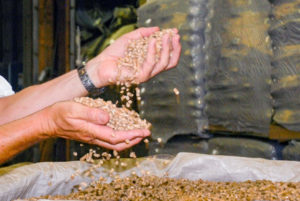 The federal government is providing funding to support BC’s forestry sector. …In what could mark a turning point for the Fort Nelson economy, a long-awaited pellet mill project is poised for significant progress with a $250,000 funding injection. The Fort Nelson First Nation is set to receive the funding, which will bolster its partnership with Peak Renewables. Together, they aim to convert an idle former Canfor sawmill into a large-scale wood pellet plant. …The region, historically reliant on its resource sector, has faced a number of challenges in bringing the project to fruition. In November 2020, the Fort Nelson First Nation extended a $1 million interest-free loan to Peak Renewables to advance the project. Originally, the pellet mill was slated to begin operations in early 2022. Since then, no new timeline has been provided as to when the mill may become operational.
  …Donald Trump is plunging North America into a trade war and clogging the flow of goods between Canada and the U.S. …Canada’s forestry industry is in the crosshairs, with a 25 per cent tariff on lumber and pulp and paper products. The likely result is higher prices on everything from the materials used to build homes to basic necessities like toilet paper. Quebec’s economy is deeply rooted in its forests… Toilet paper is a big part of that flow. Two years ago, Canada exported over $1.6 billion worth of TP, with the U.S. receiving almost all of it. …Even if American mills had the capacity to process more lumber, they’d still face a workforce problem. It’s ironic that the U.S. is penalizing Canada — a responsible steward of the trees — right after we delivered firefighters, equipment and water bombers to protect California’s trees. Canada offered its support to the U.S., but now we’re getting burned.
 Canada could be on the lower end of Trump’s threatened global tariffs next week, the Star has learned. Nothing, however, is guaranteed until Trump decides ahead of his April 2 deadline and no government officials are taking any assurances for granted, sources said. …Canadian sources with knowledge of discussions between the two countries say White House officials have suggested Trump may impose three escalating levels of tariffs on America’s trading partners, with Canada getting hit on the lower end of the scale. …Despite a recent news report the tiered-approach is not on the table, the sources said it aligns with the government’s understanding of what’s about to hit next week. Flavio Volpe, head of the Canadian Auto Parts Manufacturers Association, said, “I wouldn’t take any comfort from that… it may just be that some other countries have been levied a higher universal tariff”.
 The American Wood Council (AWC) continues to do critical work on behalf of its members, and it is our pleasure to share notable examples from this past year… AWC continued to position U.S. wood products as a sustainable solution to address the environmental impact of the built environment. …Our codes and standards teams worked together to secure some important wins in the initial Group A ICC code cycle, including references to the ANSI Fire Design Specification. …As we look to this year, the new Administration means many changes in policy and regulations. We at AWC are prepared to continue to work hard to advance public policies that support market growth and protect the industry from adverse federal legislation and regulation. Our sector tells a truly bipartisan story, and we look forward to a fresh start with new opportunities to promote our industry and all of the good it does for the country.
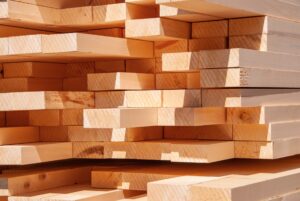 In seeking to justify his imbecilic trade war against Canada, Donald Trump
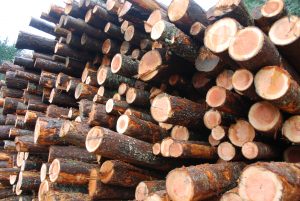 VERMONT — Oliver Pierson, Vermont state’s director of forestry, and Katharine Servidio, mapped out the [tarrif] tangle for the House Committee on Agriculture, Food Resiliency, and Forestry. As sawmill capacity in the U.S. has retracted, New England’s loggers have looked to Canada to process timber felled on this side of the border. …Vermont imported $52 million in sawmill and wood products from Canada in 2024, according to Pierson. …There is a case for bringing more milling back to America, Pierson said, but “it wouldn’t be for a year or two from now when we’d be able to stand up additional processing capacity.” In the short term, Servidio and Pierson said that they expect that U.S. tariffs on lumber imported from Canada and retaliatory Canadian tariffs on Vermont timber will be debilitating for the logging industry in the state.