 Mark Carney and the Liberal Party of Canada have a unique opportunity to stand with forest sector workers and businesses and help us grow northern and rural Canada. The path we’ve been on is not tenable. We need a new partnership with the federal government to help us move from survival mode to thriving. Global demand for wood products is growing. Together we can bring more of Canada to the world. FPAC’s Forest Sector Action Plan offers a clear roadmap:
- Pass Investment Tax Credits for clean energy and jobs.
- Reform carbon policy to work for Canadians.
- Reduce regulatory barriers to build homes faster.
- Implement worker supports to address labour shortages.
Let’s make the future of Canada’s forest sector and its employees a national priority.



 Canadian Forest Owners (CFO) reached out to the five federal political parties with current representation in parliament to ask how their party would support the thousands of rural communities across Canada where these forest owners live. Canadian Forest Owners represents 480,000 private forest owners from Prince Edward Island to Vancouver Island. These forest owners are largely family owned, small business, who own over a tenth of Canada’s managed forests, supporting every mill across the country, and accounting for nearly 20 percent of Canada’s total forest production. Private forest landowners provide solutions to climate change and real socio-economic development opportunities in rural communities from coast to coast. Here’s what they had to say…
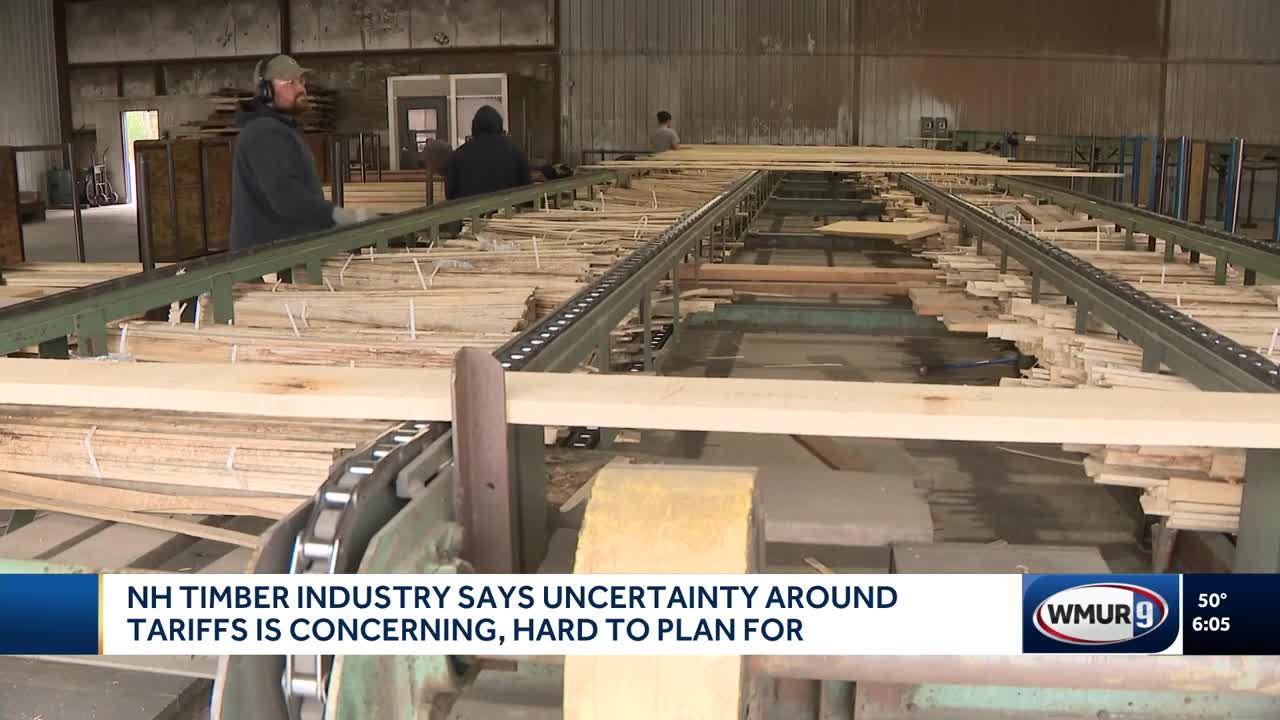
 President Trump’s shifting trade policies are creating uncertainty for the Canadian forestry industry. Sean McLaren, CEO of West Fraser Timber, says the potential inflationary effects of tariffs could weigh on future demand. “Looking forward, we see considerable macroeconomic uncertainty, particularly stemming from the US’s evolving tariff policies”. He said the company is planning for multiple scenarios. …RBC’s Matthew McKellar said that the outlook for the paper and forest products industry is highly uncertain when it comes to demand. “All of this uncertainty is bad for business,” said Derek Nighbor, CEO of Forest Products Association of Canada. Nighbor added that any impact on Canadian lumber companies will also affect pulp and paper: “We’ve got all of these downstream industries that depend on those inputs.” …McKellar noted that companies like West Fraser, Interfor and Canfor are geographically diverse, meaning potential softening of demand could be the bigger concern.
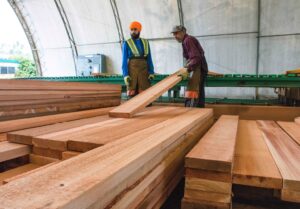 Major softwood producers with head offices in Canada say they have accounted for more than half of the growth in capacity in the US South over the past decade, highlighting their American investments as the Trump administration investigates lumber imports. The US South appeals to forestry companies because of the region’s abundant timber, the Canadian government said in a 57-page filing this month to the US Department of Commerce in a bid to avert potential tariffs. …In seeking to stave off tariffs, the Canadian government and several producers from Canada believe that the foray into the US South should be viewed as evidence of them being aligned with the Trump administration’s “America First” trade and investment agenda. …However, the U.S. Lumber Coalition is arguing that new tariffs are necessary. …Canadian producers are worried that if new lumber tariffs hit 25 per cent… total levies could reach nearly 60%. [to access the full story a Globe & Mail subscription is required]
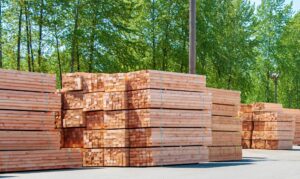 James Furney, mayor of Port McNeill, BC… is trying to stay upbeat, but his lumber town was already suffering before the threat of Trump’s trade war. …“To think that anyone is going to be insulated from what is going on with Trump would be delusional,” Furney said. “We are a forestry town and people around town are already watching their wallets and curtailing their spending, and businesses that should be ramping up now to hire summer students aren’t going to be hiring.” …In short, B.C. has plenty of wood and plenty of potential buyers for it, especially in the US, which was a $5.69-billion export market for the province in 2024, but not enough of that wood has been getting cut in recent years. That makes for gloomy days on the West Coast; a malaise that could spread to Ontario and Quebec and push the industry to the brink of collapse.
 The BC Lumber Trade Council is warning that threatened US tariffs stacked on top of duties against Canadian softwood could lead to soaring costs for residential construction, including in American states seeking to rebuild after natural disasters. Hurricane Helene damaged or destroyed an estimated 73,000 homes in North Carolina last fall, and wildfires burned more than 15,000 structures in California in January, the BC council said in a submission this month to the US Department of Commerce. “Significant hurricane reconstruction efforts are also underway in Florida, Georgia, South Carolina, Virginia and Tennessee,” the council’s 55-page filing says. The submission was a response to a March 1 executive order… which also threatened new lumber tariffs, cited Section 232 of the Trade Expansion Act, allowing him to connect the softwood file with national security. The probe into softwood and other wood products is scheduled to be completed by the end of this year. [to access the full story a Globe and Mail subscription is required]

 New support for forestry-sector manufacturers in the province is creating sustainable jobs, strengthening local supply chains, establishing new made-in-B.C. products and reinforcing B.C.’s position as a leader in mass-timber innovation. …Through the BC Manufacturing Jobs Fund (BCMJF), the Government of B.C. is contributing as much as $11 million toward four forestry-sector capital projects in the province. The projects are helping B.C.-based forestry-product manufacturers grow their businesses by constructing new production facilities, purchasing new equipment and adding new high-value product lines, while creating and protecting hundreds of jobs.
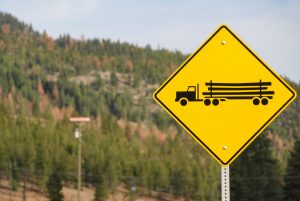
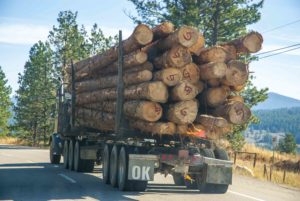 As of 2024 there are 2,500 sawmills in the U.S. and 850 in Canada. However, these numbers have to be looked at in context of housing starts in both countries. An interesting number: The rebuilding of 16,000 houses that burnt down in California require 4,300 fully loaded eight-axle trailer trucks with dimensioned lumber. We must be innovative and need more skilled workers. We should have a few smaller mills and/or machinery producing metric size timber for Europe and Japan. …We cannot change what is happening in the US, but despite an executive order from higher up, many mills in the US are suffering from a steady lack of timber supply and do not have the manpower or loggers required to steadily feed some of the mills. In Montana for example, 36 mills have closed over the last years because of a lack of timber supply, as well as a lack of loggers.
 At the Council of Forest Industries convention, Premier David Eby underscored the provincial government’s commitment to forestry as a major project — and made it clear that forestry will be treated with the same focus and urgency, saying, “This is a shared project that we can get to that 45 million (cubic metre) target, which we all know is absolutely essential.” …Eby’s commitment to a “whole of government” approach is exactly what the sector needs. …We applaud Forest Minister Ravi Parmar’s recent announcements… Equally important is ensuring BCTS delivers its full potential. Consistently hitting 90 per cent or more of its annual harvest target is critical to a thriving wood products industry that supports communities and workers throughout the province. We also can’t lose sight of reconciliation. Increasing the distribution of stumpage fees to First Nations is one achievable step that would help advance shared prosperity and strengthen Indigenous participation in the sector.
 An appeal contesting a 12-month notice period awarded to an operations specialist who had been recruited from a long-term, secure position
  WASHINGTON – The US Commerce Department said on Wednesday it is opening a probe into national security impacts of imports of medium-duty and heavy-duty trucks and related parts into the United States. The “Section 232” investigation could form the basis of grounds to impose new tariffs on work trucks, buses, vans and other larger vehicles. Tariffs would hurt Mexico, as it is the largest exporter of trucks to the US. …Canada and Japan are also large exporters of larger trucks to the US. The Commerce Department is seeking public comment by mid-May on the extent to which domestic production of trucks and truck parts can meet domestic demand. …It also wants comments on the impacts on prices “due to foreign unfair trade practices and state-sponsored overproduction”. …Higher tariffs on commercial vehicles could put pressure on transportation costs.

 President Trump and Treasury Secretary Scott Bessent hinted at a trade-war deescalation with China, as Wall Street hoped the US was preparing for an off-ramp from the weeks-long trade battle. “145% is too high, it will come down substantially,” Trump said of the level of tariffs on Chinese imports. He said he was optimistic about trade talks, adding that he plans to be “very nice” to China to reach a deal. Trump’s comments came after Bessent told investors in a closed-door summit Tuesday that he sees a deescalation in the US-China tariff situation, prompting a US stock rally on Tuesday that carried into Wednesday. Bessent called the tit-for-tat tariffs with China unsustainable, echoing the sentiments shared with Yahoo Finance last week that he was optimistic about “clarity” on tariffs. …China said it is open to trade talks with the US but struck a still-defiant tone.
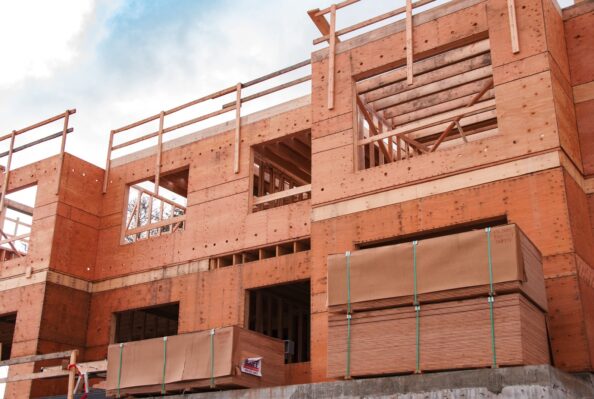 Developer Greg Drobot hope to sell the houses they’re building in Coos Bay for around $400,000. …Keeping costs down means paying attention to the price for every detail. Drobot said instead of plywood, the project was going to use a less-expensive oriented strand board from Canada. “When the tariffs hit, it made it almost cost-prohibitive for us to use that,” Drobot said. …Tariffs are almost certain to put Oregon’s new home construction goal further out of reach. Imported
 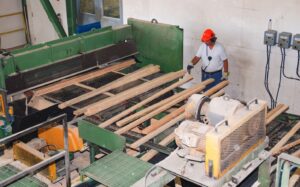 SALEM, Oregon — The Oregon Senate on Monday passed a bill to establish a lumber-grading pilot training pilot program. “This bill opens the door for small sawmill operators to participate in local housing solutions,” said Sen. Todd Nash, R-Enterprise, the bill’s sponsor. “Forty years ago, Eastern Oregon had 69 mills. Today, only seven remain. This is a practical step to support rural economies and increase housing options using locally sourced materials.” Senate Bill 1061, otherwise known as the Oregon Forests to Homes Act, would operate through Oregon State University’s Extension Service, in partnership with the Department of Consumer and Business Services. …Once certified as a grader, a mill owner could sell his lumber directly to a builder. Certified small sawmill operators will be able to sell lumber directly to homeowners or their agents for use in single-family homes or duplexes.
 Once Oregon’s largest manufacturing industry, employment in the wood product manufacturing industry has gone through large, well-publicized losses since the early 1990s. Its employment has dropped below that of computer and electronic manufacturing and food manufacturing in recent years, but it remains the third largest manufacturing industry. Despite the losses, wood product manufacturing is still a large industry in Oregon and is especially important to rural areas of the state. Over the long term, between 1990 and 2020, annual average employment in wood product manufacturing dropped 24,100, or 52%. Similar losses were experienced in all its subsectors. Sawmills and wood preservation dropped 5,900 (49%); plywood and engineered wood products dropped 9,500 (53%). …Even with the long-term decline, wood product manufacturing is still a large industry in Oregon. In 2024, there were 22,400 jobs and roughly $1.5 billion in total payroll in the industry.

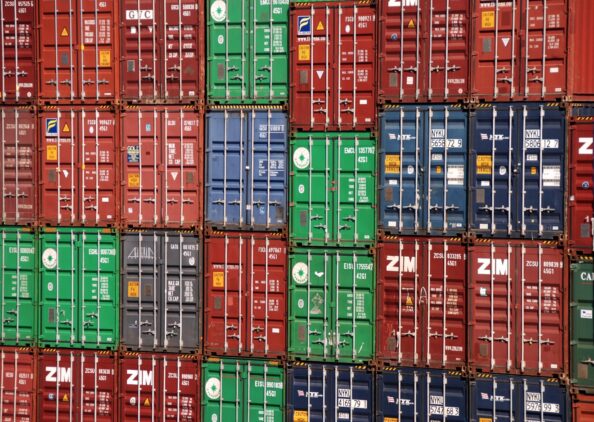 London—President Donald Trump’s unpredictable tariff policy and countermeasures by America’s trading partners will likely deal a heavy blow to economies worldwide, with US prosperity hit particularly hard, the International Monetary Fund warned Tuesday. Global economic growth will slow to 2.8% this year, from 3.3% last year and significantly below the historical average, the IMF forecast in its World Economic Outlook. The slowdown expected in the United States is even steeper, with its economy likely to grow only 1.8% in 2025, compared with a 2.8% expansion in 2024. Both predictions are more pessimistic than the fund’s January projections, which came before Trump’s flurry of tariff announcements took America’s average import tax to its highest level in a century. …North America, just like all regions, can’t expect any upside from the tariffs further down the line. “The long-term impact of the tariffs, if they are maintained, (will be) negative for all regions, just like the short-term impacts,” Gourinchas said.