 TORONTO—Unifor is calling for a large-scale Team Canada approach to support the forestry sector across Canada after the U.S. Department of Commerce’s recent announcement that will more than double the combined duties on Canadian softwood lumber. “We have an opportunity to address two crises with one made-in-Canada plan to build the housing we desperately need with our own mass timber and lumber,” said Unifor National President Lana Payne. “Unifor is calling on federal and provincial party leaders to commit to an industrial strategy for forestry that will support forestry operations in every province across the country and keep Canadians working.” Unifor represents more than 22,100 forestry workers across 10 provinces who work in sawmills, pulp and paper plants and in wood products manufacturing. …Canada must think big on forestry and use our vast lumber resources to facilitate a national affordable home building strategy.
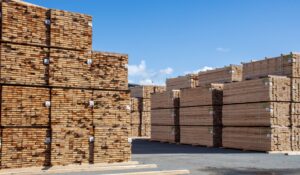 A coalition representing part of the US lumber industry is firing a shot at BC’s Forests Minister, who has suggested the State-side industry is not willing to engage. “

 WASHINGTON — U.S. President Donald Trump partially reversed course Wednesday on his global trade war following days of market turmoil — but he’s not offering any changes to the tariffs hitting Canada. Trump immediately paused for 90 days the levies on nations slapped with the highest duties under his “reciprocal” tariff regime. A White House official later clarified that a 10 per cent baseline tariff will remain in place for all countries. The president has held fast to his plan to rapidly realign global trade through a benchmark “reciprocal” tariff — but his tariffs have spread chaos throughout global markets. …On social media, Trump said he made the decision after more than 75 countries called his administration “to negotiate a solution.” Later at the White House, the president said he lowered the levies because “people were jumping a little bit out of line.” “They were getting yippy, you know,” Trump said. “They were getting a little bit yippy, a little bit afraid.”
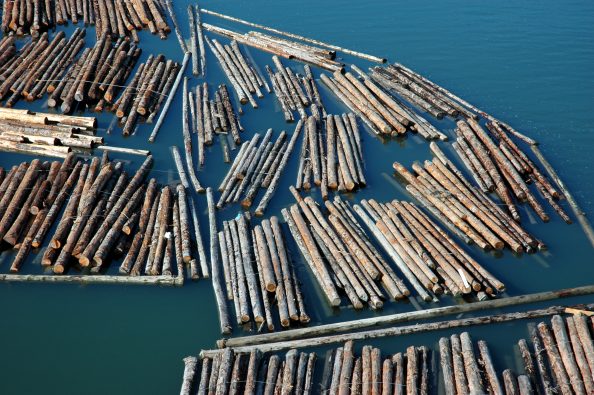 By raising duties on Canadian lumber, the United States is contending that the producers benefit from unfair subsidies and sell products below market value. However, British Columbia Premier David Eby called it an “attack on forest workers and British Columbians” on April 5. …Harry Nelson, an associate professor of forestry at the University of British Columbia, said the increase stems from Washington’s annual review of its trade remedy findings. “The main reason for the significant increase is that both rates went up, the antidumping especially so.” …Nelson said some companies such as Canfor face a nearly 50 percent tariff and could be unsustainable. “Lumber margins tend to be small — certainly not 50 percent, and it is hard to imagine how Canfor will be able to continue to operate,” he said. “I would expect a curtailment in production, where higher-cost firms may either take temporary downtime or permanently shutter some more mills.”
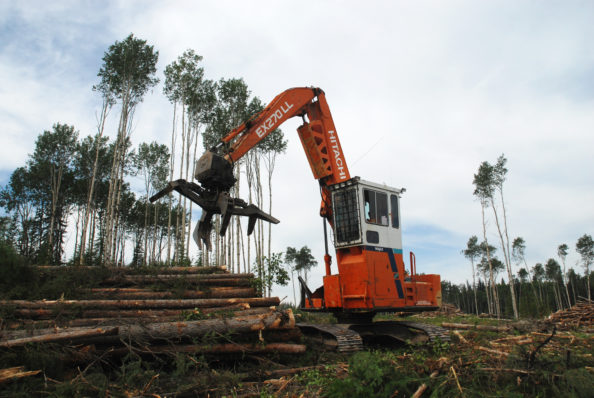 When forestry contractor Mike Egli heard the sawmill in Vanderhoof was closing, he was expecting the worst. Egli co-owns logging contractor Dalchako Transport with his brothers. As with many local forestry companies, Dalchako’s livelihood was tied to the Plateau sawmill, Vanderhoof’s largest employer. With more than 200 workers, the sawmill was integral to the local economy. It closed at the end of December 2024. Egli has found other contracts to keep working since December, but the mill’s closure has caused a massive upheaval. “We lost all that work there,” he said. …Meanwhile, workers in Vanderhoof are looking to other industries to make a living. It’s a shift many northern B.C. workers have had to make before. …Not all workers are leaving the industry. Mayor Moutray said local forestry contractors are commuting 200 kilometres to Quesnel, B.C., for work, or flying into remote work camps to stay in forestry.



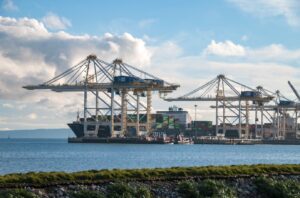 As tariffs reshape supply chains, more Americans may be checking packaging for the “Made in USA” label, either to sidestep import taxes or to support domestic businesses. …According to the Federal Trade Commission, to qualify for the label, US authorities must determine that a product’s final assembly or processing has taken place in the US, and that a significant portion of its manufacturing costs must also be incurred domestically. …That said, some foreign components are allowed to still qualify as “Made in USA.” — as long as they don’t substantially transform the product. …However, bilateral trade agreements can override these rules. Under the United States-Mexico-Canada Agreement, a one-time importation of a commercial product valued under $2,500 is exempt from country of origin labeling requirements.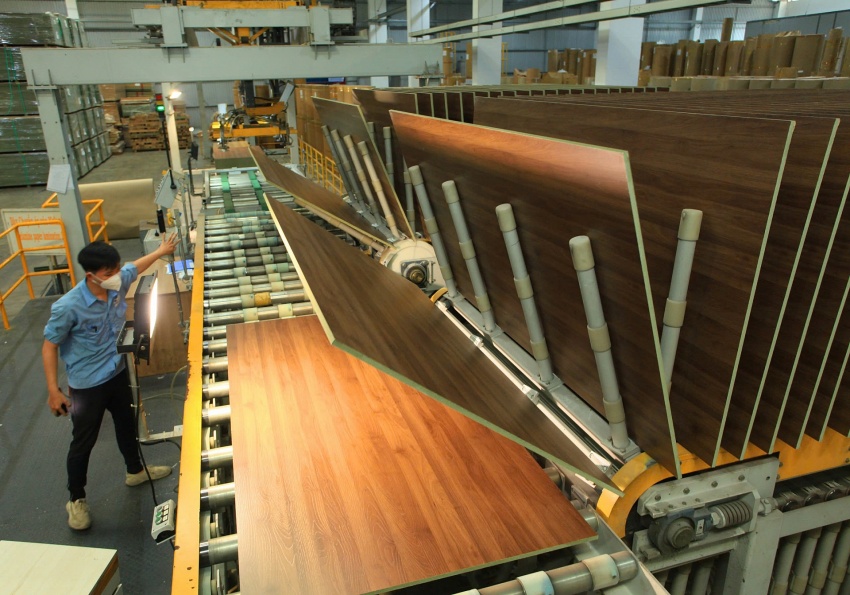
 LAS VEGAS — Canadian Steelworkers joined thousands of delegates from across the US and the Caribbean at the 2025 United Steelworkers union (USW) International Convention where a resolution calling for fair trade and an end to Trump’s reckless tariffs on Canadian goods was unanimously adopted. …USW members made it clear: Canada is not the problem. …Marty Warren, USW National Director for Canada, “These tariffs hurt workers and communities on both sides of the border. …Jeff Bromley, Chair of the USW Wood Council, “We’re not the problem – we’re here to help,” said Bromley. “We’re here to help rebuild after the fires in California, after hurricanes in the Carolinas. We’ve been your brothers and sisters, your neighbours – and we want to continue to be that. We want to grow that relationship.” The resolution calls for a permanent exemption from Section 232 tariffs… and a coordinated strategy to protect and grow union jobs across the North America.
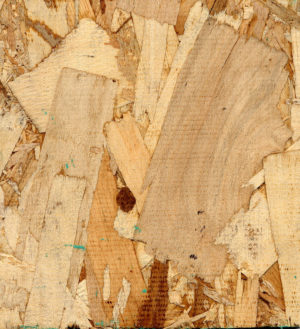 Tariffs could impact efforts to rebuild a former paper mill in Jay that was destroyed in an explosion almost five years ago. Godfrey Wood Products is looking to build a new factory on the property that would manufacture oriented strand board, a type of structural wood paneling. The company says that they have all of the permits they need, but they haven’t been able to move forward with construction because of uncertainty with tariffs. A lot of the equipment they need would come from Europe. “The stated goal of all of this tariff business is to, incentivize domestic manufacturing. Well, hell, I’m trying my level best to become a domestic manufacturer of OSB in Jay, Maine, and it seems like the public policy of the country is trying to thwart that,” said John Godfrey, owner of Godfrey Wood Products.
