The news that US president-elect Donald Trump could slap a 25% tariff on Canadian goods upon taking office in January sent a jolt of alarm through the entire Canadian economy, but the alarm in the oilpatch has only deepened as Ottawa and the provincial governments threaten to target energy exports in retaliation. Energy producers and fuel companies on both sides of the border are growing concerned that commodity flows could be disrupted if a tit-for-tat trade war erupts. …Canada is reliant on U.S. demand for its energy exports, but U.S. refineries have also grown increasingly dependent on Canadian crude. …The federal government said it is also considering retaliatory measures, including an export tax on key commodities, such as oil, potash and uranium, according to Bloomberg. …Trump’s proposed tariffs are also expected to increase energy bills in the northeastern U.S. and to raise electricity costs on both coasts where U.S. consumers are reliant on electricity and natural gas imports from Canada.

 NEW YORK — The U.S. increasingly relies on Canadian crude oil to meet domestic demand and that relationship faces potential strain amid the threat of tariffs from President-elect Trump. More than 50% of crude oil imported to the U.S. comes from Canada, up from 33% in 2013. The increase follows a jump in production from Canada’s western provinces and growing pipeline capacity to its southern neighbor. Trump has threatened blanket tariffs of up to 25% on products from both Canada and Mexico. That has raised concerns about higher energy costs trickling through the entire U.S. economy. “All three countries remain heavily reliant on each other economically, and hefty taxes on key U.S. imports like crude oil or softwood lumber risk exacerbating U.S. consumer inflation,” said the Americas for UBS Financial Services. …Canada, with its proximity to the U.S., is also the nation’s biggest trading partner.

 The B.C. government has appointed a new chair and three new directors to the BC Hydro board of directors. …Glen Clark has been appointed the new chair of the BC Hydro board of directors. Clark will take over the post from current chair, Lori Wanamaker, whose term will end on Dec. 31, 2024. …Merran Smith is president of New Economy Canada and brings award-winning leadership uniting industry, government and civil-society partners. …Brynn Bourke is executive director of the BC Building Trades (BCBT). …Don Kayne is president and CEO of Canfor Corporation, and former CEO of Canfor Pulp Products Inc. Kayne has deep experience in international sales and marketing, human resources and executive compensation through 45 years with the forest company.
 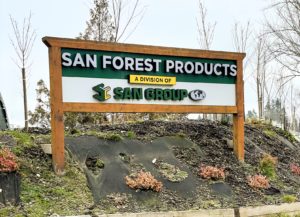 The monitor for the San Group of companies has been granted broader powers by the Supreme Court of B.C. to manage and make decisions about the financially troubled forestry company, which has operations in Port Alberni. The San Group’s protection from creditors was extended at a court hearing in Vancouver on Thursday. The next hearing is set for Jan. 16. Expanded powers granted to Deloitte include the ability to administer the company’s restructuring and any winding down of the business, plus liquidating property and disposing of assets. The monitor is permitted to continue running the business, and said it anticipates working with current management. The various parties are expected to be back in court to ask for approval for a sale and investment solicitation process. …The court agreed the company can increase its borrowing limit to $1 million — up by $400,000 — to keep operations going.



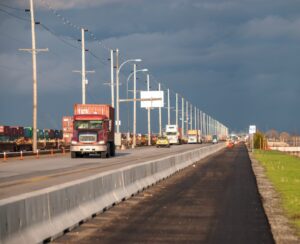 LOS ANGELES — President-elect Donald Trump’s threatened tariffs on top trade partners China, Mexico and Canada would deal a blow to the $1.7 trillion U.S. transportation industry and worsen a nearly three-year trucking recession, sector experts said. The industry that moves everything Americans make and buy is considered an economic bellwether, and will be among the first to signal any unintended consequences of trade policies that Trump says will help, not hurt, U.S. businesses. …Virtually every transportation company operating in the United States is exposed to tariff-related revenue downturns. …Trump’s new tariffs on Mexico and Canada, in particular, would hit one of the rare growth areas for trucking. The value of cargo that moves between those countries and the U.S. – which includes finished vehicles, auto parts and avocados from Mexico as well as steel and lumber from Canada – reached $88.5 billion in September 2024, up 7.7% from the year-earlier.
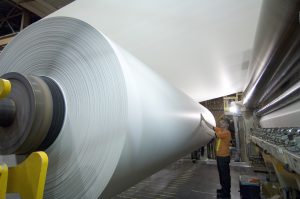 SPOKANE, Washington — Brazil’s Suzano is exploring an offer for Clearwater Paper, according to people with knowledge of the matter. The company is working with an adviser as it seeks to reach an agreement, said the people. A deal hasn’t been finalized and it’s possible one won’t be reached. Representatives for Suzano and Clearwater declined to comment. Spokane, Washington-based Clearwater, which manufactures pulp and paperboard products, had a market capitalization of $409 million as of Thursday’s close and its shares have fallen 31.6% this year. Clearwater’s shares jumped as much as 19% after the close of regular trading Thursday. Suzano, which is the largest supplier of hardwood market pulp in North America, has been pushing further into the US, most recently buying two paperboard mills in Arkansas and North Carolina in a deal valued at $110 million. [END]

 ARKANSAS — News about lumber mill shutdowns is always disheartening, and South Arkansas has had its share of that in 2024. West Frasier mothballed its Huttig mill this year, putting 140 people out of work. AHT Products closed its flooring mill in Warren unexpectedly, putting another 130 out of a job. Fortunately, there’s no lack of good news in the timber industry. PotlatchDeltic brought its $131 million Waldo sawmill upgrade online. Teal Jones Group is staffing up its new $110 million mill in Plain Dealing, LA, and will employ 125. Georgia-Pacific said it will expand toilet tissue production in Crossett, creating 50 jobs in a $90 million expansion. Canfor has completed the purchase of Domtar’s former El Dorado mill and about $50 million worth of improvements have been made. Finally, Weyerhaeuser announced a $500 million facility near Monticello that will employ about 200 workers. …That’s roughly $800 million and almost 400 new mill jobs coming online. This is positive local economic news going into 2025.