 TORONTO – Governments across Canada are racing to build more housing to improve affordability. Yet a new study has found those efforts risk putting hundreds of thousands of homes in harm’s way, and adding billions of dollars in costs each year, unless policy is improved to direct development away from the threat of wildfires and floods. According to new research published by the Canadian Climate Institute, building new homes in areas at a high risk of flood or wildfire could force governments, insurers, and homeowners to spend up to $3 billion more each year in costs for rebuilding and disaster relief. The Institute’s report, Close to Home: How to build more housing in a changing climate, is a first-of-its-kind analysis in Canada using original modelling of the financial costs of future floods and fires on new housing slated for construction by 2030.



 OTTAWA — Across the country, the impacts of climate change are becoming more severe and more frequent with extreme events like floods, wildfires and heatwaves on the rise. …Marc G. Serré, Parliamentary Secretary to the Honourable Jonathan Wilkinson, along with Member of Parliament Viviane Lapointe and Member of Parliament Anthony Rota, announced over $2.7 million in funding for five projects based in northern Ontario under Natural Resources Canada’s
  The Government has announced a new support mechanism for sustainable biomass generation post-2027. From 2027, Drax and other eligible large-scale biomass generators will be supported via a lowcarbon dispatchable CfD (Contract for Difference). If approved, the plan will keep the power station running until 2031. Under this proposed agreement, Drax Power Station can step in to increase generation when there isn’t enough electricity, helping to avoid the need to use more gas or import power from Europe. When there’s too much electricity on the UK grid, Drax can reduce generation, helping to balance the system. Importantly, the mechanism will result in a net saving for consumers. …The agreement also prioritises biomass sustainability. Drax supports these developments and will continue to engage with the UK Government on the implementation of any future reporting requirements.
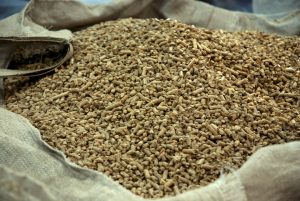 The UK government has agreed a new funding arrangement with the controversial wood-burning Drax power station that it says will cut subsidies in half. …The new agreement will run from 2027 to 2031 and will see the power station only used as a back-up to cheaper renewable sources of power. …The government says the company currently receives nearly a billion pounds a year in subsidies and and predicts that figure will more than halve to £470m under the new deal. …The new agreement also states that 100% of the wood pellets Drax burns must be “sustainably sourced” and that “material sourced from primary and old growth forests” will not be able to receive support payments. All the pellets Drax burns are imported, with most of them coming from the USA and Canada. BBC has previously reported that Drax held logging licences in British Columbia, and used wood, including whole trees, from primary forests for its pellets.
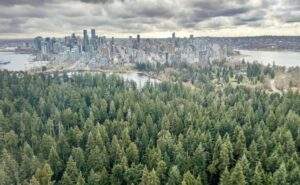 As institutional interest in real asset investing grows, forestry is gaining recognition beyond its core enthusiasts for its ability to produce income and capital growth, alongside added benefits like carbon sequestration and biodiversity protection. However, trust in sustainability-focused investments remains a challenge. In EY’s 2024 Institutional Investor Survey, 85% of respondents said misleading claims about sustainability are more of a problem today than five years ago, despite regulators’ efforts to quash exaggerated ESG statements. …A persistent narrative is that established timberlands are better, safer investments than new greenfield developments. The truth is more nuanced. Greenfield projects, which involve reforesting degraded or underused land, offer an opportunity to achieve ‘additionality’ – a crucial component of effective carbon sequestration. …For forestry investors, the upshot is clear: regulatory uncertainty is currently a barrier to restoring widespread trust in carbon markets, and resolving this will take time.
 To formally pull the United States out of the Paris Agreement, the Trump administration will need to formally submit a withdrawal letter to the United Nations, which administers the pact. The withdrawal would become official one year after the submission. The formal withdrawal of the United States and subsequent changes to agreements under the UN Framework Convention on Climate Change cannot be transmitted to the United Nations until President Trump’s nominee to be US Ambassador to the UN, Rep. Elise Stefanik (R-NY), is confirmed by the Senate. …The withdrawal raises key questions about the future of the voluntary carbon market (VCM), particularly in light of the Paris Climate Accords’ role in driving offset demand. …Without the federal endorsement of climate goals, corporate strategies might shift away from investing in carbon offsets, diminishing demand for carbon credits. Furthermore, uncertainty surrounding federal support could delay or derail the development of new VCM projects.

 Biochar, a charcoal-like material derived from plant biomass, has long been hailed as a promising tool for carbon dioxide removal. However, a new study by Stanford researchers highlights a critical issue: current methods for assessing biochar’s carbon storage potential may significantly undervalue its true environmental benefits. The paper points the way to more accurately evaluating biochar, and boosting its credibility as a climate change solution. The research challenges conventional durability metrics and proposes a more nuanced framework for evaluating biochar projects. It grew out of an early project looking at soil’s ability to capture carbon dioxide. …By reanalyzing the largest existing biochar durability dataset, the researchers uncovered that relying solely on hydrogen-to-carbon ratios ignores critical factors such as soil type, environmental conditions, and biochar feedstock variability. Without these factors, models often fail to predict real-world outcomes for carbon storage and benefits to soil health and crops.

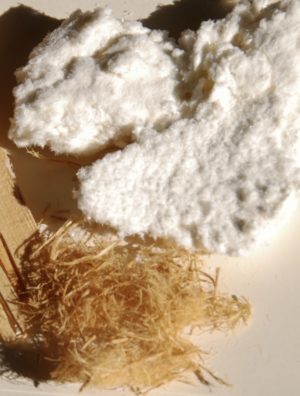 Can you fly airplanes with wood? The answer is: yes. It’s a very qualified “yes” — and it may not happen for many years — but the potential exists to manufacture sustainable aviation fuel from residual wood products and other non-petroleum-based sources that can reduce an airplane’s carbon footprint. “The technology to fly airplanes with wood exists but needs to be scaled up to show the true potential,” Rick Horton, executive vice president of Minnesota Forest Industries, told the House Agriculture Finance and Policy Committee at an informational hearing Monday. Horton was one of several testifiers who said using sustainable aviation fuel to power airplanes is in its infancy and needs large-scale development — and probably government subsidies — to make it economically viable… Sustainable aviation fuel currently costs two to five times more than conventional jet fuel.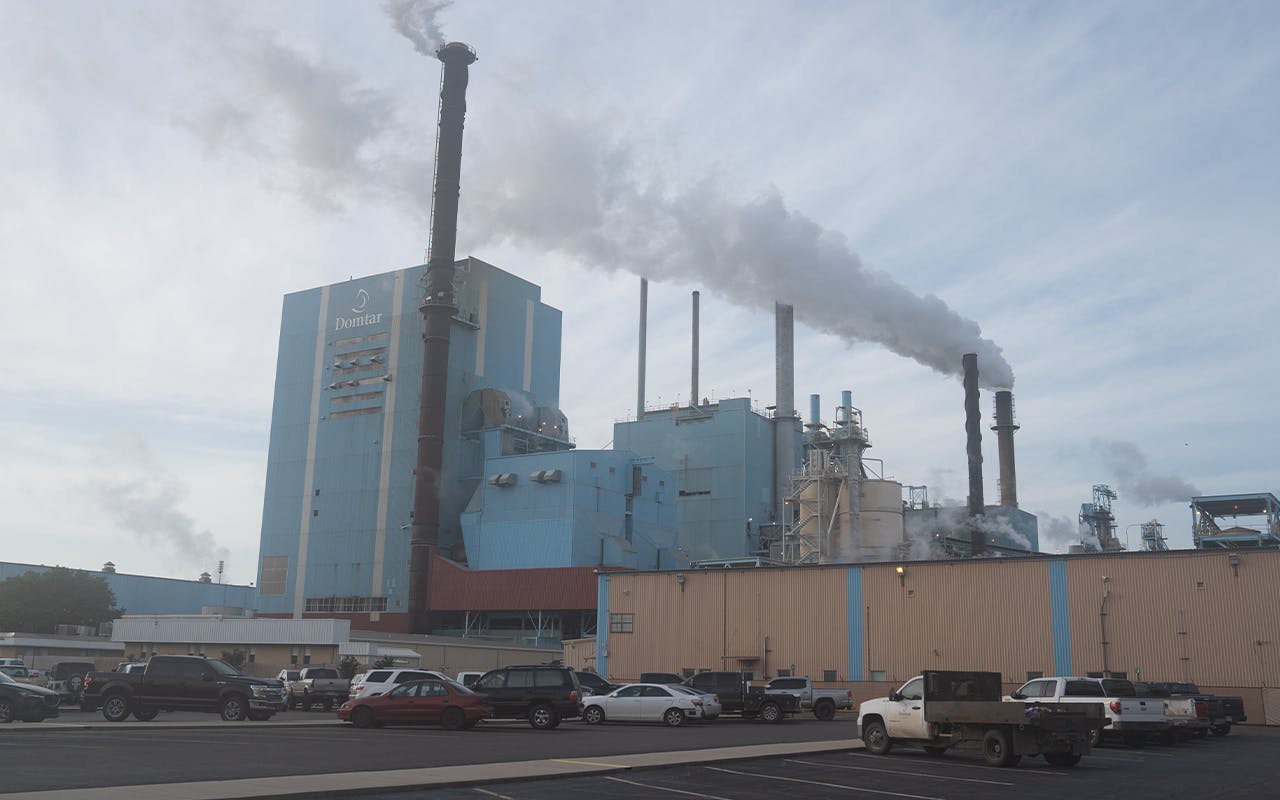

 Georgia is the nation’s top forestry state, grappling with overproduction and the aftermath of severe storms which damaged timber supplies. Industry leaders and policymakers are turning to sustainable aviation fuel to boost the industry, create jobs and reduce carbon emissions. Sen. Larry Walker, R-Perry… said the growing demand for sustainable aviation fuel from companies like Delta Air Lines highlights its potential. However, he emphasized expanding production requires strategic federal policies and research to ensure long-term growth. “To invest in a facility that manufactures SAF, it’s a huge investment. It’s a long-term proposition,” Walker stressed. “We need some certainty out of Washington what the public policy is going to be, what the incentives to create this industry are.” …Walker added state lawmakers plan to introduce bills during the 2025 legislative session to support forestry innovation and expand sustainable aviation fuel production in the state.
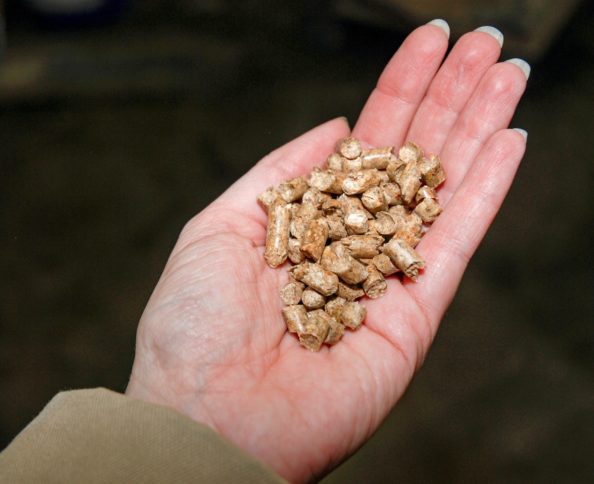 LONDON – The UK government and Drax, opens new tab have agreed a deal that will halve the energy producer’s subsidies over 2027-2031, while ensuring the group uses more sustainable sources of woody biomass, the two sides said on Monday. Drax is Britain’s largest renewable power generator. With the help of government subsidies that run until 2027, it has converted four former coal plants to use biomass to provide around 6% of the country’s electricity. Following a consultation on extending the subsidies, the government said it “cannot allow Drax to operate in the way it has done before or with the level of subsidy it received in the past”. “Biomass currently plays an important role in our energy system, but we are conscious of concerns about sustainability and the level of subsidy biomass plants have received in the past,” Energy Minister Michael Shanks said in a statement, which did not disclose the exact figures of the subsidy.
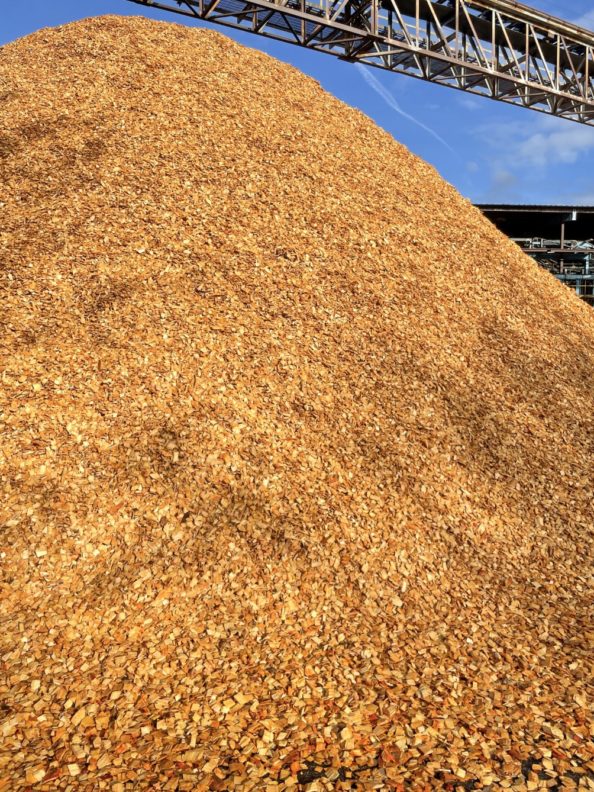 Green campaigners fear ministers are poised to award billions of pounds in fresh subsidies to Drax power station, despite strong concerns that burning trees to produce electricity is bad for the environment. Drax burns wood to generate about 8% of the UK’s “green” power, and 4% of overall electricity. This is classed as “low-carbon” because the harvested trees are replaced by others that take up carbon from the atmosphere as they grow. But many studies have shown that wood burning harms the environment, by destroying forests, and because of the decades-long time lag between the immediate release of carbon dioxide CO2 from burning and the growth to maturity of replacement trees. Drax currently receives billions of pounds in subsidies from energy bill payers, at the rate of about £2m a day according to Greenpeace, but these are scheduled to run out in 2027. A government decision to continue the support payments beyond the cut-off could come on Monday.
 Swedes and Finns have long monetized their forests. EU climate goals — seen as a threat to both family wealth and the two national economies — are fast becoming a lightning rod for anger. …In Sweden and neighboring Finland, forestry is, to all intents and purposes, a retail asset class. In Sweden, some 300,000 people own, in total, half of the country’s forests. In Finland, 60% of forests belong to 600,000 individuals. Owners like Velander have been able to work their land with relatively light regulations, generally free to harvest trees when and as they chose. The way these small forest owners traditionally manage their land is, they contend, also good for the climate. But this approach, along with their investments, is under threat from a growing number of European Union regulations aimed at protecting biodiversity and reducing the bloc’s carbon emissions. In Sweden and Finland these measures have been interpreted as a potential ban on logging. [to access the full story a Bloomberg subscription is required]
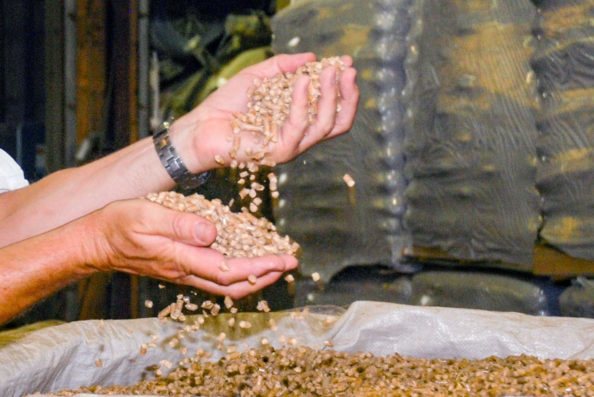 The UK should stop burning wood to generate power because it is not needed to meet the government’s target of decarbonising the electricity sector by 2030, according to analysis. Ed Miliband, the energy security and net zero secretary, is expected to make a decision soon on whether to allow billions of pounds in new public subsidies for biomass burning, despite fierce opposition from green groups. Campaigners have amassed years of evidence of how much destruction burning wood causes to forests and wildlife around the world, and argue that it is not “carbon neutral” because regrowing trees takes decades to make up for the carbon emitted when burned. But ministers were thought to be reluctant to let go of the capacity for baseload power generation that biomass represents. Biomass makes up roughly 4% of the UK’s total electricity generation, and about 8% of “green” power generation, most of it coming from Drax.