 When U.S. President Donald Trump was elected, Canadian officials issued a weaker than expected 2035 emission reduction target to account for the new political reality. Energy and Natural Resources Minister Jonathan Wilkinson said in an interview that after the U.S. election, the government looked at the opportunities and weighed the risks. Competitiveness was top of mind, more so than tariff threat, he said. “Certainly the United States does factor into the competitiveness issue,” he said. “Clearly the United States is moving away from any kind of regulation relating to climate.” …Wilkinson’s comments are the clearest indication yet of American influence on Canada’s plan to navigate the unfolding energy transition away from fossil fuels and toward clean energy. …Caroline Brouillette, executive director of Climate Action Network Canada, characterized Canada’s “weak” target as “obeying in advance” to U.S. interests.


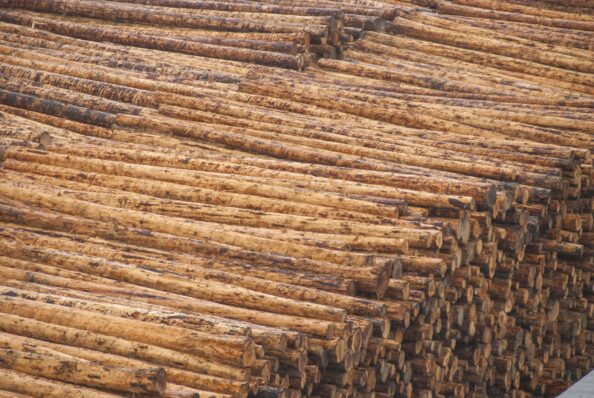 Norwegian forestry companies are making history by revolutionizing how timber is transported. Beginning in 2027, Viken AT Market and AT Skog will be the first in the forestry industry to ship timber on zero-emission vessels—a game-changing move that signals a dramatic shift toward sustainable maritime logistics. This breakthrough is made possible through a partnership with Skarv Shipping, which will provide vessels powered by ammonia and electricity, significantly reducing emissions compared to conventional diesel-powered ships. Norway’s timber industry plays a crucial role in the country’s economy, exporting approximately 1 million tons of timber annually to European markets. However, most of this transport has relied on traditional diesel-powered vessels, which contribute to greenhouse gas emissions. In an effort to push the industry forward, Viken AT Market is committing to zero-emission transport, securing a long-term shipping agreement with Skarv Shipping and Arriva Shipping.
 In December 2024, Drax and Pathway Energy announced a multiyear deal that could see Drax supplying upward of 1 million metric tons of wood pellets to Pathway’s currently proposed sustainable aviation fuel (SAF) plant on the U.S. Gulf Coast. In the months leading up to the announcement, Drax had hinted at such prospects, indicating plans to develop a pipeline of biomass sales opportunities in North America, including in the SAF market. Drax CEO Will Gardiner confirmed as much during a November quarterly earnings call. Currently, Drax has 17 operational wood pellet production plants across North America and a 450,000-metric-ton facility under construction in Longview, Washington. While Drax is well known in the industrial wood pellet industry, Pathway Energy is a new and unique market participant. Pellet Mill Magazine interviewed Pathway Energy CEO Steve Roberts to introduce the company, technology and plans.
 Turkey is poor in oil and gas while its renewable energy sector is heavily reliant on a mix of hydro, wind and solar. But another element is heating up: biofuel – fuel derived directly from biomass, such as wood or plant matter – is gaining interest domestically and creating an export market not available to other renewables. Demand for and output of biomass pellets used in stoves, furnaces and heaters as an alternative to coal or wood to cope with Turkey’s often freezing winters have increased in recent years. Produced by crushing and compressing wood waste, the pellets have a higher per-kilo energy output than gas, coal or oil, and far lower emission levels, according to promoters. Studies estimate Turkey has the raw material to produce up to 1.8 million tonnes of pellets annually, although installed processing capacity has yet to reach this level.