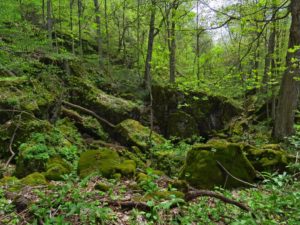
 Forests may be more resilient to climate change than previously thought. A team of international researchers have found that increased inputs from plant roots can keep carbon levels in soil stable even as temperatures and nitrogen deposits in the atmosphere rise. The collaborative research project, published in Nature Ecology and Evolution, looked at the effects of increased temperatures due to climate change and increased nitrogen in the atmosphere released by burning fossil fuels – two environmental threats that had been studied separately… the research team found when rising temperatures were coupled with higher nitrogen levels, the plants added more carbon to soil by increasing their growth, activity and root turnover (the rate that their roots grow, die and decompose), maintaining soil carbon levels.
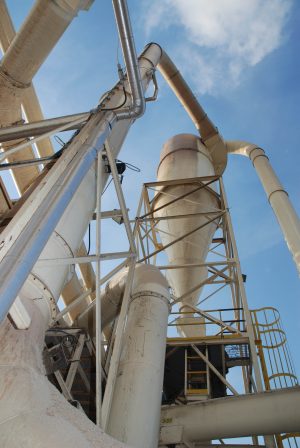 In 2023, Expander Energy Inc., and Rocky Mountain Clean Fuels Inc., announced a project to produce low carbon bio-synthetic diesel fuel by combining pieces of waste wood and synthetic gas using a patented gasification process. Expander Energy CEO Gord Crawford said his company is working on a feasibility study funded by the federal government’s Clean Fuels Fund to determine new locations for future gasification plants that turn forest products into fuel. Northern BC is being considered as a potential plant site. “These plants won’t be located in Vancouver, they’ll be in Prince George, Fort St.. John, places like Fort St. James, rural and remote.”… Northern BC has all the elements needed to support a carbon-neutral project, including fibre supply, renewable energy from the electrical grid and an existing track record of industrial development.
 A new study indicates that over the past 10 years, the Nanaimo region has gained more winter days above 0 C than anywhere else in Canada. The study comes from Climate Central, a non-profit based in New Jersey… The
 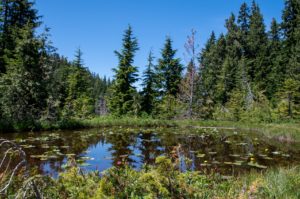 An American company that controls some large patches of forest northwest of Thunder Bay is considering the potential sale of its timberlands for use as a carbon offset initiative… Wagner Forest Management – based in New Hampshire – owns 195,000 hectares of forest in eight former Abitibi-Consolidated freehold blocks located roughly between the Dog Lake area, Graham and Sioux Lookout. It purchased the blocks from Abitibi in 2005 in a bidding process in which the Ontario government also participated. Last July the company extended an invitation to investors interested in the potential development of its holdings as “one of the largest nature-based carbon removal projects in the Voluntary Carbon Market.”.. Wagner’s forest management practices are currently certified through the Sustainable Forestry Initiative.
 President Donald Trump signed actions on the first day of his second term to pull the United States out of the Paris Agreement, an international climate change treaty in which nearly 200 countries agreed to work together to limit global warming. …Representatives from the US were leaders in the Paris Agreement negotiations. It was adopted by nearly 200 countries during the Obama administration in 2015. Trump announced his intent to pull the US out of the Paris Agreement in 2017, though it wasn’t formalized until November 4, 2020, a day after the presidential election that Biden ultimately won. On the first day of his term, Biden announced his intent to reenter the Paris Agreement. On the first day of Trump’s second term in January 2025, Trump ordered the withdrawal from the Paris Agreement again as he sought to increase US production of fossil fuels. …In the meantime, a leading United Nations climate change official reiterated “the door remains open to the Paris Agreement.”
 There’s no quick fix for decarbonizing medium- and long-distance flights. Batteries are typically too heavy, and hydrogen fuel takes up too much space to offer a practical solution, leaving sustainable aviation fuels made from plants and other biomass, recycled carbon, or captured carbon as the primary options… That creates an opportunity for developers of second-generation sustainable aviation fuel technologies, which involve making jet fuel out of captured carbon or alternate biomass sources, such as forest waste. These methods are not yet mature enough to make a significant dent in 2030 targets… But this tech will need to be a big part of the equation in order to meet the aviation sector’s overall goal of net zero emissions by 2050, as well as the EU’s sustainable fuels mandate.
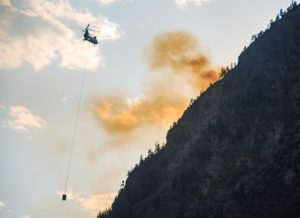 The impact of a changing climate is evident in the bigger picture for the state. California has experienced a decades-long drought that ended just two years ago. The resulting wet conditions since then have seen the rapid growth of shrubs and trees, the perfect fuel for fires. However last summer was very hot and was followed by dry autumn and winter season – downtown Los Angeles has only received 0.16 inches of rain since October, more than 4 inches below average. Researchers believe that a warming world is increasing the conditions that are conducive to wildland fire, including low relative humidity. These “fire weather” days are increasing in many parts of the world, with climate change making these conditions more severe and the fire season lasting longer in many parts of the world, scientists have shown.
 A research team led by the University of Oxford has carried out the most comprehensive assessment to date of how logging and conversion to oil palm plantations affect tropical forest ecosystems. The results demonstrate that these have significantly different and cumulative environmental impacts – and that logged forests should not be immediately ‘written off’ for conversion to oil palm plantations. The findings have been published in
  A new study by US researchers in Science shows using new, CO2-capturing concrete and other substances instead of traditional building materials could reduce global carbon dioxide emissions by more than 16 billion tonnes. …Alternatives suggested include mixing carbon-sucking substances from the earth, such as dunite, with concrete, using wood-based materials in bricks, and swapping out asphalt bitumen for bio-oil. Experts believe New Zealand has the right raw materials – such as dunite and wood – to switch out its building materials that store CO2. …Diego Elustondo of the Crown-owned wood science company Scion said the premise of the paper was promising but it appeared to favour storing carbon in masonry materials at the expense of wood-based alternatives. He said the comparison should have considered wood-based materials which were at the same stage of development as other future materials mentioned in the paper.
 Here is some of the latest climate research:
 The Irish government’s COFORD Council for Forest Research and Development has published a paper that recommends future policies to support an expanded role of forest-based biomass. The paper, entitled “