 Canada’s inflation rate eased to 1.7% in April, driven by a drop in prices after the federal government removed the consumer carbon tax, according to Statistics Canada. The slowdown came after the inflation rate hit 2.3% in March. Lower crude oil prices were also a factor in the decline, the data agency said. Despite the decline in headline inflation, core inflation measures all rose in April, some above three per cent — well above the Bank of Canada’s two per cent target rate. The central bank watches those numbers closely because they strip out volatile sectors and don’t factor in one-offs like the removal of the carbon tax. …The central bank is set to make its next interest rate decision on June 4. Porter still expects that the Bank of Canada will cut, given the outlook for weak economic growth in 2025, but said the bank might need more time to see how inflation plays out.
 Tariff discussions about reducing US dependence on foreign goods became a focus for the second Trump administration. …However, the US forest products industry’s reliance on Canadian wood raises questions about eliminating Canadian wood imports entirely. This piece is the second in a two-part series by the Fastmarkets team.


 The effects have been felt by building industries in terms of increased costs, disrupted supply chains and economic uncertainty. Last week’s webinar, “Trump’s Tariffs: Transition or Turmoil?… focused on the near-term effects of tariffs, how trade environments have shifted in response, and what the next steps of the Trump Administration might be. …Ari Hawkins, a Politico trade reporter, agreed that the administration is likely looking to the USMCA renegotiations to “really get into the weeds of a lot of these tariff disputes” with Canada. …Hawkins says that further Section 232 investigations could lead to new tariffs in the coming months on a range of products, including semiconductors, lumber and critical minerals. While the administration might make exemptions on materials like lumber before those investigations are completed, Hawkins says, they are still likely to face the Section 232 tariffs as part of the administration’s focus on incentivizing manufacturing and development within the US.
 The downward price slide of recent weeks was unabated across most framing lumber species. Uncertainty surrounding the economy and potential new developments in US trade policy contributed to a cautious market tone. Many traders lamented that they anticipated at least a modest decline in mortgage interest rates by now that has not materialized. With discounts cutting deeper across most species, the Random Lengths Framing Lumber Composite Price tumbled $14. That’s the composite’s first double-digit drop since April 2024. Downward price pressure intensified across the South. …Competitively priced Western S-P-F crept deeper into traditional Southern Pine markets, especially lower grades, which contributed to the downward price pressure on SYP. …Lumber futures settled sharply higher on Thursday after a prolonged downward trend.
 Executives at two of North America’s lumber producers said they are bracing for volatile wood prices this building season before sharply higher US duties on Canadian lumber kick in. Despite President Trump’s threats, his April 2 tariff barrage didn’t hit Canadian lumber. Nonetheless, duties related to a long-running trade dispute are set to more than double later this year. Canfor and Interfor are not sure there won’t also be additional levies tied to Trump’s March 1 order for an investigation into the national security threat of imported wood. …Canfor’s Susan Yurkovich said “Either people won’t be able to access their products and there’ll be a slowdown… or there will be a price response, which also, of course, will have an impact on affordability.” …Interfor’s Bart Bender said he expects volatile pricing this spring and summer while sawmills figure out what sort of increases buyers will bear. [to access the full story a WSJ subscription is required]
 Interfor recorded a Net loss in Q1’25 of $35.1 million compared to a Net loss of $49.9 million and a Net loss of $72.9 million. Adjusted EBITDA was $48.6 million on sales of $735.5 million in Q1’25. …Notable items include: Lumber prices increased during Q1’25 as reflected in Interfor’s average selling price of $712 per mfbm, up $53 per mfbm versus Q4’24; lumber shipments totalled 863 million board feet, representing a 77 million board foot decrease over the prior quarter. The decrease primarily relates to the sale of the Quebec operations, weather-related curtailments and shipment delays resulting from tariff uncertainty. …The Company is well positioned with a diversified product mix…only about 24% of the Company’s total lumber production is exported from Canada to the US and exposed to a potential tariff. …Interfor expects that over the mid-term, lumber markets will continue to benefit from favourable underlying supply and demand fundamentals.
 VANCOUVER — Canfor Corporation reported its Q1, 2025 results. The Company reported an operating loss of $28.5 million for the first quarter of 2025, compared to an operating loss of $45.9 million in the fourth quarter of 2024. …These results largely reflected improved lumber segment results and, to a lesser extent, the pulp and paper segment. Canfor’s CEO, Susan Yurkovich said, “While improved lumber benchmark prices provided some relief, rising global economic and trade uncertainty, and US lumber duties, create a challenging backdrop. Through our diversified operating platform in Canada, the US South and Europe, we are positioned to mitigate these challenges, while remaining focused on what we can control. …“For our pulp business” Yurkovich added, “this was another solid quarter with improved results and a strong operational performance. However, global economic uncertainty is also putting pressure on global softwood pulp markets in the near term.”
 Fresh trade data shows deepening US reliance on Canadian goods, even as the president claims the opposite. …According to the US Census Bureau and Bureau of Economic Analysis, the US goods trade deficit with Canada widened to $4.9 billion in March, up sharply from prior months. The surge was driven by higher imports of Canadian-made cars, crude oil, and finished wood products — the exact categories Trump dismissed. Automotive imports rose by $2.6 billion, including a $2.1 billion spike in passenger vehicles, many of which are assembled in Canada. Oil and lumber purchases also increased, contributing to a 14% month-over-month jump in the broader US trade deficit, which hit a new monthly high of $140.5 billion in March. …The US typically runs a services surplus with Canada, and American firms rely heavily on Canadian supply chains in autos, energy, and materials, as the fresh BEA data suggests.
 Uncertainty over international trade barriers has caused significant fluctuations in lumber prices in recent months, according to Keta Kosman, publisher of Madison’s Lumber Reporter. “The whipsaw fatigue of conflicting tariff announcements over two months had Western Canadian suppliers hoping to see the market settle down,” Kosman. …Some stakeholders held off on buying lumber altogether, while others ordered early in hopes of securing delivery ahead of any potential trade restrictions. “Others decidedly switched their purchasing to Southern Yellow Pine from SPF,” Kosman says. …Data from the WWPA indicates US sawmills were running at only 67% of full capacity in January, compared to 72% for the full-year 2024. In Canada, sawmill utilization was 74% of capacity, down just one percentage point compared to the previous year. …“At this time, there is significant lumber supply able to come back online at existing facilities should demand improve into the summer.”
 Lumber futures fell below $550 per thousand board feet, hovering at yearly lows as excess supply from winter restocking collided added to a decline in demand. A 14.2% drop in U.S. single-family housing starts to an annualized 940,000 units in March, pushed new-home inventories to nearly eight months of supply. While a federal directive to raise timber production from public lands by 25% may ease constraints in the long term, the 90-day pause on new reciprocal tariffs has removed near-term urgency for buyers to cover import risks. At the same time, expectations of sharply higher anti-dumping duties on Canadian lumber have prompted mills to hold back supply, further pressuring prices as domestic inventories accumulate and demand remains subdued despite the onset of the spring building season.
 NEW YORK, NY — Mercer International reported first quarter 2025 Operating EBITDA of $47.1 million, a decrease from $63.6 million in the same quarter of 2024 and $99.2 million in the fourth quarter of 2024. In the first quarter of 2025, net loss was $22.3 million compared to $16.7 million in the first quarter of 2024 and net income of $16.7 million in the fourth quarter of 2024. Mr. Juan Carlos Bueno, Chief Executive Officer, stated: “There was continued strength in pulp markets and an improving lumber pricing environment in the first quarter of 2025. However, our operating results in the quarter were negatively impacted by annual planned maintenance downtime at our Celgar mill and the impact of the weaker dollar against the euro.
 Statistics Canada says the Canadian economy shrunk in the month of February, but declines might not last long, as early signs for March point to moderate GDP growth. The agency says real gross domestic product decreased 0.2% in February. This follows previous growth in the month of January of 0.4% overall. While goods-producing industries pulled the economy up in January, Statistics Canada says it saw a decline of 0.6% overall for February. …Statistics Canada says 12 of the country’s 20 industrial sectors saw declines in February. But the manufacturing sector bucked the trend — that industry saw a 0.6% rise in February. …Advanced information from Statistics Canada indicates that real GDP increased by 0.1 per cent last month. The agency says the annualized growth rate for the first quarter of 2025 based on the March flash estimate is 1.5 per cent.
 Risks are high that the global economy will slip into recession this year, according to a majority of economists in a Reuters poll, in which scores said US President Donald Trump’s tariffs have damaged business sentiment. Just three months ago, the same group of economists covering nearly 50 economies had expected the global economy to grow at a strong, steady clip. …While Trump has suspended the heaviest tariffs imposed on almost all trading partners for a few months, a 10% blanket duty remains, as well as a 145% tariff on China, the United States’ largest trading partner. …Showing unusual unanimity… three-quarters of economists cut their 2025 global growth forecast, bringing the median to 2.7% from 3.0% in a January poll. …China and Russia were forecast to grow 4.5% and 1.7% respectively, outperforming the US. However, growth forecasts for Mexico and Canada were downgraded from January by some of the largest margins, to 0.2% and 1.2%.

 VANCOUVER, BC — Conifex Timber reported results for the first quarter ended March 31, 2025. EBITDA was $4.9 million for the quarter compared to EBITDA of negative $2.1 million in the fourth quarter of 2024 and negative $0.5 million in the first quarter of 2024. Net income was $0.6 million for the quarter versus net loss of $7.8 million in the previous quarter and negative $4.5 million in the first quarter of 2024. …lumber production in the first quarter of 2025 totalled approximately 46.3 million board feet, representing operating rates of approximately 77% of annualized capacity. …Power Plant sold 47.6 GWh of electricity under our EPA with BC Hydro in the first quarter of 2025 representing approximately 88% of targeted operating rates.
  VANCOUVER – Western Forest Products reported improved financial results in the first quarter of 2025, as compared to the same period last year. Net income was $13.8 million in the first quarter of 2025, as compared to a net loss of $8.0 million in the first quarter of 2024, and a net loss of $1.2 million in the fourth quarter of 2024. …lumber production of 134 million board feet (versus 145 million board feet in Q1 2024); average lumber selling price of $1,533 per mfbm. …North American markets are expected to be volatile due to concerns around the economic impact caused by potential further US tariffs and retaliatory tariffs. The spring building season which typically leads to gains in softwood lumber demand could be more muted. …In Japan, the spring housing demand is stronger than expected and channel inventories have declined. …Demand for our Industrial lumber products in North America are expected to strengthen as supply remains tight across all species.
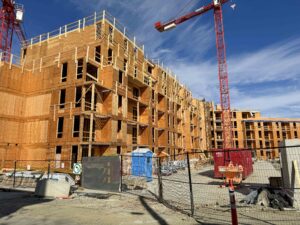 To state the obvious, in Ontario homebuilding is not keeping pace with population growth. This imbalance is driving sky-high home prices and rents, not only in the GTA but many other Ontario cities. What’s to be done? In the Ford government’s recent budget, “housing” appears not as a central theme but as one of several areas to receive “support” in light of Trump’s tariffs, mainly in the form of more money for local infrastructure. …And as part of this “housing” spending spree, the Ford government will continue to spend millions on the Community Infrastructure Fund—which targets smaller communities—and programs to encourage skilled trades, which could support housing development. … The Ontario government has already spent billions on its housing strategy, yet has not moved the needle on housing supply. Even Ford’s new budget with its massive housing “support” includes an abysmal forecast for new home construction.


 MONTREAL — Stella-Jones announced financial results for its first quarter ended March 31, 2025. Highlights include: Sales of $773 million, relatively unchanged from Q1 2024; Operating income of $143 million, including insurance settlement of $38 million; EBITDA of $179 million, or 23.2% margin; Acquisition post-quarter of a steel transmission structure manufacturer, aligned with strategy to support North American infrastructure. …Eric Vachon, President and Chief Executive Officer of Stella-Jones said “Though macroeconomic headwinds continue to impact volume growth, at this stage we remain confident in our ability to achieve our financial objectives. …“The Company entered into a definitive agreement to acquire Locwel., a leading manufacturer of lattice towers and steel poles for electrical transmission. This transaction marks a step forward in Stella-Jones’ long-term vision, allowing us to enhance our infrastructure offering and establish a presence in the growing steel transmission structure industry.”



 WASHINGTON, DC – Total single-family home sales are expected to close 2025 at 4.92 million units, with existing home sales accounting for 4.24 million of those units, according to the May 2025 Economic and Housing Outlook from the Fannie Mae Economic and Strategic Research (ESR) Group. Revisions to the home sales forecast were driven in part by the ESR Group’s lower expectations for mortgage rates, which it now forecasts to end 2025 and 2026 at 6.1% and 5.8%, respectively. The latest outlook also projects real gross domestic product growing at 0.7% in 2025 and 2.0% in 2026 on a Q4/Q4 basis. …We now expect the Consumer Price Index (CPI) to rise 3.5 percent Q4/Q4 in 2025, unchanged from our April forecast. Core CPI is expected to rise 3.8 percent Q4/Q4 in 2025 (down from 3.9 percent previously) and 2.6 percent in 2026 (unchanged).
 Volatile lumber prices are once again rattling the U.S. housing market, squeezing builders and threatening to exacerbate an already dire affordability crisis. Softwood lumber prices in April surged 23% year-over-year, while futures rose sharply in early 2025 amid fears of increased U.S. duties and widespread sawmill closures across North America, according to the National Association of Home Builders. This has weighed heavily on major homebuilders such as Lennar, D.R. Horton and Toll Brothers, which have all seen their stocks slump this spring. …“The unpredictability of lumber prices adds serious complexity to planning and budgeting,” said Steve Martinez, of Idaho-based Tradewinds General Contracting. …Beyond homebuilding, higher lumber costs are hitting renovations, fencing and interiors. The US Forest Products annual market review found that U.S. lumber production inched up… but demand continues to outpace supply. Environmental regulations, aging forests and labor constraints compound the challenge.


 The Producer Price Index declined 0.5% in April, according to data released Thursday by the US Bureau of Labor Statistics. However, of the 10 key commodities in the hardware and building supply space tracked below, only two (millwork and plywood) index lower compared to a year ago. And only one (plywood) declined from March to April. The softwood lumber index increased 8.6% year-over-year. A month ago, the increase was 12.6%. …Construction input prices decreased 0.1% in April compared to the previous month. Nonresidential construction input prices increased 0.2% for the month. “Construction input prices declined in April, but that was largely due to falling energy prices,” said ABC Chief Economist Anirban Basu. “Materials directly affected by tariffs saw sharp price increases for the month. Steel mill product prices, for instance, rose 5.9%, while copper wire and cable prices increased 5.0%.
 Builder confidence fell sharply in May on growing uncertainties stemming from elevated interest rates, tariff concerns, building material cost uncertainty and the cloudy economic outlook. However, 90% of the responses received in May were tabulated prior to the May 12 announcement that the US and China agreed to slash tariffs for 90 days to allow trade talks to continue. Builder confidence in the market for newly built single-family homes was 34 in May, down six points from April, according to the NAHB/Wells Fargo Housing Market Index (HMI). This ties the November 2023 reading and is the lowest since the index hit 31 in December 2022. …All three of the major HMI indices posted losses in May. The HMI index gauging current sales conditions fell eight points in May to a level of 37, the component measuring sales expectations in the next six months edged one-point lower to 42 while the gauge charting traffic of prospective buyers dropped two points to 23.
 While the Commerce Department released a report on Friday showing a rebound by new residential construction in the U.S. in the month of April, the report also showed a substantial pullback by building permits during the month. The Commerce Department said housing starts shot up by 1.6 percent to an annual rate of 1.361 million in April after plummeting by 10.1 percent to a revised rate of 1.339 million in March. However, economists had expected housing starts to surge by 3.5 percent to a rate of 1.370 million from the 1.324 million originally reported for the previous month. “Soft housing starts in April are another sign that builders are hitting the brakes this year in response to high uncertainty for costs and future demand,” writes Nationwide Senior Economist Ben Ayers. …The smaller than expected rebound by housing starts came as a sharp increase by multi-family starts was partly offset by a continued slump by single-family starts.
 Inflation was slightly lower than expected in April as President Trump’s tariffs just began hitting the slowing US economy, according to a Labor Department report Tuesday. The consumer price index, which measures the costs for a broad range of goods and services, rose a seasonally adjusted 0.2% for the month, putting the 12-month inflation rate at 2.3%, its lowest since February 2021. The monthly reading was in line with the Dow Jones consensus estimate while the 12-month was a bit below the forecast for 2.4%. Markets reacted little to the news, with stock futures pointing flat to slightly lower and Treasury yields mixed. ″“Good news on inflation, and we need it given inflation shocks from tariffs are on their way,” said Robert Frick, at Navy Federal Credit Union. …Shelter prices again were the main culprit in pushing up the inflation gauge.
 BEIJING — China announced a barrage of measures meant to counter the blow to its economy from US President Donald Trump ’s trade war, as the two sides prepared for talks later this week. Beijing’s central bank governor and other top financial officials outlined plans Wednesday to cut interest rates and reduce bank reserve requirements to help free up more funding for lending. …Trump’s tariffs on imports from China, have begun to take a toll on its export-dependent economy at a time when it’s already under pressure from a prolonged downturn in the property sector. China has retaliated with tariff hikes of up to 125% on US goods and stopped buying most American farm products. Late Tuesday, China and the US announced plans for talks. …The agreement to talk comes at a time when both sides have remained adamant, at least in public, about not compromising on the tariffs.
 Mortgage loan applications saw little change in April, as refinancing activity decreased. The Market Composite Index, which measures mortgage loan application volume based on the
  Gross domestic product (GDP) contracted in the first quarter by 0.3%, with imported goods being a large contributor to the decline as the suppliers prepared for President Trump’s tariff proposals once he took office. NAHB estimates this should even out in the second quarter. Other economic data of note are inflation, which is still elevated but creeping downward, and the unemployment rate, which remains low but may edge up among economic uncertainty. …NAHB Chief Economist Robert Dietz hasn’t hit the panic button yet. And I still think that we don’t know what President Trump’s economy really is yet. It’s been policy by sledgehammer, and now they’re going to start putting the pieces back together.” NAHB Senior Officers and staff continue to actively engage with lawmakers on this and other policies, including a special BUILD-PAC Capital Club event this week featuring an interview with Sen. Tim Sheehy.
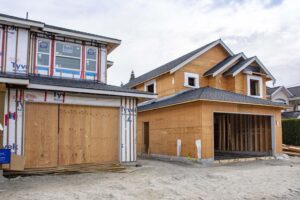 Tuesday marked the 100th day of President Trump’s second term in office and there are signs of stress and jitters in the US construction industry, with rising prices, falling confidence, and a sharp uptick in abandoned projects. “Lumber and metals prices shot up in March, while contractors’ inboxes are bulging with ‘Dear Valued Customer’ letters announcing further increases for many products,” said Ken Simonson, chief economist at AGC. “Rapid-fire changes in tariffs threaten to drive prices higher for many essential construction goods,” he added. The price of materials and services used in nonresidential construction rose 0.4% in March, the third monthly increase in a row, AGC said. It was the first time since September 2023 that input prices had risen for three consecutive months, and comes after more than a year of stable or falling prices, Simonson said. …Within the 0.4% hike, lumber and plywood rose 2.7%.
 To kick off National Home Remodeling Month in May, which promotes the benefits of hiring a professional remodeler, the National Association of Home Builders (NAHB) has highlighted
 The US economy contracted in the first three months of 2025 on an import surge at the start of President Trump’s second term in office as he wages a potentially costly trade war. Gross domestic product fell at a 0.3% annualized pace, according to a Commerce Department report adjusted for seasonal factors and inflation. This was the first quarter of negative growth since Q1 of 2022. Economists had been looking for a gain of 0.4% after GDP rose by 2.4% in the fourth quarter of 2024. However, over the past day or so some Wall Street economists changed their outlook to negative growth, largely because of an unexpected rise in imports as companies and consumers sought to get ahead of the Trump tariffs implemented in early April. …The more telling number for the future of the expansion was consumer spending, and it grew, but at a relatively weak pace,” said Robert Frick.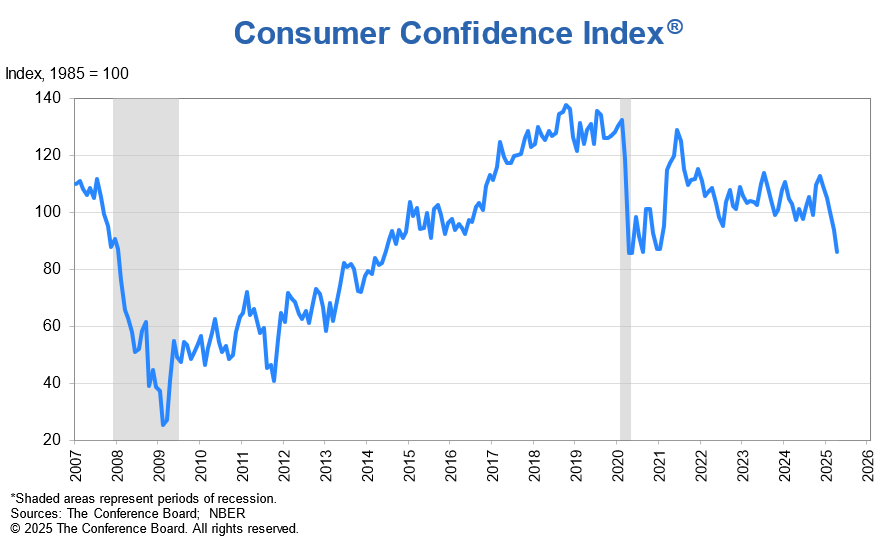

 The clock is ticking on trade deals that the US will need to strike with many nations, most notably China, to avoid what Trump’s Treasury Secretary has described as an “unsustainable” tariffs war. But in the U.S. farming sector, the damage has already been done and the economic crisis already begun. US agriculture exporters say the global backlash to President Trump’s tariffs is punishing them, especially a decline in Chinese buying of US farm products, leading to cancelled export orders and layoffs. Peter Friedmann, of the Agriculture Transportation Coalition …says “massive” financial losses are already being shared by its members. …A wood pulp and paperboard exporter reported to the trade group the immediate cancellation or hold of 6,400 metric tons in a warehouse and a hold of 15 railcars sitting in what is known in the supply chain as “demurrage,” when fees are charged for delayed movement of goods.



 Drax Group plc on May 1
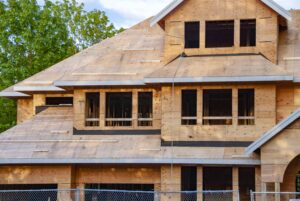 UK — Housing starts in the UK have lagged behind completions for the sixth successive quarter, including to the latest official data. Around 32,000 homes were started in the last quarter of 2024, compared to just over 49,000 completed during the same period, according to the Office for National Statistics. The number of starts is down from 37,000 in the preceding quarter and well below the average of 42,000 homes which have been started per quarter since the ONS resumed gathering the data after the pandemic in April 2022. Completions have remained more stable, rising in the last quarter of 2024 from 41,500 in the third quarter, with an average of just over 49,000 completions a year since the pandemic. Pocket Living chief executive Paul Rickard said: “By any measure these are a disappointing set of figures and continue to highlight the massive challenge the government has.”