 VANCOUVER, BC — Canfor Corporation reported its fourth quarter of 2024 results. Highlights include: Q4 2024 operating loss of $46 million; shareholder net loss of $63 million; Supply-driven uptick in North American lumber markets and pricing through the fourth quarter led to improved results from the Company’s Western Canadian and US South operations; another quarter of solid earnings from Europe; Improved results for Canfor Pulp; relatively stable global pulp market fundamentals through most of the fourth quarter, with some positive momentum late in the period; persistent challenges associated with the availability of economic fibre in British Columbia. …Canfor’s President and Chief Executive Officer, Susan Yurkovich, said, “Following several quarters of very weak global lumber market conditions, we were pleased to see a slight uplift in North American benchmark lumber prices during the fourth quarter, which gave rise to improved results across all our lumber operating regions.”

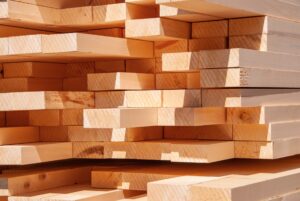 Lumber prices have risen to their highest level in more than two years on news that U.S. President Donald Trump has ordered an investigation into softwood imports from Canada. The lumber probe is the latest salvo in an escalating trade war between the neighbouring countries. Analysts say that the investigation lays the groundwork for potential new %Tariffs on Canadian lumber, notably softwood imports. …Consequently, lumber futures on the Chicago Mercantile Exchange have risen 3.5% over the past day to trade at $657 U.S. per 1,000 board feet, the highest level since mid-2022. However, while lumber prices are marching higher on the threat of U.S. tariffs, the stocks of Canadian lumber companies are tanking. Shares of Interfor fell 9% while the stock of %Canfor declined 6% in Toronto trading on March 4, the day that the 25% tariffs went into effect.


 The perpetually moving target of tariffs on Canadian lumber shipments to the US frustrated traders and had broad impacts on sales in many species. Despite middling demand, the threat of tariffs combined with relatively tight supplies left many prices higher for the week. The delay in announcement of preliminary AD rates by the Commerce Department injected further uncertainty. Despite inconsistent trading throughout February, the Random Lengths Framing Lumber Composite Price recorded its fourth straight increase and hit $461. That is its highest level since July 2023. Western S-P-F sales were steady but uneventful. Canadian mills weighed their responses to potential tariffs with plans ranging from adders on quoted levels to managing production and focusing sales to non-US destinations. Lumber futures were extremely volatile, swinging aggressively to every news report. The Southern Pine market was in disarray as traders processed a constant flow of mixed signals.
 NEW YORK — Mercer International reported fourth quarter 2024 net income of $16.7 million compared to a net loss of $87.2 million in the fourth quarter of 2023 and a net loss of $17.6 million in the third quarter of 2024. Q4 revenues were $488 million, down from $502 million in Q3, 2024 but up from $470 million in Q4, 2023. Mr. Juan Carlos Bueno, CEO, stated: “In the fourth quarter of 2024, softwood pulp prices remained strong, decreasing slightly from recent record prices.” …Hardwood pulp prices in China and North America decreased in the fourth quarter of 2024 as the market absorbed capacity increases from earlier in the year. …Lumber sales realizations increased, driven by modestly higher prices in the U.S. market, while in Europe, prices remained stable.
  If Canada is hit with 25% tariffs… the trade impacts for the forest products sector will be wide ranging. …Lumber is the most talked about commodity with respect to tariffs, largely due to the size of the market but also the fact that tariffs would be in addition to duties which are already being paid and are set to rise come August. The US can’t supply its own lumber demand and will have to continue to import Canadian lumber. Prices will rise. …The US is even more reliant on OSB from Canada. …In softwood, ~70% of demand is met by imports and in hardwood the proportion is even higher, at 89%. Canada is the largest softwood pulp supplier to the US, representing 74% of imports; a 25% tariff on Canadian goods would inevitably result in higher costs for US customers that produce paper, packaging and tissue. There are no easy near-term substitution options.
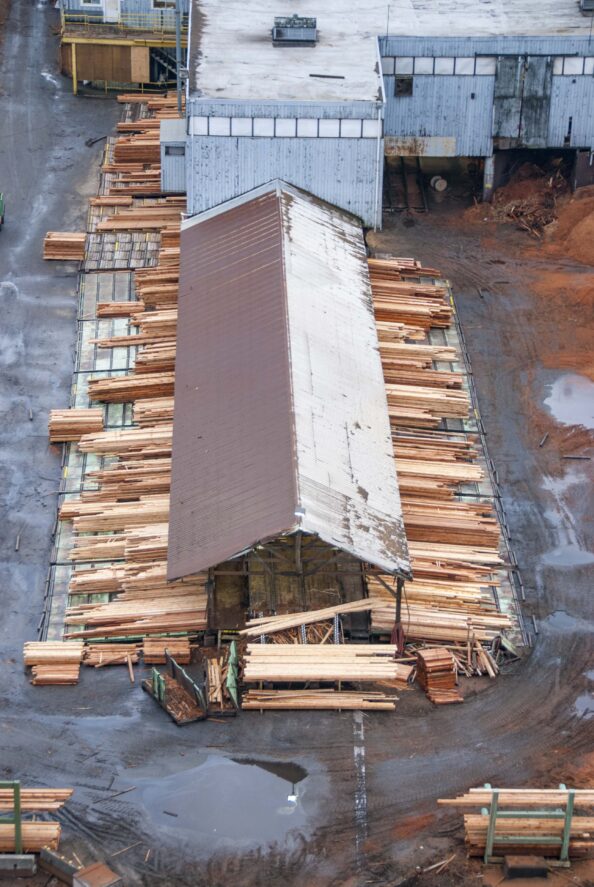 The B.C. Council of Forest Industries (COFI) welcomed B.C.’s responses to American tariffs, but questioned aspects of the provincial budget tabled Tuesday. B.C.’s forests minister, meanwhile, is calling on Ottawa to step up supports. Kim Haakstad, president and CEO of COFI, said her organization welcomes the budget’s focus on responding to new tariffs announced March 4. “We are disappointed by the absence of dedicated support for the forest sector,” Haakstad said. “As Premier (David) Eby and (Forests) Minister (Ravi) Parmar have acknowledged, the forest sector will be particularly hard hit by the new tariffs at a time when the industry is already facing significant challenges. These broad-based tariffs apply to all forest product exports … adding further pressure on workers, companies and communities already affected by softwood lumber duties.” …COFI remains committed to working with the government to advance solutions that strengthen the forestry sector, improve the provincial economy and diversify markets.

 MONTREAL — Stella-Jones announced financial results for its fourth quarter and year ended December 31, 2024. Sales for the fourth quarter of 2024 amounted to $730 million, up 6% from sales of $688 million for the same period in 2023. …Net income for the period amounted to $52 million compared with $56 million in the corresponding period of 2023. …Sales for the year ended December 31, 2024 reached $3,469 million, up 5%, versus sales of $3,319 million in 2023. Net income in 2024 was $319 million, compared to net income of $326 million in 2023. Despite the lower net income, earnings per share in 2024 was higher at $5.66 versus $5.62 in 2023 due to the continued repurchase of shares. …Eric Vachon, CEO of Stella-Jones, “We achieved solid results in our infrastructure product categories, even in the face of softer market demand. We acquired new customers, maintained our expanded EBITDA margin of over 18%, and delivered strong operating cashflows.”

 President Trump’s push for tariffs on Canada – and his subsequent delays and exemptions – are frustrating efforts to import lumber from the country and putting the building supply market on edge. The back-and-forth over whether tariffs will be imposed or not has businesses unable to trust price stability, and risks backing up the supply chain for US homebuilders. The reluctance to pay a tariff, which could be changed or cancelled any day, “freezes these markets up,” according to Don Magruder, who runs a building material company based in Florida. …Andy Rielly, president of Rielly Lumber in British Columbia, said he’s been in talks with long-term customers on how to divvy up the extra costs, but not everyone has been able to strike deals. …The US’s National Association of Home Builders chairman Buddy Hughes said tariffs risk worsening housing affordability. …The US Lumber Coalition said that lumber prices are only a fraction of homebuilding costs.
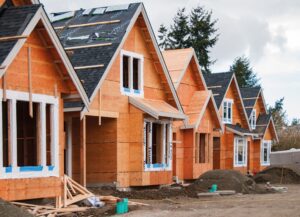 The Trump administration is moving at a record pace on a varied list of priorities, but insiders hope a focus on housing will remain at the top of the agenda in 2025. With housing affordability a central focus, bills addressing zoning, permitting, workforce development, and taxes are taking shape. …Despite all these areas of concern, one concern looms largest – tariffs. Approximately 22% of the products used in the average home are imported from China, 70% of lumber used in construction is sourced from Canada, and Mexico is the largest provider of gypsum. …The NAHB has advocated for an exemption for building materials, and the association continues to engage in conversations with lawmakers about the harmful effects these tariffs could have on housing affordability. NAHB’s Karl Eckhart says “These Canadian and Mexican tariffs are going to have a direct and painful impact on the price to build a house.”
 On Tuesday, President Donald Trump’s administration imposed new tariffs on imports from Canada and Mexico while increasing existing tariffs on goods from China, a move expected to raise prices for new homes, according to a recent CoreLogic report. That’s largely because tariffs affect essential home construction materials, including wood products, cement, steel, aluminum and appliances, so homebuilding costs are projected to rise. As a result, construction costs could increase by 4% to 6% over the next 12 months, adding roughly $17,000 to $22,000 to the sticker prices for new homes, according to CoreLogic. With the cost of a newly constructed home averaging around $422,000, these added expenses may further strain affordability for first-time homebuyers, the study says.
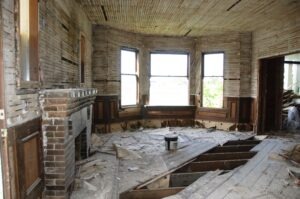 Home Depot’s CFO said people are “moving on” from today’s high mortgage rates and have started investing more in their homes. The home improvement company reported strong fourth-quarter results, although CEO Ted Decker said consumers are still reluctant to make larger investments like a kitchen remodel. Experts say people may start to view today’s mortgage rates as normal, especially when compared to historic rates. …“Housing is still frozen by mortgage rates,” Richard McPhail, said. Yet McPhail said Home Depot, which reported strong Q4 results Tuesday, has seen sales growth in nearly 80% of its U.S. geographic regions. …For Q4, 2024, Home Depot saw a 14.1% year-over-year increase in sales, which “exceeded our expectations,” Ted Decker CEO, said. …“We saw greater engagement in home improvement spend, despite ongoing pressure on large remodeling projects,” Decker said

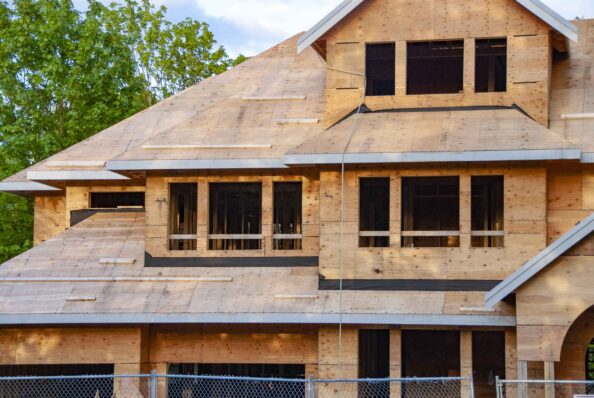 President Donald Trump “thrives on unpredictability”, said Lawrence Yun, chief economist for the National Association of REALTORS. In the last 30 days alone, multiple tariffs by Trump have been announced, imposed, called off and hotly debated. Now, the tariffs are beginning to take shape. And homebuilders are wary. …The real outcry, though, regards lumber. Roughly 30% of the lumber used in the United States last year was imported – more than 85% from Canada. …the housing industry is sharing concerns. Shortly after Trump’s inauguration, the NAHB applauded his day-one executive order that urged government agencies to take action to lower housing costs and expand supply. But NAHB chairman Carl Harris said raising tariffs will have the opposite effect. …“Tariffs on lumber and other building materials increase the cost of construction and discourage new development, and consumers end up paying for the tariffs in the form of higher home prices,” Harris said in a press release.
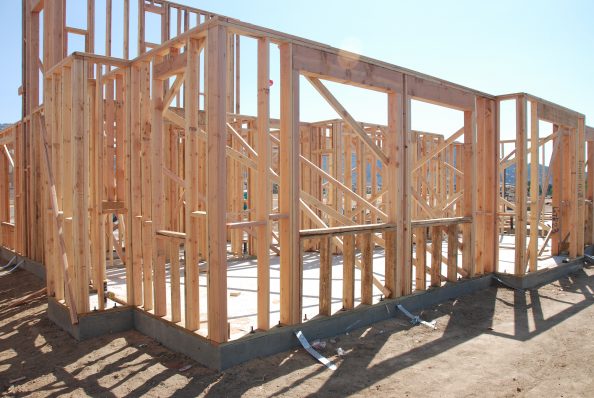 CHINO, Calif. — Where some just see lumber, Marc Saracco, a sales manager at wholesale distributor Capital Lumber Company, sees the building blocks of new communities. Although with the 25% tariffs President Donald Trump is placing on imports from Mexico and Canada, Saracco said those building blocks are expected to get more expensive. “I estimate that the tariffs from appliances to lumber would cost a homeowner between $30,000 and $40,000 per house,” Saracco said. He said it could exacerbate the current housing shortage. “We as an industry rely heavily on what they produce. About 30% of the lumber that we consume in the United States comes from Canada,” Saracco said. …”You’re talking about $600 million just in the scale of the rebuild in additional tariffs to meet those 15,000 homes that absolutely need to be rebuilt,” Saracco said. …With domestic sawmills closing, Saracco said it would take 10 to 20 years before the U.S. can internally meet lumber demand.
 Japan’s timber industry is seeing notable changes, with predictions of a drop in log imports and varying trends in lumber imports. These shifts are influenced by economic factors, environmental concerns, and policy decisions affecting how Japan uses timber. The Japan Lumber Importers Association has shared its predictions for wood imports, expecting a 13% decrease in log imports for 2024. …While log imports are expected to decline, the situation with lumber imports is more complex. In 2024, lumber imports are projected to increase by 17.2%. However, in the first half of 2025, a 12.5% decrease is expected compared to the same period the previous year. Several factors influence these mixed trends… Japan’s housing starts decreased by 4.6% year-over-year in 2023, with owner-occupied housing falling by 11.4%. These changes directly impact the demand for lumber, influencing import volumes.