 OTTAWA — The Canadian Association of Fire Chiefs says it’s time for Ottawa to stop studying the idea of a national forest fire co-ordination agency and take action. The organization’s president wants the federal government to take inspiration from the U.S. Fire Administration to establish a similar office in Canada. The U.S. office is part of Federal Emergency Management Agency, or FEMA, but Ken McMullen says a Canadian version could be simpler and less costly. He said the proposed fire administration office, which could be staffed by one or two people, would ensure that personnel and equipment are appropriately dispersed across the country in the event of wildfires. It would also allow security and fire services to have a seat at the table when relevant policies are being discussed. …”We just have to get moving and make decisions,” said McMullen, who is also fire chief in Red Deer, Alta.

 TORONTO — Canada’s 2025 wildfire season is now the second-worst on record. The latest figures posted by the Canadian Interagency Forest Fire Centre suggest the fires have torn through 72,000 square kilometres, an area roughly the size of New Brunswick.That surpasses the next worst season in 1989 and is about half the area burned during the record-setting 2023 season, according to a federal database of wildfire seasons dating back to 1972. Climate change, driven by the burning of fossil fuels, has made Canada’s fire season longer and more intense, scientists say. The last three fire seasons are all in the 10 worst on record. “We really need to do a lot more to manage our forest, to reduce the impact of climate change and better prepare the communities that are at risk,” said Anabela Bonada, managing director of climate science at the Intact Centre on Climate Adaptation at the University of Waterloo.
 With wildfires forcing evacuations from Vancouver Island on the Pacific Coast to Newfoundland in the North Atlantic, Canadian officials were mustering additional resources on Thursday to help provinces cope with the blazes and the disruption. Eleanor Olszewski, Canada’s emergency management minister, announced on social media Thursday morning that the armed forces and the Coast Guard would assist the island province of Newfoundland in fighting blazes. Three out-of-control fires forced the evacuation of 900 people in the province on Thursday. Some provinces have moved this week to limit activities like hiking that could spark additional blazes, with forecasts indicating it is unlikely that sufficient rain would fall in regions plagued by out-of-control fires. Canada’s national fire threat level has been at 5, the highest danger rating, since late May. About 7.1 million hectares, or 27,000 square miles, of forest have burned so far this season in the country. [to access the full story a NY Times subscription is required]
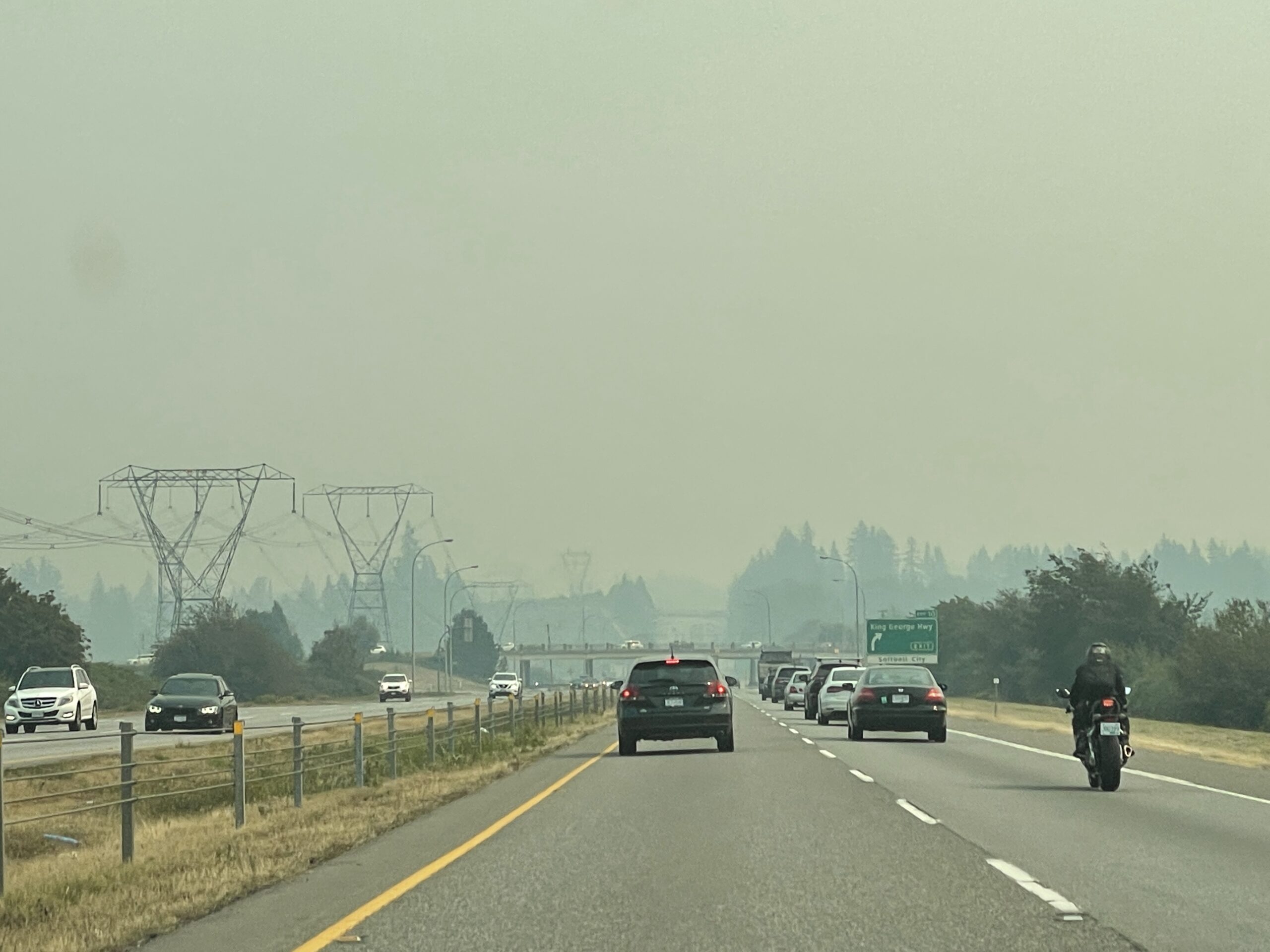 Growing up in the Greater Toronto Area, smog days were par for the course. …We’ve traded our smog days for smoke days. …Improving wildfire response should be an imperative of Prime Minister Mark Carney and his newly formed government. …Wildfires will burn no matter how many waterbombers Canada has, but there is no question there would be fewer homes destroyed, less First Nations forced to evacuate and fewer air quality alerts issued if Saskatchewan had 600 aircraft in action right now, rather than six. …Let’s turn this whole country into a waterbomber assembly line. The demand isn’t going anywhere — domestically or internationally. …In the meantime, the federal government needs to ramp up funding transfers to the provinces for wildfire fighter and pilot training programs and equipment purchases. …Getting forest fires under control is also an act of sovereignty.
  Castlegar sawmill and mass timber producer Kalesnikoff Lumber received a mention from Prime Minister Mark Carney on Aug. 5 during a visit to Kelowna. Carney was talking about his government’s Build Canada Homes initiative when he brought up Kalesnikoff’s innovations. The Build Canada Homes program prioritizes domestic materials in construction and requires companies contracting with the federal government to source Canadian lumber. It also calls for the use of Canadian technologies and resources in off-site construction of prefabricated and modular homes. “One example of the possibilities, just a few hours drive from here in Castlegar, Kalesnikoff Mass Timber recently opened its 100,000-square-foot mass timber prefabrication and modular facility – the first of its kind in North America,” said Carney. “They’re adding new products and services, including prefabricated wall panels, mass timber modules, and trusses designed and manufactured for construction efficiency.”
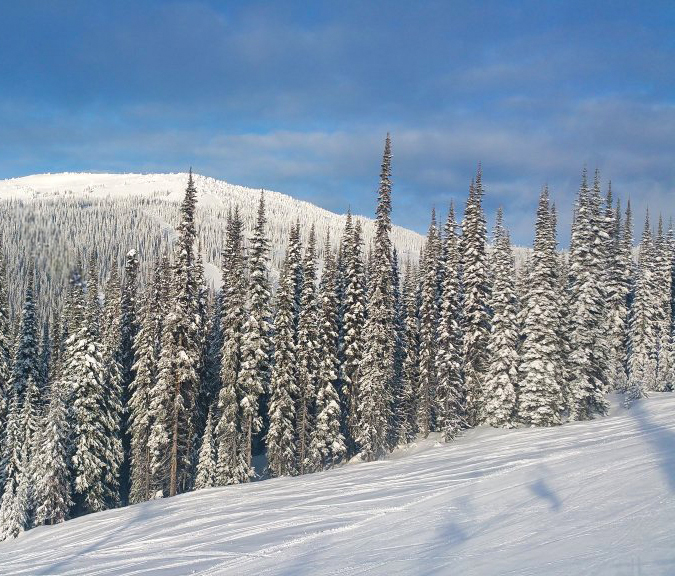 One of Revelstoke’s most popular mountains for Nordic skiing and cycling has reappeared on the map for B.C.’s lumber licensee, raising questions of how recreationists’ favourite routes could be impacted. Within the last year, BC Timber Sales (BCTS) issued a Forestry Operations Map outlining plans for Mount MacPherson, home to the Revelstoke Nordic Ski Club (RNSC) and various Revelstoke Cycling Association trails. Currently, several dozen hectares in the Wetask-Mt. MacPherson area are licensed for cut blocks, while several hectares more are mapped for retention areas and roads. …Operations are indicated to run until 2027, and all six cut block licenses have a planned development date of last Jan. 15. In a statement the Ministry of Forests said one of its recent licences was auctioned last spring and will be harvested this fall or winter. Another licence currently sits in the development stage, slated for auction next summer.


 Above average spending on Yukon wildfires is in the forecast due to rising costs of fuel, aircraft, vehicles, food and fire retardant, Yukon wildfire officials told reporters during a July 30 briefing. Officials indicated more spending doesn’t necessarily mean more fires; it relates to higher costs in general. “The cost of fuel is going up. The cost of aircrafts are going up. The cost of vehicles is going up. Fire retardant, which we used over a million litres of, has almost doubled in price in the past several years. Food for catering, for feeding all these crews. Obviously, the cost of food has gone up,” director of Yukon Wildland Fire Management Devin Bailey said at the mid-season briefing. “As everything gets more expensive, we’re going to see more expensive responses during fire season.”
 Gibsons council is renewing its push for stronger watershed protections and clearer oversight of forestry operations, following a staff report on
 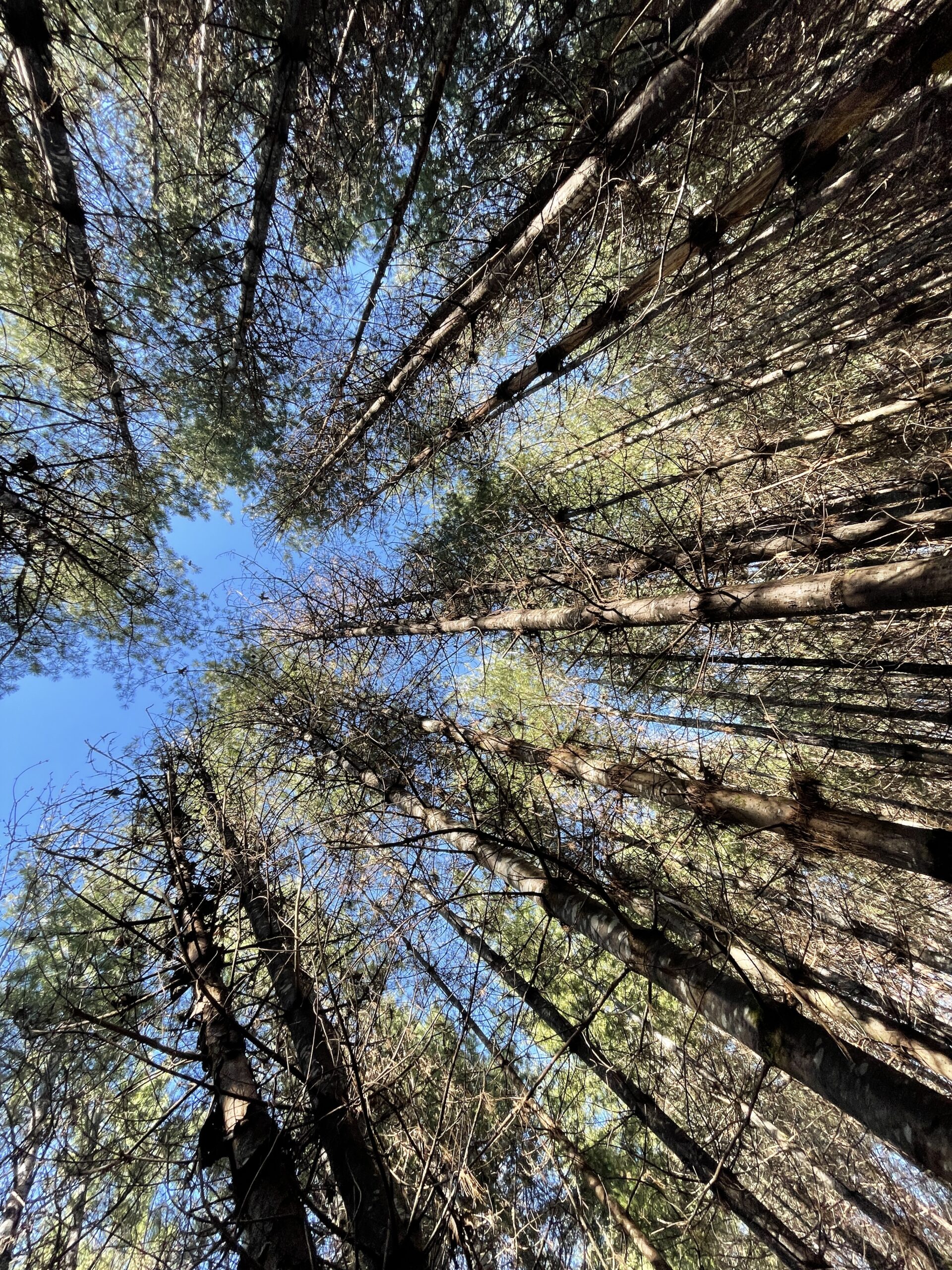 Worsening dry conditions across New Brunswick — which sparked a provincewide burn ban and led this week to an uncontrolled wildfire near Miramichi — have prompted the provincial government to impose restrictions on some industrial activities in forested areas. The Department of Natural Resources said in a news release Friday that some forestry operations would be banned for the next several days given the high risk of another wildfire. …From midnight on Aug. 8 to midnight on Aug. 12, harvesting, forwarding, skidding, scarification, chipping and all pre-commercial thinning and cleaning are all banned. That restriction applies to all forestry on both Crown and private lands. Trucking, road construction and maintenance, vegetation management and tree planting are allowed to continue. …Except for the possibility of a shower Saturday afternoon in northern New Brunswick, the province could see at least six more days of dry, hot weather, according to Environment Canada forecasts.

 MIRAMICHI, New Brunswick — In response to the increased wildfire risk, some forestry operations in New Brunswick will be restricted over the next couple of days. A release from the province’s Department of Natural Resources says the move is to protect both the forests and people living in the province. On Friday, the natural resources minister said in the release the restrictions will be on both Crown and private lands. “These measures will help protect our forests, animals, natural habitats and our communities, as well as our wildland fire crews,” John Herron said. As of midnight Friday, harvesting, forwarding, skidding, scarification, chipping and all pre-commercial thinning and cleaning are restricted until Tuesday. However, trucking, road construction and maintenance, vegetation management and tree planting are still getting the green light. These restrictions apply to all forested lands in the province, both private and Crown.
 Fostering inclusive economic development and ensuring that local communities, including Indigenous partners, benefit from these opportunities are key priorities for the Government of Canada. Today, Claude Guay, Parliamentary Secretary to the Minister of Energy and Natural Resources, concluded a two-day tour of Northern Quebec, where he highlighted the importance of Quebec’s mining and forest sectors in building Canada’s supply chains and export opportunities, creating good jobs, and strengthening reconciliation… Parliamentary Secretary Guay concluded the trip with a visit to Les Chantiers Chibougamau’s Kraft Pulp Mill in Lebel-sur-Quevillon and their head manufacturing plant in Chibougamau. These sites are key examples of Quebec’s forest sector excellence and innovation in modernizing the industry, accelerating affordable housing and promoting green construction using value-added Canadian wood-based products.


 The 9th American Forest Congress has
  On the two-year anniversary of the deadly wildfires in Lahaina, Hawaii, the Arbor Day Foundation launched its effort to help replant lost tree canopy. The Foundation distributed more than 580 trees alongside its local planting partner The Outdoor Circle, in collaboration with Treecovery Hawaii and The Royal Lahaina Resort & Bungalows.“Recovery from a wildfire of this scale can take years, but the Arbor Day Foundation is committed to being here for the long haul. We’re proud to work alongside the passionate advocates at The Outdoor Circle to help regrow a flourishing community canopy,” said Dan Lambe, chief executive of the Arbor Day Foundation. “We know trees won’t replace all of what’s been lost in Lahaina, but they can help grow new roots of resilience and nurture hope for the future.”
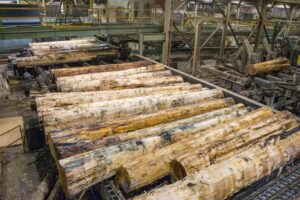 Despite attempts to save it, the longstanding Pixelle Specialty Solutions in Chillicothe closed its doors permanently on Sunday. The southern Ohio paper mill announced its planned closure in April after nearly 200 years of operating in Ross County. Local leaders and state representatives alike pushed to delay its shuttering, but ultimately the company ceased production this weekend. Not only did the paper mill employ more than 800 people, it fed a larger industry in the state. Executive director of the Ohio Forestry Association Jenna Reese said the mill’s closure will hurt Ohio loggers. “This is gonna have ripple effects throughout the state,” she said. “We’re unfortunately anticipating attrition.” With nearly 8 million acres of forest in Ohio, logging is a major industry. It contributes $1.1 billion to the state economy annually, according to Reese. Forest products, more broadly, make up more than a quarter of Ohio’s agricultural industry, which tops the state.
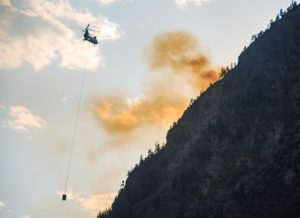 Every spring, Forest Service fire leaders meet to plan for the upcoming fire season. This year, some employees were shocked by the blunt remarks made during a meeting with forest supervisors and fire staff officers from across the Intermountain West. “We were told, ‘Help is not on the way,’” said one employee, who asked to remain anonymous for fear of losing their job. “I’ve never been told that before.” Agency leaders already knew it might be a bad wildfire season, made worse by having fewer hands available to help out. According to the employee High Country News spoke to, the Forest Service lost at least 1,800 fire-qualified, or “red-carded,” employees through layoffs, deferred resignation, and retirement offers. In total, 4,800 people left the agency. “We were told: Don’t commit to an attack thinking the cavalry is going to come,” the employee said. As fire activity continues to pick up across much of the West, that warning rings true. [a free subscription is required to read the original article,
  Western Apache fire management once reshaped Arizona’s forests — and tree rings prove it. A new study combining tree-ring evidence and historical data shows that for centuries, Western Apache communities systematically controlled fire activity across their homeland, reducing the role of climate in driving wildfires. Led by Southern Methodist University fire scientist Christopher Roos, the research analyzed 649 fire-scarred trees from 34 sites in central and eastern Arizona and compared them to several thousand samples from the broader Southwest. The findings, published in the Proceedings of the National Academy of Sciences, show that Apache burns were more frequent, smaller, and timed differently than fires elsewhere in the region. Scientists found that in Apache territory, fires often occurred in late April and May — months when community members were engaged in subsistence activities in pine forests.
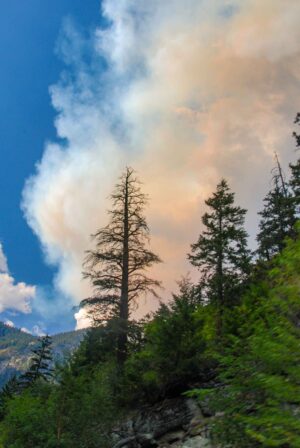 Cole Lindsay, the Oregon Department of Forestry aviation coordinator, said firefighters would typically have to hike into the dark canyon to check for new fires — a time-consuming and potentially dangerous task on a wildfire that had already roared to 23,890 acres in Wheeler County. But technology has advanced. Instead of sending people, Lindsay sent a drone equipped with an infrared camera to sweep across the canyon. “The cameras and sensors are so good that it would have seen something way before the human eye,” Lindsay said. …The Oregon Department of Forestry has 29 pilots. In 2024, ODF and its contractors flew 482 drone missions, 364 of which were for fire purposes. Out of 136 hours of flight time, 98.5 hours were on fire missions. So far in 2025, ODF, excluding its contractors, have flown 41 missions totaling 14 hours. Out of those 14 hours, 7.9 hours were for fire purposes.
 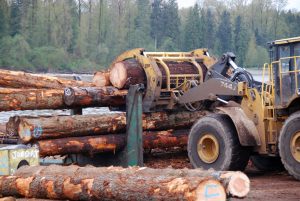 WASHINGTON STATE — Washington’s rural counties and school districts are preparing to start the school year without millions of dollars from a program meant to offset reduced revenue from logging on federal lands. The Secure Rural Schools program expired at the end of 2023 after Congress failed to renew it. Democratic and Republican lawmakers, along with local officials, are pushing US House leadership to bring a bill renewing the program to the floor. The lapsed program helps pay for roads and schools, providing $7 billion in payments to more than 700 counties and 4,400 school districts across 40 states since it was enacted in 2000. …Counties and schools have received logging revenue from the federal government for roads and schools since 1906. Federal law currently mandates that all counties annually receive 25% of the seven-year average of revenue generated by that county’s forests.
  In May, the White House Office of Budget and Management sent Congress President Trump’s proposed budget for discretionary spending for upcoming fiscal year 2026. Among the budget’s many cuts is a proposal to eliminate all funding for the Collaborative Forest Landscape Restoration Program, designed to make timber projects run more smoothly. The Collaborative is a decades-long experiment to get conservationists, the timber industry and U.S. Forest Service back to the proverbial table after the timber wars of years past. Collaboratives have been widely credited with incorporating conservationist’s environmental concerns in the design of timber harvests and, consequently, reducing environmental litigation known to slow down harvests. The CFLRP has been lauded by some for helping implement forest thinning and restoration projects meant to both reduce wildfire risk and increase timber production and jobs in rural communities.
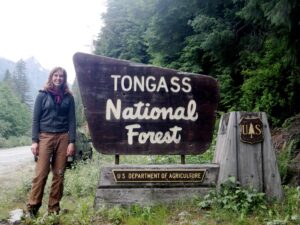 The Trump administration has announced plans to rescind the 2001 Roadless Rule, changing the political and timber industry landscape in the Tongass National Forest for the third time in five years. The Roadless Rule prevents logging, road building and mining on national forest lands. It was last repealed in 2020 and restored in 2023, and has been subject to decades of debate. Timber operators say the rescission could help a dying industry – if it passes through Congress. The U.S. Forest Service owns approximately 78% of the land in Southeast Alaska, meaning timber operators are dependent on the federal agency for a majority of their supply. Kirk Dahlstrom, co-owner of Viking Lumber Co. in Klawock, said the agency is nine years behind on offering timber supply for the Southeast industry. He said his business will not survive if land management remains under Forest Service control. “We got starved to almost nothing.”
 Near the bottom of a shady hillside in Jericho, a lone beech tree stretches high into the canopy, a relic of a bygone forest. Through luck or (hopefully) genetics, this mighty tree has avoided contracting beech bark disease—a fatal fungal pathogen that has proven deadly to mature beech trees. And it stands just outside a hotspot where a new pathogen called beech leaf disease (BLD) is spreading across Vermont forests. “Beech is here a lot as a sapling … but if you look out into the forest it’s not really common in the overstory,” said Jess Wikle Ph.D. ’24, lecturer in forestry and manager of the University of Vermont’s Research Forests. The beech trees that do succumb often send out a series of root sprouts before they die, turning a forest of big trees into a thicket of saplings. Beech leaf disease is different. It seems to be spreading faster and young beech trees tend to die first.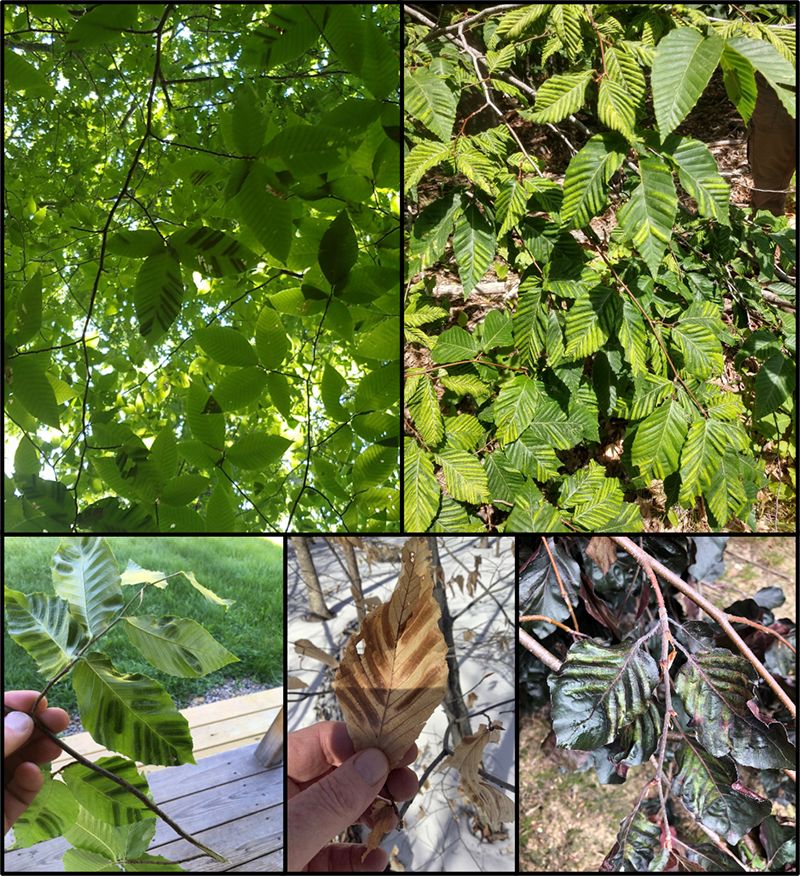


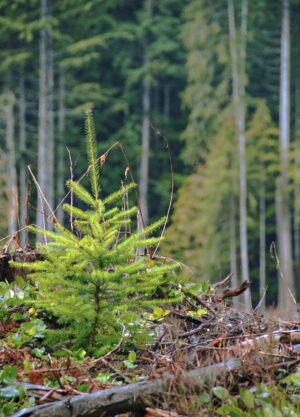 The Nature Conservancy announced it planted 2.5 million trees in northern Minnesota this year in partnership with the U.S. Forest Service, Minnesota Department of Natural Resources and three county land departments. This is a record number for the organization, and the second consecutive year the program has planted more than 2 million tree seedlings The tree seedlings were planted on public lands—across 5,810 acres of national forest, state forest, state park and county-managed forest lands—and covered six counties, including Cook, Lake, Saint Louis, Itasca, Cass and Carlton County. The planting areas included 1.8 miles along scenic Highway 61 and 41 miles of stream, river and lakeshore that connect to Lake Superior. It also included 1,740 acres of moose habitat enhancement, completed in partnership with the Ruffed Grouse Society and Minnesota Moose Habitat Collaborative—whose tribal representation is critical in maintaining habitat for this species of cultural importance to Indigenous communities.
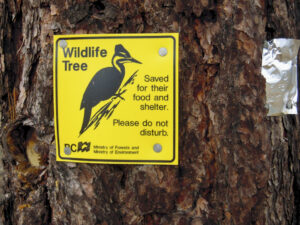 The European Court of Justice (ECJ) has issued a ruling on suspending logging to protect bird nesting sites in Estonia. However, the Ministry of Climate and forestry industry representatives interpret the ruling in opposing ways, each claiming their stance is the right one. The final decision on the matter is set to be made in the autumn by the Estonian Supreme Court, which should clarify whether current practices will be changed or not. Head of the Ministry of Climate’s Biodiversity Protection Department, Timo Kark, said overall the ECJ considered the suspension of logging to be justified. “In the opinion of the European Court, the birds directive must be interpreted such that its provisions apply to all bird species, including those that are not protected. So any activity that may result in birds being killed, such as logging during the spring-summer nesting period, can be suspended,” Kark said.
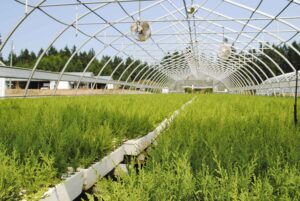 The First Minister has today opened a new £26 million facility to help grow more trees for Scotland’s forests and woodlands. Newton Tree Nursery, near Elgin, will support Forestry and Land Scotland to almost treble their tree production – from seven million to nearly 20 million trees per year by 2029. It will help support the sustainable management of Scotland’s national forests and land and help tackle the climate emergency, while also supporting the rural economy. Seedling operations at the redeveloped tree nursery began in March 2025 and 12 million trees have already been established within the glasshouse. The new nursery is the UK’s largest and most advanced tree-growing glasshouse and sets a new standard for bio secure, sustainable, and high-volume forest nursery production. The facility ensures that an adequate supply of high-quality trees is available to supply the publicly managed forests of Scotland with those forests supporting rural economies, providing flood mitigation, improving biodiversity and sequestering carbon.
 Recent research