 Canada is home to nearly 347 million hectares of forest, which account for about 9% of the world’s forests. As I travel this week across the northern boreal to visit mill and woodlands employees and local community leaders, I’m reminded of the vastness of our forests, the 200,000 direct jobs and families that rely upon them, and how the resilience of those workers is part of both an ever-evolving story and my sense of self as a Canadian. Our connection to our forests has also informed our role in the world beyond commerce, and beyond symbols. …As we endure another devastating wildfire season across Canada, there is more discussion at the community level about turning to more active forest management as a solution. …In a world in which Canada’s exportable natural assets are being besieged by avoidable uncertainty, Canada’s forests are our most sustainable, renewable resource. …To me, being Canadian means having a privileged relationship with nature, especially with our trees and forests.
 OTTAWA, ON – With wildfires impacting Canadians across the country, the federal government is taking action to prevent wildfires, mitigate their effects and boost resilience. …The Government of Canada announced an investment of $11.7 million;over four years to establish the Wildfire Resilience Consortium of Canada (WRCC). Funded through the Wildfire Resilient Futures Initiative, the WRCC will serve as a national centre of excellence and virtual hub for wildland fire innovation and knowledge exchange. The WRCC will advance many of the actions in the Kananaskis Wildfire Charter, agreed to by the leaders of the G7 this spring in Canada and endorsed by the leaders of Australia, India, Mexico, the Republic of Korea and South Africa. It will bring together domestic and international governments, communities impacted by wildfires, the private sector and individual experts to share knowledge, facilitate collaboration and accelerate the use of cutting-edge science and technology in wildfire prevention, mitigation, preparedness and response.

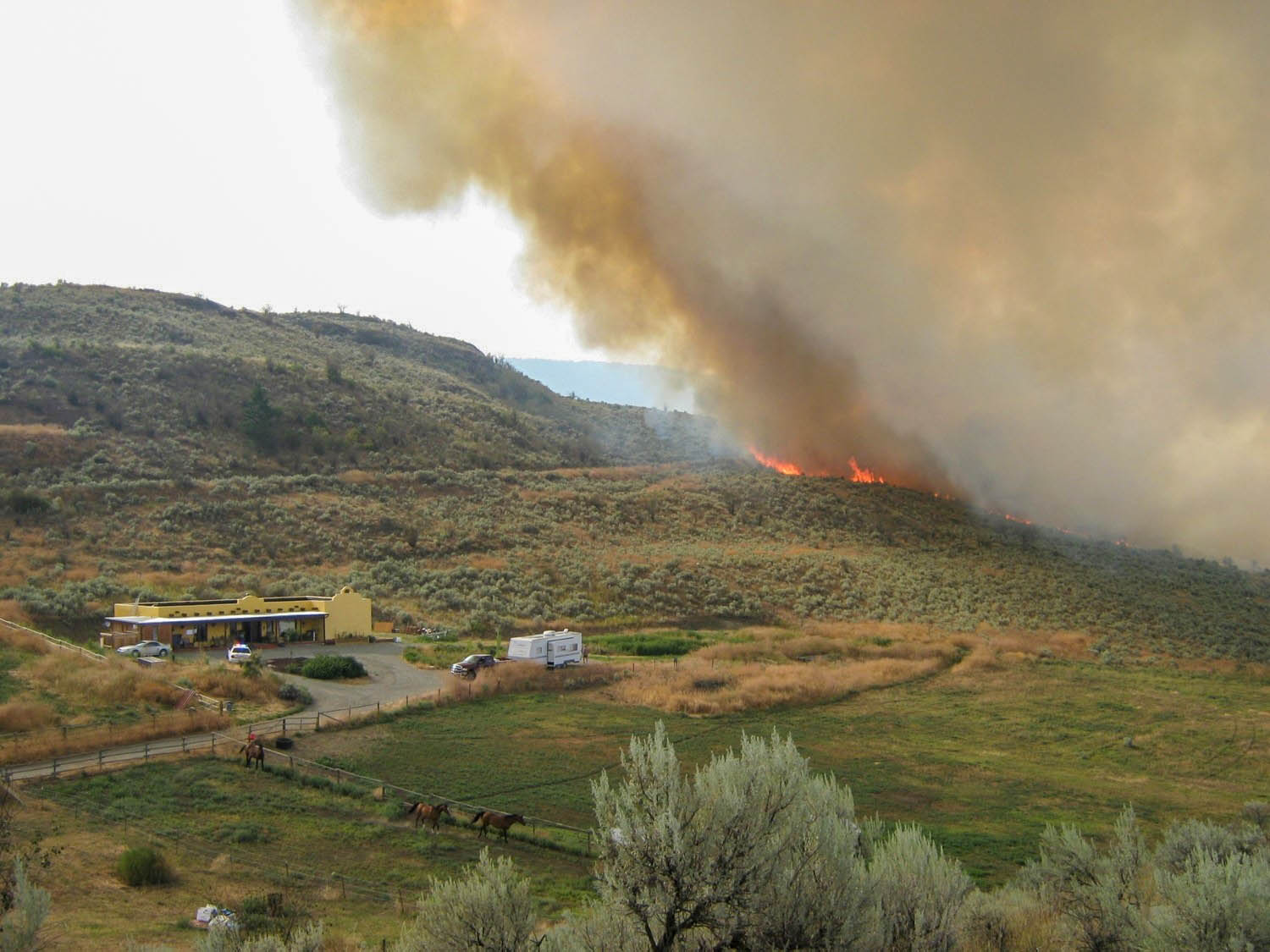 A recent report out of British Columbia suggests using beneficial fires to build wildfire resilience. In the Yukon, that idea is not new — but finding a way to reap the benefits of fire while preventing devastation is a delicate balancing act. …the


 …The National Film Board–produced Incandescence is just one of several documentaries either released this year or currently in production that speak to the province’s new reality and the urgency of the climate crisis that’s fuelled it. This spring, B.C.’s Knowledge Network released a five-part docuseries called Wildfire, about BC Wildfire Service firefighters and the on-the-ground reality of their work. A third crowdfunded documentary, BC is Burning, recently finished production and had its first community screenings in the Okanagan in June. The appearance of these films feels especially timely, and speaks to deeper trends around documentary as a storytelling tool in times of social or ecological crisis. “Environmental documentaries have kind of come in waves that are often in response to policy,” says Chelsea Birks, the learning and outreach director at Vancouver’s The Cinematheque and a film studies lecturer at the University of British Columbia. She says climate change is not an easy subject to capture.

 VANCOUVER, BC — West Fraser Timber and the Lake Babine Nation Forestry Limited Partnership (LBN Forestry) welcomed the


 A report from the Nelson-based organization Save What’s Left calls on the provincial government to revamp BC Timber Sales and give it an environmental stewardship mandate. The 50-page report titled Public Forest, Public Trust alleges that BCTS logs old growth forests, disturbs watersheds and interferes with wildlife corridors. BCTS is an independent organization within the Ministry of Forests that develops Crown timber for auction. BCTS plans and designs logging operations and builds logging roads, then sells the timber to the highest bidder. The document lays out 24 such allegations, stating they are based on field verification by Save What’s Left, on satellite time-lapse imagery, and on conversations with forest professionals and forest workers. “This paper both outlines the myriad of problems with how BC Timber Sales operates and presents a new path forward,” writes prominent environmentalist David Suzuki in his introduction to the report. “What we need now is courage by leaders to walk that path.”

 A contractor’s appeal of a B.C. Wildfire Service (BCWS) order to pay more than $1.8 million in compensation and penalties will be heard after a May 22 decision by the Forest Appeals Commission. Panel chair Ian Miller found “special circumstances” led to last summer’s two-day delay in filing a notice to appeal and granted the extension to Jaikle Contracting. “The delay was brief, the explanations and reasons are reasonable and credible, and there would be substantial prejudice to the appellant if the right to appeal is denied,” said Miller’s ruling. On July 12, 2024, designated decision maker Laurence Bowdige of BCWS issued a contravention order against Jaikle, under the Wildfire Regulation, for harvesting timber near Mackenzie in August 2021. “Specifically, that the appellant did not keep an adequate fire suppression system at the activity site while carrying out a high-risk activity within 300 metres of forest land,” said the Miller ruling.
 Vancouver park board commissioners voted Monday to keep the same contractor on the job for the continued work required to remove dead and declining trees in Stanley Park that have been damaged by a hemlock looper moth infestation. The board now has to finalize a contract with B.A. Blackwell and Associates Ltd. for the final phase of mitigation and restoration work in the park. The contract will be worth more than $3 million and fall within a previously approved overall budget of $17.9 million for the project. Although 23 suppliers registered an interest to complete the work, only Blackwell chose to submit a proposal, which was reviewed by the board’s evaluation team comprised of staff from urban forestry and supply chain management. …As for why Blackwell was the only bidder, Joe McLeod, the board’s associate director of urban forestry said, “There are very few forestry professional consulting firms that have the set of unique skill set.”

 Kamloops, B.C.– The Forest Enhancement Society of BC (FESBC) recently approved up to $1.7 million to the Woodlot Product Development Council (Woodlots BC) to carry out wildfire risk reduction treatments over a 2-year fiscal period. Treatments will be conducted on woodlots throughout British Columbia, each located within a Wildland Urban Interface, endorsed by the local Forestry District and following BC Wildfire Service (BCWS) wildfire risk reduction standards. Through this work, Woodlots BC looks forward to building capacity across the forest sector and helping promote innovative ways to complete treatment of wildfire risk reduction projects to reduce combustible forest fuel loading, thereby better protecting communities. “Woodlots are vital to B.C.’s forestry sector as they support local jobs, keep our forests healthy, and help reduce wildfire risk where it matters most: right where people live,” said Ravi Parmar, Minister of Forests.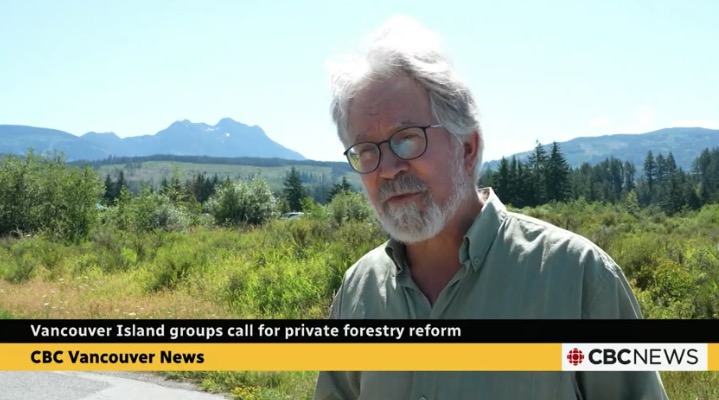


 Vancouver Park Board staff are seeking commissioners’ approval to proceed with the next phase of a tree removal project in Stanley Park due to an extensive looper moth infestation. Work has been underway to cut down thousands of trees in Vancouver’s biggest park since the summer of 2023, due to fire and public safety risks posed by dead and dying trees. …While the tree removal plan has faced sharp criticism staff say they have a plan that will see the least number of trees removed. “This aims to balance key public safety risks resulting from the hemlock looper outbreak while leaving a moderate extent of internal forest areas to undergo natural forest stand regeneration,” the staff motion says of its preferred approach. If commissioners approve of the staff plan, planning for tree removal and mitigation work would begin later this year and conclude in the first quarter of 2027.

 Forming an unusual alliance, environmental and animal welfare groups have pulled together a bipartisan effort in Congress, united by universal disdain for a Biden-era plan to massacre nearly 500,000 barred owls. Killing off barred owls in an effort to save endangered spotted owls is “wasteful, inhumane and unworkable,” Wayne Pacelle, president of Animal Wellness Action and the Center for a Humane Economy said. Those groups hailed the introduction Wednesday of the Congressional Review Act (CRA) to nullify the Biden-era barred owl management strategy. …In September 2024, the Biden administration approved a $1.3 billion plan for U.S. Fish and Wildlife Service (FWS) agents to shoot about 470,000 barred owls over the next 30 years in Washington, Oregon and California. The justification was to give spotted owls a better chance of recovery under the assumption that barred owls bully their smaller cousins out of vital, old-growth forest habitat. …Federal wildlife agents have killed roughly 4,500 barred owls since 2009.
  America’s public forests are under assault. We have already seen the massive timber harvests called for by President Trump’s executive order, the elimination of the Roadless Rule, and the gutting of wildlife protection efforts. Those are the broad stokes, but there are also finer maneuvers underway, such as abandoning the traditional practice whereby forest personnel paint-mark the trees selected for cutting, handing those decisions over instead to the timber companies themselves. Or the various subsections that keep popping up in the “Big Beautiful Bill” — for example, giving timber companies an option to pay for hastened environmental review and defunding endangered species recovery efforts. It also arbitrarily requires the Forest Service to increase harvests by 250 million acres annually for nine years. This is the context within which we must now view the Fix Our Forests Act, a logging-in-the-name-of-fire-prevention bill, stuffed with provisions that significantly override scientific and citizen review.
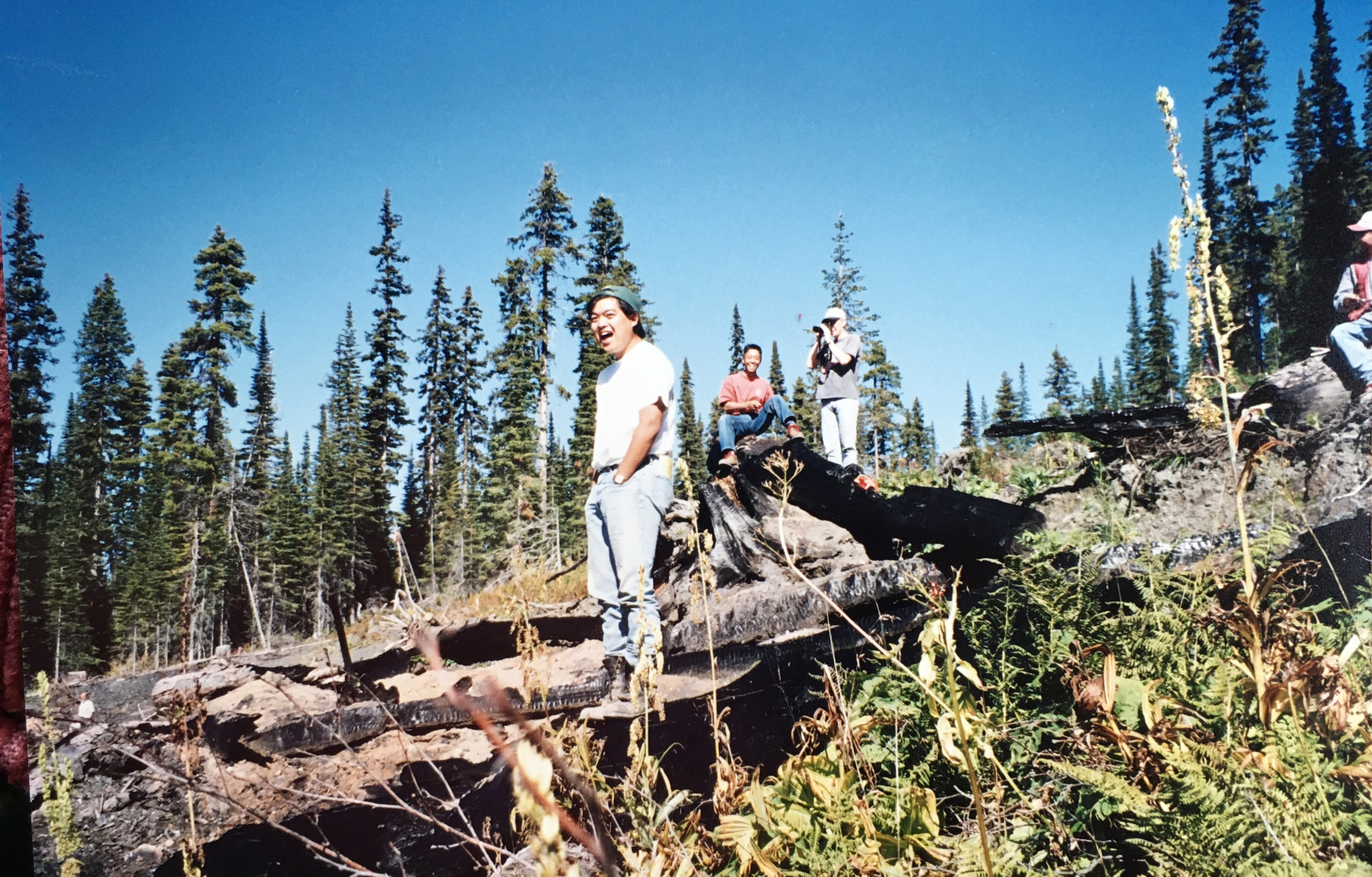 U.S. Rep. Marie Gluesenkamp Perez, D-Skamania, and Rep. David Rouzer, R-North Carolina, recently introduced the bipartisan Jobs in the Woods Act, which aims to connect young people with careers and training in forestry.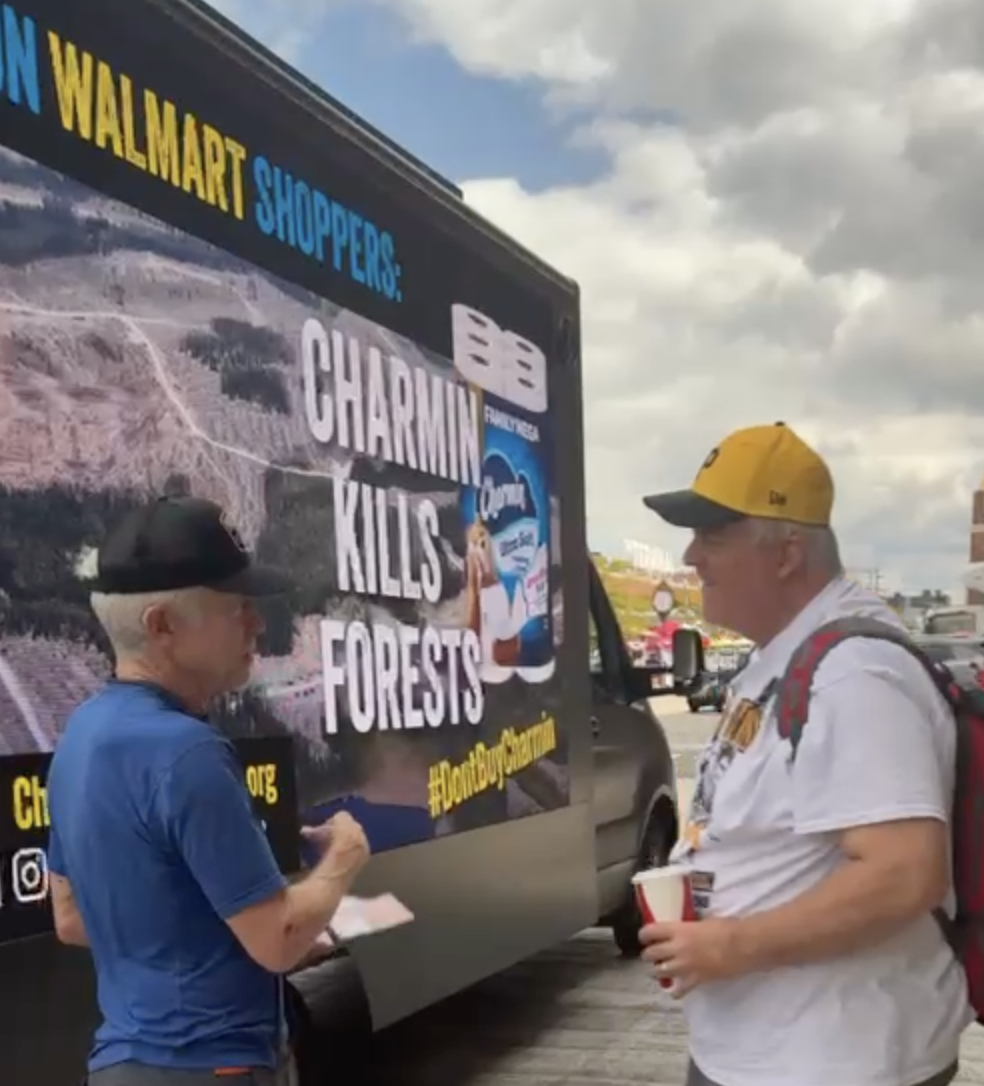
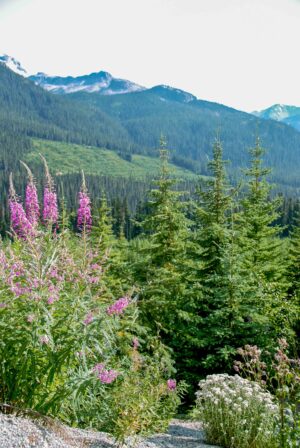 The Trump administration aims to end the prohibition on logging on tens of millions of acres of roadless areas in national forests by the end of next year, according to a draft schedule at the Forest Service. The draft timeline… sets a schedule for drafting the new policy, conducting public comment sessions and consulting with tribes before making a final decision in November or December of 2026. Agriculture Secretary Brooke Rollins has already said she’s decided to rescind the roadless-area protections, which have blocked road construction, timber harvesting. The rule applies on 58.5 million of the forest system’s 193 million acres, with Alaska’s Tongass National Forest having the most in any one place. In a June 23 statement, Rollins said, “Once again, President Trump is removing absurd obstacles to common sense management of our natural resources by rescinding the overly restrictive roadless rule.” [to access the full story an E&E News subscription is required]
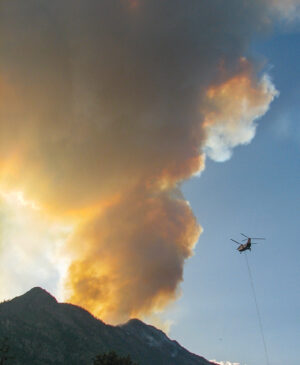 More than a quarter of firefighting positions at the United States Forest Service (USFS) remain vacant, according to internal data reviewed by the Guardian, creating staffing shortages as extreme conditions fuel dozens of blazes across the US. The data paints a dangerously different picture than the one offered by Tom Schultz, the chief of the USFS, who has repeatedly assured lawmakers and the public that the agency is fully prepared for the onslaught in fire activity expected through this year. It’s already been busy. So far this year there have been more than 41,000 wildfires – an amount nearly 31% higher than the ten-year average. “In terms of firefighting capacity we are there,” Schultz said during a Senate committee hearing on 10 July, claiming the USFS had hit 99% of hiring goals. He repeated the claim multiple times.
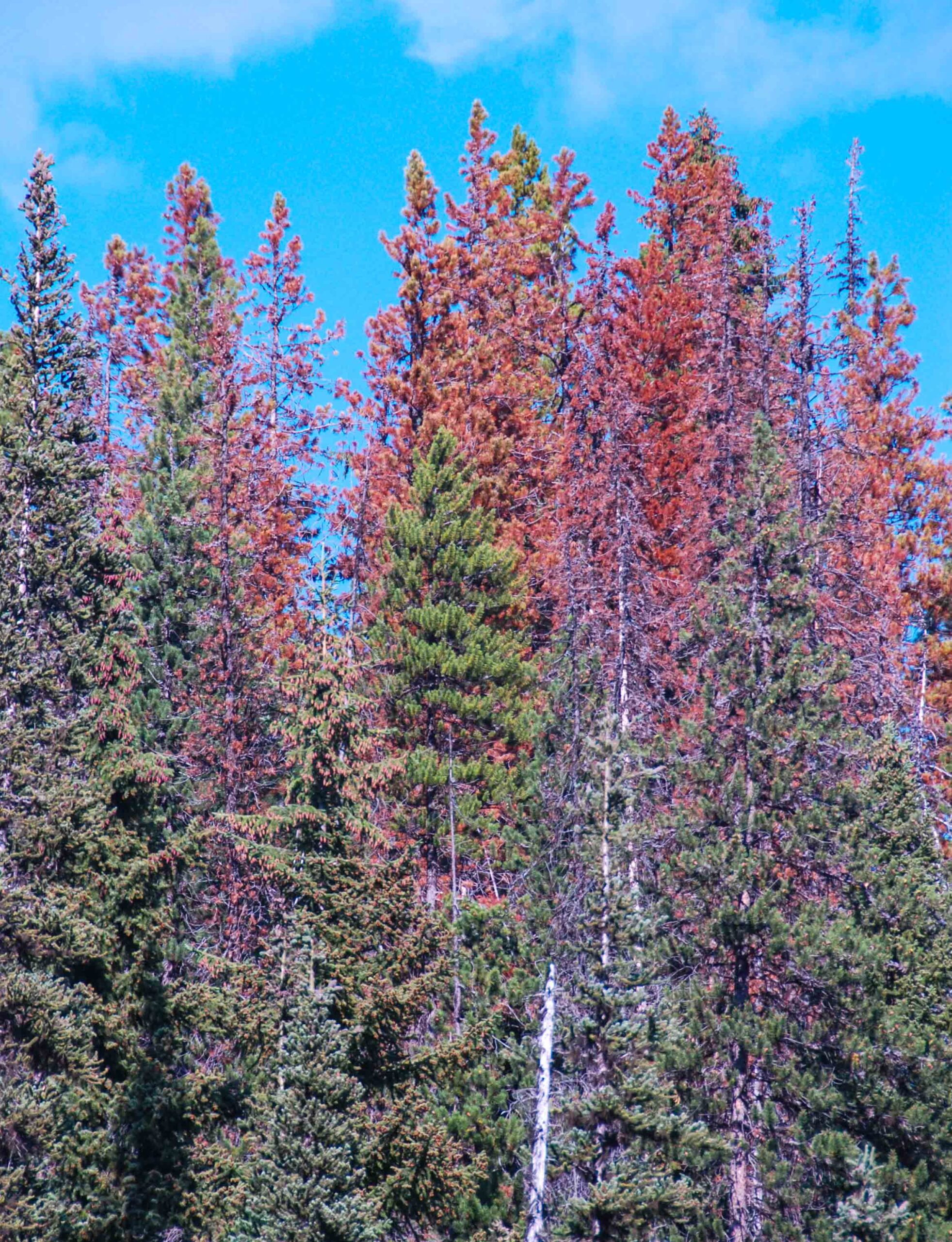
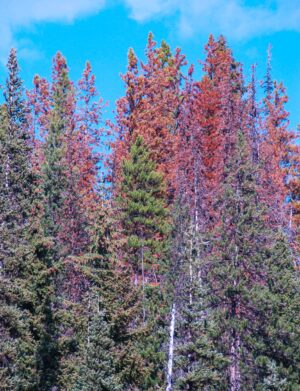 Since the mid-1990s, so-called blooms of bark beetles have affected nearly 80% of Colorado’s 4.2 million acres of pine forest, reducing decades-old trees into firewood. In the process, they’ve literally laid the groundwork for some of the state’s most devastating forest fires, from the 2016 Beaver Creek Fire in Walden to the 2020 East Troublesome Fire in Grand County. Despite rendering postcard views into wildfire fodder, West does not call these beetles a pest. Like fire, they’re just a part of nature here, filling a vital biological niche in their native habitat. In the long term, experts say they even make forests healthier. “Bark beetles serve as the ecological sanitizers of the forest,” said West, who helps manage Colorado’s 24 million acres of state forestland. One paper,
 If state funding for forest health and wildfire prevention isn’t ramped back up in the next legislative session, it could hinder efforts to prevent severe fires in the coming years, Washington’s top public lands official and others warned this week. The state Legislature approved House Bill 1168 in 2021, which committed $500 million over eight years to the state Department of Natural Resources for wildfire preparedness and response. State spending had largely kept up with that target until this year, with the department receiving $115 million in the last two-year budget and $130 million in the one before that. Then this year, as lawmakers confronted a budget shortfall, they slashed the wildfire preparedness funding to just $60 million for the next two years. The Department of Natural Resources says it’s prepared for this fire season and has money left over from past years. But the funding rollback has sparked concerns.
 The state’s top public lands official is urging lawmakers to restore the spending to previous levels after they cut it by about half this year. If state funding for forest health and wildfire prevention isn’t ramped back up in the next legislative session, it could hinder efforts to prevent severe fires in the coming years, Washington’s top public lands official and others warned this week. The state Legislature approved House Bill 1168 in 2021, which committed $500 million over eight years to the state Department of Natural Resources for wildfire preparedness and response. State spending had largely kept up with that target until this year, with the department receiving $115 million in the last two-year budget and $130 million in the one before that. Then this year, as lawmakers confronted a budget shortfall, they slashed the wildfire preparedness funding to just $60 million for the next two years.
  REDDING, California — In firefighting, drones get used to see hot spots in the dark, map the size of fires and look for damage. But the recent Green Fire also proves the flying robots also are effective in starting backfires on terrain firefighters cannot safely get to in the Shasta-Trinity National Forest. “If the mission is dull, dumb or dangerous, send the drone,” said John Schuler, a firefighter and US Forest Service spokesperson on the Green Fire. Drones can go where no firefighter can: Into remote areas that are difficult to impossible for crews to reach, and where manned aircraft have trouble flying due to smoke or other safety concerns. Firefighters like those on the Green Fire in the Shasta-Trinity National Forest are using drones to check fire size and directions wildfires are moving. They do the latter by dropping ping pong balls full of chemicals, said Schuler.
 The restoration of gray wolves in Yellowstone National Park has helped revive an aspen tree population unique to the region, a new study has found. Quaking aspen, one of the few deciduous tree species in the northern Rocky Mountain ecosystem, is once again thriving, after suffering severe decline during the 20th century, according to a new study. “This is a remarkable case of ecological restoration,” lead author, Luke Painter, at Oregon State University’s College of Agricultural Sciences, said. The decline in aspen growth occurred in tandem with a surge in Rocky Mountain elk, which had lost a key predator following the elimination of wolves from the region by 1930. …At the same time… aspen recovery hasn’t been uniform across northern Yellowstone — and the growth is subject to numerous potential threats including climate change and encroachment of coniferous trees, are possible such factors. And other herbivores have increased in the region.
 The state of Washington will get about $20 million for wildfire fighting efforts after a months-long delay, a Washington congresswoman confirmed Thursday. The Trump administration distributed $280 million in federal funding to forestry agencies across the country, according to the office of U.S. Sen. Maria Cantwell, D-Washington. The money will help fund the Washington State Department of Natural Resources’ efforts to train and equip wildland firefighters across the state. “The state of Washington is in the middle of an active and dangerous wildfire season,” Cantwell said in a news release. “After questioning the Chief of the Forest Service and the Secretary of Agriculture, I am pleased that Washington — and all states — are finally receiving the funding they need to prepare for and respond to wildfires this summer and in the future.”
 Crested Butte Mountain Resort (CBMR) in central Colorado has been dealing with a mountain pine beetle infestation for the last two years, but the Gunnison County resort is fighting back using small packets of pheromones stapled to trees. Beetles were first detected mountainside at CBMR in 2023… During the 2024 season, ground crews revisited large areas of lodgepole pine within and around CBMR’s boundaries, confirming limited but recent beetle activity among the trees. …But now CBMR Mountain Operations, alongside rangers with the U.S. Forest Service, are fighting the beetles back with the help of verbenone pheromone packets. Verbenone is an anti-aggregation pheromone produced by mountain pine beetles to indicate a tree has reached maximum capacity, letting other beetles know there are no resources available to consume within the tree.
 The Salt River Project has extended its partnership with the state to thin watersheds, which will also improve fire protection for communities in Rim Country and the White Mountains. In the past five years, The Valley utility has worked with the Arizona Department of Forestry and Fire Management to thin 35,000 acres of overgrown forest, including a portion of the watershed of the C.C. Cragin Reservoir. SRP has also signed long-term contracts to buy electricity from NovoBiopower, the state’s only biomass burning power plant. The Snowflake power plant remains crucial to forest restoration efforts by providing one of the few markets for the tons of low-value biomass removed on each acre treated. SRP issued a release this week stating it hopes to fund the treatment of another 52,000 acres in the next five years. SRP also helped thin overgrown forests outside Payson, adding to a buffer zone protecting the community from wildfires.
 A major logging project in Montana can continue after a federal judge on Tuesday denied a motion for a preliminary injunction filed by four environmental groups. Last year, the U.S. Forest Service and the U.S. Fish and Wildlife Service approved the Round Star logging project, which covers 28,300 acres of land about 13 miles west of the city of Whitefish. …The agencies also approved the construction of nearly 20 miles of permanent roads in the national forest. …The four conservation groups — Alliance for the Wild Rockies, Native Ecosystems Council, Council on Wildlife and Fish and Yellowstone to Uintas Connection — sued to stop the logging in January, and filed their motion for a preliminary injunction months later. By that time, the logging was already underway. …Though the timing of the motion wasn’t a dealbreaker for the motion, DeSoto also found that the plaintiffs are unlikely to succeed on the merits of the case.
 After months of deliberation, a years-old vision to restore local control of some of Pacific and Wahkiakum counties’ most productive timberlands is a step closer to becoming a reality. Last Tuesday, representatives from the Columbia Land Trust presented to both sets of commissioners a near-complete draft of the charter for the Upper Grays River Community Forest. The document lays out the legal framework and governance structure for a working forest in the upper Grays River watershed, which will straddle the boundary between the two counties. “The purpose… is to provide a legal entity… to undertake, assist with and otherwise facilitate the acquisition, ownership, maintenance, harvest, and management of a community forest or forests within Pacific County and Wahkiakum County to provide economic, environmental and community benefits to the public,” the charter’s fourth article reads.
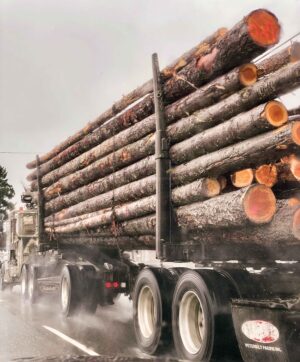 On March 1, 2025, President Trump issued an executive order directing the Secretaries of Agriculture and the Interior to develop plans to increase timber production on federal lands. The order was motivated by two stated priorities: expanding the timber supply and addressing rising wildfire risks. The US Forest Service has responded with a goal of increasing timber offered for sale by 25 percent over the next four to five years. This report puts the Trump administration’s actions into context by reviewing the history of harvest from federal lands and evaluating current forest inventories and treatment needs. It asks: What would be the effect on wildfire risk if federal land management agencies increased harvests by 25 percent? Opportunities for harvests that successfully mitigate risk may be limited by the absence of active timber markets, the availability of a qualified workforce, and the economics of fuel removals.
 An unusual alliance of Republican lawmakers and animal rights advocates, together with others, is creating storm clouds for a plan to protect one threatened owl by killing a more common one. Last August, the U.S. Fish and Wildlife Service approved a plan to shoot roughly 450,000 barred owls in California, Oregon and Washington over three decades. The barred owls have been out-competing imperiled northern spotted owls in the Pacific Northwest, as well as California spotted owls, pushing them out of their territory. Supporters of the approach — including conservation groups and prominent scientists — believe the cull is necessary to avert disastrous consequences for the spotted owls. Last month, The Times has found, federal officials canceled three owl-related grants to the California Department of Fish and Wildlife totaling roughly $1.1 million, including one study that would remove barred owls from over 192,000 acres in Mendocino and Sonoma counties.
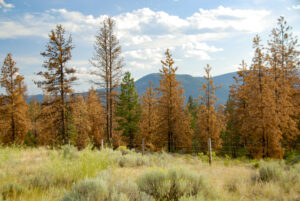 In 2023 and 2024, the hottest years on record, more than 78 million acres of forests burned around the globe. The fires sent veils of smoke and several billion tons of carbon dioxide into the atmosphere, subjecting millions of people to poor air quality. Extreme forest-fire years are becoming more common because of climate change, new research suggests. Boreal forests lost more than two times the canopy area in 2023-24 compared with the period between 2002 and 2022, the study found. Tropical forests saw three times as much loss, and North American forests lost nearly four times as much canopy, mostly because of Canada’s wildfires. Significant losses were in remote forests, far from human activities. That isolation suggests fires are increasing primarily because of climate change, said Calum Cunningham, a fire geographer at the University of Tasmania who was not involved with the study. “Chronic changes in climate are making these forests more conducive to burning,” Dr. Cunningham said. [a paid subscription is required to read this article]
 Conservation groups sued the U.S. Fish and Wildlife Service on July 17 for denying Endangered Species Act (ESA) protections to the north Oregon Coast population of red tree voles. The lawsuit, filed by the Center for Biological Diversity, Bird Alliance of Oregon, Oregon Wild and Cascadia Wildlands, claims the USFWS’ February 2024 decision that the population was not warranted for ESA protections deprives it of critical protections necessary to ensure its survival. “Red tree voles have graced Oregon’s coastal old-growth forests for thousands of years, but we could lose them forever if they don’t get Endangered Species Act protections soon,” said Ryan Shannon, a senior attorney in the Center for Biological Diversity’s endangered species program. …Due to decades of logging, this population has been eliminated from most of its historic range. It also faces an existential threat from wildfire that is worsening under climate change, according to the lawsuit.
 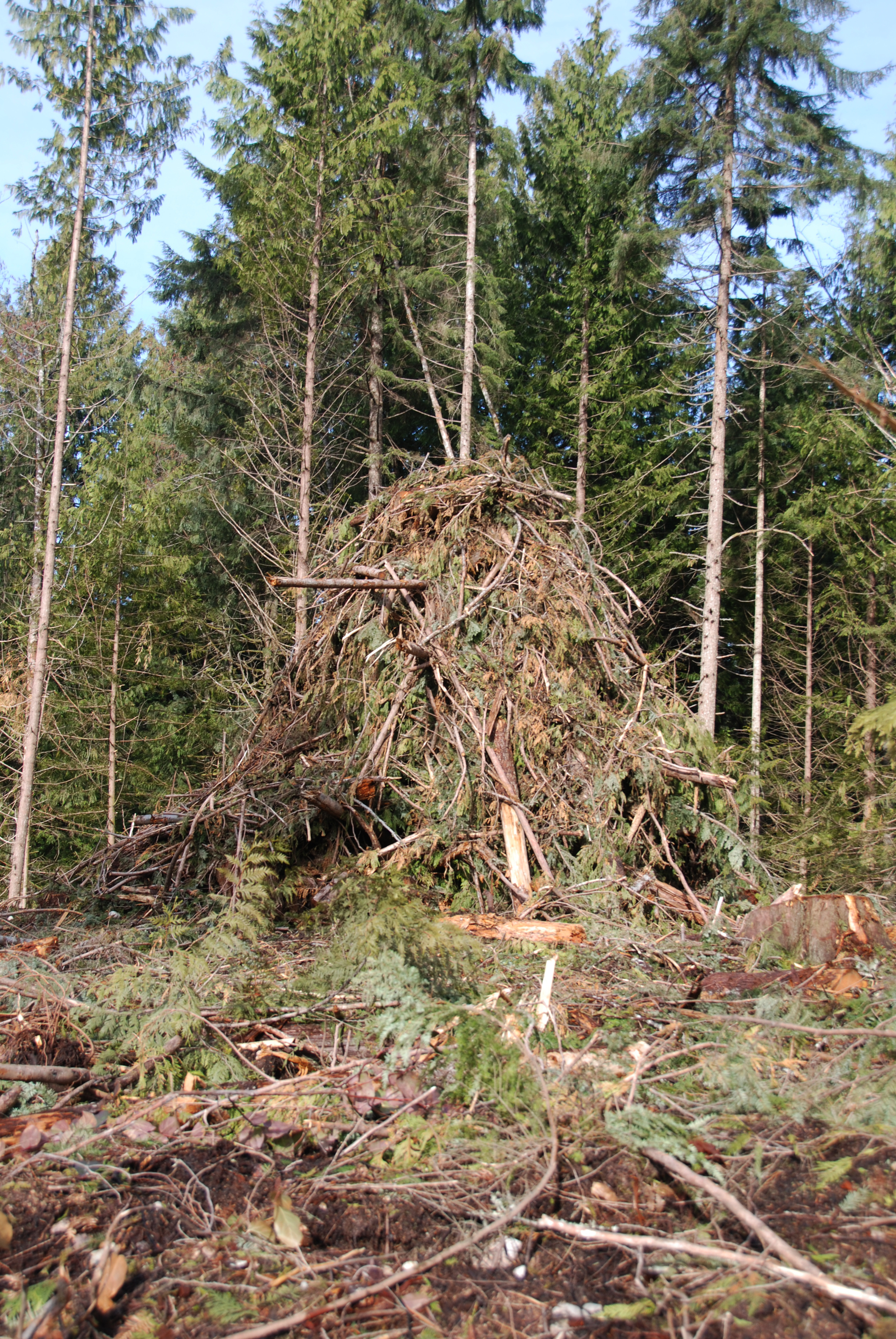 The Oregon Department of Forestry is teaming up with the owner of 33,000 acres of private timberland west of Bend to test a new technology that reduces the amount of smoke produced during pile burning activities, and reduces wildfire risk. A pilot project is set to be held in October on Shanda Asset Management’s Skyline Forest, a vast swath of timberland that has long been the target of conservation efforts. The project entails using an air curtain burner — a container-sized unit that burns wood slash from thinning projects. Instead of releasing particulate matter into the atmosphere, these units capture smoke and produce biochar. It also reduces the risk of a wildfire caused by embers escaping from burning piles. Another advantage is limiting the spread of tree disease and insects — air curtain burners have proven to be better than pile burning when containment is needed.
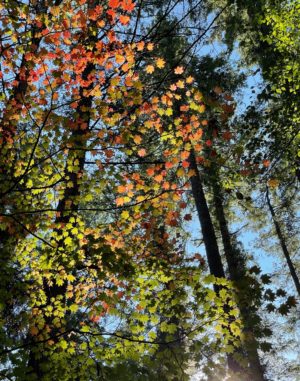 For 11 straight years, the National Arbor Day Foundation has recognized UAB as a Tree Campus USA. The recognition is for UAB’s work to plant and care for the more than 4,400 healthy trees on campus, while engaging students and employees in learning about and preserving them. UAB has been honored for the past six years with the National Arbor Day Foundation’s Tree Campus Healthcare designation. The national recognition program celebrates health institutions that make a mission-aligned impact on community wellness through tree education, investment and community engagement. The university’s urban forest is managed by the UAB Facilities Division, which maintains data on its trees: An ongoing project includes collecting details on the more than 17 genus and 24 tree species currently across campus. Students played an important part in helping identify and maintain data on the trees.


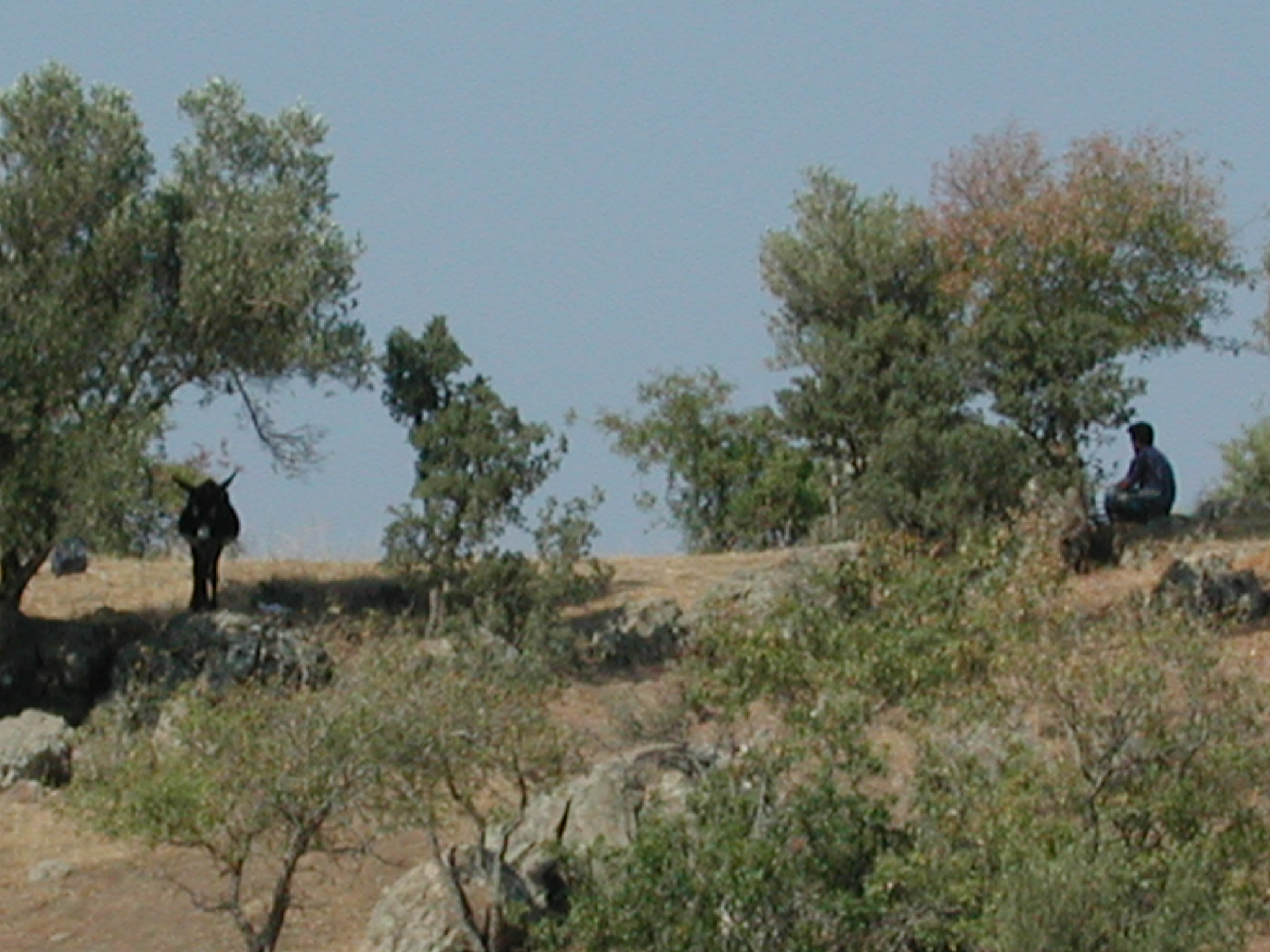 KALAVRYTA, Greece – Around the village of Kalavryta in southwestern Greece, hundreds of dying fir trees stand out among the dark green foliage, a stark reminder of how drought slowly drains the life from nature. Greek fir species Abies cephalonica are known to need cooler, moist climates. But prolonged droughts in recent years linked to a fast-changing climate in Greece are leaving them exposed to pest infestations, scientists and locals said. …Less water and moisture mean that fir trees become more vulnerable to attacks by pests that bore into their bark to lay eggs and create tunnels, disrupting the trees’ ability to transport nutrients between roots and branches and leading to their death. …In Kalavryta, authorities plan to remove dead and infested trees to limit the damage. But this might not be enough to save the forests. “We cannot stop climate change,” director of research at the National Observatory of Athens, Dr Kostas Lagouvardos said.
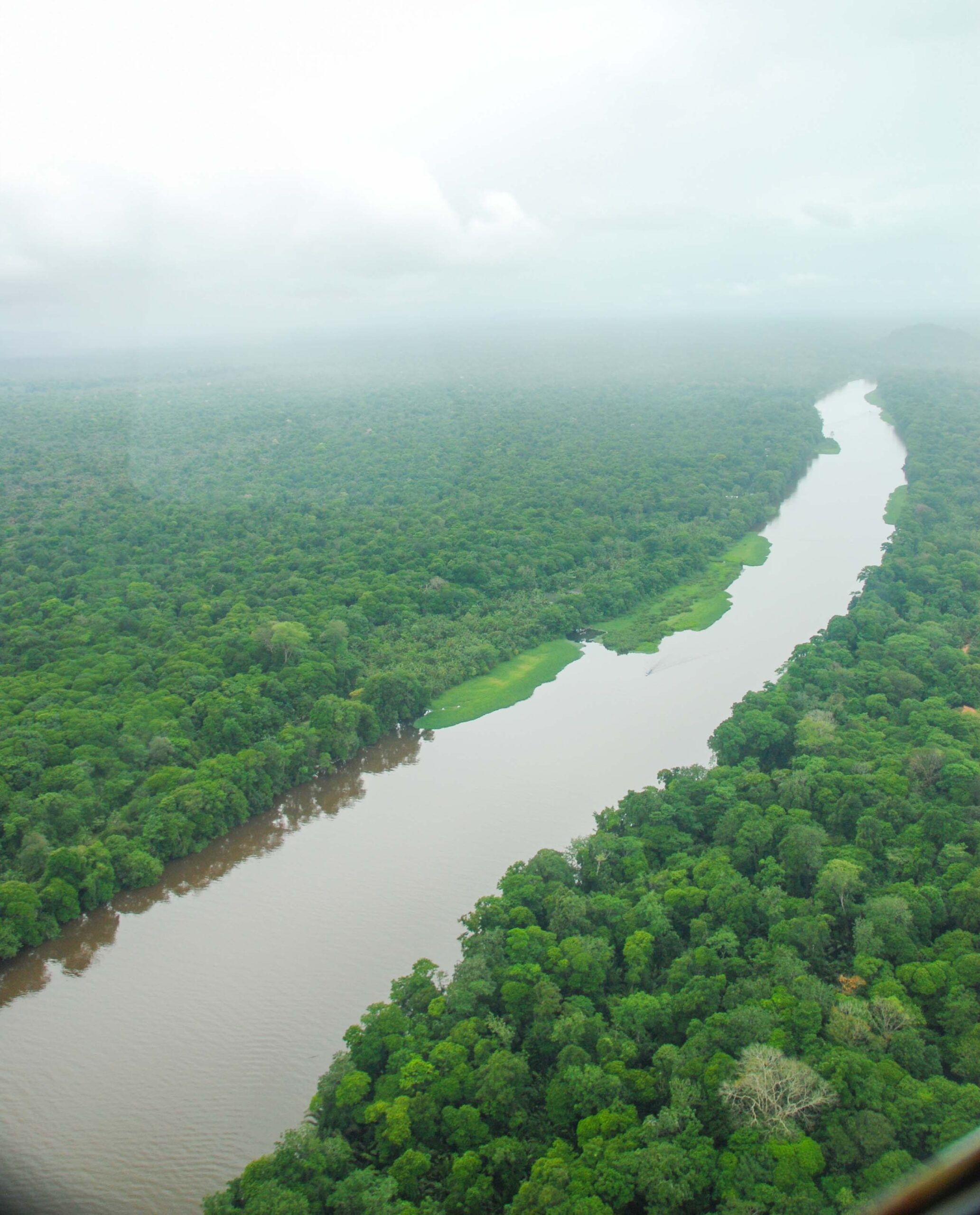 Costa Rica is advancing with the creation of a National Forest Traceability System, a key tool to guarantee the legality and sustainability of timber use. Public and private sectors came together for the first time to plan this initiative. This process is led by the Ministry of Environment and Energy through the Vice Ministries of Environment and Strategic Management of Costa Rica, with technical support from the FAO. It is part of a national strategy to strengthen forest legality, reduce the risk of illegal timber trade, and enhance the competitiveness of the Costa Rican forestry sector in demanding markets such as Europe (EUDR) and the United States (Lacey Act). “Costa Rica has made significant progress in forest legality, but the next step is to integrate technology and innovation into the process to ensure traceability from the farm to the primary wood product,” commented Franz Tattenbach, Minister of Environment and Energy.
 In 2023 and 2024 the world’s forests absorbed only a quarter of the carbon dioxide they did in the beginning of the 21st century, according to data from the World Resources Institute’s Global Forest Watch. Those back-to-back years of record-breaking wildfires hampered forests’ ability absorb billions of tons of carbon dioxide, curbing some of the global warming caused by fossil fuel emissions. Those two years also marked the first time wildfires surpassed logging or agriculture-driven deforestation as the biggest factor lowering forests’ carbon-capturing ability. It’s an emerging pattern that’s different from the last big drop, in 2016 and 2017, which was largely the result of increased deforestation for agriculture. …Other recently published studies suggest that climate change is making extreme-forest-fire years more common, and the worst events more frequent and intense. …“We’re reaching the point where global warming is feeding the warming,” said Werner Kurz, an emeritus scientist for the Canadian Forest Service. [A subscription to the New York Times is required to access the full story]
 Alastair Collier is right to point out that to build forests that can withstand future conditions, we must invest in resilience from the outset (Britain’s forests need help to adapt to the changing climate
 At the southern tip of Europe’s largest river island, the ground falls away into a vast and unexpected vista. From a high, rocky ledge on Khortytsia Island, the view opens on to a sea of swaying young willows and mirrored lagoons. Some of the trees are already many metres tall, but this is a young forest. Just a few years ago, all of it was under water. “This is Velykyi Luh – the Great Meadow,” says Valeriy Babko, a retired history teacher and army veteran, standing on the former reservoir shoreline at Malokaterynivka village. For him, this extraordinary new-old environment represents more than nature alone. “It is an ancient, mythic terrain, woven through Ukrainian folklore,” he says. “Think of all those Cossacks galloping through its valleys of forests so dense the sun barely pierced them.”