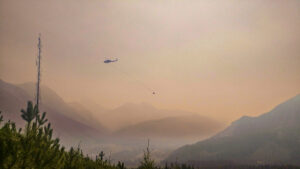
 Six Republican lawmakers have sent a letter to Kirsten Hillman, Canada’s ambassador, calling for action on the wildfires sending smoke billowing across the international border into their states. Representatives Tom Tiffany, Brad Finstad, Tom Emmer, Michelle Fischbach, Glenn Grothman and Pete Stauber of Wisconsin and Minnesota said their constituents are coping with suffocating smoke from Canadian wildfires. “We would like to know how your government plans on mitigating wildfires and the smoke that makes its way south,” the letter said. The lawmakers said successive years of wildfires in Canada have undermined air quality in their states and robbed Americans of their ability to enjoy the summer. They pointed to forest management and arson as possible factors behind the fires. They did not mention climate change. …Canadian officials warned last month that this year’s wildfire season could shape up to be the second-worst on record… although the threat appears to have eased somewhat recently.
Related coverage in:
- Wildfire Today: American Republicans claim Canada’s wildfires are due to ‘poor management’ and demand nation deal with smoke
- National Observer: Trump allies fume Canadian smoke is ruining summer – and offer misinfo as the solution
- BBC: US lawmakers complain that Canada’s wildfire smoke is spoiling summer



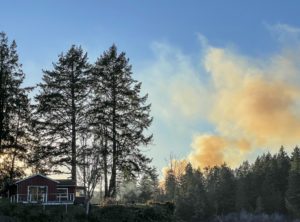 As world leaders gathered for the G7 summit last week in Kananaskis, Alberta, more than 50 wildfires burned across the province. The leaders’ joint statements included the
  In partnership with the First Nations Leadership Council, the Province is moving forward to the next stage of consultation and engagement on modernizing the Heritage Conservation Act. The act, which regulates the protection, management and conservation of cultural and heritage sites in B.C., was last substantively updated in 1996. “The Heritage Conservation Act is how we protect important cultural and archeological sites in B.C., but the current system doesn’t work well for people, and it doesn’t fully reflect our shared values or commitments,” said Ravi Parmar, Minister of Forests. “As we embark on this important engagement, I am committed to ensuring our collective work will lead to a system that will support faster permitting, better planning and more meaningful discussions with people, communities, industry and First Nations.” The project is a multi-year collaborative effort, mandated in 2021 and co-developed through the Joint Working Group on First Nations Heritage Conservation…
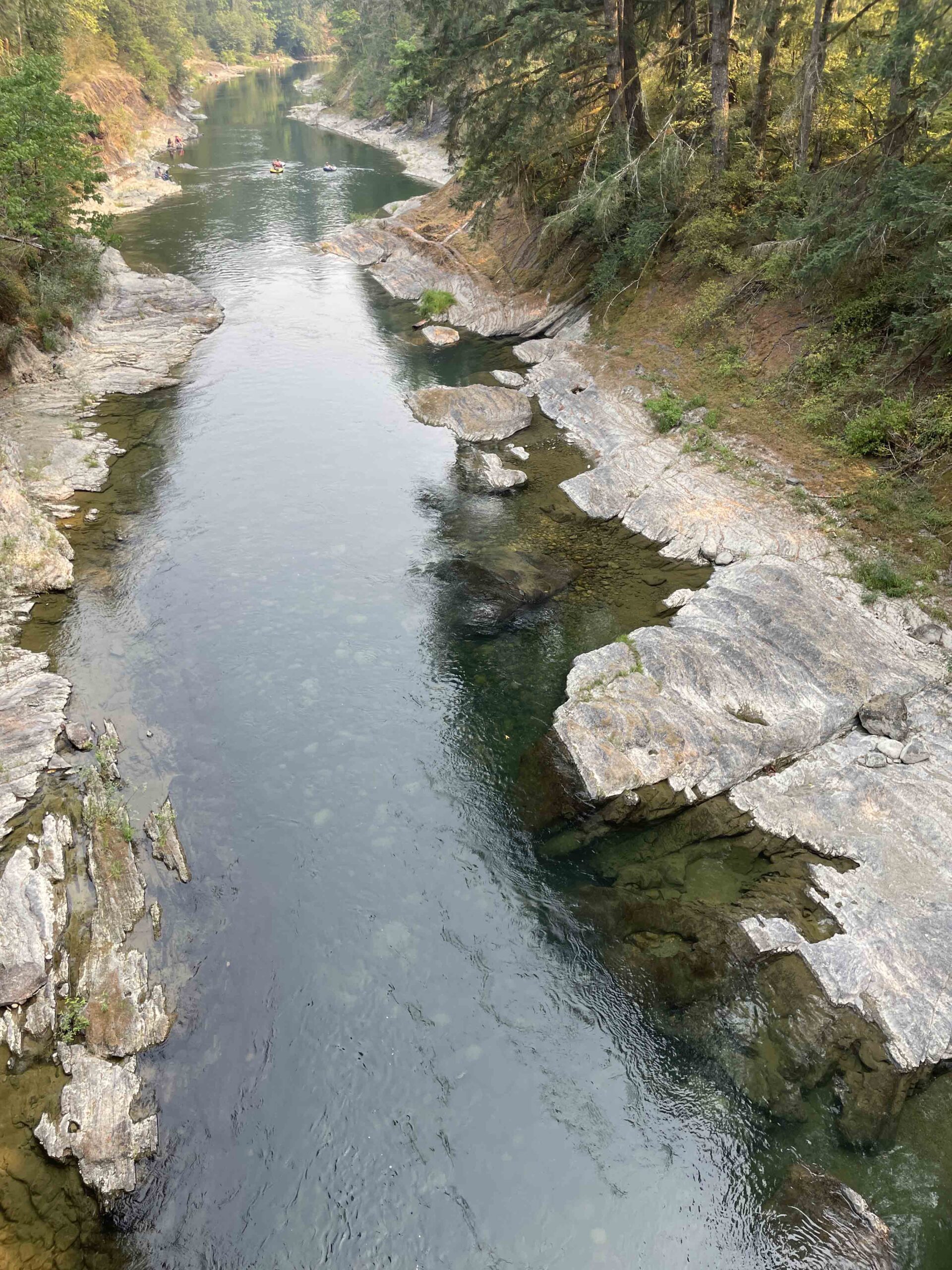 Flow at the Cowichan River will be reduced again with the lake at 48 per cent full. Brian Houle, environmental manager at Domtar’s Crofton pulp mill, says a meeting with regulators of the watershed on July 7 led to an agreement to reduce flow from seven cubic metres per second (cms) to 5.5. “Given the summer 2025 drought conditions in Cowichan Lake, careful watershed management decisions need to be made,” reads a news release from Houle. “Today’s water levels are not dissimilar to 2023, when several factors resulted in a fish kill event in the upper Cowichan River and pumping of lake to river was needed for extended period of 36 days in the fall.” In May, the flow was reduced to seven cms and Houle said the plan was to hold that rate through July and August. In 2023, the river flow was reduced to 4.5 cms in May. Houle says keeping it at seven this year was intended to reduce impacts on fish.
 NELSON, BC — BC Timber Sales is talking to residents about logging and wildfire protection planned for the Falls Creek watershed in the Bonnington area. In a June 6 letter to residents posted on social media, Mark Tallman, planning forester for BCTS, said the agency is beginning a community watershed planning process that will include local residents. …Will BCTS have already decided which trees will be cut before the watershed plan is created? …A Ministry of Forests spokesperson said potential cut blocks have not yet been mapped. “The project is being designed to use early engagement with interested parties to help guide BCTS planning around forest harvesting, road construction, and wildfire risk reduction.” …An initial draft of the watershed forest plan is expected to be completed by “early winter 2026” and the “timing of the timber sale is anticipated to be around 2028-29 at the earliest.
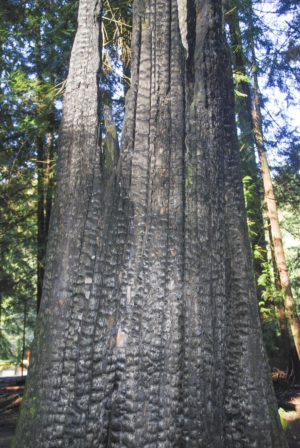 It’s a widely-accepted mystery: whether or not a tree that falls in the forest makes a sound. But what about the riddle that Jasper National Park officials were faced with last year: If hundreds of thousands of burned trees are down in high visitor use areas, who clears them away? Since the Jasper Wildfire Complex razed 33,000 ha of Jasper’s forests last July, Lethbridge’s Adam Ross and his team of arborists, foresters, danger tree specialists and wildlife tree assessors, have been cutting, pruning, clearing, mulching, sawing, chipping and generally making passable the area’s roads, right-of-ways and trails. “Bush surgeons, that’s who we are,” says Ross, who owns and operates Rossco’s Tree Service. Ross’ company has been contracted to clear all of Jasper’s campgrounds, day-use areas and roadways impacted by the fire. The enormity of the crews’ task is difficult to put into perspective, and not just because of the sheer volume of trees to be cleared.
 Fire hazard assessments and hazard abatement are key activities in reducing the potential threat of wildfires arising from fuels left on the land base following industrial activities. Under the Wildfire Act a person carrying out an industrial activity or prescribed activity is required to assess and abate fire hazards as necessary. The BC Wildfire Service has developed



 At
At 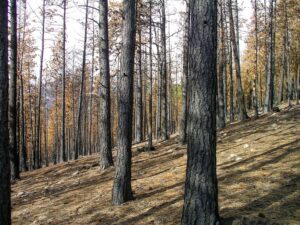 WHITEHORSE, Yukon — Communities in southern Yukon will reduce their wildfire risk after a combined investment of more than $17 million from the federal and Yukon governments. The funding was announced by Dr. Brendan Hanley, Parliamentary Secretary to the Minister of Northern and Arctic Affairs and Member of Parliament for Yukon. …Funding for the Government of Yukon’s Wildland Fire Management branch will decrease fire risk in the communities of Whitehorse, Teslin, and Haines Junction—communities which are part of the northern boreal forest region and prone to aggressive wildfire behaviour. …New treatment will include reducing or managing materials that are flammable or combustible in the wildland-urban interface. These measures follow national standards set out by FireSmart Canada and will increase the wildfire resilience of these three communities.
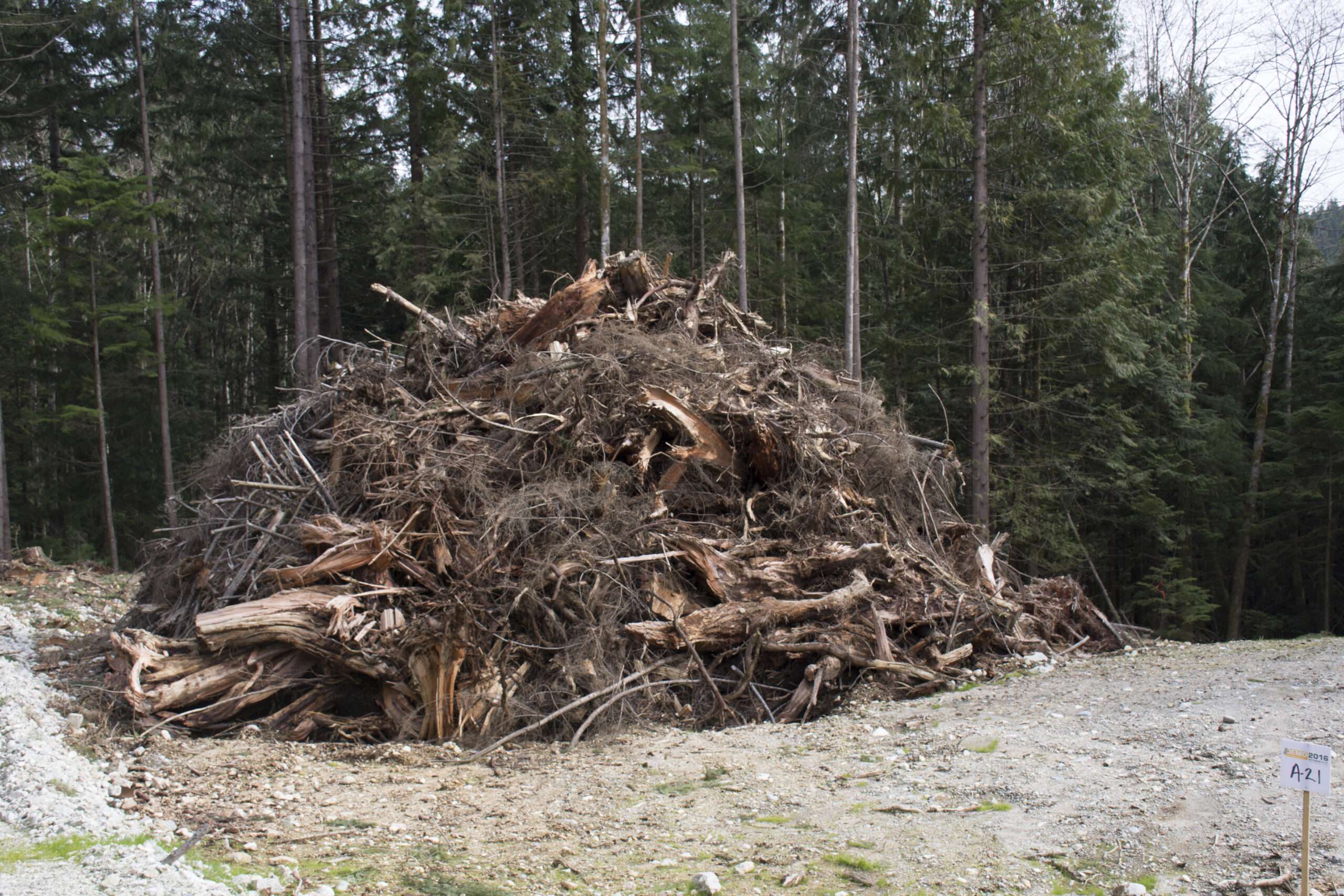 On the Easter long weekend, there was a wildfire on Egmont Forest Service Road that had to be controlled by the local fire department because a logging slash pile being burned was left unattended. How big does a wildfire have to get before the shíshálh Nation or the province will finally fulfill their promises to the residents around North Lake in Egmont? …Four years ago we participated in a community engagement process with BC Timber Sales and the shíshálh Nation regarding the cutting of 60,000 cubic metres (thousands of trees) around North and Klein Lakes. …One of the bigger concerns that we had was the removal of hundreds of large burn piles created by the logging. We were promised by both BCTS and the shíshálh Nation that the burn piles would be dealt with after the logging ended. It is now two years later and the burn piles have not been removed.
 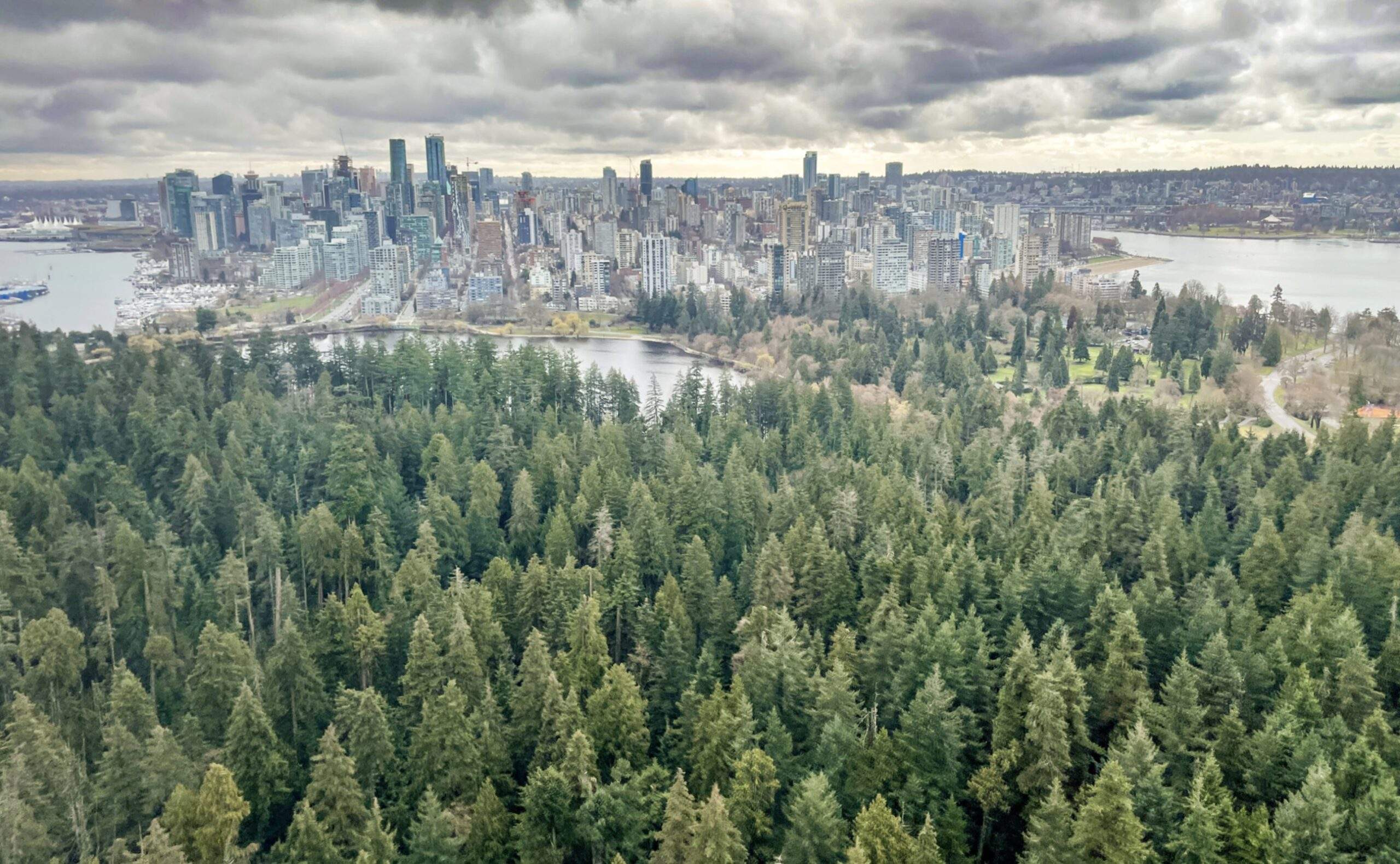 Four years ago, British Columbia endured the deadliest weather event in recorded Canadian history. The 2021 heat dome claimed the lives of more than 600 people, many of whom died alone in overheated homes. As we mark the fourth anniversary of this devastating mass casualty event with record-breaking heat elsewhere in the country, we must confront a troubling truth: B.C. remains dangerously unprepared for the next one. Despite some advancements, including updated building codes, rebates for heat pumps and a now-depleted $30-million fund to provide vulnerable households with air conditioning units, one of the most critical aspects of climate readiness has seen little to no progress. In fact, it’s getting worse. Our communities are rapidly losing tree canopy, green space and permeable surfaces — the very elements that keep cities cooler during extreme heat.
 Llenllenéy’ten (High Bar) First Nation (HBFN) has signed a historic Joint Development Agreement (JDA) with West Fraser Timber Co. Ltd. (West Fraser). The JDA was signed during HBFN’s National Indigenous Peoples Day event in Clinton on June 21. A press release issued by High Bar on June 24 stated that “The landmark agreement highlights HBFN’s commitment to sustainable forest management through partnership with the private sector to achieve mutually beneficial outcomes.” The relationship ensures fibre supply for West Fraser, and opens the door for more diverse fibre product development. At the same time, HBFN notes that the agreement creates a path toward increased resource revenues and decision-making authority for HBFN, which marks a meaningful step toward economic reconciliation. Under the JDA, West Fraser will transfer a portion of its timber harvesting rights to Llenllenéy’ten (High Bar) First Nation.
  With wildfire season in full swing, an immigration consultant says there is a simple way to end the shortage of qualified people to fight wildfires: Let existing, trained firefighters who are non-residents stay once their work permits expire by letting them choose a path to permanent residency. Jennie McCahill is representing Irish national Jake McGavin, a team leader with a wildfire-fighting contractor called Carmanah Wildfire, which is based in Sidney but has firefighting crews spread all over B.C. …McGavin, who turns 29 in September, is in his third season fighting wildfires in B.C. He’s been lucky to have received a pair of two-year work permits, but the second is soon to run out. …He wants to stay in Canada not only because he’s fallen in love with B.C. …”Unfortunately, Immigration, Refugees and Citizenship Canada does not recognize wildland firefighting as skilled work.”
 Over 7,600 people shared their views on outdoor recreation in a first-ever public survey conducted by Mosaic. “The feedback we received tells us how important Mosaic’s managed forests are to people’s lives,” said Jimmie Hodgson at Mosaic. “It reinforces our responsibility to work toward solutions that reflect what we heard.” Early findings show:
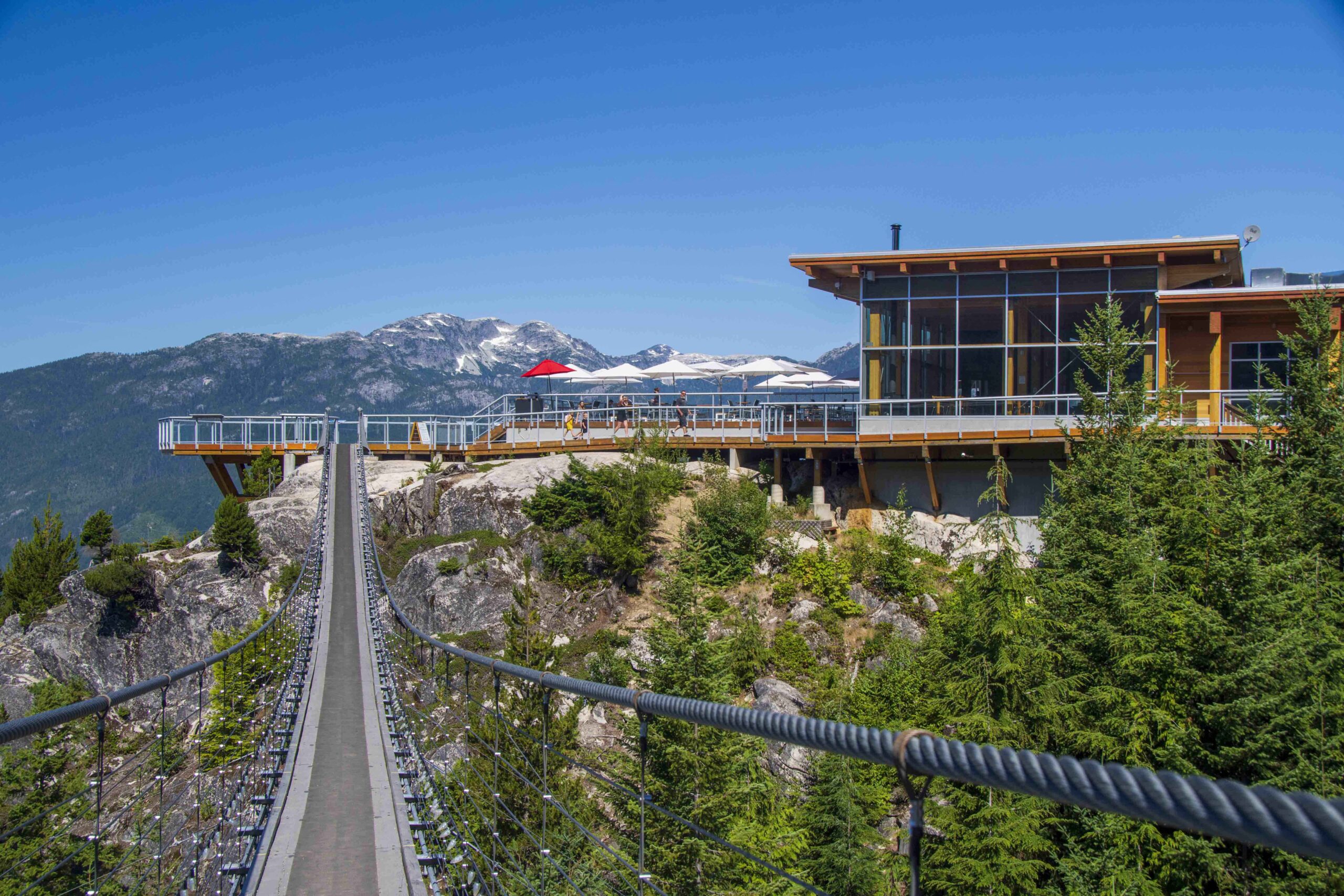 Sḵwx̱wú7mesh Úxwumixw (Squamish Nation) and the Province have signed an agreement to guide forest stewardship in Squamish Nation territory at a ceremony held at the top of the Sea-to-Sky gondola overlooking Átl’ḵa7tsem (Howe Sound). “This agreement will ensure our cultural sites and key environmental areas are protected for future generations. These have been our lands for thousands of years, and the fact they are now back under our direct control provides a greater sense of security for our people, and a strong optimism for our future,” said Sxwíxwtn Wilson Williams, Councillor and elected spokesperson, Sḵwx̱wú7mesh Úxwumixw (Squamish Nation). …The next step will be to complete a ministerial order, which will include consultation with First Nations, and engagement with the public. It aims to establish objectives for the forestry sector to follow in alignment with the agreement and provide the Squamish Nation certainty in sites of high value.
 Firefighters are urging hikers and mountain bikers not to enter trails closed due to a wildfire just north of Squamish, B.C., ahead of the Canada Day long weekend. The Dryden Creek wildfire, which was discovered on June 9, is considered under control by the B.C. Wildfire Service, but a local state of emergency remains in Squamish and a campfire ban remains in effect for the district. Fire suppression work is ongoing in the area, and evacuation orders and alerts remain due to the danger of trees falling and rocks rolling loose. Despite that, firefighters say they’re seeing people disobey trail closures, which could prove to be a risky decision. “Especially last weekend, numerous hikers and mountain bikers accessed trails that were closed,” said B.C. Wildfire fire information officer Jennifer Lohmeyer on Tuesday. “Some people even moved barriers that had been put in place to indicate that the trail was closed,” she added.
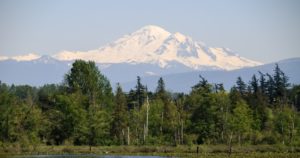 The City of Delta is undertaking an inventory of its trees. Crews started last week in Ladner, collecting data on street and park trees as part of Delta’s Urban Forest Strategy. In its request for proposals this spring for a qualified arboricultural consultant to conduct the urban forest subsection inventory of individual city-owned urban trees, the city noted it wanted to focus on street and park specimen trees. The project does not include trees on private property, nor is it the intent to include larger stands of trees in the city’s natural areas. The purpose of the project is to expand a tree inventory that was started in-house in 2023, improve asset management, as well as gain an accurate cost of a city-wide tree inventory for areas with low, medium and high canopy coverage.
 It’s been hot in southern Ontario [with] apocalyptic news coverage out of Toronto…. “The world is burning,” announces the headline of a parenting advice column in The Globe and Mail. “Should we tell our children?” The author’s children are not told about forest fires… They are not told about the huge, ongoing increase in greenhouse gas emissions in Asia, cancelling out many times over the modest reductions achieved at great cost in North America and Europe. …The answer… is that natural variability is larger than the trend line produced by statistics. It’s true that Canada has seen more communities damaged or destroyed by fire, but that’s largely because there are more communities. …The Second World War was nearing its end, but the war on forest fires was just beginning, with the deployment of heavy equipment as well as aircraft. Saving timber was the goal, and the unintended consequences have piled up ever since.
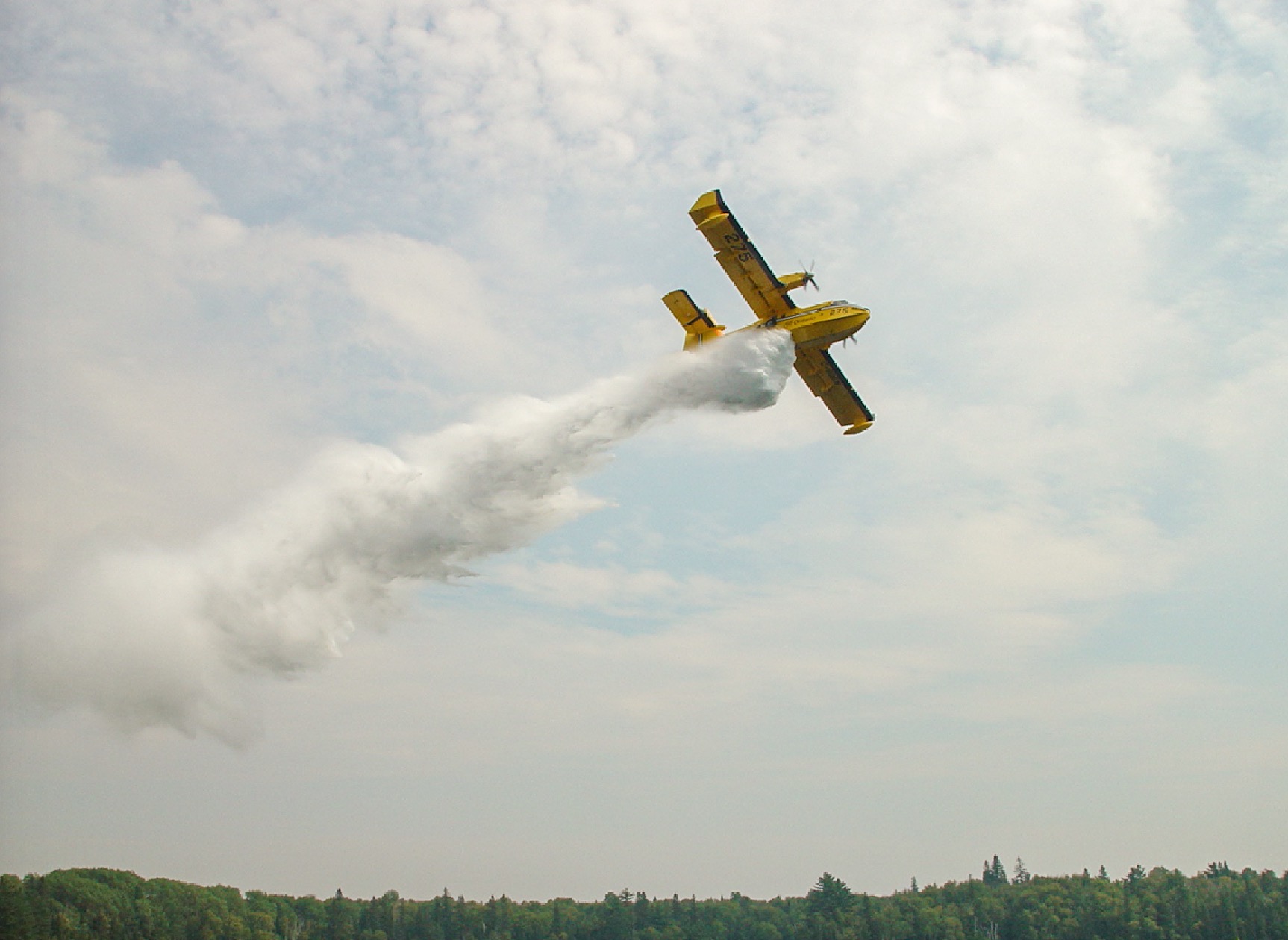 The union representing Ontario’s wildland firefighters says they’re working long hours that are contributing to “fatigue,” and is calling for a funding increase to address a lack of resources. “Historically Ontario’s had about 180 four-person fire crews,” said Noah Freedman, a wildfire crew leader in northwestern Ontario and vice-president of Local 703 of the Ontario Public Service Employees Union (OPSEU). …”While we should be looking to staff more firefighters, and have more water bombers and pilots and all of our incredible support staff that we need more of, we’re just going the other direction at the moment.” Freedman said the union has been unable to confirm the exact number of crews currently operating; last year, there were 143. …The province is also short water bomber pilots.
 The other day, in the midst of a heat wave that suffocated central Canada, this newspaper brought us the story of a five-year-old at a public school in Ottawa, sent to hospital for heat exhaustion. The accompanying photo shows the child and his mother seated on a picnic table in the schoolyard, surrounded by grass and pavement – and one tree. As a forester, I volunteer with a program of Forests Canada called Forestry in the Classroom, whose goal is to connect ”the next generation of forest stewards with forestry and environmental professionals.” This spring I visited a school in north Toronto to take a class of Grade 5 students to a nearby forested ravine, to help them identify trees and to evaluate tree health. On my arrival at the school, I was shocked to find the playground a barren wasteland.
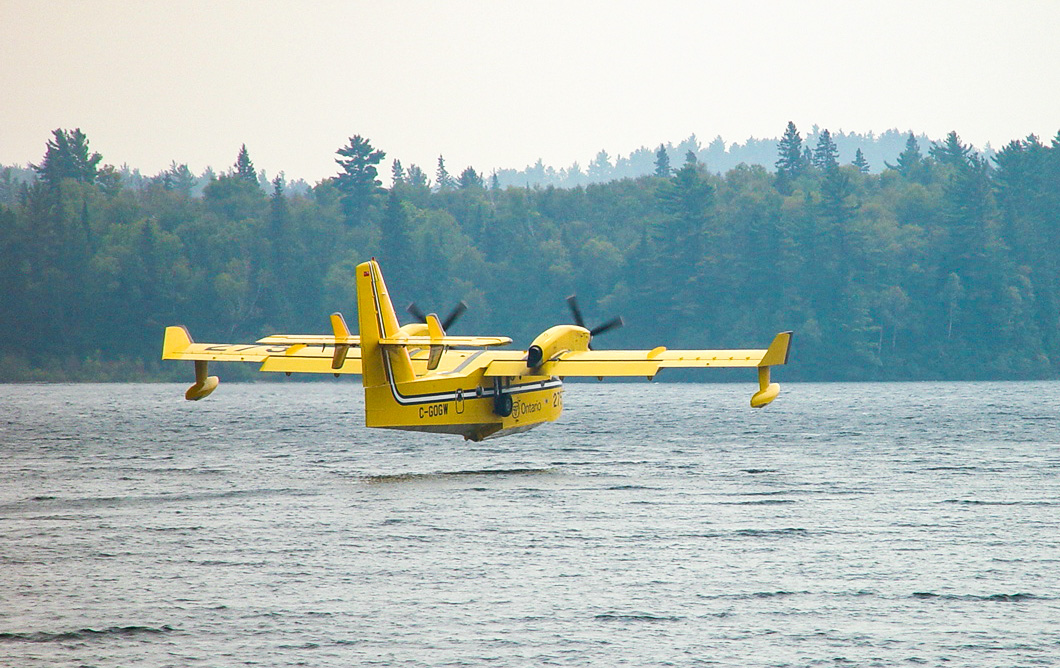 For years, forest firefighters in Ontario have been calling on the provincial government to reclassify their jobs to recognize them as an emergency service in a bid to stem recruitment and retention issues. It’s a change the Ford government promised it would take on after sustained pressure from front-line staff and union officials. The province now says work to reclassify forest firefighters — officially called resource technicians — has been “completed,” and is blaming the Ontario Public Service Employees Union for a delay in announcing the move. Whether the terms the government has put forward address the substantive changes called for by forest firefighters is contested. Draft information seen by Global News shows the reclassification involves renaming positions within the existing union structure — and moving people one category further up the grid, for a raise of roughly $3 per hour.
 WASHINGTON, D.C. – Northland congressmen are pushing for stronger forest management practices in Canada. Representatives Tom Tiffany of Northwest Wisconsin and Pete Stauber of Northeast Minnesota were included on the letter sent to Canada’s ambassador Kirsten Hillman urging better management of forests to help with wildfire risk. In the letter, the lawmakers wrote: “As I’m sure you know, this is not the first year Canadian wildfire smoke has been an issue. …While we know a key driver of this issue has been a lack of active forest management, we’ve also seen things like arson as another way multiple large wildfires have ignited in Canada. With all the technology that we have at our disposal, both in preventing and fighting wildfires, this worrisome trend can be reversed if proper action is taken.” …The letter asked the ambassador to address the issue with key Canadian agencies, such as the Canadian Forest Service.
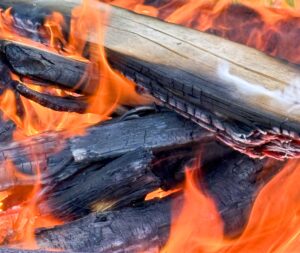 The hills of Louis Creek Valley are covered in lovely, towering Douglas fir, healthy evergreens climbing from the grassy meadow at the valley floor up to the ridges where the mountains meet the sky. It’s lush, like much of interior British Columbia, where densely packed conifers line the innumerable wooded valleys, the heavy cone-laden branches reaching down to the ground. Joe Gilchrist, a fire steward of Secwepemc people, and a firefighter for more than 30 years, stands on the valley floor and looks at the beautiful trees. But what he sees first is danger. “It’s been over 100 years since it’s been illegal for Indigenous people to use fire on the land, and so in that time, the trees have overgrown the area, and some of the trees have got diseased,” he says.
  The clock is ticking to register and make plans for the 38th Forest Products Machinery & Equipment EXPO from August 6-8 in Nashville, and you do not want to miss it! EXPO is the epicenter of the entire wood products manufacturing sector – held only every other year – with numerous exhibitors showcasing state-of-the-art machinery and specialized services designed for the forest products industry. This event brings together thousands of industry leaders and decision-makers eager to explore cutting-edge products and solutions, spanning advancements in hardwood and softwood log processing, remanufacturing, pallet industries, bioenergy, engineered wood products, and pressure treatment. Seize this unparalleled opportunity to explore new machinery, engage with key decision-makers, reimagine your sawmill operations, and propel your business to new heights.
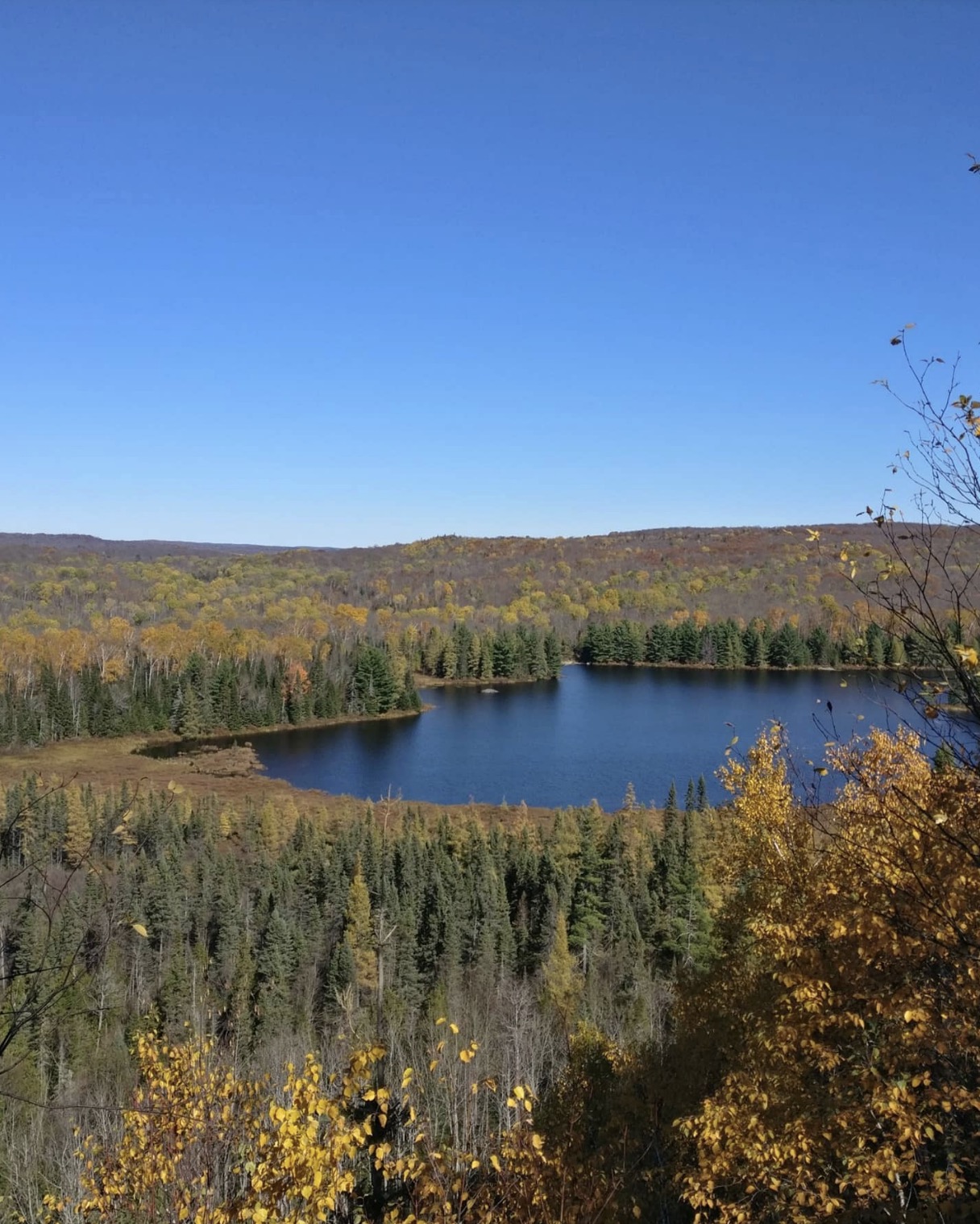 The U.S. Forest Service has proposed lifting the rule that bars roads in designated wilderness areas. The change could open 1.2 million acres of federal land in Arizona to logging. Agriculture Secretary Brooke Rollins proposed canceling the 25-year-old “roadless rule” that created some 58 million acres of wilderness areas throughout the west. Arizona’s forested wilderness areas come to about 1.2 million acres of the 11 million acres of Forest Service land in Arizona. …Environmental groups immediately decried the proposal. They said it would increase the danger of wildfires and destroy wilderness areas essential to wildlife and many forms of recreation. …However, a century of logging, cattle grazing and fire suppression has dramatically increased tree densities across forested Northern Arizona … from about 50 per acre to more like 1,000 per acre in the past century. …The Four Forests Restoration Initiative has tried and mostly failed to ramp up logging on six million acres of non protected forest already criss-crossed with roads.
 President Trump’s Executive Order (EO) “Empowering Commonsense Wildfire Prevention and Response” is the latest of several significant federal policy efforts aimed at tackling the wildfire crisis. The Federation of American Scientists (FAS) focuses on embedding science, data, and technology into government to support communities in preparing for, responding to, and recovering from wildfires. FAS applauds several elements of President Trump’s EO. For instance, the EO correctly recognizes that wildfire technology and prescribed fire are powerful tools for reducing risk and strengthening wildfire resilience. FAS is also glad to see the Administration promote interagency coordination; emphasize the importance of state, local, and Tribal leadership; and recognize the intersection of wildfire resilience and other sectors, such as the grid and our bioeconomy. We are encouraged that the Administration and Congress are recognizing the severity of the wildfire crisis and elevating it as a national priority. Yet the devil is in the details when it comes to making real-world progress.
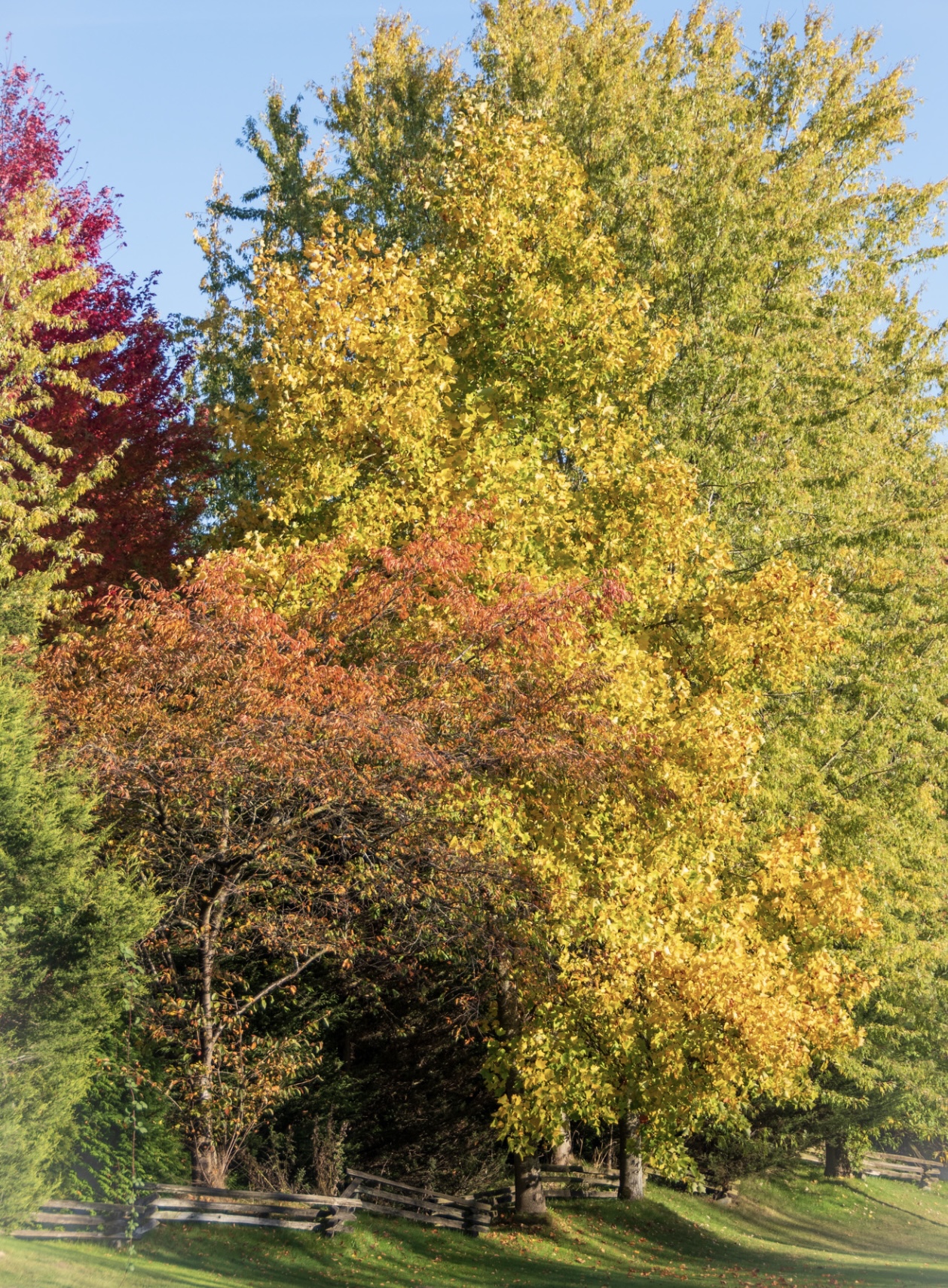 A proposal to sell public lands through the U.S. Senate’s budget reconciliation bill died by the sword of parliamentary procedure Monday, though the budgetary battle over public lands is not yet over. The Senate parliamentarian … nixed a provision to sell up to three million acres of Bureau of Land Management and U.S. Forest Service land across 11 states, including Wyoming, finding that it violated a rule limiting budget reconciliation bills to measures that are directly related to federal spending. The provision, which framed the sale as a way to alleviate the housing crisis by opening up more land for development, has roiled Westerners of all political persuasions since it was unveiled June 11. …U.S. Sen. Mike Lee, R-Utah, the architect of the provision, will introduce a new measure removing Forest Service land from the bill and narrowing the amount of BLM land for sale to tracts within 5 miles of population centers.
 A plan to sell more than 2 million acres of federal land in Oregon, Washington and 9 other Western states has been ruled out of Republicans’ big tax and spending cut bill after the Senate parliamentarian determined the proposal by Senate Energy Chairman Mike Lee would violate the chamber’s rules. Lee, an Utah Republican, has proposed selling public lands to states or other entities for use as housing or infrastructure. The plan would revive a longtime ambition of Western conservatives to cede lands to local control after a similar proposal failed in the House earlier this year.The proposal received a mixed reception Monday from the governors of Western states. New Mexico Gov. Michelle Lujan Grisham, a Democrat, called it problematic in her state because of the close relationship residents have with public lands. …Lee said he would keep trying. …Environmental advocates celebrated the ruling late Monday, but cautioned that Lee’s proposal was far from dead.
 MULLAN, Idaho — The Bureau of Land Management is offering the Gentle Annie Timber Sale, totaling approximately 493,000 board feet, for commercial thinning on 100 acres near Mullan, east of Kellogg in Shoshone County. The harvested timber will supply critical materials for construction and other industries, supporting jobs across Idaho’s Panhandle. This thinning project will remove dead and downed wood caused by insects and disease, leaving an average of 55 trees per acre. The result: a healthier, more fire-resilient forest. “We’re excited to continue our work in the Mullan Urban Interface and hope this timber sale will help reduce the town’s risk of catastrophic wildland fire,” said BLM District Manager Kurt Pindel. “We’ll also be limiting the spread of insects and disease within the timber stand, as well as harvesting some merchantable timber for the local economy.”
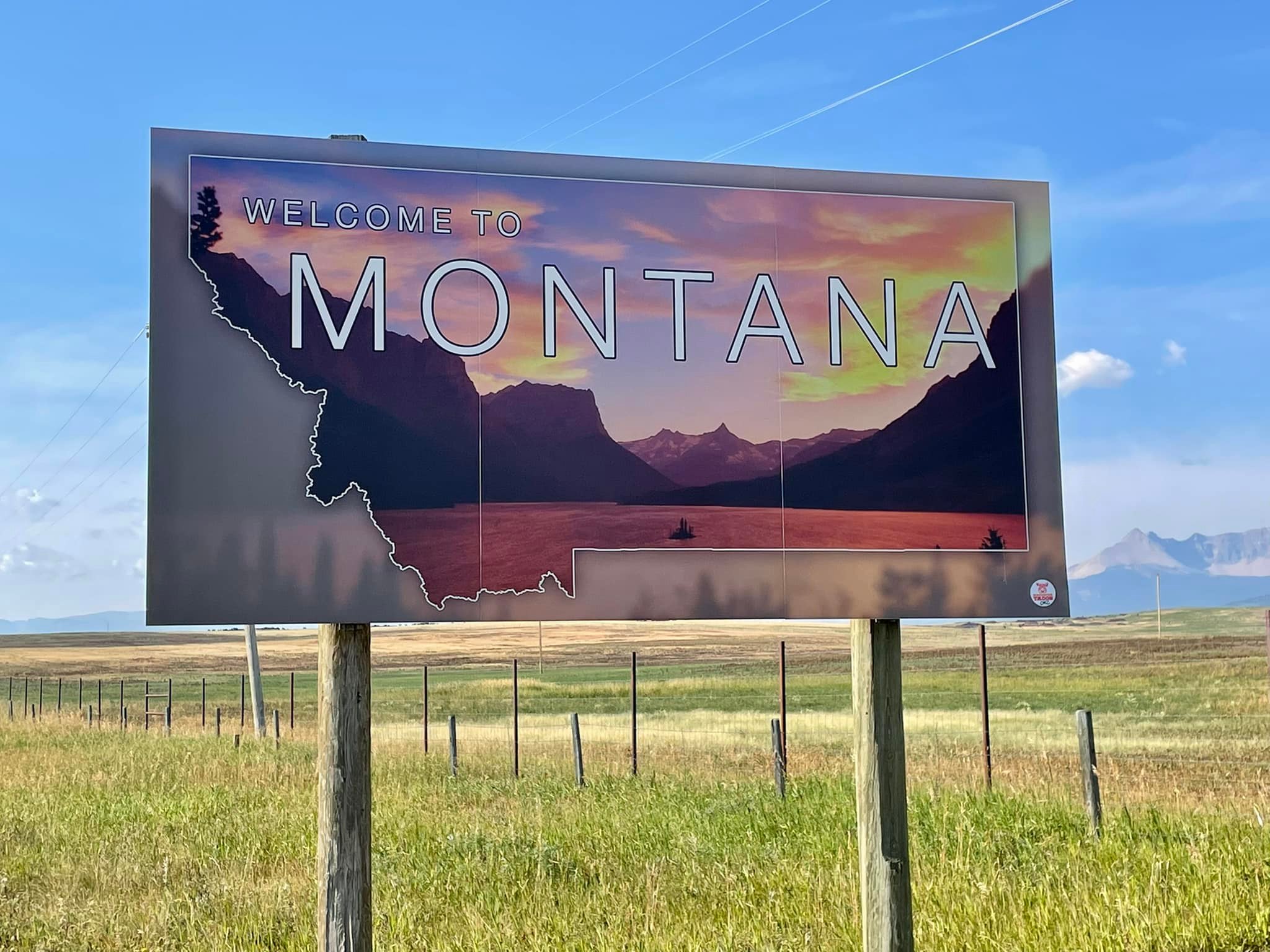 Montana Fish, Wildlife and Parks (FWP) completed its review of a proposal to permanently protect 53,000 acres of private timberland in Flathead and Lincoln counties, recommending the state purchase a conservation easement that would keep the working forest in timber production while guaranteeing year-round public access and preserving wildlife habitat. The Montana Fish and Wildlife Commission is scheduled to vote on the proposal on Aug. 21 in Helena. …In total, the project would encompass 85,752 acres of private timberland owned by Green Diamond Resource Company. The first phase of the project… received final approval in December. The new easement would encompass forestlands in the Cabinet Mountains between Kalispell and Libby. …If approved, Green Diamond would maintain ownership of the land under an easement owned by FWP [allowing them to] sustainably harvest wood, preclude development, protect important wildlife habitat and associated key landscape connectivity, and provide permanent free public access to the easement lands.
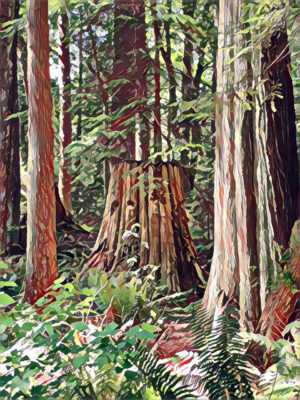 Our many stunning hiking and walking trails in the Columbia-Pacific region offer locals and visitors alike wondrous views of forests of many different stages of succession, from recent clearcuts attempting to come back to life, to ancient old growth stands that somehow avoided the ax and the saw. The beauty of our area is one of its most valuable assets — so it may seem odd to some people that these forests include significant numbers of dead trees. Some call them ugly, while others refer to them as beautiful, but they do in fact have formal names. A standing dead tree is known as a snag, but once it falls to the ground it is a nurse log, so named because its rotting wood nurses young plants and fungi in their first years of life. One could also refer to a decaying stump covered in mosses, lichens, and other green growing things as a nurse stump.
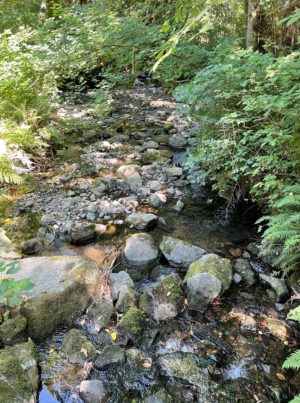 Streams that wind through Western Washington’s forests are essential habitat for frogs, bugs, and lots of other tiny critters. These streams are also a critical source of clean, cool water downstream. This means these streams are an important part of large watershed ecosystems. For the past 26 years, the timber industry, Tribes, environmental organizations, and Washington State agencies have worked together to address pollution and meet water quality standards through the “Forests and Fish Agreement.” The agreement aims to address pollution that can come from forestry activities like logging and forest road construction and maintenance, while maintaining both a viable timber industry and water quality. This coordination primarily happens through the Forest Practices Board, an independent state agency chaired by the elected Commissioner of Public Lands. Rules adopted by the Board are implemented and enforced by Washington’s Department of Natural Resources.
 In the face of a backlash, Utah Republican Sen. Mike Lee has revamped his public land sell-off measure to target only Bureau of Land Management holdings while also declaring, “we’re just getting started.” A reconciliation budget proposal revised by Lee’s Senate Energy and Natural Resources Committee targets BLM land within five miles of undefined “population centers.” It puts checkerboard BLM holdings back on a priority list for his “mandatory disposal” measure and takes lands under permit for grazing off the auction block. The revision would shift 15% of revenue to local governments and conservation. The bill would appropriate $5 million to carry out the mandatory sales, which are designed to be offered within 60 days of passage and regularly thereafter. …But opposition to Lee’s measure comes from “all walks of life,” said Land Tawney, former president and CEO of Backcountry Hunters and Anglers. That includes “Democrats, Independents, Republicans, hunters, anglers, bird watchers, kayakers, ranchers [and] loggers,” he said.
 Don Hardin’s hillside was largely cleared of trees killed by the mountain pine beetle. Some of the trees have died in just a few weeks with Ips beetles munching their tops and mountain pine beetles coming through their bark in large visible holes. …Across Colorado, mountain pine beetles also are on the rise in Douglas, Jefferson and Gilpin counties, among other areas, said Dan West, forest entomologist with the State Forest Service. The agency’s annual aerial survey shows the number of infected acres increasing from less than 2,000 acres in 2021 to nearly 6,000 acres last year. …To combat the beetle, the State Forest Service is putting small packets on trees to send the message to mountain pine beetles to seek a home elsewhere, West said. The message will be sent through a synthetic replication of beetle pheromones that sends a “no-vacancy signal” to adult pine beetles looking for a healthy tree to infest.
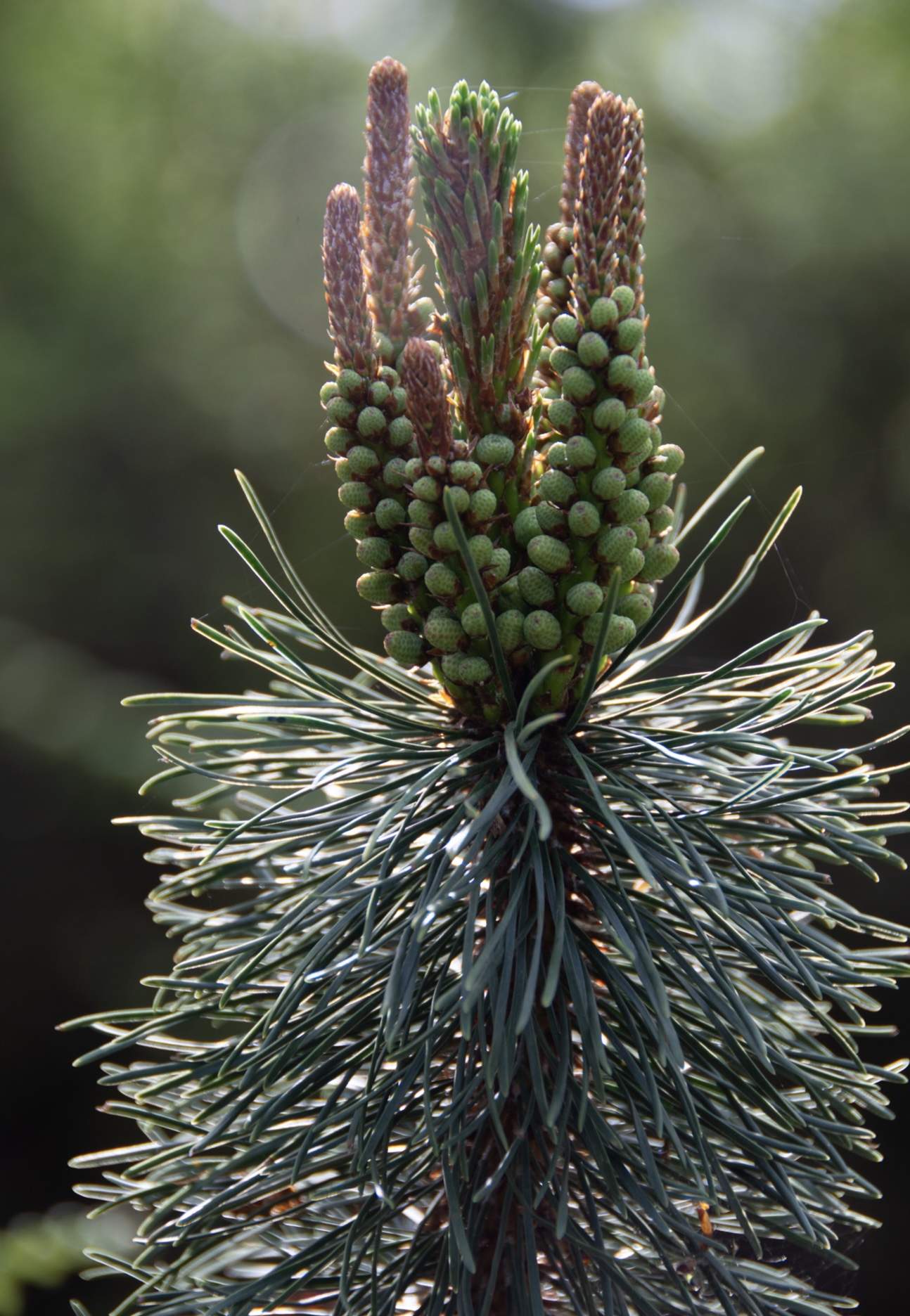 In the parched summer of 1988, wildfires ripped through more than one-third of Yellowstone National Park during the most severe fire year in park history. Approximately 1.2 million acres scorched by September. …While new forests sprouted in most of Yellowstone’s charred woodlands, recent research has identified that 16 percent of the forests consumed by the fires still have few trees. A recent study found that much of this land has transformed into green meadows full of grasses and wildflowers. Of the roughly 965 square miles of forest killed by the fires, 158 remain unforested, largely due to a lack of available seeds to start the next generation of trees. Seventy square miles of the previously forested land is now open meadow… The forests that [recovered quickly] were full of lodgepole pines with serotinous cones. …Alternatively, the areas that remain unforested were mainly above 8,200 feet in elevation and dominated by subalpine fir, Engelmenn spruce and non-serotinous lodgepole pines.
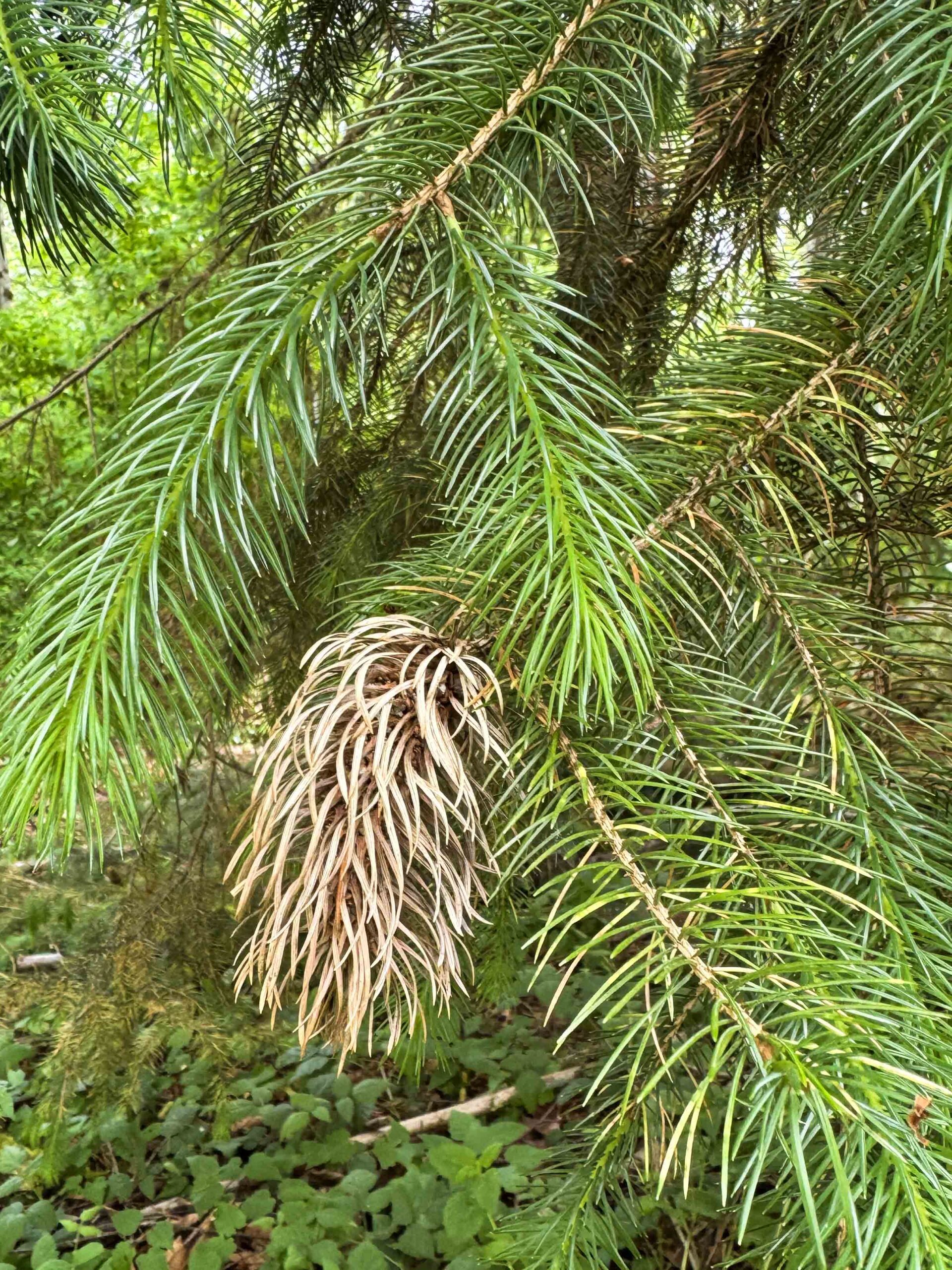 More than half a million acres of trees spread across Washington were sick, struggling, or dead last year, according to the results of an aerial survey of forests by the state’s Department of Natural Resources. Surveyors identified about 545,000 acres with some level of tree mortality, defoliation, or disease, the department said this week. That’s less than 1% of the total forestland surveyed. The amount of forest with problems is up nearly 30,000 acres from 2023 and more than the 10-year average of 519,000 acres, but well below the acres mapped with diseased or dead trees in 2022, according to the Department of Natural Resources. The Department of Natural Resources and the U.S. Forest Service partnered to conduct an aerial survey of 22 million forested acres in Washington state to observe recently killed and damaged trees. They carried out the survey between June and September last year.
 HELENA, Montana — US Secretary of Agriculture Brooke L. Rollins announced US Forest Service Chief Tom Schultz and Montana Governor Greg Gianforte signed a historic Shared Stewardship Memorandum of Understanding, establishing a new framework between the US Forest Service (USFS) and the State of Montana to advance forest restoration and reduce wildfire risk across the state. Montana’s Shared Stewardship Agreement expands collaborative efforts to accelerate active forest management, safeguard communities, and support sustainable timber production. …“By cutting burdensome, unnecessary red tape and empowering Montana to lead, we’re proving that through real partnership, conservation and economic growth can go hand-in-hand. …The Forest Service and Montana Department of Natural Resources and Conservation (DNRC) will jointly identify and execute large-scale forest management projects, initially focusing on approximately 200,000 acres in northwest Montana.

 WHITE SULPHUR SPRINGS, Montana — The Helena-Lewis and Clark National Forest has released a final decision for the Bonanza Project, located in the Castle Mountains just east of White Sulphur Springs. Primary management activities planned include timber harvest and prescribed fire. “The project area is highly impacted by the mountain pine beetle and some areas have experienced 90% tree mortality,” said District Ranger Jason Oltrogge. “The timber generated from this project will provide wood products to local companies and prescribed fire will restore forests and reduce wildfire severity.” The Helena-Lewis and Clark National Forest partnered with the Montana Department of Natural Resources and Conservation to plan this project, and the joint effort made this project a reality. …The project includes commercial timber harvest on 1,980 acres and prescribed burning on 918 acres. Project implementation is anticipated to start later this summer.

 When U.S. Agriculture Secretary Brooke Rollins announced on Monday that her department would be opening up more US Forest Service land to development, she did so with the caveat that just two states — Colorado and Idaho — would not be impacted. Rollins, who serves in President Donald Trump’s cabinet, unveiled the plans during a meeting of Western state governors in Santa Fe, where she told reporters that the Agriculture Department would be rescinding the 2001 “roadless rule” established under former President Bill Clinton. The rule, hailed by conservationists as a landmark preservation effort, protects roughly 58.5 million acres of backcountry Forest Service land from road construction, logging and other development. “For too long, Western states, especially those with large swaths of land administered by our incredible Forest Service, have been inhibited from innovating because of burdensome regulations imposed by the federal government,” Rollins said.
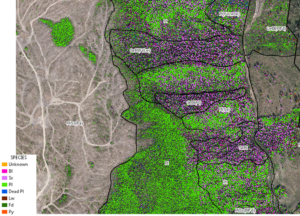 After a longer wait than expected, the a bill that would eliminate the unpopular Oregon Wildfire Hazard Map passed the Oregon House on June 24. Senate Bill 83 repeals a map meant to identify parts of Oregon at high risk of catastrophic wildfires but has become a lightning rod for anger from rural residents who say it places an unfair burden on them. The bill, which passed the Senate in April, now heads to the desk of Gov. Tina Kotek. The map, which was released earlier in 2025 and identifies areas at high wildfire risk, requires stricter building codes and creation of defensible space for roughly 100,000 properties in the name of wildfire prevention. The map was roundly condemned by impacted residents who said it was inaccurate, decreased property values and imposed burdensome regulations.
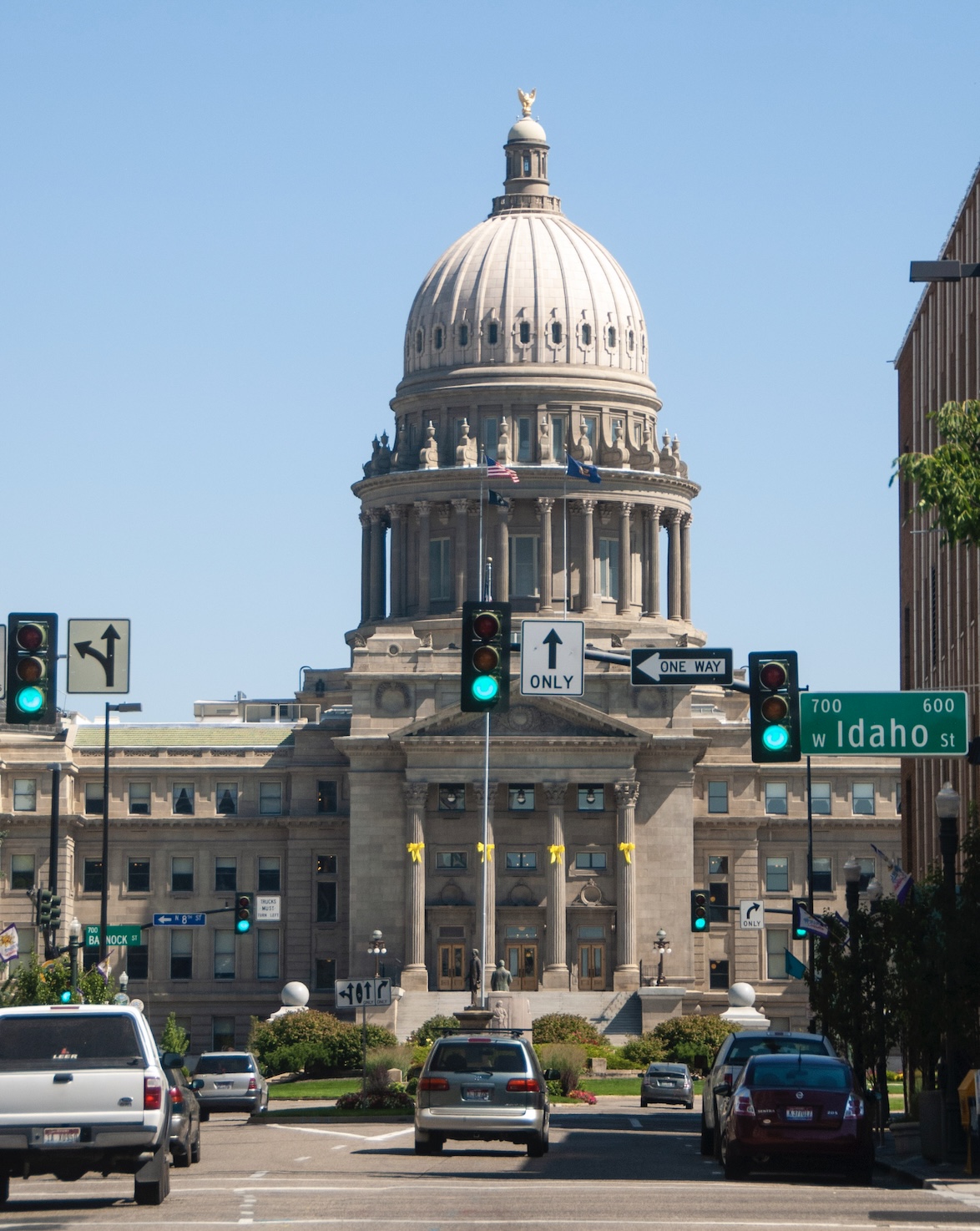 The Idaho roadless rule is not included in the effort by the Trump administration to rescind the national rule. A spokesperson for the U.S. Department of Agriculture said, “the Idaho state-specific roadless rule was part of the Administrative Procedures Act petitions and will not be affected by rescinding the 2001 Roadless Rule.” The rule, a collaboratively written offshoot of the national rule, was spearheaded by then-Gov. Jim Risch in 2006. It is more flexible than the national rule and allows limited logging and road building in some of the state’s roadless forests that are not otherwise protected as wilderness areas. But it also offers more stringent protections to the most remote areas. …Risch’s Idaho-specific roadless rule, implemented in 2008, overrides the national rule and forbids logging and roads on 3.2 million acres of the state’s 9 million acres of inventoried roadless areas. Some logging and roads are allowed, under limited circumstances, on the remaining 6 million acres.

 A new study in The Journal of Cleaner Production confirms that Forest Stewardship Council (FSC) certification contributes to maintaining and increasing forest cover, especially in lower-middle income countries. These findings reinforce the conclusions of previous research and provide insights on adapting regional certification strategies to increase sustainable forest management. The study investigated the critical role of FSC certification in promoting sustainable forest management and mitigating deforestation across diverse economic and climatic contexts. Using dynamic panel data model and Generalized Method of Moments estimations on 70 countries from 2000 – 2021, the researchers examined forest cover as a measure for impact of FSC certification. Results indicate that FSC certification contributes to maintaining and increasing forest cover across diverse economic and climatic contexts. This positive impact is most strongly observed in lower-middle income countries. Scaling up certification and integrating it into national policies could benefit countries of this economic category.
  Forestry Australia has welcomed the release of the Federal Government’s Timber Fibre Strategy, congratulating Minister Julie Collins and the Albanese Government for delivering a timely and important roadmap to support a sustainable, world-leading forest and wood products sector.
 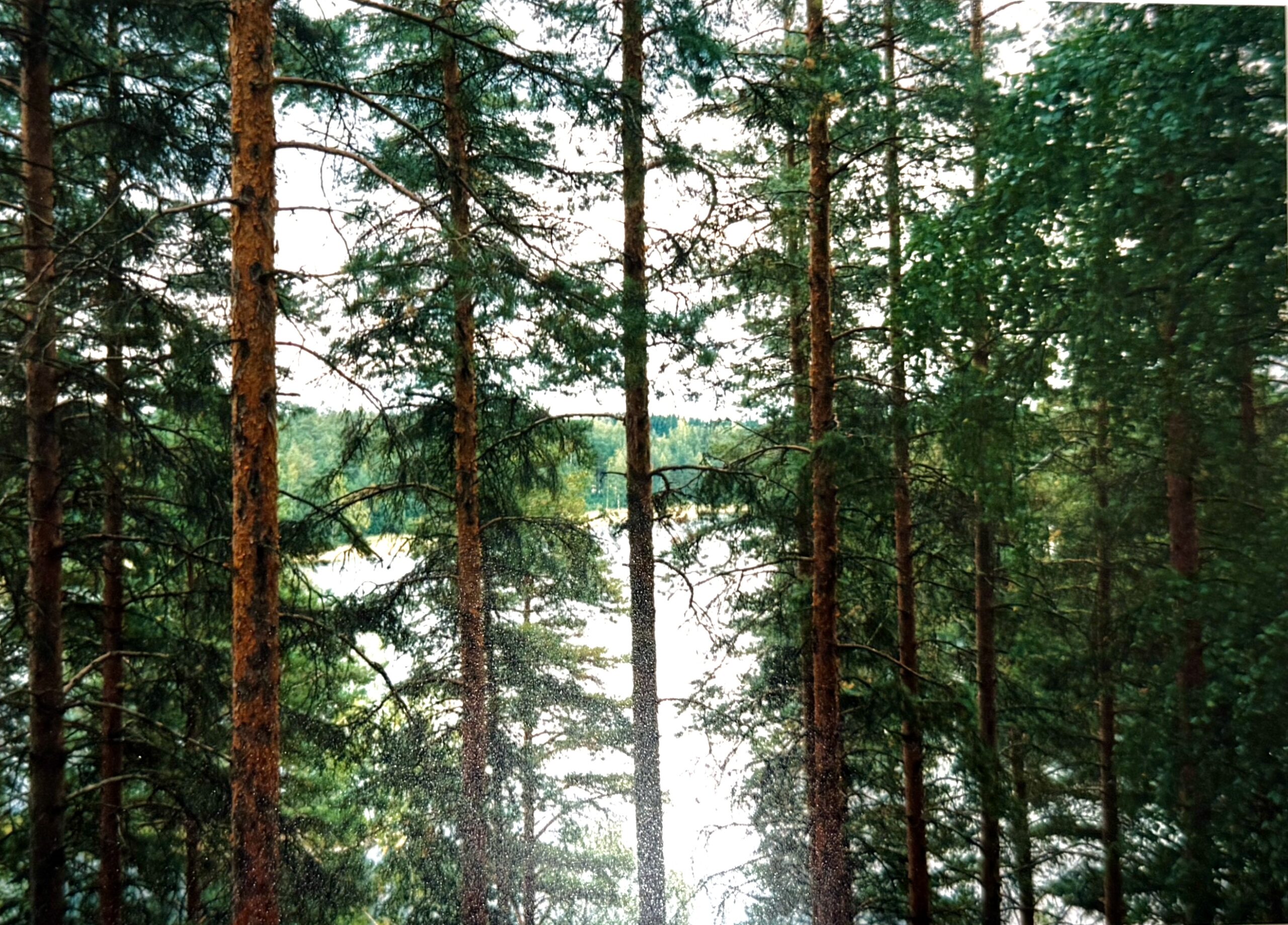 The Ministry of Agriculture and Forestry has unveiled a broad package of measures aimed to boosting forest growth and pollution-absorbing carbon sinks. The moves will help Finland reach its goal of carbon neutrality by 2035, as required by law and stipulated in the government programme, ministry officials said on Friday. The agency is led by Minister of Agriculture and Forestry Sari Essayah, chair of the Christian Democrats. The government of Prime Minister Petteri Orpo (NCP) approved the financing of forest-related climate measures during its mid-term policy review session last spring and in its second supplementary budget of 2025. The measures include moves to step up fertilisation of forests and expansion of the forest cover in an effort to increase carbon sequestration, in other words woodlands’ capacity to absorb and store carbon from emissions that would otherwise contribute to global warming.