 TORONTO – The Printing House (TPH) is growing its corporate sustainability mission with the launch of the TPH Smart Forest™, a new initiative in partnership with Canada’s Forest Trust Corporation (CFTC). Through CFTC’s six-phase tree planting and preservation approach, this partnership will harness Canada’s natural ecosystems to drive carbon capture, restore biodiversity, purify air, and create green jobs. The first TPH Smart Forest™ is starting its growth in New Brunswick, with the goal of expanding across Canada in the regions where the business is located. Their Smart Forest™ model goes beyond traditional sustainability initiatives by combining nature with digital tracking through a Smart Forest™ portal, allowing TPH to quantify, showcase, and grow their environmental contributions over time.
 OTTAWA — The Honourable Jonathan Wilkinson announced a $16.3 million investment over the next three years, starting in 2024–25, to support 25 projects through the Government of Canada’s Fighting and Managing Wildfires in a Changing Climate Program (FMWCC) – Training Fund. Through this investment, over 2,800 youth and community members in remote, rural and Indigenous communities across Canada will receive wildland firefighting training to enhance community capacity for responding to and managing wildfires. …Some of the projects funded through the FMWCC Training Fund include: $329,109 to the Keewaytinook Okimakanak’s project in Thunder Bay, Ontario… $499,330 to the Metis Settlements General Council’s project in Edmonton, Alberta… $946,330 to Prince Albert Development Corporation Management Co. Ltd.’s project in Prince Albert, Saskatchewan… and $1,999,999 to the Independent First Nations Alliance’s (IFNA) project in Sioux Lookout, Ontario.
 In this newsletter, we are pleased to share great stories of the impactful work happening in communities throughout our province. As the world continues to navigate the challenges affiliated with climate change, British Columbia’s forestry sector is playing a key role to mitigate its impacts and contribute to a more sustainable future. We take pride in investing in projects that provide enduring economic and social benefits for our local communities and are helping take action on this global issue. Last month, in collaboration with the Provincial Government, we shared more specifics about 70 recently funded projects moving forward to help local communities, community forests, First Nations, and other project partners enhance their wildfire prevention efforts and/or expand fibre-recovery initiatives. …In years past, much wood waste from harvesting operations was piled and burned in slash piles. Today, we invest in projects that recover this waste and use it to make forest products and generate green energy.
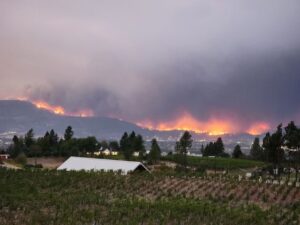 If you’ve noticed smoke on days it hasn’t been snowing or raining recently, it’s likely from a prescribed burn. Local governments across the Okanagan including the Westbank First Nation are working to finish as many of their prescribed burn operations as possible before the weather gets too hot and dry. A prescribed burn, sometimes called a controlled burn, is a planned and intentional use of fire on a specific land area to reduce wildfire risk, improve wildlife habitat, or restore ecosystems… The McDougall Creek wildfire was one of the most destructive local wildfires in recent memory, destroying 303 structures in West Kelowna, Westbank First Nation, Kelowna and the RDCO. The Insurance Bureau of Canada estimated the fire caused $480 million in insured damage.
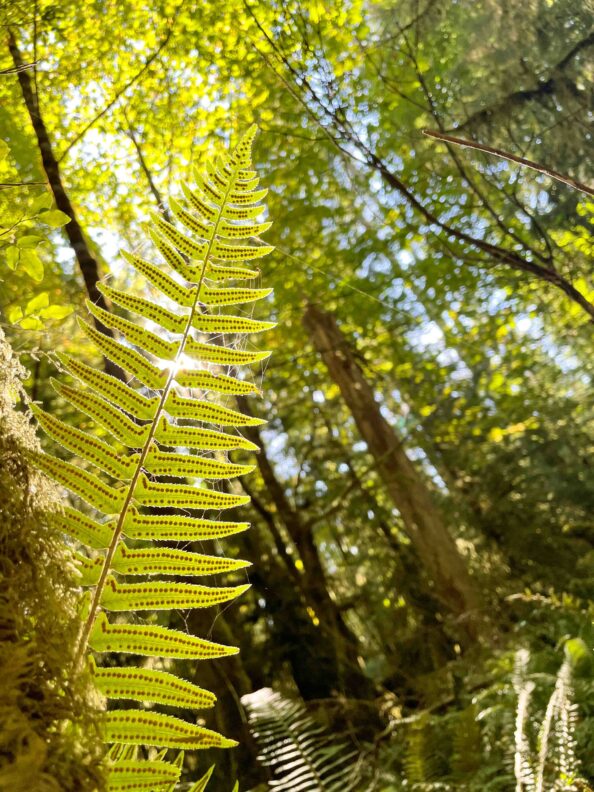 A draft co-management framework and plan to manage North Cowichan’s 5,000-hectare municipal forest reserve likely won’t be presented until sometime in 2026. The municipality and the Quw’utsun Nation (which consists of Cowichan Tribes, Halalt First Nation, Lyackson First Nation, Penelakut Tribe, and Stz’uminus First Nation) agreed in April, 2024, that they would work together to establish a co-management framework and plan for the forest reserve, and that work is still ongoing. North Cowichan’s communications director Barb Floden said the municipality and the Quw’utsun Nation issued a joint request for proposals to support the development of the co-management plan in February, which will be closing soon, and it is expected that the draft framework and plan will be ready next year. “The public will be kept informed of the process through joint statements and updates at council meetings,” Floden said.
 A Canfor operation in Prince George and three area First Nations have received federal funding to boost innovation in forestry. The $293,500 in local funding is part of more than $20 million the Canadian government is investing in 67 projects province-wide. The funds are part of a broader effort to enhance the competitiveness and resiliency of Canada’s forest industry, which has faced increasing trade barriers, particularly from the US. Among the recipients is Canadian Forest Products, or Canfor, which will receive up to $121,500 for a project aimed at producing innovative, formaldehyde-free and isocyanate-free wood adhesives. The company will explore extracting kraft lignin from black liquor at its Northwood mill in Prince George, converting it into a new, sustainable bioproduct. The project aims to determine the commercial viability of this process, which could open up new revenue streams and reduce reliance on harmful chemicals.
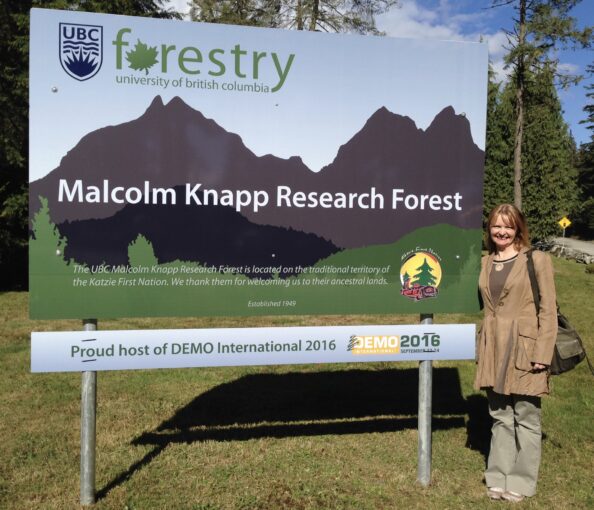 At UBC’s Faculty of Forestry, we are shaping a sustainable, biodiverse, and inclusive future by advancing the stewardship of forests and the environment. The Faculty is Canada’s largest forestry school, welcoming over 1,600 students annually. Our innovative research, hands-on education, and community engagement are addressing some of the most pressing global challenges. This Giving Day, we’re proud to feature the
  More than $2.3 million in funding is coming to Vancouver Island to help First Nations and forestry businesses. Federal natural resources Minister Jonathan Wilkinson announced the funding this week, saying it shows a commitment to defending and strengthening BC’s forestry sector. In total the federal government is funding 67 projects with $20 million across BC.
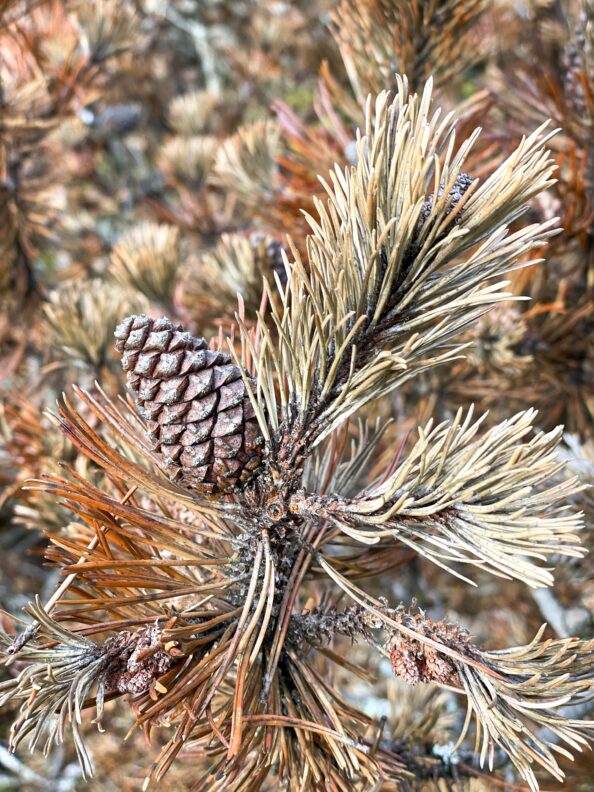 Ontario is ready to respond to this year’s wildland fire season, which lasts from April 1 until October 31. This year, the government has filled nearly 100 additional permanent positions to support the 2025 fire season and help ensure people and resources are in place to protect communities. “We are ready to protect people, communities and properties across Ontario from wildland fires,” said Mike Harris, Minister of Natural Resources. “When wildland fires hit, our brave and dedicated FireRangers, pilots and support staff are prepared to battle these fires and protect Ontarians.” Last year, the province partnered with the federal government to invest a total of $64 million in the wildland fire program. This investment has allowed Ontario to enhance its firefighting capacity for the 2025 fire season and includes funding for forest fire suppression equipment and technology, such as fuel systems, trucks and emergency management software.
 The world is running out of time to halt deforestation. Yet instead of stepping up, the US is dismantling forest protections and undermining global progress – highlighting the dangers of global forest policy that fails to hold the wealthiest, most powerful countries accountable. …But the latest actions by the US highlight just how dangerous and unbalanced this paradigm is. …Under the pretense of national security, Trump’s orders aim to gut environmental safeguards and fast-track industrial clearcutting in some of the US’s most precious and climate-critical forests. …Meanwhile, as Europe strengthens forest accountability, US state officials are pushing to exempt the country from new deforestation protections.. These officials, echoing industry talking points, are urging the EU to exclude US wood products from a law requiring due diligence to prevent imports or exports tied to deforestation or forest degradation. Their argument? That the US doesn’t need oversight.

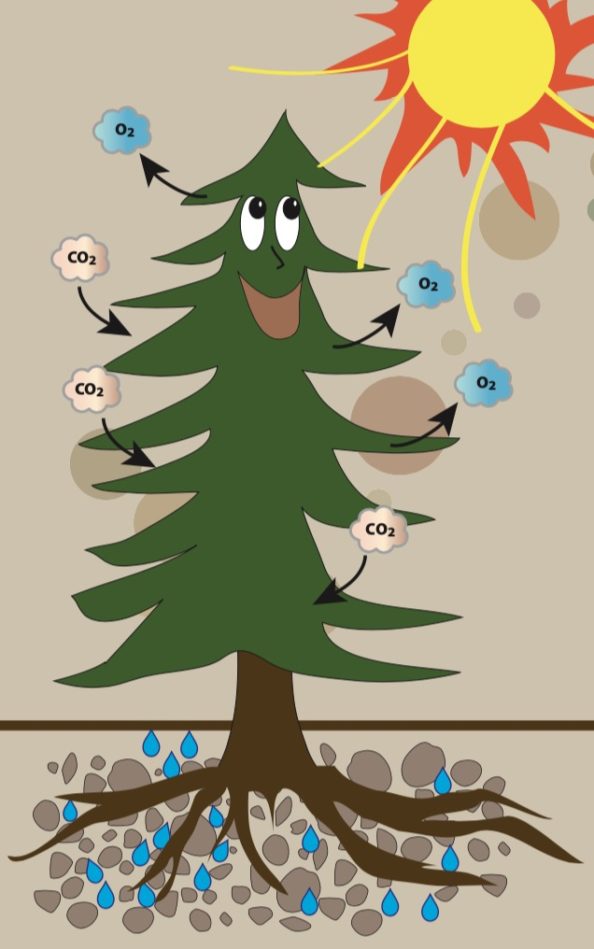 A recent study published by the Colorado State Forest Service took a deeper look into the impact of Colorado’s trees and how they store carbon. The findings reported that some of Colorado’s forests release more carbon than they draw due to dying trees that are actively decomposing. …it should be kept in mind that this data applies to recent years, and results fluctuate and can be nuanced. “(The) bigger picture of this report found that Colorado’s forests hold a lot of carbon, and that continues to this day, and it’s just in recent years that it’s releasing slightly more carbon than it adds,” Vorster said. “But when you just put it in perspective, if you were to compare the amount of carbon that it holds compared to what it releases, it’s like 0.06%, so a very tiny fraction of it at least every year. … It’s pretty close to a balance.”
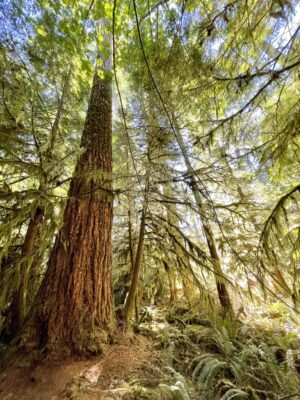 The Pacific Northwest is fortunate to have vast forests and ideal conditions for growing trees quickly. These forests have long been a cornerstone of our rural economies while also protecting streams, sequestering carbon and supporting wildlife. However, we face a troubling trend: a decline in local timber production and a growing reliance on imported lumber. We use science for active forest management with the toughest regulations in the world, we do forestry the best here. It’s time to prioritize local timber and rebuild a robust, sustainable industry right here in Washington… Prioritizing local wood production is a win-win for the Pacific Northwest. Wood is good, but local wood is best if we want to restore a vital, create economic stability and protect our environment.
 It’s a cold day at Sun Mountain Lumber in Deer Lodge, Montana. Outreach Forester Sean Steinebach walks toward the mill’s massive kiln where freshly cut two-by-fours are dried. You can feel the heat radiating off the fresh boards. He stops and inhales. “It smells fresh and it smells bright and it smells wild,” he says. The mill’s lumber yard is filled with stacks of Douglas fir and lodgepole pine logs that will soon become lumber. Having a steady and reliable supply of logs is crucial to keeping the mill in business, says Steinebach. “We drive the economics of Powell County for sure, Anaconda, Deer Lodge County. We’ve got a lot of employees that live there. Granite County, we’ve got employees there. We’re a big impact in the whole state, I think. Forest products in general is a huge impact in the state of Montana.”
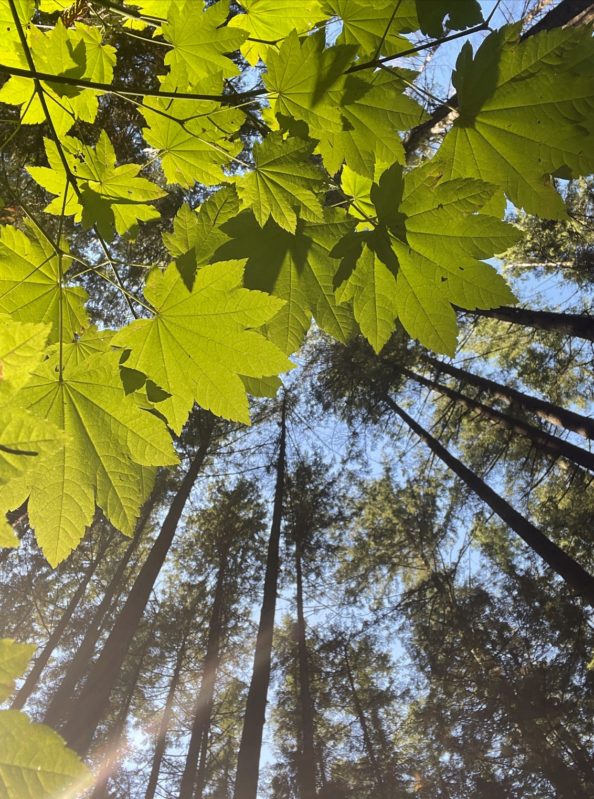 Earlier this month, President Donald Trump signed
 President Donald Trump’s March 1 executive order calling for “immediate expansion of American timber production” generated lots of enthusiasm in the Northwest wood products world. But analysts added equal amounts of concern that Trump’s Department of Government Efficiency-driven federal cuts might keep the woods quiet. “It’s going to be a good thing in terms of helping stimulate activity on national forests,” the University of Montana’s Todd Morgan said… but also recognizes the uncertainty spiraling around Washington, D.C. “A lot is going to depend on who’s left in federal agencies at the end of the day, the week, the next four years,” he said. “All this funding- and budget-cutting is going to interfere with the stated goals.” …Trump’s order also calls for timber production targets. That’s something that has been missing from federal land management for a long time, according to Montana Wood Products Association Director Julia Altemus.

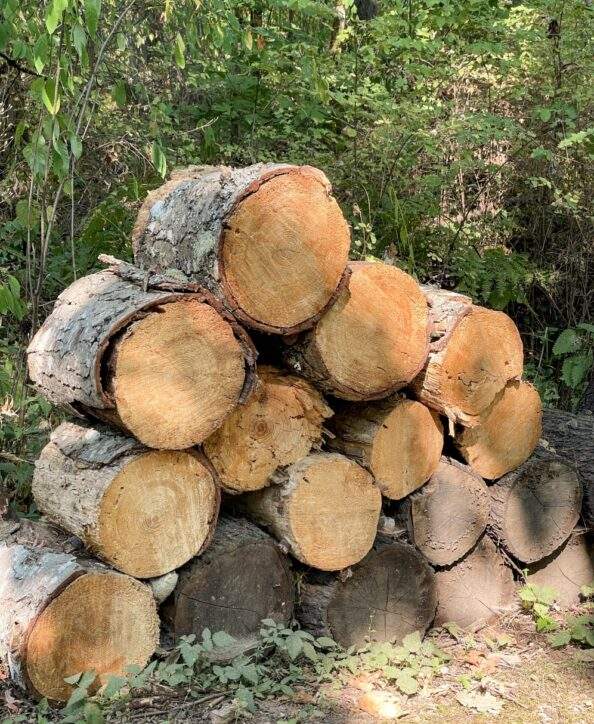 Millions of federal dollars promised to Maine woodland to improve harvest practices has been stalled for months without explanation. Landowners and logging companies are increasingly anxious about the funding blockade, and will have to make tough decisions if the money doesn’t come through. Baskahegan Co. Vice President Kyle Burdick said it was banking on federal reimbursements to sustain logging operations on its Down East timberland this year. But if the money doesn’t come through, it will have to potentially lay off logging contractors. Baskahegan was one of six Maine landowners that last year agreed to try out forestry practices that thin out woodlands to encourage bigger tree growth. The pilot project, funded through a $32 million climate smart commodities grant from the U.S. Department of Agriculture, was intended to store more carbon and generate valuable wood products in the future. The funding has been blocked since President Donald Trump put money …under review.
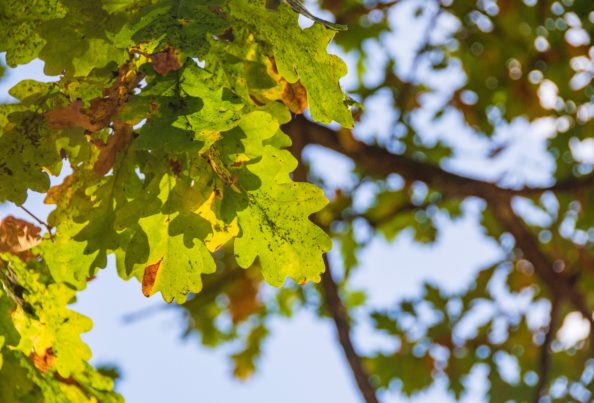 A quiet collapse is sweeping through America’s hardwood log export industry, completely devastating working families in rural communities who’ve been left behind as trade battles play out far above their heads. On March 4, China abruptly banned imports of U.S. hardwood logs, citing pest concerns — though industry insiders believe it was thinly veiled economic retaliation to the Trump administration’s recent tariffs. The impact was immediate and massive: China is the dominant buyer of U.S. logs, importing the vast majority of what America exports. Without that market, the entire industry lost its economic lifeline, according to Seth Riggio, a 35-year-old log broker based in Greenville, South Carolina. The move set off a chain reaction that has pushed loggers, exporters, truckers, and rural communities across the country into financial ruin. …These aren’t corporations with reserves. Most loggers don’t have savings accounts or college degrees. What they have are contracts, equipment, and a forest to work.
 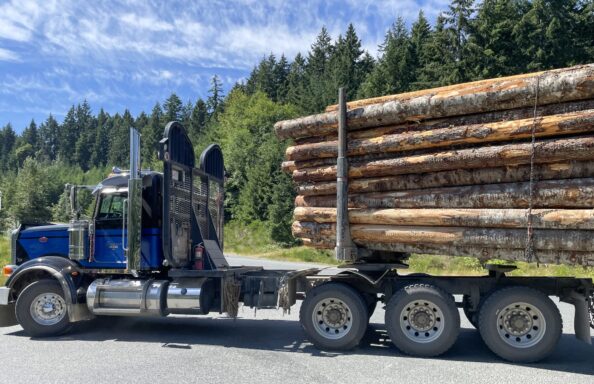 As a log truck driver, I want to share my perspective on the proposed increase in truck weight limits in Alabama. This issue is critical to the livelihoods of many hardworking people and to the… state’s forestry sector. The challenges of operating a log truck have grown significantly in recent years. Insurance premiums keep rising, fuel prices fluctuate unpredictably, and truck maintenance costs have soared due to the increasing price of parts and repairs. Despite these mounting expenses, the rates paid to haul raw wood remain relatively stagnant because of supply and demand constraints. Timber is so plentiful that mills often hit capacity before the end of the workweek, forcing them to impose quotas and stop purchases early. These restrictions directly impact our ability to make a living and keep our businesses afloat. …If weight limits are not raised, the future of Alabama’s log trucking industry — and by extension, the forestry sector — remains uncertain.
 NEW YORK — A jury in Georgia has ordered Monsanto parent Bayer to pay nearly $2.1 billion in damages to a man who says the company’s Roundup weed killer caused his cancer. The verdict marks the latest in a long-running series of court battles Monsanto has faced over its Roundup herbicide. The agrochemical giant says it will appeal the verdict. The penalties awarded include $65 million in compensatory damages and $2 billion in punitive damages. That marks one of the largest legal settlements reached in a Roundup-related case to date. …Germany-based Bayer, which acquired Monsanto in 2018, has continued to dispute claims that Roundup causes cancer. But the company has been hit with more than 177,000 lawsuits involving the weedkiller and set aside $16 billion to settle cases. Monsanto said Friday’s verdict “conflicts with the overwhelming weight of scientific evidence and the consensus of regulatory bodies and their scientific assessments worldwide.”
 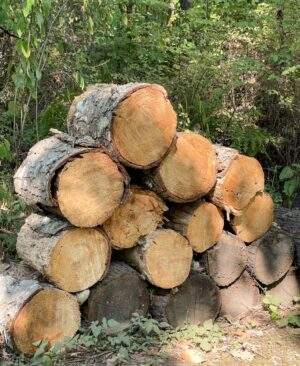 Virginia loggers hope steps taken by President Donald Trump will breathe new life into parts of the Commonwealth they feel have long been abandoned. …Canada is the largest exporter of lumber into the US. The lumber industry in the United State has a long history and has been financially rocky in recent decades. Unregulated cutting up to the 1980s damaged land and water systems. Regulations followed. Then international trade agreements saw production shipped overseas, further denting an industry that literally built America. But loggers in Virginia have stuck with it. Among them is Vance Wright. …Trump’s shortest-term impact on logging may be with tariffs. But logging and timber have long been subject to different international trade deals. And while those international markets arguably killed Virginia’s manufacturing, think Martinsville’s now-shuttered furniture factories, it also opened doors to new opportunities.
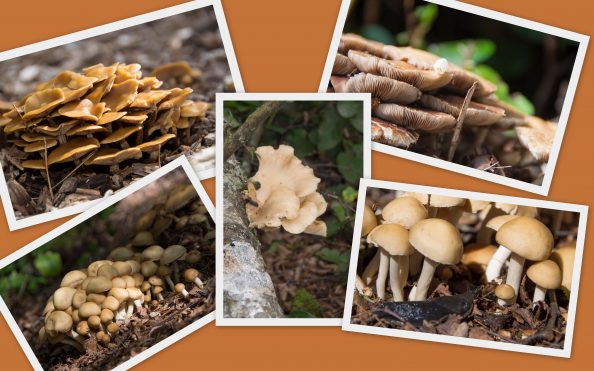 Gland, Switzerland – The number of fungi species on the IUCN Red List of Threatened Species has surpassed 1,000, confirming that deforestation, agricultural expansion and urban development are driving these species to decline worldwide. The IUCN Red List now includes 169,420 species, of which 47,187 are threatened with extinction. The addition of 482 newly assessed fungi species brings their number on the IUCN Red List to 1,300, of which at least 411 are at risk of extinction. “Fungi are the unsung heroes of life on Earth – yet they have long been overlooked. …we have taken a vital step forward: over 1,000 of the world’s 155,000 known fungal species have now been assessed for the IUCN Red List of Threatened Species, the most comprehensive source of information on extinction risk. Now, it’s time to turn this knowledge into action and safeguard the extraordinary fungal kingdom,” said Dr Grethel Aguilar, IUCN Director General.
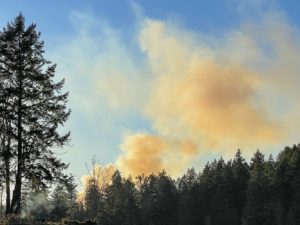 Last year was Ukraine’s worst year for wildfires in more than three decades of record-keeping, as shelling along front lines in the war with Russia triggered an unprecedented number of blazes, scientists said. Forest fires in Ukraine in 2024 burnt more than twice the area destroyed by fire in the entire 27-country European Union in 2024. Satellite data showed nearly 9,000 fires torched a total of 965,000 hectares in Ukraine in 2024. Ukraine has around 10 million hectares, or 100,000 sq km (38,610 sq miles), of forest. Around a third of the area burned last year was farmland… Maksym Matsala, a forest researcher at Sweden’s University of Agricultural Sciences, said the main cause was artillery and falling shells igniting fires. He said the jump in fires last year was partly because of a large build-up of dead and damaged trees since Russia’s invasion in 2022, which had created plentiful fuel for fires during extremely dry weather in 2024.