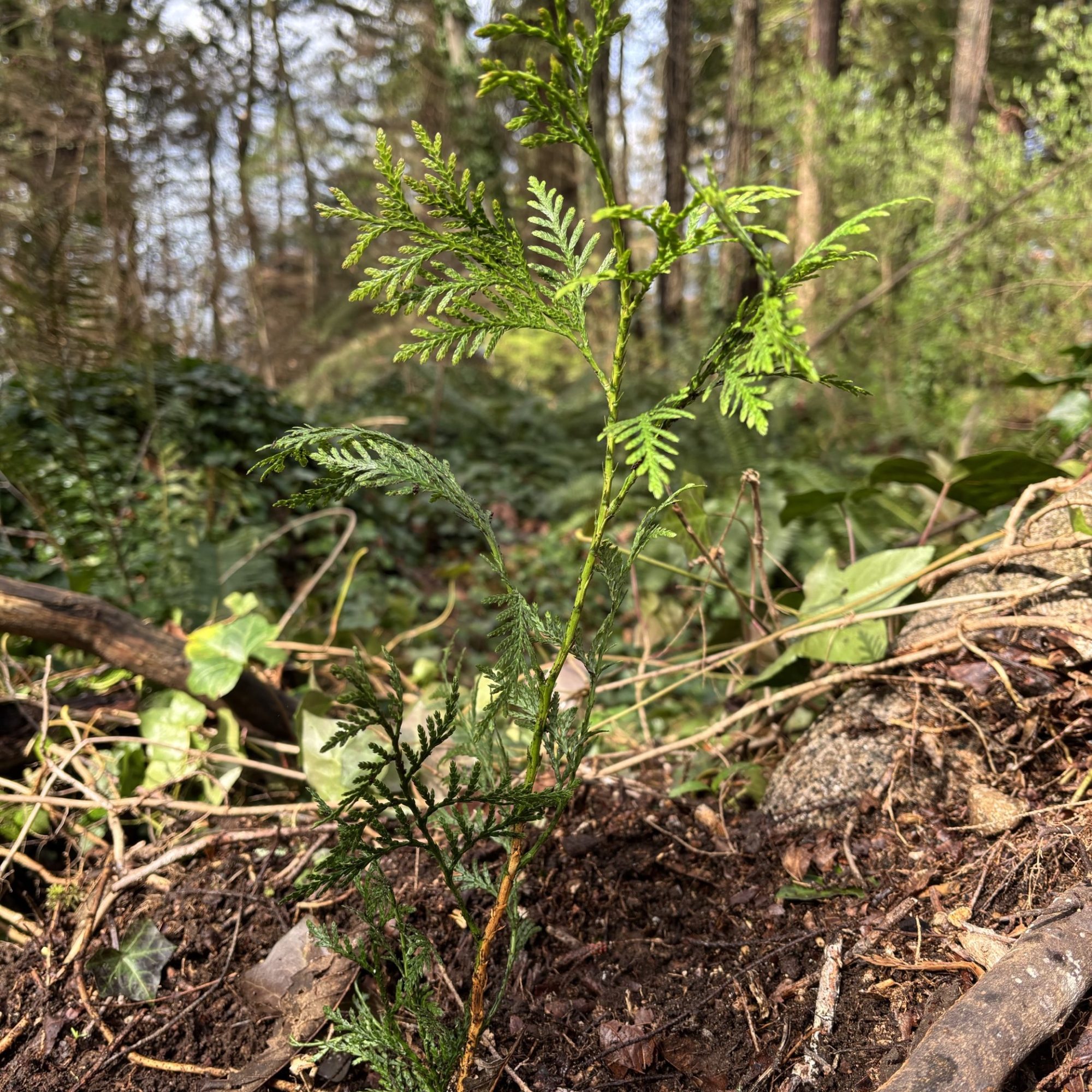
 Western Forest Products is contributing tree seedling to Vancouver’s Stanley Park to help replant and restore the park’s tree canopy. The first seedlings are being planted now, with 65,000 trees set to be planted over the course of the three-year partnership. Stanley Park, which spans 400 hectares of West Coast rainforest … first opened in 1888. Through dedicated tree planting with a diverse mix of species, this replanting effort is designed to strengthen the park’s natural resilience and ensure the forest continues to thrive for future generations. The seedlings being planted were grown at Western’s Saanich Forestry Centre, which has earned a reputation for its expertise in researching and cultivating high-quality seeds and seedlings. Every year, the seed orchard and tree nursery produces over four million trees, which are planted across the coast of British Columbia, contributing to climate resilience, supporting biodiversity and providing long-term benefits for communities.
 VANCOUVER, BC – Canfor Corporation and Canfor Pulp Products released their joint 2024 Sustainability Report today. The report describes the companies’ approach to managing environmental, social and governance activities, and reports on established targets. Canfor CEO Susan Yurkovich said, “Sustainability is at the forefront of our business and we continually strive to be better at all that we do.” 2024 performance highlights include: Maintaining certifications for sustainable forest management and fibre procurement activities, with 100% of Canfor-managed forests certified to SFI® or FSC® Forest Management Standards, 100% of sourced fibre in North American operations managed to the SFI Fibre Sourcing Standard and 100% of Swedish forestry operations certified to the PEFC Forest Management Standard. …Advancements in safety, health and wellness initiatives. …Investing in communities, with more than $2 million donated. …Continuing to pursue our goal to be net zero by 2050.
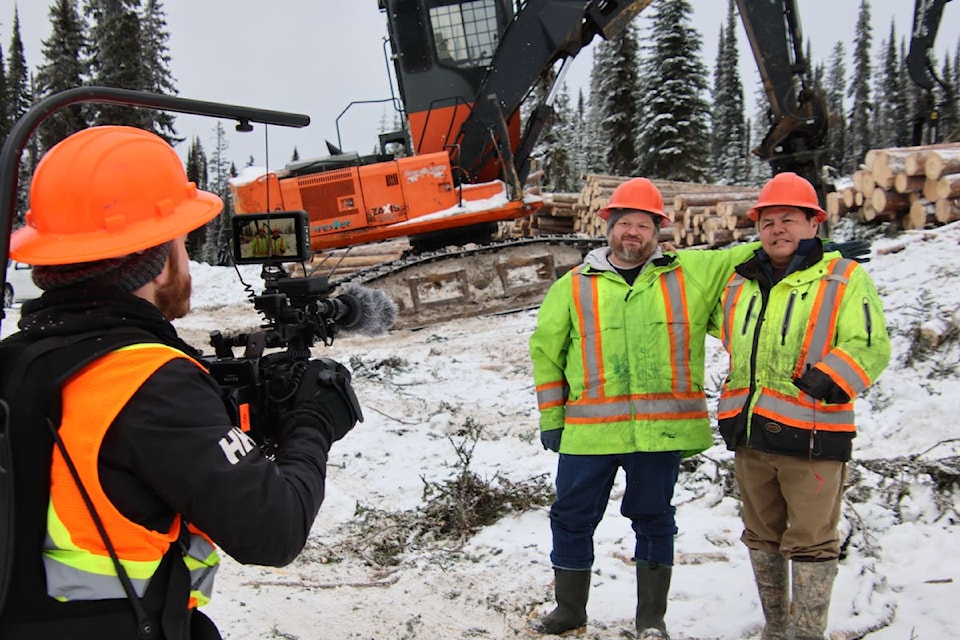
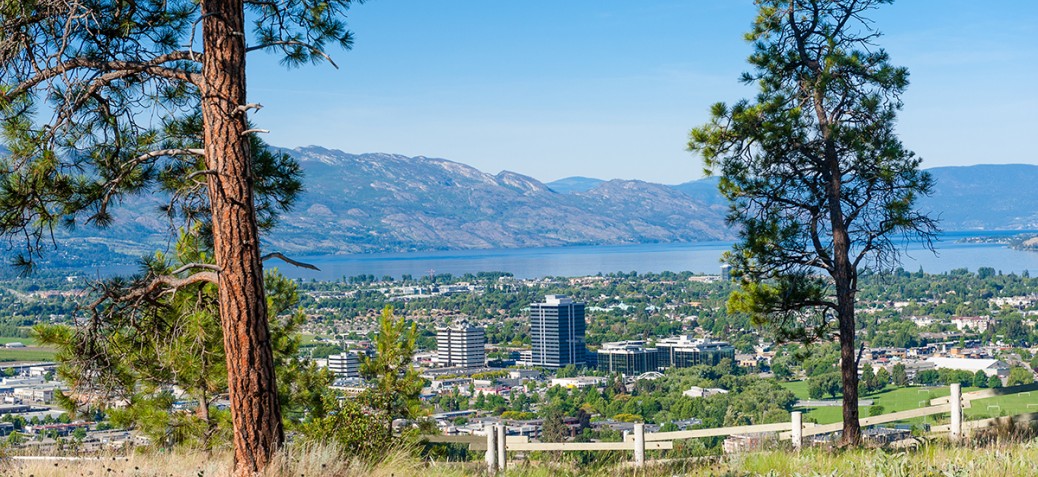

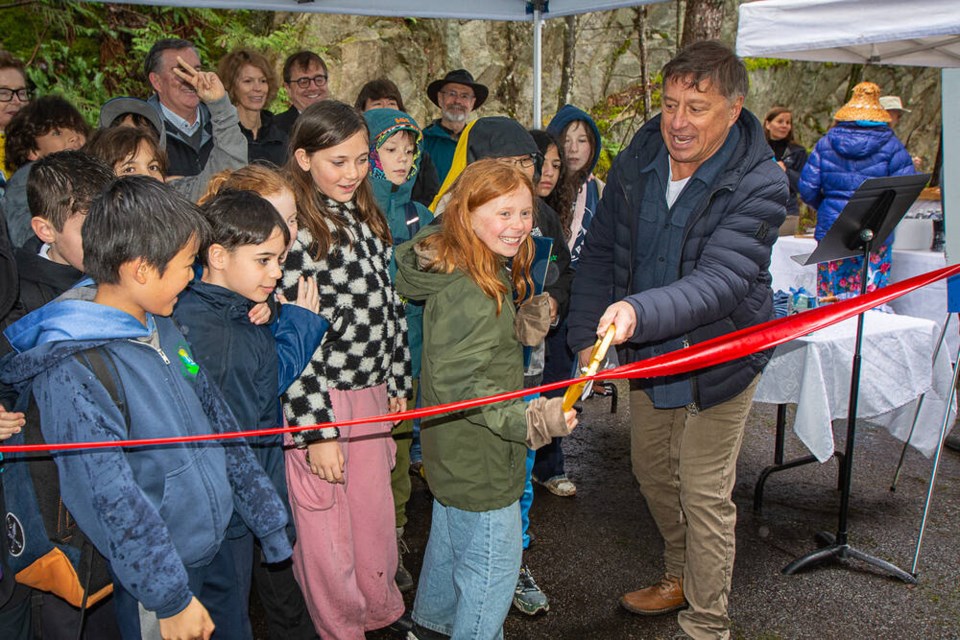

 The Province is taking action to adapt B.C.’s forests to ensure long-term sustainability and good-paying jobs by enlisting BC Timber Sales (BCTS) to play a larger role in reducing wildfire risk and enhancing forest and community resilience through its operations. This work is increasingly urgent given the threat of sector-specific tariff threats coming from the United States. … BCTS manages forest harvesting on more than 20% of B.C.’s public land. In January 2025, the Ministry of Forests initiated a review of BCTS, undertaken by an expert task force, to create pathways for a stronger, more resilient forestry sector. A progress update was announced at the Council of Forest Industries convention on Friday, April 4, 2025. “We have all witnessed the impacts of wildfire on B.C.’s communities, and we are uniting all parts of my ministry to tackle this challenge head on,” said Ravi Parmar, Minister of Forests.
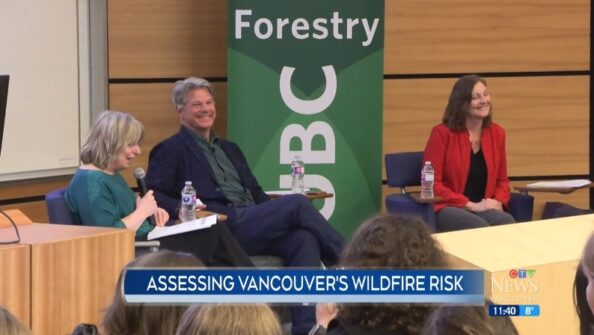 B.C.’s wildfire season is fast approaching, and experts are warning that urban areas of the province – including Metro Vancouver – may be at risk as fires grow more frequent and intense. A panel of experts – including bestselling author of Fire Weather John Vaillant and UBC Centre for Wildfire Coexistence co-director Dr. Lori Daniels – spoke about urban wildfire risks at the university’s Vancouver campus Thursday night. Daniels told CTV News a combination of climate change, forest management practices and urban expansion into fire-prone areas has contributed to a rise in the amount of land and structures burned in recent years. While in some parts of the province – such as the Okanagan Valley – there is a sense that it’s “not if, but when” a destructive wildfire will hit, Daniels said Metro Vancouver is also vulnerable.
 The federal government is pitching in more than $180,000 for a Kamloops-area study to determine whether rehabilitating wildfire-damaged landscapes can provide an economic opportunity through carbon credits. It’s part of a total $20 million the federal government will be injecting into B.C.’s forestry sector. Jonathan Wilkinson, minister of energy and natural resources, said 67 projects in the province will receive funding, including a number of Kamloops and Shuswap-area initiatives. The Secwepemcul’ecw Restoration and Stewardship Society will receive $184,355. …Tolko Industries will be getting $400,000 in federal funding to conduct further research into a finger jointing process for parallel laminated veneer products produced at its Heffley Creek facility. Local Indigenous groups are also set to receive funding as part of the Indigenous Forestry Initiative program. …And as part of the Global Forest Leadership program the Wood Pellet Association of Canada based in Revelstoke is set to receive $180,000 to help advance international standards for wood pellets.
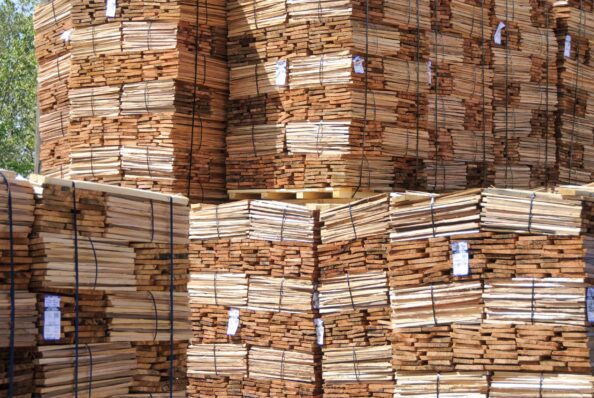 The BC Supreme Court has dismissed a lawsuit from Teal Cedar Products, a forestry company, which claimed it lost millions of dollars due to new timber rules in Haida Gwaii. The company argued that the new regulations unfairly devalued their forest tenures. The rule changes included reducing the amount of timber that could be harvested and implementing conservation measures. Teal, which owned forest licenses affected by the regulations, claimed these changes amounted to “constructive expropriation,” meaning the government’s actions took away the value of their property rights, without formally seizing the property. Chris Tollefson, a University of Victoria law professor and public interest lawyer who represented the Haida Gwaii Management Council, said private operators need to know rules evolve based on changing values and science, and companies aren’t owed compensation “where the change is bona fide, is not being used to discriminate or target them.”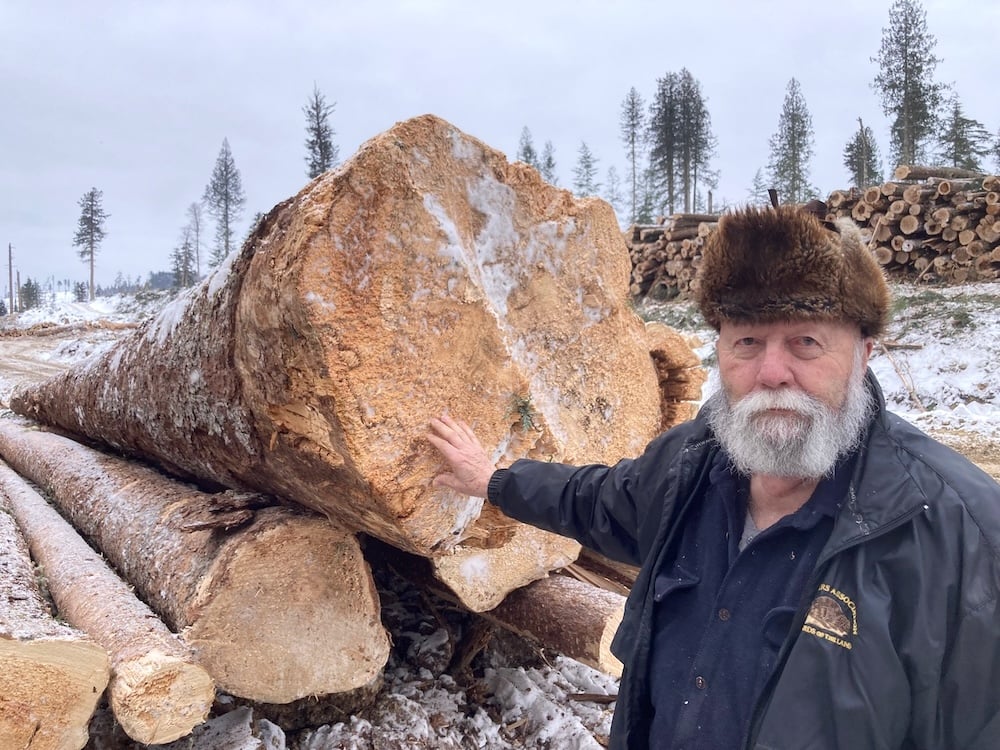

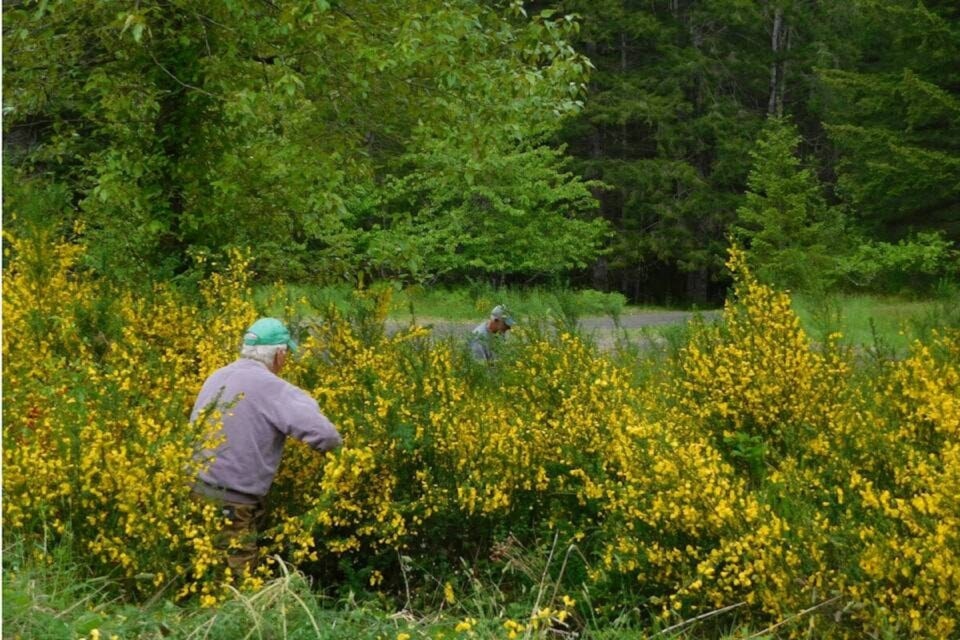

 The Osoyoos Indian Band (OIB) and American forestry company Weyerhaeuser have struck what they describe as a “landmark partnership” to manage a tree farm licence (TFL) east of OIB reserve land near Oliver. The OIB said stewardship of their traditional territory “is both a responsibility and an opportunity”. Through this partnership, OIB says it has taken a co-leadership role in managing TFL 59, an area of “profound cultural, ecological, and economic significance”. The two aim to raise the benchmark for sustainable forestry by balancing modern forestry practices with traditional knowledge… The tenure has a broad and ambitious set of management objectives, including reducing wildfire risk, protecting water resources, enhancing wildlife habitat, increasing forest resiliency and rehabilitating areas impacted by the devastating 2021 wildfires.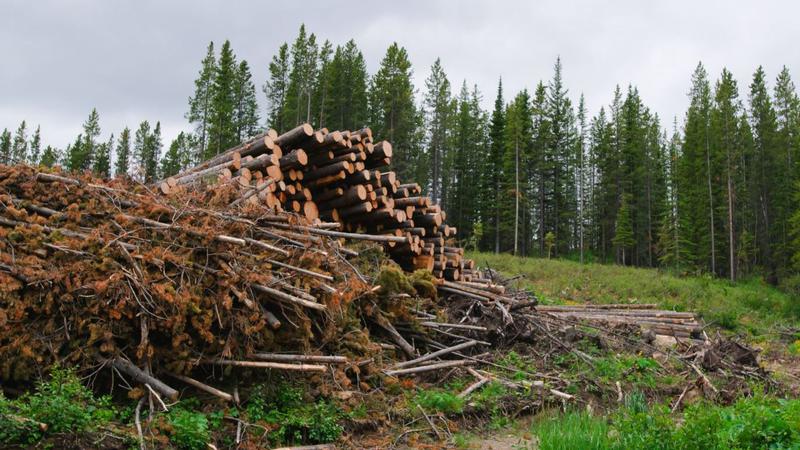
 Conservation groups are warning that a proposed Alberta government plan for a sub-region in west-central Alberta would wipe out two caribou populations if implemented. The draft plan for the Upper Smoky sub-region would enable the U.S.-based timber company Weyerhaeuser to entirely clearcut the last winter range forests… A Caribou Task Force, made up of Indigenous groups, industry, municipalities, various user groups and interest groups, had been established to advise the Alberta government on Upper Smoky sub-regional planning. These multi-stakeholder conversations were held from 2019 to 2021; however, none of the task force’s recommendations related to caribou conservation and recovery were reflected in the report. Public engagement runs until June 25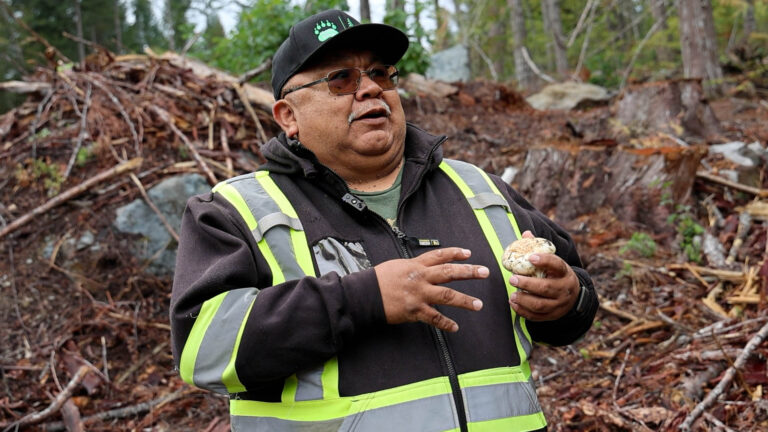

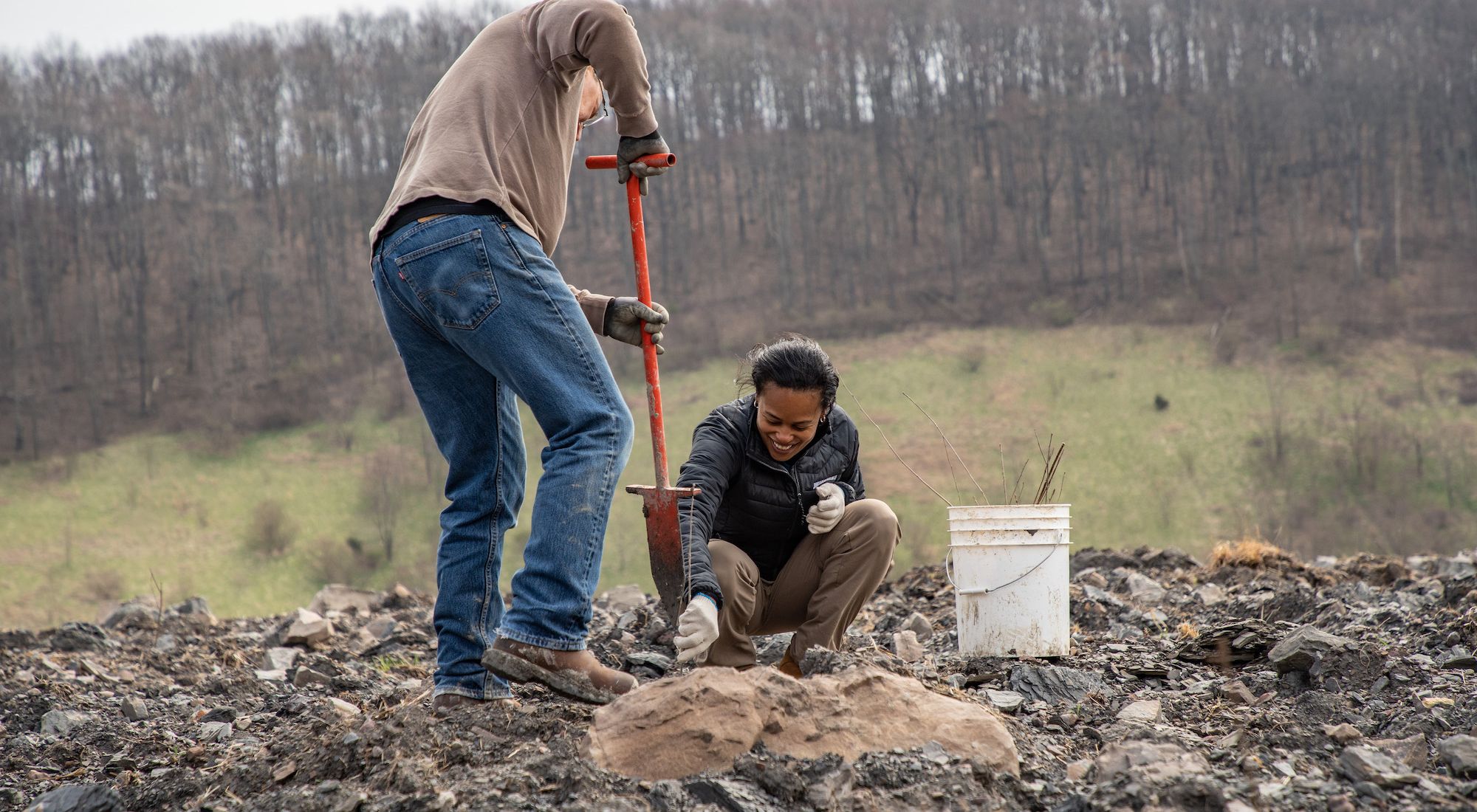
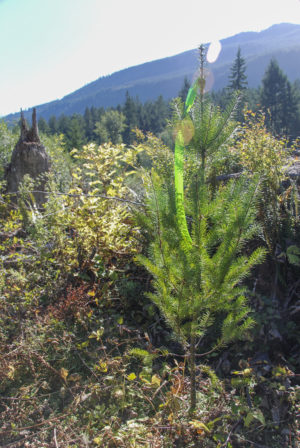 When it comes to reforesting areas made bare by natural causes, it’s the Ministry of Forests’ job to oversee the progress. “Wildfire…really is the biggest thing we’re focusing on,” said Shelley Barlow, the ministry’s regional silviculture specialist for the Cariboo. According to a February 2018 report by the Ministry of Forests, Lands, Natural Resource Operations and Rural Development, 80 per cent of the area affected by the 2017 wildfires in B.C. was in the Cariboo. About one million hectares of forests were burnt in the region, and 609,000 of those hectares were part of the Cariboo’s timber harvesting land base. Prior to 2017, the ministry was planting up to two million trees per year in the Williams Lake forestry district. Since then, Barlow said this number has at least tripled.
 There is still plenty of snow around, but today, April 1, marks the first day of the fire season. That means Ontario’s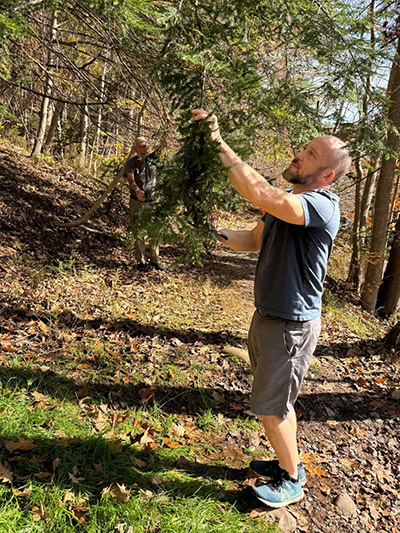

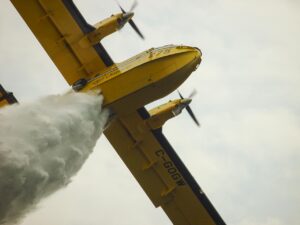 The Province of Ontario says it’s prepared for the fast-approaching 2025 wildland fire season. The new season starts on April 1, and preparations have included filling more than 100 new, permanent positions to help support forest fire fighting operations, said Chris Marchand, fire information officer with Aviation, Forest Fire and Emergency Services (AFFES). …Exactly how busy this season will be remains unknown, Marchand said, as it’s very difficult to predict how intense a fire season will be. …Marchand said the previous winter saw “somewhat normal” snowfall patterns across Ontario. …Marchand noted, however, that the 2024 fire season was slower than usual — 480 fires were reported, down from the 10-year, seasonal average of 700 fires. The Province of Ontario said it partnered with the federal government last year to invest $64 million in the provincial wil
 The Trump administration’s drive to harvest more timber from national forests will lead to a “thriving wood products economy” that doesn’t rely on imports, a top Forest Service official told the agency’s top brass in a memo last week. But the timber goal acting Associate Chief Chris French pinpointed — a 25 percent increase from current levels offered for sale — would fall short of the first Trump administration’s ambitions and barely make a dent in U.S. timber supplies, data shows. The chasm between the new administration’s rhetoric — cut more trees on national forests to reduce the country’s reliance on wood imports and rejuvenate the economy — and the math behind French’s memo reflect the hurdles to returning to the timber industry’s prosperous times around national forests… Timber industry representatives and others familiar with the Forest Service’s timber program point to several flaws in the administration’s timber-boom narrative, although the industry welcomes the Forest Service’s moves to step up production.
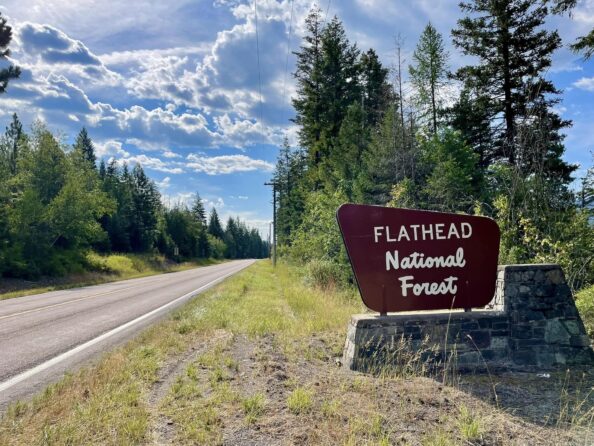 The U.S. Department of Agriculture on Friday announced will allow logging in national forests, which will help spur timber production amid reciprocal tariffs on other nations. A memo by USDA Secretary Brooke Rollins follows an executive order by President Donald Trump last month to expand timber production. There are 154 national forests covering approximately 188.3 million acres. … “Healthy forests require work, and right now, we’re facing a national forest emergency,” Rollins said in a statement. “We have an abundance of timber at high risk of wildfires in our National Forest. “I am proud to follow the bold leadership of President Trump by empowering forest managers to reduce constraints and minimize the risks of fire, insects, and disease so that we can strengthen American timber industry and further enrich our forests with the resources they need to thrive.” …The Sierra Club said the order was a giveaway to the logging industry.
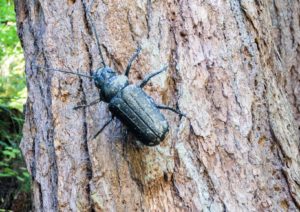 FORT COLLINS, Colo. — The latest findings about the health of Colorado’s forests are a “mixed bag”, according to forestry experts. On Tuesday, the Colorado State Forest Service released its annual report tracking the damage from forest pests. “Insects are so closely tied to a lot of that temperature and precipitation so in Colorado it’s really been a number of years, actually 31 years, since we’ve been below average temperatures so that makes it really hard to be a tree in Colorado,” CSFS forest entomologist Dr. Dan West said. …According to the report, the front range is experiencing a surge in activity from the mountain pine beetle. In 2021, the insect impacted 1,500 acres statewide. In 2024, that number grew to 5,600 affected acres and included areas in Jefferson County and Castle Rock. …Not only do the dead trees cause forests to be less visually attractive, but they also create more fuel for more damaging wildfires.

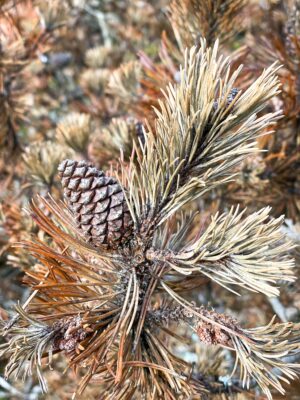
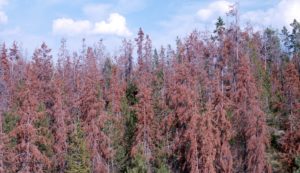 An insect known for turning entire mountainsides the color of rust could be making a resurgence in Colorado. The pest is none other than the mountain pine beetle. After a roughly decade-long period of relatively lower populations, the bugs are rebuilding their numbers along the Front Range and in southwest Colorado, according to an annual forest health report published by the Colorado State Forest Service in late March. “I’m a little concerned moving in this summer because we really haven’t had any precipitation,” said Dan West, the forest entomologist for the Colorado State Forest Service. “I’m worried bark beetles are going to increase their populations in these drought-stricken trees.” Few bugs have had a more visible impact on forests across the western U.S.



 Governor Stitt said he’s standing by his firings of staff from the Forestry Service after the March deadly fires. Several fire crews have now called for an independent investigation into what happened and what the state could do better. “It’s tough to believe anything – he’s been fact-checked several times by fire departments and the media and his facts have been incorrect. So right now you just can’t believe anything that comes out of the governor’s office,” said Fire Chief Jason Dobson of the Olive Volunteer Fire Dept. His department was one of the first to share the Change.org petition which called for Governor Stitt’s impeachment… “If the governor can’t fire the head of the forestry, who can?,” said Gov. Stitt.
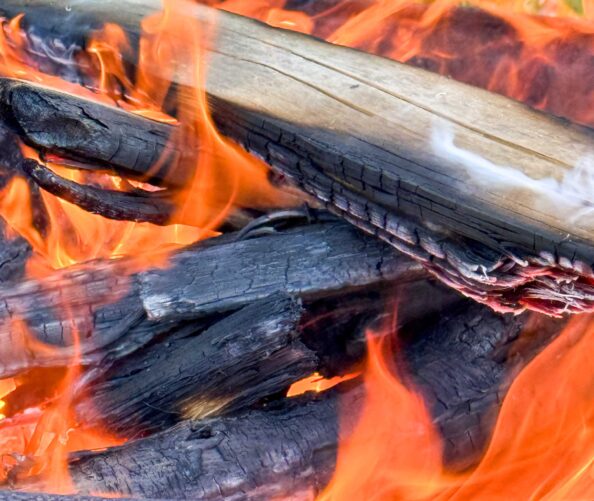 COLUMBIA, S.C. – A group of South Carolina lawmakers will continue considering a bill that would increase penalties for illegal burning in the state. The South Carolina Criminal Law Subcommittee discussed H.4265 during a meeting on Wednesday. The bill, filed by Rep. Tim McGinnis of Horry County, came after a wildfire allegedly started by a Carolina Forest woman burned more than 2,000 acres last month. McGinnis’s bill would increase fines and even jail time for burning during a ban issued by the South Carolina Forestry Commission. He spoke during Wednesday’s meeting, saying that an amendment to the bill was also made after meeting with the SCFC on Tuesday. …The bill would also repeal a section of South Carolina law that allowed exemptions for fire regulation, such as fire pits and chimineas.
 DULUTH — The U.S. Forest Service will not log in designated wilderness areas like the Boundary Waters, federal officials clarified Tuesday evening, days after issuing an emergency order intended to boost logging on national forest land throughout the country. … Wide swaths of several wilderness areas, like the Boundary Waters, were included in that total, and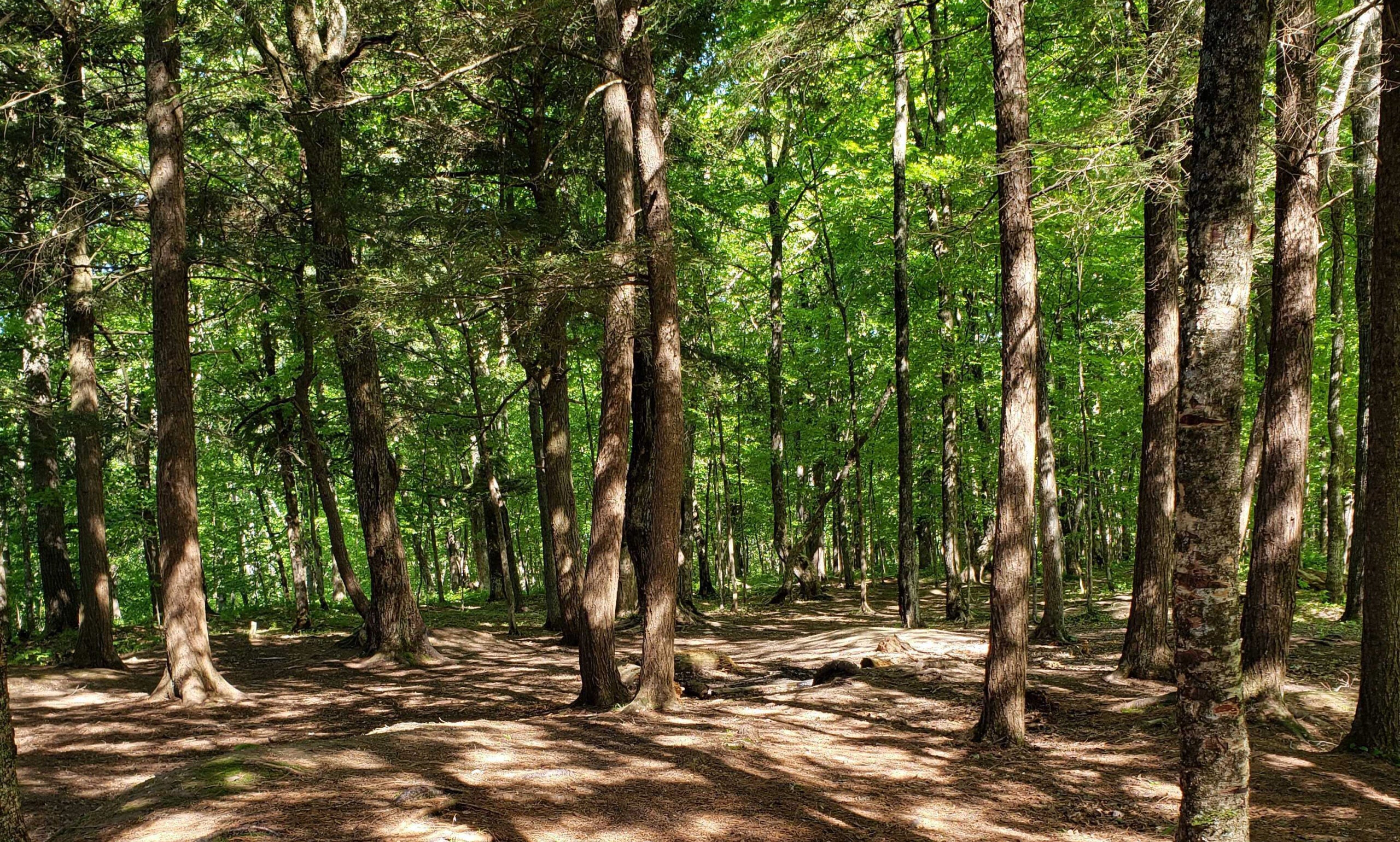
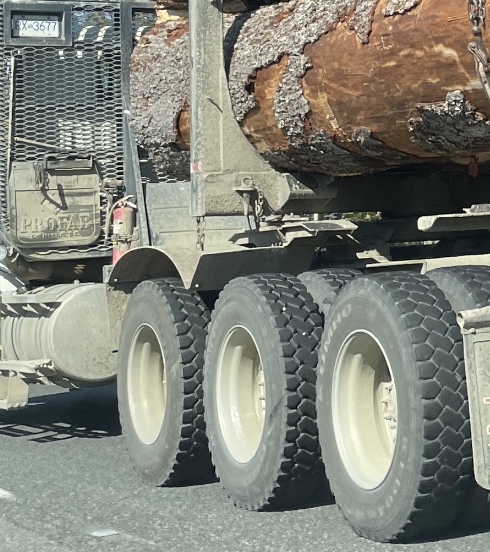 Leaders from the Texas forest industry urged Angelina County commissioners Tuesday to table a proposed road use agreement they say unfairly targets timber haulers and could lead to legal challenges. Dave Durren, speaking on behalf of the Texas Logging Council and the Texas Forestry Association, said the proposed policy would require permits and potential financial responsibility for road maintenance, placing an undue burden on loggers. “Other agricultural sectors… are not subject to this level of scrutiny or regulation, despite using the same rural road systems. This selective enforcement places an undue burden on the forestry sector and creates an uneven playing field,” the speaker said. The speaker also cited the passage of Texas Proposition 1, a constitutional amendment approved by Texas voters in 2023 protecting the right to farm, ranch and produce timber. He argued that regulating the transportation of timber directly interferes with the constitutionally protected activity.
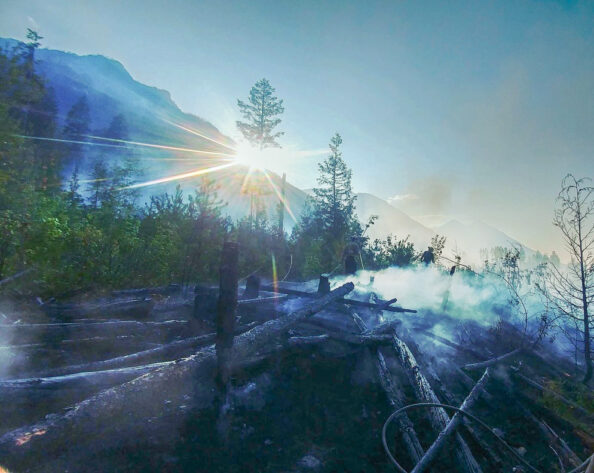 OKLAHOMA CITY — There is more fallout from what has largely divided Governor Kevin Stitt and the entire firefighting community. Governor Stitt confirms two more top-level employees within Oklahoma Forestry Services. The two unnamed employees follow the firing of lauded Forestry Director Mark Goeller. …Since Goeller’s firing, Stitt has continued making shocking changes — and suggestions — within and about forestry. He has suggested eliminating OFS altogether and called for an investigation, claiming 50% of resources went untapped during the March wildfires. …“Forestry is an integral part of what we do,” said Rep. Stan May, who worked for the Tulsa Fire Department for 30 years. …May said it would also likely disrupt inter-state agreements that aid in a multitude of disasters. He said if we don’t help others, it will hinder our efforts to get help. “We have to make sure those agreements are in place,” he said.


 Last week, Gov. Kevin Stitt criticized the Oklahoma State Forester’s response to the fires that blazed across Oklahoma in March. This week, the governor is floating the concept of axing the entire Forestry Services division. Stitt has said he believes the Oklahoma Forestry Service held back resources during the fires. When asked to specify which resources during a press conference, Stitt said he didn’t know. “The fact that we can’t get answers about where their assets were around the state is further proof that this is a deep-seated bureaucracy that are trying to protect their actions,” Stitt said. “We still haven’t been able to figure out where they were during that thing.” Just weeks after the fires, the state’s Chief Forester Mark Goeller resigned following criticism from the governor.




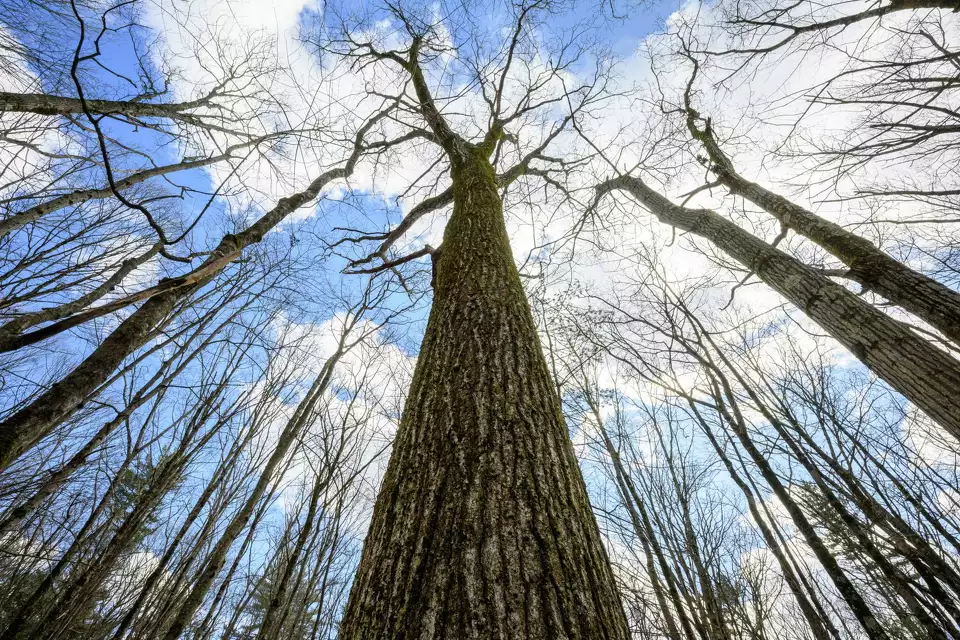
 Nearly 18,000 acres in the lower Blackfoot River watershed prized for its habitat and wood products could become publicly owned if the Bureau of Land Management (BLM) follows through with its planned acquisition. Missoula County last week signed a letter of support backing the BLM’s proposed acquisition of the former private industrial timberland in the Gold and Twin Creek drainages northeast of Missoula. Chet Crowser, chief lands and communities officer with the county, said that acquiring the parcels would permanently protect public ownership and provide benefits for decades to come… More than 60% of Missoula County is covered with public lands – lands the county claims sustain local economies through restoration and active management.

 FSC is extending the suspension of the Asia Pulp and Paper (APP) Memorandum of Understanding on the implementation of the FSC Remedy Framework until the end of June 2025. The extension of the suspension is due to a conflict of interest identified between Domtar and the law firm FSC identified for conducting the legal review of APP and Domtar’s corporate groups. FSC is identifying a different independent, third-party law firm to conduct this legal review. In January 2025, FSC suspended APP’s remedy MoU until the end of March 2025 because of the changes APP and Domtar announced regarding the concentration of sole beneficial ownership of the two corporate groups. FSC is commissioning a legal review of the corporate groups of Domtar and APP to better understand the implications and the effect of this change, and any impacts on the scope of the APP remedy process and the MoU. FSC disassociated from APP’s entire corporate group in 2007.