Twenty years ago, Forests Canada set an ambitious goal to plant 50 million trees by 2025. After planting almost 47 million trees in the past two decades, the organization is on track to plant close to 3.5 million more by the end of this year – the highest annual number in its history – to fulfill its initial 50 million tree pledge. Forests Canada is a national non-profit charity that conserves, restores and grows the nation’s forests as well as educates Canadians on the value of these vital resources. It implements up to 700 planting projects annually and has completed more than 9,700 projects across Canada to date. As a result, Forests Canada has built unparalleled infrastructure and gathered extensive expertise on ways to optimize its projects’ benefits for climate, biodiversity, wildlife, habitat and people. While every tree is important, the sheer number of trees planted is not the ultimate metric for success, says Forests Canada CEO Jess Kaknevicius.

 The BC Council of Forest Industries (COFI) is now accepting applications for the 2025 Forestry Scholarships. As part of our commitment to supporting the next generation of forestry professionals, COFI will award 10 scholarships of $2,000 each to students from across British Columbia pursuing post-secondary studies or skilled trades training related to the forest sector. The scholarships are open to BC residents entering a forestry-related program at an accredited post-secondary institution in fall 2025 or spring 2026—whether you’re from a rural community, coastal town, or urban centre.
 ʔakisq̓nuk First Nation is among communities that have taken a proactive approach to reducing risk ahead of B.C.’s next wildfire season, supported by Indigenous-owned resource management firm Nupqu and $365,000 from the Forest Enhancement Society of BC (FESBC). East of the Nation’s reserve and just north of Fairmont Hot Springs, work will continue through summer and into fall as the ʔakisq̓nuk community collaborates with foresters and the province to treat natural fire fuel and ensure a safer future for locals. It’s become a successful project, first proposed back in 2018. According to ʔakisq̓nuk Chief Donald Sam, fire suppression in these forests for more than a century has challenged and restricted the health of these ecosystems.
 A decision by the Supreme Court of British Columbia to reject a $75-million compensation claim made by a logging company that once operated on Haida Gwaii could have reverberations across the province as the government continues its reconciliation efforts with First Nations… A prime example is the $84 million in compensation that the B.C. government agreed to pay MacMillan Bloedel in 1999 after the government created a number of new parks on Vancouver Island. In seeking $75 million in compensation for alleged losses of portions of its logging tenures on Haida Gwaii, however, Teal Cedar Products Ltd., a subsidiary of the Teal-Jones Group, tried to argue something entirely different: that changes to where it could log, how it could log and when it could log amounted to a form of expropriation for which the company should be compensated millions in taxpayer dollars.

 GRAND FORKS – The Forest Practices Board has completed an investigation into a complaint about range practices and government enforcement in the Ingram-Boundary range unit. A resident of Midway submitted the complaint in January 2023, raising concerns about overgrazing, inadequate fencing to protect riparian areas and the spread of invasive plants. The investigation examined whether two range agreement holders followed legislative requirements during the 2023 grazing season. It also considered whether government enforcement had been appropriate. Board investigators visited the range unit in September 2023. The board determined that the range agreement holders complied with legal requirements when grazing livestock in the 2023 grazing season, and protected riparian and upland areas as required. However, investigators found the actions that deal with the spread of invasive plants in the range agreement holders’ range use plans were unmeasurable and could not be evaluated for compliance.
 It’s been hard to keep up with the impact of U.S. President Donald Trump’s tariff trade war on Canada. Punishing tariffs have been levied on steel, aluminum and automobiles and — critically for B.C. — softwood lumber. “Tariffs are the top election issue for workers,” Canadian Labour Congress president Bea Bruske said. “This uncertainty really has people very, very stressed out about the future of their jobs.” …The United Steelworkers union represents about 14,000 forestry workers across Canada. Wood Council chair Jeff Bromley said it’s still not clear what the tariffs will mean for members. …Bromley said the federal government can support forest workers by enhancing employment insurance and funding training support for workers who need to find work in other industries. But Bromley said the ultimate solution is a new softwood agreement.
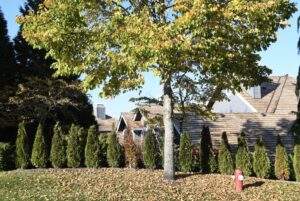 Proposed changes to Port Moody’s tree protection bylaw will adjust the requirements for developers and property owners to replace trees, afford greater protection to larger trees and establish a registry for significant landmark or legacy trees. In a report to be presented to council’s city initiatives and planning committee on Tuesday, April 15, Port Moody’s manager of policy planning, Mary De Paoli, said the new rules are consistent with council’s strategic goal to strengthen the city’s urban forest and enhance its natural assets. The revisions come more than five years after some councillors advocated for increased protection of Port Moody’s tree canopy. “It’s such and important part of our climate action plan,” said Coun. Amy Lubik. “It’s critical for keeping our community safe in these extreme climate events.”
 Hundreds of municipal, First Nations and BC Wildfire Service (BCWS) firefighters from across the province are coming together at the Wildfire Resiliency and Training Summit in Penticton to train, collaborate and learn about new technology and practices ahead of the 2025 wildfire season. “We don’t know exactly what this wildfire season will bring, but I want British Columbians to know that we are working hard every day to be ready,” said Ravi Parmar, Minister of Forests. …The Wildfire Resiliency and Training Summit brings together First Nations and local government representatives, emergency managers, wildfire mitigation specialists, and firefighters to collaborate and train with the BCWS and discuss the latest developments in wildfire technology, mitigation and prevention. The five-day event attracts more than 350 wildfire professionals and includes two days of collaborative training between structural fire departments from throughout the province and the BCWS.

 On March 31, the Supreme Court of B.C. released its decision on a historic case with implications for the future of resource management in Canada. The judge sided with the Haida Gwaii Management Council and Province of British Columbia against logging giant Teal Cedar Products Inc., which argued its profitability had unjustly diminished due to the former’s sustainability regulations and improved forestry stewardship standards. In its defence, Haida Gwaii Management Council and the province pointed to Teal’s careless logging and business practices, which it continued despite expert, repeated advice from Haida and Crown governments. Proceedings involved numerous expert witnesses … in 2023. Almost exactly two years later, the judge dismissed Teal’s claims. …If corporations were to earn the power to sue governments any time they passed new legislation to uphold sustainable and ecologically sound practices, then we would witness a nation-wide proliferation of lawsuits arising from every sector.

 The Bow Valley—encompassing Banff National Park, the Town of Banff, Canmore, and MD of Bighorn—is at imminent risk of a catastrophic wildfire. Despite commendable efforts in localized fire prevention (e.g., firebreaks, fireguards, neighbourhood mitigation), it is our opinion no comprehensive measures are in place to address the risk of an extreme wildfire—the kind that devastated Fort McMurray (2016) and Jasper (2024). A fire of that scale in this region would be both a national tragedy and a global environmental disaster. …Our call for action for our federal candidates: Acknowledge the real and rising risk of a Class 6 wildfire in the Bow Valley; While working with the Province and Indigenous Peoples, support federal investment in a landscape-scale fire mitigation strategy for the Bow Valley; Advance policy reform recognizing forests as carbon assets requiring active stewardship; and Champion this initiative as a model for national wildfire and carbon management.
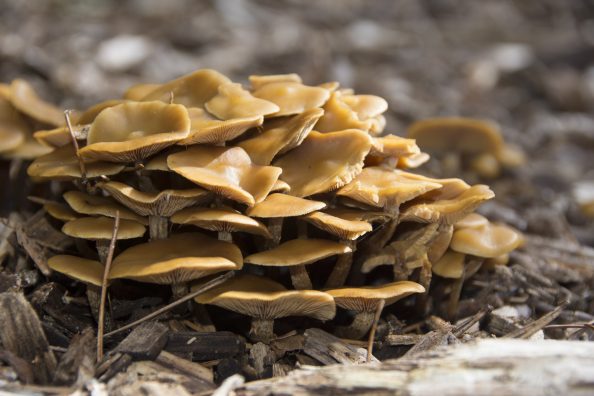 Officials in Fox Creek Alberta are trying to find ways to better protect the community from future fires. One option includes using fungi. …This summer, researchers from Lac La Biche, Alta.-based Portage College will go into the the boreal forest surrounding Fox Creek to collect local fungi. Spores from that fungi could later be used to inoculate wood in man-made slash piles. Forests are thinned to remove wood biomass so there is less material to burn during a wildfire. Wood that has been removed can be stored in massive slash piles, which can be fire risks themselves. Fungi could be used to break down the wood faster, returning them to soil, said Michael Schulz, research chair in environment and sustainability in the boreal forest at Portage College.


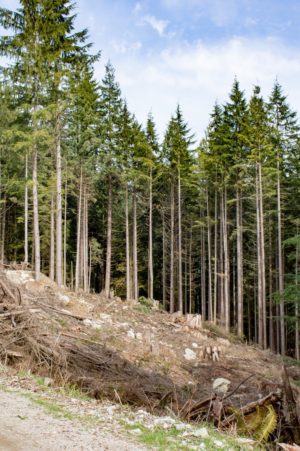 The Trump administration plans to eliminate habitat protections for endangered and threatened species in a move environmentalists say would lead to the extinction of critically endangered species because of logging, mining, development and other activities. At issue is a long-standing definition of “harm” in the Endangered Species Act, which has included altering or destroying the places those species live. Habitat destruction is the biggest cause of extinction, said Noah Greenwald, endangered species director at the Center for Biological Diversity. The US Fish and Wildlife Service and National Marine Fisheries Service said in a proposed rule issued Wednesday that habitat modification should not be considered harm because it is not the same as intentionally targeting a species, called “take.” Environmentalists argue that the definition of “take,” though, has always included actions that harm species, and the definition of “harm” has been upheld by the US Supreme Court.
 In an emergency directive issued late last week, U.S. Department of Agriculture Secretary Brooke Rollins announced her department’s plan to expand logging and timber production by 25% and, in the process, dismantle the half-century-old environmental review system that has blocked the federal government from finalizing major decisions concerning national forest lands without public insight. Under Rollins’s direction and following an earlier executive order signed by President Donald Trump, the U.S. Forest Service would carry out the plan that designates 67 million acres of national forest lands as high or very high wildfire risk, classifies another 79 million acres as being in a state of declining forest health, and labels 34 million acres as at risk of wildfire, insects, and disease. All told, the declaration encompasses some 59% of Forest Service lands. …Environmentalists say the administration’s plans are likely to only escalate wildfire risk and contribute more to climate change. …A
 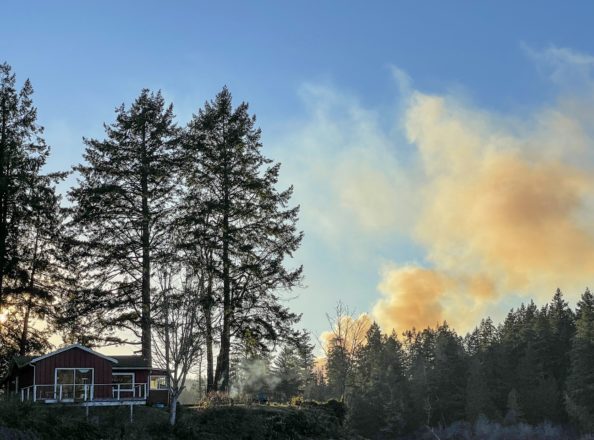 President Donald Trump wants to create a new federal agency that will be responsible for “all wildland fire fighting nationwide” by 2026, according to a draft executive order currently under review at the White House. The draft order, which was obtained by POLITICO and confirmed by three people familiar with the situation, would launch a national wildland firefighting task force in the next 90 days, combining resources from the Departments of Agriculture, Interior and Homeland Security. The White House’s eventual goal, according to the document, is to have Congress create a National Wildland Fire Agency in the next two years. The order aims to “eliminate red tape, reform our agencies and reforge our efforts around the priority to address fighting fire fast,” the document reads. It comes four months after wildfires devastated Los Angeles, a disaster that has created a sense of bipartisan urgency to improve forest management and cut down on wildfire risk. [A Politico subscription is required for full access]
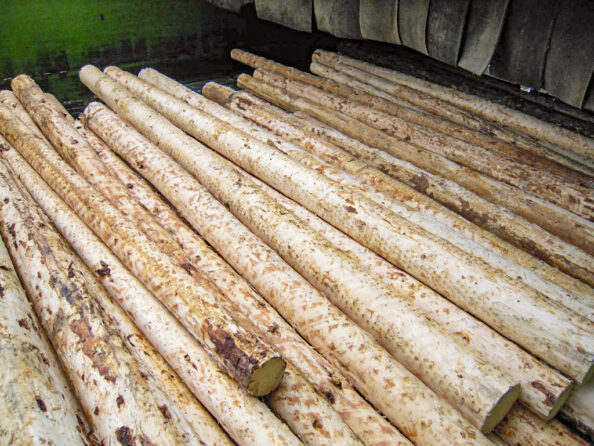 WASHINGTON, D.C. — U.S. Senators Angus King (I-ME) and Jim Risch (R-ID), co-chairs of the
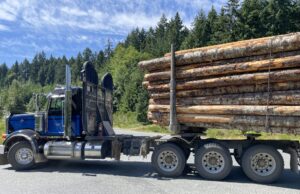 Logging is not necessarily a dirty word in the environmental dictionary. There, I said it. Provided sustainable practices are used, namely the careful choice over what trees get chopped down, logging can have a positive impact on the health of our forests as part of an effective management strategy that includes mechanical thinning and prescribed burning. Selective logging can also mitigate the risk and destructive power of wildfires. …This is my way of saying logging shouldn’t automatically be perceived as an environmental threat – despite what history tells us is the result when chainsaws and bulldozers are employed by the wrong hands. …Environmental groups reacted with outrage to Trump’s order, calling it a thinly veiled attempt to bypass environmental laws in order to justify widespread commercial logging under the false pretense that such actions will reduce wildfire risk.
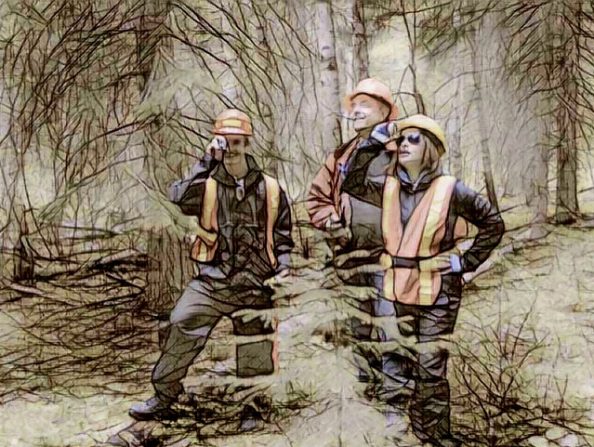 Imagine you’re a college senior who just landed your dream job working for the U.S. Forest Service
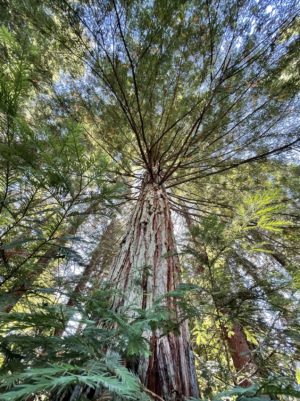 A federal order to increase US timber production by 25% will touch all 18 of the Golden’s State’s national forests, officials said. The USDA said it does not yet have information about how many acres in each forest will be affected. California’s national forests are on the chopping block — literally — in the wake of the Trump administration’s April 5 order to immediately expand timber production. Last week, US Secretary of Agriculture Brooke Rollins issued an emergency declaration that ordered the US Forest Service to open up some 112.5 million acres of national forestland to logging. The announcement included a grainy map of affected forests, which did not specify forest names or the amount of impacted acreage in each. However, USDA officials have confirmed that the order will touch all 18 of the Golden State’s national forests, which collectively span more than 20 million acres. [to access the full story a Los Angeles Times subscription is required]
 BONNERS FERRY, ID – A federal district court has stopped a logging project in northern Idaho that would have carved more roads into the area and harmed the Selkirk grizzly population habitat. Only about 50 grizzlies live in the region. Mike Garrity, executive director of the Alliance for the Wild Rockies, which has been in litigation with the U.S. Forest Service over this issue for nearly six years, said the project would have resulted in more roads than is allowed under the agency’s rules. “The Forest Plan, which is their management plan that governs the forest, limits road density in Selkirk grizzly bear habitat,” he said, “because most grizzly bears are killed within a third of a mile of a road, and it’s usually a logging road.” The court decision found the government had been violating road construction limits for years. Court documents show the goal of the Hanna Flats Good Neighbor Authority Project was to reduce wildfire risk.
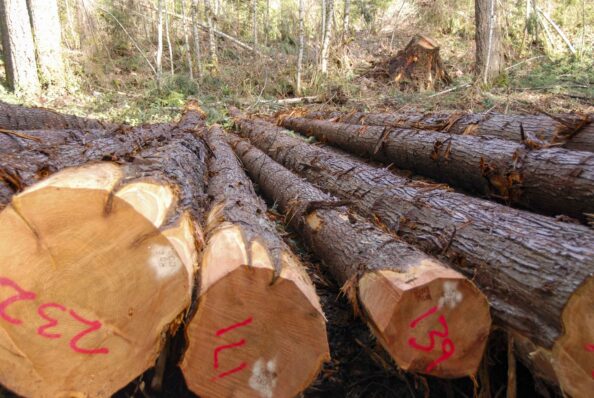 CALIFORNIA — State experts said they’re dubious about President Donald Trump’s claims that his directive opening up well over half of the country’s forests to logging will reduce wildfire risk and “save American lives.” Some, such as University of California Agriculture and Natural Resources climate-change scientist Daniel Swain, flatly called the administration’s rhetoric disingenuous and misleading. “It’s BS, frankly,” Swain told The Examiner. “Are we going to try and justify logging forests commercially under the guise of wildfire-risk reduction? …The Trump administration says the benefits of these actions are largely twofold: It will reinvigorate the economy by boosting a stagnant timber industry and significantly mitigate wildfires tearing through the West. …UC Berkeley wildfire researcher Scott Stephens said that logging can be a viable way to mitigate fire risk, as long as it’s done sustainably and arborists are strategic about what trees they’re chopping down.
 Amid a growing number of wildfires, mostly across Western states, a U.S. Senate bill is aiming to protect areas where communities are most vulnerable to fires, using “good neighbor” agreements, cross-boundary collaboration and the expansion of tools to prevent fire hazards. The bill, titled the
  A Salmon, Idaho man has pleaded guilty to a seven-count indictment for his role in schemes to rig bids, allocate territories, and commit wire fraud over an eight-year period while providing fuel truck services to the U.S. Forest Service’s wildfire fighters. Kris Bird, 62, pleaded guilty at the end of March to all counts two weeks before trial, with no assurances from the government as to what sentence will be recommended when he goes before a judge with another involved executive in June 2025. The men were indicted after a federal wiretap investigation in December 2023… “The defendant illegally profited from American taxpayer money,” said Special Agent in Charge Mehtab Syed of the FBI Salt Lake City Field Office. “The FBI and our partners are committed to rooting out fraud and protecting fair competition in the bidding for government contracts.”

 FORT STEWART, Ga. — This week, NASA scientists have been on the ground with the Fort Stewart forestry team, studying different aspects of prescribed wildfires. It’s an unlikely duo, learning a lot from each other, in this partnership between the federal space agency and Army’s forestry team on post. The team ignites 115,000 acres annually, during the Dec. 1 to June 30 season. …they do it to lower wildfire risk, to keep military training missions moving, and to rejuvenate the environment. …“The prescribed fire program here at Fort Stewart is very successful,” said scientist Jacquelyn Shuman, with NASA Firesense. Shuman and her researchers needed a place to safely study different parts of wildfires, what better place than Fort Stewart, Shuman says. “NASA has been collecting information about fire for decades,” Shuman said. NASA scientists are studying the fires’ emissions, how it releases its heat, and how wind changes the behavior of the blaze.
 Environmentalists are voicing outrage over the Trump administration’s move to invoke emergency powers to ramp up timber production from national forests in northern New England and across the country. The bulk of the White Mountain National Forest in New Hampshire and much of the Green Mountain National Forest in Vermont were included in US Agriculture Secretary Brooke Rollins’s announcement earlier this month that an “emergency situation” exists across 112.6 million acres of federally managed land. Heightened risks for wildfires and infestation by insects and disease have contributed to “a full-blown wildfire and forest health crisis” across more than half of all National Forestry System land, Rollins wrote. …Zack Porter, executive director of Standing Trees, an advocacy group that has opposed increased logging on public lands, said the secretary’s memo is an “outrageous” effort to bypass public input on how national forests should be used.
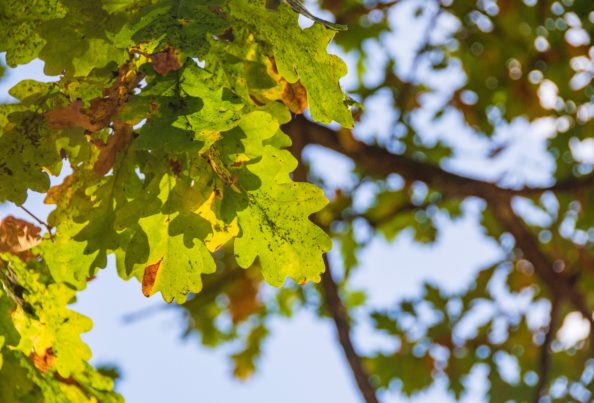 Virginia — …Slowly but steadily, the oak is disappearing from our forests and from our landscape. To use just one typical measure: In Shenandoah National Park, the oak canopy has shriveled by 20 percent over the past 20 years, according to a study funded by the Shenandoah National Park Trust. The oak’s decline is accelerating in a vicious arboreal cycle. There are many reasons for this, but one rises above all others. Oaks are fire-dependent, meaning they require frequent fires to regenerate. But fire-suppression efforts over the past century have broken this timeless pattern. Fire-intolerant trees with far less ecological value — maple, beech, basswood, black gum, tulip trees — have risen to replace the oak, hickory and pine forests, which need regular fire to open the forest canopy, bring in light and eliminate competitors. The best way to save the oak, and the countless critters that rely on it, is to return fire to our landscape. [A Washington Post subscription is required for full access]
 In the months after Hurricane Helene leveled thousands of acres in Pisgah National Forest, John Beaudet and other volunteers cleared downed trees from the Appalachian National Scenic Trail. Chopping them up and moving them aside was back-breaking work, but essential to ensuring safe passage for hikers. So he was dismayed to learn that a section of the trail in western North Carolina could remain closed for more than a year because the National Forest Service wants that timber left alone so logging companies can clear it… The fast-track approach to environmental review following Helene has many people concerned that the public isn’t being given any chance to inform the process. According to forest advocates who have been in communication with the Forest Service, the government reportedly plans to announce 15 salvage projects in western North Carolina. Volunteers, scientists, and hikers are asking for transparency in a process they say could prioritize profit over ecosystems.
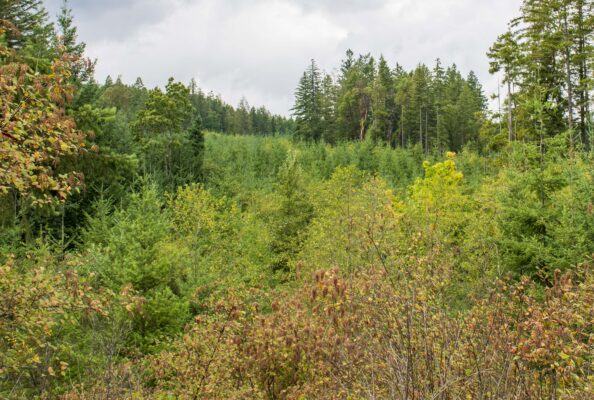 The Wisconsin Department of Natural Resources (DNR) is proud to join communities, organizations and individuals throughout the state in celebrating trees and forests during Forest Appreciation Week, which runs from April 21 to Arbor Day (April 25) and includes Earth Day (April 22). Forest Appreciation Week is a time to reflect on the importance of urban and rural forests. “Everyone has a role in ensuring that forests continue to serve a vital role in the ecological, cultural and economic health of our state, our local communities and our individual lives,” said Carmen Hardin, DNR Applied Forestry bureau director. 17 million acres of forests cover nearly half of Wisconsin and millions of urban trees provide many benefits; to maintain these many benefits, we need to be good stewards of the forest resources.
 On 10 April 2025, the Forest Stewardship Council (FSC) was notified of Svenska Cellulosa Aktiebolaget’s (SCA) intention to self-terminate its forest management certification in Sweden as of 1 June 2025, while keeping their forests in the Baltics certified and maintaining the Chain of Custody certification as well as membership in FSC Sweden. We regret this decision, but acknowledge SCA’s continued commitment to FSC, and its openness to finding a solution through engagement with FSC and other stakeholders. FSC, a membership-based organization, is founded on the belief that lasting solutions to complex problems require diverse voices at the table. Our unique three-chamber governance structure brings together environmental, social, and economic interests, ensuring that no single perspective dominates, and that consensus guides our decision making.
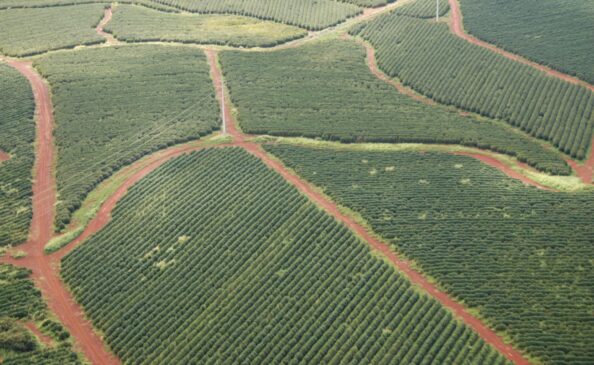 BOGOTA, Colombia — A recent amendment to Peru’s Forestry and Wildlife Law is drawing fierce backlash from environmental groups and Indigenous groups that warn it could accelerate deforestation in the Amazon rainforest under the guise of economic development. The amendment eliminates the requirement that landowners or companies get state authorization before converting forested land to other uses. Critics say the change could legitimize years of illegal deforestation. “To us, this is gravely concerning,” said Alvaro Masquez Salvador, a lawyer with the Indigenous Peoples program at Peru’s Legal Defense Institute. Masquez added that the reform sets a troubling precedent by “effectively privatizing” land that Peru’s constitution defines as national patrimony. “Forests are not private property—they belong to the nation,” he said. Supporters of the amendment, enacted in March, say it will stabilize Peru’s agricultural sector and provide farmers with greater legal certainty.