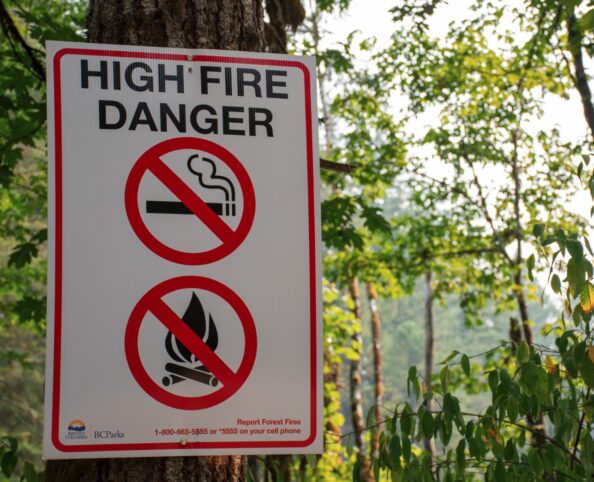
 Canadian forests are increasingly primed for severe, uncontrollable wildfires, a study published Thursday said, underlining what the authors described as a pressing need to proactively mitigate the “increased threat posed by climate change.” The study by Canadian researchers, published in the journal Science, looked at Canadian fire severity from 1981 to 2020. “The widespread increases, along with limited decreases, in high-burn severity days during 1981 to 2020 indicate the increasingly severe fire situation and more challenging fire season under the changing climate in Canada,” the study read. Co-author Xianli Wang, a research scientist with the Canadian Forest Service, says there were on average an additional two days conducive to high-severity fires in 2000 to 2020, compared to the previous two decades. In some areas, it was closer to five days. …The greatest increase in burn severity days was recorded in an area covering northern Quebec and an area covering Northwest Territories, northwest Alberta and northeast British Columbia.
 Human recreation on mountain trails is displacing grizzly bears and wolves from their natural habitats, even when the trails are hundreds of metres away, according to a new study from the University of Alberta. The research underscores the need for more effective planning to ensure that recreationists and wildlife can coexist, particularly in the busy Bow River Valley, which has long served as a natural corridor connecting the prairies to the Continental Divide… Though trails that never receive any use from humans have little to no effect on wildlife, only half of grizzlies studied would venture within 300 metres of trails with the highest human use. This effect was more pronounced in wary wolves, whose radius of comfort extended to 600 metres from the busiest trails. “We initially thought bears might use hiking trails as efficient routes when humans weren’t around, but they actually avoid these areas altogether,” says the author.
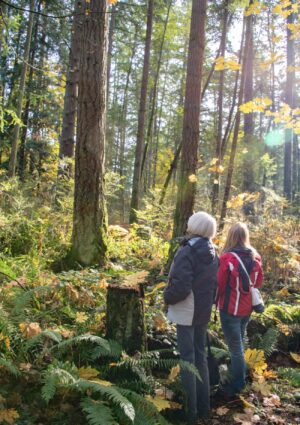 For over 20 years, the BC Community Forest Association (BCCFA) has championed the community forest program, highlighting its ability to foster social, economic, ecological, and cultural resilience. …Community forests are long-term, area-based tenures managed by local communities to reflect local priorities and values. With 61 community forests currently operating across the province, and growing interest in local resource management, the program is gaining broad recognition and support. …According to the December BCCFA Newsletter, the city of Quesnel along with five First Nations, have come to an agreement on the establishment of the Three Rivers Community Forest (TRCF). …Farther south, the BCCFA provided Nakusp and Area Community Forest (NACFOR) with funding through the province’s Economic Recovery Initiative under the Crown Land Wildfire Risk Reduction program. …There were 14 other community forests across the province supported by this initiative.
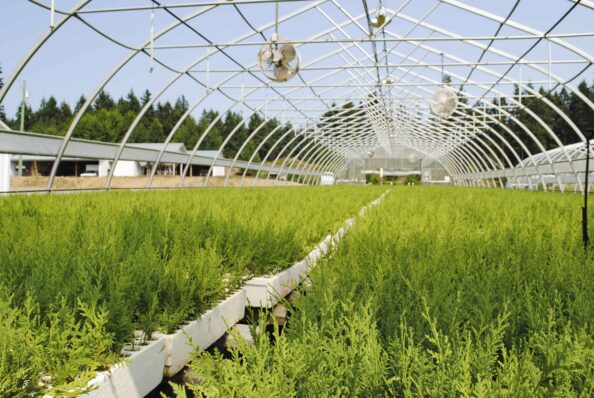 More than 280 million trees were planted in B.C. forests in 2024 due to the Province’s efforts. “2024 was a banner year for tree planting in B.C., including celebrating 10 billion trees planted since 1930,” said Ravi Parmar, Minister of Forests. “Our government’s commitment to sustainable forests has seen us lead the country by planting more than two billion trees since 2017.” …The Province’s 2024 reforestation efforts were primarily focused on fire-damaged areas. This was in addition to the work undertaken by forest tenure holders as part of their legal requirements to regenerate harvested areas. “We are in good shape right now based upon a run of strong years and the government’s commitment to tackling the impacts of climate change through adaptation and keeping reforestation programs at a level to help regrow our forests,” said John Betts, executive director, Western Forestry Contractors’ Association.
  In 2024… Since April 1, a total of 1,688 wildfires resulted in approximately 1.08 million hectares burned. More than 70% of wildfires this season were caused by lightning, while slightly fewer than 30% were attributed to human activity. …“I want to thank the hardworking members of the BC Wildfire Service,” said Ravi Parmar, Minister of Forests. …Building on the recommendations of the Premier’s Expert Task Force on Emergencies, the BC Wildfire Service is working in partnership with trained local community members who are interested in supporting response efforts around their communities. …The Province is expanding the number of firefighting tools available to crews to provide broader response capabilities. …This year, a wildfire training and education centre was announced. A first-of-its-kind in North America, the centre is a partnership with Thompson Rivers University in Kamloops.
  Sporting aviator sunglasses and standing in front of a lectern last month in Manaus, Brazil, in the heart of the Amazon, outgoing President Joe Biden spoke of the importance of safeguarding the world’s carbon-rich forests — a message he delivered numerous times throughout his tenure. …“Despite Biden’s rhetorical flourishes about the importance of preserving and restoring old-growth forest ecosystems, his administration has led the charge to open more and more of these areas to commercial logging,” said John Talberth, president and senior economist at the Center for Sustainable Economy (CSE), a nonprofit think tank. …The Forest Service did not respond to questions about whether it expects to finalize a national old-growth amendment before Trump’s inauguration on Jan. 20. …Agriculture Secretary Tom Vilsack told The Associated Press that it would be “a serious mistake for the country to take a step backwards now that we’ve taken significant steps forward.” …As long as the Forest Service remains under the Department of Agriculture, things are unlikely to change, Talberth said.
 Just days after Christmas in 1973 President Richard Nixon signed into law the Endangered Species Act, establishing one of the strongest conservation laws in history. …The Northern Spotted Owl has proven to be the most controversial of animal species listed. Its “threatened” designation in the late 1980s sparked legal battles between logging companies and environmental groups later named the Timber Wars. …The Northwest Forest Plan was amended in a monumental compromise between environmental groups and the timber industry in 2022 when Governor Kate Brown singed into law the Private Forest Accord. …The Forest Service has proposed additional amendments to the Northwest Forest Plan that may open up millions of acres of western lands to logging. The final environmental impact statement of that plan will be released in 2025 under the Trump administration, which has promised extensive deregulation. The Northern Spotted Owl remains listed as endangered.