Canada’s Forest Trust Corporation (CFTC) and Forests Canada announced a new partnership, where the two national organizations will team up to plant trees from coast to coast. Together, the organizations will plant 250,000 trees this year, with Forests Canada contributing longstanding expertise and proudly delivering forest restoration programs focused on improving forest health and landscape connectivity to support diverse, healthy ecosystems. CFTC brings excellence in the use of technology to monitor forest health, biodiversity benefits, and climate impacts. The national collaboration will create up to 125 hectares of new forest. This will contribute to CFTC’s projections of planting 30 million trees over the next five years, and builds on more than two million trees that CFTC has planted and monitors in partnership with clients, local communities, and Indigenous partners. This collaboration will also contribute to Forests Canada’s all-time goal of planting a total of 50 million trees by the end of 2025.
 MONTREAL — CN and Tree Canada have awarded ten Canadian communities with $50,000 grants for tree planting and greening projects. These grants, totaling $500,000, are made possible through CN EcoConnexions – From the Ground Up program that invests in community greening projects along CN’s rail network across Canada. …CN has also funded 45 additional $10,000 grants through Tree Canada’s Community Tree Grants program, supporting municipalities in their efforts to expand and maintain urban forests. Through the From the Ground Up program, CN has helped municipalities enhance their natural environments, improve social well-being, and engage residents who value green spaces. …Together with mass reforestation projects, CN and Tree Canada, along with other partners, have planted over 2.4 million trees through EcoConnexions initiatives, with a goal of planting a total of 3 million trees by 2030. Tree Canada works closely with grant recipients to help ensure the long-term success of their greening projects.



 Len Apedaile, RPF, is the general manager of Tiičma Forestry, a small market logger based up in Ka:’yu:’k’t’h’/Che:k’tles7et’h’ First Nations (KCFN) territory on Vancouver Island’s north coast. He thinks, if anything, the American tariffs scenario of 25% on all Canadian imports will give businesses the opportunity to re-evaluate how they fundamentally do things. …“This doesn’t happen overnight, but I think that you’ll see that this will spur on those efforts over time,” said Apedaile. …“We really don’t understand where these tariffs are coming from because they just don’t make sense for the Americans or us. …Tiičma Forestry operates in a high-cost area of Vancouver Island. The relatively new First Nations forestry company sells west coast old and second growth logs to a Terminal Forest Products sawmill on the mainland who exports primarily to the U.S.
 The BC government is providing Forest Professionals British Columbia (FPBC) with a $620,000 grant to improve and expand the use of registered forest professionals in managing BC’s forests for wildfire. “The increasing frequency and severity of wildfires has shown that we need to be more proactive in managing our forests and the forested lands near our communities to make them more resilient to wildfire and enhance public safety,” said Christine Gelowitz, RPF, Forest Professionals BC chief executive office. “Working in partnership with BC Wildfire Service, we will set robust practice standards in wildfire prevention, planning, and recovery, allowing forest professionals to better manage forests for wildfire and help reduce the risk to the public and the environment.” The funding will support the Wildland Fire Joint Panel Initiative, which includes Forest Professionals BC and the BC Wildfire Service.

 Dear Minister Ravi Parmar: I am writing to you in reference to your recent Minister’s Statement regarding photos of tree spiking claimed to be of Fairy Creek, submitted to you anonymously and without verification. I understand from the reporter who subsequently interviewed me that the purported sender was “Friends of Fairy Creek.” My name is Kathy Code and I am a Fairy Creek Forest Defender. …Thus, I was dismayed to read your statement. Not only are you giving public voice to unsubstantiated claims from an unknown sender, but the weight of your office gives some credence to the underlying accusations. …I ask on behalf of the citizens of BC that you withdraw your statement as a means of maintaining the dignity of your office.
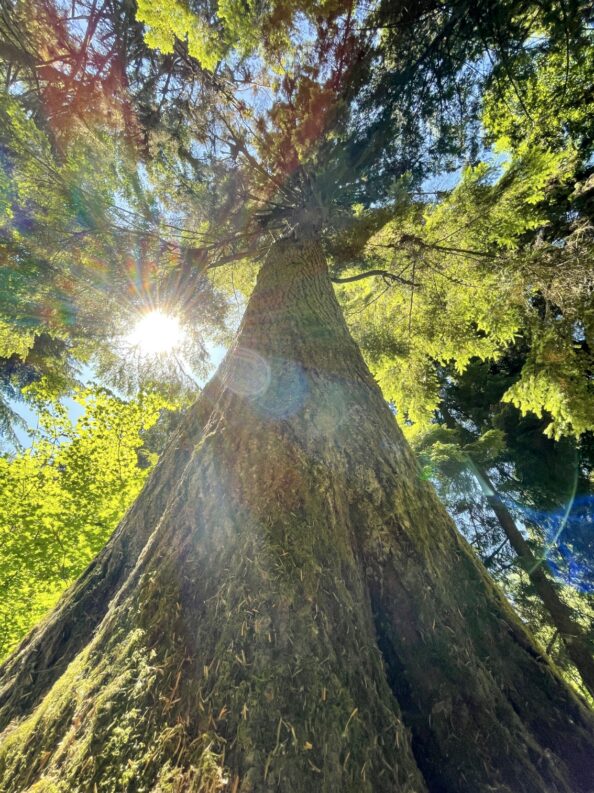 The overall goal is to have a working forest while sustaining ecological and cultural values so that future generations have access to forest areas just as diverse and healthy as those currently enjoyed. For Sunshine Coast Community Forest (SCCF) operations manager, Warren Hansen, ecosystem-based management (EBM), a tool introduced in its operations in 2021, “came from the heart” of what the community wants from SCCF. In his opening remarks at a Jan. 30 Community Advisory Panel and public information webinar, he noted that SCCF’s board and community advisory panel are committed to using EBM in stewarding its tenure by harvesting timber in a way that curbs losses of biodiversity. The overall goal is to have a working forest while sustaining ecological and cultural values so that future generations have access to forest areas just as diverse and healthy as those currently enjoyed. To do that, SCCF relies on advice from contractors including Laurie Kremsater and Anna Yuill, who presented an overview of EBM to about 35 people tuned into the webinar.

 Washington D.C.–The Sustainable Forestry Initiative (SFI) is proud to announce a groundbreaking new project to advance climate smart forestry practices across the United States, supported by a generous investment of over $800,000 from the Doris Duke Foundation. The project, Advancing Carbon Stewardship Practices for Large Landowners in the United States, will use a forest sector-focused approach to advance forest management and conservation activities to both enhance the carbon sink and reduce sources of emissions from forests. Forests … are experiencing increased frequency and severity of fire, drought, pest outbreaks, and disease—all of which negatively impact forest and community health, economic development, and resiliency while threatening our safety. “We are so thankful for this investment from the Doris Duke Foundation to leverage our network, scale, and the SFI Forest Management Standard, which includes progressive requirements on climate and fire,” said Kathy Abusow, President and CEO of SFI.
  A bipartisan group of senators introduced legislation Thursday that would create a new Wildfire Intelligence Agency, seeking to streamline the federal response to fires. The bill, led by Sens. Alex Padilla (D-Calif.), Tim Sheehy (R-Mont.), John Hickenlooper (D-Colo.) and Steve Daines (R-Mont.), came in the wake of recent blazes that decimated parts of Southern California, primarily in the Los Angeles region. “The scale of the wildfire crisis demands a singular, whole-of-government wildfire intelligence center to foster cross-agency collaboration and save lives,” Padilla wrote in a statement. The joint office would share information with the Department of Agriculture, the Department of Commerce and the Department of the Interior, according to the legislation. “Wildfires don’t care about state lines or forest service boundaries,” Hickenlooper said. “A centralized wildfire intelligence center will speed our response to fires and promote cross-agency collaboration to tackle them.”
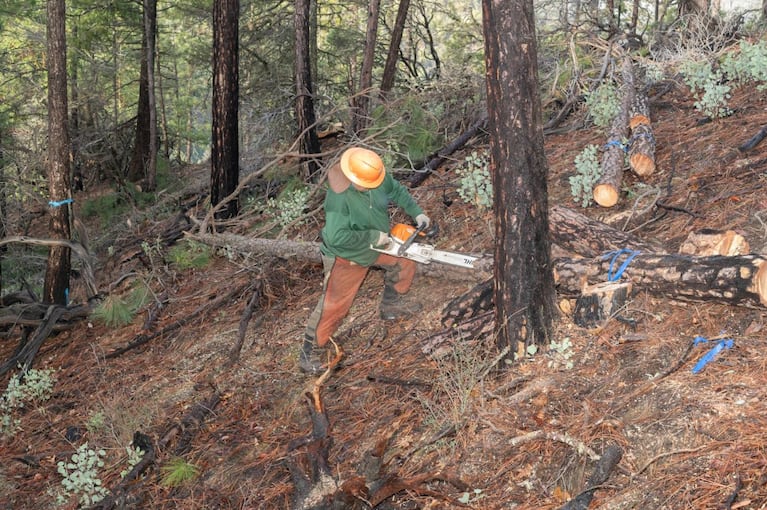

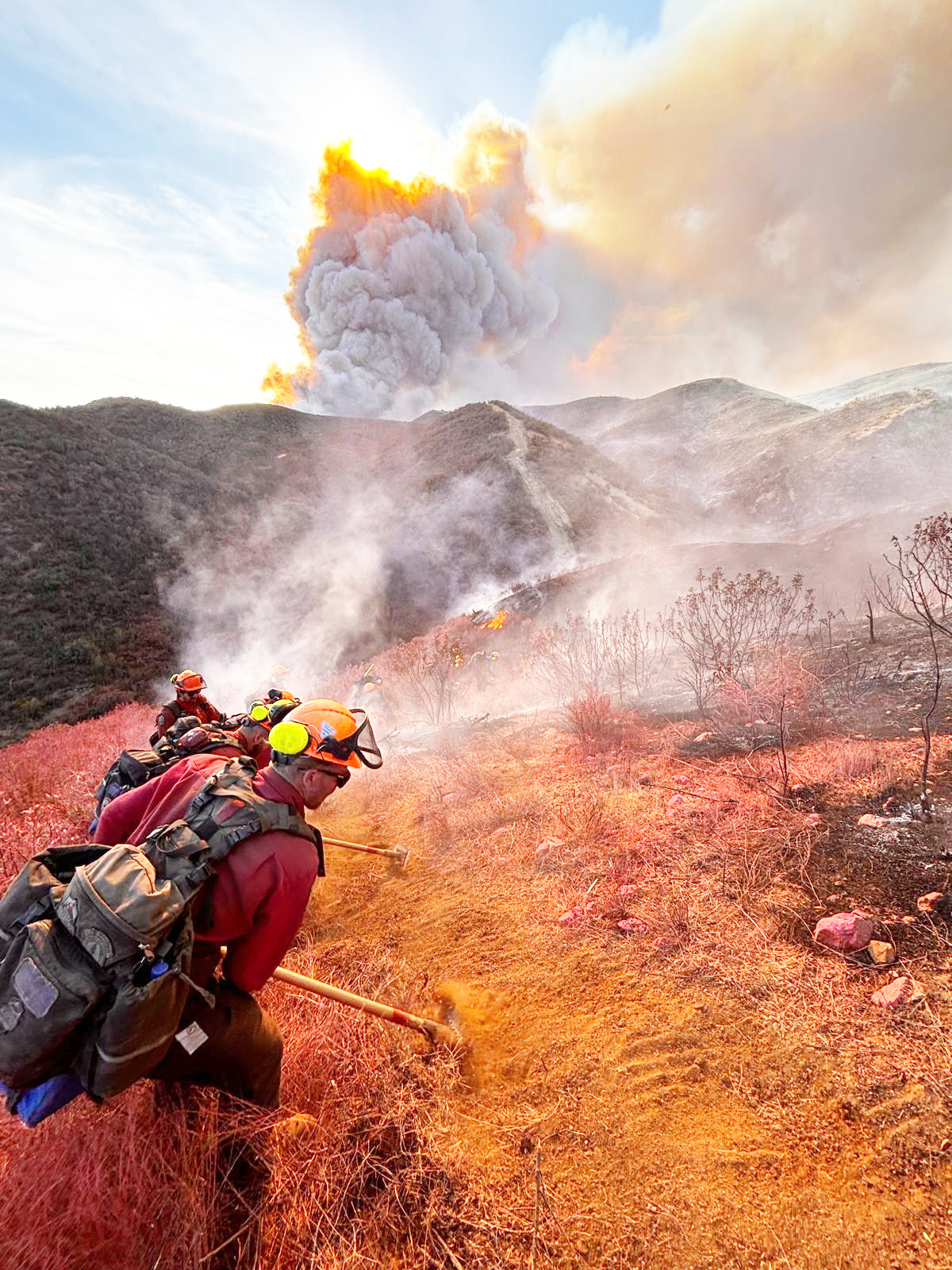

 SACRAMENTO, Calif. — As Los Angeles reels from deadly January wildfires that destroyed thousands of homes, California Gov. Gavin Newsom signed an order Thursday directing the state to advance long-delayed regulations requiring homeowners in high-risk areas to clear combustible materials around their homes. Newsom ordered the state to publish draft regulation next month, with a deadline to adopt those rules by the end of the year. The requirements were passed by lawmakers in 2020 and originally set to take effect by Jan. 1, 2023. Newsom signed the order after he returned from Washington to advocate for disaster aid. The rule requires homeowners to clear materials like dead plants and wooden furniture within 5 feet of their homes in fire-prone areas. As multiple fires roared through LA neighborhoods in January, the regulations still weren’t written, and the state Board of Forestry and Fire Protection told The Associated Press last month it had no firm timeline for completing them.
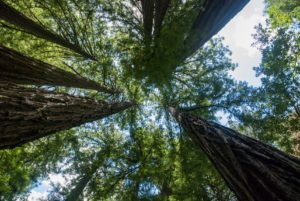 Senator Mike Rounds has re-introduced a bill that would require National Forest superintendents to submit remediation plans if their timber production falls well below the allowable amounts laid out in forest plans. The remediation plans would be required to bring timber production in the respective forests back to at least 75% of their allowable amounts. Rounds says timber production in the Black Hills has far below its allowable 181,000 units. “Three years ago, we did about 80,000, the year before last we did about 60,000, and we’re down to about 59,000 units this year, and so the bottom line is not even a third of what we should be harvesting in the Black Hills is actually being done,” Rounds said. “But it also means some of those forests that could be more properly managed, based upon their own plan are not being harvested, the plan is not being followed,” Rounds said.


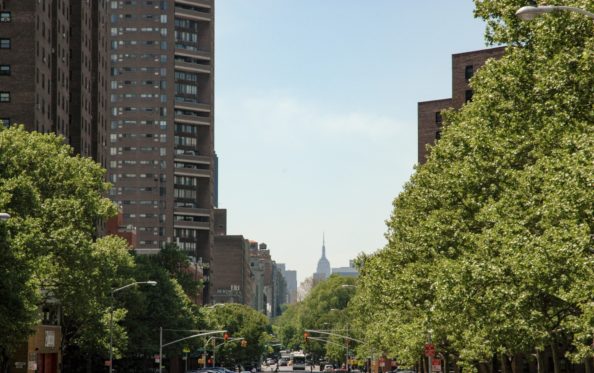 The State of New York last week announced the launch of two new interactive tools for recording and tracking the number of trees planted as part of a climate initiative to reach 25 million trees by 2033. Developed by the state’s Department of Environmental Conservation and its Office of Information Technology Services, the Tree Tracker allows state agencies and private organizations and individuals to report the number and location of trees planted, as well as planting dates, species and tree size. “New York is taking decisive action to protect our environment and strengthen communities’ ability to withstand severe weather,” Gov. Kathy Hochul said in the press release. “Our progress toward the 25 Million Tree goal is a testament to the power of community-driven action, and the new Tree Tracker will make it easier for New Yorkers to track our progress, share updates and contribute to a healthier environment for the future.”