In the 19th century, the forests that surrounded some of Canada’s oldest and most populated cities were key to the economics of European settlement and helped lay the foundation for a new country. Now, those same places could become essential to Canada’s future – not through further clearing and development, but by encouraging the trees to grow back. That’s the takeaway from a comprehensive analysis that seeks to optimize the country’s 2 Billion Trees effort… “It’s asking where in Canada are we going to achieve the highest growth rate of trees at the least cost,” said Ronnie Drever, senior conservation scientist with Nature United who led the study… The findings show that the best return on investment are not to be found in the remote boreal wilderness but in diverse pockets of land that are relatively close to the cities and towns that most Canadians call home. [A subscription required to read this article]

 Rhonda Millikin, an award-winning ecologist who has questioned Whistler’s approach to wildfire mitigation, was issued a cease-and-desist letter last month from Forest Professionals British Columbia (FPBC), which said she is not certified to offer forestry advice. The FPBC said in its Dec. 14 letter that Millikin was unlawfully engaged in the reserved practice of professional forestry by providing advice and recommendations to the RMOW to limit or cease forest fuel-thinning efforts. “On principle, we don’t have an issue with people, whether a member of the public or someone from a different profession, researching or holding opinions or even talking about those opinions,” explained Casey Macaulay, the FPBC’s registrar and director of act compliance, who authored the cease-and-desist letter. “Where it’s an issue is when they start to advocate for a particular practice, and in this case, where that practice is so out of sync with the current science and the current practice of protecting communities from wildfires.”
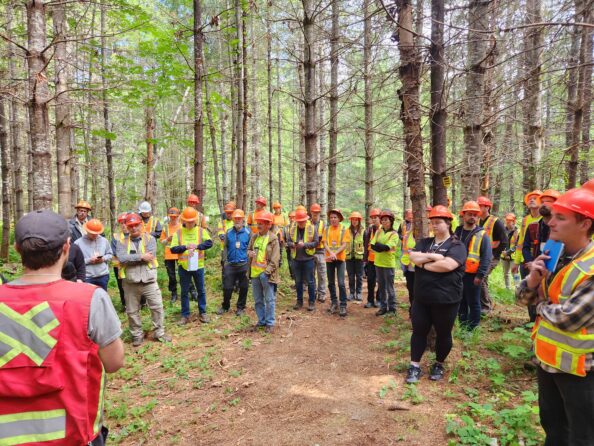 The Coast Silviculture Committee is an ad hoc organization of forest professionals whose prime objective is to disseminate current technical forest management and silvicultural information to all forest practitioners and the public in coastal British Columbia. Its membership includes corporate, government, and self-employed professional foresters and forest technologist, forestry educators, forest land owners, researchers, and tenure managers. Every year the CSC holds two meetings; a short, one or two day, information meeting in winter, and a slightly longer field based technical workshop in early to mid- June; summer meetings are held in a different part of the coast each year. All of the surplus funds from workshops go towards supporting development of silvicultural expertise in students at the post-secondary level through providing of awards. The Winter 2025 workshop is scheduled for February 19 at Vancouver Island University.
  VICTORIA – The Forest Practices Board is identifying opportunities for government to enhance how it manages and enforces range activities. This is following a complaint investigation about cattle grazing practices near Grand Forks. The board investigated concerns raised by the Southern Interior Land Trust (SILT) that two range agreement holders were not following their grazing schedules or maintaining fences as required by law, and that government actions taken in response to their concerns were inadequate. From 2021 until 2023, SILT observed cattle grazing on its private land it had purchased to conserve wildlife habitat. SILT contacted the Ministry of Forests’ range staff to request corrective action, sharing proof of the cattle grazing gathered using game cameras. …“It’s crucial that government record results when it conducts inspections,” said Keith Atkinson, chair, Forest Practices Board. “Documentation helps evaluate the accuracy of complaints, the effectiveness of enforcement efforts and can support corrective measures, if necessary.”
 OTTAWA, ON – Today, the Honourable Jonathan Wilkinson, Canada’s Minister of Energy and Natural Resources, announced an investment of more than $900,000 to Integrity Reforestation for a major reforestation project that will help to restore wildfire-impacted land and caribou habitat in Ontario’s Ogoki Forest. With this funding, Integrity Reforestation will: plant 800,000 trees, covering 450 hectares of the Ogoki Forest; rehabilitate ecosystems destroyed by wildfires using native species to restore the habitats of woodland caribou, moose and black bears; and create over 40 tree-planting jobs in the region. With this agreement, Canada and Integrity Reforestation are leveraging their shared commitment to habitat restoration and climate action. Canada will continue to work with provinces, territories, local communities, organizations and Indigenous Peoples to create a greener, healthier and more resilient Canada while reinforcing our country’s ability to respond to wildfires, especially in the face of changing climate.
 The
The 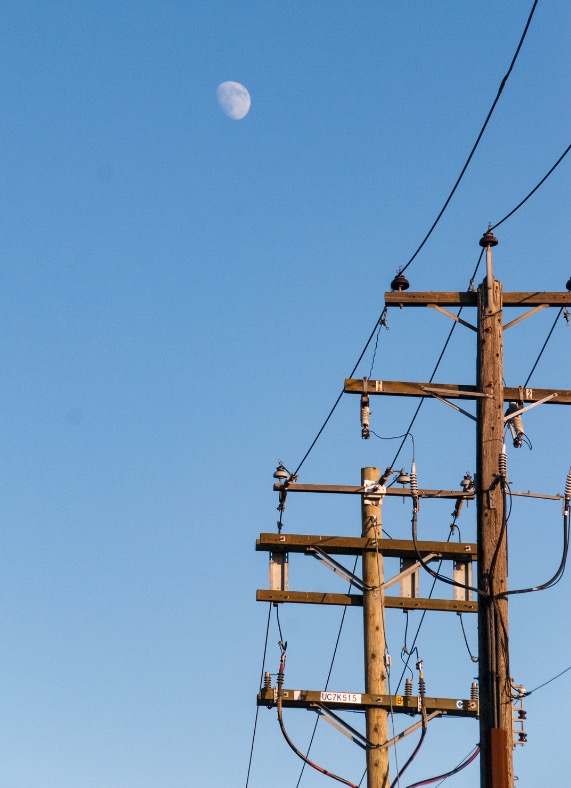 As California residents grapple for answers in the wake of a massive firestorm event in which two major blazes ravaged parts of Los Angeles — the Palisades Fire and the Eaton Fire —power lines are once again at the center of debate. It’s no wonder. Failed electric equipment and poor maintenance have caused horrific blazes in recent years, sometimes sparked by the smallest of parts, according to government investigators. …The 2023 fire in Maui that killed 102 people was caused by “reenergization” of broken power lines during high winds that showered sparks into dense, dry vegetation. …One key but often unpopular tool for preventing deadly wildfires is shutting off power when high winds of certain velocities are forecast. …Undergrounding power lines is the single best method to avoid dangerous arcing of overhead wires, or having dry palm frond hit one that can spark or spread fires. It’s also by far the most costly
 WASHINGTON – Today, U.S. Secretary of Commerce Gina Raimondo announced the Department’s Economic Development Administration (EDA) is investing $6.2 million in the state of Kansas to support forestry and construction industry workforce development. The EDA forestry investments announced today are: Kansas State University in Manhattan will receive a $3.2 million grant to bolster natural resource and wildfire risk management workforce development through construction of a modernized training facility. This EDA investment will be matched with $815,794 in local funds. …“The Biden-Harris Administration’s Investing in America agenda is growing jobs, building a sustainable workforce, and creating opportunities for workers across the country,” said Secretary of Commerce Gina Raimondo. “These EDA investments in Manhattan and Beloit will provide expanded forestry and construction workforce training programs so local workers get the skills they need for in-demand jobs, and the local economy grows.”