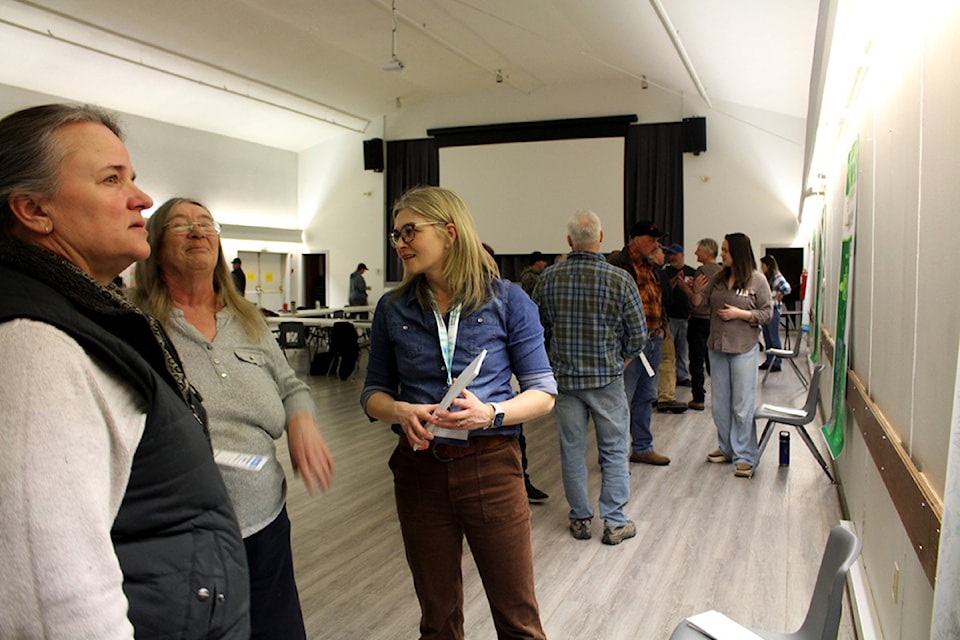
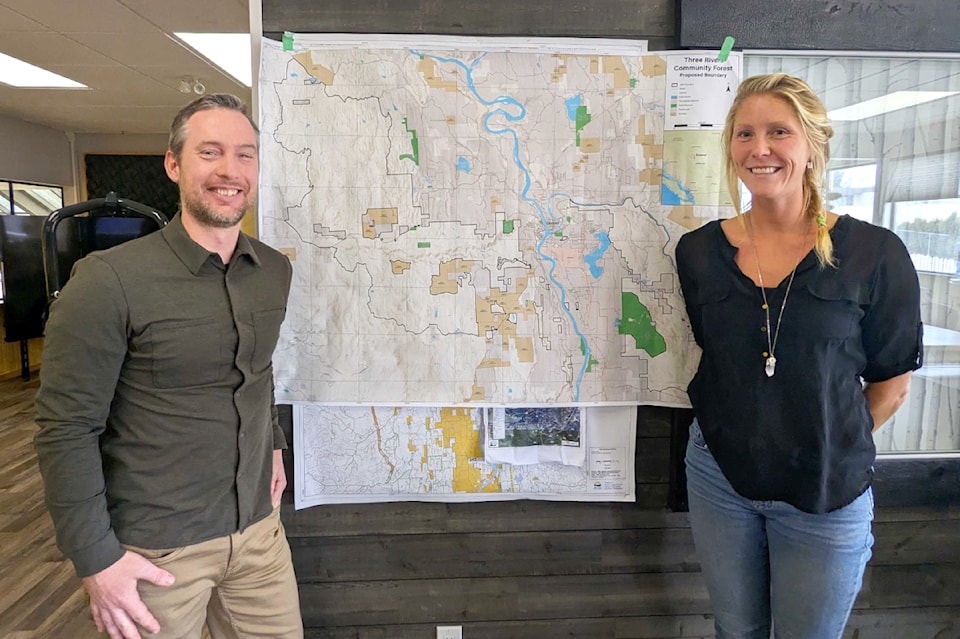
 A new Bulkley Valley Lake forest planning project is now in the public input phase. The Bulkley-Morice Forest Landscape Planning (FLP) project is one of five new provincial projects that are shaping a revamped framework for sustainable forest management in B.C. The Province held an open house on Feb. 26 at the Houston Community Hall about its newest forestry project. In addition to the open house in Houston, the province also held open houses in Granisle on Jan. 29 and Smithers on March 6, inviting communities within the Bulkley Valley to get involved in the development of the new FLP project. “What excites me about forest landscape plans is they provide the opportunity to bring the community together, said minister of forests Ravi Parmar.

 Are clear-cuts in forestry bad? I would say no. Nature demands that there is a mosaic of age classes to support conservation of biodiversity. …Wildfire “clearcuts” following insect invasion, disease, wind or old old trees aging out in many forests. …Logging and tree planting have proven logged clear-cuts are a gentler treatment for refreshing forests when compared to traumatic wildfires. On top of the biodiversity and conservation benefits, we get socioeconomic benefits of forest products and employment and resulting government services and infrastructure. …In certain areas where trees are shade tolerant, such as in Interior Douglas Fir areas, various types of selection may be prescribed to fit the ecology of the site. Biodiversity provides for all species in a mosiac of different types across the landscape. Look outside, it is not one continuous environment.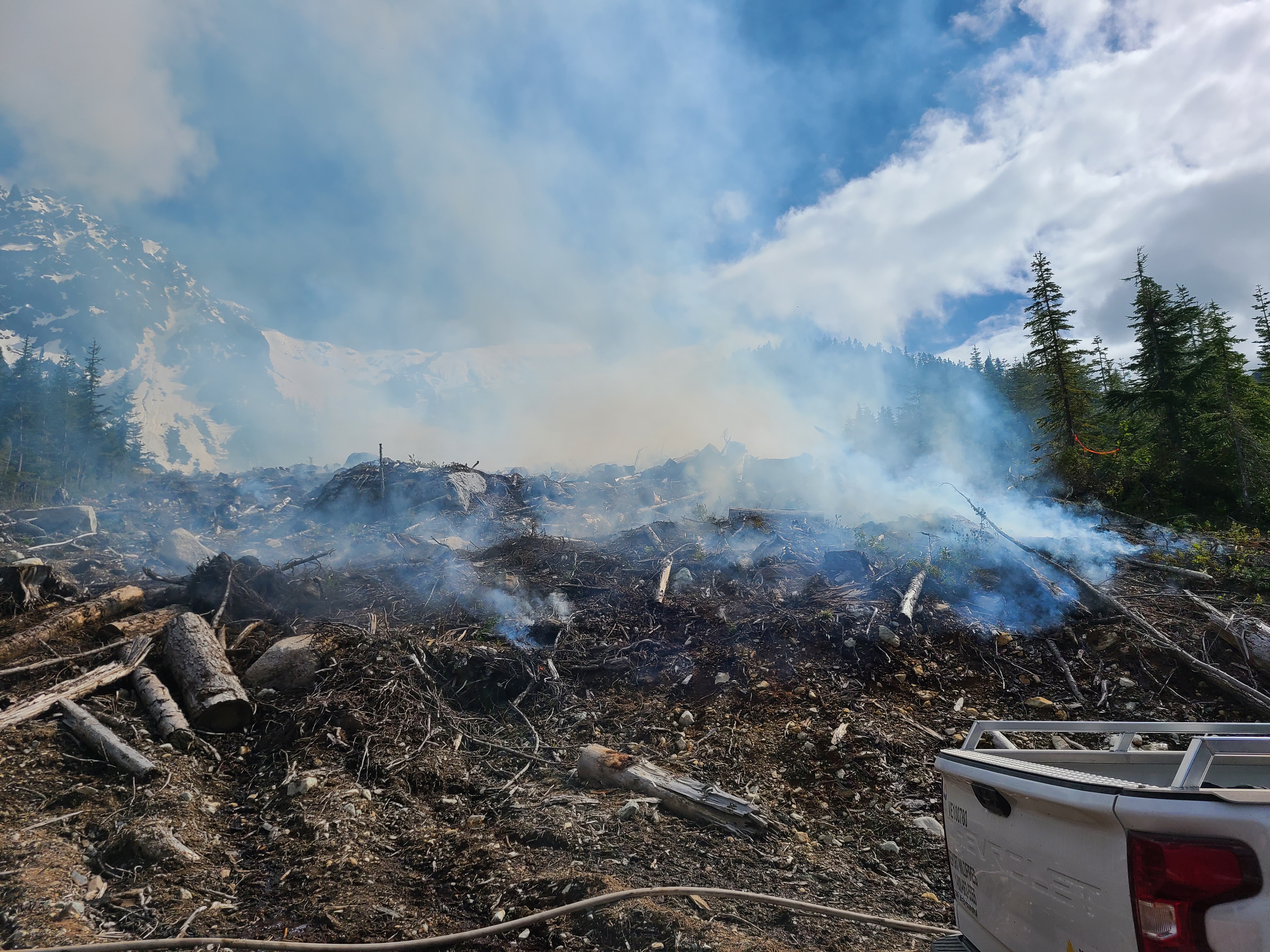

.JPG;w=960)
 QUÉBEC – The Ministry of Environment and Climate Change announced the signing of a Canada-Quebec agreement to advance the protection and conservation of nature throughout Quebec. The Government of Canada will invest up to $100 million between now and 2027 to support the objectives of Quebec’s 2030 Nature Plan and Canada’s 2030 Nature Strategy. This nature agreement reflects both governments’ commitment to implementing the Kunming-Montréal Global Biodiversity Framework and establishes a series of objectives to achieve this: Create and expand protected and conserved areas, and accelerate the conservation of natural environments on private land in southern Quebec, including through the implementation of urban park projects; Take action to address threats to biodiversity, better protect threatened or vulnerable species, and foster the recovery of at-risk species; Control invasive alien species; and Support Indigenous leadership in biodiversity conservation.
 The Trump administration touted logging as the next frontier in job creation and wildfire prevention, but those goals will face confounding challenges. Trump issued two executive orders on March 1: the first to boost timber production on federal land and the second to address wood product imports. The moves were cheered by the timber industry. “These are common sense directives,” said Travis Joseph, president of the American Forest Resource Council, a timber industry trade group. “Our federal forests have been mismanaged for decades and Americans have paid the price in almost every way – lost jobs, lost manufacturing, and infrastructure.” Timber groups and rural lawmakers also said the orders could help manage overstocked forests and reduce the threat of wildfire. But conservation groups and forestry experts say cutting down more trees doesn’t inherently reduce wildfire risk and can actually increase it. The plan also faces pushback about environmental concerns and economics.
 A bipartisan group of lawmakers on Monday urged the Trump administration to scrap plans to kill more than 450,000 invasive barred owls in West Coast forests as part of efforts to stop the birds from crowding out a smaller type of owl that’s facing potential extinction. The 19 lawmakers claimed the killings would be “grossly expensive” and cost $3,000 per bird. They questioned if the shootings would help native populations of northern spotted owls, which have long been controversial because of logging restrictions in the birds’ forest habitat beginning in the 1990s, and the closely related California spotted owl. Barred owls are native to eastern North America and started appearing in the Pacific Northwest in the 1970s. They’ve quickly displaced many spotted owls, which are smaller birds that need larger territories to breed.
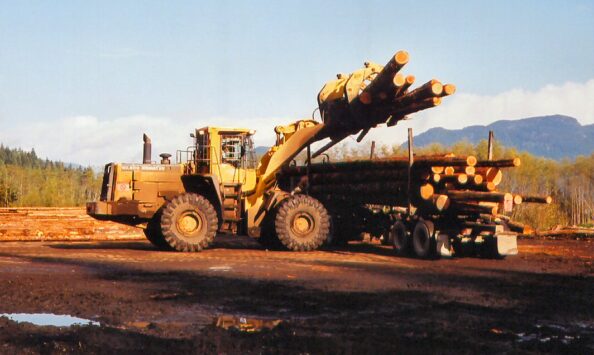 Northeastern Minnesota loggers and the nation’s forest products industry could get a lift under an executive order issued by President Donald Trump. New guidance or updates to facilitate increased timber production, sound forest management, reduced timber delivery time, and decreased timber supply uncertainty, are by the end of March to be issued by the U.S. Secretary of the Interior, Secretary of Agriculture, and U.S. Forest Service chief, under Trump’s “Immediate Expansion of American Timber Production,” order. National and Minnesota timber products officials say Trump’s order is a positive step toward boosting American timber production. “We’ve had nearly 150 mills close across the U.S. in the past 24 months,” Scott Dane, American Loggers Council (ALC) executive director said. “We need to turn the dismantling of the American timber industry around before it is too late. President Trump’s “immediate” increase in lumber production is the beginning of that turnaround.”
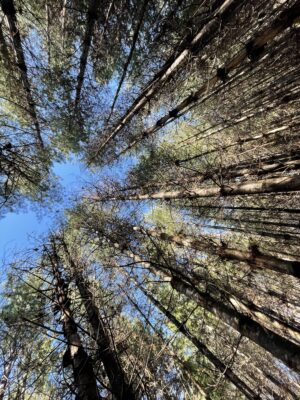 Federal officials are preparing to disband an advisory committee tasked with guiding policies for millions of acres of national forests in the Pacific Northwest. …The 21 members of the Northwest Forest Plan federal advisory committee… have been meeting since summer 2023, hashing out how to tackle wildfires, pests and diseases across nearly 25 million acres of national forests in Oregon, Washington and Northern California. On Thursday, officials with the US Forest Service told committee members the agency was likely to dissolve the group in the coming weeks. Some members said they had been expecting this news. …The Forest Service pulled the committee together to help amend the decades-old Northwest Forest Plan, a set of policies that came out of the timber wars of the 1980s and ’90s. …The committee delivered its recommendations to the Forest Service last year.
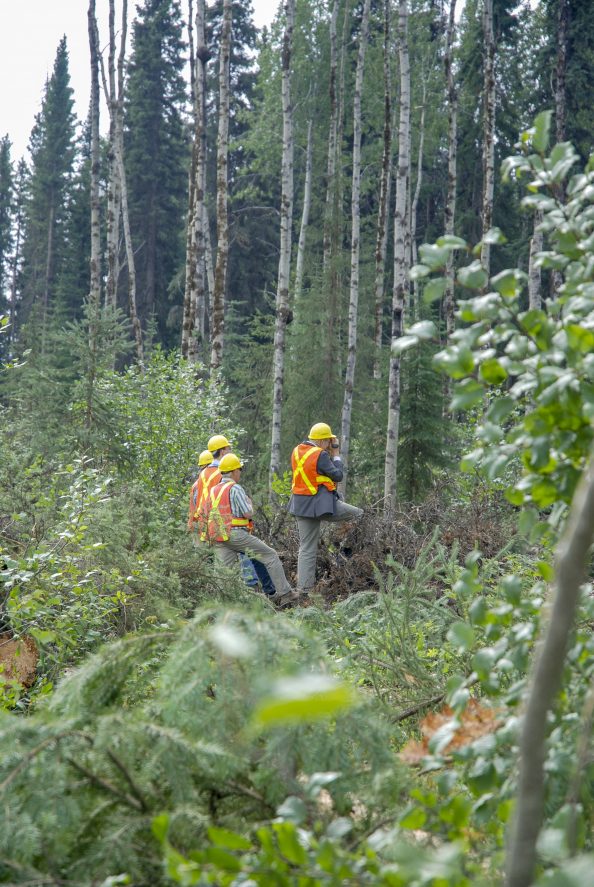 …in the early 2000s, a group of scientists and businessmen began arguing that forest thinning was too much for the government to take on. If Arizona had any hope of decreasing the risk of catastrophic forest fire, private industry would have to play a part. From this debate emerged Arizona Forest Restoration Products, a company that had planned to make oriented strand board from the low-dollar trees. …But …the Forest Service unexpectedly awarded the contract in 2012 to Pioneer Associates, a group it favored, even if they were arguably less qualified and had gathered almost no funding for their proposal. …Pioneer quickly went defunct, and the company that took over its contract, Good Earth, only thinned a fraction of what it promised. …And a cautionary tale as we fall into a pattern of on-again, off-again federal infrastructure funding cuts and threatened tariffs, which were enacted and then delayed on Canada and Mexico until April.


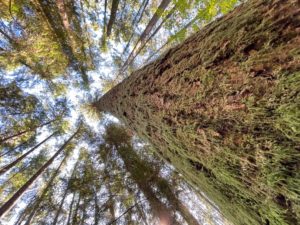 The European Union Deforestation Regulation (EUDR) aims to prevent deforestation-linked products from entering the EU market. This study assesses the potential impacts of the EUDR on global forest product markets using the FOrest Resource Outlook Model (FOROM). We simulate two scenarios: the baseline EUDR, focused on commodity-driven deforestation and urbanization, and an extended EUDR+ scenario, which includes shifting agriculture. The results indicate that high-deforestation countries, such as Brazil, Indonesia, and Malaysia, are expected to face significant reductions in roundwood production and exports, with downstream effects on sawnwood and panel prices. In contrast, low-deforestation countries like Canada and the United States may experience slight increases in production to meet EU demand, but their impact is limited by moderate deforestation rates. The study also highlights the potential for market leakage, where deforestation-linked products may shift to non-EU markets, potentially undermining global environmental goals.