TORONTO – Passive House Canada (PHC) today announced the upcoming departure of CEO Chris Ballard, effective May 9, 2025, and the appointment of incoming CEO Michael Quast, who will officially assume the role on April 28, 2025. Both leaders will attend the 2025 Annual Passive House Canada Conference, taking place May 5–7 in Ottawa, providing an opportunity for the community to celebrate Chris’s contributions and welcome Michael to the PHC family. Chris Ballard has led Passive House Canada with distinction for more than five years, guiding the organization through unprecedented challenges, including the COVID-19 pandemic, and significantly advancing the national conversation around sustainable, high-performance building. …Incoming CEO Michael Quast brings more than two decades of leadership experience spanning construction, sustainability, brand development, and stakeholder engagement.

 CALGARY — The one constant of Trump’s tariff plan seems to be that it is in a constant state of flux. “The time is now to start planning for what those impacts could possibly be and develop the mitigation strategies and tracking mechanisms…so that as they (tariffs) evolve in real time you are prepared to deal with them,” said Rick Moffat. Moffat moderated a webinar panel recently on legal and practical strategies for managing the impacts of the tariffs on construction projects in Canada. …Stressing the importance of detailed contingency plans that account for potential cost hikes caused by tariffs, Bulut Cinar said contractors would benefit by including “multiple scenarios” illustrating how their contingencies help manage their costs. …If contractors consider delay-causing tariffs a force majeure event, but the contract deals with tariffs differently they might be “precluding themselves” from compensation, he added.


 Prince George city council took the first step in renewing its contract with Lakeland Mills Ltd. to supply fibre for the Downtown Renewable Energy System through 2026 with options to extend it through 2027 and 2028 at its Monday, April 7 meeting. From a central location near the intersection of Second Avenue and George Street, the system uses wood waste to power boilers that pump heated water to buildings across downtown Prince George like city hall, the Prince George Public Library, the Canfor Leisure Pool, the Ramada Hotel and more. The original contract with Lakeland Mills to supply the products used to power the boilers ran from 2012 to 2022. If the bylaw creating the new agreement eventually passes fourth reading, the new agreement would stretch retroactively from July 1, 2022 to Dec. 31, 2026 with options to extend it through 2027 and 2028.
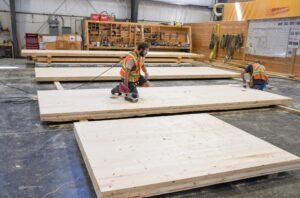 To reach Ontario’s bold goal of 1.5 million homes by 2031… we have a proven solution — and much of what we need, from innovative building techniques to mass timber and Canadian steel, is right here in Ontario’s backyard. …The Ontario Real Estate Association (OREA) released a new policy report, titled Building More, Building Faster, outlining the importance of embracing factory-built homes as a key part of the solution to address Ontario’s ongoing housing supply and affordability crisis. …Factory-built, or prefabricated housing, is a fast-growing area of homebuilding where homes are constructed in a factory — often using prefabricated 3D components — and assembled at their final address. …OREA’s new report highlights five policy recommendations that would cut red tape and create favourable conditions for investment to significantly boost factory-built housing construction with “Made-in-Ontario” solutions that can eventually scale nationally.
 The April Monthly Update includes these stories and more:




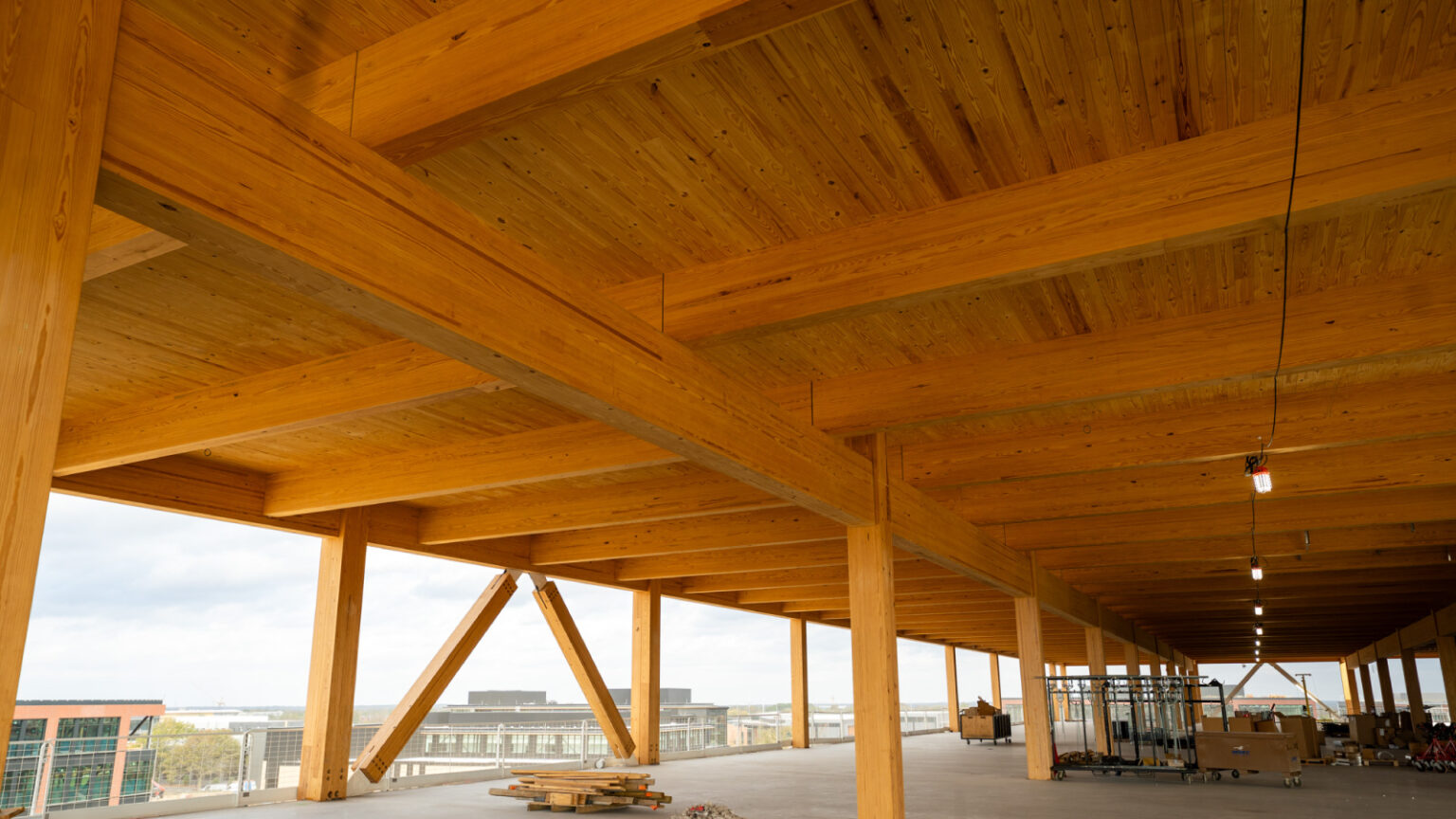



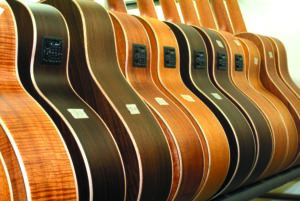 UK — Nearly half of birch wood certified by leading sustainability schemes is misidentified and does not come from the labelled country of origin, according to new testing. The analysis raises fears that large quantities of sanctioned wood from Russia and Belarus are still illegally entering Britain. New research by World Forest ID… scrutinised the accuracy of dozens of harvesting-origin claims on birch products, which had almost entirely been approved by FSC and PEFC sustainability schemes. The samples of birch – a popular hardwood used in furniture, kitchens panels and musical instruments – were labelled as originating in Ukraine, Poland, Estonia and Latvia. But tests using the wood’s “chemical fingerprint” showed that 46% of certified samples did not come from the origin on the label. …While the tests did not specify the country where the wood was grown, experts said Russia and Belarus were the only plausible origins.