 The Canadian Wood Council (CWC) is pleased to announce the release of five new Environmental Product Declarations (EPDs) for Canadian softwood lumber, oriented strand board (OSB), plywood, trusses, and prefabricated wood I-joists. These EPDs provide comprehensive, transparent environmental data on the potential impacts associated with the cradle-to-gate life cycle stages of these essential wood products. Developed as regionalized, industry-wide business-to-business (B2B) Type III declarations, the EPDs comply with the highest international standards, including ISO 21930, ISO 14025, ISO 14040, ISO 14044, the governing product category rules, and ASTM General Program Instructions for Type III EPDs. This ensures credible, third-party verified environmental impact data, supporting designers, builders, and policymakers in making informed, sustainable material choices. The EPDs are available for download from the Canadian Wood Council’s digital resource hub.
 CALGARY — The one constant of Trump’s tariff plan seems to be that it is in a constant state of flux. “The time is now to start planning for what those impacts could possibly be and develop the mitigation strategies and tracking mechanisms…so that as they (tariffs) evolve in real time you are prepared to deal with them,” said Rick Moffat. Moffat moderated a webinar panel recently on legal and practical strategies for managing the impacts of the tariffs on construction projects in Canada. …Stressing the importance of detailed contingency plans that account for potential cost hikes caused by tariffs, Bulut Cinar said contractors would benefit by including “multiple scenarios” illustrating how their contingencies help manage their costs. …If contractors consider delay-causing tariffs a force majeure event, but the contract deals with tariffs differently they might be “precluding themselves” from compensation, he added.


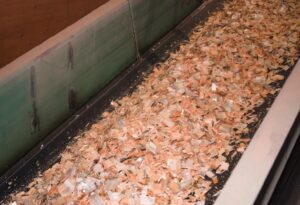 Prince George city council took the first step in renewing its contract with Lakeland Mills Ltd. to supply fibre for the Downtown Renewable Energy System through 2026 with options to extend it through 2027 and 2028 at its Monday, April 7 meeting. From a central location near the intersection of Second Avenue and George Street, the system uses wood waste to power boilers that pump heated water to buildings across downtown Prince George like city hall, the Prince George Public Library, the Canfor Leisure Pool, the Ramada Hotel and more. The original contract with Lakeland Mills to supply the products used to power the boilers ran from 2012 to 2022. If the bylaw creating the new agreement eventually passes fourth reading, the new agreement would stretch retroactively from July 1, 2022 to Dec. 31, 2026 with options to extend it through 2027 and 2028.

 VANCOUVER, BC — T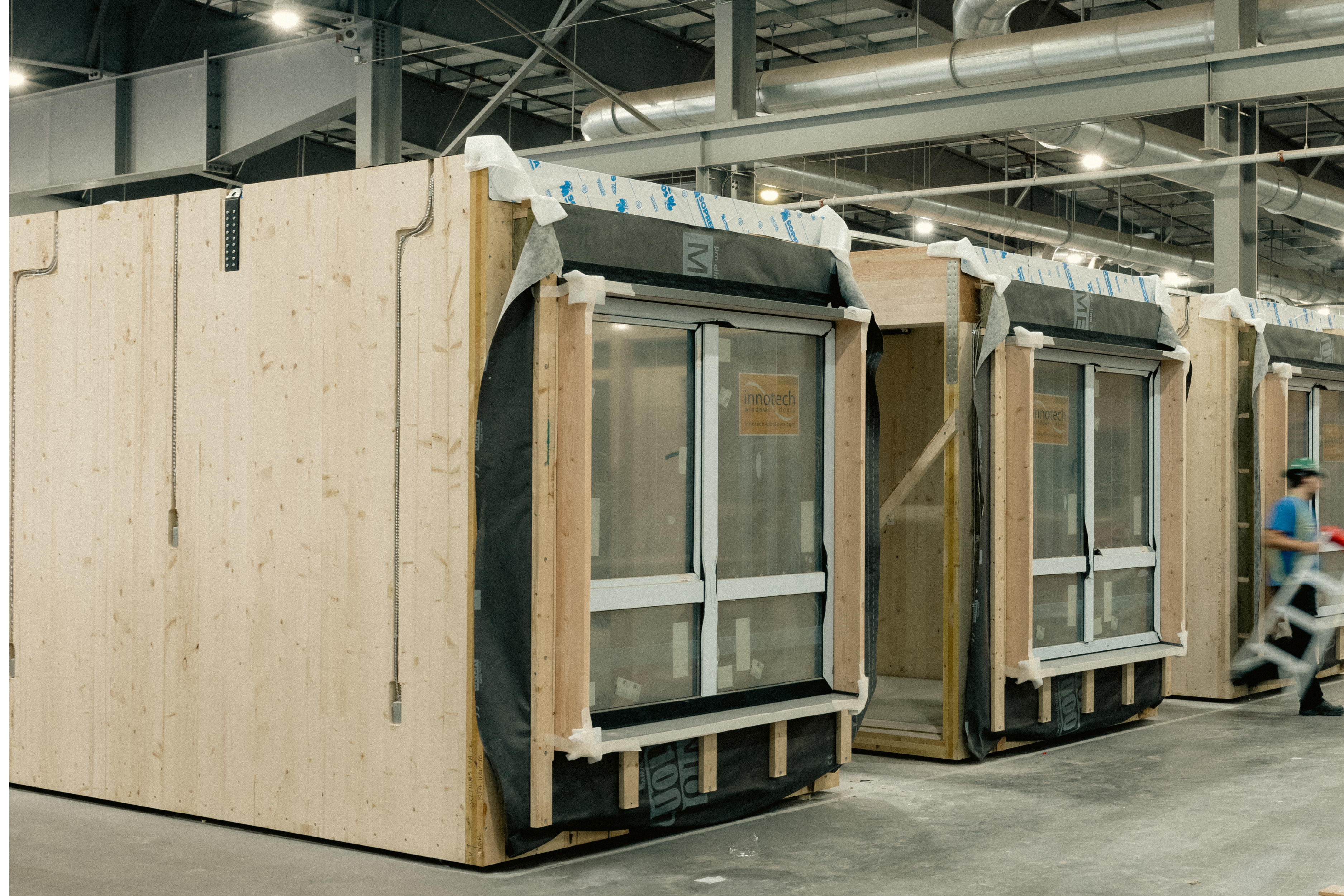

 To reach Ontario’s bold goal of 1.5 million homes by 2031… we have a proven solution — and much of what we need, from innovative building techniques to mass timber and Canadian steel, is right here in Ontario’s backyard. …The Ontario Real Estate Association (OREA) released a new policy report, titled Building More, Building Faster, outlining the importance of embracing factory-built homes as a key part of the solution to address Ontario’s ongoing housing supply and affordability crisis. …Factory-built, or prefabricated housing, is a fast-growing area of homebuilding where homes are constructed in a factory — often using prefabricated 3D components — and assembled at their final address. …OREA’s new report highlights five policy recommendations that would cut red tape and create favourable conditions for investment to significantly boost factory-built housing construction with “Made-in-Ontario” solutions that can eventually scale nationally.


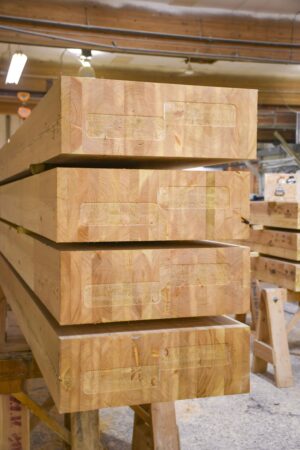 EAST HANTS, Nova Scotia — The Honourable Kody Blois, Minister of Agriculture and Agri-Food, announced federal funding for MTC Mass Timber Company (MTC) to support its move to technology-driven manufacturing that will create high-value mass timber products in Nova Scotia. Through an investment of $500,000, MTC will advance the detailed design of Canada’s first large-scale, clear-span mass timber manufacturing structure that would house a new industrial plant. Once constructed, MTC will be Canada’s first vertically integrated mass timber manufacturer in Atlantic Canada, allowing further growth of the region’s offsite building construction sector and improving access to housing for Nova Scotians. MTC was also conditionally approved for $10 million in federal support, subject to the required due diligence measures, and the negotiation of a final agreement.


 In the course of their business, home builders and remodelers buy many different products— ranging from lumber and other wood products to electrical and plumbing fixtures, a variety of materials used to finish various areas of the house, appliances, and even tools. The National Association of Home Builders (NAHB) recently surveyed both its single-family builders and its remodelers, asking them who’s most often responsible for choosing these products. In a separate question, NAHB also asked where these products are purchased irrespective of who chooses them because even when they’re not the ones driving the product choice, builders and remodelers often know where the product is being purchased. …The survey results show that, irrespective of who actually makes the purchase, it is the builders and remodelers themselves who most often influence product selection and therefore should most often be the prime targets for manufacturers looking to effectively market building products.
 From laundry detergent to dishwasher tablets, cleaning products are an indispensable part of life. Yet the chemicals that make these products so effective can be difficult to break down or could even trigger ecosystem-altering algal blooms. Now, researchers reporting in ACS’ Langmuir have addressed those challenges with an environmentally compatible detergent made of tiny wood fibers and corn protein that removes stains on clothes and dishes just as well as commercial products. …The researchers combined cellulose nanofibers from wood with zein protein from corn to create an emulsion. Cellulose can attract and repel water, so it is effective at forming such emulsions and attracting different types of stains. The zein protein, on the other hand, helps stabilize the emulsion and trap oils.
  Last week, consumers in four states filed a proposed class action against Amazon, accusing the company of greenwashing by misleading consumers about the sustainability of the company’s Amazon Basics line of paper products. Here are some of the key allegations: Amazon uses a Sustainability Leaf and a Climate Pledge Friendly logo to suggest that Amazon’s supply chain for Amazon Basics paper products uses sustainable forestry practices. …However, because Amazon sources its Amazon Basics paper products from suppliers who clearcut and burn centuries-old forests, Amazon is exaggerating any environmental benefits. …The Forest Stewardship Council (or “FSC”) requires companies to use different FSC logos to depict different levels of commitment to responsible forest management. Despite this, Amazon uses an unqualified Forest Stewardship Council logo. …This Complaint challenges an arguably very sustainably-minded company. We learned this week that Amazon announced the launch of a new carbon credit investment service.
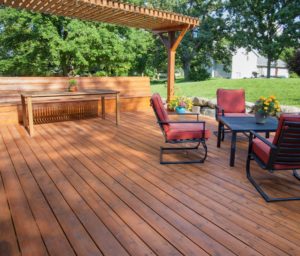 The Oregon Building Codes Division (BCD) has published its first permit-ready plan under the state’s updated Permit-Ready Plans Program. The building plans, available free to the public, are for a code-compliant residential deck. The Permit-Ready Plans Program creates an efficient pathway for the state to develop and make publicly accessible building plans that meet the requirements of the state building code. Plans are published to the BCD website. …The first plan published is a single-level, wood-framed, exterior deck attached to a building regulated by the Oregon Residential Specialty Code. BCD anticipates publishing more permit-ready plans for other residential accessory structures such as pole buildings, detached garages, patio covers, and carports later this year. The division will start developing plans for smaller detached dwelling units by the end of 2025.

 LOS ANGELES —

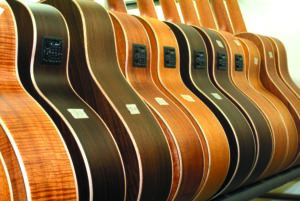 UK — Nearly half of birch wood certified by leading sustainability schemes is misidentified and does not come from the labelled country of origin, according to new testing. The analysis raises fears that large quantities of sanctioned wood from Russia and Belarus are still illegally entering Britain. New research by World Forest ID… scrutinised the accuracy of dozens of harvesting-origin claims on birch products, which had almost entirely been approved by FSC and PEFC sustainability schemes. The samples of birch – a popular hardwood used in furniture, kitchens panels and musical instruments – were labelled as originating in Ukraine, Poland, Estonia and Latvia. But tests using the wood’s “chemical fingerprint” showed that 46% of certified samples did not come from the origin on the label. …While the tests did not specify the country where the wood was grown, experts said Russia and Belarus were the only plausible origins.




 Indonesia is one of the active exporters of logs and sawn wood, so the waste generated is very large. One of the applicable technologies developed for the utilization of wood saw waste is to process it into liquid smoke through the pyrolysis process. The application of liquid smoke to plants can affect plant’s growth and production processes due to the presence of acetic acid and methanol. The purpose of this research was to find out about the properties of Surian sawn waste liquid smoke and how it could be used as a biofertilizer an Arabica coffee seeds. …The effectiveness of liquid smoke from sawn wood waste for the increase in height, stem diameter, and the highest number of leaves of coffee seeds was obtained at a concentration of 2.5%.
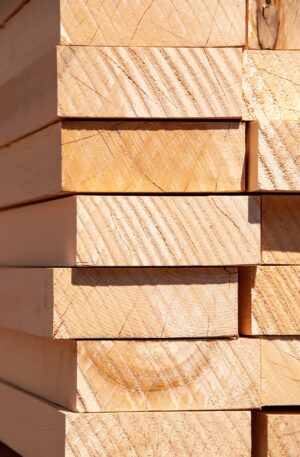 Wood, a traditional and sustainable structural material, has long been used in construction and furniture due to its availability and mechanical properties. However, natural wood’s strength is often insufficient for advanced engineering applications. Now,