 Canada–US trade tensions dominate talks as Prime Minister Carney briefs Canada’s premiers, and meets with four US senators. In other Business news: Domtar’s Skookumchuck mill faces effluent penalties; Maine’s Hammond Lumber buys its competitor; CWC applauds Nova Scotia’s wood use initiative; and Wales launches its first timber strategy. Meanwhile: a Fraser Institute report on Canada’s housing crisis; the US economy signals recession risk; WoodWorks BC and FSC Canada are hiring; and kind remembrances for longtime employees at Gorman Bros (Ray Van Ingen) and SFPA (Lionel Landry).
In Forestry/Climate news: Ottawa pledges $125 million to regrow Alberta forests; an interview with Kim Haakstad and Jess Ketchum on BC forestry; the US plan to shoot barred owls could be in jeopardy; red tree vole protections are sought in Oregon; a NY Times report says climate change makes fires worse; the US Forest Service faces a firefighter shortage; Trump’s new law is called bad for US emissions; and two stories on wildfire risk-reduction and US timber harvests. Meanwhile, wildfire conditions improve in northern BC; and a fire evacuation alert in Slave Lake, Alberta.
Finally, BC Wood will celebrate 22 years of excellence at the 2025 Global Buyers Mission.
Kelly McCloskey, Tree Frog News Editor

 Just as we depend on forests, forests depend on all of us. At the Forest Stewardship Council (FSC), your work will create a better future for forests and people around the world. When you join our team, you can do your part to build a world where the true value of forests is recognized by all.
 Through the Domtar Connects program, employees lead impactful local initiatives—ranging from education and environmental projects to support for Indigenous communities—reflecting a long-term, values-driven commitment to social responsibility. …With nearly 14,000 employees across more than 60 locations, Domtar’s footprint is large, but its approach is local. The Domtar Connects community investment program responds directly to the unique needs of each operating community, ensuring that support is tailored, meaningful and led by employee input. Recent highlights include:
 The Canadian Wood Council is hiring a new leader to guide its WoodWorks BC program. Based in Vancouver (hybrid), this is a senior role focused on driving market growth, building strategic partnerships, and advancing wood use in construction across British Columbia. The Executive Director will lead a high-impact team, contribute to national market development efforts, and work closely with government, industry, and design professionals to promote innovation and sustainability in the built environment. This is a pivotal leadership role responsible for driving strategic growth, fostering stakeholder relationships, and championing the use of wood in construction. The Executive Director will serve as the principal representative of the program in BC and play a national role in mentoring and supporting Market development staff across Canada. WoodWorks is the market development program of the Canadian Wood Council that seeks to increase the use of wood in non-residential and multi-family building markets across Canada.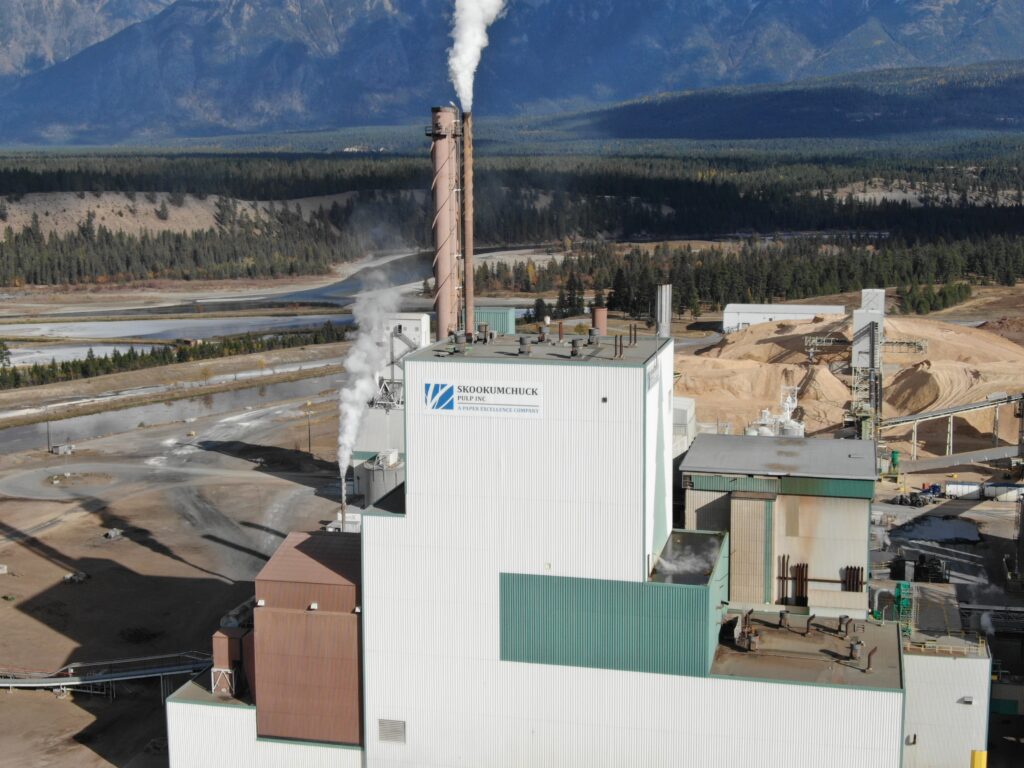


 During April’s election campaign, the Carney government promised to double the pace of homebuilding in Canada by 2035—an unlikely outcome in light of Canada’s shortage of construction workers and investment dollars. But even if homebuilding were miraculously doubled, it would not solve Canada’s housing affordability crisis. That’s the sobering conclusion of a recent

 Kamloops, B.C.– The Forest Enhancement Society of BC (FESBC) recently approved up to $1.7 million to the Woodlot Product Development Council (Woodlots BC) to carry out wildfire risk reduction treatments over a 2-year fiscal period. Treatments will be conducted on woodlots throughout British Columbia, each located within a Wildland Urban Interface, endorsed by the local Forestry District and following BC Wildfire Service (BCWS) wildfire risk reduction standards. Through this work, Woodlots BC looks forward to building capacity across the forest sector and helping promote innovative ways to complete treatment of wildfire risk reduction projects to reduce combustible forest fuel loading, thereby better protecting communities. “Woodlots are vital to B.C.’s forestry sector as they support local jobs, keep our forests healthy, and help reduce wildfire risk where it matters most: right where people live,” said Ravi Parmar, Minister of Forests.

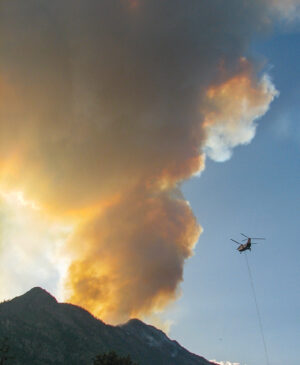 More than a quarter of firefighting positions at the United States Forest Service (USFS) remain vacant, according to internal data reviewed by the Guardian, creating staffing shortages as extreme conditions fuel dozens of blazes across the US. The data paints a dangerously different picture than the one offered by Tom Schultz, the chief of the USFS, who has repeatedly assured lawmakers and the public that the agency is fully prepared for the onslaught in fire activity expected through this year. It’s already been busy. So far this year there have been more than 41,000 wildfires – an amount nearly 31% higher than the ten-year average. “In terms of firefighting capacity we are there,” Schultz said during a Senate committee hearing on 10 July, claiming the USFS had hit 99% of hiring goals. He repeated the claim multiple times.
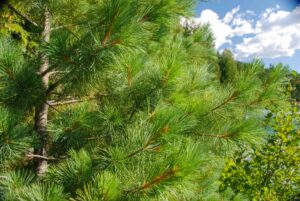 After months of deliberation, a years-old vision to restore local control of some of Pacific and Wahkiakum counties’ most productive timberlands is a step closer to becoming a reality. Last Tuesday, representatives from the Columbia Land Trust presented to both sets of commissioners a near-complete draft of the charter for the Upper Grays River Community Forest. The document lays out the legal framework and governance structure for a working forest in the upper Grays River watershed, which will straddle the boundary between the two counties. “The purpose… is to provide a legal entity… to undertake, assist with and otherwise facilitate the acquisition, ownership, maintenance, harvest, and management of a community forest or forests within Pacific County and Wahkiakum County to provide economic, environmental and community benefits to the public,” the charter’s fourth article reads.
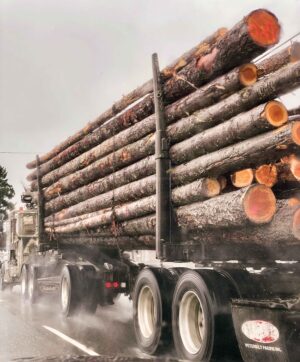 On March 1, 2025, President Trump issued an executive order directing the Secretaries of Agriculture and the Interior to develop plans to increase timber production on federal lands. The order was motivated by two stated priorities: expanding the timber supply and addressing rising wildfire risks. The US Forest Service has responded with a goal of increasing timber offered for sale by 25 percent over the next four to five years. This report puts the Trump administration’s actions into context by reviewing the history of harvest from federal lands and evaluating current forest inventories and treatment needs. It asks: What would be the effect on wildfire risk if federal land management agencies increased harvests by 25 percent? Opportunities for harvests that successfully mitigate risk may be limited by the absence of active timber markets, the availability of a qualified workforce, and the economics of fuel removals.
 An unusual alliance of Republican lawmakers and animal rights advocates, together with others, is creating storm clouds for a plan to protect one threatened owl by killing a more common one. Last August, the U.S. Fish and Wildlife Service approved a plan to shoot roughly 450,000 barred owls in California, Oregon and Washington over three decades. The barred owls have been out-competing imperiled northern spotted owls in the Pacific Northwest, as well as California spotted owls, pushing them out of their territory. Supporters of the approach — including conservation groups and prominent scientists — believe the cull is necessary to avert disastrous consequences for the spotted owls. Last month, The Times has found, federal officials canceled three owl-related grants to the California Department of Fish and Wildlife totaling roughly $1.1 million, including one study that would remove barred owls from over 192,000 acres in Mendocino and Sonoma counties.
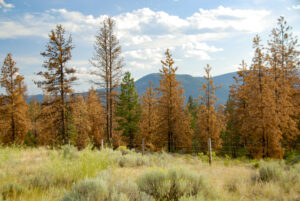 In 2023 and 2024, the hottest years on record, more than 78 million acres of forests burned around the globe. The fires sent veils of smoke and several billion tons of carbon dioxide into the atmosphere, subjecting millions of people to poor air quality. Extreme forest-fire years are becoming more common because of climate change, new research suggests. Boreal forests lost more than two times the canopy area in 2023-24 compared with the period between 2002 and 2022, the study found. Tropical forests saw three times as much loss, and North American forests lost nearly four times as much canopy, mostly because of Canada’s wildfires. Significant losses were in remote forests, far from human activities. That isolation suggests fires are increasing primarily because of climate change, said Calum Cunningham, a fire geographer at the University of Tasmania who was not involved with the study. “Chronic changes in climate are making these forests more conducive to burning,” Dr. Cunningham said. [a paid subscription is required to read this article]
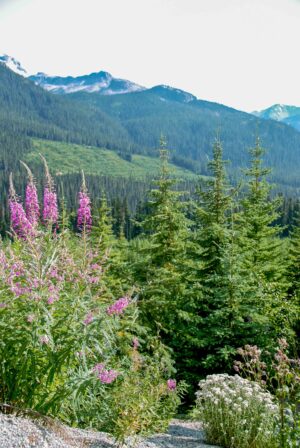 The days of clear-cutting the Tongass National Forest are over, with little chance of reviving the past. The Alaska Forest Association, tribal members, and environmentalists say a new future must be charted. Since the Clinton administration implemented the Roadless Rule in 2001, construction of new roads in wild areas of most national forests has been blocked. With no more roads being built and few companies willing to barge out the wood, it is difficult to imagine the return of mass logging. Timber operators expected to harvest 46 million board feet per year, a mix of young and old-growth, based on the 2016 Tongass Land and Resource Management plan. Viking Lumber Company in Klawock and Alcan Timber in Ketchikan acknowledge the time needed to transition to young-growth harvesting. “Threads of the Tongass” is a series of stories that explore how lives in Southeast Alaska are interwoven with the Tongass National Forest during a time of political, cultural and environmental change.
 Conservation groups sued the U.S. Fish and Wildlife Service on July 17 for denying Endangered Species Act (ESA) protections to the north Oregon Coast population of red tree voles. The lawsuit, filed by the Center for Biological Diversity, Bird Alliance of Oregon, Oregon Wild and Cascadia Wildlands, claims the USFWS’ February 2024 decision that the population was not warranted for ESA protections deprives it of critical protections necessary to ensure its survival. “Red tree voles have graced Oregon’s coastal old-growth forests for thousands of years, but we could lose them forever if they don’t get Endangered Species Act protections soon,” said Ryan Shannon, a senior attorney in the Center for Biological Diversity’s endangered species program. …Due to decades of logging, this population has been eliminated from most of its historic range. It also faces an existential threat from wildfire that is worsening under climate change, according to the lawsuit.
 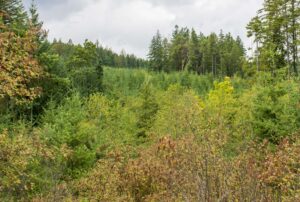 At the southern tip of Europe’s largest river island, the ground falls away into a vast and unexpected vista. From a high, rocky ledge on Khortytsia Island, the view opens on to a sea of swaying young willows and mirrored lagoons. Some of the trees are already many metres tall, but this is a young forest. Just a few years ago, all of it was under water. “This is Velykyi Luh – the Great Meadow,” says Valeriy Babko, a retired history teacher and army veteran, standing on the former reservoir shoreline at Malokaterynivka village. For him, this extraordinary new-old environment represents more than nature alone. “It is an ancient, mythic terrain, woven through Ukrainian folklore,” he says. “Think of all those Cossacks galloping through its valleys of forests so dense the sun barely pierced them.”
 …The Tyee looked at three critical and vastly different means to store carbon in the West, examining how these ecosystems capture carbon, the restoration work they require and why Canada should take them seriously as solutions. …Peatlands are a type of wetland found all over Canada. In the West, they are found in northern B.C. and Alberta. …However, they come with a catch; as much as they absorb carbon, they also emit methane. …Kelp is one of the newest potentials for natural climate solutions and carbon sequestration in Canada. …It is hard for researchers to fully evaluate how much kelp carbon is sequestered in the deep oceans in the long term. …Trees are one of the world’s largest carbon sinks. Like peat, trees sequester carbon through photosynthesis. As trees grow, they take in carbon from the air around them and store it in their wood, soil and plant matter
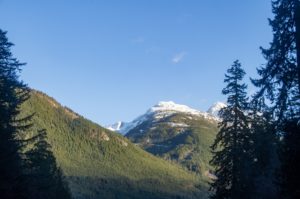 The megabill President Trump signed into law this month is expected to make a major dent in the U.S.’s climate progress, adding significantly more planet-warming emissions to the atmosphere. Models of the legislation that have emerged since its passage earlier this month show U.S. emissions will rise as a result of its implementation. One from climate think tank C2ES found U.S. emissions will be 8 percent more than they would have been otherwise as a result of the package. “An 8% increase in our emissions is … still a massive amount of emissions,” said Brad Townsend, the group’s vice president for policy and outreach. Taking into account all of the efforts to reduce U.S. emissions over the last 20 years, Townsend said, the bill represents “rolling back a third of that progress with a stroke of a pen.” “From an emissions perspective, this bill is a disaster,” he said.
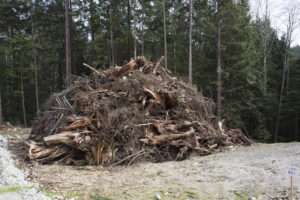 When seeking to make forests more fire resilient, removing fuels from the landscape is a tough task to make cost-effective. Thinning and limbing trees during fuels reduction treatments will sometimes produce marketable timber, but more often will produce small-diameter wood pieces that have traditionally been considered unmarketable. These pieces are typically chipped, masticated, or pile burned, and have long been considered ‘wood waste’. California researchers, industry leaders, and private forest landowners have been looking at ways to transform forest wood waste, particularly in wildfire-prone areas, into sustainable products. Utilizing forest biomass for building materials, soil amendments, and clean energy is a key strategy to economically incentivize improving forest conditions and can address both public and private industry needs. The state has also been making moves to decrease greenhouse gas emissions and aims to eliminate emissions entirely by 2045.