
Lumber quotas could be part of a Canada–US trade deal, said Prime Minister Carney. In response, the US Lumber Coalition panned the idea, while a Canadian litigator thinks the idea is unwise. In other Business news: Nova Scotia promotes more wood use in construction; Kalesnikoff’s Andrew Stiffman talks mass timber; Drax is called a top UK polluter; US industries brace for Trump’s tariffs; and US homebuilder confidence edges up.
In Forestry/Wildfire news: UBC researchers link clear-cutting to a rise in flooding; logging in Ontario’s boreal forest is called unsustainable; Northern Pulp’s asset sale raises questions about who pays for the cleanup; Oregon declares a state of emergency due to wildfire threat; California debuts a burn severity mapping tool; and Trump’s 20-year logging contracts could tie up the land. Meanwhile: dogs sniff out lanternfly eggs, wasps battle emerald ash borers, and golden oyster mushrooms spread unchecked across eastern forests.
Finally, a new study says mass timber could spur intensive forest management and reduce GHGs.
Kelly McCloskey, Tree Frog News Editor


 Prime Minister Carney says securing a truce in the long-running Canada-US lumber dispute is a top priority as Canadian producers brace for even heftier US levies as early as September. …Mr. Carney declined to say what level of baseline tariff Ottawa would accept in a new trade and security pact with Washington. …Mr. Carney was asked whether Canada would impose tariffs on US products if the US keeps a baseline levy on Canadian goods. “We’ll see what the final agreement is, if there is an agreement,” he said. …Historically, Mr. Carney said lumber deals with the US contain “some element of managed trade” such as quotas on Canadian shipments to the US. …Mr. Pellerin, a former Canadian government softwood litigator, said he thinks it would be unwise to strike a deal before litigation related to the softwood dispute plays out. There are several challenges of US duties on softwood proceeding under the United States-Mexico-Canada Agreement dispute mechanism. [This story is for Globe and Mail subscribers only]
 President Donald Trump’s flurry of tariff letters to more two dozen countries has triggered new threats of retaliation. Key US industries are increasingly worried they are going to be collateral damage. The European Union on Monday released a targeted list of $88 billion worth of US goods it plans to tariff if it doesn’t make more progress in trade talks with Trump. Brazil, staring down a 50% duty on its exports to the US over Trump’s frustration with their domestic politics. …While the hardening battle lines in the negotiations could be part of each sides’ effort to force more concessions, domestic business groups aren’t counting on it. Instead, they are mobilizing to try and convince both the Trump administration and foreign governments that it would be a mistake to target their industries. …On Tuesday, the president dismissed the idea that the EU may go through with their proposed retaliatory tariffs.
 As we’re now well into 2025, the hardwood flooring industry continues to evolve in response to broader shifts in how people design and inhabit their spaces. From residential builds to commercial interiors, there’s a growing appetite for natural materials that offer both durability and design versatility—and wood remains a standout. With its timeless appeal and ability to suit a wide range of design aesthetics, it continues to be a foundational material in interior architecture. A key trend gaining traction is the use of tactile, textured finishes. Glossy surfaces are making way for more organic aesthetics, like wire-brushed, matte or hand-scraped textures that bring warmth and visual depth to a room. These finishes complement today’s more relaxed and natural design styles and offer practical benefits, like helping to conceal everyday wear in high-traffic environments.
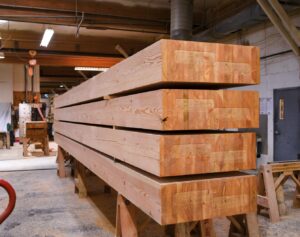 British Columbia remains at the forefront of mass timber design and implementation globally. The province has the highest number of mass timber buildings per capita of any other place in North America, and leads the country with more than 285 mass timber buildings. B.C.’s Mass Timber Action Plan has driven the expansion of mass timber construction, manufacturing, and workforce development across the province. This has increased the number of mass timber buildings and positioned B.C. as a critical exporter of knowledge and products to international markets. Metrics such as overall building count, advancements in carbon reduction, and the adoption of encapsulated mass timber construction (EMTC) standards in other regions all reflect our sustained leadership. Eric Andreasen, the vice-president of marketing and sales at Adera Development, spoke to Tanya Martins of Construction Canada and shed light on how B.C. is on its way to becoming the leader in mass timber development globally.
 The Province is making wood construction and heating a priority in public buildings. All departments have been directed to look for every opportunity to use mass timber, wood pellets, biomass, biofuels and other products made with wood that is leftover from sustainable harvesting and sawmilling. “Government is leading by example and using more wood products in our own buildings. It’s one of many steps our government is taking to make Nova Scotia more self-reliant and energy secure and to grow our economy and create jobs through innovation in our forestry sector,” said Public Works Minister Fred Tilley. Departments will prioritize wood products in new construction, renovations and conversions from oil heat. They will also make it a priority where applicable in projects that are partially or completely funded by the government. This focus aligns with the Nova Scotia Loyal program, reduces reliance on imports and enhances export markets.
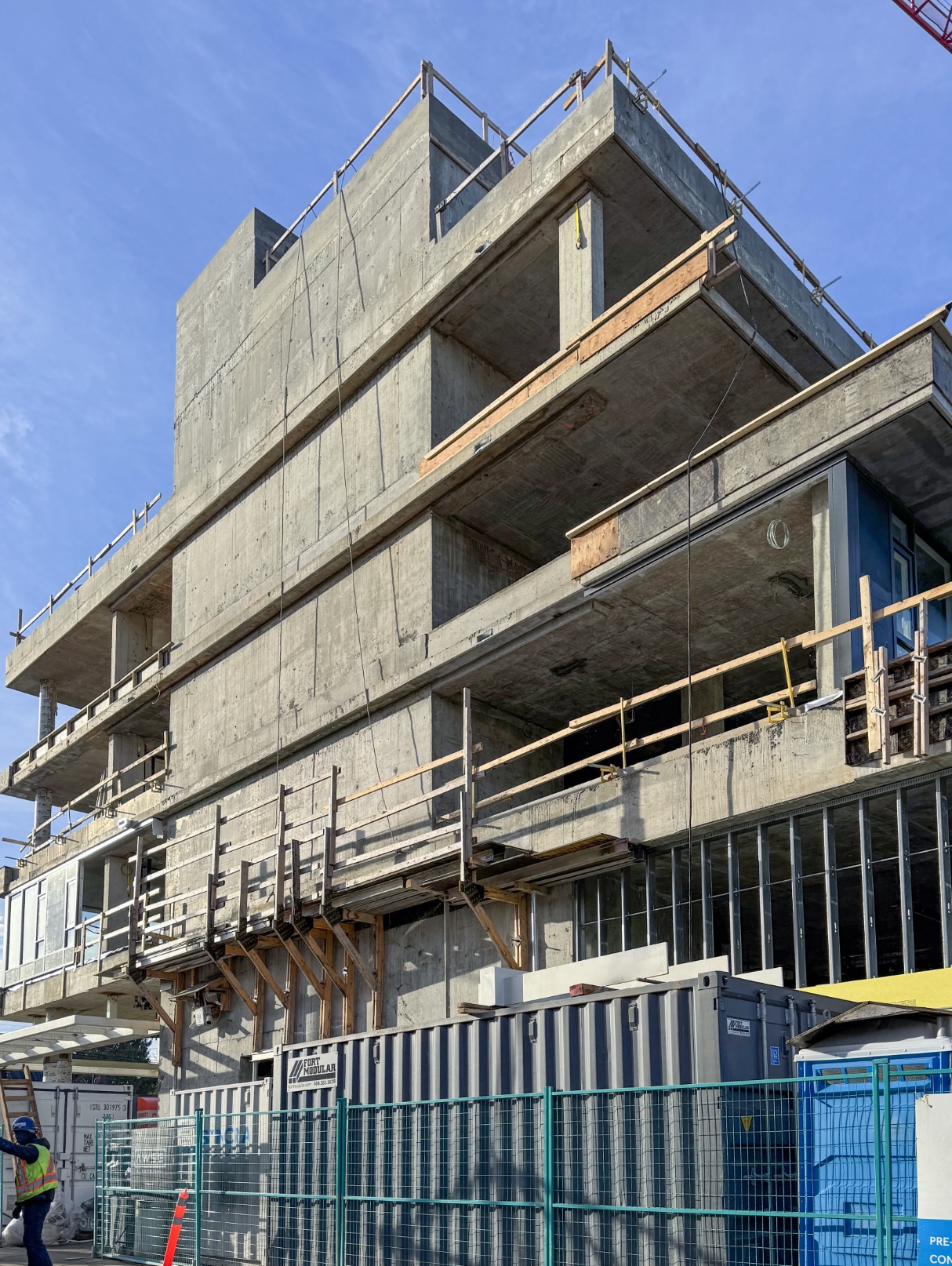 Replacing concrete and steel with mass timber in buildings could significantly reduce global carbon emissions and spur the expansion of intensively managed forests, a new study by Yale School of the Environment research scientists found. Published in
 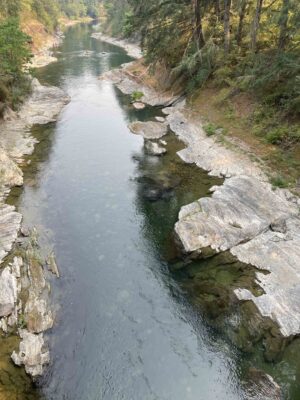 Clear-cutting can make catastrophic floods 18 times more frequent with effects lasting more than 40 years, according to a new UBC study. In one watershed, these extreme floods also became more than twice as large, turning a once-in-70-years event into something that now happens every nine. “This research challenges conventional thinking about forest management’s impact on flooding,” said senior author Dr. Younes Alila, a hydrologist in the UBC faculty of forestry. “We hope the industry and policymakers will take note of the findings, which show that it matters not only how much forest you remove but also where, how and under what conditions.” The UBC-led study draws on one of the world’s longest-running forest experiments at the Coweeta Hydrologic Laboratory in North Carolina and is published in the
 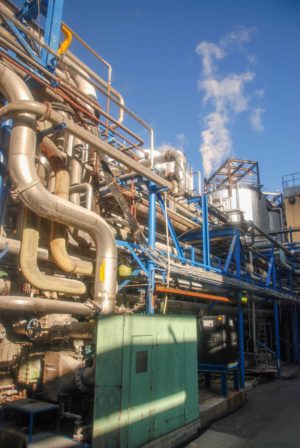 With the announcement that there won’t be a new kraft pulp mill being built in Liverpool, the long and expensive Northern Pulp saga begins winding down. Here’s the little we know about what Northern Pulp and its associated companies are worth, who’s likely to get paid and what the taxpayer might be on the hook for. When it filed for creditor protection in 2020, Northern Pulp estimated it had $254 million in assets and $311,019,464 in liabilities. But half of those assets – what it estimated as $130 million worth of equipment and land associated with a cold-idled pulp mill at Abercrombie Point – comes with a large and undetermined liability for whoever gets stuck with the cleanup costs. How much the taxpayer ends up on the hook both for unpaid loans to Northern Pulp and cleanup of the mill site will rely on how much gets paid for the companies’ assets.
 A new peer-reviewed scientific study [
 A new tool sheds light on the impact of wildfires across California. The
 New federal laws could “lock up” timber land for decades at a time, raising concerns big companies could elbow out smaller competitors and that timber revenue for counties could be delayed for years. President Donald Trump’s tax cuts and spending bill, which he signed into law earlier this month, increases the length of federal logging contracts to a minimum of 20 years. The contracts, which determine how long a logging company has to harvest on the land under contract, have typically averaged three to four years, and the longest contracts extended up to 10 years. The concern raised by a coalition of timber companies and local governments is that companies could sign long-term contracts, then wait years to harvest trees. “If the timber volume is tied up in these 20 year contracts,” Doug Robertson, executive director of the Association of O&C counties, said, “that volume then is no longer available to generate revenue for the counties and the state.”
 Oregon’s forestry board has long had the power to hire and fire the state forester, who oversees logging and environmental protections on state lands, as well as firefighting across millions of acres of public and private land. But the board lost that hiring-and-firing power this session with Senate Bill 1051, which handed it over to the governor. This bill has left many forestry board members wondering how much authority they still have. “Right now, after the passage of this senate bill, I have very little reason to trust your office,” vice chair Brenda McComb told members of Gov. Tina Kotek’s staff at the board’s Wednesday meeting. There’s a lot riding on forest management in Oregon. Revenues raised from logging trees on state lands help fund rural schools and some county budgets. Timber sales are also a key revenue source for the Oregon Department of Forestry, which fights fires on about 12 million acres of private land.
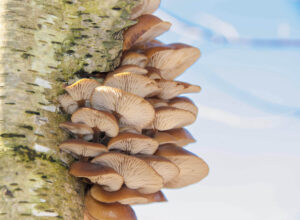 For a few years, foragers and fungi enthusiasts around the Midwest have been seeing something yellow. The butter-colored flushes of the golden oyster mushroom are difficult to miss. They bloom on dead or decaying trees, and they have become profuse in states around the Great Lakes. The fungi, which are native to Asia, are good to eat and easy to grow. But a new study shows that they may also be sapping the resources of native mushrooms. And their footprint is spreading fast. “I don’t think anyone would hesitate to call it invasive,” said Aishwarya Veerabahu, a mycologist and doctoral student at the University of Wisconsin-Madison and an author of the
  On a day in early June, state forester Will Phifer carried a pill bottle-orange canister into a southeastern Oklahoma forest, tied it to a shaded tree trunk and left. The area was a confirmed spot for a growing population of tree-killing beetles called emerald ash borers, which likely seeped into the state from the east. The container held what scientists hope is a solution to controlling the harmful pest: more than 100 minuscule parasitoid wasp eggs. “These emerald ash borer eggs are laid on the outer bark of the tree,” Dieter Rudolph, forest health specialist for Oklahoma Forestry Services, said. “So, this wasp will go find them and basically inject an egg into the emerald ash borer egg.” Instead of producing an emerald ash borer larva, the host egg will hatch a new wasp.
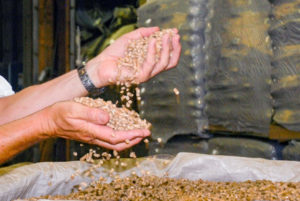 …In the aftermath of the earthquake and tsunami, Japan shut down not just Fukushima but all of its nuclear plants, a move that resulted in the loss of a third of its electrical power. …Japan faced a daunting energy crisis that it addressed… with conventional fuels such as natural gas and “bioproducts” including wood pellets derived from the logging of BC’s Interior forests. …Last year, roughly two million tonnes of those pellets arrived Japanese ports from BC, linked to a dozen mills in the province that make wood pellets derived from trees logged in the province’s rapidly dwindling primary forests — natural forests never previously subject to industrial logging. …Which means that in the name of creating allegedly clean energy, forests are being razed just to burn the wood. …The strain on the province’s stressed forests is [also] coming from other bioenergy producers, including those who want to use wood to make jet fuel.
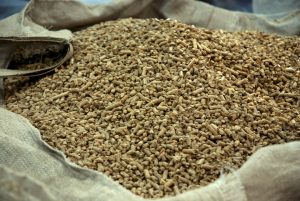 Drax power station is once again the UK’s largest single source of carbon emissions, according to new analysis from think tank Ember. Emissions from the biomass-burning power plant rose to 13.3 million tonnes of CO2 in 2024, a 16% increase from the previous year. Drax biomass power plant has been the UK’s top emitter for the last 10 years running. Drax now emits more than the next four largest polluters combined and more than the six most emitting gas power plants combined. Emissions from the Drax power plant are equivalent to over 10% of the UK’s total transport emissions and nearly 3% of the country’s territorial total. Despite its emissions increase, Drax received around £2 million per day in subsidies in 2024, an average of £10 per household. The power station burned 7.6 million tonnes of wood, 99% of which was imported. Recent investigations have found instances of old growth forests being cut down for this purpose.
 A Norwegian start up is showing how a little black powder could have a big impact on farming — from healthier livestock to stronger soils and a more climate-friendly future. Why it matters: The ongoing emphasis on reducing antibiotic use in livestock production and increasing soil health means farmers are looking for new tools to help them achieve this. Obiochar, based in rural Norway about 120 kilometres north of Oslo, is using a fully automated system to turn biomass – in this case dead trees from nearby forests that can’t be used by the lumber industry – into a powerful tool for agriculture. And while biochar itself isn’t new, Obiochar ‘s unique, dual-focused approach to using biochar is setting it apart from its competitors. The company is developing biochar products both for livestock gut health in the form of feed additives and soil enhancement as an amendment.