
Cascades will permanently close its Niagara Falls, New York, corrugated medium facility, affecting 123 workers. In related news: Newfoundland’s Corner Brook pulp mill faces contamination claim; the US Hardwood Forestry Fund winds down after 35 years; and the US moves forward on trade cases targeting hardwood plywood from China et al. Meanwhile, Trump has pushed his tariff deadline to August 1; the Bank of America warns tariffs could raise US homebuilding costs; Oregon researchers say wood outperforms plastic in healthcare settings; and Ireland launches a new timber construction R&D strategy.
In Forestry/Wildfire news: BC’s fire season is quieter than past years but risks persist; BC Timber Sales proposes logging and fire mitigation near Nelson; Montana advances a forest conservation deal with Green Diamond; New Zealand supports Manitoba’s wildfire efforts; Spain reports progress on the Paüls wildfire, and France battles a fire near Marseille. Meanwhile: Canada’s wood pellet industry conference touts biomass for a low-carbon future; while David Suzuki says the fight against climate change is lost.
Finally, could support-exoskeletons reduce forestry’s injury rate? Texas researchers say yes.
Kelly McCloskey, Tree Frog News Editor
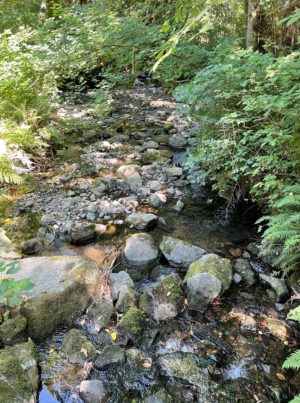 ST. JOHNS, Newfoundland — St. John’s lawyer Bob Buckingham is not sure how an investigation into the illegal burial of hazardous and contaminated materials in Deer Lake will take place, but he’s giving all the credit for it happening to one man. Buckingham represents Richard Dewey, a resident of Deer Lake who, for more than a decade, has worked to bring attention to three separate environmental issues in the town: the burial of the hazardous and contaminated materials, pollution of the town’s drinking water and property damage caused by seepage from the Humber Canal. …Dewey made a complaint to the provincial government claiming that creosote-contaminated soil was trucked from beneath the penstocks on the Humber Canal and buried near the town’s water supply, and that creosote-soaked penstocks were dumped at the closed town landfill.
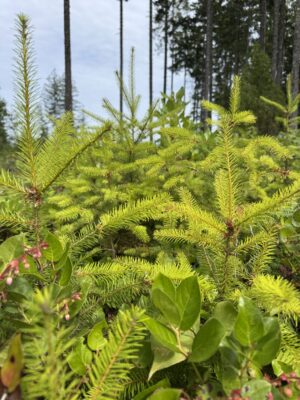 After funding 5 million seedlings for 289 projects, in 38 states and 4 foreign countries, the Hardwood Forestry Fund (HFF) has decided to voluntarily dissolve its operations. The Board announced its final distribution of $190,000 to the Arbor Day Foundation and One Tree Planted to implement Hardwood Tree plantings in line with the HFF’s mission and goals. The Hardwood Forestry Fund promoted hardwood timber growth, management, education, and environmentally sound uses of renewable forest resources by providing grant funding to partnering organizations. …The HFF was formed in 1990 by members of the Hardwood Plywood and Veneer Association, which eventually became the Decorative Hardwoods Association. …During its 35 years of operation, the
 This week was supposed to mark the deadline for other countries to strike trade deals with the US — or face tariffs of up to 49% on the goods they sell in the United States. President Trump is still threatening sky-high import taxes, but he has pushed back the effective date to Aug. 1, sowing even more uncertainty. Here’s an update on where Trump’s tariff policy stands, from which tariffs he has in place to which countries are currently affected. A 10% tariff applies to just about everything the US imports. …Higher tariffs on tap for other countries — maybe. …China already has a higher tariff after tit-for-tat retaliations. …The European Union could also face stiffer tariffs. …Mexico and Canada face special scrutiny. …The U.K. and Vietnam are the only two countries with deals in place. …Separate tariffs apply to steel, aluminum and autos. …But tariffs also face a legal challenge.
 University of Oregon researchers hope to make wood — often overlooked in health care facilities — more commonplace in those settings. Exposed wood, they’ve found, can resist microbial growth after a brief wetting. During the study, wood samples tested lower for levels of bacterial abundance than an empty plastic enclosure used as a control. “People generally think of wood as unhygienic in a medical setting,” said assistant professor Mark Fretz, co-director of the UO’s Institute for Health in the Built Environment and principal investigator for the study. “But wood actually transfers microbes at a lower rate than other less porous materials such as stainless steel.” Numerous studies support those properties of wood. A UO-led research team including scientists from the Salk Institute for Biological Studies in San Diego and Portland State University wanted to explore what happens when wood gets wet and then dries.
  GALWAY, Ireland — Minister of State with responsibility for Forestry, Michael Healy-Rae, announced a new report “
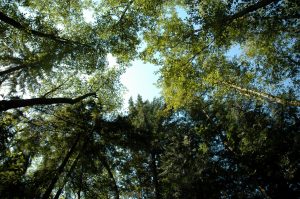 NELSON, BC — BC Timber Sales is talking to residents about logging and wildfire protection planned for the Falls Creek watershed in the Bonnington area. In a June 6 letter to residents posted on social media, Mark Tallman, planning forester for BCTS, said the agency is beginning a community watershed planning process that will include local residents. …Will BCTS have already decided which trees will be cut before the watershed plan is created? …A Ministry of Forests spokesperson said potential cut blocks have not yet been mapped. “The project is being designed to use early engagement with interested parties to help guide BCTS planning around forest harvesting, road construction, and wildfire risk reduction.” …An initial draft of the watershed forest plan is expected to be completed by “early winter 2026” and the “timing of the timber sale is anticipated to be around 2028-29 at the earliest.
 WASHINGTON, D.C. – Northland congressmen are pushing for stronger forest management practices in Canada. Representatives Tom Tiffany of Northwest Wisconsin and Pete Stauber of Northeast Minnesota were included on the letter sent to Canada’s ambassador Kirsten Hillman urging better management of forests to help with wildfire risk. In the letter, the lawmakers wrote: “As I’m sure you know, this is not the first year Canadian wildfire smoke has been an issue. …While we know a key driver of this issue has been a lack of active forest management, we’ve also seen things like arson as another way multiple large wildfires have ignited in Canada. With all the technology that we have at our disposal, both in preventing and fighting wildfires, this worrisome trend can be reversed if proper action is taken.” …The letter asked the ambassador to address the issue with key Canadian agencies, such as the Canadian Forest Service.
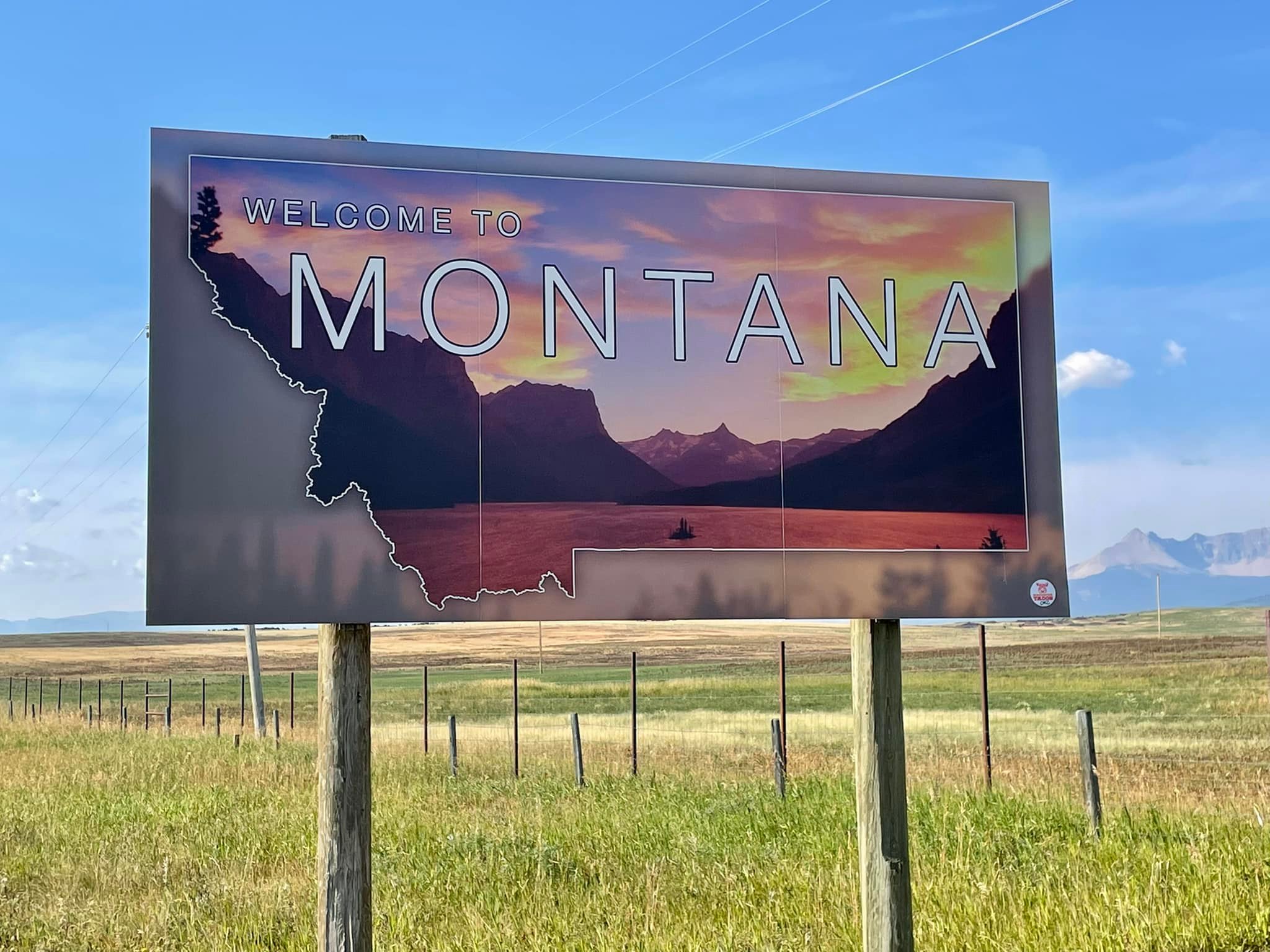 Montana Fish, Wildlife and Parks (FWP) completed its review of a proposal to permanently protect 53,000 acres of private timberland in Flathead and Lincoln counties, recommending the state purchase a conservation easement that would keep the working forest in timber production while guaranteeing year-round public access and preserving wildlife habitat. The Montana Fish and Wildlife Commission is scheduled to vote on the proposal on Aug. 21 in Helena. …In total, the project would encompass 85,752 acres of private timberland owned by Green Diamond Resource Company. The first phase of the project… received final approval in December. The new easement would encompass forestlands in the Cabinet Mountains between Kalispell and Libby. …If approved, Green Diamond would maintain ownership of the land under an easement owned by FWP [allowing them to] sustainably harvest wood, preclude development, protect important wildlife habitat and associated key landscape connectivity, and provide permanent free public access to the easement lands.
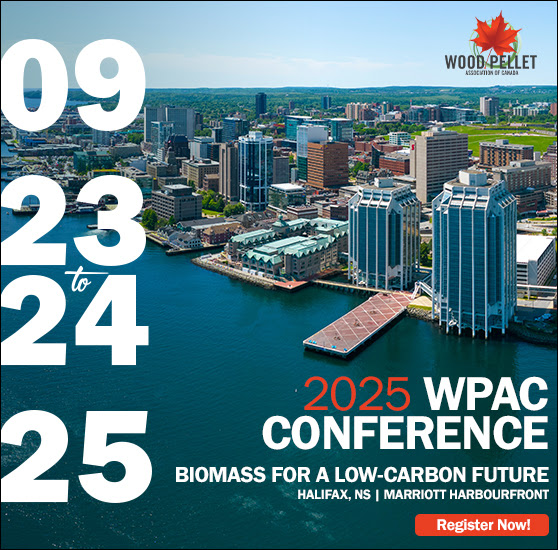 The Wood Pellet Association of Canada will host the largest gathering of the Canadian wood pellet industry. Biomass and wood pellets play a key role in ensuring Canada has renewable and responsible energy. Join us in Halifax, Nova Scotia, September 23-24, 2025.
 COLLEGE STATION, Texas — Forestry workers could benefit from the use of exoskeletons that support their back and upper limbs, results of a