 A fire at Western Forest Products’ Columbia Vista mill in Washington rendered it inoperable. In other Company news: International Paper plans major facility closures and exits the moulded fibre market; Domtar finalizes Powell River land sale, and advances its anaerobic digester in Tennessee; and Woodgrain is closing its Pilot Rock mill in Oregon. Meanwhile: Brink Forest Products is fined for a worker injury; BC community leaders strategize over Western’s Chemainus mill curtailment; and more accolades for Kalesnikoff”s new mass timber facility in BC.
In Forestry news: BC Timber Sales faces opposition over Walker Creek cutblocks; High Bar First Nation and West Fraser ink a Development Agreement; and the Forest Practices Board launches a biodiversity audit near Terrace, BC. South of the border, the US public lands sell-off is dropped from policy bill; the USDA and Montana sign a wildfire mitigation pact, and debate continues over the rollback of roadless protections in California, Tennessee and Oregon. In Wildfire news: a fire near Lytton, BC prompts local state of emergency; and thousands flee fires in Turkey amid Europe’s heatwave.
Finally, APA’s 2024 Safety Awards and the Canadian Wood Council’s 2024 Annual Report.
Kelly McCloskey, Tree Frog News Editor


 Domtar (formerly Paper Excellence) has signed a purchase agreement with Cranberry Business Park Ltd. for the sale of the remaining half of its lands at the former Tis’kwat paper mill site in Powell River. “We are looking forward to contributing to the economic future of Powell River and the region,” stated Craig Austin and Thomas Ligocki, from Cranberry Business Park Ltd., in a media release. “With waterfront access and abundant energy sources, this site has so much potential. We are proud to be part of the revitalization of the city’s Historic Townsite, alongside our neighbour at Tis’kwat, the Tla’amin Nation.” “It was a priority for Domtar to find a buyer who would ensure that the lands continue to generate jobs and economic benefit for the broader community well into the future,” stated Carlo Dal Monte, vice-president, Domtar Legacy Assets.
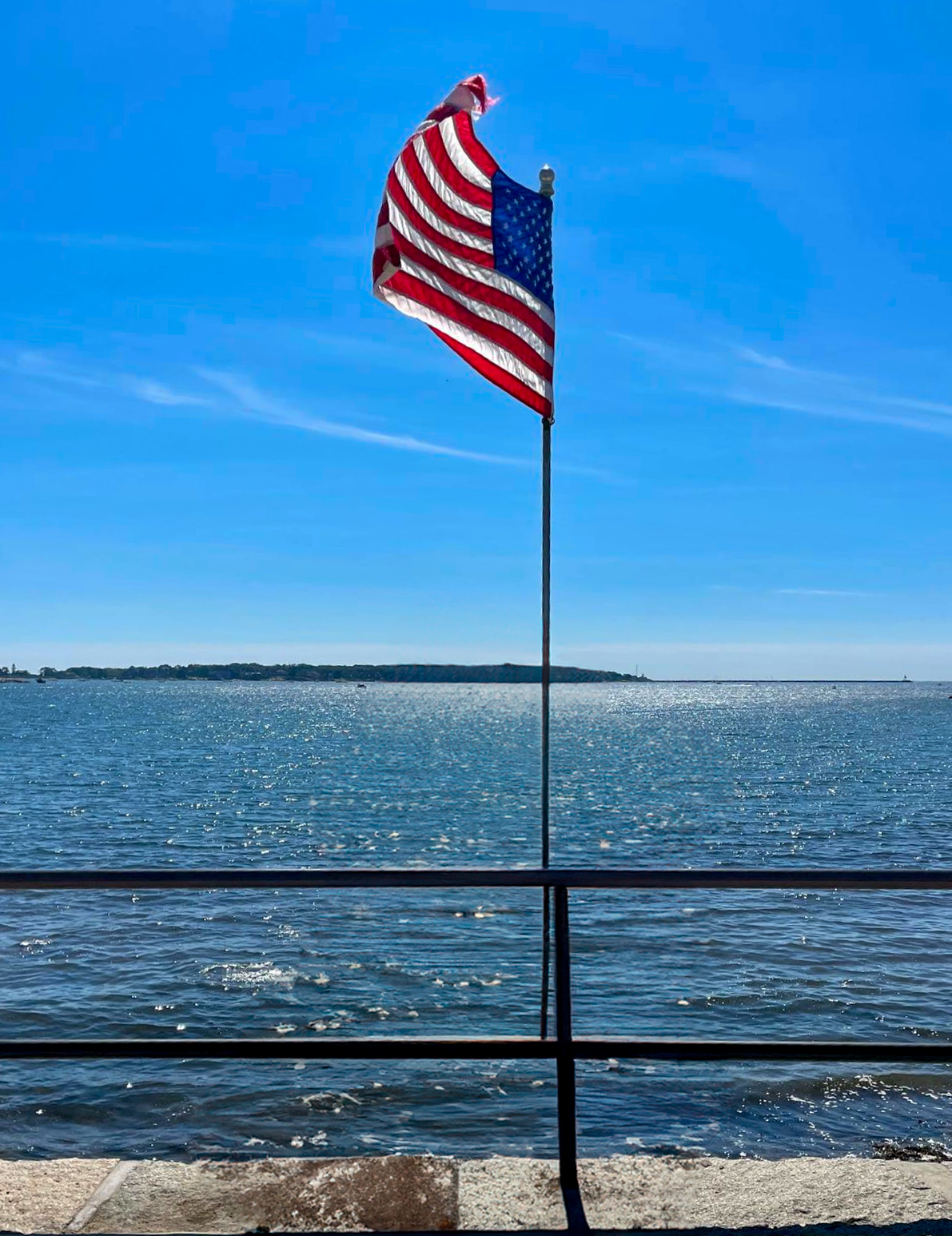 WASHINGTON — Sen. Mike Lee, R-Utah, said late Saturday that he had dropped his contentious plan to sell millions of acres of public lands from the sweeping domestic policy package that the Senate will soon begin debating. Lee made the announcement on social media after it became clear that the plan faced insurmountable opposition from within his own party. At least four Republican senators from Western states had said they planned to vote for an amendment to strike the proposal from the bill. The plan had also triggered intense pushback from conservative hunters and outdoorsmen across the American West, who had warned that it threatened the lands where they hunted and fished. …Lee said that, because of the strict rules governing the budgetary process … he was “unable to secure clear, enforceable safeguards to guarantee that these lands would be sold only to American families — not to any foreign interests.”


 VANCOUVER, British Columbia – Western Forest Products announced today that the sawmill at its Columbia Vista Division, located in Vancouver, Washington, sustained extensive damage in a fire, rendering the mill inoperable. “On behalf of Western, I want to extend my sincere gratitude to the firefighters and first responders who attended the fire at our site,” said Steven Hofer, Western’s President and CEO. “While we are shocked by the damage to the mill, we feel incredibly fortunate that no employees or emergency personnel were injured. We are focused on supporting our team members and completing an incident investigation and assessment.” The Columbia Vista Division produced approximately 53 million board feet of lumber in 2024, with production focused on Douglas Fir specialty products for Japan and U.S. markets.
 KINGSPORT, Tennessee — Domtar’s Kingsport mill received a long-awaited permit last week leading to the start of the anaerobic digester project. The Tennessee Department of Environment and Conservation issued the 142-page permit Wednesday. …“Receiving this permit is an important milestone in our efforts to advance the anaerobic digester project at the Kingsport Mill,” Charlie Floyd, VP of strategic capital projects, said. “This investment underscores Domtar’s commitment to sustainable innovation and environmental stewardship, while supporting good jobs and economic vitality here in Kingsport.” …Start-up of the new wastewater treatment system is expected by the third or fourth quarter of 2026, according to Domtar’s latest timeline. Around 150 contractors are expected to be on site to build the digester and associated equipment, Floyd said. Domtar estimates a $12.8 million economic impact from the project — including labor, hotel and dining within the community.
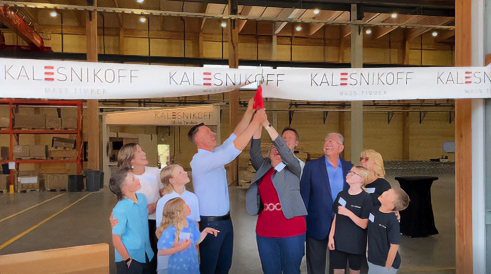 Kalesnikoff Mass Timber recently opened its new 100,000-square-foot mass timber prefabrication and modular facility in Castlegar, B.C., 400 miles east of Vancouver. Starting small just before the Second World War, Kalesnikoff today is a family-owned, fourth-generation company that produces dimensional lumber, glulam beams and columns, glue-laminated timber (GLT) panels, cross laminated timber (CLT) and prefabricated components. The new facility, which is built entirely out of Kalesnikoff’s own mass timber… enables Kalesnikoff to provide new products that can be used for prefabricated walls, flooring, modules and full modular construction. Chief operating officer Chris Kalesnikoff says it’s the first vertically integrated mass timber operation in North America. Kalesnikoff was started by Chris’s great-grandfather and two of his brothers in 1939 as a logging operation. His grandfather and his father (Ken) expanded the sawmill into value-added wood products.
 A decade-spanning political battle between housing developers and defenders of California’s preeminent environmental law likely came to an end this afternoon with only a smattering of “no” votes. The forces of housing won. With the passage of a state budget-related housing bill, the California Environmental Quality Act will be a non-issue for a decisive swath of urban residential development in California. In practice, that means most new apartment buildings will no longer face the open threat of environmental litigation. It also means most urban developers will no longer have to study, predict and mitigate the ways that new housing might affect local traffic, air pollution, flora and fauna, noise levels, groundwater quality and objects of historic or archeological significance. And it means that when housing advocates argue that the state isn’t doing enough to build more homes amid crippling rents and stratospheric prices, they won’t — with a few exceptions — have CEQA to blame anymore.
 With wildfire season in full swing, an immigration consultant says there is a simple way to end the shortage of qualified people to fight wildfires: Let existing, trained firefighters who are non-residents stay once their work permits expire by letting them choose a path to permanent residency. Jennie McCahill is representing Irish national Jake McGavin, a team leader with a wildfire-fighting contractor called Carmanah Wildfire, which is based in Sidney but has firefighting crews spread all over B.C. …McGavin, who turns 29 in September, is in his third season fighting wildfires in B.C. He’s been lucky to have received a pair of two-year work permits, but the second is soon to run out. …He wants to stay in Canada not only because he’s fallen in love with B.C. …”Unfortunately, Immigration, Refugees and Citizenship Canada does not recognize wildland firefighting as skilled work.”
 Llenllenéy’ten (High Bar) First Nation (HBFN) has signed a historic Joint Development Agreement (JDA) with West Fraser Timber Co. Ltd. (West Fraser). The JDA was signed during HBFN’s National Indigenous Peoples Day event in Clinton on June 21. A press release issued by High Bar on June 24 stated that “The landmark agreement highlights HBFN’s commitment to sustainable forest management through partnership with the private sector to achieve mutually beneficial outcomes.” The relationship ensures fibre supply for West Fraser, and opens the door for more diverse fibre product development. At the same time, HBFN notes that the agreement creates a path toward increased resource revenues and decision-making authority for HBFN, which marks a meaningful step toward economic reconciliation. Under the JDA, West Fraser will transfer a portion of its timber harvesting rights to Llenllenéy’ten (High Bar) First Nation.


 HELENA, Montana — US Secretary of Agriculture Brooke L. Rollins announced US Forest Service Chief Tom Schultz and Montana Governor Greg Gianforte signed a historic Shared Stewardship Memorandum of Understanding, establishing a new framework between the US Forest Service (USFS) and the State of Montana to advance forest restoration and reduce wildfire risk across the state. Montana’s Shared Stewardship Agreement expands collaborative efforts to accelerate active forest management, safeguard communities, and support sustainable timber production. …“By cutting burdensome, unnecessary red tape and empowering Montana to lead, we’re proving that through real partnership, conservation and economic growth can go hand-in-hand. …The Forest Service and Montana Department of Natural Resources and Conservation (DNRC) will jointly identify and execute large-scale forest management projects, initially focusing on approximately 200,000 acres in northwest Montana.

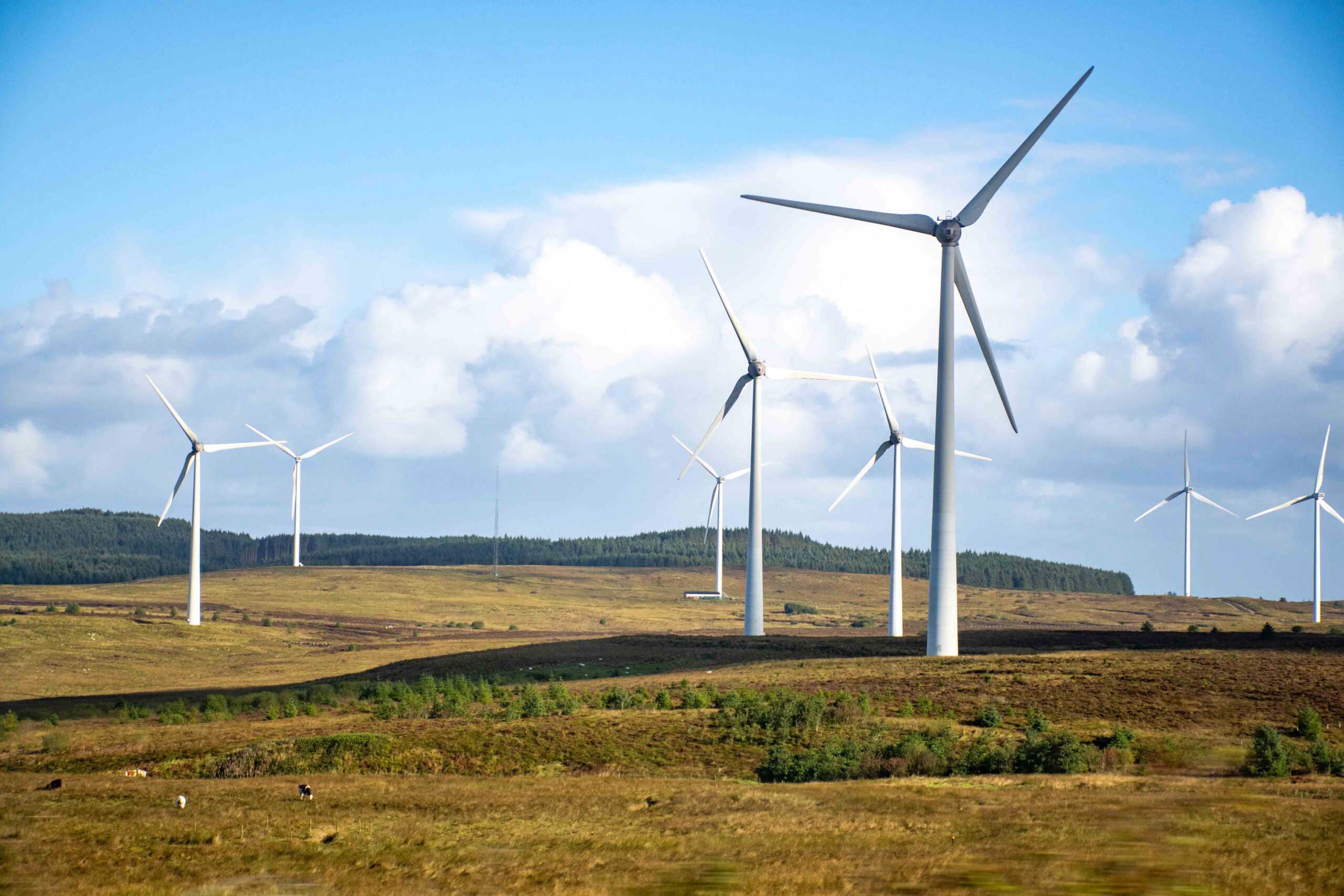 The Trump administration on Monday shut down a federal website that had presented congressionally mandated reports and research on climate change, drawing rebukes from scientists who said it will hinder the nation’s efforts to prepare for worsening droughts, floods and heat waves. The U.S. Global Change Research Program’s website, globalchange.gov, was taken down along with all five versions of the National Climate Assessment report and extensive information on how global warming is affecting the country. “They’re public documents. It’s scientific censorship at its worst,” said Peter Gleick, a California water and climate scientist. …In May, Trump signed an executive order saying that his administration is committed to “restoring a gold standard for science to ensure that federally funded research is transparent, rigorous.” …The president cited an example relating to climate science, saying federal agencies previously used a “worst-case scenario” of warming “based on highly unlikely assumptions.”
 Engineered wood manufacturers from across North America were named winners of APA – The Engineered Wood Association’s 2024 Safety and Health Awards — the premier safety award program for North America’s engineered wood products industry. The program promotes and recognizes operational excellence with the goal of reducing injury and illness rates. The Safest Company Award went to three members: Domtar won in the category of three or fewer mills, West Fraser won for companies with four to 10 mills, and LP earned the title for companies with 11 or more member mills. There were two winners in the prestigious Innovation in Safety Award category. Domtar’s Larouche, Quebec, mill won the Equipment-Based Innovation in Safety Award for their submission, “Distancing Handle,” while LP’s Jasper, Texas, mill won the Jack Wagner Process-Based Innovation in Safety Award for their submission, “Safety Champions – Future Leader Development – Safety Projects.”
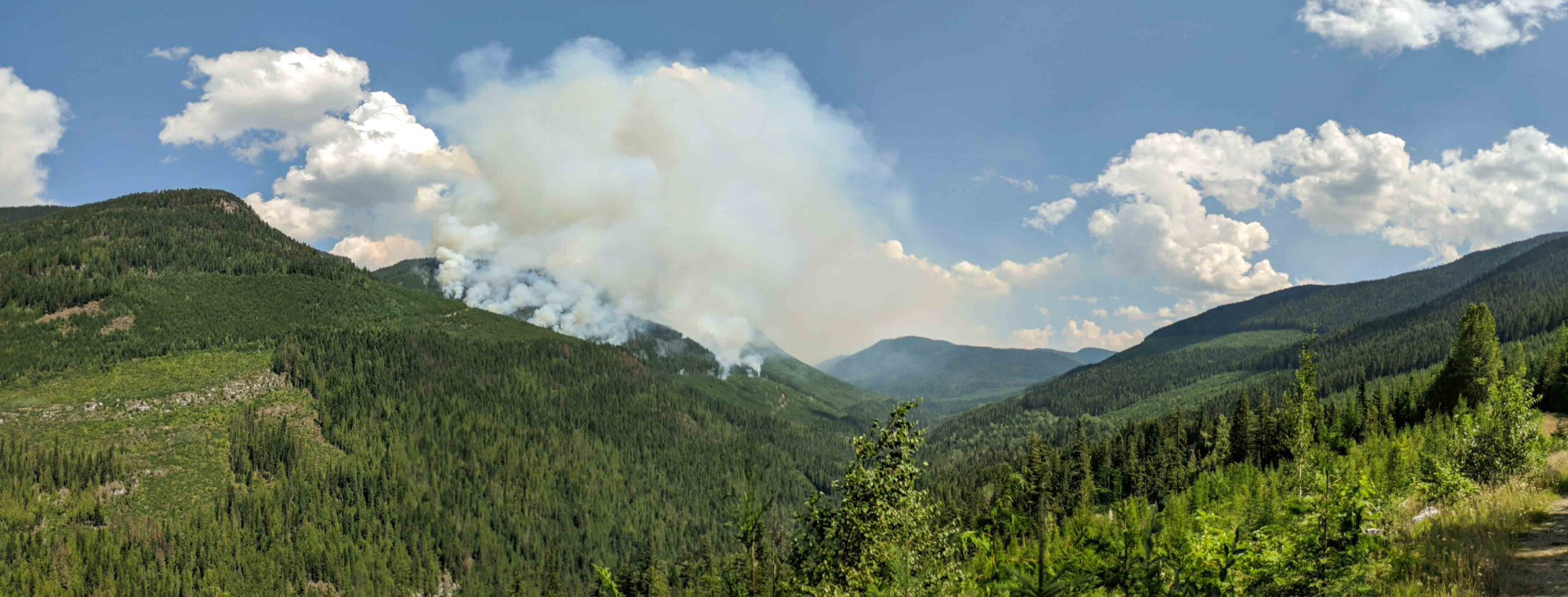
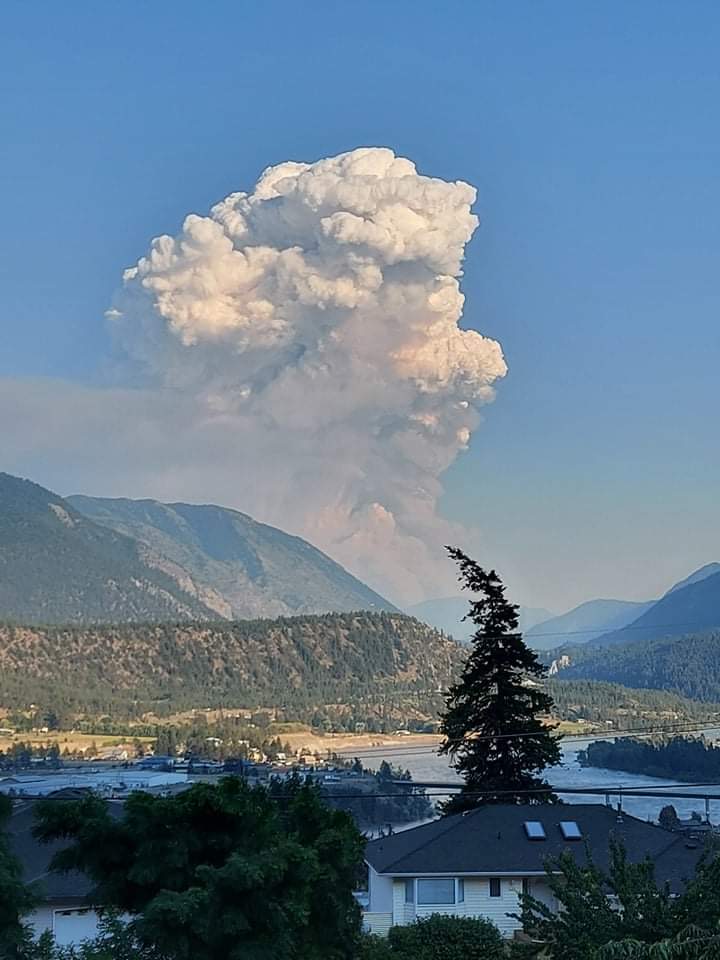 The Thompson-Nicola Regional District has declared a local state of emergency for the Blue Sky Country region due to an encroaching out-of-control wildfire near Lytton, B.C. It has also issued an evacuation order for two properties on Spencer Road South as the blaze poses “immediate danger to life.” The BC Wildfire Service says the Nikaia Creek wildfire is about six hectares in size and is one of more than 70 wildfires burning across the province. It says crews, supported by firefighters from Lytton First Nation, made “good progress” overnight and they are now focused on the north and south flanks of the blaze. The Thompson-Nicola Regional District also issued an evacuation alert Monday night for nine properties in the Harper Lake area near Chase, B.C., due to the rapidly growing Mount Scatchard wildfire.
 ISTANBUL/PARIS/BRUSSELS – Firefighters battled wildfires in Turkey and France on Monday and more than 50,000 people were evacuated as an early summer heatwave hit Europe. Health alerts were issued in France, Spain, Italy, Portugal and Germany. Even the Netherlands, used to a milder climate, issued a warning for high temperatures in the coming days, coupled with high humidity. “Large parts of Western Europe are experiencing extreme heat and heatwave conditions that are normally observed in July or August, rather than June,” said the EU’s Copernicus Climate Change Service. …In Turkey, wildfires raged for a second day in the western province of Izmir, fanned by strong winds, Forestry Minister Ibrahim Yumakli said. More than 50,000 people have been evacuated from five regions, including more than 42,000 in Izmir, Turkey’s AFAD emergency management authority said.