 To the delight of some and dismay of others—the US plans to rollback the 2001 Roadless Rule, allowing logging and thinning in 58 million acres of federal lands. In Business news: San Group’s Port Alberni holdings are sold; mill-fire updates at East Fraser Fibre in Quesnel, BC and K&D Products in Panguitch, Utah; lumber futures ease down; and Canadian inflation holds steady. Meanwhile: Perkins&Will is recognized at the 2025 Carbon Leadership Forum; and Kelowna, BC and Chico, California celebrate mass timber milestones.
In Forestry/Climate news: Manitoba’s premier ends wildfire state of emergency; JD Irving employs heavy-lift drones to support planting; RBC says BC businesses may up their spending on climate adaptation; and the Great Bear Rainforest is selling carbon offsets. Meanwhile: a European Commission report on biomass supply and use; and the UK plans to scrap green levies to boost growth, while bioenergy subsidies may increase demand for wood pellets.
Finally, another study says wildfire heat and smoke combine to increase mortality risk.
Kelly McCloskey, Tree Frog News Editor
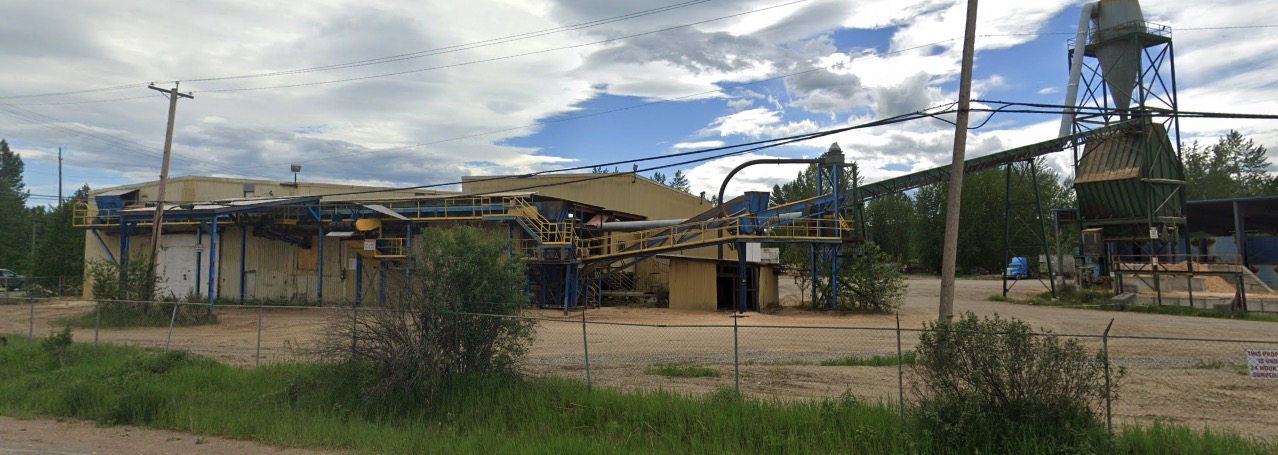 The East Fraser Fibre mill in Quesnel was on fire Saturday, June 21, closing a stretch of Highway 97 at the intersection with Quesnel-Hixon Road. Firefighters from multiple departments including Quesnel Volunteer Fire Department (QVFD), Ten Mile Volunteer Fire Department and Barlow Creek Volunteer Fire Department responded to the blaze. “On arrival we had heavy smoke and flames exiting the roof of the building,” said QVFD chief Ron Richert. “Crews were on scene for almost 12 hours, until seven o’clock in the morning.” Crews were also called back to the East Fraser Fibre building to manage hot spots, where small fires in some areas of the building or grass outside flared up. Richert said the building is now clear of fibre but it is still under investigation.
 Two industrial properties in the Alberni Valley that were shuttered when San Group declared bankruptcy last year have been sold. The Coulson Mill, located a few kilometres up the Alberni Inlet, has been purchased for an undisclosed amount by Fraserview, a Surrey company that has been producing manufactured wood products since 1994. The remanufacturing plant on Stamp Avenue has been sold to a numbered company, 037BC, which will in turn lease the premises to IGV Housing Ltd. This company, from Ucluelet, specializes in manufacturing scalable and sustainable housing using a hybrid construction system, according to court documents. The company intends to “revitalize the…plant as a central hub for prefabrication and production of affordable housing.” Again, the purchase price was not disclosed. The closing date for the reman plant purchase will be before June 30, 2025.
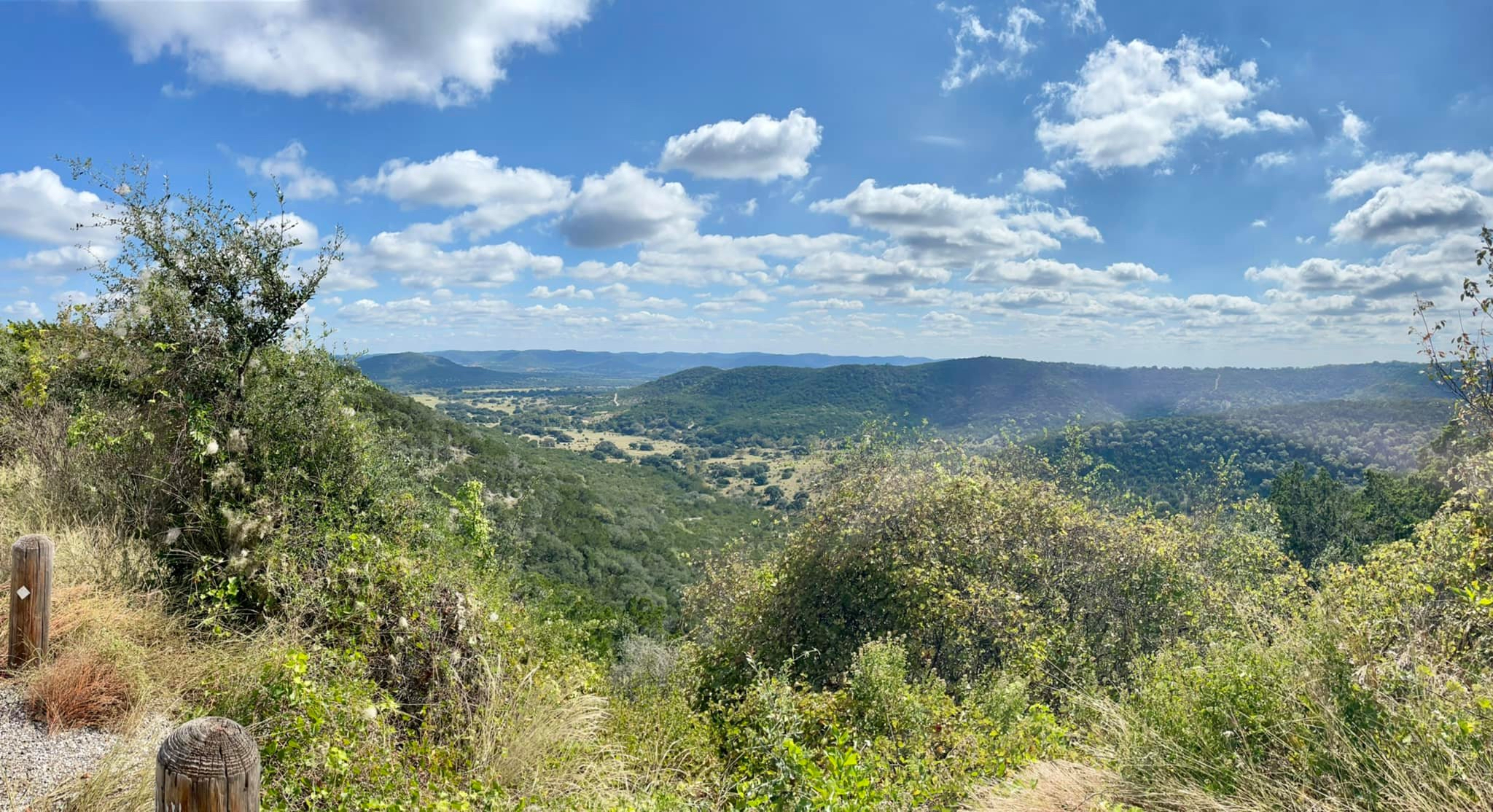 The Trump administration will rescind protections that prevent logging on nearly a third of national forest lands, including the largest old growth forest in the country, the agriculture secretary, Brooke Rollins, announced on Monday. …Republican lawmakers from western states celebrated the announcement while environmental groups expressed dismay. On social media, the Republican representative for Alaska, Nick Begich, said: “…the ‘Roadless Rule’ has long stifled responsible forest management, blocked access to critical resources, and halted economic opportunity.” Meanwhile, the Sierra Club’s Alex Craven, said: “Once again, the Trump administration is ignoring the voices of millions of Americans to pursue a corporate giveaway for his billionaire buddies. Stripping our national forests of roadless rule protections will put close to 60m acres of wildlands across the country on the chopping block.”
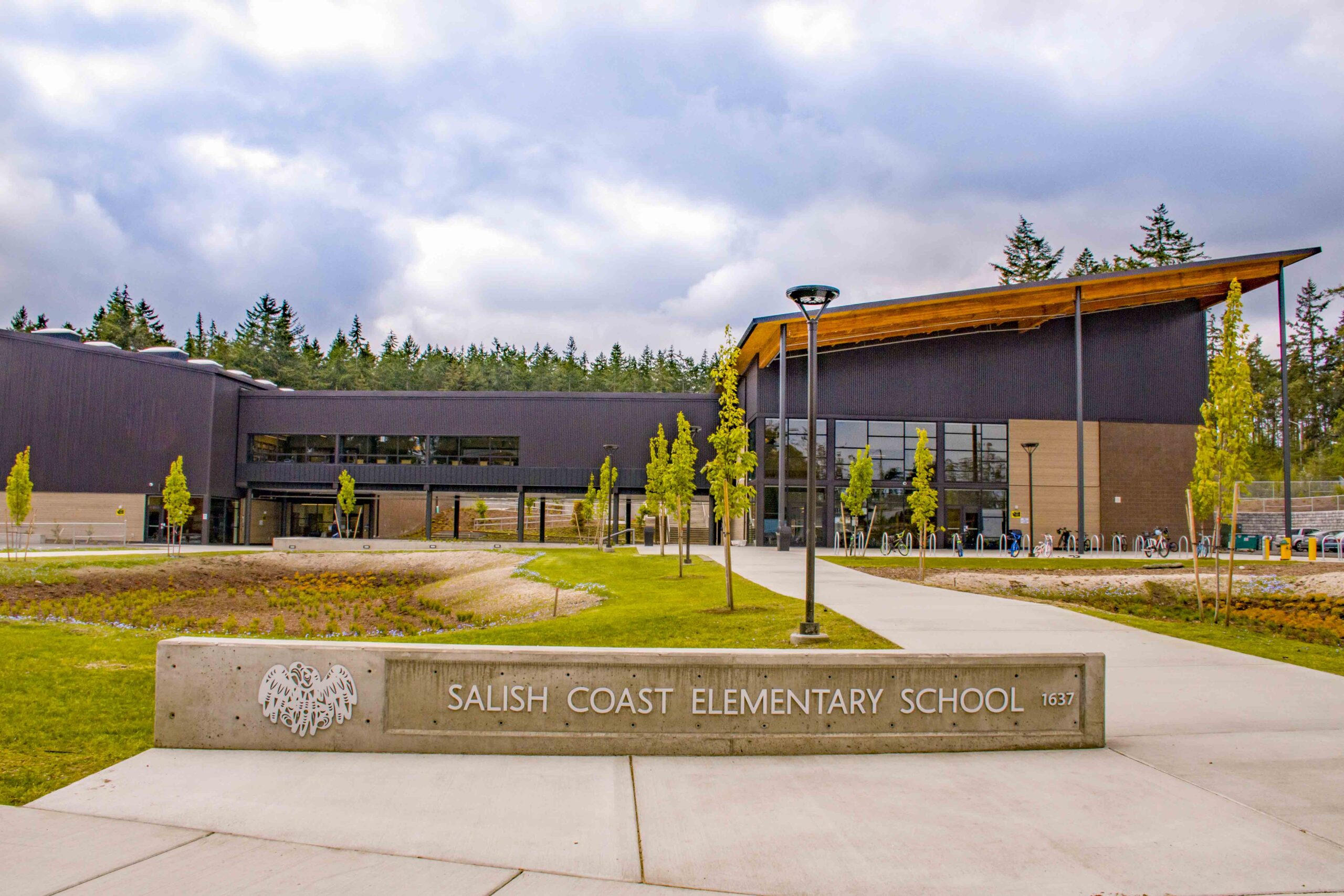 The U.S. Senate unanimously passed a bill to reauthorize a program that has provided billions to schools, roads and other services in rural Oregon and Idaho. The U.S. Forest Service’s “Secure Rural Schools and Self-Determination Program,” was initially crafted in 2000 to help offset the loss of timber revenue in rural counties. The program expired at the end of 2023, but the recently passed “Secure Rural Schools Reauthorization Act of 2025” would reauthorize the funding for more than 4,000 school districts and 700 counties across the country through the 2026 fiscal year. The bill’s lead sponsors include U.S. Sens. Ron Wyden and Jeff Merkley, both Oregon Democrats, and U.S. Sens. Jim Risch and Mike Crapo, both Idaho Republicans. …This year, bill sponsors are urging the U.S. House to reauthorize the program. Without its passage in the House, rural counties in Oregon, Idaho and across the country will fall short of funds that support local services.
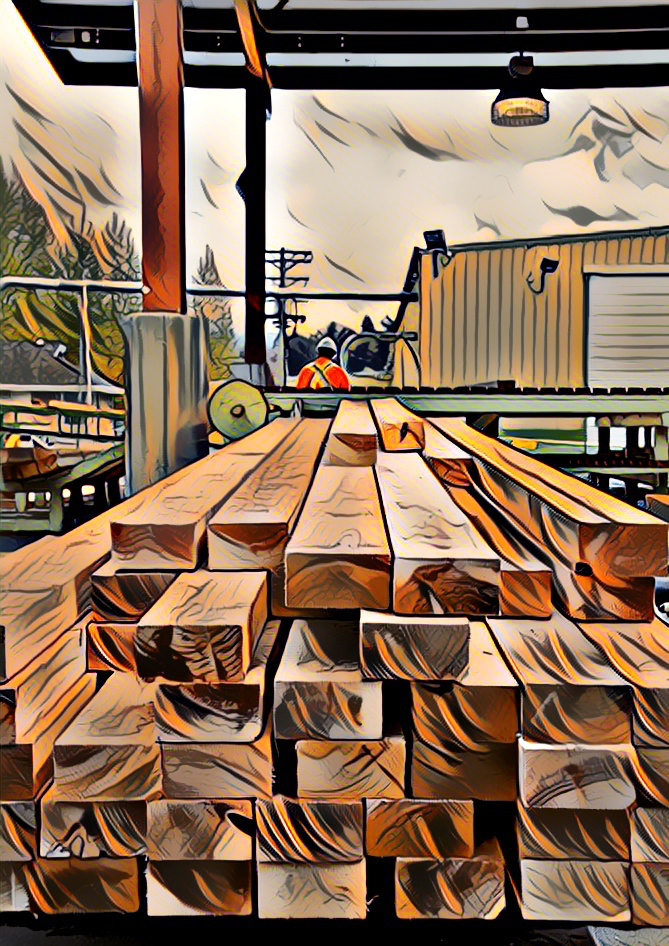 …In August 2024, a lumber mill owned by K & D Products and nestled in Panguitch, Garfield County’s largest city, went up in flames. Reports stated that, while the blaze didn’t get to the timber, the site’s machinery was severely damaged. The destruction landed a heavy blow to the community and the Frandsen family, who have owned and operated the mill for generations. …Between the area’s lumber heritage and the need to balance out tourism’s seasonal employment waves, Fiala gained enthusiastic support from state and local governments to build another sawmill. With his business partner, Barco — a logging company — Fiala acquired 25 acres north of Panguitch and began clearing space and bringing in power, water and gas. When the K & D Products sawmill burned during Fiala’s development, he spoke to the Frandsens and together they worked out a way for Fiala to take over what was left of the old mill and utilize it for his new business.
 Lumber futures traded below $610 per thousand board feet, easing from two-month highs of $626 seen June 13th, driven by improving supply while demand slowed. This pullback reflects a temporary surge in supply as sawmills and wholesalers restocked early-season safety stocks, while builders delayed purchases after earlier buying . The decline also stems from softer demand: high mortgage rates continue to suppress new house builds and remodeling activity, with treaters and end-users scaling back orders. Although longer-term forecasts expect a pickup in Q3, driven by renewed tariff pressure and projected housing recovery, the current correction is supply-led, driven by modest restocking, seasonal slowdown, and rate-constrained construction spending. [END]›
 The annual pace of inflation held steady at 1.7% in May as cooling shelter costs helped tame price pressures, Statistics Canada said. Shelter costs rose three per cent in May, StatCan said, marking a slowdown from 3.4% in April. The agency singled out Ontario as the major source of rent relief in the country. …Mortgage interest costs meanwhile decelerated for the 21st consecutive month amid lower interest rates from the Bank of Canada. Economists had broadly expected inflation would remain unchanged heading into Tuesday. The removal of the consumer carbon price continues to drive down gasoline costs annually, StatCan said. …Inflation excluding tax changes – stripping out influences from the carbon price removal – was also steady at 2.3 per cent last month. …The central bank’s closely watched core inflation metrics meanwhile ticked down a tenth of a percentage point to three per cent in May.
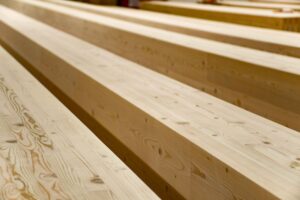 The Kelowna International Airport (YLW) is proud to share a significant project milestone for Airport Terminal Building (ATB) expansion – the mass timber roof structure of the facility is now complete. The use of mass timber throughout the terminal building expansion highlights the airport’s commitment to sustainability, innovation and community reflection in this project. YLW received $500,000 from the Province’s Mass Timber Demonstration Program, which aims to grow B.C.’s mass timber and engineered wood products industry and position B.C. as a world leader in wood design, engineering and construction. An important design consideration for the ATB Expansion is to incorporate characteristics that showcase our local community. The use of mass timber plays a meaningful role in conveying our region’s natural beauty, heritage and character.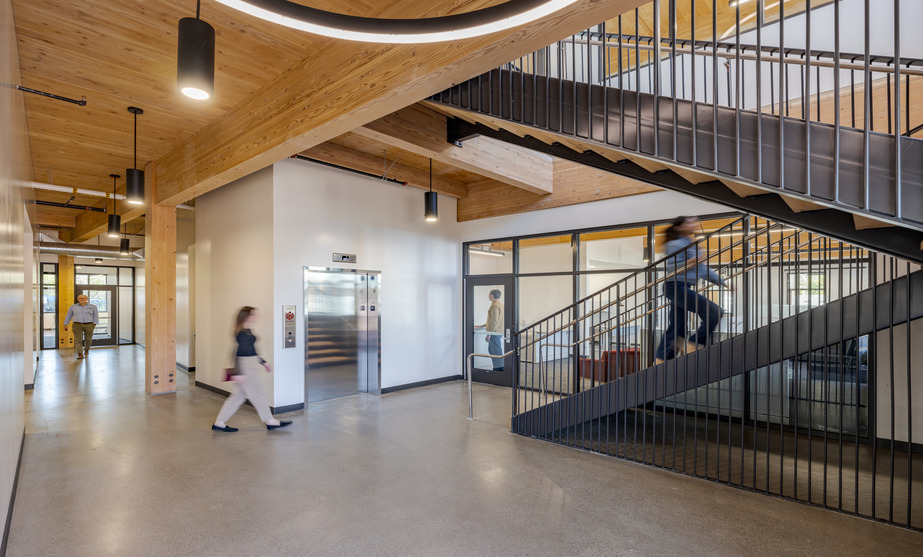

 Work on climate change has largely focused on preventing it from getting worse, but as a new RBC report points out, businesses are also starting to think more about potential spending on adaptation and preparation as the costs of disasters pile up. The report says that extreme weather and natural disaster costs already totalled US$368 billion last year, 14 per cent above the long-term average since 2000, and that this year could match or exceed the total. The trend is expected to get worse, because as the report notes there’s expected to be a 2.7 degree rise in average temperatures by 2100 based on current global policies and actions, while an optimistic scenario pegs the rise at 1.9 degrees. The costs stemming from rising temperatures are leading to more attention in boardrooms, with the report noting mentions of climate change on the rise in both U.S. and Asia.
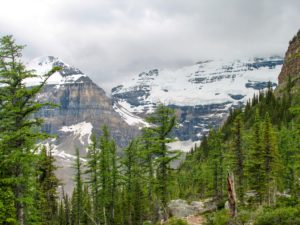 The Great Bear Rainforest on British Columbia’s North and Central Coast sequesters millions of tonnes of carbon dioxide across 6.4 million hectares of snow-capped mountains, ancient western red cedars, and Sitka spruce. It is considered one of the world’s largest carbon sinks—meaning it absorbs more carbon dioxide (CO2) than it releases. Under the Great Bear Carbon banner, a collection of coastal First Nations has entered the voluntary carbon offset market. The organization generates carbon offsets by preserving trees and ecosystems that naturally store CO2, with each carbon offset verifying the removal of one tonne of carbon from the atmosphere. Businesses, governments and individuals can purchase carbon offsets to compensate for their environmental impact. The Great Bear Carbon program helps raise revenue to support the local First Nations and their stewardship efforts.
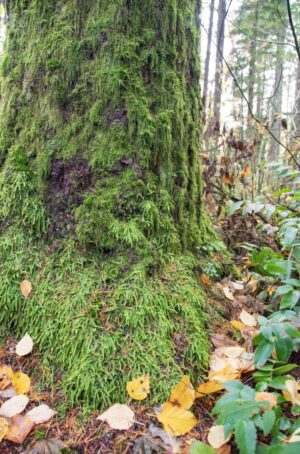 Protecting and restoring forests are essential for curbing climate change. But while efforts often focus on conserving mature forests and planting new trees (both of which are badly needed), a critical piece of the puzzle is often overlooked: managing naturally regrowing forests to increase the carbon they remove. Until now, scientists did not have a detailed picture of the carbon removal value of naturally regrowing forests. But
 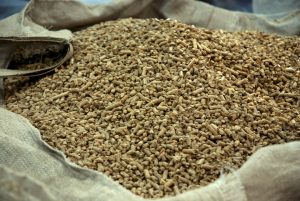 While biomass production and extraction in the European Union continue to grow, its long-term viability is at risk due to declining ecosystem conditions. A new

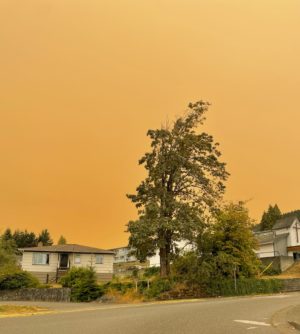 Wildfire smoke and extreme heat are combining to create a lethal cocktail of environmental conditions that multiply the risk of death in Metro Vancouver, a
 PANGUITCH, Utah — The France Canyon fire has increased to 23,353 acres and is currently at 10% containment, according to the latest information posted by the U.S. Forest Service – Dixie National Forest. Officials say fire activity increased at around 2 p.m. on Sunday, June 22, pushing eastward into the Kings Creek Campground area. Firefighters had to conduct a tactical firing operation to protect the campground. A total of 749 personnel are battling the fire and working on securing structures within Wilson Peak, the Hillsdale and Johnson Canyons. Firefighters are also working to keep the fire west of East Fork Road. Efforts are also underway to protect the Bryce Woodland community on the southwest side of the wildfire perimeter.