 Michael McCain says Canada’s Competition Act stifles corporate environmental efforts. In related news: the Fraser Institute says rhetoric dominates Canada’s climate debate; the WWF says Ottawa’s focus on nation-building threatens nature; land ownership stifles carbon investments in the Philippines; and Iceland’s Mammoth carbon project is falling short. In Business news: the global economic burden of wildfires is staggering; New Zealand seeks forest trade with India; and the tallest timber tower in the Western Hemisphere breaks ground in Milwaukee.
In Forestry news: Manitoba, Saskatchewan and BC report progress on wildfires; California invests in forest health and resilience; an Oregon bill seeks new way to fund firefighting; a New York bill promotes forest easements; an ENGO lawsuit targets logging in North Carolina; and some species adapt to the boreal’s wildfire cycles—while others struggle.
Finally, wondering how bad the mosquitoes might be this summer? Try a skeeter meter!
Kelly McCloskey, Tree Frog News Editor



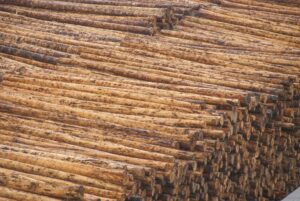 NEW ZEALAND — Forestry Minister Todd McClay has unveiled two-way forestry trade missions with India this year. The inbound visit – supported by industry partners – is expected to showcase New Zealand’s forestry systems and sustainable management practices. “The outbound mission will continue to open doors for deeper commercial and government partnerships,” McClay said. …McClay was speaking at the Fieldays Forestry Hub on Friday. Trade between New Zealand and India was valued at $3.14 billion in 2024. New Zealand’s exports to India last year included forestry products valued at $126 million. New Zealand’s wood exports to India have surged from $9.5 million in 2023 to an estimated $76.5 million this year. Pulp exports have more than doubled, from $20 million to $45.6 million. “India is one of the fastest-growing markets for our forestry exports – and we’re focused on turning that growth into long-term opportunity for New Zealand exporters,” McClay said.
 In an age of sleek finishes and synthetic shortcuts, timber framing offers something few modern materials can: substance. There’s a quiet grandeur to exposed beams that hold not only the weight of a home but the stories it gathers over time. The appeal isn’t rooted in nostalgia—it comes from discernment. Choosing timber is a commitment to craftsmanship, to the feel of hand-hewn structure beneath polished design. Bespoke estates, mountain retreats, and coastal getaways are embracing timber as both a form and a functional element. No longer reserved for rustic cabins or historical reproductions, it’s becoming the architectural signature of homes designed with permanence in mind. That kind of durability begins with sourcing, ensuring the materials behind the beauty are as intentional as the design itself. Timber framing is one of the oldest construction methods still in use, with roots stretching back over a thousand years.
  I recently gave my electric pressure washer a vigorous workout. …Years ago, I walked into a lumber company to purchase materials and saw a placard on the counter advertising new maintenance-free pressure-treated lumber. Yes, at one time, residential pressure-treated lumber was a new thing. …We all discovered the claim was wrong. Pressure-treated lumber requires extensive maintenance. …This reality led to the first generation of composite decking. I remember when Trex was introduced. It dominated the marketplace, even though it was quite unattractive. It, too, was marketed as maintenance-free. Millions of other homeowners demanded a more realistic composite deck material. Generations two and three of composite decking followed. …The corporate attorneys for some decking manufacturers have reined in the optimistic marketing managers. You’ll now see clever descriptions such as “minimal maintenance.”

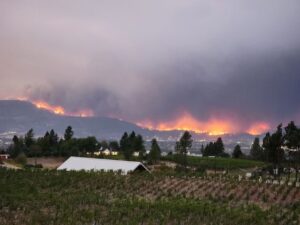 A wildfire risk reduction initiative led by the Lower Nicola Indian Band Development Corporation (LNIBDC) has significantly decreased wildfire hazards in the Steffens Estates area, just north of Merritt, while setting an example for Indigenous-led land stewardship in British Columbia. The multi-phase project, which began in 2022 and was completed in March 2024, combined strategic timber harvesting with intensive fuel mitigation efforts to create safer forest conditions near the Steffens Estates subdivision—land bordering private residences and Crown forests. With more work planned near Steffens Estates and around critical communications infrastructure on Iron Mountain, the project is part of a broader effort to proactively manage wildfire risk in British Columbia. B.C. Minister of Forests Ravi Parmar also praised the initiative: “Wildfire risk reduction is one of the most important ways we can protect people, homes, and vital infrastructure – especially as our province faces the growing impacts of climate change.”
 There’s an entire cycle of life that helps some wildlife thrive when the boreal forest burns, but experts say climate change and human activity have led to larger, more intense wildfires, exacerbating the negative effects on some species. While it’s too early to know exactly how one of the worst wildfire seasons in Saskatchewan history is affecting wildlife, research shows some species have evolved over millennia to take advantage of forest fire cycles. “It’s almost essential, particularly in the boreal forest, to have some degree of fire on the landscape, because it is important to create that sort of regenerative habitat for species that depend on it,” said Jean-Michele DeVink, an environmental consultant and adjunct professor at the University of Saskatchewan. “The challenge, is that for other species that do require more mature forest, the extent of fires that we’re seeing throughout the boreal forest is a bit of a problem.”
 They slither in silence, drape trees in silk and chew through lively leaves. This year, the forests of Ontario are full of a very distinctive, creepy crawler – the tent caterpillar. Eastern tent caterpillars are appearing in large numbers across the province marking what experts describe as an ‘outbreak year’ for the species. While noticeable, the current outbreak is not as severe as previous ones, according to Dan Rowlinson, forest health field coordinator with Ontario’s Ministry of Natural Resources. According to the Government of Ontario, periodic outbreaks occur roughly every 10 to 12 years and typically last three to six years in a particular areas. The tent caterpillar, often mistaken for their close relatives; the spongy moth, is known for having a similar looking larvae.
 The California Department of Forestry and Fire Protection (Cal Fire) has announced the allocation of nearly $72 million to support extensive land management projects aimed at restoring forest health and resilience across the state. Through its Forest Health Program, Cal Fire has distributed 12 grants to various local and regional partners working on projects spanning state, local, tribal, federal, and private lands. These initiatives are designed to tackle critical forest health issues, reduce wildfire risks, improve ecosystem resilience, and enhance carbon sequestration across California’s diverse landscapes. The forest health grant projects must focus on large-scale forestlands that involve multiple landowners and jurisdictions, with a minimum size of 800 acres. These projects are expected to be applied across expansive areas to achieve regional forest resilience, prioritizing initiatives that incorporate a mix of activities involving experienced partnerships.
 A late-in-the-session Hail Mary proposal to redirect the bulk of the state’s “kicker” tax rebate to fund statewide wildfire work would still kick some of the rebate back to most Oregonians. Under a forthcoming amendment to Senate Bill 1177 — still a placeholder bill for some mechanism to fund wildfire prevention and response work in the state — Sen. Jeff Golden, D-Ashland, proposes the Legislature move $1 billion of the expected $1.64 billion state tax rebate to an interest-bearing wildfire account. “The notion of walking into every session with $100 to $150 million waiting for us for wildfire, is really attractive, as opposed to starting from scratch every two years,” Golden said. Under his proposal, $1 billion from next year’s kicker would be put into an interest-bearing account that could, if earning 5% each year, send $100 million each biennium to the state for wildfire — covering about one-third of the total $300 million the state hopes to budget each biennium.
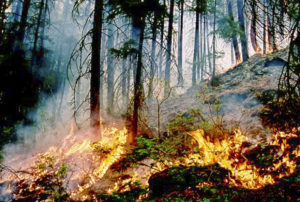 HOPLAND, California — …Dripping gasoline onto dry grass and deliberately setting it ablaze in the California countryside felt wildly reckless, especially for someone whose job involves interviewing survivors of the state’s all too frequent, catastrophic wildfires. But “good fire,” as Nielson called it, is essential for reducing the fuel available for bad fire, the kind that makes the headlines. The principle is as ancient as it is simple. …With that in mind, the state set an ambitious goal in the early 2020s to deliberately burn at least 400,000 acres of wilderness each year. …But California officials worry their ambitious goals are likely to be thwarted by deep cuts to those federal agencies. Gov. Gavin Newsom added $72 million to the state’s forest management budget to bridge some of the gap expected to be left by federal agencies. But wildfire experts say that’s just a drop in the bucket.
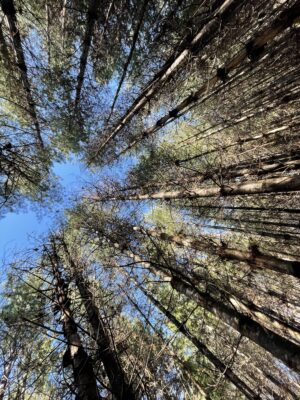 Tim Meyer’s interest in the outdoors goes back decades, beginning with hunting. In 1987, he bought 115 acres of land in Davis County in southern Iowa. It was on that land that his love of the outdoors — and his interest in developing a healthy forest — grew. Today, that property has grown to 384 acres, which includes 320 acres of forest. Last year, Meyer’s knowledge and care for trees was honored when he and his wife, Pam Goschke, were named Iowa’s Outstanding Tree Farmers by the Iowa Tree Farm Committee. The award honored Meyer’s work fostering woodlands across the state, but learning the ways of tending to woodlands wasn’t always easy. “I didn’t realize how cruel nature can be,” said Meyer, who lives in Iowa County. “If you leave a forest unmanaged, there’s really a war going on out there in the forest because, you know, bad trees outgrow good trees.”
 As Western North Carolina’s forests recover from Hurricane Helene, environmental groups say Pisgah and Nantahala face a one-two punch from the federal government, potentially setting the stage for further destruction. For as long as the country has had national forests, logging has been a part of their management, but those needs are also weighed against the need to maintain habitat, recreational opportunities, protect local water systems and defend wildlife. In the past few years, the U.S. Forest Service has opened up more land to logging and now with a recent executive order calling for increased timber production across the country, environmental nonprofits like Center for Biological Diversity, the Sierra Club, Defenders of Wildlife and Asheville-based MountainTrue are suing to prevent what they believe could severely damage habitat in a way that could take decades to recover from.
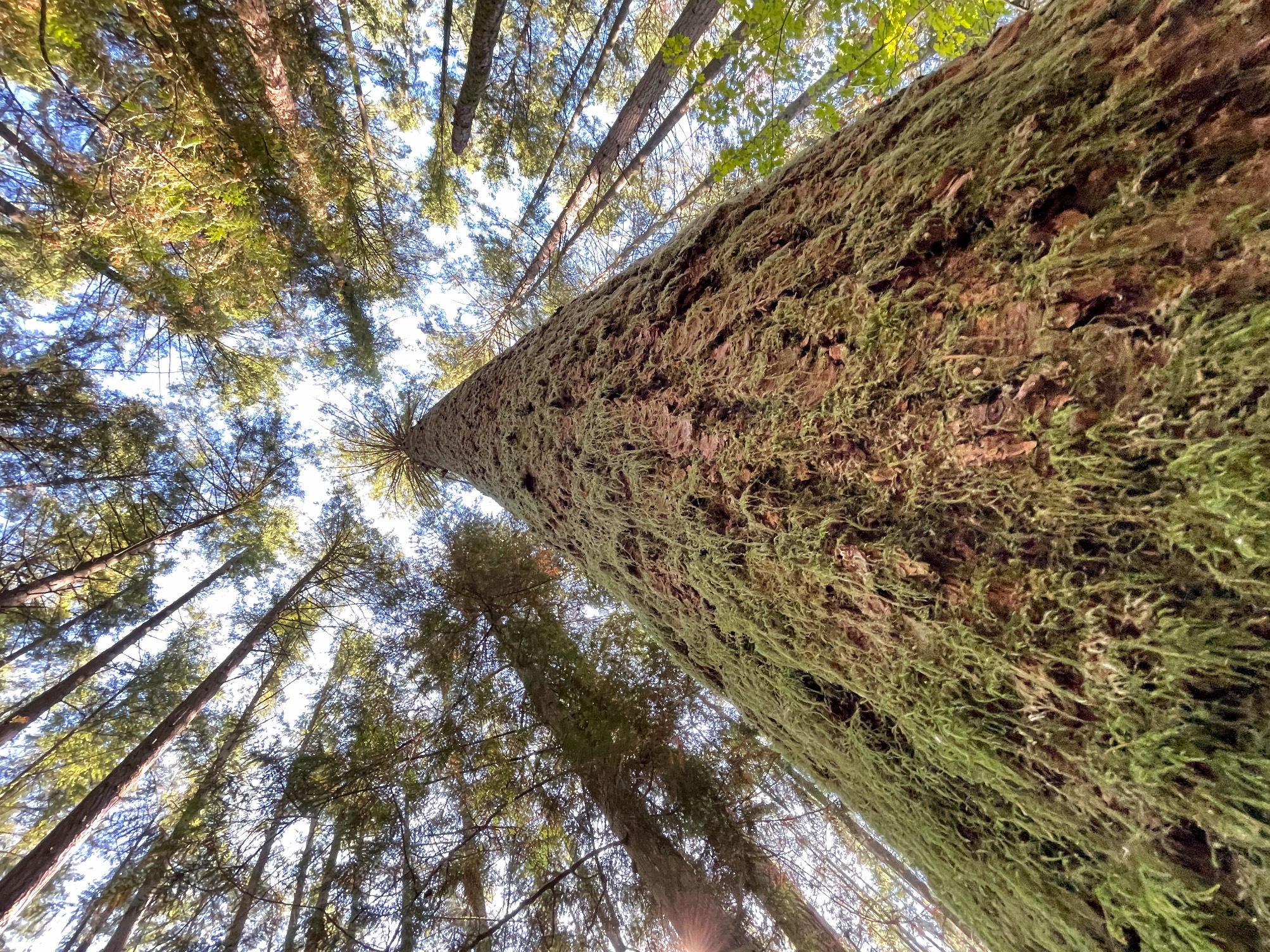 The world’s oldest forests are facing growing pressure from all sides. Their decline isn’t just an environmental concern – it carries serious consequences for people, climate stability and global biodiversity. According to a new


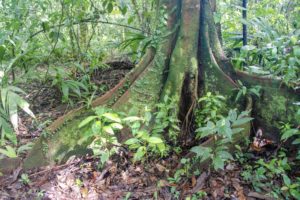 The Phillipines sits on a goldmine of forest and carbon wealth. But an unclear and short-sighted property rights regime is choking its potential; existing rules are partially to be blamed.
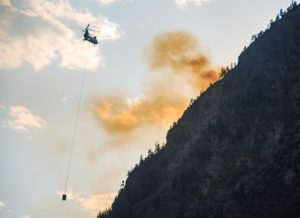
 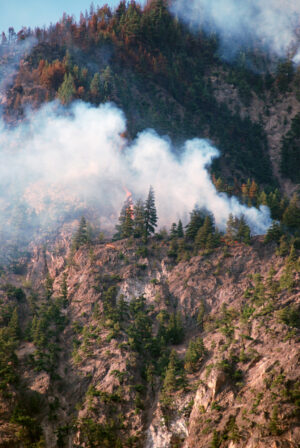 The wildfire on the northern edge of Squamish is classified as being held on Monday after a weekend of favourable weather conditions. BC Wildfire Service Fire Information Officer Sarah Budd says dozens of ground crews are working to get the Dryden Creek wildfire fully under control. “We also have three helicopters actioning this fire,” Budd told 1130 NewsRadio, adding the fire now sits at just under 60 hectares. An evacuation alert for properties near the fire, issued by the Squamish Fire Department, has been downsized. Because the Dryden Creek Fire is in difficult terrain, it could take crews another week or so to wrap things up. “This fire has been burning in sort of really difficult terrain,” explained Budd.
 WINNIPEG — Rain and cooler temperatures brought relief to fire-ravaged Manitoba and Saskatchewan Monday, allowing fire bans to be reduced and more evacuees to go home. The weather helped fire crews get an upper hand in parts of northern Manitoba to clear the way for some of the 21,000 or more evacuees to start returning home. David Monias, chief of Pimicikamak Cree Nation, reposted video of heavy rainfall on social media along with video of small planes leaving Winnipeg with evacuees who were forced out almost three weeks earlier. “Our people are coming home,” Monias wrote on Facebook, adding the community’s infrastructure is intact and water systems have been tested by health officials. …There were 18 fires still burning across Manitoba, with seven of them listed as out of control.