 Kevin Lynch opines on how Canada can best navigate Trump’s trade war—as supply chain disruptions loom. In related news: BC’s forest industry seeks action on trade; Ontario’s premier plans to protect forestry; US Kitchen Cabinet manufacturers urge tariff action; and the US Lumber Coalition says Canada wants to avoid liability. Meanwhile: Northern Pulp seeks another extension of creditor protection; International Paper reports Q1, 2025 loss; and Builders FirstSource released its Social Responsibility report.
In other news: Ontario announced $6.8M for workplace safety; BC streamlines permitting for renewable-energy projects; Colorado lawmakers advocate for forestry-worker reinstatements; and Washington state launches thinning project near Mount Pilchuck. Meanwhile, registration is open for Boston’s Mass Timber+ Conference; and the latest from BC’s First Nations Forestry Council.
Finally, a guitar-shaped mass-timber airport terminal is set to be built in Macon, Georgia.
Kelly McCloskey, Tree Frog News Editor



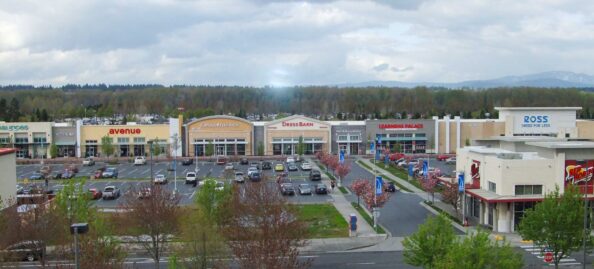 New York — Some of the last cargo ships carrying Chinese goods without crippling tariffs are arriving at US ports. Come next week, that will change. Cargo on ships from China loaded after April 9 will carry with them the 145% tariff President Donald Trump slapped on goods from that nation last month. Next week there will be fewer ships carrying less cargo. For many importers, it is too expensive to do business with China. Yet China is still one of America’s most important trading partners. It’s where we get most of our clothes, footwear, electronics and microchips, which power appliances, thermostats and anything else that beeps. …Forty-five percent of supply chain leaders expect they’ll pass the higher cost from tariffs down to their customers, according to a new survey by Gartner, a corporate research firm. …With fewer cargo ships expected at US ports, local economies will suffer immediately, Gene Seroka, executive director of the Port of Los Angeles said.
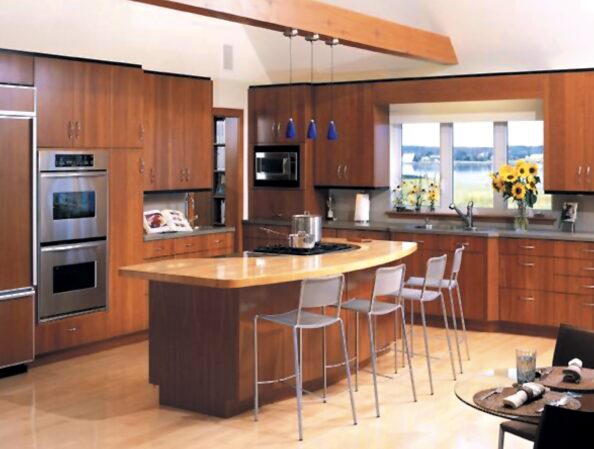 WASHINGTON, DC — The American Kitchen Cabinet Alliance (AKCA) recently submitted formal comments as part of the Section 232 investigation on Timber, Lumber and Derivatives (including cabinets). Unfairly traded cabinet imports many of them sold at prices that are often over 60% below that of the domestic market are flooding into the US. …“American cabinet manufacturing plants cannot compete with foreign countries flooding the market with unfairly traded cabinets which has resulted in an estimated $6.5 billion in lost revenue to the domestic industry over the last five years,” remarked Perry Miller, President of Kountry Wood Products. “Foreign imports primarily from Cambodia, Malaysia, Mexico, Thailand, Vietnam that are heavily subsidized are destroying American cabinet jobs. …“The domestic cabinet industry is on the brink of collapse. “We are asking for a Section 232 tariff of at least 60%, to level the playing field and stop the cheating as we seek to protect over 250,000 American jobs.”
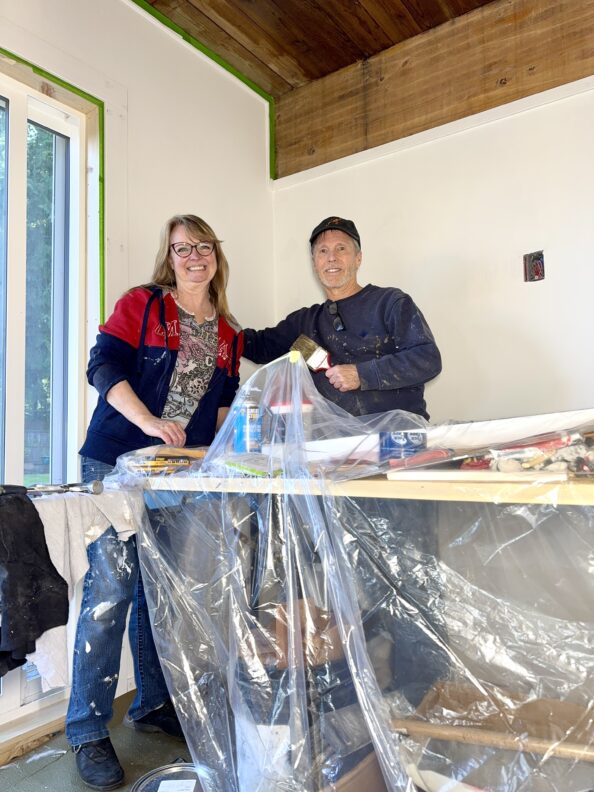 To kick off National Home Remodeling Month in May, which promotes the benefits of hiring a professional remodeler, the National Association of Home Builders (NAHB) has highlighted
 Tuesday marked the 100th day of President Trump’s second term in office and there are signs of stress and jitters in the US construction industry, with rising prices, falling confidence, and a sharp uptick in abandoned projects. “Lumber and metals prices shot up in March, while contractors’ inboxes are bulging with ‘Dear Valued Customer’ letters announcing further increases for many products,” said Ken Simonson, chief economist at AGC. “Rapid-fire changes in tariffs threaten to drive prices higher for many essential construction goods,” he added. The price of materials and services used in nonresidential construction rose 0.4% in March, the third monthly increase in a row, AGC said. It was the first time since September 2023 that input prices had risen for three consecutive months, and comes after more than a year of stable or falling prices, Simonson said. …Within the 0.4% hike, lumber and plywood rose 2.7%.



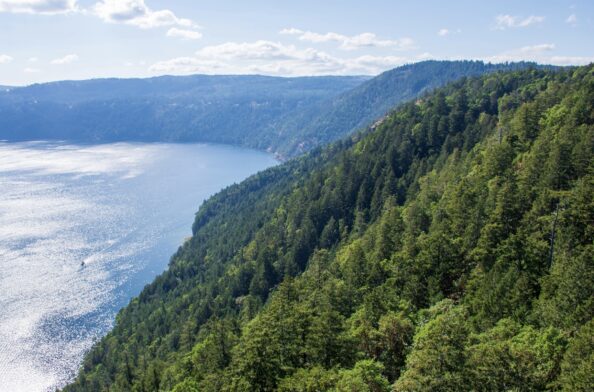 More than 80 per cent of the critical habitat for at-risk species in B.C. fails to meet federal protection standards, according to a government briefing document. The

 The Washington State Department of Natural Resources recently began a multi-faceted forest restoration project across approximately 150 acres of the Mount Baker-Snoqualmie National Forest near Verlot. The Pilchuck Restoration Project is led by the Department of Natural Resources (DNR) Federal Lands Program under the agency’s Good Neighbor Authority agreement with the USDA Forest Service. Established in 2014, the GNA allows DNR to leverage its resources with federal and local partners to perform a variety of restoration activities on federal lands. Operators are following a carefully designed prescription focused on thinning out the small-diameter, younger trees that, due to past management practices, are overcrowding tree stands to the detriment of the larger, older trees.
 The
The 
 Israel asked Greece, Bulgaria, Cyprus, Italy and Croatia to help extinguish major wildfires that broke out Wednesday morning in several locations near Jerusalem and along Highway 1 leading to the city as communities along the road were instructed to evacuate. At least one man suspected of involvement in igniting the fires was arrested, according to Israeli broadcaster Kan, which reported that the suspect is now detained at the Oz police station in east Jerusalem. Israel police did not confirm or give any details on what started the fires. …Foreign Minister Gideon Saar asked his counterparts in the four countries to send firefighting airplanes and helicopters to Israel, including supertankers. Ynet reported that Greece and Italy are sending supertankers and that the Palestinian Authority offered to send firefighters, though Israel has not yet responded to the offer. International aid is expected to arrive Thursday morning.