 Despite market headwinds, West Fraser Timber reported positive Q1, 2025 earnings of $42 million. In other Business news: Ohio-based Pixelle paused its paper mill closure plan; pushback on New Brunswick’s pulp & paper power subsidies, and a Eugene wood treatment plant CEO faces prison. Meanwhile, US lumber duties point to gloomy days for BC’s West Coast; a nuanced look at US-Canada lumber trade; and Trump looks to deescalate his trade war with China.
In Forestry/Wildfire news: Canfor passes BC Forest Practices Board audit—with accolades; ENGOs say Ontario Bill 5 will weaken species protection; BC’s Northeast faces drought conditions; a New Jersey wildfire begets State of emergency; Idaho ramps up its forest management; New Mexico’s tree mortality doubles; Oregon looks to increase prescribed burns; and a Tucson judge upholds the Grey Wolf Recovery program.
Finally, FSC’s Leadership Award nominations are now open for projects in Canada and the US.
Kelly McCloskey, Tree Frog News Editor
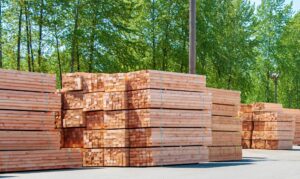 James Furney, mayor of Port McNeill, BC… is trying to stay upbeat, but his lumber town was already suffering before the threat of Trump’s trade war. …“To think that anyone is going to be insulated from what is going on with Trump would be delusional,” Furney said. “We are a forestry town and people around town are already watching their wallets and curtailing their spending, and businesses that should be ramping up now to hire summer students aren’t going to be hiring.” …In short, B.C. has plenty of wood and plenty of potential buyers for it, especially in the US, which was a $5.69-billion export market for the province in 2024, but not enough of that wood has been getting cut in recent years. That makes for gloomy days on the West Coast; a malaise that could spread to Ontario and Quebec and push the industry to the brink of collapse.
 President Trump and Treasury Secretary Scott Bessent hinted at a trade-war deescalation with China, as Wall Street hoped the US was preparing for an off-ramp from the weeks-long trade battle. “145% is too high, it will come down substantially,” Trump said of the level of tariffs on Chinese imports. He said he was optimistic about trade talks, adding that he plans to be “very nice” to China to reach a deal. Trump’s comments came after Bessent told investors in a closed-door summit Tuesday that he sees a deescalation in the US-China tariff situation, prompting a US stock rally on Tuesday that carried into Wednesday. Bessent called the tit-for-tat tariffs with China unsustainable, echoing the sentiments shared with Yahoo Finance last week that he was optimistic about “clarity” on tariffs. …China said it is open to trade talks with the US but struck a still-defiant tone.
 VANCOUVER, BC – West Fraser Timber reported first quarter results of 2025. …First quarter sales were $1.459 billion, compared to $1.405 billion in the fourth quarter of 2024. First quarter earnings were $42 million, compared to a loss of $62 million in the fourth quarter of 2024. The fourth quarter included a non-cash impairment loss of $70 million. …First quarter Adjusted EBITDA was $195 million compared to $140 million in the fourth quarter of 2024. ..The Lumber segment has experienced a slower than expected start to the year, owing to transportation and weather challenges that have influenced shipments as well as uncertainty related to demand impacts from the U.S. administration’s shifting tariff policies. …The global pulp market has begun to experience disruption with the economic impact of US tariffs creating considerable demand uncertainty in Chinese markets. As such, we anticipate NBSK pricing weakness over the near- to medium-term and a potentially significant adverse financial impact on our Pulp & Paper segment.
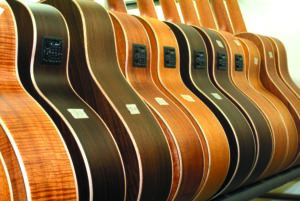 UK — Nearly half of birch wood certified by leading sustainability schemes is misidentified and does not come from the labelled country of origin, according to new testing. The analysis raises fears that large quantities of sanctioned wood from Russia and Belarus are still illegally entering Britain. New research by World Forest ID… scrutinised the accuracy of dozens of harvesting-origin claims on birch products, which had almost entirely been approved by FSC and PEFC sustainability schemes. The samples of birch – a popular hardwood used in furniture, kitchens panels and musical instruments – were labelled as originating in Ukraine, Poland, Estonia and Latvia. But tests using the wood’s “chemical fingerprint” showed that 46% of certified samples did not come from the origin on the label. …While the tests did not specify the country where the wood was grown, experts said Russia and Belarus were the only plausible origins.
 The FSC Leadership Awards recognize excellence in the use of FSC-certified products, materials, and commitment to responsible forest management across industries, as well as in advocacy, conservation and individual leadership in the FSC community. Submissions are due Friday, July 25, 2025. Categories for submissions for people, organizations, and projects in the United States and Canada:

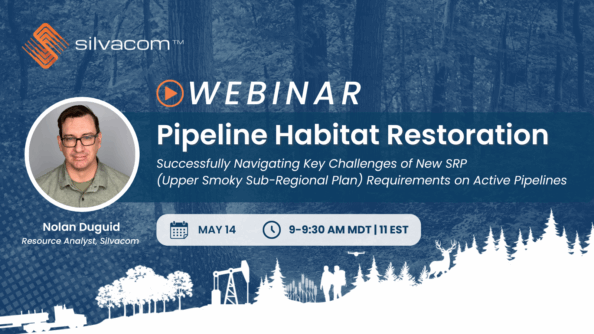 Silvacom is hosting a free webinar titled “Pipeline Habitat Restoration: Strategies and Innovations” MAY 14, 2025 9:00 AM MDT | 11 EST. This event will bring together industry experts, environmental scientists, and key stakeholders to discuss the latest developments and best practices in habitat restoration in areas affected by pipeline projects. Join Our Webinar on Pipeline Habitat Restoration: Successfully Navigating Key Challenges of New SRP Requirements on Active Pipelines (Upper Smoky Sub-Regional Plan). With Alberta’s Sub-Regional Planning Process introducing new regulatory requirements for caribou habitat restoration, the energy sector must adapt and implement habitat restoration on active pipeline corridors. Unlike decommissioned or abandoned pipelines, active right-of-ways (ROW) present unique operational, regulatory, and ecological challenges. This webinar will explore the complexities of meeting habitat restoration objectives while balancing: Ecological restoration goals; Operational efficiencies; Regulatory requirements; and Indigenous community and stakeholder values.