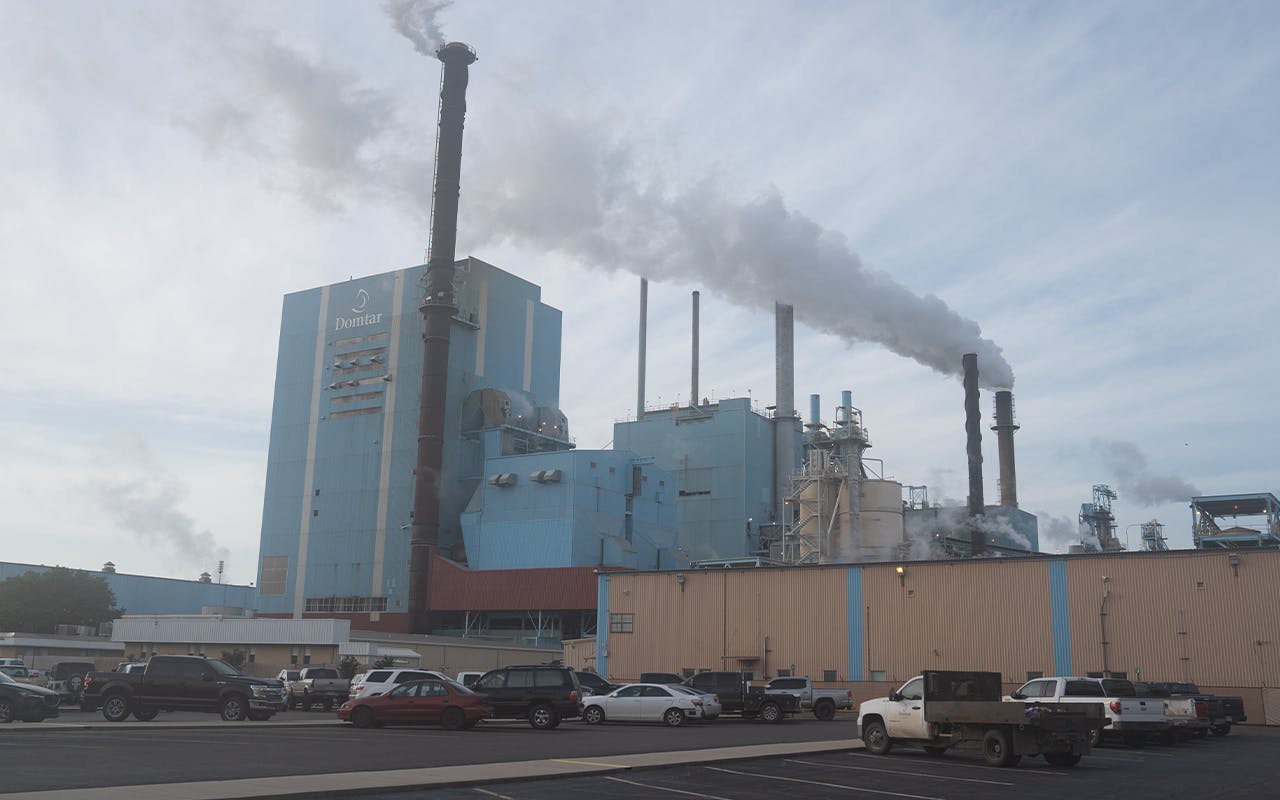
 Despite President Trump’s 30-day tariff pause, uncertainty looms over the Canadian and US economy. In related news: Canadians grapple with a sense of betrayal, as Canada’s forestry stocks fall, and the sector faces uncertainty; Maine’s industry is impacted due to Canadian ties; and Colorado, Maine and Illinois homebuilders fear cost increases. Meanwhile: The Wood Manufacturing Council names Audra Denny president; Canada Wood’s latest market news: and the Pacific Lumber Inspection Bureau pays tribute to Bradley E. Shelley.
In other news: Domtar’s Arkansas mill to employ carbon capture and storage technology; Ackerman Mississippi sawmill is expanding; the US Forest Service website faces mass deletions; BC wildfire crews return from California; an Arkansas study sheds light on post-fire recovery; and Los Angeles home insurance rates increase 22% after fires.
Finally, the last fragments of ancient Irish rainforests may face a new threat—trees.
Kelly McCloskey, Tree Frog Editor

 The vast majority—72%—of respondents to an HBSDealer poll question say the United States should not pursue a policy of aggressive growth. However, an aggressive approach has been launched —and then quickly paused. …For the home improvement industry, tariffs on Canadian lumber continue to be a central and controversial topic. …NAHB Chairman Carl Harris. “NAHB urges the administration to reconsider this action on tariffs, and we will continue to work with policymakers to eliminate barriers that make housing more costly and prevent builders from boosting housing production.” …Meanwhile, with a deeply ingrained opposition to imports subsidized by the Canadian government, the U.S. lumber industry applauds the tariffs. It also discounts the idea that increasing the tariffs on Canadian lumber imports would lead to significantly higher home prices. The US Lumber Coalition argues that softwood lumber prices are currently low and have not kept pace with general inflation.
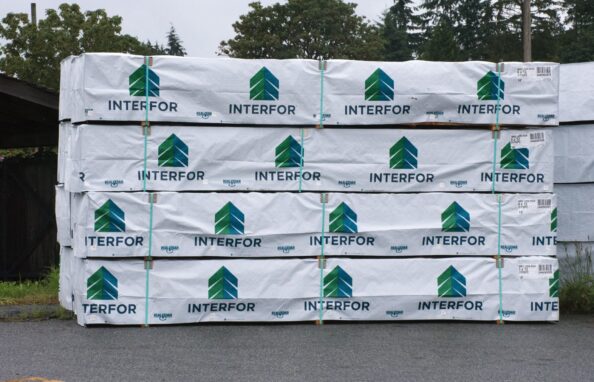 [Companies] in B.C. and across Canada, were given a last-minute, one-month reprieve Monday afternoon after Prime Minister Justin Trudeau spoke with U.S. President Donald Trump… The wood products sector sends $5.7 billion of products to the U.S., and another $962 million in pulp-and-paper products. On Monday, Interfor said it has been closely monitoring the U.S. tariff issue for some time, and as a diversified North American producer, comes into this new environment in as good a position as anyone in the industry. “Our leadership team has been hard at work identifying ways to insulate our company from tariff exposure where possible and put us in the best position to continue to thrive,” said Svetlana Kayumova, Interfor’s vice-president of corporate communications and government relations. “We know there is a housing shortage across North America, and the lumber products we produce are a vital part of the solution.” Interfor has mills on both sides of the border.
 BEIJING — China countered President Trump’s across-the-board tariffs on Chinese products with tariffs on select U.S. imports Tuesday, as well as announcing an antitrust investigation into Google. The Chinese response was “measured,” said John Gong, a professor at the University of International Business and Economics in Beijing. “I don’t think they want the trade war escalating,” he said. …This time, analysts said, China is much better prepared to counter, with the government announcing a slew of measures that cut across different sectors of the economy, from energy to individual U.S. companies. China said it would implement a 15% tariff on coal and liquefied natural gas products as well as a 10% tariff on crude oil. …China also announced export controls on several elements critical to the production of modern high-tech products. “A risk is that this is the beginning of a tit-for-tat trade war,” Stephen Dover of Franklin Templeton said.



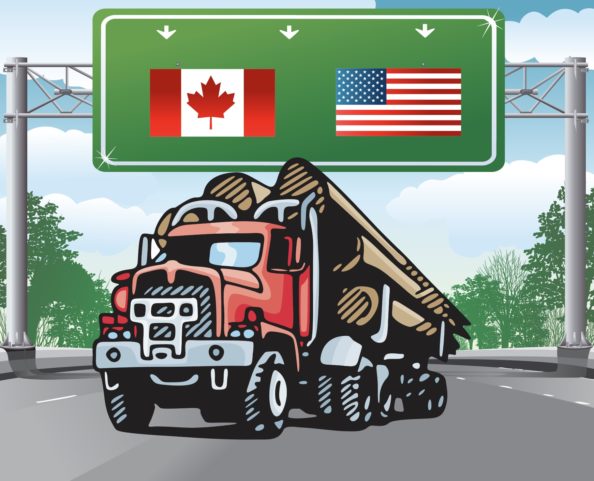 Stocks in B.C.’s three major publicly traded forestry companies were predictably down this morning (February 3), when stock markets opened after this weekend’s declaration of a trade war between the U.S., Canada and Mexico. U.S. stock markets were jolted, too, Monday morning, as was the S&P TSX composite Index. The Canadian dollar fell to $0.68 to the American dollar following Saturday’s confirmation that Trump will hit Canadian imports with 25 per cent tariffs, and 10 per cent tariffs on Canadian energy imports, beginning Tuesday. North American stocks fell sharply in early morning trading before recovering somewhat. Canadian companies that are highly exposed to the U.S. were jolted, with companies like West Fraser Timber, Canfor Corp and Interfor Corp. experiencing early morning drops of four, five and six per cent respectively, before correcting somewhat later in the morning.
 Don’t miss these headlines and more in the February Market News and Insights:
.jpg)

 This opinion piece is by the following groups: Central Utah Water Conservancy District, Salt Lake City Department of Public Utilities, Weber Basin Water Conservancy District, Mountain Regional Water Special Service District, Metropolitan Water District of Salt Lake & Sandy, Jordan Valley Water Conservancy District, Summit County, and World Resources Institute. After another catastrophic wildfire season in the West, it is clear that Utah can no longer put off needed investments to protect our forests and critical sources of drinking water. The consequences of delaying these essential investments grow yearly and the stakes have never been higher. …These fires are a wake-up call. Infrastructure costs should not fall on water ratepayers alone. While Utah water utilities and our partners have made progress in reducing wildfire risks in key watersheds, the wildfire crisis demands even greater levels of collaboration and funding — and both are needed now from Utah’s state Legislature.
 PIEDMONT TRIAD, N.C. — North Carolina has seen a rising number of wildfires recently, including two here in the Triad just last week. The North Carolina Forest Service is the agency responsible for getting those fires out, but lately it’s been difficult to do so. That’s due to the large number of vacancies across the department. “When we’re the lead agency for wildfire response, this isn’t a forest you want 100 positions consistently unfilled,” Philip Jackson, Public Information Officer for the N.C. Forest Service, said. It’s an issue the agency has been having for some time. “It’s [vacancies] pretty evenly distributed throughout all three regions across the state,” Jackson said. “You’re looking at about 30-35 unfilled positions in all three regions.”