
President Trump says a 25% tariff is coming to Canada on Saturday—as his advisors hunt for an off-ramp deal. In related news: Maine braces for tariff fallout; Ontario is asked to stick up for its forest industry; and Clean Energy Canada fears a knee-jerk response. In other Business news: BC invests in Atco Wood Products; Weyerhaeuser reports Q4, 2024 earnings of $81M, and International Paper reports Q4 net loss of $147M.
In Forestry news: a new report on the economic value of Canada’s tree nurseries; a call for old-growth protections in Northwest Forest Plan; and budget uncertainty stalls forest thinning in Arizona. Meanwhile: the latest from BC’s Forest Enhancement Society; Forests Canada’s February 20 conference; and Michigan’s wood residuals summit.
Finally, whether you’re one of our 46,000 new readers or not, we’re looking for feedback! Please complete our brief survey.
Kelly McCloskey, Tree Frog Editor
 A local forest-sector manufacturer is receiving a boost from the province to help grow its product line. Atco Wood Products — located in Fruitvale, 67 kilometres southwest of Nelson — is considered one of the top producers of softwood veneers and related by-products in the region. Through the B.C. Manufacturing Jobs Fund (BCMJF), the Government of B.C. will hand Atco $50,000 to complete planning for a new veneer-production facility, and purchase and commission new equipment to improve fibre utilization and optimize production. The company — which also manufactures veneer, ties, posts, wood chips, mulch and biomass — has evolved from its sawmilling roots, into a cutting-edge manufacturer of specialized softwood veneer and other wood products. As part of new support for forest-sector manufacturers throughout the province will help create jobs and boost local economies while diversifying the range of fibre sources used to manufacture high-value, made-in-B.C. forest products.
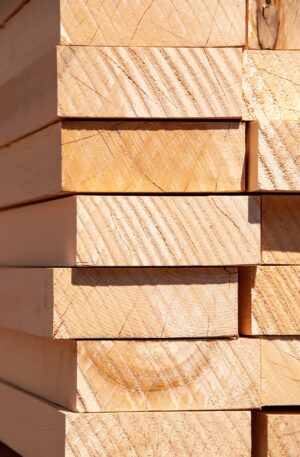 PORTLAND, Maine — Tariffs that are central to Trump’s economic policies could destabilize markets for numerous Maine products from lumber to electricity. …Tariffs on products from Canada, which is Maine’s biggest trading partner, would send powerful ripples across the state’s economy. Maine brought in $4.4 billion of goods – fuels, oil, electricity, wood pulp and more – from its neighbor in 2024. Imports from Canada far outpace those from any other trading partner. …Patrick Woodcock, CEO of the Maine State Chamber of Commerce said, “many state businesses see Canada not just as a market to buy and sell items, but a place with mills and processing plants that are “fully integrated in their business plans”. …New tariffs could complicate trade relations between the U.S. and Canada, which have been tested in disputes over lumber for decades, said Patrick Strauch, of the Maine Forest Products Council… but a universal tariff would have the biggest effect on the price of energy. [the access the full story a Portland Press Herald subscription is required]


 This is the beginning of convention season and that means many opportunities to learn, connect, and hear from government officials, project partners, and community organizations about problems, policies, and possibilities for the sector. The mood, thus far, is introspective, with reviews planned for BC Timber Sales and the forest sector in general. …At FESBC, we are reviewing applications for funding over the next two years. Demand for funding currently far exceeds supply. In this newsletter: A safety tip from the BC Forest Safety Council; Faces of Forestry features Erin McLeod; Information on FESBC’s 2025-27 second round of funding; Impact and benefits of the Pressy Lake Pilot Project; Nakusp & Area Community Forest’s wildfire risk reduction projects; and a podcast feature from the University of Northern British Columbia Forestry Club.
 Five efforts in Northern Ontario are receiving a total of $2.7 million in federal funding to work on climate change adaptation projects. Four of these projects are based in Sudbury and one is in Mattawa, and they include such things as creating educational programming and climate change adaptation plans. Wednesday’s funding comes from a greater pool of
 Kenneth A. Margolis, New York — Who says bipartisanship is dead? President Trump and California Gov. Gavin Newsom have found common ground. Both seem determined to cripple the rebuilding effort in Los Angeles.
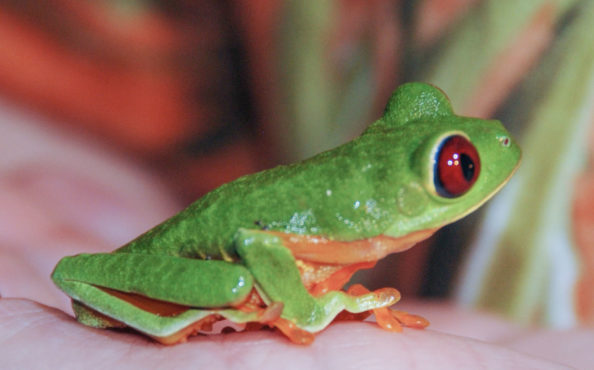 An international survey of frogs and toads has revealed that global warming and drought are more likely to affect the animals in the Amazon and Atlantic Rainforests. The

 …Endless hours in front of devices are quietly rewriting the blueprint of childhood, reshaping the way that young people think, interact, develop, and experience the world. Young people today spend between 5 and 9 hours staring at screens, but less than 10 minutes a day enjoying time playing in nature. The result? Rising rates of anxiety, body image dissatisfaction, reduced attention spans, waning creativity, and sleepless nights. Brain scans show kids glued to screens experience premature thinning in the prefrontal cortex—the brain’s control centre for impulse control, attention, emotional regulation, and decision-making. …But there is a solution… The antidote is far simpler than reducing screen time. It’s the original technology: nature. …One movement helping to lead this reconnection is the forest school. Forest schools are built on a simple but radical idea: the best classroom doesn’t have walls. Here, nature is a teacher.