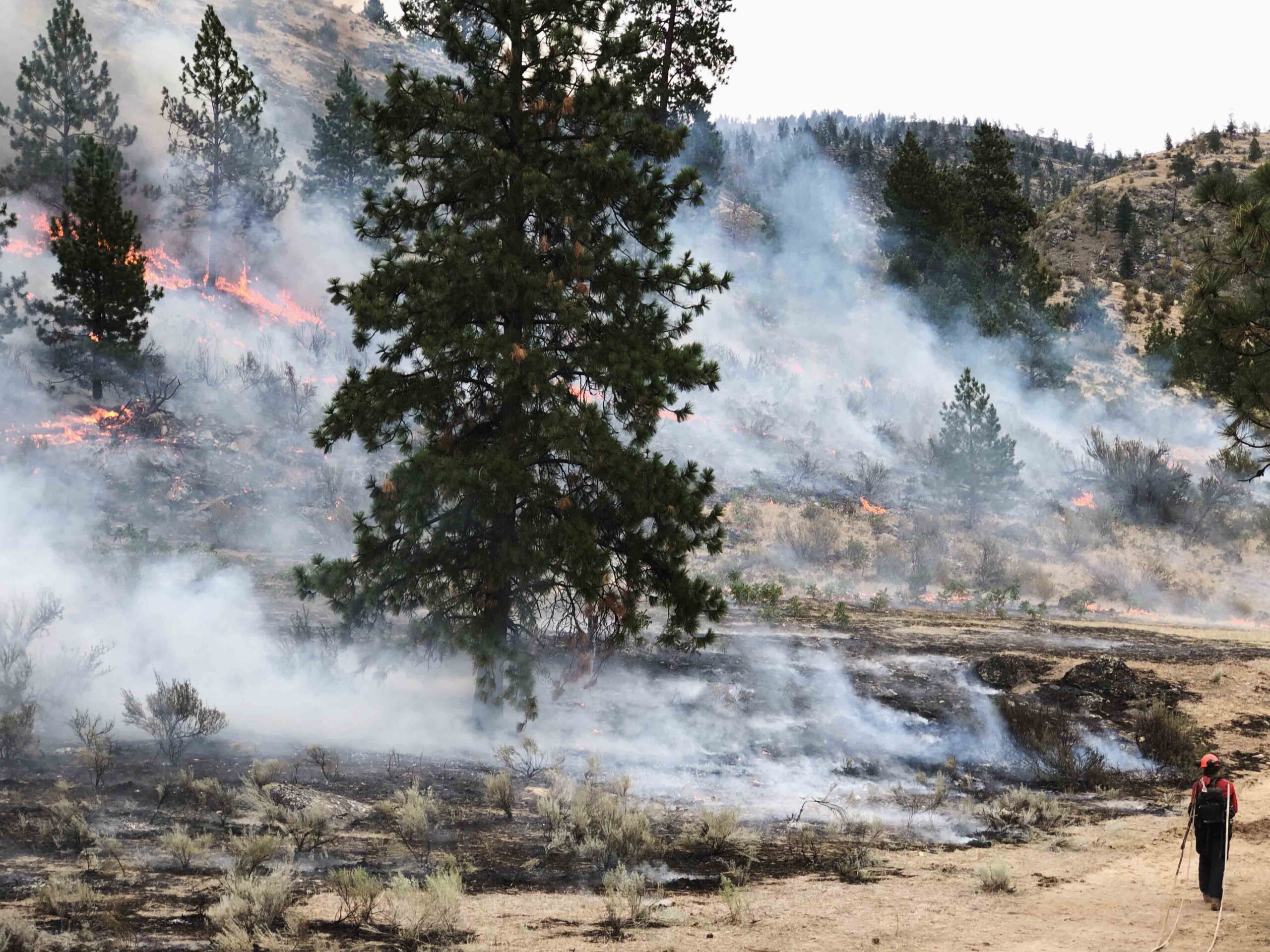
 Wildfires are reversing decades of air quality improvements across much of the US. Expanded use of prescribed fire is a primary proposed solution, but air quality trade-offs—more initial smoke for less smoke later—remain poorly quantified. Using two decades of satellite-derived measurements of fire severity and smoke particulate matter across California, we assessed the causal effect of low-severity wildfire, a proxy for prescribed burning, on subsequent wildfire activity and air quality. We found that low-severity fire reduced the probability of very-high-severity wildfire by 92%, with reductions lasting a decade and extending 5 kilometers from treated locations. Reduced future smoke far outweighed the smoke produced during treatment, with benefit-cost ratios exceeding five after a decade. Sustained treatment of 500,000 acres annually would reduce cumulative smoke fine particulate matter (PM2.5) by about 10% after a decade.