
Susan Holt
New Brunswick Premier Susan Holt says a working group between BC and Ottawa sparked to support the forest industry was an initiative by BC, and that NB has its own strategy. The working group was announced in Vancouver, a promise by Ottawa to find ways to help an industry that’s been heavily impacted by tariffs. “Obviously, softwood lumber continues to be something that we have been raising with the Americans,” said Dominic LeBlanc, Minister responsible for Canada-US trade. …Holt told reporters Tuesday she’s expecting to hear about further support for the industry in the coming weeks, that will include N.B. “New Brunswick has been advocating for support on softwood lumber and engaging with our industry to talk about what they need specifically and pushing the federal government to provide solutions and meet our needs here, in New Brunswick,” she said. The industry employs over 24,000 people in the province.




 The federal government says its housing agenda can “drive transformation” in the forestry sector as it continues to feel the squeeze of U.S. President Donald Trump’s trade war. That was among the messages relayed by Natural Resources Canada assistant deputy minister Glenn Hargrove to the House natural resources committee on Wednesday. Hargrove touted a $1.25 billion aid package for the sector unveiled by Prime Minister Mark Carney in August, noting $700 million of that, which will flow in loan guarantees through the Business Development Bank of Canada, will start to roll out this week. While there have been many pulp, paper, and sawmill closures across the country in recent years, Hargrove said the department sees a “huge opportunity” to “divert” Canadian products away from the U.S. and into the feds’ efforts to boost homebuilding.
 The judges at New Brunswick’s highest court are wrestling with how to award costs in the first part of a massive and complex litigation that has entangled the province’s biggest landowners. The New Brunswick Court of Appeal heard arguments from three timber firms that successfully argued their case in preliminary motions in a lower court in the Wolastoqey Nation’s big title claim for about 60% of the province’s territory. …Lawyers for J.D. Irving, Acadian Timber, and H.J. Crabbe and Sons argued that because the case is so complex and important for the rights of all private properties in the disputed territory, they deserve a bigger payout. …The case is expected to cost millions over the years. This is one of the reasons the Liberals say they decided the government should settle the dispute. …The judge said the court would make its decision known at a later date.
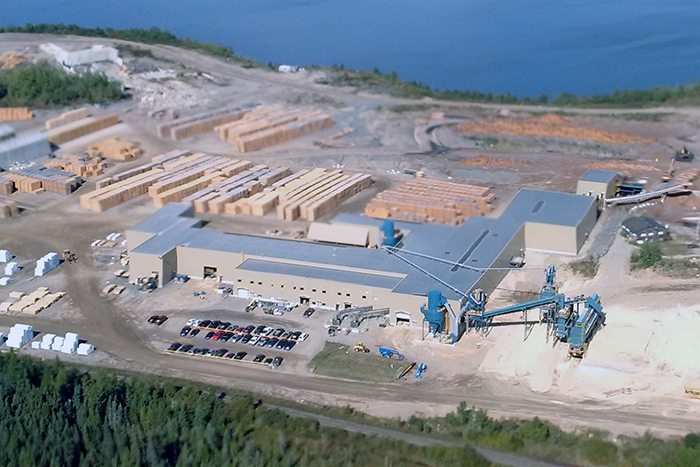

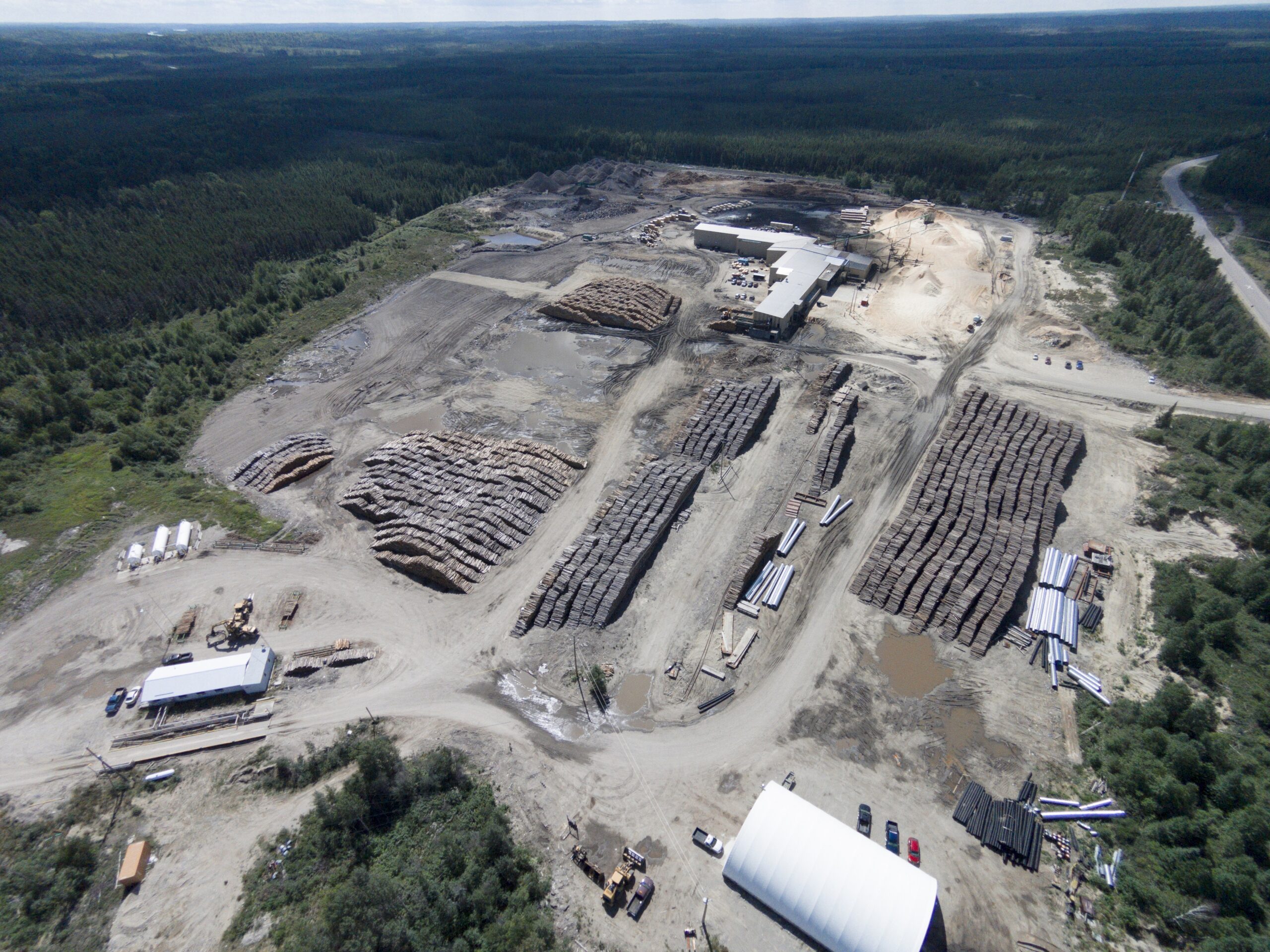

 Kapuskasing Mayor Dave Plourde says after receiving good news on Friday, Kap Paper is slowly getting up and running again. Plourde said the facility was idle for about six weeks after the board ran out of funds to pay employees. Now the community is relieved that the federal and provincial governments have stepped up with close to $29 million to get around 300 people back on the payroll. Plourde said work is underway to plan for the operation’s future. “We started yesterday on the commencement of that,” he said. “It had already been in the works prior to that, but we’re having regular updates and we’re going to make sure that we have something in front of government very soon.” Plourde, who is also chair of the Federation of Northern Ontario Municipalities, said the support is appreciated, but overall, northern Ontario’s forestry sector requires urgent and coordinated action to ensure long-term stability.
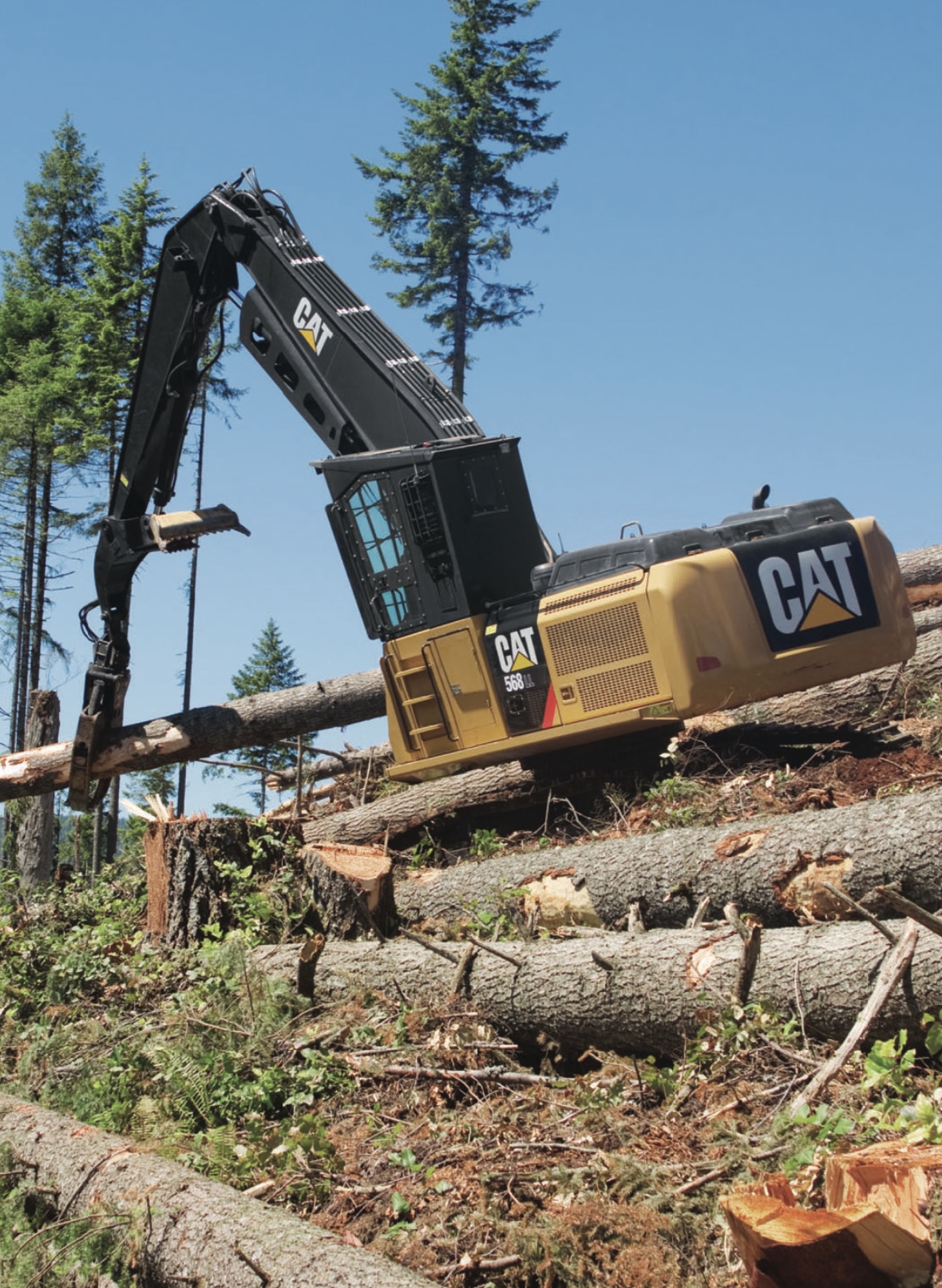 THUNDER BAY – Ontario’s MPPs are officially back at Queen’s Park for a new sitting of the provincial legislature, after breaking for the summer and forestry was top of mind for the region’s leaders. Opposition member Sol Mamakwa, MPP for Kiiwetinoong, questioned the Ford government on how they plan to help 160 unionized workers affected by the shutdown at the sawmill in Ear Falls. “Our government is disappointed of the news coming from Ear Falls. Immediately following the announcement of the mill, the premier and I reached out to company officials and Mayor (Kevin) Kahoot offering support for the workers and the community,” Associate Minister of Forestry and Forest Products Kevin Holland said. …The tariff hike contributed to ongoing market challenges in the sector forcing Interforb to suspend operations at the sawmill indefinitely.
 Friday was a good news, bad news day for Northern Ontario’s forest products sector. Folks in Kapukasing are breathing easier…the federal and provincial governments announced they’re contributing a total investment of $28.8 million to sustain the Kapuskasing paper mill for the short term. Broken down, the province is spending $16.8 million, while the feds are chipping in $12 million. …However, forestry’s shaky conditions have put another community in peril [with] Interfor indefinitely shutting down its Ear Falls sawmill. …Unifor is calling for immediate action involving all levels of government to develop an industrial strategy for the forestry sector… The Northwestern Ontario Municipal Association and the Federation of Northern Ontario Municipalities issued a joint statement that “urgent and coordinated action is required to ensure long-term stability across Northern Ontario’s forestry and resource sectors.” The best outcome, the group said, is for government to strike a long-term trade deal with the U.S. to ensure economic and employment stability.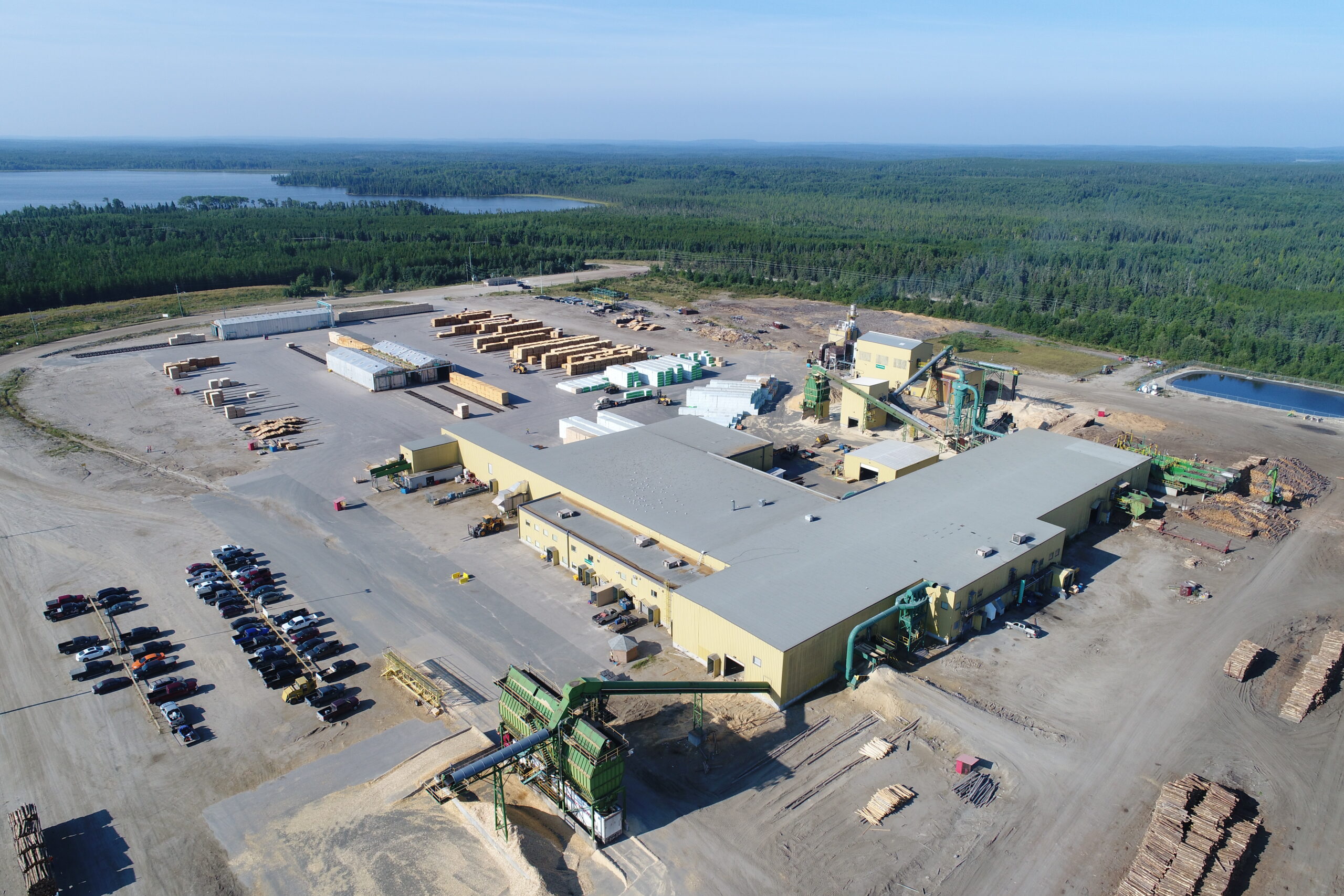

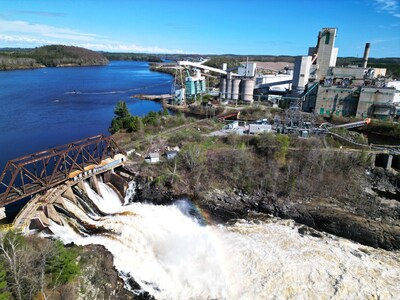

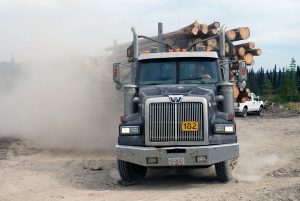 Linda Bell says there has been turmoil and chaos along parts of the US and New Brunswick border as trucks carrying lumber navigate the new tariffs that came into effect on Tuesday. But Bell says there’s been confusion as to what’s included under the new tariffs. In her almost three decades working as the general manager of the Carleton Victoria Wood Producers Association in Florenceville, she says it’s the first time there appears to be a duty on roundwood. “Trucks that were headed over there have been turned back and had to be unloaded. Some have been allowed to cross. We really don’t know what is going on,” she said. She said a few large mills in Maine who’ve been buying New Brunswick wood for five decades have halted all deliveries until the confusion can be cleared up. …Minister Mélanie Joly said there are different interpretations happening at various border locations.
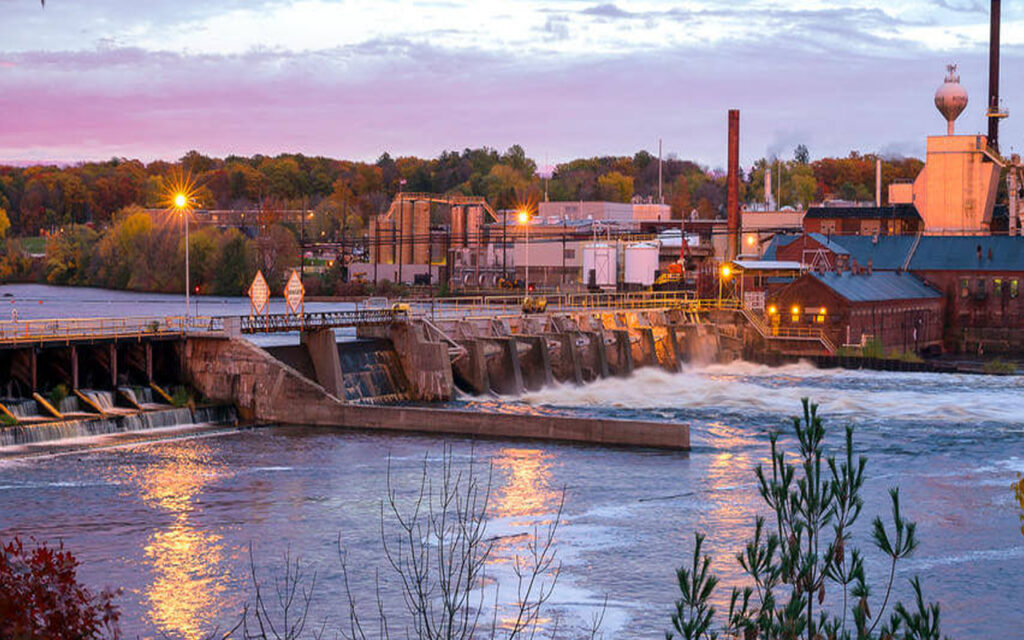

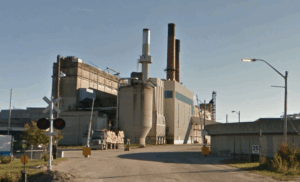 ONTARIO — Upper levels of government have reached funding agreements to support the Town of Kapuskasing’s Paper Mill, averting a planned closure and providing what local leaders are calling “a critical step” toward securing the region’s economic future. Kap Paper announced the newfound support in a social media post on Friday evening. “Next week, we’ll be working out the details for a restart plan,” the post said, adding that updates would be shared “as soon as everything is confirmed.” Kapuskasing Mayor Dave Plourde, called the deal a “critical step forward for Kapuskasing and the entire region,” in a statement posted to the town’s social media page. …“We now have a second chance – a window of opportunity to come together, calmly and deliberately, to build a plan for modernization and long-term competitiveness,” said Plourde …“Today, I am pleased to confirm that both the federal and provincial governments have agreed to provide support.”
 Companies reliant on New Brunswick’s softwood lumber industry are bracing for hard times after US President Trump announced new tariffs on Sept. 30. …In a letter to Prime Minister Mark Carney, New Brunswick Premier Susan Holt pleaded for the federal government to make softwood lumber tariffs a top priority. “In some communities in New Brunswick, one in every 11 workers depends directly on forest products,” Holt wrote. …Ron Marcolin, the New Brunswick vice-president with Canadian Manufacturers and Exporters, said the latest tariffs and duties are a big deal in a long-running drama over softwood lumber. …While New Brunswick may largely rely on the American market, Marcolin said Americans also rely on New Brunswick’s products. …”The thing is, too, they realize their product is inferior. Their softwood lumber is not as good as a Canadian stick of lumber.”

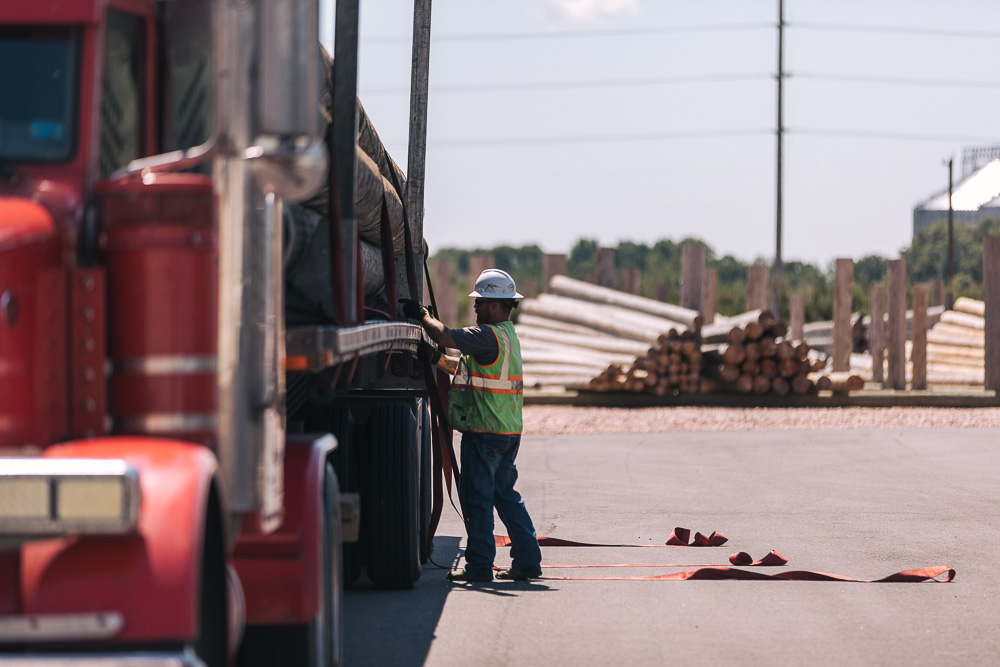
 MONTREAL, Quebec – Stella-Jones announced financial results for its third quarter ended September 30, 2025. Highlights include: Sales of $958 million, up 5% from Q3 2024; Operating income of $135 million, up 4% from Q3 2024; EBITDA of $171 million, or 17.8% margin, up 6% from Q3 2024; and Net Income of $88 million, up 10% from Q3, 2024. …“Stella-Jones achieved another solid performance in the third quarter, supported by volume improvements, robust margins, improved cash flow and a strong balance sheet,” said Eric Vachon, CEO. …The increase in pressure-treated wood sales resulted from an increase in utility poles and industrial products volumes and higher pricing for railway ties and residential lumber. This was partially offset by lower pricing for utility poles. Logs and lumber sales decreased by $14 million or 47%, mainly driven by lower logs activity.
 EDMUNDSTON, New Brunswick – Acadian Timber reported financial and operating results1 for the three months ended September 27, 2025. Acadian generated sales of $23.0 million, compared to $26.0 million in the prior year period. …Operating costs and expenses decreased $2.0 million compared to the prior year period as a result of decreased timber sales volumes and timber services activity, partially offset by higher average operating costs and expenses per m

 HUNTSVILLE — The Ontario government is investing $10 million through the Forest Sector Investment and Innovation Program to help Daiken North America upgrade its laminated board production line at its manufacturing facility in Huntsville. This investment will help the company bring a first-of-its-kind wood panel product to market, create jobs and boost productivity. As part of its plan to protect Ontario, the government is making strategic investments to help forest sector businesses adapt, compete and grow to stay resilient in the face of U.S. tariffs. …Daiken’s $70 million project will equip them to manufacture a new type of wood panel used in flooring, recreational vehicles and modular housing, while supporting 128 existing jobs and creating 10 new jobs. This made-in-Ontario forest product is the first of its kind in the world, offering a higher-performance, lower-cost alternative to imported material.
 TORONTO — As the 2025 fire season ends, Ontario’s fire crews, aviation services and support staff responded to 643 fires between April and October with 597,654 hectares burned. While the 2025 fire season began with an early active start, the coordinated efforts of frontline staff, municipalities, Indigenous communities and firefighting crews ensured a rapid response to protect people and communities from wildland fires. …With the rest of Canada also experiencing a demanding fire season, Ontario extended support to our partners, with over 400 fire personnel and six aircraft supporting firefighting in British Columbia, Manitoba, Saskatchewan, Nova Scotia, Newfoundland and Labrador, New Brunswick, as well as south of the border in Minnesota. As this year’s fire season ends, Ontario is now turning its focus to ensuring provincial fire crews are ready to respond next fire season. …The 2026 fire season will begin on April 1, 2026.

 DRYDEN — Wildland fire crews were kept “very busy” throughout the 2025 forest fire season as Northwestern Ontario saw over 560,000 hectares go up in flames. “It would be fair to call the 2025 wildland fire season a very busy one in the Northwest,” said Chris Marchand, a fire information officer with the Ministry of Natural Resources’s regional fire management centre in Dryden. “Often in the spring, you hear us speak of the volatility of spring fire hazard conditions,” he continued. “And this year, from about the second week of May, it really provided a good demonstration of how a few weeks of dry weather combined with high winds and low humidity can really produce extreme fire behaviour in forests that haven’t greened up yet.” Those early conditions were the spark for a season that saw 560,234.9 hectares burned by 435 fires in the Northwest region alone. Comparatively, the Northwest’s relatively slow 2024 season saw 69,938.3 hectares burned in 218 fires.



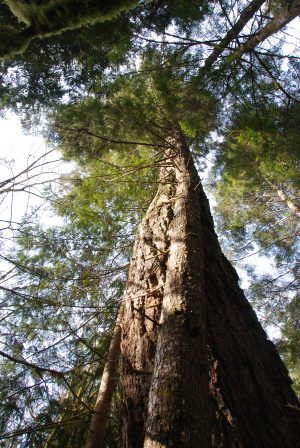 HALIFAX – A documentary on BC’s Fairy Creek blockade is making waves in Nova Scotia. “Fairy Creek” covers a period of eight months in 2021, when thousands of activists blockaded logging roads leading to old-growth forests on Vancouver Island. …Now, it’s getting a Nova Scotia debut with screenings in Halifax, Tatamagouche, Inverness, Annapolis Royal and Wolfville. …Neal Livingston, a Nova Scotia filmmaker, says… “We don’t have a history of that (in Nova Scotia).” Livingston says the film is especially timely for Nova Scotians, as activists in Cape Breton say they have been targeted by recent legislation. …The province introduced an omnibus bill that would make blocking forest access roads illegal and come with a fine of up to $50,000 and/or six months in jail. This fine is a steep increase from the current $2,000 penalty.

 Atlantic Canada’s wildfires are growing and a scientist at the University of New Brunswick (UNB) says the combination of climate change and regional forest management are making things worse. Anthony Taylor is a forestry expert at the UNB. He studies the impact of climate change and forest composition. “We should expect more weather like this into the future,” Taylor said. “That’s largely a consequence of inaction on climate change over the past 20 or 30 years.” Taylor said the weather and drought conditions in the Maritimes can be blamed on the climate change already baked into the system and people should expect more warming in coming decades. He said weather impacts wildfires more than any other variable but the next biggest factor is ignition. “More than 90 per cent of our fires that do occur, including this year, are from human ignition,” Taylor said. “Obviously we want to try to reduce and stop climate change but the next best thing after that is to be fire smart around the woods.”
:quality(65))
 The man charged after an investigation into the largest wildfire in Nova Scotia history has been fined $25,000. Dalton Stewart, 23, chose not to speak when he was handed the sentence Thursday in Barrington provincial court. The sentence — a joint recommendation from the Crown and defence — also includes an order to complete educational training on wildfire prevention.
  ONTARIO — The Northwestern Ontario Innovation Centre has partnered with the Thunder Bay Community Economic Development Commission (CEDC), the Centre for Research and Innovation in the Bio-Economy (CRIBE), Lakehead University and Confederation College to launch the Boreal Springboard, an innovative initiative aimed at strengthening and diversifying the forestry sector in Northwestern Ontario. Graham Bracken, at the Northwestern Ontario Innovation Centre, said the launch comes at a critical time for forestry in the region. …“The trade pressures were really the impetus to focus people’s minds,” Bracken said. “The sector is really integrated, and any threat to protection on the sawmill side weakens the rest of the sector. There’s a real drive to look to trade diversification and try and develop new value-added products that we can access other markets with.” Bracken says these investors will bring skills, technologies, and solutions that can be adapted to strengthen and grow the sector.


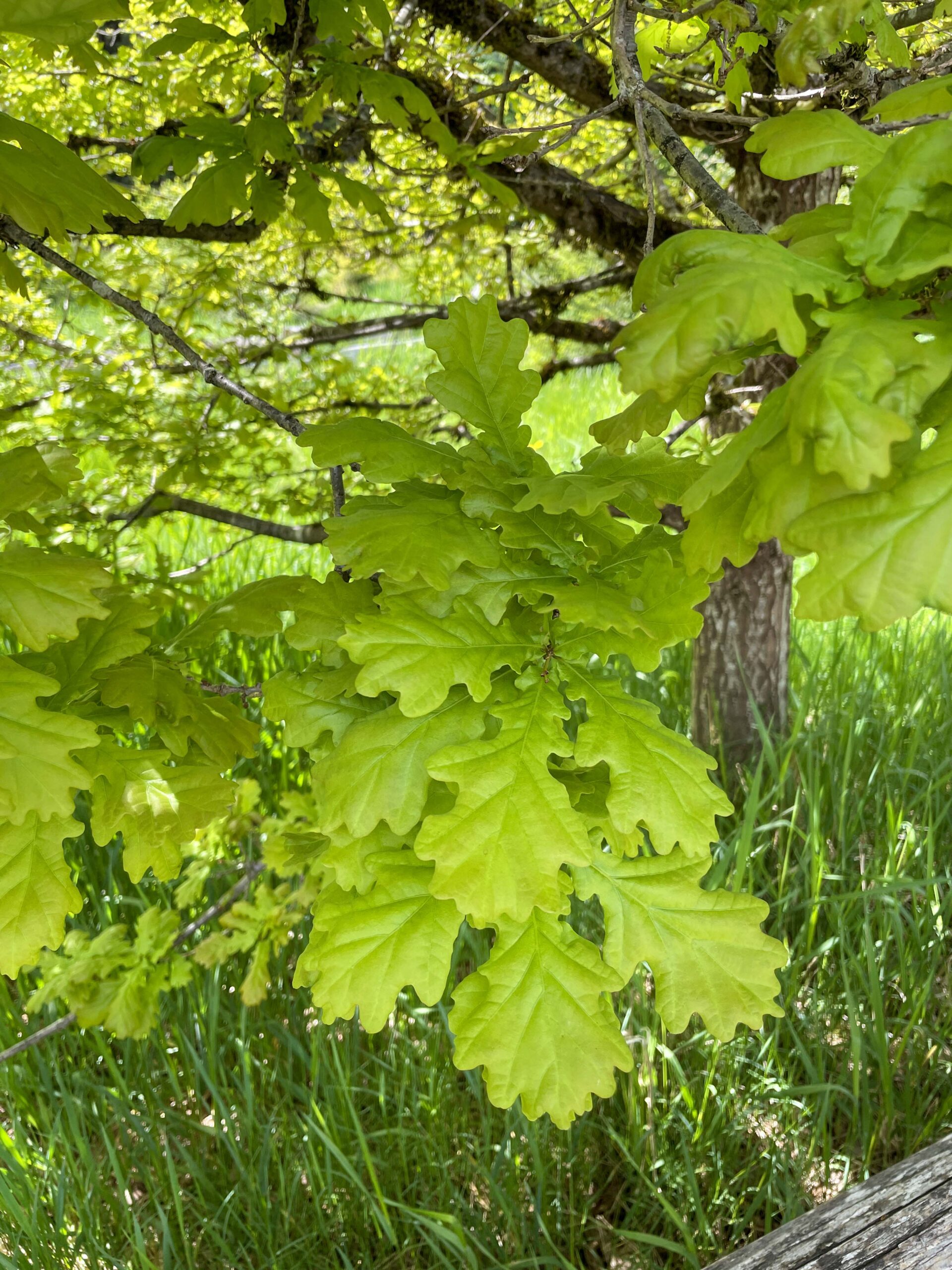 A group of University of Toronto forestry students collected acorns from a giant White Oak tree at Queen’s Park on Wednesday as part of an effort to preserve the diversity of Toronto’s native trees. Eric Davies, a forest ecologist at the University of Toronto, led a group of undergraduate students in the university’s foresters club as they gathered about six litres of acorns from a tree in Queen’s Park North, one of four remaining large White Oaks in the park. White Oaks, a common deciduous tree species in North America, are the largest and oldest trees in the green spaces outside the Ontario Legislature. …Davies said timing is key, as White Oaks produce acorns about once every five to 10 years — this year being one of them. …Davies said the students will donate most of the acorns to the City of Toronto’s tree seed diversity program in the next two weeks. Some of the acorns will be kept at U of T to be grown there, he added.
 The Nova Scotia government’s proposed move to make it illegal to block forest access roads on Crown lands is being dismissed as heavy-handed and an attempt to ignore Mi’kmaq rights. Several presenters spoke out in opposition Monday during an appearance before the legislature’s public bills committee hearing on the Protecting Nova Scotians Act. The omnibus bill includes one new piece of legislation and amends seven other acts, including the Crown Lands Act. The changes to the act would impose a $50,000 fine and/or six months in jail for protests or individuals who ignore protest camp removal orders. Michelle Paul, a Mi’kmaq water protector and land defender, said the bill was written without consultation or consideration of treaty rights and should be withdrawn. “It’s not lost upon us that this bill is being rushed through on the eve of Treaty Day and the National Day for Truth and Reconciliation,” said Paul.
  THUNDER BAY — A number of stakeholders, largely from the forestry and energy sectors, got to provide regional input into a series of ongoing cross-province talks about energy policy. The Vaughn and Thunder Bay Chambers of Commerce held a roundtable discussion in the city on Oct. 2. The goal was for regional interests to provide requested input into an issues paper on energy being developed by the Toronto-based business lobby. …In Northwestern Ontario, she said, that includes longstanding sources like hydroelectricity and natural gas, but also continually-emerging opportunities connected to forestry and biomass. “We also talked a lot about the opportunities through the forest sector and biomass and the many things that can be created by harnessing forest products into energy,” Robinson said. “I think the most important thing was talking about how, from a forestry perspective, it really does check all the boxes.”
 Quebec’s workers’ safety board (CNESST) concluded that driving a forestry vehicle that had no seat belt or complete door contributed to the death of a worker in Saint-Côme-Linière, in the Chaudière-Appalaches region. The forestry worker died in a workplace accident on Jan. 6 while reversing a vehicle known as a skidder, according to the Commission des normes, de l’équité, de la santé et de la sécurité du travail (CNESST). During the maneuver, the vehicle backed up onto the stump of a felled tree, causing vibrations that ejected the worker from the cab. The man was crushed by the front wheel of the skidder. In its report, the CNESST concluded that “operating a skidder that is not equipped with seat belts or full doors violates section 21 of the Regulation respecting occupational health and safety in forest development work.”
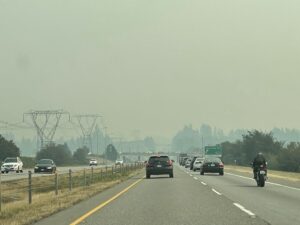 NOVA SCOTIA — Unseasonably warm temperatures proved challenging Monday as the fight against an out-of-control wildfire in Nova Scotia’s Annapolis Valley entered its second week. The Department of Natural Resources estimated that the fire at Lake George had grown slightly in 24 hours to just over 2.8 square kilometres, mainly because of dry and windy conditions. Monday’s forecast for the area near Aylesford, N.S., called for a high of 28 C — the average daily high in the region for October is normally below 15 C. “I can’t believe it — in October we normally get frost and cold,” Dave Corkum, mayor of the Municipality of the County of Kings, said in an interview. “There is some rain in the forecast in a few days and hopefully we will get it.” Despite the conditions, Corkum said there are no reports of damage to structures in the area.
 Nova Scotia’s Department of Natural Resources says more evacuations are possible as a fire near Lake George in the Annapolis Valley continues to burn out of control. Residents of … Aylesford Lake’s southwest end have been told to prepare to evacuate. The fire in Kings County, which broke out Sunday, is estimated to be 150 hectares. It had been pegged at 300 hectares Monday night but officials at a briefing Tuesday afternoon said that was the result of an overestimation due to dense smoke conditions. Jim Rudderham, DNR’s director of fleet and forest protection, told reporters the cause of the fire has not been determined but it’s presumed human activity is responsible since there has been no lightning in the area. “It’s frustrating for us and for everybody when this happens,” Rudderham said. No buildings have been damaged but 275 civic addresses have been evacuated and 56 others are under an evacuation alert. Some of those addresses are cottages.
 AYLESFORD — Nova Scotia officials say more evacuation orders are possible as a wildfire in the Annapolis Valley remains out of control. In a social media post, the Department of Natural Resources said a helicopter had been dispatched to gauge the area of the Lake George fire, which at last estimate was roughly 300 hectares in size. The fire broke out Sunday and was declared out of control late Monday, prompting officials to announce an evacuation of nearby campgrounds and homes. Officials said Tuesday residents on Birch Lane, Spruce Drive and Blue Lane at Aylesford Lake’s southwest end should be prepared to evacuated. Dry and windy conditions have helped push the fire from the northern end of Lake George eastward toward the northern end of Aylesford Lake. Evacuees are asked to register at the Louis Millett Community Complex in New Minas, N.S., where services are being offered.