 Back in 2013, the Coast Harvesting Advisory Group (CHAG) identified phase congestion as a priority at the request of coastal contractors who had become concerned about practices that could negatively impact worker safety when logging phases were not properly managed and became too close together or “stacked” for a variety of reasons including production pressures, poor planning, permit or other unexpected delays.
 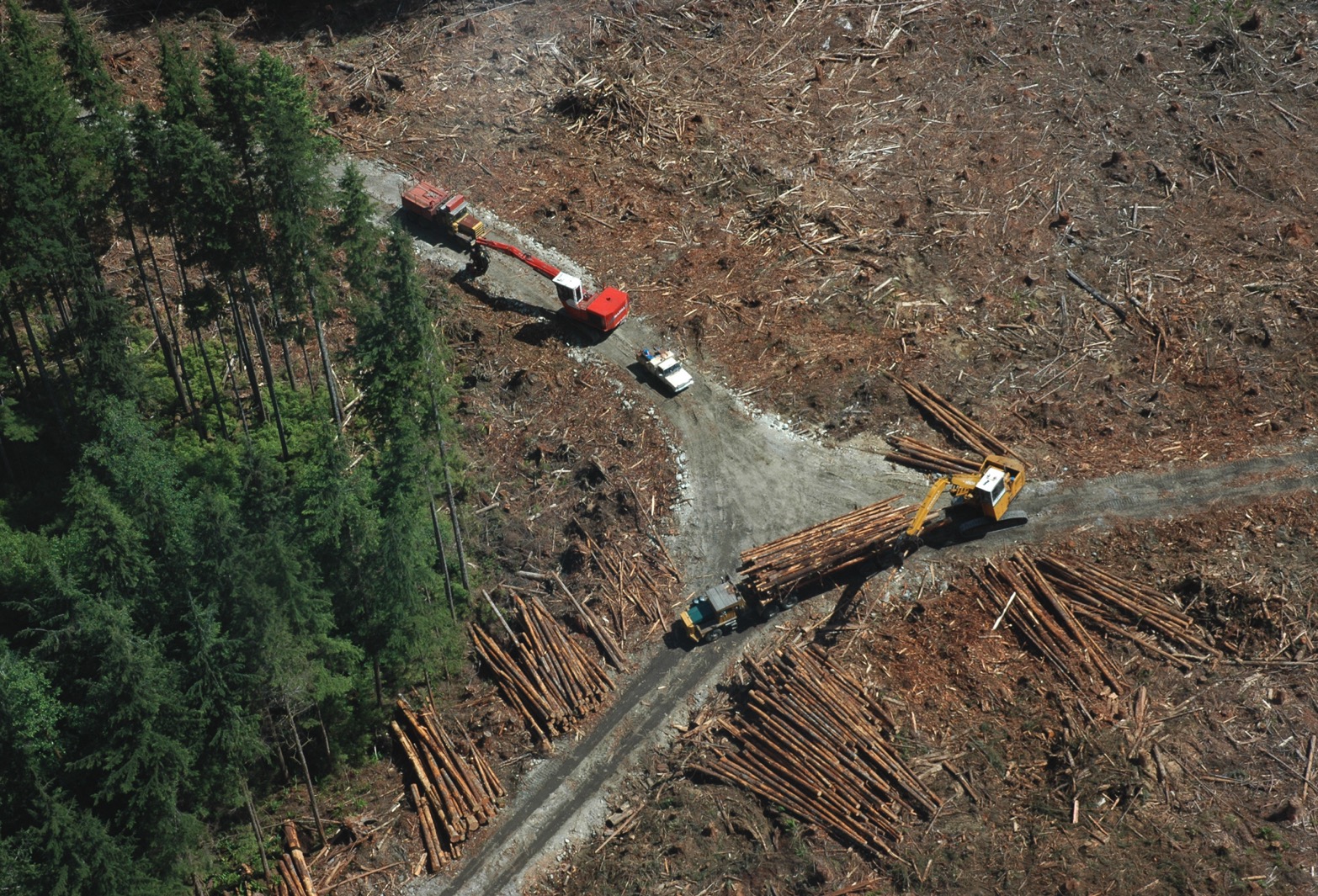 Here again in 2025, phase congestion has become a heightened concern as forestry operations are scrambling to produce in the face of uncertainty which could lead to dangerous situations for workers. History has proven that during uncertain times, productivity becomes the main driver, not for all contractors, but for some, and safety can be put on the backburner which puts everyone at risk, even those who put safety first.
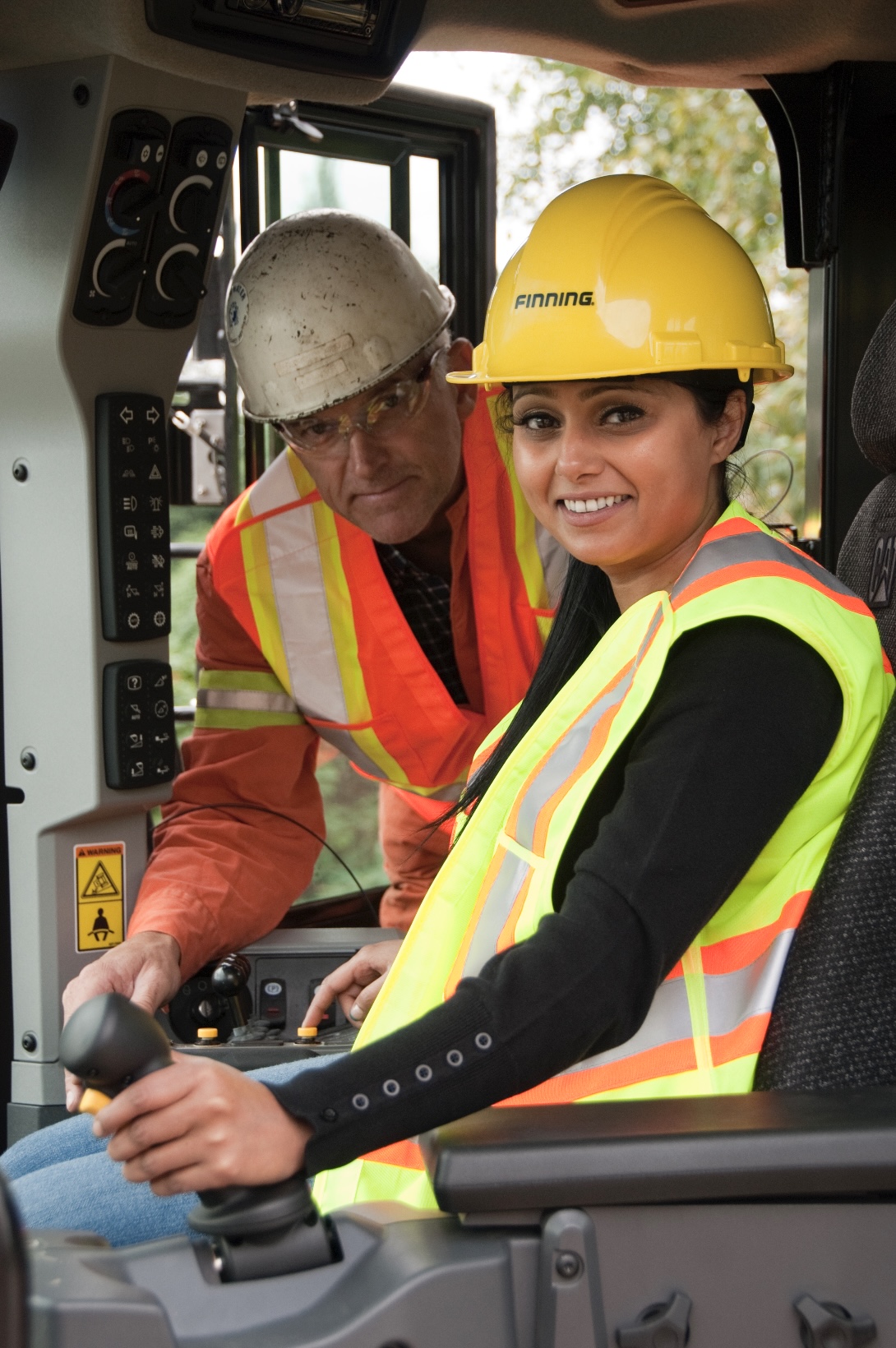
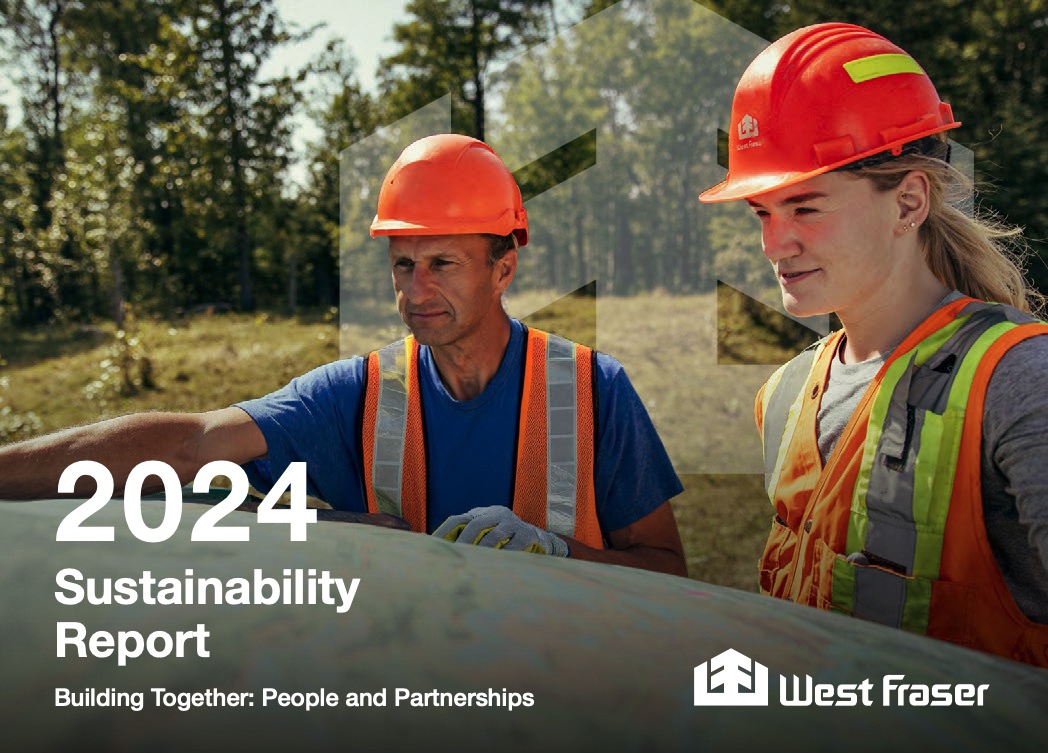 VANCOUVER, BC – West Fraser Timber Co. Ltd. released its 2024 Sustainability Report, Building Together: People and Partnerships. The report highlights the Company’s sustainability performance across a variety of environmental, social, and governance goals and disclosed targets. “Since our founding 70 years ago, West Fraser has recognized our responsibility to the environment and society while delivering solid financial performance,” said
  Culturally significant land in the Cowichan Valley has been returned to Lyackson First Nation and Cowichan Tribes communities, a reconciliation landmark between the Nations and B.C. The lands that are now in possession of the Nations are near an existing Cowichan Tribes Indian Reserve known as Skutz Falls IR8 and adds to an area that has historically been used by the Nations for gathering, harvesting and other activities of cultural importance for their communities. “The acquisition of this parcel of land could not have been made possible without the commitment of British Columbia, our kinship ties with Cowichan Tribes and willing seller Mosaic,” said Hereditary Chief Laxele’wuts’aat Chief Shana Thomas of Lyackson First Nation.
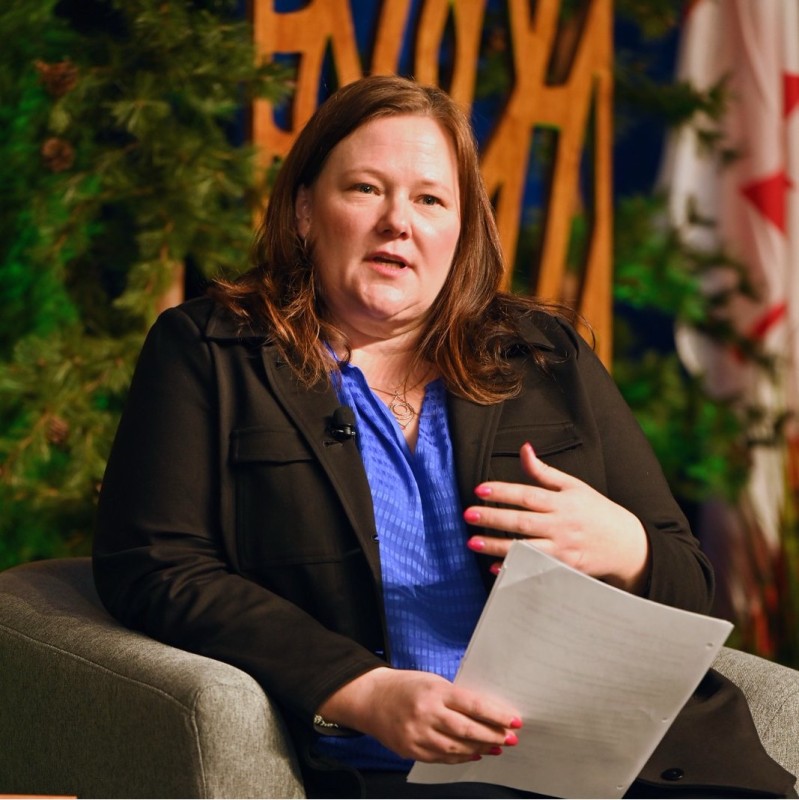

 Members of the newly formed Provincial Forest Advisory Council are tasked with providing recommendations to government on advancing forest stewardship, while supporting communities and workers that rely on forests. Under the Cooperation and Responsible Government Accord 2025, the B.C. government and BC Green caucus have established the Provincial Forest Advisory Council. The council will provide recommendations to government to ensure there are clear and measurable outcomes that support a healthy forests, healthy ecosystems and a healthy forestry sector. …The council will consult with industry partners, such as the Provincial Forestry Forum and ecological, environmental and biodiversity experts, to engage the public for feedback and honour commitments to work in partnership with First Nations. …The council brings together forestry sector leaders that have been jointly appointed by the BC NDP and Green caucuses. The council will provide an interim report this fall, with a final report expected by the end of 2025.


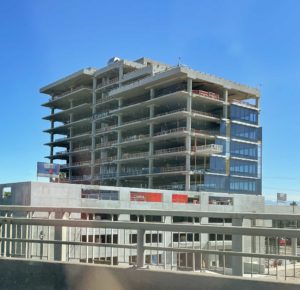 The new Cowichan District Hospital will be British Columbia’s first fossil fuel-free hospital, Island Health announced on Earth Day, April 22. The new hospital is under construction on Bell McKinnon Road near Duncan on Vancouver Island and is scheduled to open in 2027. It is also Canada’s first hospital to achieve Zero Carbon Building – Design certification from the Canada Green Building Council. “We’re building hospitals that will care for people in our communities for generations,” said Bowinn Ma, B.C.’s minister of Infrastructure. “This certification shows that through innovative design, we can create hospitals that support the well-being of families and a sustainable future.”.. The hospital’s leading-edge sustainability measures will free up resources for patient care while supporting patient and staff well-being and delivering environmental benefits.




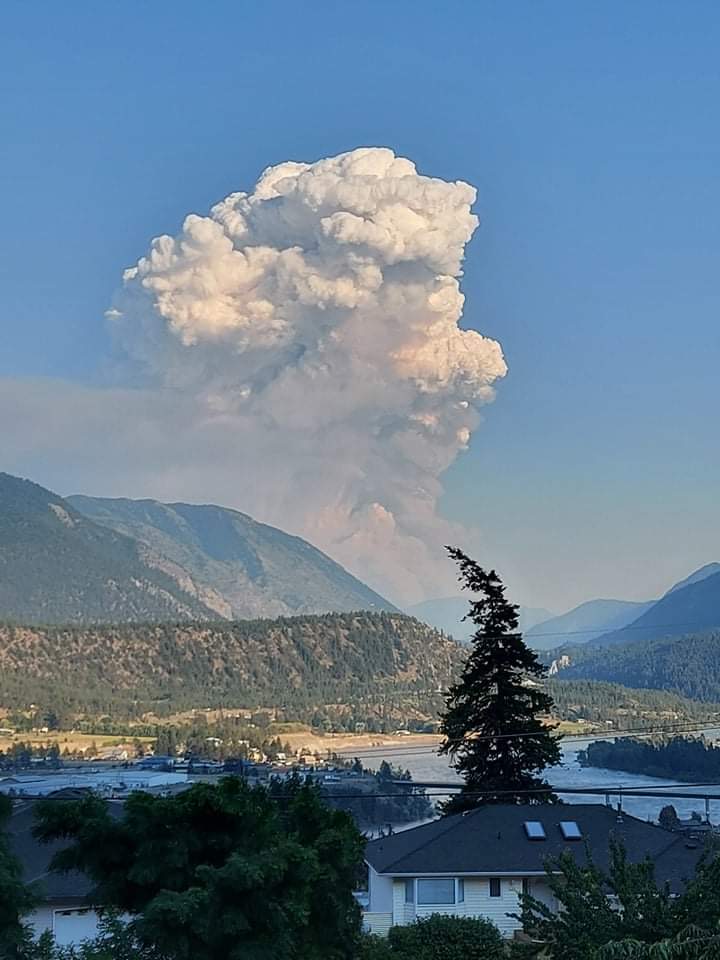 With drought and tinder dry conditions hitting many parts of the province, a number of municipal mayors are raising concerns about yet another potentially record-breaking wildfire season in B.C. Clearwater Mayor Merlin Blackwell, who has seen flames dance around his community for years, says current temperatures are well above normal. “We are in drought conditions up here. We are expecting an above normal, higher risk wildfire season for sure,” he said. …Mayor Barbara Roden has lived in Ashcroft for 28 years. She says, given the fire seasons in the last several years, fear now hangs over residents. …she says the increasingly extreme heat facing this province year after year is also becoming an equally serious concern. A sentiment understood and echoed by Lytton Mayor Denise O’Connor. She moved back to her family home not that long ago after the village was leveled by a massive wildfire during the 2021 heat dome.
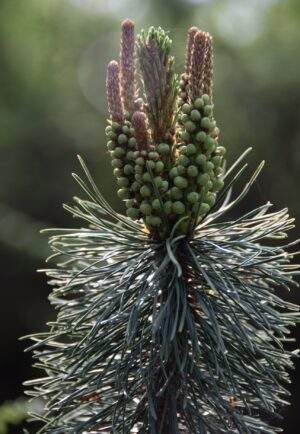 It doesn’t look like much from the grid road. Just an approach with deep tire ruts chewed into the summer Saskatchewan mud, tall jack pine and spruce trees clustered at its opening like a gateway. But if you walk past that first line of trees and down the narrow working trail, it fans out into a pocket of open space. Scattered there are stumps, piles of dirt and roughage, logs that are too small or too large stacked to the side — the aftermath of a logging sweep, both bare and messy. That pocket opens further into a clearing, a few hundred acres in size, that was logged the spring before. Grass now pokes through the churned-up dirt; grasshoppers chirp in the still July heat. Across the clearing, even if you can’t see it through the trees that dot the far side, is the northern town of Big River, Sask. It’s just a few hundred metres away.
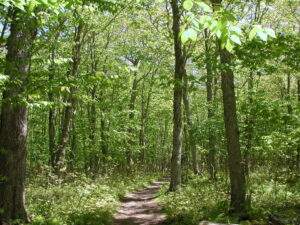 When outdoor enthusiasts Jeff Woodgate, Shaun Peter and Joey Reinhardt learned of West Fraser Timber Cochrane’s plans to harvest parts of their beloved forests near Moose Mountain and West Bragg Creek, they didn’t sit back. Fueled by a deep connection to the land and a sense of urgency, the trio founded Guardians of Recreational Outdoor Wilderness (GROW) and launched a petition to cancel the logging plans. Their message struck a chord. Today, more than 20,000 people have signed in support of preserving these cherished landscapes… After listening to public concerns, West Fraser reduced the scope of its plan by 37 per cent, now targeting 556 hectares — 268 in West Bragg Creek and 288 in Moose Mountain. According to West Fraser, the revised plan will now affect only five of 26 trails, with just 2.1 km directly impacted. Another 18.3 km of trail — about 17 per cent of the network — falls within 50 metres of harvest areas.
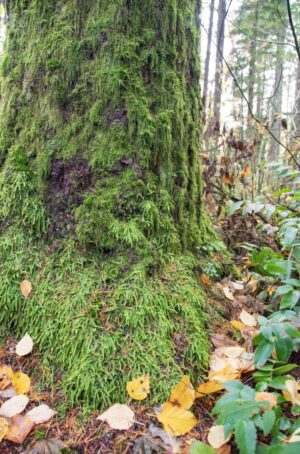 Improvements are coming to the Ancient Forest, one hour east of Prince George. The Enhancement Project is funded through the Investing in Canada Infrastructure Program – Community, Culture, and Recreation Program, with a total project cost of approximately $8.7 million. The Ancient Forest Provincial Park, known as Chun T’oh Whudujut in the Dakelh language, is one of the world’s few inland temperate rainforests, and was saved from logging in 2005… The project was originally funded in late 2019, and was expected to be finished by March of this year. However, it faced significant delays due to the COVID-19 pandemic in 2020, which disrupted planning and operations. This was followed by the tragic loss of both the Project Coordinator and Project Manager due to cancer, resulting in a loss of leadership and continuity.
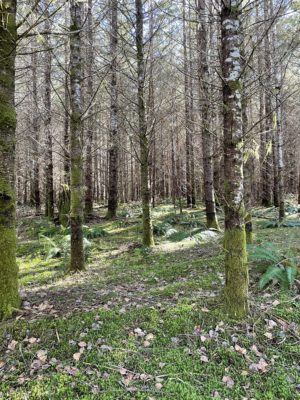 Is the Alberta government hell-bent on eliminating what remains of the two caribou herds that live in the mountains just north of Jasper National Park? Looking at the province’s recently released draft management plan for the Upper Smoky area, one might think that is the case. Let’s set this up: the motivation behind the sub-regional plan in the first place was to convince the federal government that the province was doing a good job of caribou conservation. Spoiler alert: they haven’t! Meanwhile, I can’t help but think of the irony that… the company which stands to benefit the most is a US-based forestry corporation, Weyerhaeuser. …For decades now, provincial governments have been promising to conserve and rehabilitate caribou habitat. And for decades, those governments have not made good on those promises. As discussed in previous Jasper Local articles, for caribou to have a chance, they need some space.
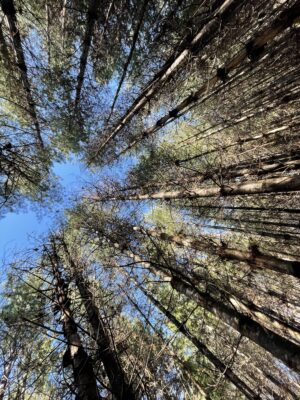 SUNDRE – While the persistent, multi-year presence of a destructive pest known as spruce budworm has been noted by Alberta Forestry and Parks, an entomologist for the provincial government said the localized impact is not yet considered an epidemic. “We mapped some minor infestations that are on private land south of the Sundre area,” said Forest Health Specialist Caroline Whitehouse. …“From what we’re seeing from our aerial overview surveys – that’s the primary way that we are doing monitoring for spruce budworm – we’re not seeing what we would call an epidemic at this point,” she said. …Asked whether there are any regions in the province where there might be an epidemic unfolding, she said the department’s data from 2024 does not indicate as much. …Steve Bouchet, owner of Everblue Nursery said he is less worried about his own tree farm. …“But it’s also a forest fire risk.
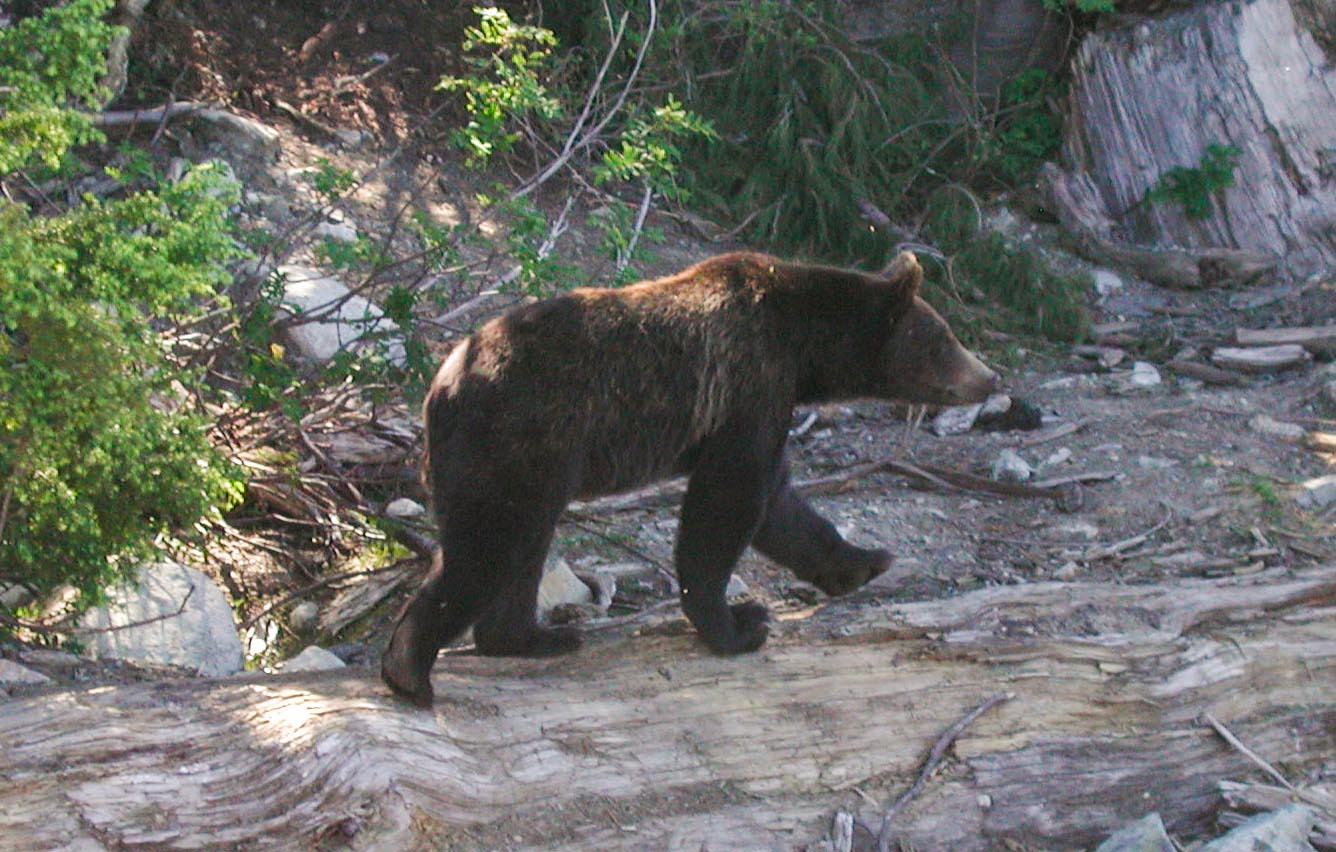 They’re common subjects of news stories and interaction with humans and urban areas. But how common is the black bear in B.C.? Wildlife advocates say the answer is far from clear, and better data is required to help and understand the species, many of whom are destroyed as a result of becoming habituated to human food. “I want some more pressure on the government to address this big knowledge gap that we just don’t know how many we have,” said registered professional biologist Helen Davis with Artemis Wildlife Consultants. “We don’t know if we’re hunting too many, if we’re killing too many through conflict.” …Biologists like Davis, who, along with First Nations, want bear dens in old-growth forests protected with provincewide legislation, say there could be a misconception that a key species with ecological and cultural value is plentiful when the data to support that is outdated or even dubious.
 With fire season arriving earlier and burning longer each year, Whistler is pushing forward with a suite of new wildfire risk mitigation measures—ranging from forest fuel-thinning and emergency planning to updated bylaws and collaborative research. At the heart of the work is a recognition wildfires are no longer rare events, but a growing threat made worse by climate change. “We are acutely aware that the wildfire risk is rising in Whistler and it’s the single biggest climate change related risk and vulnerability for all of us here,” said the Resort Municipality of Whistler’s (RMOW) manager of climate and environment Luisa Burhenne at the May 13 council meeting. The RMOW has treated more than 100 hectares of high-risk forest, representing about one-third of its 2030 target.
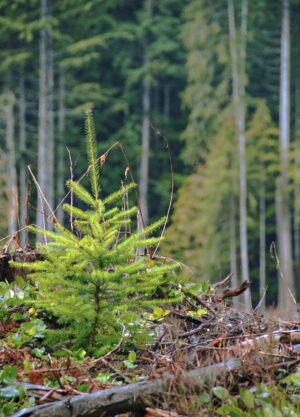 While the persistent, multi-year presence of a destructive pest known as spruce budworm has been noted by Alberta Forestry and Parks, an entomologist for the provincial government said the localized impact is not yet considered an epidemic. “We mapped some minor infestations that are on private land south of the Sundre area,” said Forest Health Specialist Caroline Whitehouse. “That kind of extends along that narrow band of spruce between the public forest and private land all the way west of Diamond Valley,” Whitehouse said. “And then it does peak into the Kananaskis forest area a little bit, but it’s really quite minor in that region”… Steve Bouchet, owner of Everblue Nursery who first established a plantation near Sundre in 1996, said he is less worried about his own tree farm where he can deploy mitigation strategies to attack the aggressive pest but harbours concern about damage trees in the greater area could suffer.


 In this edition of the WorkSafeBC Health and Safety News you’ll find: