 The Tree Frog News is featuring the panels and speakers from last week’s BC Council of Forest Industries Convention. On Friday, we carried the Thursday morning keynote speakers and panel sessions, and in today’s Tree Frog News we have the balance of Thursday’s presentations and all of the Friday sessions. Below are links to all of the conference sessions in chronological order.
Day One – April 3, 2025
- Opening Keynote: Regional Chief Terry Teegee
- BC Forest Sector Economic Outlook: Kurt Niquidet & Glenn O’Kelly
- Global Markets: Russ Taylor, Kate Lindsay, Mark Cameron & Shawn Lawlor
- Spotlights on Innovation:Kylie Williams, Tim Caldecott and Todd Sayers
- Next 4 Years:Corinne Stavness, Glen Clarke, James Moore, & Mark Cameron
- New Ground: Jason Fisher, Lennard Joe, Michael Reid, Kathy Abusow & Aspen Dudzic
- Growing the Market: Shawn Keyes, Chris Hill, Robert Manuel & Shelly Craig
- Closing Keynote: John Rustad, Leader of the Opposition
Day Two – April 4, 2025
- Keynote: John Kitzhaber and Wart Stamer, Kale Tyndall & James Whitehead
- Elephant in the Room: George Abbott, David Elstone, Nick Arkle & Jennifer Gunter
- Forestry’s Future: Ravi Parmar, John Jack, Lisa Dominator & Juan Carlos Bueno
- Closing Keynote: David Eby, BC Premier




 Well, 2025 will prove to be an interesting year ahead. …Provincially there are some glimmers of hope for some directional changes to the current trajectory of BC’s forest sector through the appointment of an energized and determined Minister of Forests. At the recent TLA convention, there also seemed to be acknowledgment that the need for change was recognized with the Premier and Minister. …The government’s forestry mandate appears to be granted for firm actions, even more so with our obvious need for more self-reliance as a country. But muddying the background is the reality that anything that needs to be accomplished must be done within the spectre of massive provincial deficits and a hiring freeze. Where to start?





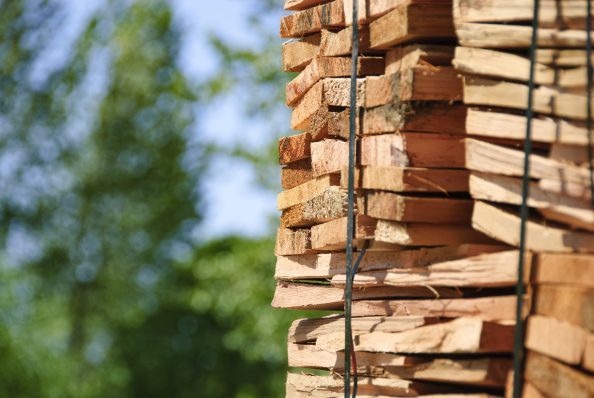 Teal Cedar Products has lost a bid for damages against the B.C. government over its declaration of First Nations rights on Haida Gwaii. The company argued the recognition of title over the lumber-rich but highly protected island archipelago deprived it of its ability to harvest despite Teal holding tree farm and forest licences in the area. It argued the B.C. government didn’t act in good faith, essentially expropriated property where Teal had business interests, and failed in a promise to keep the company whole during its negotiations with the Haida Gwaii Management Council over Indigenous title to the former Queen Charlotte Islands. B.C. Supreme Court Judge Brenda Brown rejected all three rationales and dismissed the claim for damages against either of the defendants, the B.C. government or the management council. …Teal obtained the two tenures from TimberWest in 2008, before selling them to A&A Trading Ltd. in late 2016.
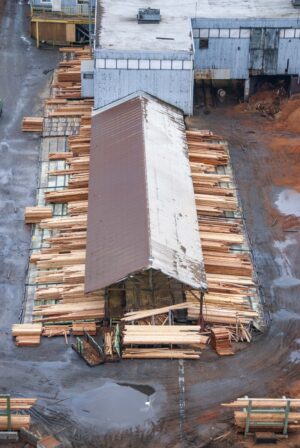 Another wave of sawmill closures swept across British Columbia in 2024, from West Fraser’s Fraser Lake facility to Canfor’s operations in Polar, Vanderhoof, and Fort St. John. As the Northern View reported, Chief Robert Michelle of the Stellat’en warned that “the economic impact for our communities will be dire,” citing job losses not just in the Fraser Lake mill but also among log haulers, restaurant workers and gas station employees… It is clear that current conditions cannot sustain profitable operations, leaving businesses struggling and workers unemployed. The fundamental issue lies in how Victoria approaches forest policy. The government faces mounting pressure from multiple stakeholders. Environmental groups advocate for reduced harvesting levels, while Indigenous communities seek both greater access to timber supplies and a larger role in forest management. While environmental protection and Indigenous rights are important considerations in forest management, and rightly so, the government’s approach has failed to balance these priorities with economic sustainability.
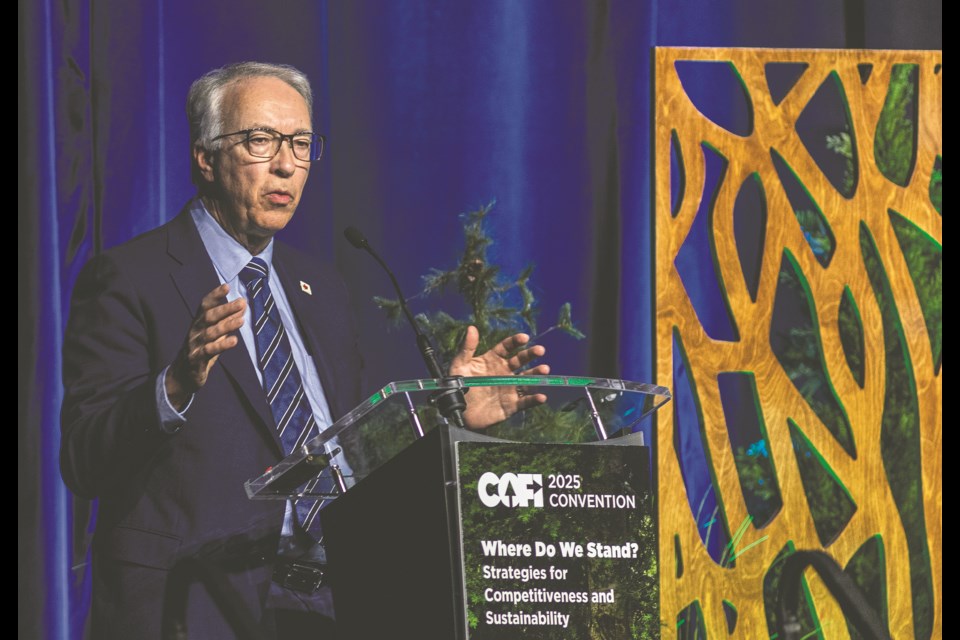
 Vancouver, BC — This week, the BC Council of Forest Industries (COFI) will welcome more than 600 industry, government, and Indigenous leaders to Prince George for a sold-out COFI 2025 Convention, running April 2-4. As one of the largest annual gatherings of the forest sector in Western Canada, the convention focuses on urgent challenges facing the industry—and the path forward. Attendees are set to explore how the sector can respond to rising US tariffs, global trade uncertainty and regulatory complexity. Discussions will center on strategies to improve industry competitiveness, strengthen partnerships with First Nations and sustain local jobs, while positioning BC as a global leader in sustainable forestry. … A highlight of the convention will be the release of a new study comparing international forest jurisdictions by Glen O’Kelly, CEO of O’Kelly Acumen, benchmarking BC’s performance against leading forestry regions—including Sweden, Finland, Austria, the US, and Brazil.

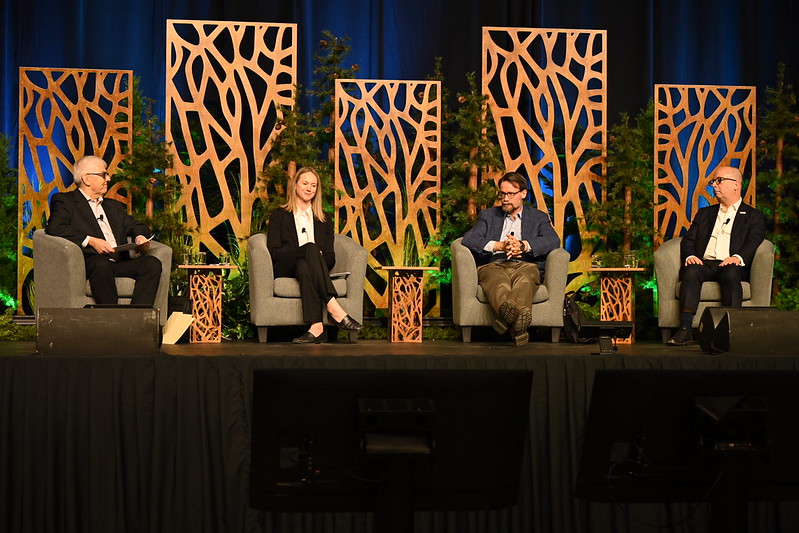
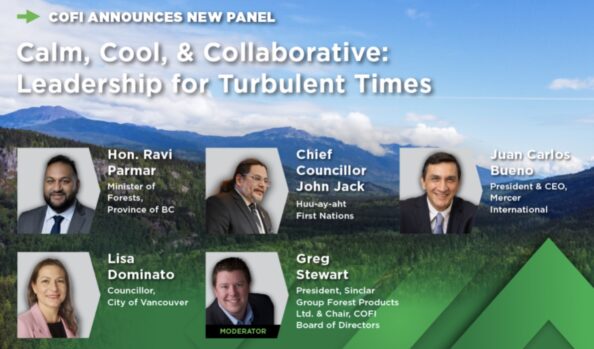 COFI 2025 – April 2-4 in Prince George, BC — As BC’s forest sector grapples with significant turbulence – including US tariffs, geopolitical uncertainty, and sector-wide challenges in BC – strong leadership and collaboration are essential to securing a sustainable and competitive future. The “Calm, Cool, & Collaborative: Leadership for Turbulent Times” panel at the 2025 COFI Convention will bring together senior decision-makers from industry, government, and First Nations. These influential voices will share their insights on navigating market uncertainty, shaping effective policies, and strengthening community resilience. Jon our panelists: Hon. Ravi Parmar, Minister of Forests, Province of BC; Chief Councillor John Jack, Huu-ay-aht First Nations; Juan Carlos Bueno, President & CEO, Mercer International; and Lisa Dominato, Councillor, City of Vancouver for a lively discussion moderated by Greg Stewart, President, Sinclar Group Forest Products Ltd. & Chair, COFI Board of Directors.
 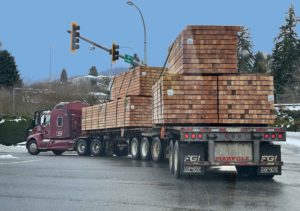 The ongoing trade spat between the U.S. and Canada is impacting BC’s construction sector in ways that could bring short-term gain and long-term pain. At first, there could be an oversupply of lumber if Canadian softwood is taken out of the U.S. equation, resulting in lower costs for B.C. builders and developers, said Padraic Kelly, Vancouver-based director with BTY Group. But costs would later rise significantly, he said. “The medium- and long-term pain would be that if the American market is choked out, mills would close, supply would be constrained and costs would ultimately go up,” Kelly said. The total levy on Canadian softwood lumber going into the U.S. could total between 45% and 55%, taking into account anti-dumping measures introduced by the Biden administration and scheduled to increase this August. Other big-ticket impacts to B.C. construction could be the mechanical and electrical divisions within construction budgets, he said.

 The Province is taking action to adapt B.C.’s forests to ensure long-term sustainability and good-paying jobs by enlisting BC Timber Sales (BCTS) to play a larger role in reducing wildfire risk and enhancing forest and community resilience through its operations. This work is increasingly urgent given the threat of sector-specific tariff threats coming from the United States. … BCTS manages forest harvesting on more than 20% of B.C.’s public land. In January 2025, the Ministry of Forests initiated a review of BCTS, undertaken by an expert task force, to create pathways for a stronger, more resilient forestry sector. A progress update was announced at the Council of Forest Industries convention on Friday, April 4, 2025. “We have all witnessed the impacts of wildfire on B.C.’s communities, and we are uniting all parts of my ministry to tackle this challenge head on,” said Ravi Parmar, Minister of Forests.
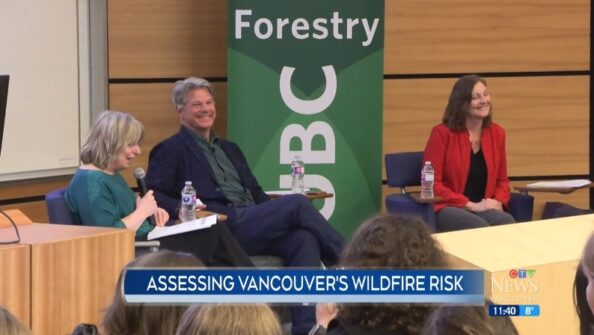 B.C.’s wildfire season is fast approaching, and experts are warning that urban areas of the province – including Metro Vancouver – may be at risk as fires grow more frequent and intense. A panel of experts – including bestselling author of Fire Weather John Vaillant and UBC Centre for Wildfire Coexistence co-director Dr. Lori Daniels – spoke about urban wildfire risks at the university’s Vancouver campus Thursday night. Daniels told CTV News a combination of climate change, forest management practices and urban expansion into fire-prone areas has contributed to a rise in the amount of land and structures burned in recent years. While in some parts of the province – such as the Okanagan Valley – there is a sense that it’s “not if, but when” a destructive wildfire will hit, Daniels said Metro Vancouver is also vulnerable.
 The federal government is pitching in more than $180,000 for a Kamloops-area study to determine whether rehabilitating wildfire-damaged landscapes can provide an economic opportunity through carbon credits. It’s part of a total $20 million the federal government will be injecting into B.C.’s forestry sector. Jonathan Wilkinson, minister of energy and natural resources, said 67 projects in the province will receive funding, including a number of Kamloops and Shuswap-area initiatives. The Secwepemcul’ecw Restoration and Stewardship Society will receive $184,355. …Tolko Industries will be getting $400,000 in federal funding to conduct further research into a finger jointing process for parallel laminated veneer products produced at its Heffley Creek facility. Local Indigenous groups are also set to receive funding as part of the Indigenous Forestry Initiative program. …And as part of the Global Forest Leadership program the Wood Pellet Association of Canada based in Revelstoke is set to receive $180,000 to help advance international standards for wood pellets.
 The BC Supreme Court has dismissed a lawsuit from Teal Cedar Products, a forestry company, which claimed it lost millions of dollars due to new timber rules in Haida Gwaii. The company argued that the new regulations unfairly devalued their forest tenures. The rule changes included reducing the amount of timber that could be harvested and implementing conservation measures. Teal, which owned forest licenses affected by the regulations, claimed these changes amounted to “constructive expropriation,” meaning the government’s actions took away the value of their property rights, without formally seizing the property. Chris Tollefson, a University of Victoria law professor and public interest lawyer who represented the Haida Gwaii Management Council, said private operators need to know rules evolve based on changing values and science, and companies aren’t owed compensation “where the change is bona fide, is not being used to discriminate or target them.”

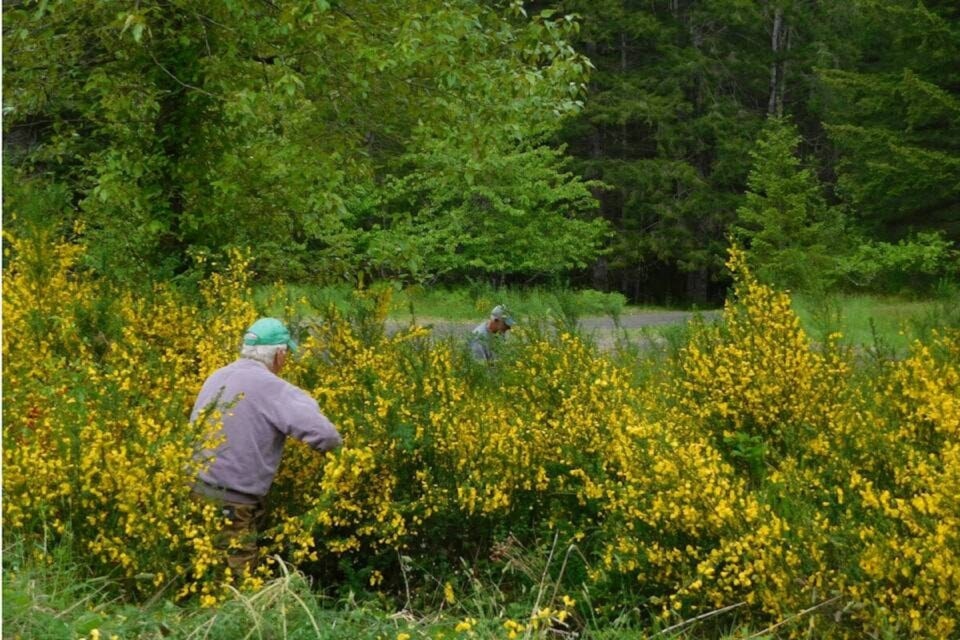
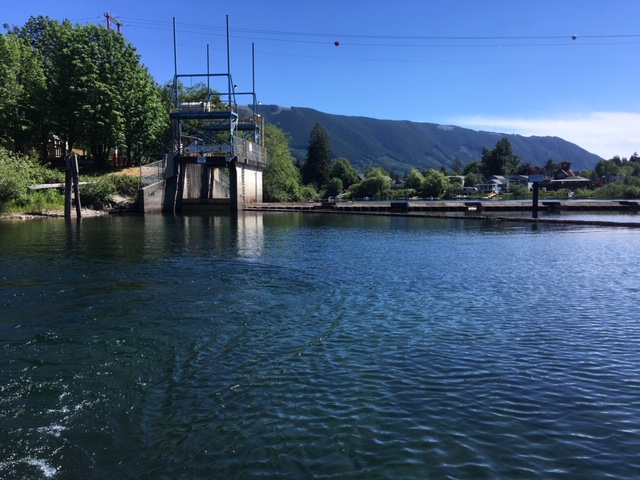
 The Osoyoos Indian Band (OIB) and American forestry company Weyerhaeuser have struck what they describe as a “landmark partnership” to manage a tree farm licence (TFL) east of OIB reserve land near Oliver. The OIB said stewardship of their traditional territory “is both a responsibility and an opportunity”. Through this partnership, OIB says it has taken a co-leadership role in managing TFL 59, an area of “profound cultural, ecological, and economic significance”. The two aim to raise the benchmark for sustainable forestry by balancing modern forestry practices with traditional knowledge… The tenure has a broad and ambitious set of management objectives, including reducing wildfire risk, protecting water resources, enhancing wildlife habitat, increasing forest resiliency and rehabilitating areas impacted by the devastating 2021 wildfires.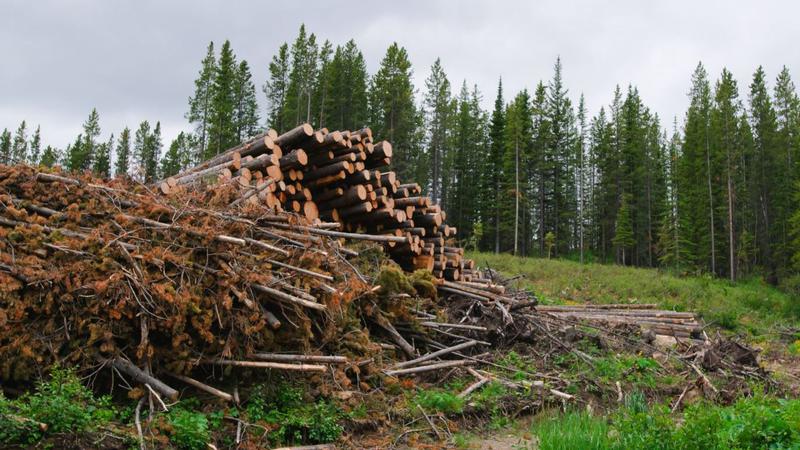
 Conservation groups are warning that a proposed Alberta government plan for a sub-region in west-central Alberta would wipe out two caribou populations if implemented. The draft plan for the Upper Smoky sub-region would enable the U.S.-based timber company Weyerhaeuser to entirely clearcut the last winter range forests… A Caribou Task Force, made up of Indigenous groups, industry, municipalities, various user groups and interest groups, had been established to advise the Alberta government on Upper Smoky sub-regional planning. These multi-stakeholder conversations were held from 2019 to 2021; however, none of the task force’s recommendations related to caribou conservation and recovery were reflected in the report. Public engagement runs until June 25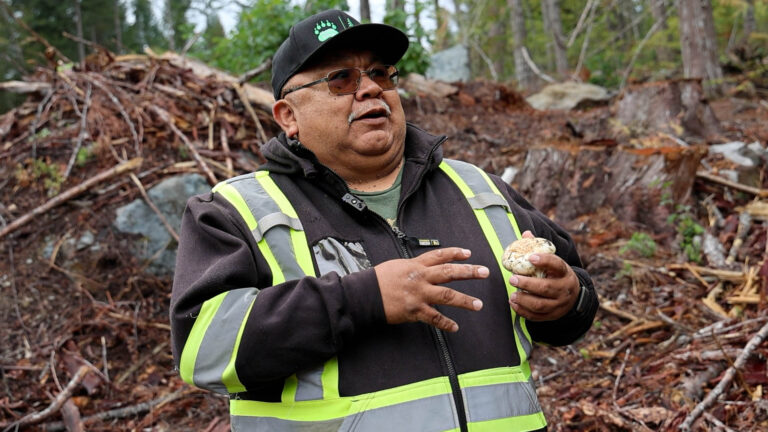

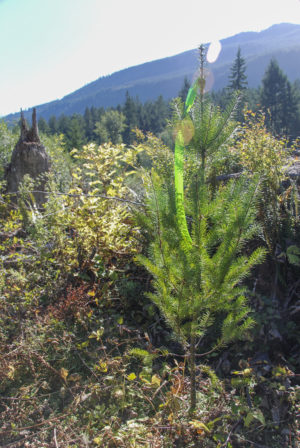 When it comes to reforesting areas made bare by natural causes, it’s the Ministry of Forests’ job to oversee the progress. “Wildfire…really is the biggest thing we’re focusing on,” said Shelley Barlow, the ministry’s regional silviculture specialist for the Cariboo. According to a February 2018 report by the Ministry of Forests, Lands, Natural Resource Operations and Rural Development, 80 per cent of the area affected by the 2017 wildfires in B.C. was in the Cariboo. About one million hectares of forests were burnt in the region, and 609,000 of those hectares were part of the Cariboo’s timber harvesting land base. Prior to 2017, the ministry was planting up to two million trees per year in the Williams Lake forestry district. Since then, Barlow said this number has at least tripled.
 In this newsletter, we are pleased to share great stories of the impactful work happening in communities throughout our province. As the world continues to navigate the challenges affiliated with climate change, British Columbia’s forestry sector is playing a key role to mitigate its impacts and contribute to a more sustainable future. We take pride in investing in projects that provide enduring economic and social benefits for our local communities and are helping take action on this global issue. Last month, in collaboration with the Provincial Government, we shared more specifics about 70 recently funded projects moving forward to help local communities, community forests, First Nations, and other project partners enhance their wildfire prevention efforts and/or expand fibre-recovery initiatives. …In years past, much wood waste from harvesting operations was piled and burned in slash piles. Today, we invest in projects that recover this waste and use it to make forest products and generate green energy.
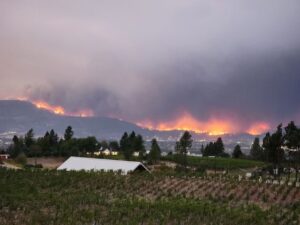 If you’ve noticed smoke on days it hasn’t been snowing or raining recently, it’s likely from a prescribed burn. Local governments across the Okanagan including the Westbank First Nation are working to finish as many of their prescribed burn operations as possible before the weather gets too hot and dry. A prescribed burn, sometimes called a controlled burn, is a planned and intentional use of fire on a specific land area to reduce wildfire risk, improve wildlife habitat, or restore ecosystems… The McDougall Creek wildfire was one of the most destructive local wildfires in recent memory, destroying 303 structures in West Kelowna, Westbank First Nation, Kelowna and the RDCO. The Insurance Bureau of Canada estimated the fire caused $480 million in insured damage.
 A draft co-management framework and plan to manage North Cowichan’s 5,000-hectare municipal forest reserve likely won’t be presented until sometime in 2026. The municipality and the Quw’utsun Nation (which consists of Cowichan Tribes, Halalt First Nation, Lyackson First Nation, Penelakut Tribe, and Stz’uminus First Nation) agreed in April, 2024, that they would work together to establish a co-management framework and plan for the forest reserve, and that work is still ongoing. North Cowichan’s communications director Barb Floden said the municipality and the Quw’utsun Nation issued a joint request for proposals to support the development of the co-management plan in February, which will be closing soon, and it is expected that the draft framework and plan will be ready next year. “The public will be kept informed of the process through joint statements and updates at council meetings,” Floden said.
 The Workers Compensation Amendment Act, 2019 (Bill 18) expanded the definition of “firefighter” and changed the definition of “worker” in the Workers Compensation Act, resulting in implications for society fire brigades that engage volunteer firefighters. Our Policy, Regulation and Research Department is releasing a discussion paper with proposed amendments to policy in the Assessment Manual to provide guidance on how WorkSafeBC determines the employer of a volunteer firefighter, and to remove outdated language. The discussion paper and information on how to provide feedback can be found here:
  WorkSafeBC is releasing a discussion paper concerning changes made to policy on duration of benefits (retirement age). To reflect legislative amendments to the Workers Compensation Act, policy changes related to retirement age determinations were effective on January 1, 2021. After reviewing the implementation of the initial changes, WorkSafeBC’s Board of Directors approved further policy changes, effective January 1, 2024, on WorkSafeBC’s determination of whether a worker “would retire” after the retirement dates set out in the Workers Compensation Act. The Board of Directors approved these policy changes in advance of public consultation. Our Policy, Regulation and Research Department is now consulting on the 2024 changes to determine whether further changes are necessary. The discussion paper and information on how to provide feedback can be found here: