100 MILE HOUSE, BC — 100 Mile Fire Rescue responded to a silo spot fire at West Fraser 100 Mile on Tuesday, Jan. 7. Fire Chief Dave Bissat said the initial call came in at 6:14 p.m. for a reported outbuilding fire at the West Fraser Mill Site. On arrival his crews assisted West Fraser mill staff in controlling a fire within the fine dust silos. “Firefighters quickly extinguished small spot fires and cooled the silo exhaust system, successfully preventing any damage,” Bissat said. A total of 16 firefighters and five apparatuses responded to the incident. …The cause of this spot fire is unknown, though Bissat said sparks generated during regular operations of the mill are a potential factor. That being said, Bissat added mill staff are highly vigilant in maintaining safety and incidents requiring external assistance, such as this fire, are rare.
 New Westminster, BC — The Canadian Mill Services Association (CMSA) is announcing that it has completed a purchase agreement with the BC Council of Forest Industries (COFI) to acquire the COFI Quality Control (QC) operations and to merge them into CMSA. This has involved the transfer of the rights and trademarks to use the COFI grade stamps, and the Interior Lumber Manufacturers’ (ILMA) grade stamps as well as the transfer of the quality control employees from COFI to CMSA. As of December 31, 2024 COFI ceases to offer QC services and the former COFI customers who were using these services are encouraged to join CMSA as active Members. With completion of the merger, CMSA will now provide all the necessary Quality Control Services including Educational Training and Support to its active members. CMSA shall continue to be members of the NLGA, CLSAB and ALSC and will continue to represent its members with the Canadian Wood Council.
 After a dismal 2023 and 2024 in lumber markets in both demand and prices, it can only get better in 2025, right? Well, that depends. …The outlook for 2025 needs to incorporate several variables:
 Are you looking to enhance your skills in the lumber and sawmill sector? Onboarding new employees that would benefit from formal education in the field? Are you seeking to provide your employees with essential business skills for professional development? BCIT is currently offering two Associate Certificates to help you:
 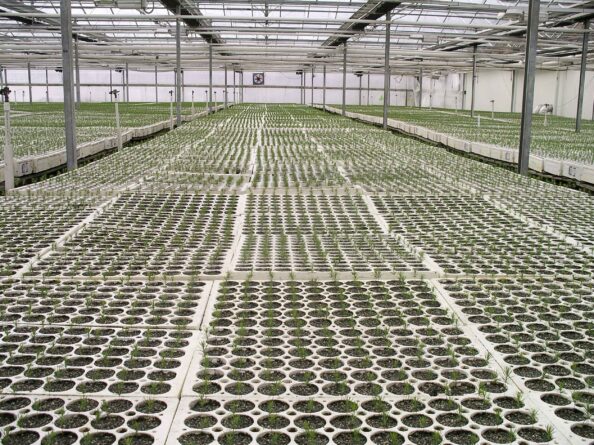 The provincial government expects to plant nearly 50 million fewer trees this year — a 17 per cent drop from last year’s planting season at a time when the province has seen a major spike in wildfire activity. The projections come from presentation slides shown to the industry in September. …the government expects the number of trees planted to sink to 233 million in 2025, 47 million fewer than were planted in 2024. …About half of the anticipated drop in 2025 is due to declines in trees planted by logging companies. Drops are also expected in government programs designed to combat climate change, restore forest carbon stocks, and plant trees in the wake of wildfires, data show. The 2023 wildfires also prevented many replanting projects from occurring that year, and delays due to the time it takes to grow enough seedlings mean replanting won’t take place until 2026 and 2027, according to the ministry spokesperson.
 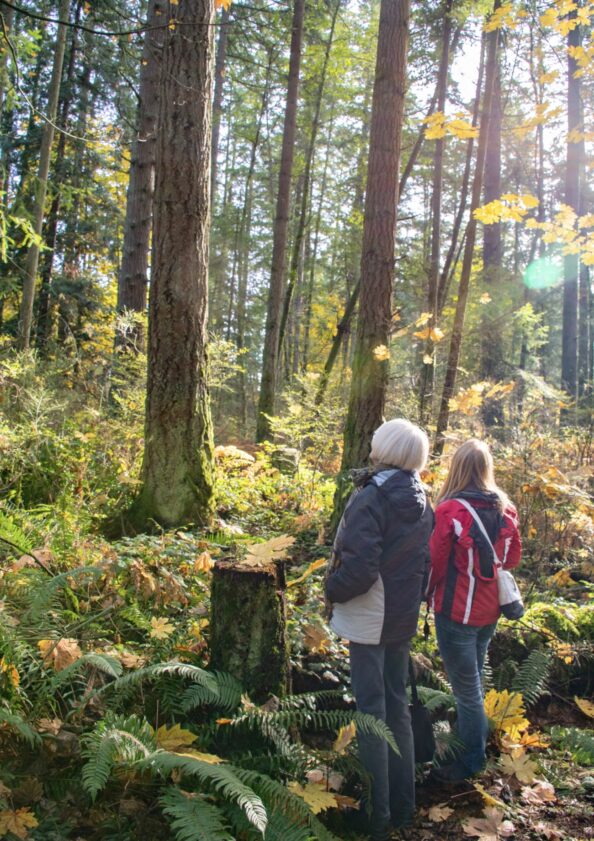 The Kaska Dena people, who for thousands of years have lived on a vast swath of intact wilderness in northern B.C. on the Yukon border… They want to ensure it remains undeveloped… So the Kaska have come up with a plan for the province to protect an area, called the Dene K’éh Kusān — 40,000 square kilometres, an area larger than Vancouver Island, of land and water. …It would also boost B.C.’s pledge to protect 30 per cent of land and 30 per cent of water by 2030, say conservation experts. …With only five years to go, and just about 16 per cent of land protected in B.C. so far, the province must double its efforts if it intends to reach those ambitious targets…Randene Neill, B.C.’s minister of Water, Land and Resource Stewardship said that she’s aware that some areas reported as conservation measures aren’t meeting their originally intended objectives.
  …British Columbia’s forests are … a foundation of the province’s identity and a bedrock of its economy. Both past and present, the industry has been one of the province’s largest employers, providing tens of thousands of well-paying jobs, particularly in rural and Indigenous communities where opportunities can be scarce. These jobs are vital for maintaining economic stability in smaller towns, where forestry often serves as the main driver of local economies. …By managing forests, BC can enhance their role as carbon sinks, reducing greenhouse gas emissions and mitigating climate-driven concerns such as wildfires. …Concurrently, BC’s forestry practices need to keep pace with evolving environmental and social expectations. …Global markets and decision-makers are increasingly demanding environmentally responsible products and wood clearly delivers those needs. However, two things need to happen. First, a clear, cohesive strategy is needed to ensure we do not fall behind international competitors. Secondly, you actually have to cut a tree down.
 Human recreation on mountain trails is displacing grizzly bears and wolves from their natural habitats, even when the trails are hundreds of metres away, according to a new study from the University of Alberta. The research underscores the need for more effective planning to ensure that recreationists and wildlife can coexist, particularly in the busy Bow River Valley, which has long served as a natural corridor connecting the prairies to the Continental Divide… Though trails that never receive any use from humans have little to no effect on wildlife, only half of grizzlies studied would venture within 300 metres of trails with the highest human use. This effect was more pronounced in wary wolves, whose radius of comfort extended to 600 metres from the busiest trails. “We initially thought bears might use hiking trails as efficient routes when humans weren’t around, but they actually avoid these areas altogether,” says the author.
 A new study indicates that over the past 10 years, the Nanaimo region has gained more winter days above 0 C than anywhere else in Canada. The study comes from Climate Central, a non-profit based in New Jersey… The
 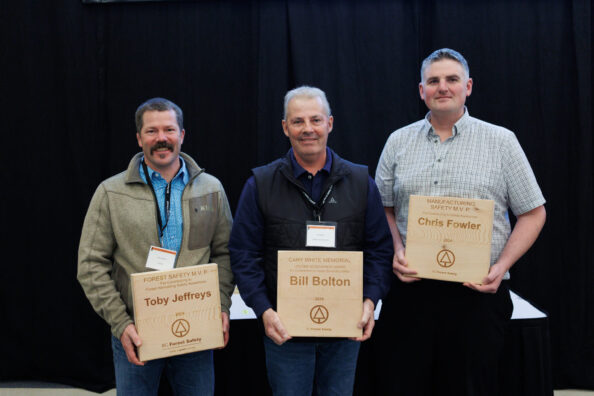 The BC Forest Safety Council celebrated Leadership in Forestry Safety with the 2024 Leadership in Safety Awards at the Vancouver Island Safety Conference on Saturday, October 26th. The 2024 Leadership in Safety Awards were presented by BCFSC’s CEO, Rob Moonen. These awards honour the exceptional contributions to safety in the forestry industry and recognize individuals, crews, and companies that have made significant strides in workplace safety, reinforcing the goal of ensuring every worker returns home safely. This year, three outstanding individuals were celebrated: Bill Bolton, former Falling Manager and senior advisor for the BCFSC received the 2024 Cary White Memorial Lifetime Achievement Award for his unwavering advocacy for faller safety. …Toby Jeffreys, Area Supervisor at Interfor’s Adams Lake Division, was awarded the Forest Safety MVP Award. And Chris Fowler, Safety Coordinator at Canoe Forest Products (CFP), a division of the Gorman Group, received the MVP Award for Wood Products Manufacturing.