 On behalf of the Board of Directors of the BC Council of Forest Industries (COFI), I am pleased to announce the appointment of Kim Haakstad as the new President and Chief Executive Officer of COFI. Kim Haakstad brings a wealth of experience and expertise to COFI, with over two decades of leadership in executive roles across government, industry, and stakeholder relations. A seasoned strategist and relationship builder, Kim has consistently demonstrated her ability to navigate complex policy landscapes and forge strong partnerships that drive shared success. She has served as Deputy Chief of Staff to the BC Premier and Chief of Staff to Cabinet Ministers. Her deep understanding of governmental processes, coupled with her strong connections across sectors, positions her as a uniquely qualified leader to guide COFI and the forest sector through the challenges and opportunities that lie ahead.
As we welcome Kim to COFI, I would also like to take this opportunity to extend our appreciation to Linda Coady for her leadership and service as President and CEO. Linda’s work underscored the forest sector’s role in Indigenous reconciliation and supporting the diverse values BC’s forests provide — community well-being, environmental resilience, and economic prosperity.
 As most may have heard by now, Premier Eby has announced an agreement in principle between the BC NDP and Greens. …Of key significance to the forest sector, the agreement commits “to undertake a review of BC forests with First Nations, workers, unions, business and community to address concerns about sustainability, jobs, environmental protection and the future of the industry.” Such broad encompassing reviews typically take several months, if not over a year to complete and even longer before acting on recommendations. To propose such a review now is a prime example of just how forestry in British Columbia has truly become all about politics and not common sense. The two parties in their wisdom, have agreed to a review while the BC forest industry is literally in its death throes.
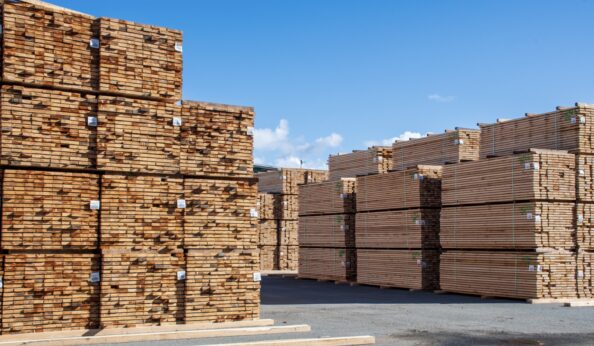 …Washington argues stumpage fees are too low and give Canadian loggers a competitive advantage over U.S. producers, which harvest timber largely from private lands and bid against each other for the privilege. The U.S. Department of Commerce is expected to release its next preliminary duty rates on lumber in early May, or 90 days later than originally planned. Its sixth administrative review is based on lumber markets in 2023, when prices were low. Analysts say U.S. duty rates imposed on Canadian softwood could double in 2025 and reach nearly 30 per cent. …U.S.-headquartered lumber producers and timberland owners who complained about Canadian softwood ended up receiving 10 per cent of the US$5-billion in softwood duties paid in the previous round of the dispute, from 2001 to 2006. Canadian companies recouped 80 per cent of the funds while 9 per cent went to “meritorious initiatives” in the U.S., with the remaining 1 per cent allocated to promoting lumber in both countries. Vancouver-based forestry analyst Russ Taylor said, it’s unclear how much Canada will recover in U.S. duties already paid since 2017. [A Globe and Mail subscription is required to read this article in full]
 The B.C. government has appointed a new chair and three new directors to the BC Hydro board of directors. …Glen Clark has been appointed the new chair of the BC Hydro board of directors. Clark will take over the post from current chair, Lori Wanamaker, whose term will end on Dec. 31, 2024. …Merran Smith is president of New Economy Canada and brings award-winning leadership uniting industry, government and civil-society partners. …Brynn Bourke is executive director of the BC Building Trades (BCBT). …Don Kayne is president and CEO of Canfor Corporation, and former CEO of Canfor Pulp Products Inc. Kayne has deep experience in international sales and marketing, human resources and executive compensation through 45 years with the forest company.
  The monitor for the San Group of companies has been granted broader powers by the Supreme Court of B.C. to manage and make decisions about the financially troubled forestry company, which has operations in Port Alberni. The San Group’s protection from creditors was extended at a court hearing in Vancouver on Thursday. The next hearing is set for Jan. 16. Expanded powers granted to Deloitte include the ability to administer the company’s restructuring and any winding down of the business, plus liquidating property and disposing of assets. The monitor is permitted to continue running the business, and said it anticipates working with current management. The various parties are expected to be back in court to ask for approval for a sale and investment solicitation process. …The court agreed the company can increase its borrowing limit to $1 million — up by $400,000 — to keep operations going.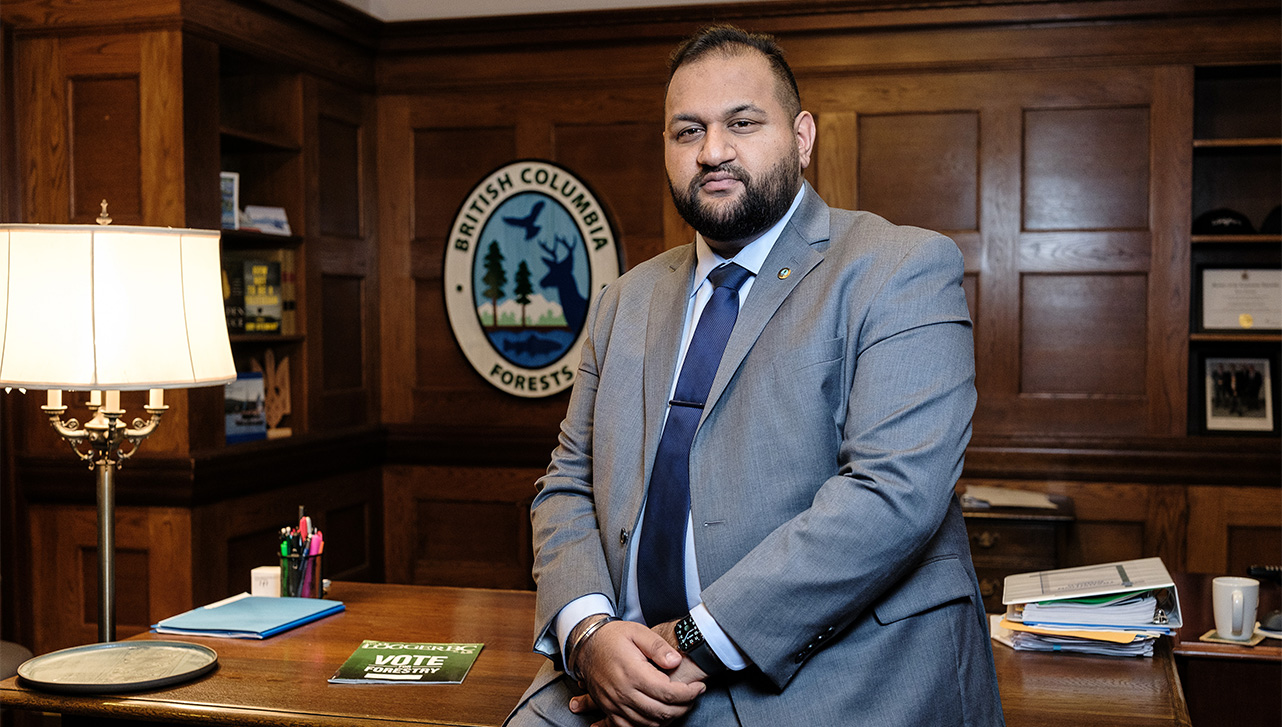
 New actions are being implemented to help more people find affordable homes in the communities where they live and work. …Starting Jan. 1, 2025, the B.C. home-flipping tax will be in place to discourage investors from buying housing to turn a quick profit. People who sell their home within two years of buying will be subject to the tax, unless they qualify for an exemption, such as divorce, job loss or change in household membership. It is expected approximately 4,000 properties will be subject to the tax in 2025. All revenue from the tax will go directly into strengthening housing programs and building new affordable homes in B.C. …Other measures to help make homeownership more accessible and improve the supply of housing, which came into effect April 1, 2024, are new thresholds for the first-time homebuyers’ program and the newly built home exemption.
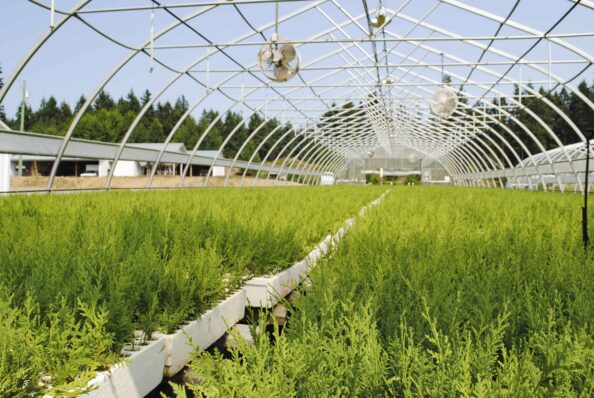 More than 280 million trees were planted in B.C. forests in 2024 due to the Province’s efforts. “2024 was a banner year for tree planting in B.C., including celebrating 10 billion trees planted since 1930,” said Ravi Parmar, Minister of Forests. “Our government’s commitment to sustainable forests has seen us lead the country by planting more than two billion trees since 2017.” …The Province’s 2024 reforestation efforts were primarily focused on fire-damaged areas. This was in addition to the work undertaken by forest tenure holders as part of their legal requirements to regenerate harvested areas. “We are in good shape right now based upon a run of strong years and the government’s commitment to tackling the impacts of climate change through adaptation and keeping reforestation programs at a level to help regrow our forests,” said John Betts, executive director, Western Forestry Contractors’ Association.
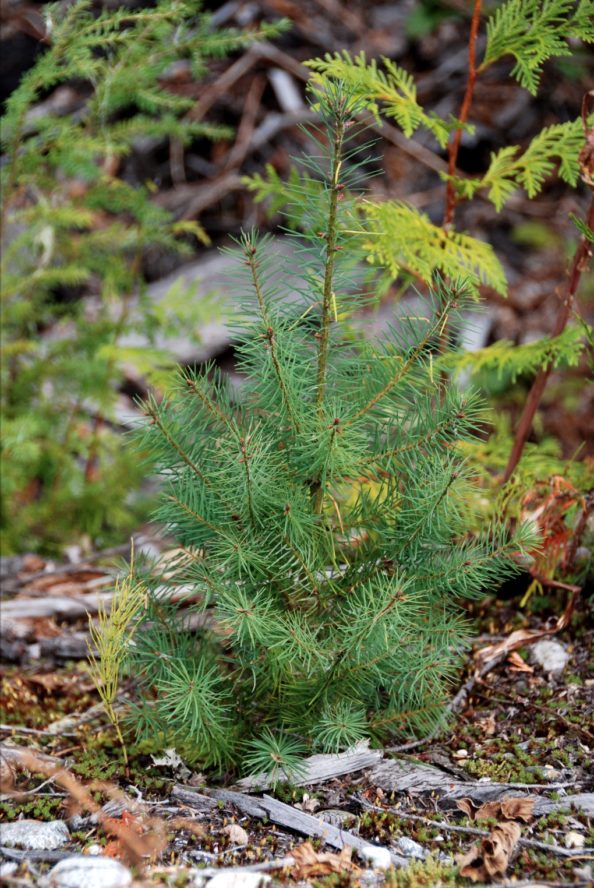 Walking through the clear-cuts north of Lund, I’ve noticed they’re not terrible by typical standards … the real problem lies in what comes next: replanting. Replanted areas aren’t forests; they’re fiber-farms—dense monocultures devoid of biodiversity. There are no birds, deer, or diverse plant life, just crowded trees competing for scarce nutrients. If we had to live off these lands, we’d starve. Replanting is a public relations greenwash, creating biological deserts instead of ecosystems. Naturally regenerating forests, by contrast, begins with nitrogen-fixing alders, enriched soils and balanced biodiversity. …Yet British Columbia clings to outdated forestry models focused on short-term profit. …Why not replant one clear-cut while letting others regenerate naturally? We could compare outcomes and learn something valuable. …We could listen to professional foresters and scientists rather than corporate lobbyists. BC could lead the world in forestry innovation, but only if we upgrade our economic belief systems.
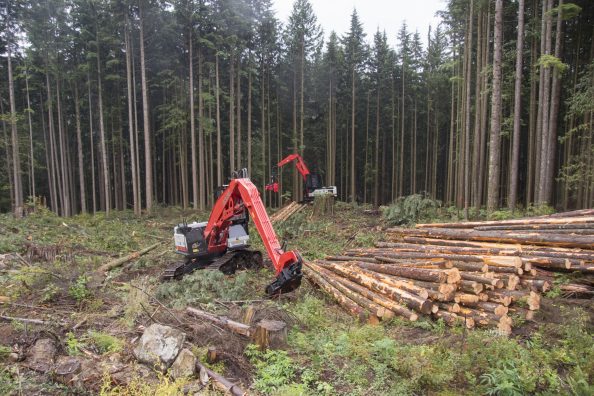 While details are minimal to this point, the BC Forest Safety Council is reporting a logging truck driver was killed outside of Logan Lake sometime Monday. According to the Safety Council’s bulletin issued Wednesday, the person was killed December 16th while attempting to “tow a log truck that had spun out on an icy road.” The details on a specific location, as well as the circumstances surrounding the person’s death, have not been detailed. …A separate bulletin issued by the BC Forest Safety Council this week also highlights the dangers that forestry workers face while on the front-lines of felling operations. It points to two separate, non-fatal incidents involving heavy machinery being used in different operations in the Southern Interior this fall, including one near Scotch Creek in the Shuswap. Both involve harvesting in steep-sloped areas.
 On December 16th, a log truck driver was fatally injured during an attempt to tow a log truck that had spun out on an icy road. This incident occurred in an area near Logan Lake, BC. WorkSafeBC and the Coroners Service are investigating this incident. We extend our condolences to the family and friends of the deceased and our sympathies to all those affected by this incident. This is the second harvesting fatality of 2024… We extend our condolences to the family and friends of the deceased and our sympathies to all those affected by this incident.
 At its November 2024 meeting, WorkSafeBC’s