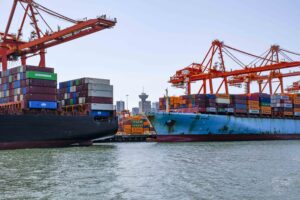
 Canada’s international trade deficit swelled to $6.3 billion in August, its second-largest shortfall on record, as new United States tariffs took a heavy toll on key exports and injected fresh volatility into cross-border flows. The latest figures, released by Statistics Canada, show how US trade policy continues to affect Canadian exporters and make the Bank of Canada’s next interest rate decision more complicated. Exports in August fell 3% by value and 3.2% in volume, led by sharp declines in copper ore and lumber shipments, both of which were hit by new US tariffs. …Imports, meanwhile, rose 0.9%, buoyed by higher consumer goods, a sign of resilient household demand, even as business investment remained soft. …Exports to the US, Canada’s largest trading partner, fell 3.4% in August after three consecutive monthly gains, and were down 8% year-over-year. Exports to non-US destinations edged up 1.8% from a year ago but slipped 2% from July.
 WASHINGTON — Prime Minister Carney is set to return to Ottawa today with no deals to remove US tariffs from Canadian goods, but he’s leaving his key minister on Canada-US trade behind to keep pressing the Canadian case. US President Trump lavished praise on Carney during a meeting in the Oval Office on Tuesday and said the prime minister would walk away “very happy.” The president showed no signs of relenting on tariffs, however, and no deal was announced. Carney was scheduled to have a working breakfast this morning with Joshua Bolten, CEO of the Business Roundtable, while Foreign Affairs Minister Anita Anand was set to meet with Secretary of State Marco Rubio. Canada-US Trade Minister Dominic LeBlanc will be staying behind in Washington. LeBlanc told reporters Tuesday that substantial progress was made in the White House talks this week.
 TORONTO – United Steelworkers union National Director Marty Warren issued the following statement as Prime Minister Mark Carney travels to Washington, D.C., to meet with US President Trump. …“Canada’s softwood lumber industry is on the brink of collapse. Thousands of workers and entire communities are hanging by a thread while Trump’s tariffs deindustrialize our economy and threaten good jobs across the country. We need urgent action – not more concessions. If free and fair trade in strategic sectors cannot be restored, the federal government must be ready to retaliate and take all necessary measures to protect the integrity of Canadian industrial production and employment. …We cannot allow foreign producers to use Canada as a back door for cheap, dirty, or diverted imports. …If Washington wants access to our market, it must come with respect for fair trade and for the workers who keep our economy running.”
 The Canadian Lumber Trade Alliance (CLTA) issued the following statement. …Luc Theriault, President, Wood Products at Domtar and Co-Chair of the Canadian Lumber Trade Alliance, said “The U.S. government’s decision to impose a further 10% tariff – on top of existing duties of 35% – is disappointing. These measures unjustly punish Canadian producers, while also driving up costs for our neighbors in the US.” …“Canadian lumber does not pose a national security risk to the United States. Our industry directly supports 200,000 jobs and sustains over 300 forest-dependent communities across Canada. We will continue to work closely with the Government of Canada to defend against these unfortunate trade actions and to safeguard Canadian forestry jobs.” …In its recent Section 232 proclamation, the US signaled a willingness to pursue negotiations. The Canadian industry is ready to engage. It is essential that the Government of Canada match this commitment and play an active role in defending our industry.


 ONTARIO — Upper levels of government have reached funding agreements to support the Town of Kapuskasing’s Paper Mill, averting a planned closure and providing what local leaders are calling “a critical step” toward securing the region’s economic future. Kap Paper announced the newfound support in a social media post on Friday evening. “Next week, we’ll be working out the details for a restart plan,” the post said, adding that updates would be shared “as soon as everything is confirmed.” Kapuskasing Mayor Dave Plourde, called the deal a “critical step forward for Kapuskasing and the entire region,” in a statement posted to the town’s social media page. …“We now have a second chance – a window of opportunity to come together, calmly and deliberately, to build a plan for modernization and long-term competitiveness,” said Plourde …“Today, I am pleased to confirm that both the federal and provincial governments have agreed to provide support.”
 Companies reliant on New Brunswick’s softwood lumber industry are bracing for hard times after US President Trump announced new tariffs on Sept. 30. …In a letter to Prime Minister Mark Carney, New Brunswick Premier Susan Holt pleaded for the federal government to make softwood lumber tariffs a top priority. “In some communities in New Brunswick, one in every 11 workers depends directly on forest products,” Holt wrote. …Ron Marcolin, the New Brunswick vice-president with Canadian Manufacturers and Exporters, said the latest tariffs and duties are a big deal in a long-running drama over softwood lumber. …While New Brunswick may largely rely on the American market, Marcolin said Americans also rely on New Brunswick’s products. …”The thing is, too, they realize their product is inferior. Their softwood lumber is not as good as a Canadian stick of lumber.”
 Canada’s merchandise trade deficit widened in August to C$6.32 billion ($4.53 billion) as exports fell faster in both value and volume than the rise in imports on a monthly basis, official government statistics showed on Tuesday. The trade deficit in August was led by drop in exports not only to its top trading partner the U.S. but also because its shipments to the rest of the world shrank in the month. Canada’s international trade numbers took a beating early this year as US President Trump imposed sectoral tariffs on the country, forcing businesses to reorient supply chain from its biggest trading partner. But the shift has been volatile and erratic. Analysts polled by Reuters had forecast the August trade deficit at C$5.55 billion, up from an upwardly revised C$3.82 billion in the prior month. Total exports dropped by 3% while imports increased 0.9%, StatsCan said.
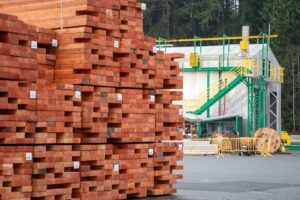 It’s hard to find anything good to say about Canadian forestry stocks right now. Some of the biggest names in the sector have been on a downward slide for the past three years. … But the onslaught of grim news has highlighted some bargains. …Okay, the definition of attractive rests on an assumption that risk-averse investors might not want to embrace just yet: Despite Mr. Trump’s bluster, the US still needs Canadian lumber in a big way to feed its lumber-intensive home construction industry. Says who? The National Association of Home Builders, for one. …Some analysts believe that US forestry companies will struggle to replace Canadian softwood. Ben Isaacson, at Bank of Nova Scotia, estimates that US producers would have to build 50 new mills to become fully independent of Canadian lumber. Just two companies build the specialized equipment required in mills. They would struggle to supply even two mills a year. [to access the full story a Globe & Mail subscription is required]

 HUNTSVILLE — The Ontario government is investing $10 million through the Forest Sector Investment and Innovation Program to help Daiken North America upgrade its laminated board production line at its manufacturing facility in Huntsville. This investment will help the company bring a first-of-its-kind wood panel product to market, create jobs and boost productivity. As part of its plan to protect Ontario, the government is making strategic investments to help forest sector businesses adapt, compete and grow to stay resilient in the face of U.S. tariffs. …Daiken’s $70 million project will equip them to manufacture a new type of wood panel used in flooring, recreational vehicles and modular housing, while supporting 128 existing jobs and creating 10 new jobs. This made-in-Ontario forest product is the first of its kind in the world, offering a higher-performance, lower-cost alternative to imported material.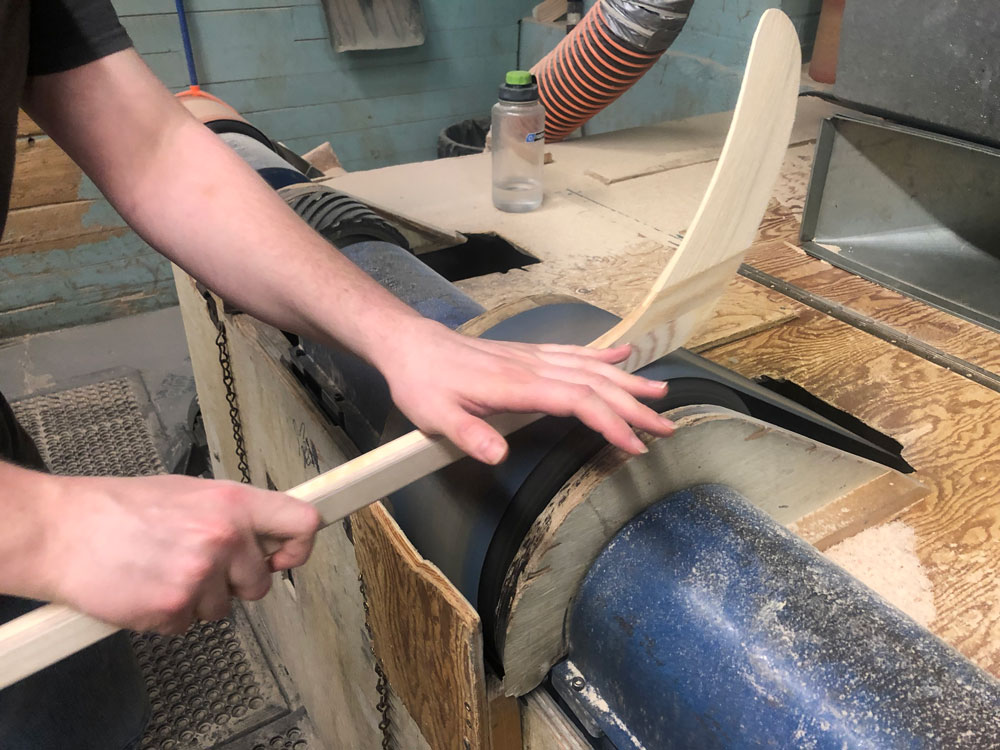



 FORT MILL, South Carolina — In a major stride towards its ambitious 2030 sustainability strategy, Domtar released its sustainability report. The report, entitled


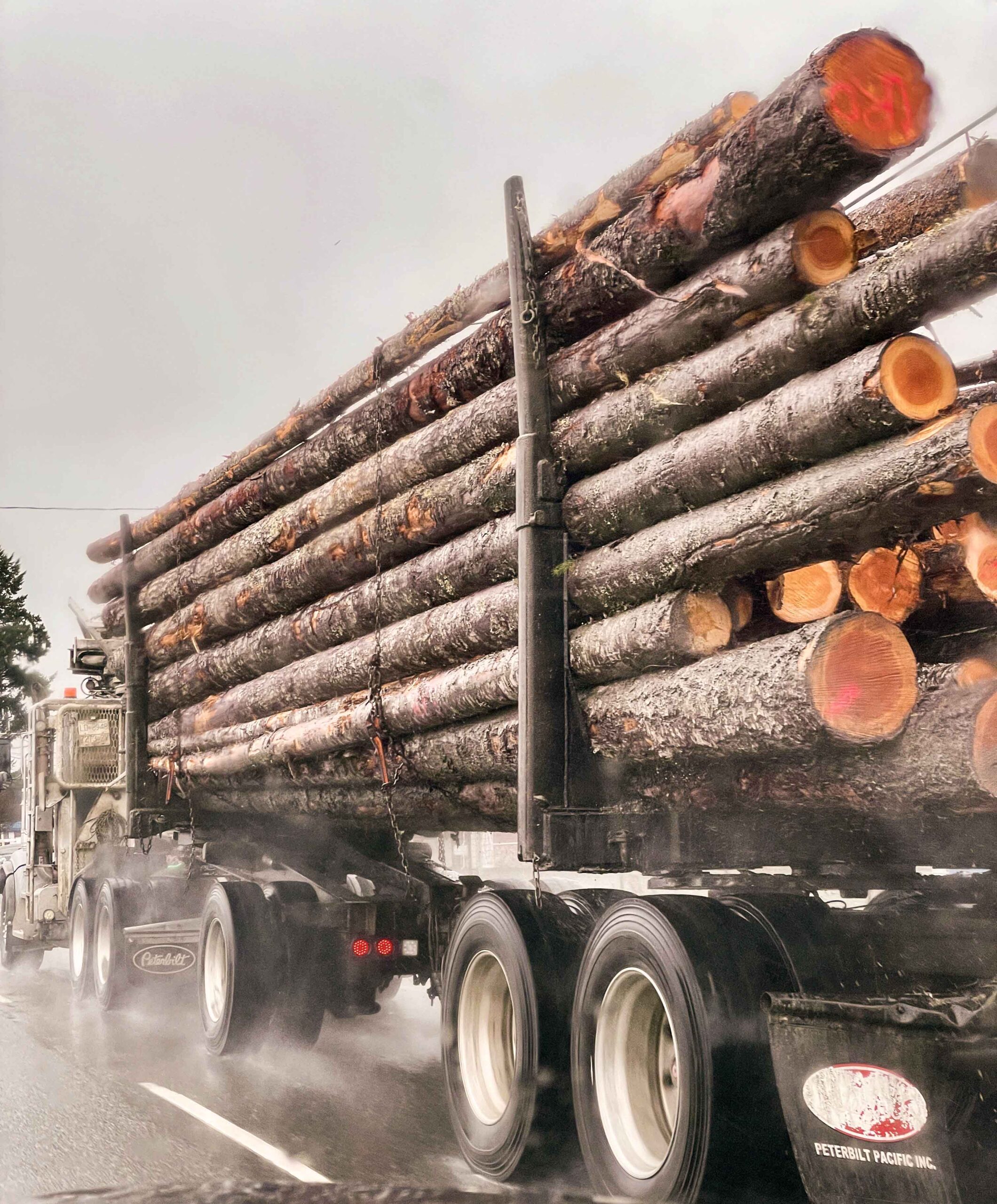 Anderson Creek Timber is currently hauling logs from its property located just south of Nelson above the Rail Trail at Mountain Station. The work will continue for another three-to-four weeks, said Doug Thorburn, a forester with Monticola Forest Ltd. that manages Anderson Creek’s forest properties. … The 600-hectare Anderson Creek Timber property is private land and is therefore governed by B.C.’s Private Managed Forest Land Act, which provides much less regulation than the Forest Act in areas such as biodiversity, watershed protection, wildlife protection and harvest guidelines. …Anderson Creek Timber and Kalesnikoff, which has a public Crown land tenure over much of the Anderson Creek watershed, are working on a watershed assessment for the area… The reason the company has not done public information sessions about its logging plans … is that on privately owned land, compared with public land, there is less obligation to do so.
 The Forest Enhancement Society of BC (FESBC) is accepting expressions of interest (EOI) for projects to assist the Province of British Columbia in advancing the environmental and resource stewardship of British Columbia’s forests. These projects must occur on provincial crown land and support one or more of the core purposes of the Society, which include:
 ʼNa̱mǥis First Nation and the Province are one step closer to a joint decision-making agreement that will support predictable harvesting, job creation and sustainable forestry operations on the north Island. “The best way to move fibre is by working together and that is what we are accomplishing with the ʼNa̱mǥis First Nation,” said Ravi Parmar, Minister of Forests. “I am optimistic that this draft agreement will create good-paying jobs and help us in our efforts to provide stability and certainty for our coastal forestry sector, as we deal with Donald Trump’s attack on our forestry sector.” ʼNa̱mǥis First Nation and the Province have developed a first-of-its-kind draft Section 7 joint decision-making agreement for the forestry sector under the Declaration on the Rights of Indigenous Peoples Act (Declaration Act) and Forest Range and Practices Act.
  The Chemainus River reveals its secrets in strange and unexpected ways. For years, I have wandered the forests near my North Cowichan home in search of the last few ancient trees, finding a few nice specimens here and there. In the heavily logged, 5,000-hectare Municipal Forest Reserve — popularly known as the Six Mountains, an hour north of Victoria — they are as elusive as the last rhinos of Sumatra. With a bit of luck, I hope my persistence may yet pay off. I don’t know it at the time, but my quest will launch me on a journey from the river’s headwaters to its mouth in pursuit of questions fundamental to the Chemainus and its future. How have human activities like industrial logging shaped the river, its watershed, and its salmon? …In my search for answers, I will discover modern challenges that bedevil other B.C. coastal rivers.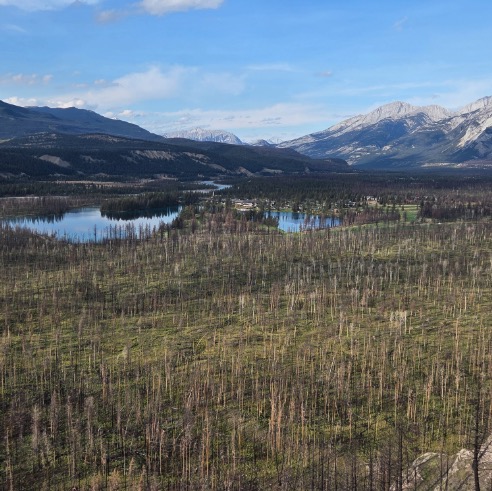

 THUNDER BAY — A number of stakeholders, largely from the forestry and energy sectors, got to provide regional input into a series of ongoing cross-province talks about energy policy. The Vaughn and Thunder Bay Chambers of Commerce held a roundtable discussion in the city on Oct. 2. The goal was for regional interests to provide requested input into an issues paper on energy being developed by the Toronto-based business lobby. …In Northwestern Ontario, she said, that includes longstanding sources like hydroelectricity and natural gas, but also continually-emerging opportunities connected to forestry and biomass. “We also talked a lot about the opportunities through the forest sector and biomass and the many things that can be created by harnessing forest products into energy,” Robinson said. “I think the most important thing was talking about how, from a forestry perspective, it really does check all the boxes.”
 NOVA SCOTIA — Unseasonably warm temperatures proved challenging Monday as the fight against an out-of-control wildfire in Nova Scotia’s Annapolis Valley entered its second week. The Department of Natural Resources estimated that the fire at Lake George had grown slightly in 24 hours to just over 2.8 square kilometres, mainly because of dry and windy conditions. Monday’s forecast for the area near Aylesford, N.S., called for a high of 28 C — the average daily high in the region for October is normally below 15 C. “I can’t believe it — in October we normally get frost and cold,” Dave Corkum, mayor of the Municipality of the County of Kings, said in an interview. “There is some rain in the forecast in a few days and hopefully we will get it.” Despite the conditions, Corkum said there are no reports of damage to structures in the area.