
Mark Carney
Prime Minister Carney says any future trade deal with the US could include “some element of managed trade,” including quotas, on softwood lumber exports. Carney’s comments come after B.C. Premier David Eby said that the federal government has been speaking with the provinces about quotas to resolve the softwood lumber dispute. Carney added that resolving the conflict is a “top priority” as the US prepares to double various duties to 34.45%. Canada and the US have been without a softwood lumber agreement since 2015, and Eby has previously said that resolving the dispute could “build momentum” for a larger trade deal. US President Trump’s latest threat is to impose 35% tariffs by Aug. 1 on Canadian goods currently not compliant with the US-Mexico-Canada Agreement. Carney says he agrees with Eby’s idea of resolving the lumber dispute as part of a larger trade deal, but notes that both issues are unfolding along different times lines.
Related coverage in: Business in Vancouver: Carney confirms possibility of lumber quotas in trade deal with US
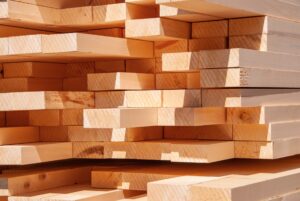 The Canada-US softwood lumber trade relationship has dealt with ups and downs for decades. …Canadian firms will soon receive word from the US Commerce Department… with the rate expected to jump from around 14% to 34%. …“Canfor’s rate will be ~45%,” said Andrew Miller, chair of the US Lumber Coalition. …Then there’s the threat of tariffs from President Donald Trump’s ongoing national security investigation of Canadian lumber imports under Section 232 of the Trade Expansion Act. …The US Lumber Coalition is playing for keeps. …Miller isn’t shy about the goals: “A countrywide quota with no exemptions and no carveouts, and a single-digit market share” for Canadian lumber. …The coalition is pushing for a tariff rate from the Section 232 investigation that starts at 15 to 20% and goes higher from there. That, Miller explained, will incentivize U.S. sawmill owners struggling with thin margins to hire more people and invest in upgrades, bolstering U.S. production.
 Canada’s premiers’ summer gathering in Muskoka will also feature a meeting with Prime Minister Mark Carney, as trade talks with the US are expected to intensify. Most of what the premiers are likely to discuss stems from President Trump’s tariffs: trade negotiations, the direct impact on industries such as steel and aluminum, the increased pushes to remove interprovincial trade barriers and speed up major infrastructure and natural resource projects. …“Canada is not open to us,” he said. “They need to open their market. Unless they’re willing to open their market, they’re going to pay a tariff. Lutnick also said Trump intends to renegotiate the Canada-U.S.-Mexico agreement next year, when the pact is slated to undergo a joint review. Carney has said Canada is trying to get an agreement on softwood lumber exports included in the current round of negotiations with the United States.
 The US and Canada… have feuded over “softwood” lumber since the 1980s. …Canada has long resisted changing its trade practices on lumber. But as the Trump administration has become more bellicose about its trade relationship with Canada, the country’s stance may be softening. On July 16, BC Premier Eby said Canadian officials are now open to a quota. …Any added fees from the US would likely further hamper an already struggling Canadian industry and benefit the US South. But the US would likely struggle to offset the lumber it gets from Canada in the short-term, driving up housing prices. …Though the US has some spare capacity to turn more timber into construction materials, a fully domestic supply chain would likely still require the construction of new sawmills and additional trained workers to operate the facilities. …Another factor for US suppliers and buyers is that US and Canadian lumber are not a perfect swap. [to access the full story a Bloomberg subscription may be required]
 Prime Minister Carney says securing a truce in the long-running Canada-US lumber dispute is a top priority as Canadian producers brace for even heftier US levies as early as September. …Mr. Carney declined to say what level of baseline tariff Ottawa would accept in a new trade and security pact with Washington. …Mr. Carney was asked whether Canada would impose tariffs on US products if the US keeps a baseline levy on Canadian goods. “We’ll see what the final agreement is, if there is an agreement,” he said. …Historically, Mr. Carney said lumber deals with the US contain “some element of managed trade” such as quotas on Canadian shipments to the US. …Mr. Pellerin, a former Canadian government softwood litigator, said he thinks it would be unwise to strike a deal before litigation related to the softwood dispute plays out. There are several challenges of US duties on softwood proceeding under the United States-Mexico-Canada Agreement dispute mechanism. [This story is for Globe and Mail subscribers only]
 Canada is open to considering limits on softwood lumber exports to the U.S. to try to ease some trade friction between the neighboring countries, British Columbia Premier David Eby told Bloomberg News in a report published on Wednesday. “One of the asks for years out of the American coalition has been a quota — that there’s a fixed amount of lumber that gets to come from Canada,” Eby told Bloomberg News. “And I think that, for the first time, there’s some willingness to have a conversation about what that could look like.” [to access the full story, a Reuters or Bloomberg Economics subscription is required]
 Northern Pulp has announced it will initiate a court-supervised sales process of its assets after it confirmed it wasn’t able to secure funding for a new mill project. In a news release Monday night, the insolvent company said the decision follows completion of a comprehensive feasibility study that concluded Northern Pulp could not achieve the 14 per cent internal rate of return required in a settlement agreement with the province to develop a bleached softwood kraft pulp mill and bioproducts hub near Liverpool, N.S. “Northern Pulp is thankful for the support and collaboration of the Province of Nova Scotia and local stakeholders throughout the feasibility study,” the company said in the release. Nova Scotia’s minister of natural resources said Northern Pulp’s announcement was “not the outcome we had hoped for.”




 B.C.’s employers in forestry-related businesses, sawmilling, stone cutting and oil and gas field servicing could be seen as the biggest beneficiaries of WorkSafeBC’s $2 billion surplus as the corporation proposes cuts to their service premiums approaching 40 per cent or more. WorkSafeBC’s policy is to maintain enough of a surplus “to avoid rate volatility” during economically difficult times. The corporation’s 2024 surplus, however, is equivalent to 141 per cent of liabilities, far more than its 130 per cent target. The corporation says its strong financial position has been helped along by “higher than-required investment returns,” according to WorkSafe’s statement, which is similar to workers-compensation agencies across the country. Ontario’s Workplace Safety and Insurance Board has used its 2024 surplus to issue $4 billion in rebates, over two rounds, to employers and in May, the Workers’ Compensation Board of Manitoba did likewise with $122 million in rebates, which is something the Canadian Federation of Business would like to see.

 Stop me if you have heard this one before. A company from away lands and makes loud noises about hiring hundreds of people in a job-hungry rural part of Nova Scotia. Government puts up millions of our dollars to bring in a new industry it really doesn’t understand. …Sometimes it works, other times the receivers move in or the multi-nationals move out. Then the recriminations begin. They already have in the 58-year-long saga of Northern Pulp and its predecessor companies which limps to a conclusion in Nova Scotia. This province has had a few successful commercial transplants. …But it is our high-profile failures, like this week’s announcement that Northern Pulp not only wouldn’t build a mill on the South Shore but has started selling off its assets, that seem to stick. …Enough companies have gone bust, sometimes spectacularly so, that they should serve as cautionary tales.
 Days after Nova Scotia’s forestry sector was dealt a major blow, the province is promising to use more wood to heat and construct public buildings — although officials deny any connection between the two developments. Two cabinet ministers made the announcement Thursday at Ledwidge Lumber, a sawmill in Enfield, N.S. Public Works Minister Fred Tilley said every government department is being directed to look for opportunities to use wood products that are leftover after trees have been harvested and milled for lumber. The products could include mass timber, wood pellets, biomass and biofuels. Tilley said the move was driven by the province’s desire to become more self-reliant, reduce fossil fuel use and produce more locally-made construction materials. …Meanwhile, lawyers for Northern Pulp were in a British Columbia courtroom on Thursday where they received approval for a plan to extend creditor protection while preparations continue to auction off the outfit’s Nova Scotia assets.

 TERRACE BAY, Ontario — AV Terrace Bay has been convicted on two charges: Failing to control the quality of discharged effluent to ensure that acute toxicity tests resulted in no more than a 50% mortality rate for the test organisms; and Failing to comply with an industry standard by discharging Total Reduced Sulphur compounds. …AV Terrace Bay was convicted of two violations under the Environmental Protection Act, fined $525,000 plus a victim fine surcharge of $131,250, and given 12 months to pay. …Due to financial constraints and market conditions, the mill has been in a warm idle state and has not been producing product or revenue since at least January 2024. The mill generates industrial effluent that undergoes primary and secondary treatment prior to discharging to Lake Superior via Blackbird Creek. …On May 1, 2023, 100% of the Rainbow Trout died during an acute lethality test performed on a grab sample of the mill’s final effluent.
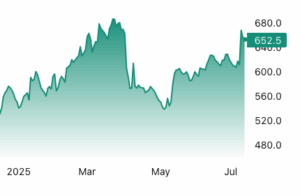 Lumber futures traded above $650 per thousand board feet, hovering near April highs driven by tightening US sawmill output and dwindling import volumes, both of which are near their lowest levels in half a decade. Domestic production in the first quarter slipped year-on-year, and imports, including softwood lumber from Canada, have contracted sharply, leaving US framing material availability at its leanest since 2019. At the same time, builders are contending with looming tariff hikes that could push duties on Canadian lumber from roughly 14.5% today toward the mid-30s, adding several thousand dollars to the cost of new homes. Although a modest pull-back in construction activity has softened recent gains, overall demand remains sufficient to absorb current supply, and without a rapid expansion in US mill capacity or alternative sourcing, these supply constraints, compounded by rising trade barriers, are likely to sustain upward pressure on lumber prices in the months ahead.
 OTTAWA — Canada’s annual inflation rate rose to 1.9% in June, meeting analysts’ expectations, as increases in the price of automobiles and clothing and footwear pushed the index higher, data showed on Tuesday. The consumer price index was at 1.7% in the prior month. Statistics Canada said on a monthly basis the CPI increased 0.1%, matching analysts’ forecasts. It is for the third month in a row that the CPI has been under 2%, or the mid-point of Bank of Canada’s inflation target range. This is the last major economic indicator to be released before the Bank of Canada’s rates decision later this month. The slight rise in prices across many segments, along with a strong jobs number last week, is likely to take away any incentive to cut interest rates, economists had earlier predicted. …Shelter prices rose by 2.9%, its first drop below 3% in more than four years.
 As we’re now well into 2025, the hardwood flooring industry continues to evolve in response to broader shifts in how people design and inhabit their spaces. From residential builds to commercial interiors, there’s a growing appetite for natural materials that offer both durability and design versatility—and wood remains a standout. With its timeless appeal and ability to suit a wide range of design aesthetics, it continues to be a foundational material in interior architecture. A key trend gaining traction is the use of tactile, textured finishes. Glossy surfaces are making way for more organic aesthetics, like wire-brushed, matte or hand-scraped textures that bring warmth and visual depth to a room. These finishes complement today’s more relaxed and natural design styles and offer practical benefits, like helping to conceal everyday wear in high-traffic environments.
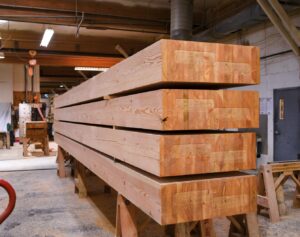 British Columbia remains at the forefront of mass timber design and implementation globally. The province has the highest number of mass timber buildings per capita of any other place in North America, and leads the country with more than 285 mass timber buildings. B.C.’s Mass Timber Action Plan has driven the expansion of mass timber construction, manufacturing, and workforce development across the province. This has increased the number of mass timber buildings and positioned B.C. as a critical exporter of knowledge and products to international markets. Metrics such as overall building count, advancements in carbon reduction, and the adoption of encapsulated mass timber construction (EMTC) standards in other regions all reflect our sustained leadership. Eric Andreasen, the vice-president of marketing and sales at Adera Development, spoke to Tanya Martins of Construction Canada and shed light on how B.C. is on its way to becoming the leader in mass timber development globally.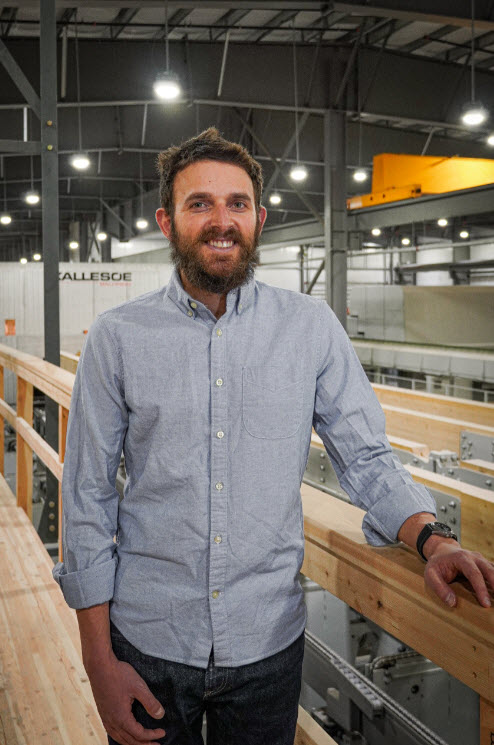
 Join us for our 22nd Annual GBM September 4th to 6th, where we will host international buyers and specifiers from all around the world, to meet our Canadian suppliers in Whistler. If you are an industry member and thinking about exhibiting to get yourself in front of these buyers and decision-makers, ACT FAST! We only have 5 booth spaces left, and they will go on a first-come basis. Industry surveys from 2024 indicated an anticipated $37 million in new sales from contacts made at the GBM. We anticipate many “new to GBM” Buyers again this year, and with hard work of our overseas staff, the continued assistance of the federal International Trade Commissioner Service and the provincial Trade & Investment Representatives abroad, we expect an excellent group of Buyers from across the globe. As usual, we will host BC Wood’s AGM, deliver Specifier Workshops and the exclusive Building Connections program.
  Don’t miss the BC Wood newsletter. Headlines include:
 The Province is making wood construction and heating a priority in public buildings. All departments have been directed to look for every opportunity to use mass timber, wood pellets, biomass, biofuels and other products made with wood that is leftover from sustainable harvesting and sawmilling. “Government is leading by example and using more wood products in our own buildings. It’s one of many steps our government is taking to make Nova Scotia more self-reliant and energy secure and to grow our economy and create jobs through innovation in our forestry sector,” said Public Works Minister Fred Tilley. Departments will prioritize wood products in new construction, renovations and conversions from oil heat. They will also make it a priority where applicable in projects that are partially or completely funded by the government. This focus aligns with the Nova Scotia Loyal program, reduces reliance on imports and enhances export markets.
 OTTAWA, ON – With wildfires impacting Canadians across the country, the federal government is taking action to prevent wildfires, mitigate their effects and boost resilience. …The Government of Canada announced an investment of $11.7 million;over four years to establish the Wildfire Resilience Consortium of Canada (WRCC). Funded through the Wildfire Resilient Futures Initiative, the WRCC will serve as a national centre of excellence and virtual hub for wildland fire innovation and knowledge exchange. The WRCC will advance many of the actions in the Kananaskis Wildfire Charter, agreed to by the leaders of the G7 this spring in Canada and endorsed by the leaders of Australia, India, Mexico, the Republic of Korea and South Africa. It will bring together domestic and international governments, communities impacted by wildfires, the private sector and individual experts to share knowledge, facilitate collaboration and accelerate the use of cutting-edge science and technology in wildfire prevention, mitigation, preparedness and response.
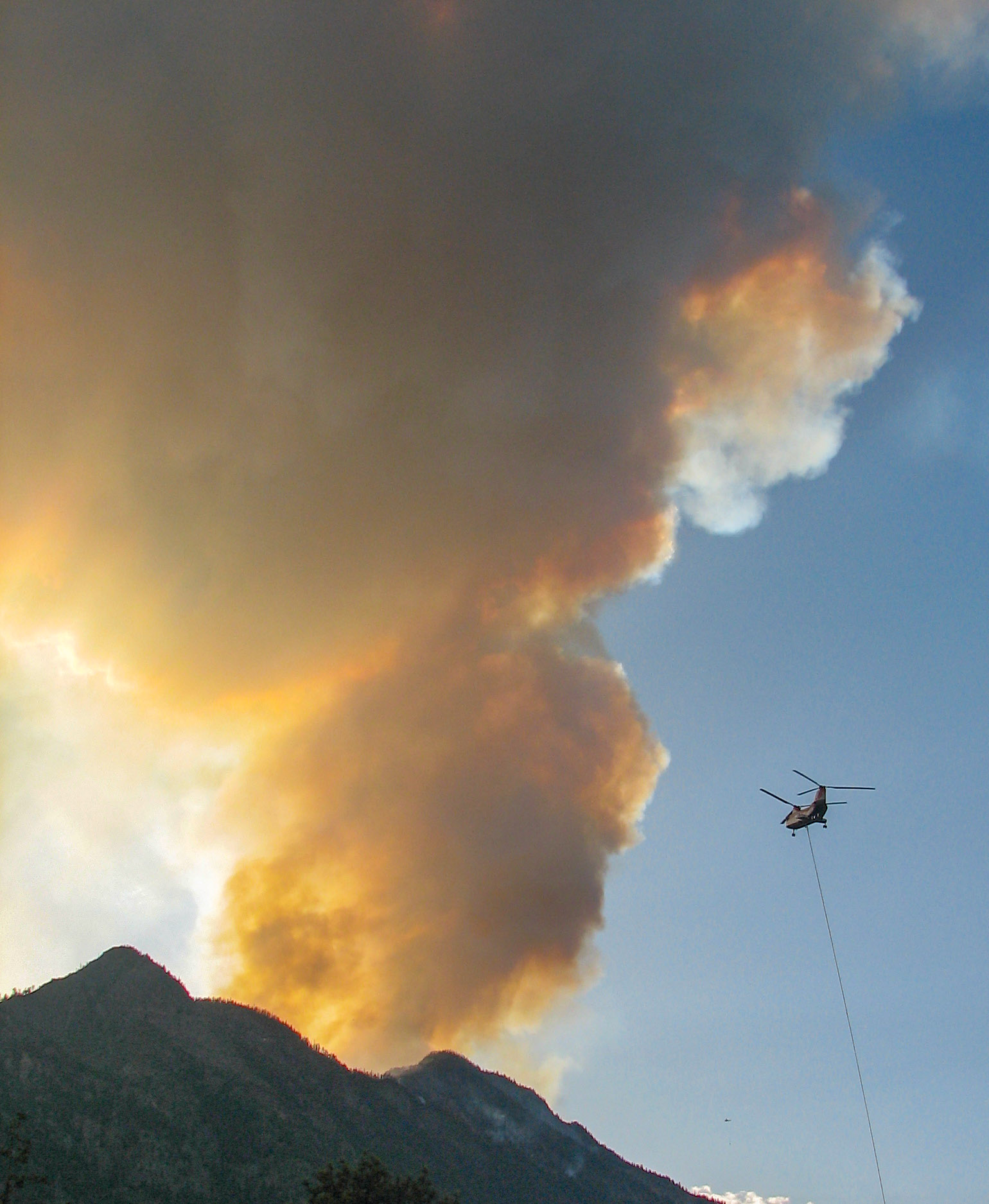 Canada’s premiers met June to talk infrastructure but were distracted by the small matter of the forest
 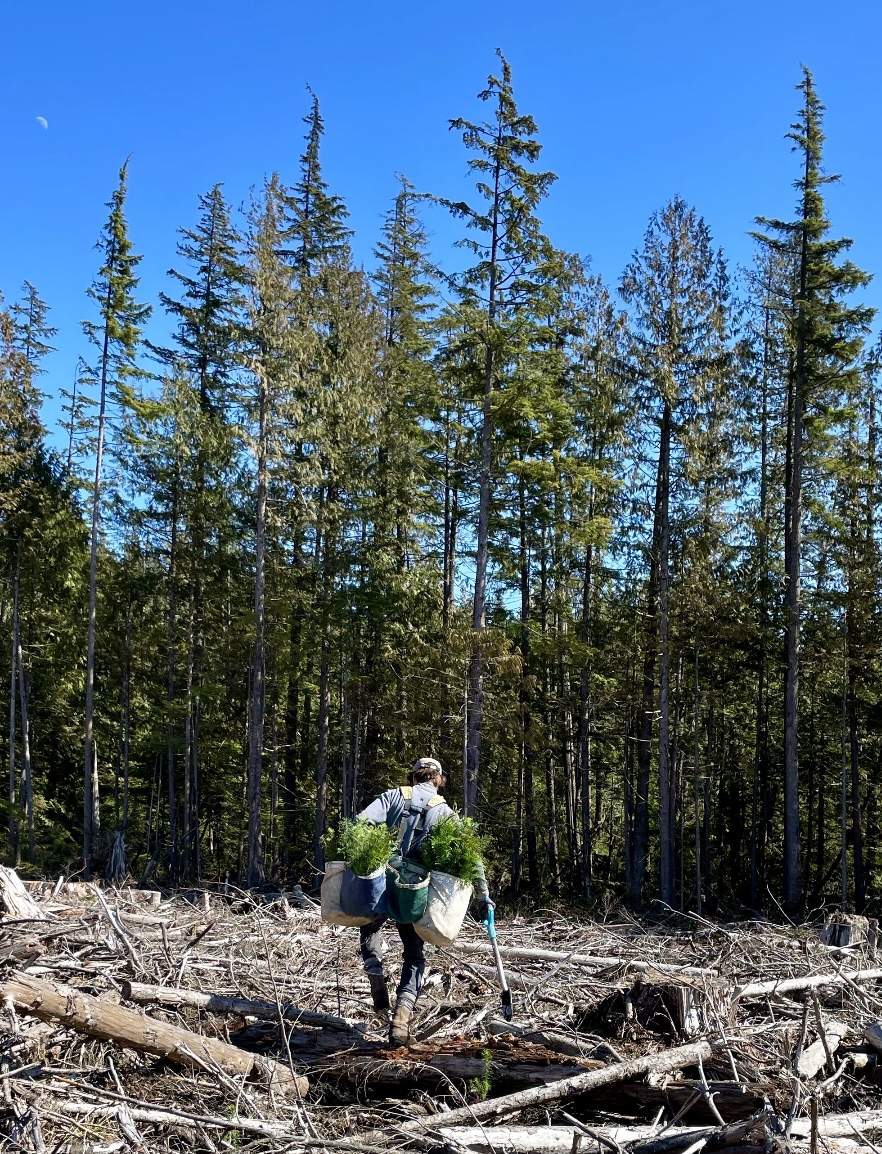 It is estimated that 130 million trees in the Tłı̨chǫ region alone were burned in the devastating 2023 fires. An ambitions new reforestation project is taking on a unprecedented initiative to plant over 1 million trees as part of a six-year plan to plant 13 million trees to bring back the forest. The Tłı̨chǫ Government is holding a special opening ceremony tomorrow at the Behchokǫ̀ Culture Centre at 10:00 a.m. in celebration of the launch of their major reforestation project. “This will mark the beginning of the largest reforestation effort ever undertaken in the Northwest Territories,” said Paul Cressman, who is working with the Tłı̨chǫ government on the new reforestation project. Over the summer, 1.4 million trees will be planted around Behchokǫ̀, Russell Lake, and James Lake. Using locally harvested seeds, the tree planting is “the first step” in a six-year plan to plant 13 million trees across Tłı̨chǫ lands.
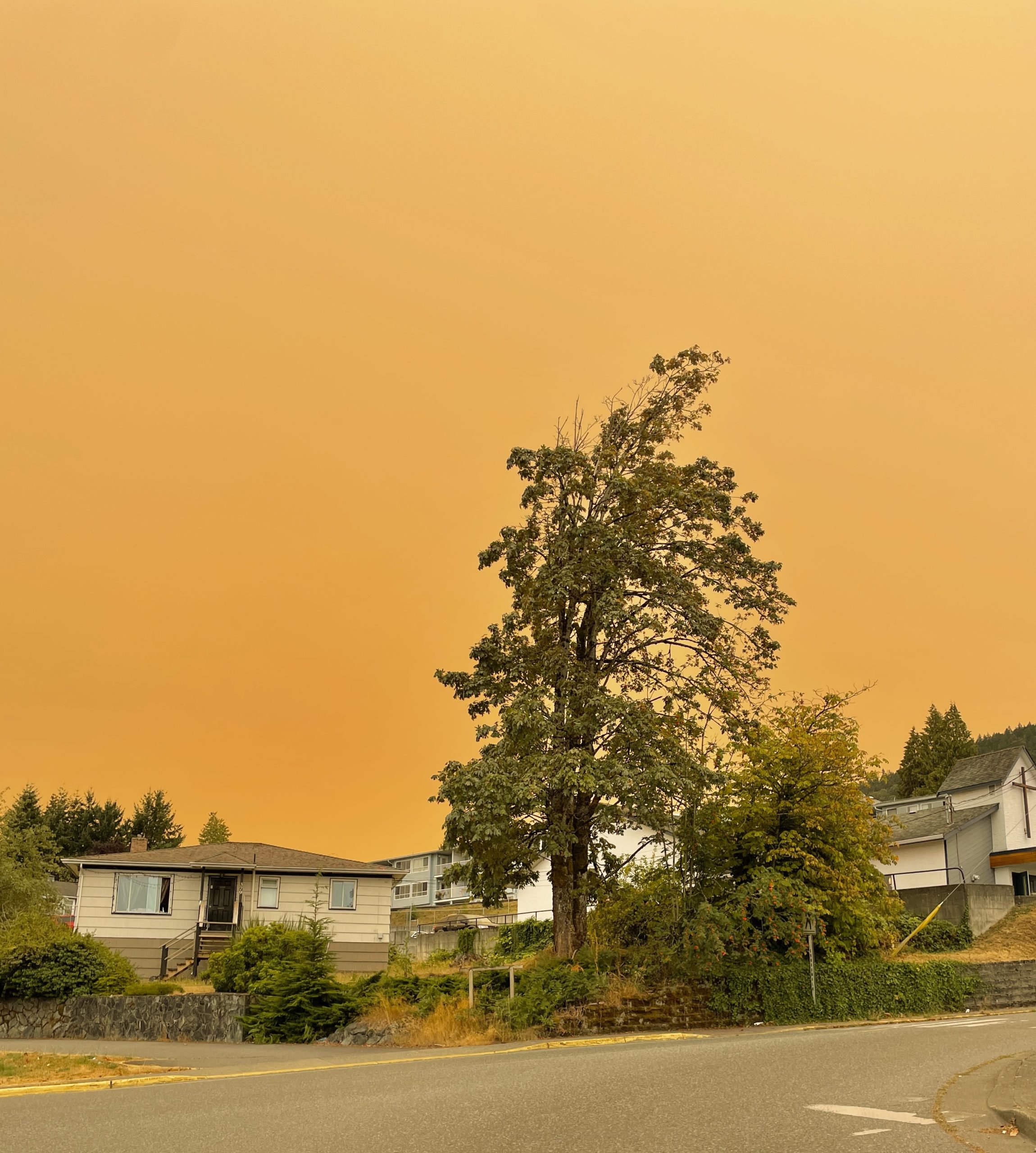 Hundreds of wildfires are burning across the Western states, Alaska and Canada as fire season perks up amid a sprawling heat wave and widespread dry conditions. …Fires are being fueled by widespread high temperatures and dry conditions. …The preparedness level is at 4 out of 5 for the U.S., and 5 out of 5 in Canada. Intense fire behavior was reported in 10 western US states over recent days in regions afflicted by heat and drought. …Alaska has seen major wildfire activity over the past week, with more than 300,000 of the 750,000 acres burned this year going up in flames, according to the Alaska Division of Forestry & Fire Protection. …After a bit of a lull in firestorms in late June to early July, Canadian wildfires returned in a big way. More than 350 fires are burning out of control across the western two-thirds of the nation. Among the most concerning fires flaring, many are in Manitoba. [A Washington Post subscription is required for full access to this story]
 It had to be a joke, right? A group of MAGA lawmakers moaning about “suffocating Canadian wildfire smoke”. …But, no. …It makes no mention of the tens of thousands of Canadians forced to evacuate this year or those who have died. The signatories conveniently ignore the fact that smoke from the US side of the border regularly smothers those of us who live north of it. In fact, the complaint does not mention fires in the US at all, even though more than two million acres have burned so far this year, and Canadian firefighters have deployed to assist their US colleagues, just as US wildland firefighters have been helping in Canada. Given the MAGA credentials of the complainants, you may not be surprised to hear their complaint blames a “lack of active forest management”… admonishes Canada for not preventing arson and makes no mention of climate change whatsoever.
 Vancouver Park Board staff are seeking commissioners’ approval to proceed with the next phase of a tree removal project in Stanley Park due to an extensive looper moth infestation. Work has been underway to cut down thousands of trees in Vancouver’s biggest park since the summer of 2023, due to fire and public safety risks posed by dead and dying trees. …While the tree removal plan has faced sharp criticism staff say they have a plan that will see the least number of trees removed. “This aims to balance key public safety risks resulting from the hemlock looper outbreak while leaving a moderate extent of internal forest areas to undergo natural forest stand regeneration,” the staff motion says of its preferred approach. If commissioners approve of the staff plan, planning for tree removal and mitigation work would begin later this year and conclude in the first quarter of 2027.

 Clear-cutting can make catastrophic floods 18 times more frequent with effects lasting more than 40 years, according to a new UBC study. In one watershed, these extreme floods also became more than twice as large, turning a once-in-70-years event into something that now happens every nine. “This research challenges conventional thinking about forest management’s impact on flooding,” said senior author Dr. Younes Alila, a hydrologist in the UBC faculty of forestry. “We hope the industry and policymakers will take note of the findings, which show that it matters not only how much forest you remove but also where, how and under what conditions.” The UBC-led study draws on one of the world’s longest-running forest experiments at the Coweeta Hydrologic Laboratory in North Carolina and is published in the
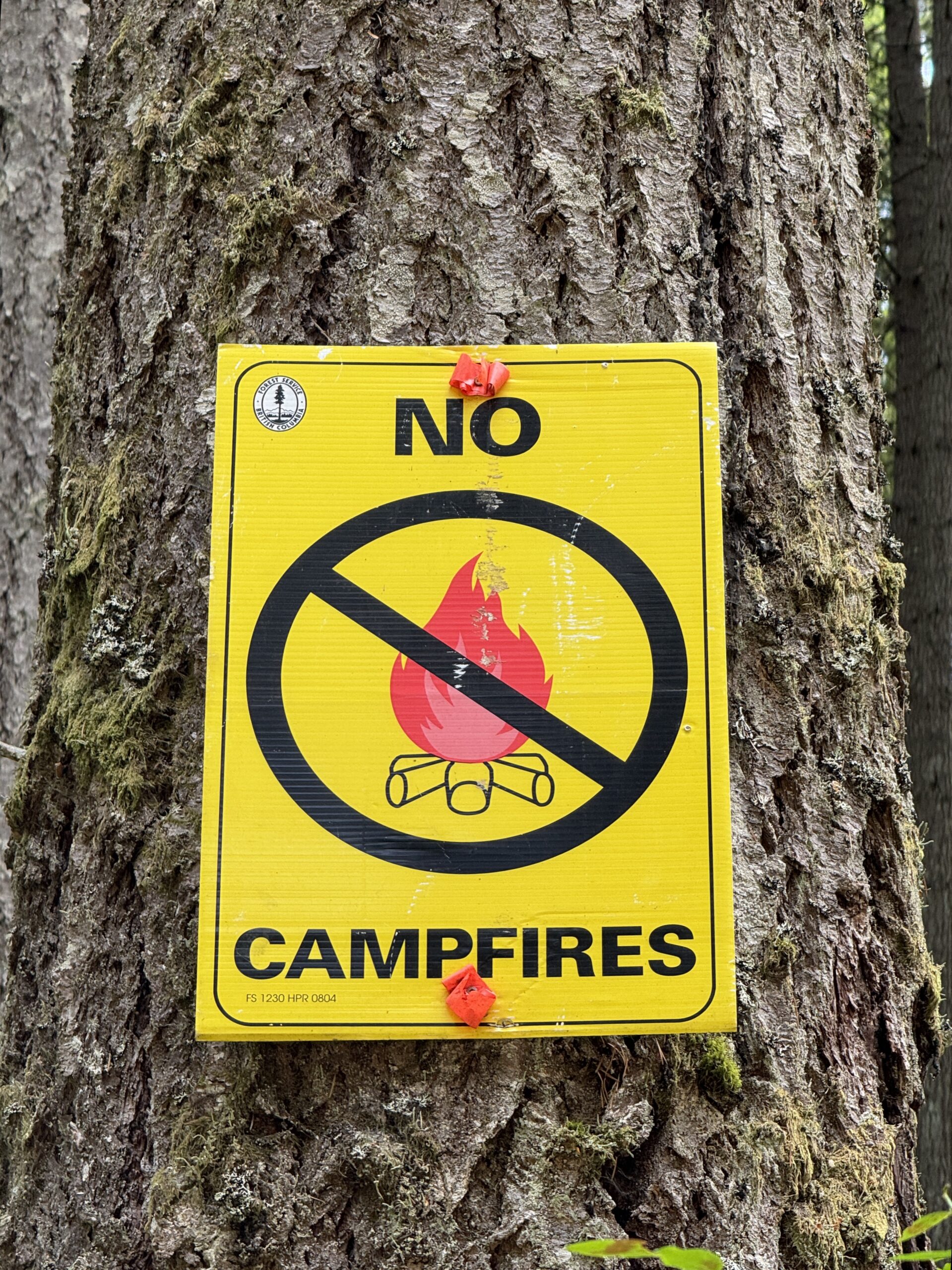 The Coastal Fire Centre will put a campfire ban into effect this week. The ban will be in place starting at noon on Thursday, July 17, noted a Coastal Fire Centre information bulletin issued Tuesday, July 15. Campfires will be prohibited on Vancouver Island and throughout the Coastal Fire Centre region with the exception of Haida Gwaii and the portion of the Central Coast Regional District within the North Island Central Forest District. Existing open fire prohibitions in the Coastal Fire Centre’s jurisdiction enacted May 30 will remain in place, and fireworks and burn barrels are restricted in most areas. “Open fire is the largest cause of human-caused fires provincially,” noted the information bulletin. “Human-caused wildfires are entirely preventable and may divert crucial resources from naturally occurring and/or existing wildfires.” The campfire ban and previous burning bans will be in place until Oct. 31 or until the orders are rescinded.
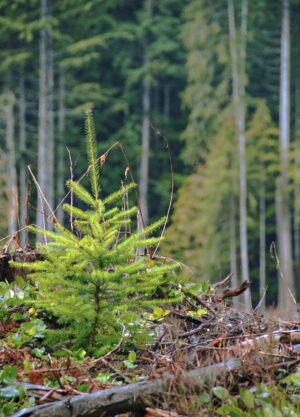 With the wildfire season intensifying in recent years, post-wildfire restoration has become increasingly critical. A Vancouver tech company drawing investor attention says it has an answer for not only replanting trees, but helping to rebuild forests that are more resilient to future fires. Veritree Technology Inc. is a platform that uses ecological data and monitoring tools to support tree planting, tracking and reporting. “Today, areas that historically wouldn’t have burned from wildfires are actually burning much hotter. At times, that burns the seed stock that would otherwise naturally regenerate after a wildfire,” said Derrick Emsley, CEO and co-founder of Veritree. He said that without intervention, deciduous species could grow back fast, crowding out the chance for a mature, healthy natural forest to regenerate, which leaves the area more vulnerable to wildfires in the future.



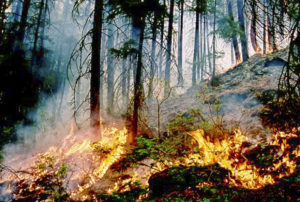 As wildfires become more frequent and intense across Canada, fire officials are seeing stark differences between northwestern and northeastern Ontario. They say it all comes down to what’s burning, how it burns, and where. More than 2.2 million hectares have burned in Ontario’s northwest since 2015, compared with around 287,000 hectares in the northeast. “The three things that we need to consider are the weather, the fuels and the topography,” said Chelene Hanes, a wildland fire research scientist at the Great Lakes Forestry Centre in Sault Ste. Marie. Northwestern Ontario typically gets a minimal amount of rain, whereas the northeast has a wetter climate and vast peatlands, she explained. …”On the [northwest] side of the province, and moving into the prairies, they’ve experienced a bit more drought, which is influencing the moisture of the fuels. So that is causing more ignitions to happen as well, because it’s drier,” Hanes said.
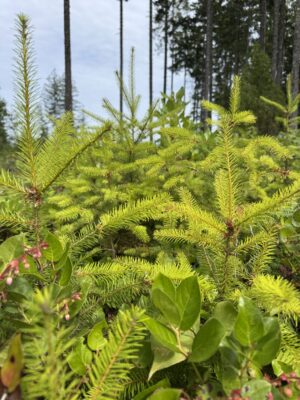 WHITBY, Ontario — Ryan Turnbull, Parliamentary Secretary to the Minister of Finance… highlighted a $4-million federal investment for tree-planting projects in urban and suburban areas in southern Ontario. Trees For Life will collaborate with planting partners to plant an average of 24,000 trees annually over five years, for a total of 120,000 trees in communities across southern Ontario. The collaboration with Trees For Life is already ahead of target, supporting the planting of 83,000 trees in southern Ontario with 35,000 trees planted in 2024 and 48,000 trees planted across 40 projects in 2025 to date. This project builds on a successful regional model piloted in the Durham Region.
 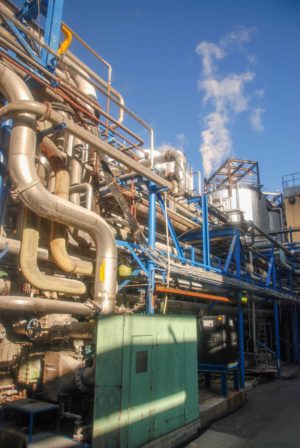 With the announcement that there won’t be a new kraft pulp mill being built in Liverpool, the long and expensive Northern Pulp saga begins winding down. Here’s the little we know about what Northern Pulp and its associated companies are worth, who’s likely to get paid and what the taxpayer might be on the hook for. When it filed for creditor protection in 2020, Northern Pulp estimated it had $254 million in assets and $311,019,464 in liabilities. But half of those assets – what it estimated as $130 million worth of equipment and land associated with a cold-idled pulp mill at Abercrombie Point – comes with a large and undetermined liability for whoever gets stuck with the cleanup costs. How much the taxpayer ends up on the hook both for unpaid loans to Northern Pulp and cleanup of the mill site will rely on how much gets paid for the companies’ assets.
 A new peer-reviewed scientific study [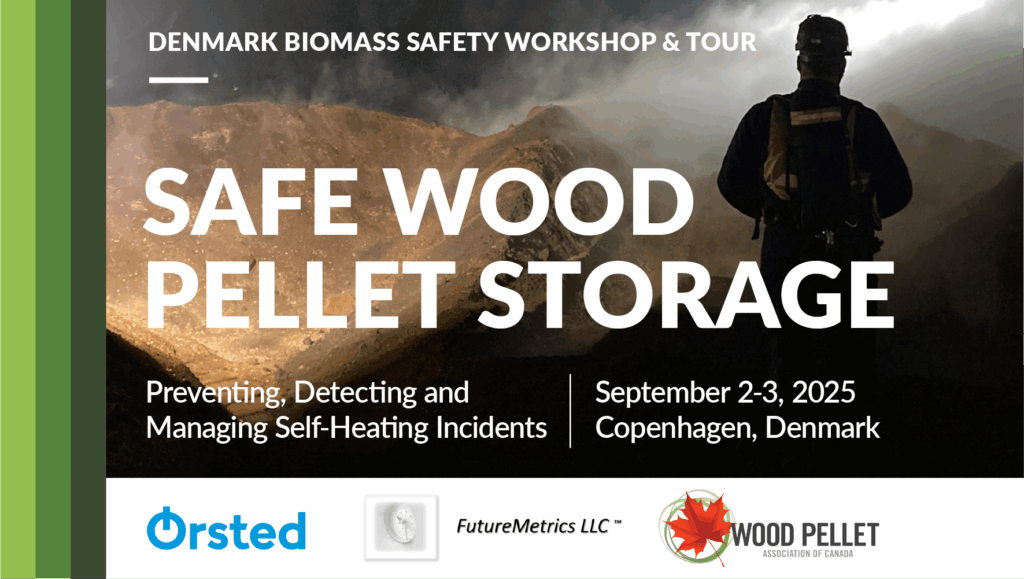

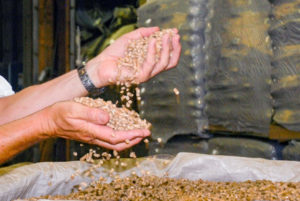 …In the aftermath of the earthquake and tsunami, Japan shut down not just Fukushima but all of its nuclear plants, a move that resulted in the loss of a third of its electrical power. …Japan faced a daunting energy crisis that it addressed… with conventional fuels such as natural gas and “bioproducts” including wood pellets derived from the logging of BC’s Interior forests. …Last year, roughly two million tonnes of those pellets arrived Japanese ports from BC, linked to a dozen mills in the province that make wood pellets derived from trees logged in the province’s rapidly dwindling primary forests — natural forests never previously subject to industrial logging. …Which means that in the name of creating allegedly clean energy, forests are being razed just to burn the wood. …The strain on the province’s stressed forests is [also] coming from other bioenergy producers, including those who want to use wood to make jet fuel.

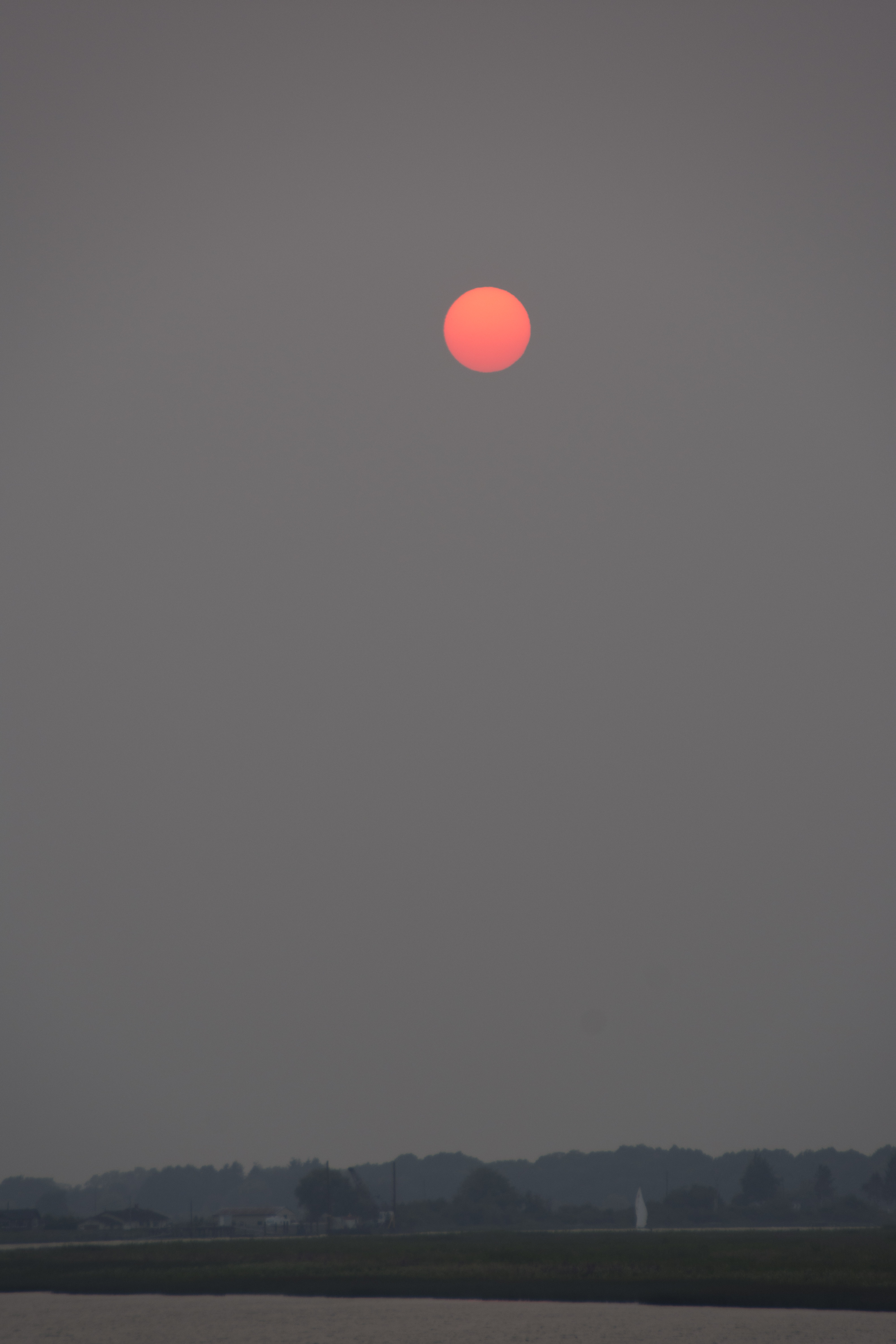 Summer camps and daycares are being forced to shift their plans amid stifling heat and poor air quality caused by wildfire smoke drifting across Central Canada, the Prairies and other parts of the country. Special air quality statements or warnings were in effect Tuesday for a second day across several provinces and territories, combined with heat warnings that stretched from Ontario to Prince Edward Island. Smoky air in the Toronto area prompted many camps to field calls from concerned parents and make last-minute changes, especially on Monday, when the city was under a warning due to the Air Quality Health Index reaching the “very high risk” rating of over 10. Adib Razavi, director of Toronto Athletic Camps, said they received hundreds of calls on Monday morning from parents who wanted to know how their kids’ activities were being adjusted.


 Much of Central Canada, Manitoba and Saskatchewan were placed under special air quality statements or warnings on Monday due to smoke from wildfires, as Environment Canada advised residents to limit time outdoors and watch for smoke exposure symptoms. The weather agency said air quality was poor across swaths of Ontario and Quebec as westerly winds brought in smoke from forest fires in the Prairies and northern Ontario. The weather agency also issued air quality warnings in central Saskatchewan and a special statement for much of Manitoba, noting that air quality and visibility due to wildfire smoke can fluctuate over short distances and vary from hour to hour.
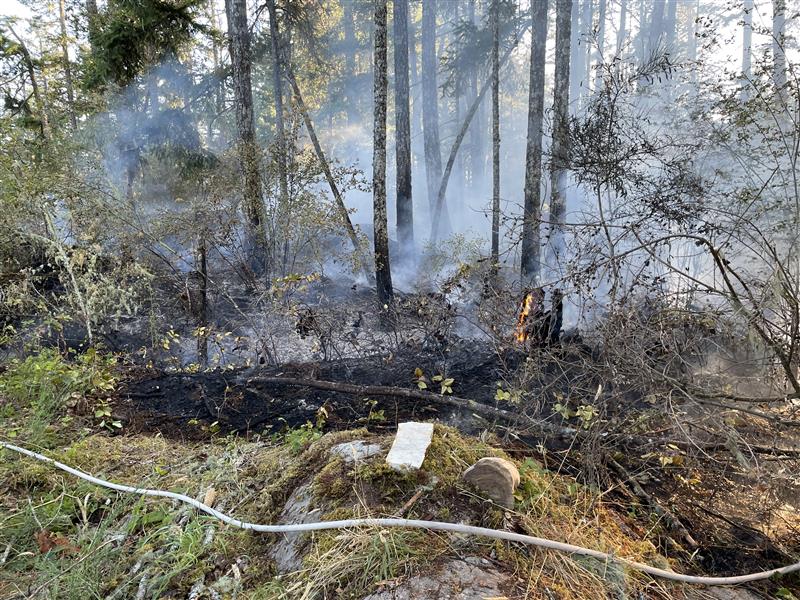
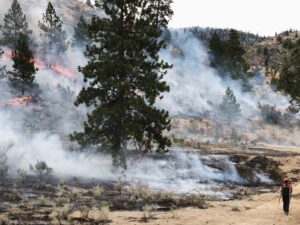 Fire crews in Northwestern Ontario are monitoring 52 active wildfires across the region after five new blazes were confirmed by Sunday evening. Among the latest is Red Lake 99, burning near Grist Lake, which is the largest of the new fires at 394 hectares and not under control. Red Lake 101 has also drawn attention after crossing into Ontario from Manitoba. That fire is currently 227.5 hectares and continues to burn within Woodland Caribou Provincial Park. Other new fires include Red Lake 98 near Hornby Lake, Red Lake 100 west of Poplar Hill First Nation, and Red Lake 102 northwest of Nechigona Lake. Of those, only Red Lake 100 is under control. Fire officials continue to urge people to respect emergency orders and stay out of restricted zones to support safety and firefighting operations.
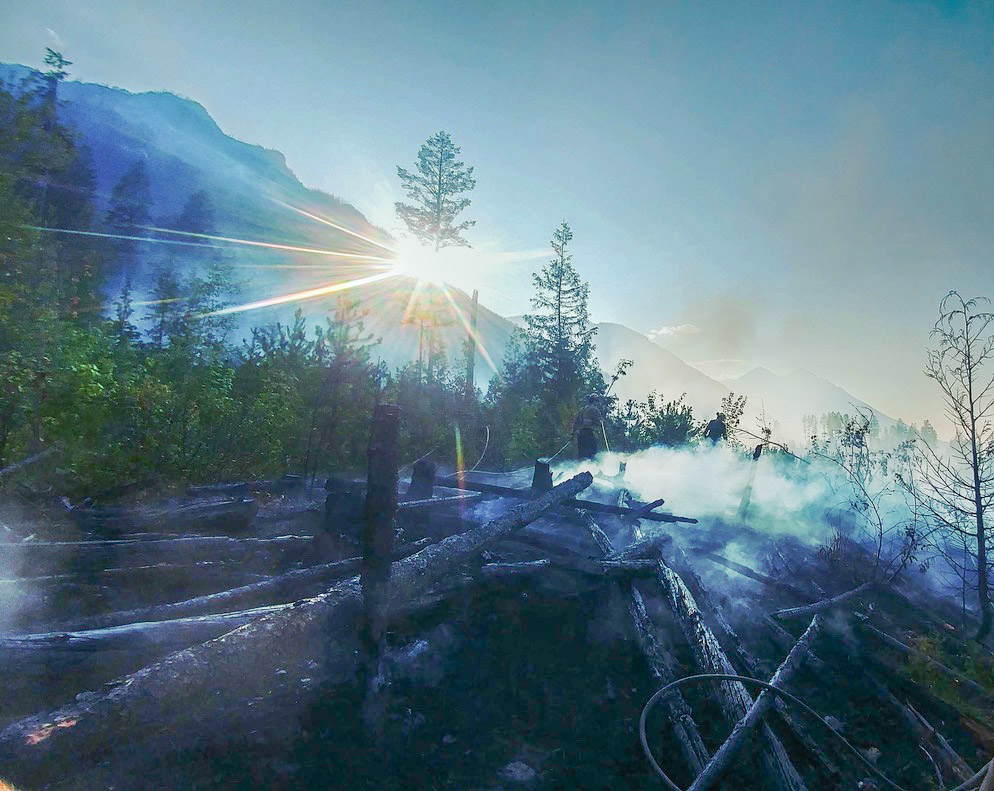 DRYDEN — Ten new forest fires in Northwestern Ontario over the weekend brought the total number of active fires in the region to 52. The Ministry of Natural Resources reports that one of the new outbreaks is an extension of a wildfire burning in Manitoba. That province’s EA061 fire has burned 278,000 hectares there, and 228 hectares in Ontario, as of Sunday evening. It’s located about 10 kilometres west of Bulging Lake in Woodland Caribou Provincial Park. Among other new fires of note in the Northwest, a 394-hectare blaze is burning four kilometres northwest of Grist Lake in the MNR’s Red Lake sector. The ministry reports the wildland fire hazard is low to moderate in most of the region, except for along the Ontario-Manitoba border from the Rainy River area to Opasquia Provincial Park, 250 kilometres north of Red Lake, where the hazard is mainly high.