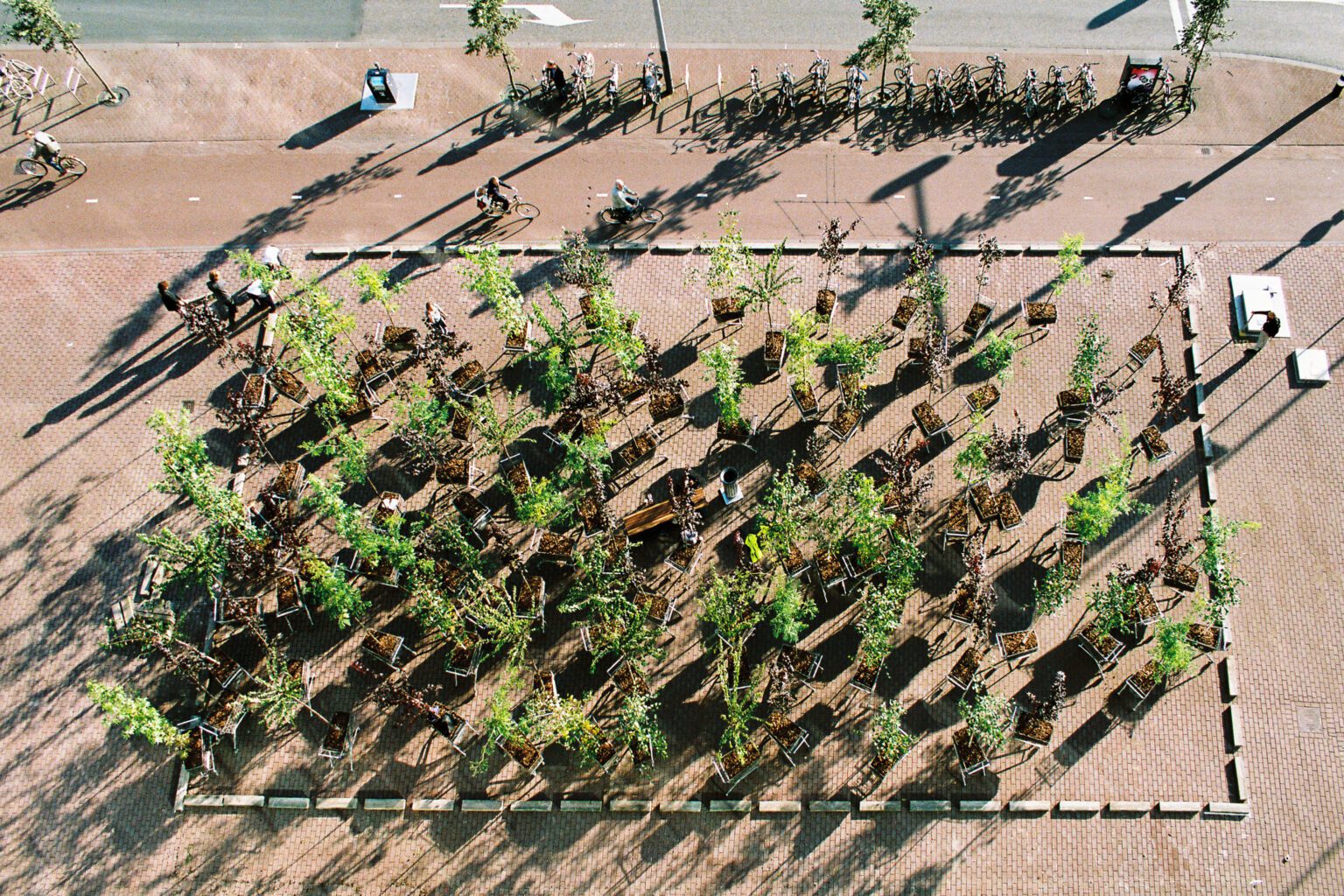
 An upcoming art installation in Toronto aims to spark city-wide engagement around greenery and draw attention to the way that trees impact physical and mental health in urban settings. Designed by architects from the Netherlands, the Moving Forest is a mobile project featuring 50 red, silver, sugar and Autumn Blaze maple trees planted in shopping carts travelling through the city for eight weeks, highlighting the importance of trees and shade. …“The project reminds us that as our cities continue to warm and densify, we must ensure that we are prioritizing green infrastructure along with grey,” the project website reads.






 Kitselas First Nation is expanding its role in the forestry sector with the purchase of a new forest tenure from A&A Trading Ltd. The deal includes Forest License A16836 and Road Permit RP16688, giving Kitselas an annual allowable cut of just over 10,000 cubic metres. The total purchase price was just under $1.58 million and was approved by Chief and Council in July 2024. The acquisition is supported by Kitselas Development Corporation and Kitselas Forestry LP. An initial $800,000 was transferred to Kitselas in 2024, with the potential for a second distribution to fully cover the purchase. This move strengthens Kitselas’ economic position and gives the Nation more control over its lands and resources. Kitselas Forestry LP will manage the new tenure alongside existing operations, maintaining partnerships with trusted industry players.
 For 82 years, the TLA’s long history of supporting the forward movement of BC’s forest sector with the core objective of ensuring the ongoing prosperity of the contracting community and the people working in it, has been to the overall benefit of our forests. BC’s forest sector is wrestling with difficult and challenging conditions caused by many factors including changes in government policies, increasing complexity, conflicting mandates, and ever-increasing cost structures. We are overdue for a comprehensive overhaul of the current environment we deal with and the need to return to a dedicated vision towards renewed prosperity. However, today’s announcement of the new Provincial Forest Advisory Council (PFAC), yet another committee to review BC’s forest sector and provide recommendations to the Minister of Forests, is of concern. Notably, the advisory council does not include representation from boots-on-the-ground, independent contractors who can provide a valuable perspective on the impacts of potential changes.
 Tariff discussions about reducing US dependence on foreign goods became a focus for the second Trump administration. …However, the US forest products industry’s reliance on Canadian wood raises questions about eliminating Canadian wood imports entirely. This piece is the second in a two-part series by the Fastmarkets team.


 The effects have been felt by building industries in terms of increased costs, disrupted supply chains and economic uncertainty. Last week’s webinar, “Trump’s Tariffs: Transition or Turmoil?… focused on the near-term effects of tariffs, how trade environments have shifted in response, and what the next steps of the Trump Administration might be. …Ari Hawkins, a Politico trade reporter, agreed that the administration is likely looking to the USMCA renegotiations to “really get into the weeds of a lot of these tariff disputes” with Canada. …Hawkins says that further Section 232 investigations could lead to new tariffs in the coming months on a range of products, including semiconductors, lumber and critical minerals. While the administration might make exemptions on materials like lumber before those investigations are completed, Hawkins says, they are still likely to face the Section 232 tariffs as part of the administration’s focus on incentivizing manufacturing and development within the US.
 The downward price slide of recent weeks was unabated across most framing lumber species. Uncertainty surrounding the economy and potential new developments in US trade policy contributed to a cautious market tone. Many traders lamented that they anticipated at least a modest decline in mortgage interest rates by now that has not materialized. With discounts cutting deeper across most species, the Random Lengths Framing Lumber Composite Price tumbled $14. That’s the composite’s first double-digit drop since April 2024. Downward price pressure intensified across the South. …Competitively priced Western S-P-F crept deeper into traditional Southern Pine markets, especially lower grades, which contributed to the downward price pressure on SYP. …Lumber futures settled sharply higher on Thursday after a prolonged downward trend.

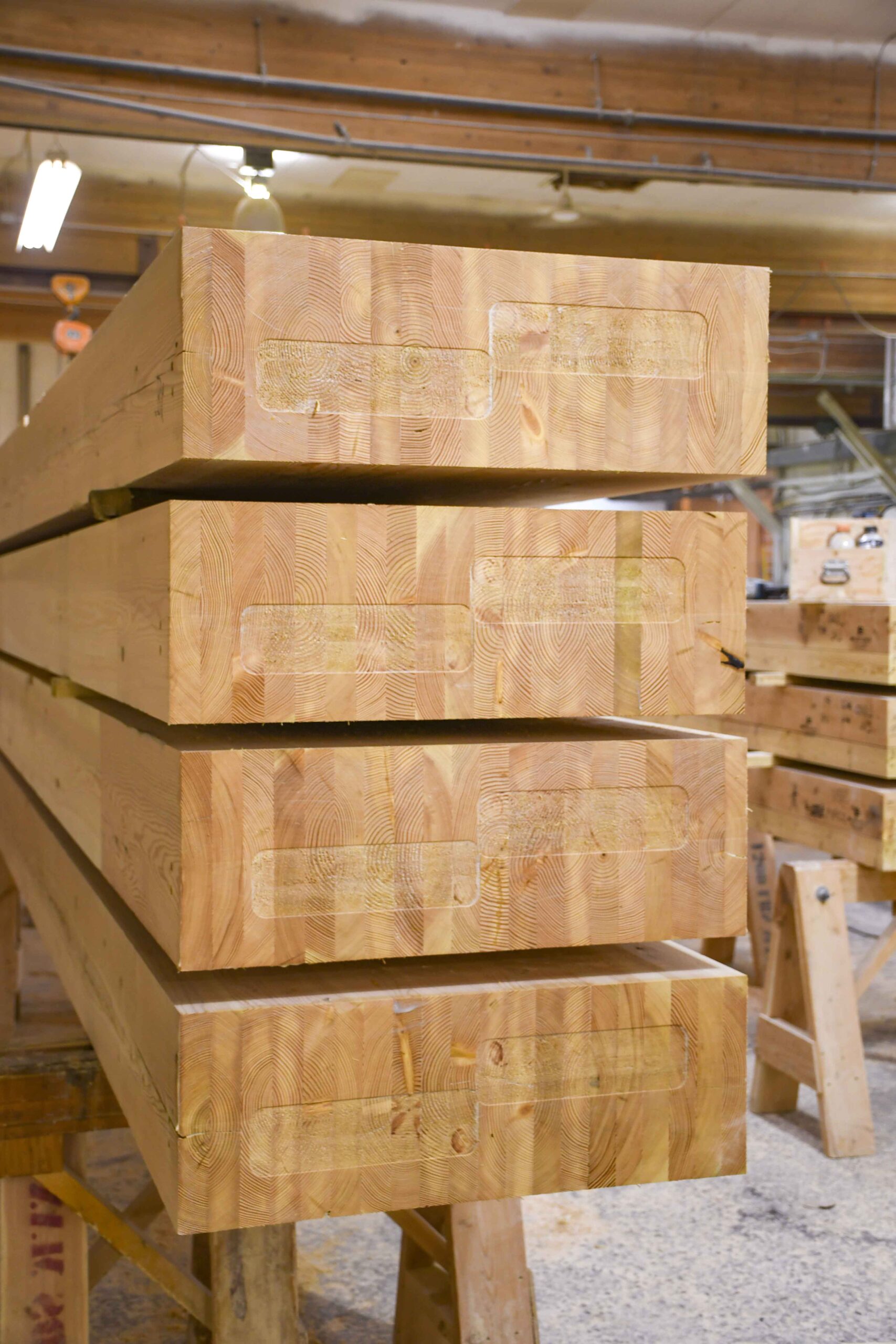 We are taking a look at developments throughout the Kootenay region. All of these developments are in the planning, permitting stage or development is underway. …Castlegar: Kalesnikoff Mass Timber Project Completion In Sight — Completion is in sight for one of West Kootenay’s biggest projects. Last year the BC government’s Manufacturing Jobs Fund (BCMJF) contributed some $6.7 million to assist Kalesnikoff Mass Timber Inc. to expand by establishing a new prefabricated mass-timber and cross-laminated timber modularized building facility, and purchasing new machinery to drive production of building components that will be used for rapid housing construction. The $34 million Mass Timber facility will create 90 jobs… This is the third Kalesnikoff operation in the region. Nelson: Spearhead Timberworks Set to Expand – Spearhead Timberworks, recently received a $7.5-million grant from the B.C government to expand its North Shore facility. The new facility will allow it to upgrade and increase production of its own custom glue-laminated timber.
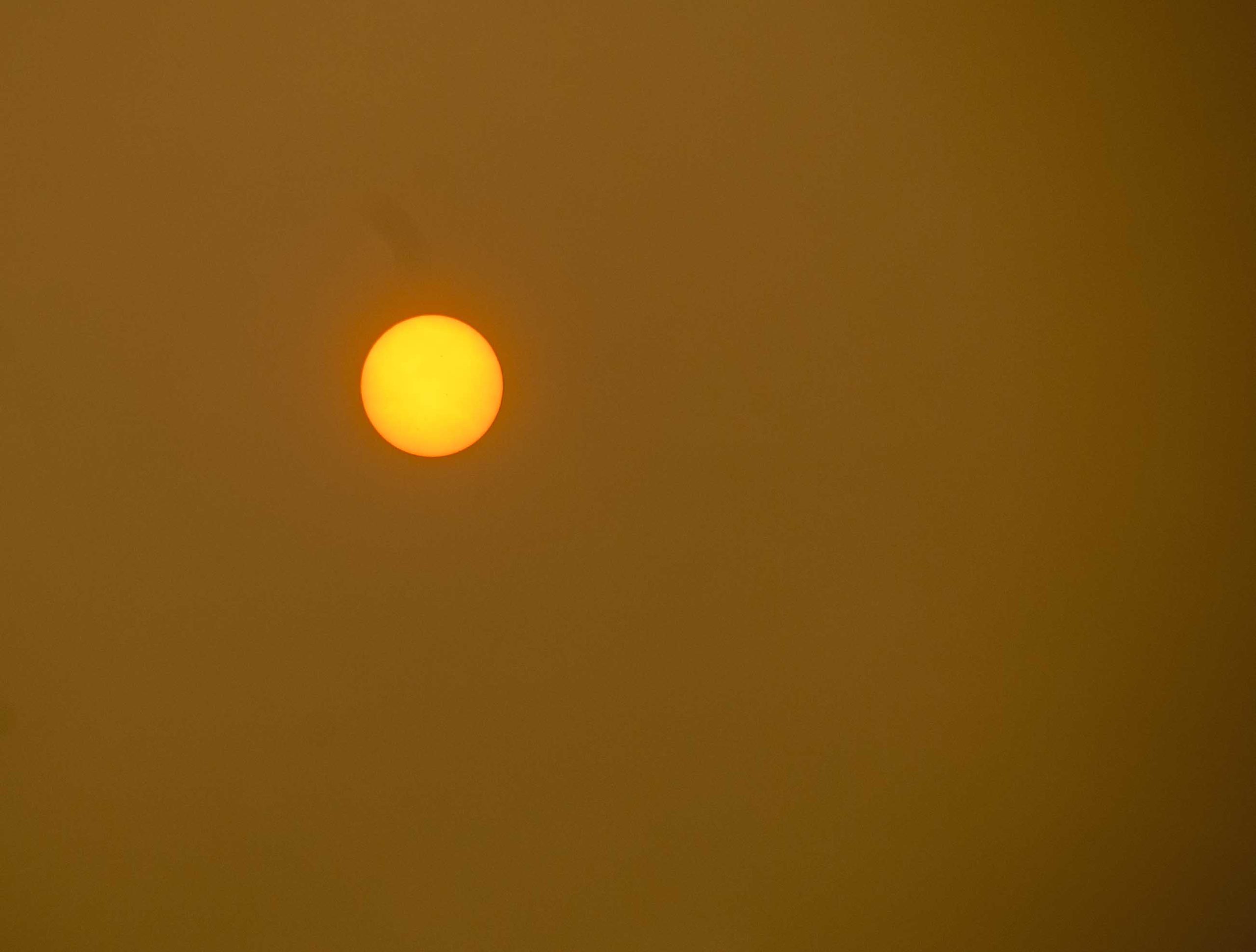 It could be another dangerously smoky summer for some in the United States as Canada prepares for a busy wildfire season with forecasts also signaling extreme heat is in store for both countries in the coming months. But when it comes to wildfire threats this season, the call is also coming from inside the house for the US: Violent wildfires have already raged in multiple states this year, millions were under red flag warnings this week and an active summer is on the horizon. In Canada, wildfires have scorched tens of millions of acres, displaced hundreds of thousands of people and killed multiple firefighters since the country’s record-breaking 2023 fire season. Some fires from the past two years also poured smoke into large population centers in Canada and the US, cratering air quality and ushering in orange-tinted, apocalyptic-looking skies. …Large wildfires produce dangerous smoke that can reach communities hundreds of miles away.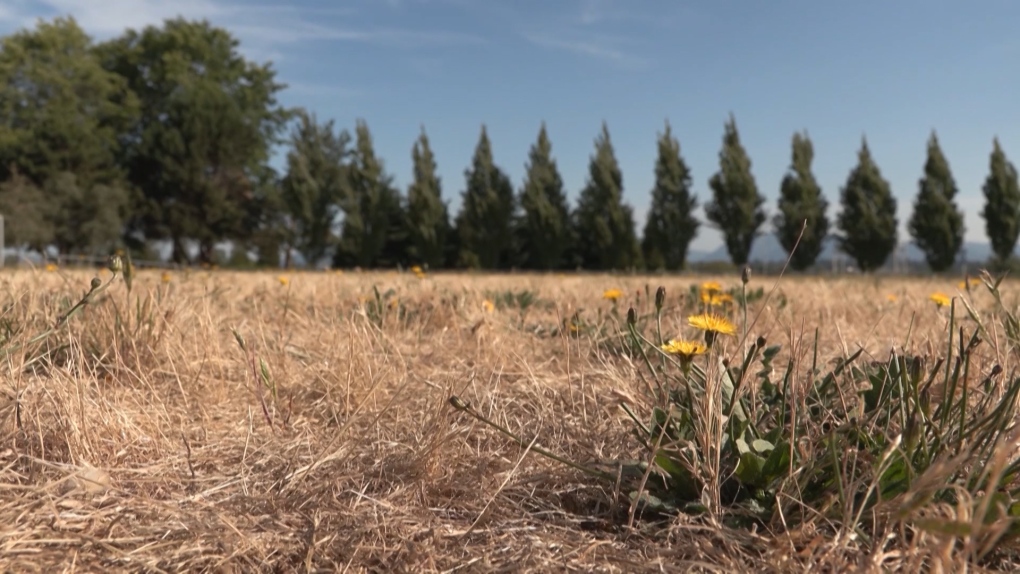






 Prime Minister Mark Carney announced his new cabinet on Tuesday with a speech at Rideau Hall outlining his priorities — and like the speech, which did not mention climate change, the cabinet itself signals a potential shift in a new direction. Carney’s cabinet signals a “potential downgrading” of climate change and environment, says Mark Winfield, a professor of environmental governance at York University. …Carney appointed longtime business executive Tim Hodgson to serve as energy and natural resources minister and Toronto—Danforth MP Julie Dabrusin to serve as minister of environment and climate change. Dabrusin steps into the post held under Trudeau by Steven Guilbeault, who drew the ire of the energy industry and its political allies. Immediately following Dabrusin’s appointment, Alberta Premier Danielle Smith attacked her, too. Smith promptly took to social media after the swearing-in ceremony on May 13 to call Dabrusin “another anti-oil and gas Environment Minister.” [A subscription is required to access this full story]

 Flags have been lowered to half-mast at the Manitoba Legislative Building to honour two people who died after being trapped by an out-of-control wildfire in the rural municipality of Lac du Bonnet. Premier Wab Kinew, who offered condolences to the family, friends and community members of the victims, called the move “a small gesture towards the sympathies that we feel and how this latest turn in this year’s wildfire situation hits on a different emotional level.” “The news of this loss of life changes what was an emergency into a tragedy,” he said at a Thursday morning news conference. …Kinew urged people heading into the May long weekend — traditionally the unofficial start to summer and camping season — to listen to evacuation orders and stay out of areas where emergency crews are working. As of Thursday, there are 21 fires burning in the province, with a total of 80 recorded so far this season…
 A major wildfire burning in central Canada has killed two people and forced 1,000 more to evacuate their homes, kicking off a fire season authorities warn could prove devastating. Canadian federal police confirmed on Wednesday that two people died in the small community of Lac du Bonnet, in the central province of Manitoba, which is experiencing unusually hot, dry and windy conditions. Manitoba’s premier, Wab Kinew, said he was “deeply saddened to learn of the tragic loss of two Manitobans due to the wildfires”. “My heart goes out to their loved ones,” he added in a post on Twitter/X. In 2023, during Canada’s worst wildfire season, there were no recorded civilian deaths. Chris Hastie of the Royal Canadian mounted police told reporters that authorities “were aware that these individuals had been trapped in the fire”.

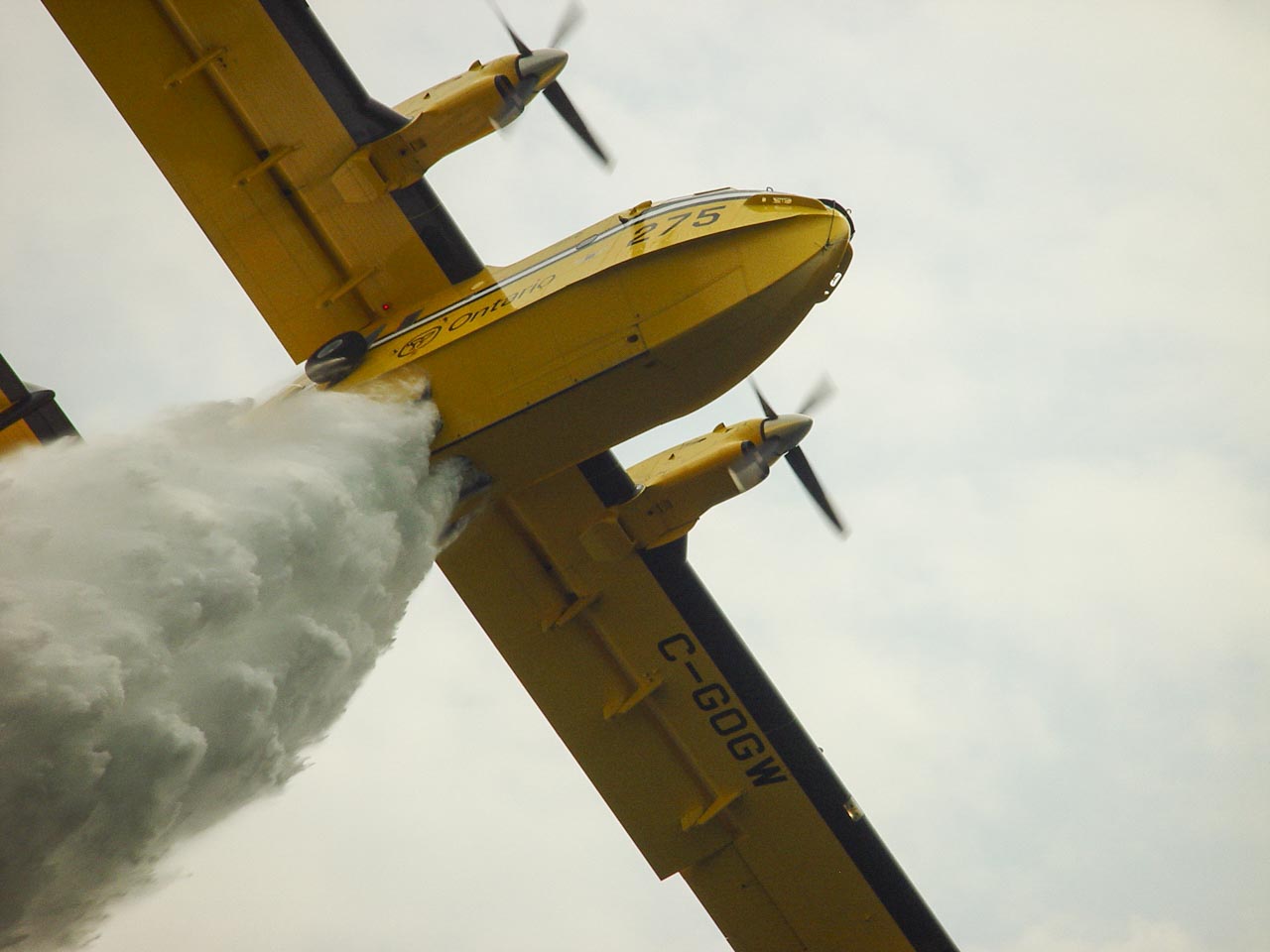 Favourable winds and provincial firefighting efforts have led to the cancellation of a stage one evacuation for Wabaseemoong Independent Nations as a large forest fire burns nearby. The fire, known as Kenora 14, was discovered on Thursday 12 kilometres from Wabaseemoong. It has since grown to more than 1,000 hectares in size, and is not under control. “We had another update meeting (Sunday) morning, and it looked promising that we won’t have to do any evacuation,” said Waylon Scott, chief of Wabaseemoong. “We were at the midst of doing a stage one evacuation, which is basically the vulnerable population.” Scott said the evacuation has now been put on hold. Chris Marchand, fire information officer with Ontario’s Aviation, Forest Fire and Emergency Services (AFFES), said southerly winds have kept the fire from advancing any closer to Wabaseemoong, and helped keep smoke out of the community.