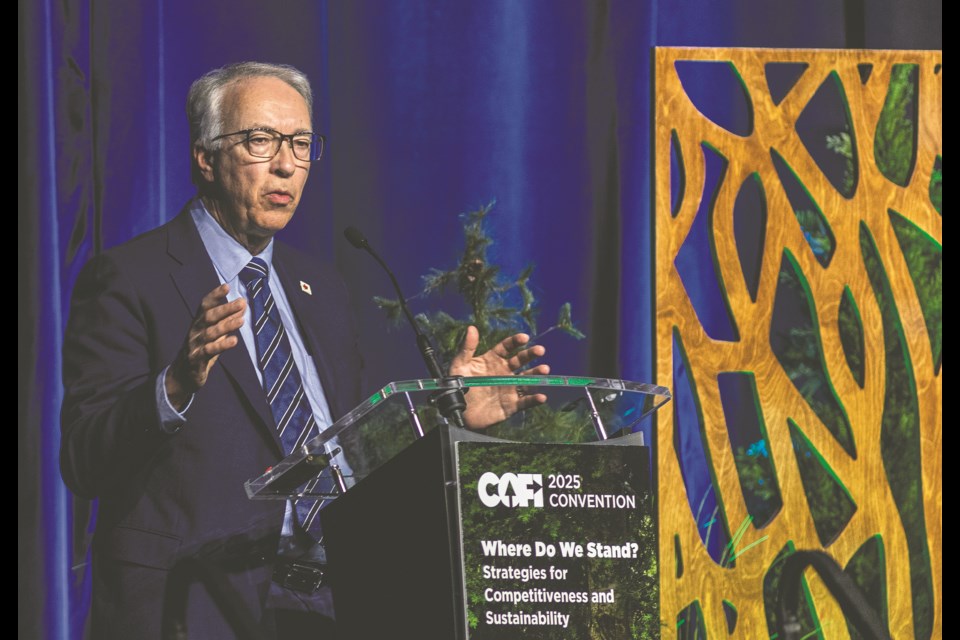
Premier David Eby delivered the final keynote at the 2025 COFI Conference in Prince George with a firm message of solidarity for British Columbia’s forest sector amid rising economic and geopolitical uncertainty. Eby painted a stark picture of global instability, citing a sharp downturn in US markets, looming tariffs, and direct threats to the province’s timber industry. …Eby warned that the recently announced US tariffs are likely to increase, targeting not just Canadian timber but pharmaceuticals and autos as well. He described the rationale behind these moves as “ludicrous and absurd,” especially in the context of a national security investigation into Canada’s timber sector. “Regardless of the posturing of the president,” he said, “the reality is that the Americans need Canadian timber.”
The Premier acknowledged that some of the sector’s challenges stem from within the province, citing government policy, court decisions, and endangered species legislation. He reaffirmed the government’s commitment to a working forest target of 45 million cubic meters and noted that new Forests Minister Ravi Parmar was appointed with this explicit goal. Eby highlighted several efforts underway to reach that target. He cited accelerated permitting efforts, forest landscape planning, and prioritized Indigenous agreements. …In closing, Eby said Canada’s response must be both short- and long-term. “We want to continue to expand the use of BC wood products, both nationally and internationally.” He said interprovincial trade reforms may open new markets, but reminded the audience that success begins with supply. “We’ve got to get to the 45 million cubic meters… in order to make sure that we’re getting those products to our primary mills.”
- Prince George Citizen – Eby hopes sanity will prevail in U.S.-Canada trade war





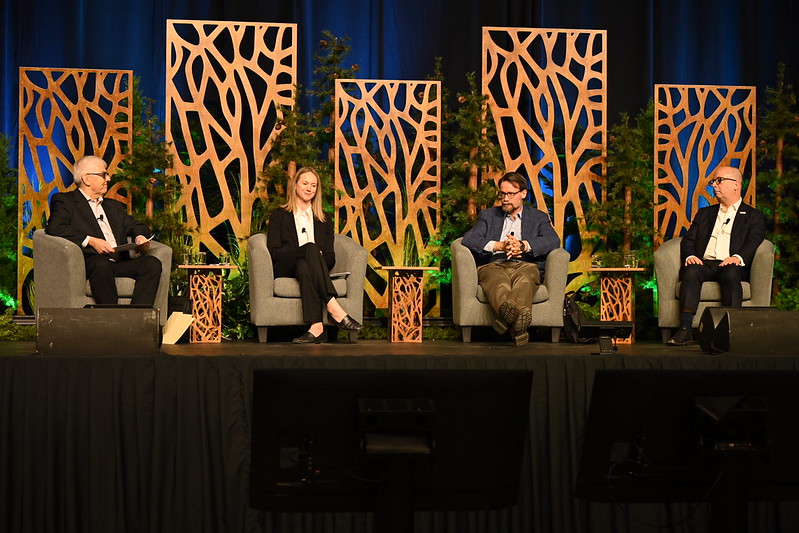


 Well, 2025 will prove to be an interesting year ahead. …Provincially there are some glimmers of hope for some directional changes to the current trajectory of BC’s forest sector through the appointment of an energized and determined Minister of Forests. At the recent TLA convention, there also seemed to be acknowledgment that the need for change was recognized with the Premier and Minister. …The government’s forestry mandate appears to be granted for firm actions, even more so with our obvious need for more self-reliance as a country. But muddying the background is the reality that anything that needs to be accomplished must be done within the spectre of massive provincial deficits and a hiring freeze. Where to start?

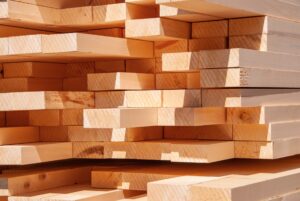 The US is set to more than double the duty it charges on softwood lumber imports from Canada, with the planned new rate set at 34.45%, up from the previous 14.54%. …New softwood lumber duties were long-feared amid the growing trade war between Canada and the US, and would be the latest blow to BC’s beleaguered forestry industry, which has seen thousands of workers laid off over the last few years. BC Premier David Eby condemned the planned duty hike as an “attack on forest workers and British Columbians” in a statement on Saturday. While Canada may have been spared additional tariffs from the US on Wednesday, anxiety around levies on BC’s softwood lumber industry remains high. …Under the U.S. Tariff Act, the Department of Commerce determines whether goods are being sold at less than fair value or if they’re benefiting from subsidies provided by foreign governments.
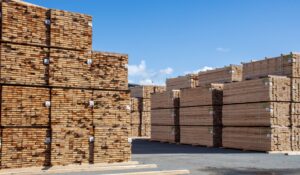 Canadian lumber has been left out of Trump’s tariff blitz, despite the president’s repeated threats to add to import taxes to a big chunk of US wood supply. Prices for two-by-fours are tumbling. Lumber futures contracts shed 8.7% to end at $606 per thousand board feet, the lowest price since mid February. They are on track for their worst day since the pandemic-era lumber bubble burst three years ago. Prices had risen this year in anticipation of another layer of import taxes. …That climb is unwinding. But the decline can also be chalked up to expectations that tariffs will push up residential construction prices and strain affordability. The tariffs Trump announced Wednesday will add about $6,400 to the cost of building an average house, UBS analyst John Lovallo estimates. That assumes that about 7% of the materials are imported and subject to an average tariff of 22%. [to access the full story a WSJ subscription is required]

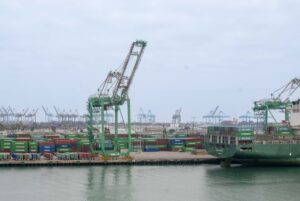 MONTREAL — The notion that Canadian companies can simply switch supply chains in response to American tariffs is a fantasy, experts say. Businesses north of the border are looking elsewhere to source their material and sell their products. But companies caught up in tightly braided supply channels after decades of trade pacts and sector specialization may quickly bump into barriers around everything from transport and labour costs to resource availability, manufacturing capacity and market saturation. …Cancelling contracts with Canadian suppliers would trigger breakage fees of up to $500 million per U.S. factory, the group said. Many parts cross the border multiple times before final assembly. …Auto, lumber and steel producers would face some of the toughest challenges in the hunt for new markets, Paschen said. …Forestry players face an entirely different dilemma. Lumber exports, while ample, have a low value per volume compared to some other commodities.
 Sweeping new tariffs announced by Donald Trump provoked dismay, threats of countermeasures and urgent calls for talks to find ways to rescind the stiff new import taxes imposed on goods from countries around the globe. …Trump maintains they will draw factories and jobs back to the United States. …European Commission President Ursula von der Leyen said it was a “major blow to the world economy.” …British Prime Minister Kier Starmer said he hopes to get the tariffs lifted with a trade deal. …Financial markets were jolted. …China’s Commerce Ministry said Beijing would “resolutely take countermeasures to safeguard its own rights and interests,” without saying exactly what it might do. …Mexican President Claudia Sheinbaum said she would wait to see how Trump’s announcement will affect Mexico, which like Canada was spared for goods already qualified under their free trade agreement with the United States, though previously announced 25% tariffs on auto imports took effect Thursday.
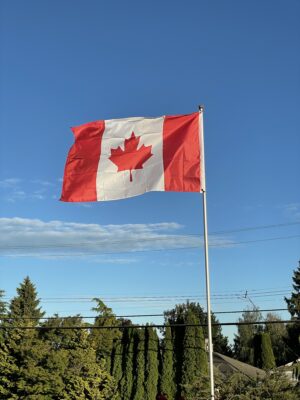 OTTAWA — Canada’s exemption from Donald Trump’s global tariffs was “like dodging a bullet into the path of a tank”, say business leaders as other levies are poised to hit key industries that drive the country’s economy. …Canada was noticeably absent, alongside trade ally Mexico. Prime minister Mark Carney said 25% tariffs on Canadian steel and aluminum, as well as on automobiles, will come into effect within hours. Canada would “fight these measures with countermeasures” he said. Already, Canada had put a 25% tax on C$30bn worth of US goods in response to Trump’s tariffs. …Carney warned that while Trump had preserved key elements of the bilateral relationship, the global tariffs “fundamentally change the international trading system”. …On Wednesday, a bipartisan group of senators passed a resolution to end the national fentanyl emergency the president invoked to justify the 25% tax on Canadian imports. …House speaker Mike Johnson is unlikely to bring the measure to a vote.
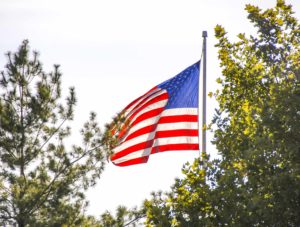 Democrats in the U.S. Senate are moving forward on a resolution to block sweeping tariffs targeting Canada as President Donald Trump presses Republican lawmakers to continue backing his trade agenda. Sen. Tim Kaine plans to force a vote on Trump’s use of the International Economic Emergency Powers Act, also called IEEPA, to declare an emergency over fentanyl trafficking to hit Canada with devastating duties. “The president has justified the imposition of these tariffs on, in my view, a made-up emergency,” Kaine said Tuesday. U.S. government data shows the volume of fentanyl seized at the northern border is tiny. The Annual Threat Assessment report, released last week, does not mention Canada in its section on illicit drugs and fentanyl. The vote will test whether Republican senators continue to back Trump’s tariffs on Canada — tariffs that, according to polling, are not supported by most Americans.
 The United States is scheduled to unveil reciprocal tariffs on a wide array of trading partners, including Canada. Dubbed “Liberation Day” by Donald Trump, the measures are meant to even things out with those who, in Trump’s eyes, have unfairly taken advantage of the US with tariffs and other non-tariff barriers. …Aside from steel, aluminum and autos, which are already facing separate tariffs, here are the issues the U.S. has singled out as problematic in their trade with Canada that could factor in to the Liberation Day announcement, and what economists and trade officials have to say about them. What Trump says: He has lumped his anger about dairy and lumber tariffs together, threatening to act immediately on unfair treatment by Canada. He also said the U.S. does not need any Canadian lumber. Reality Check: There is far from enough lumber produced in the U.S. to meet building demand.




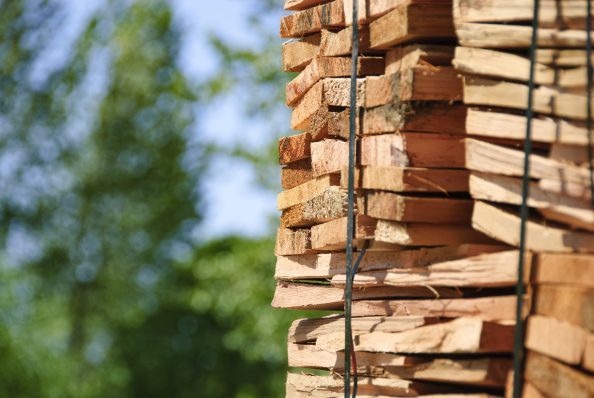 Teal Cedar Products has lost a bid for damages against the B.C. government over its declaration of First Nations rights on Haida Gwaii. The company argued the recognition of title over the lumber-rich but highly protected island archipelago deprived it of its ability to harvest despite Teal holding tree farm and forest licences in the area. It argued the B.C. government didn’t act in good faith, essentially expropriated property where Teal had business interests, and failed in a promise to keep the company whole during its negotiations with the Haida Gwaii Management Council over Indigenous title to the former Queen Charlotte Islands. B.C. Supreme Court Judge Brenda Brown rejected all three rationales and dismissed the claim for damages against either of the defendants, the B.C. government or the management council. …Teal obtained the two tenures from TimberWest in 2008, before selling them to A&A Trading Ltd. in late 2016.
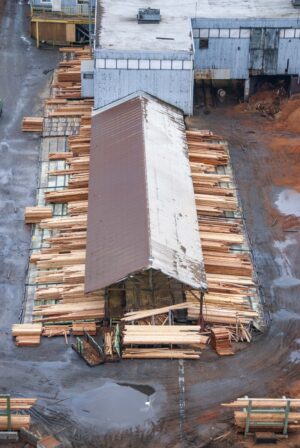 Another wave of sawmill closures swept across British Columbia in 2024, from West Fraser’s Fraser Lake facility to Canfor’s operations in Polar, Vanderhoof, and Fort St. John. As the Northern View reported, Chief Robert Michelle of the Stellat’en warned that “the economic impact for our communities will be dire,” citing job losses not just in the Fraser Lake mill but also among log haulers, restaurant workers and gas station employees… It is clear that current conditions cannot sustain profitable operations, leaving businesses struggling and workers unemployed. The fundamental issue lies in how Victoria approaches forest policy. The government faces mounting pressure from multiple stakeholders. Environmental groups advocate for reduced harvesting levels, while Indigenous communities seek both greater access to timber supplies and a larger role in forest management. While environmental protection and Indigenous rights are important considerations in forest management, and rightly so, the government’s approach has failed to balance these priorities with economic sustainability.
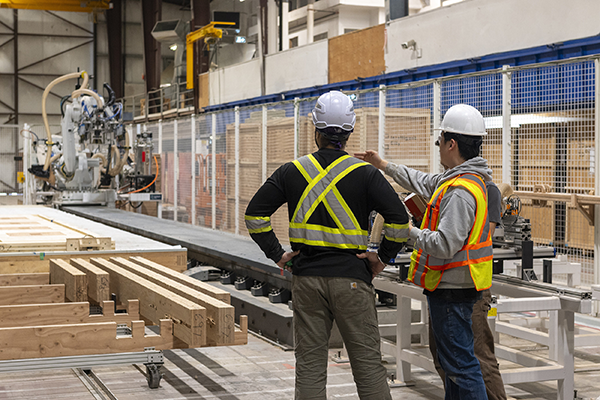
 In April 2023, close to 600 USW activists, staff and retirees from across the country gathered in Toronto for the 55th USW National Policy Conference, this central body that guides our union’s direction in Canada.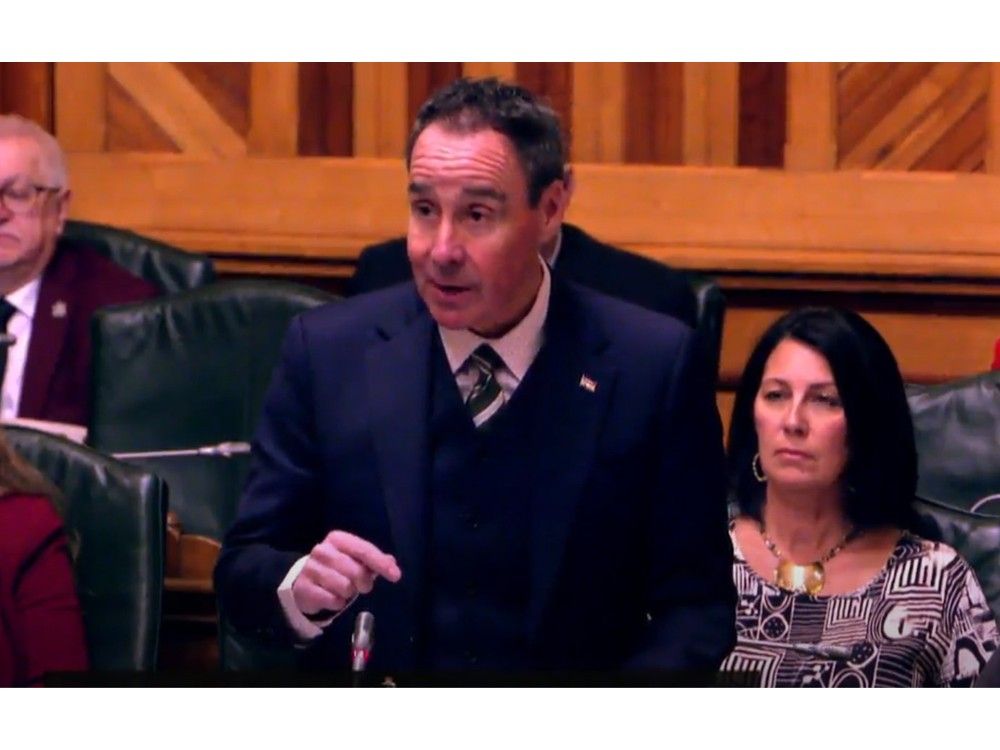
 Canada’s economy was already stumbling a few months ago. Now, it is on the brink of recession because of President Trump’s tariffs. Canada’s economy is starting to shed jobs after months of tariff-fueled anxiety, while the outlook among businesses and consumers has become increasingly dour as one of the US’s largest trading partners braces for more pain to come. …Last week, Canada’s statistical agency reported that 33,000 Canadians lost their jobs in March, the worst jobs report in more than three years. On Monday, the Bank of Canada reported that businesses and households expect inflation to climb, and company executives warned they expect to pass on higher, tariff-fueled costs to customers regardless of the hit to consumer demand. …Canada’s fiscal and monetary outlook has also been complicated by the government’s decision to retaliate against the US. [to access the full story a WSJ subscription is required]

 The Canadian Wood Council (CWC) is pleased to announce the release of five new Environmental Product Declarations (EPDs) for Canadian softwood lumber, oriented strand board (OSB), plywood, trusses, and prefabricated wood I-joists. These EPDs provide comprehensive, transparent environmental data on the potential impacts associated with the cradle-to-gate life cycle stages of these essential wood products. Developed as regionalized, industry-wide business-to-business (B2B) Type III declarations, the EPDs comply with the highest international standards, including ISO 21930, ISO 14025, ISO 14040, ISO 14044, the governing product category rules, and ASTM General Program Instructions for Type III EPDs. This ensures credible, third-party verified environmental impact data, supporting designers, builders, and policymakers in making informed, sustainable material choices. The EPDs are available for download from the Canadian Wood Council’s

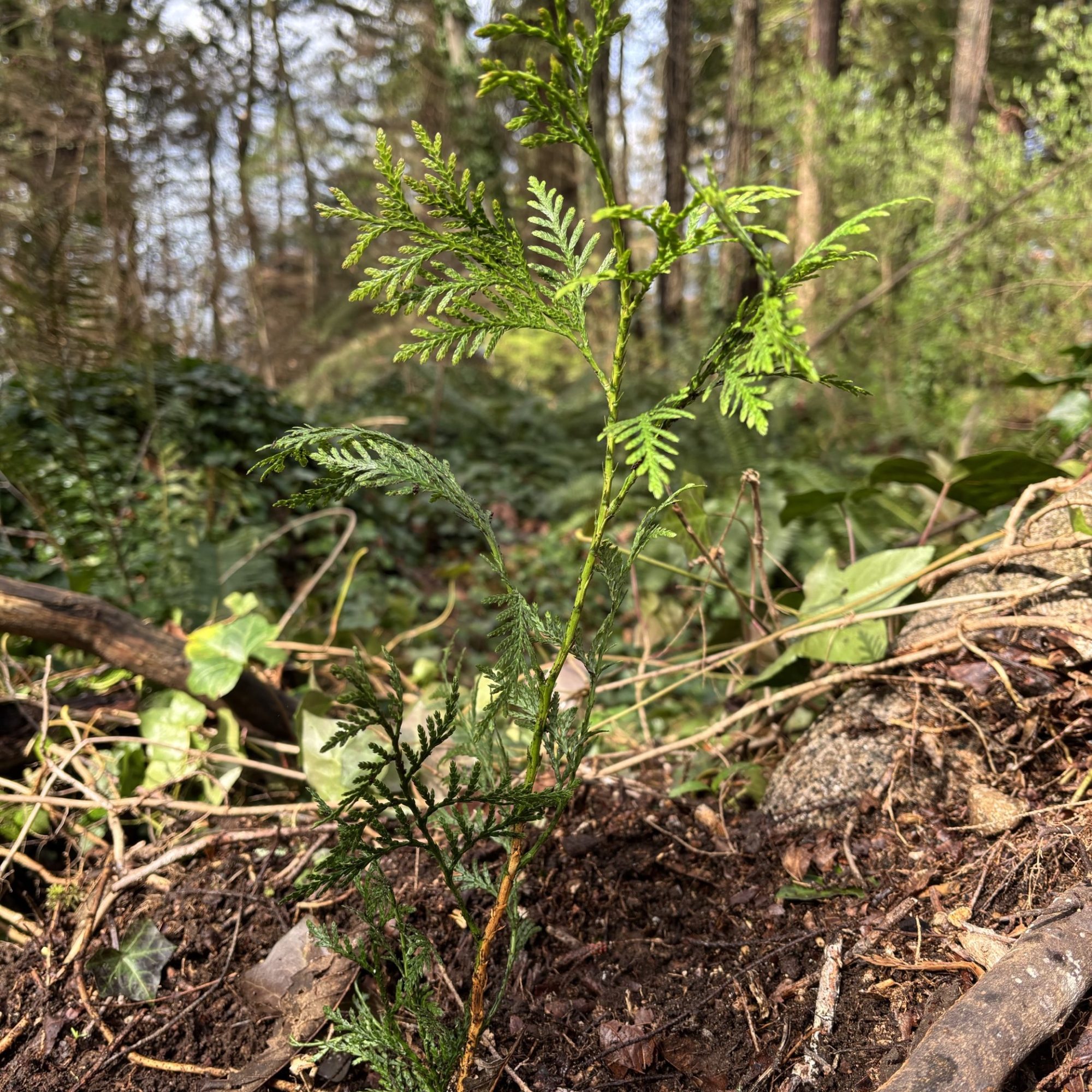
 VANCOUVER, BC – Canfor Corporation and Canfor Pulp Products released their joint 2024 Sustainability Report today. The report describes the companies’ approach to managing environmental, social and governance activities, and reports on established targets. Canfor CEO Susan Yurkovich said, “Sustainability is at the forefront of our business and we continually strive to be better at all that we do.” 2024 performance highlights include: Maintaining certifications for sustainable forest management and fibre procurement activities, with 100% of Canfor-managed forests certified to SFI® or FSC® Forest Management Standards, 100% of sourced fibre in North American operations managed to the SFI Fibre Sourcing Standard and 100% of Swedish forestry operations certified to the PEFC Forest Management Standard. …Advancements in safety, health and wellness initiatives. …Investing in communities, with more than $2 million donated. …Continuing to pursue our goal to be net zero by 2050.
 The Province is taking action to adapt B.C.’s forests to ensure long-term sustainability and good-paying jobs by enlisting BC Timber Sales (BCTS) to play a larger role in reducing wildfire risk and enhancing forest and community resilience through its operations. This work is increasingly urgent given the threat of sector-specific tariff threats coming from the United States. … BCTS manages forest harvesting on more than 20% of B.C.’s public land. In January 2025, the Ministry of Forests initiated a review of BCTS, undertaken by an expert task force, to create pathways for a stronger, more resilient forestry sector. A progress update was announced at the Council of Forest Industries convention on Friday, April 4, 2025. “We have all witnessed the impacts of wildfire on B.C.’s communities, and we are uniting all parts of my ministry to tackle this challenge head on,” said Ravi Parmar, Minister of Forests.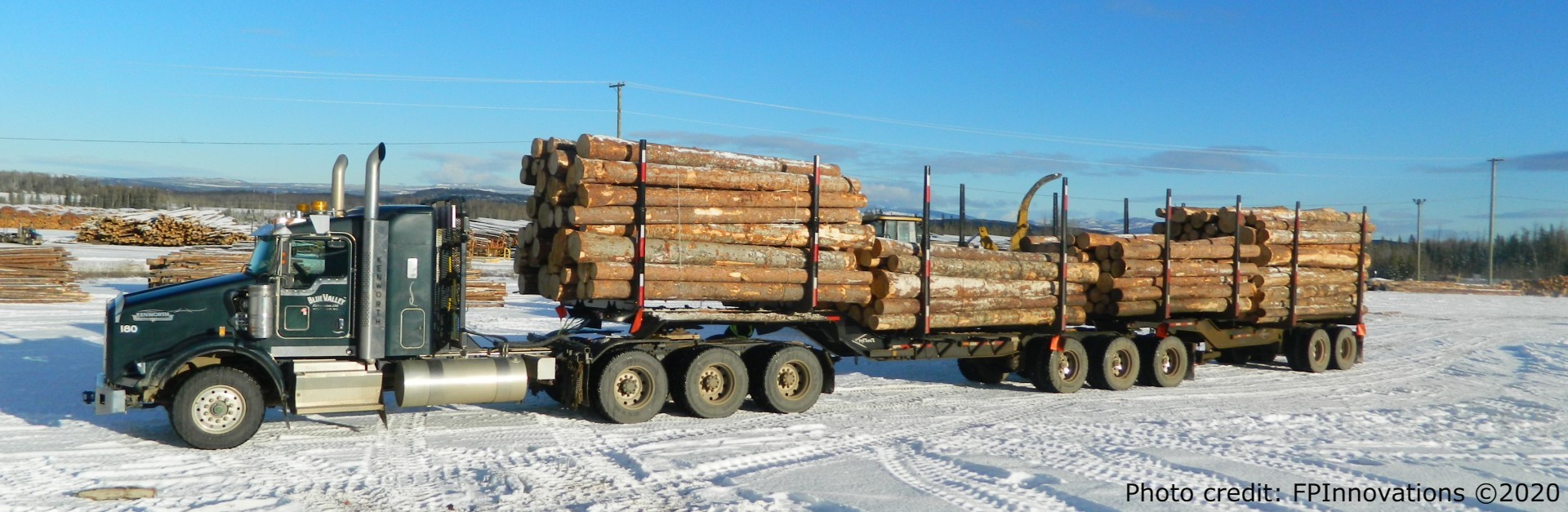
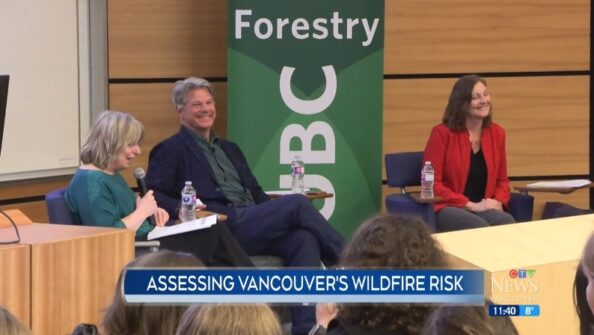 B.C.’s wildfire season is fast approaching, and experts are warning that urban areas of the province – including Metro Vancouver – may be at risk as fires grow more frequent and intense. A panel of experts – including bestselling author of Fire Weather John Vaillant and UBC Centre for Wildfire Coexistence co-director Dr. Lori Daniels – spoke about urban wildfire risks at the university’s Vancouver campus Thursday night. Daniels told CTV News a combination of climate change, forest management practices and urban expansion into fire-prone areas has contributed to a rise in the amount of land and structures burned in recent years. While in some parts of the province – such as the Okanagan Valley – there is a sense that it’s “not if, but when” a destructive wildfire will hit, Daniels said Metro Vancouver is also vulnerable.
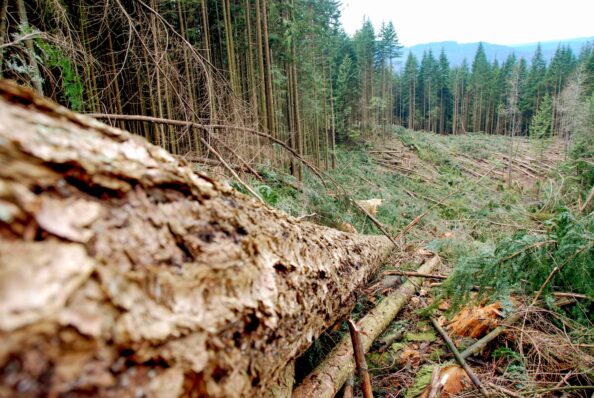 The federal government is pitching in more than $180,000 for a Kamloops-area study to determine whether rehabilitating wildfire-damaged landscapes can provide an economic opportunity through carbon credits. It’s part of a total $20 million the federal government will be injecting into B.C.’s forestry sector. Jonathan Wilkinson, minister of energy and natural resources, said 67 projects in the province will receive funding, including a number of Kamloops and Shuswap-area initiatives. The Secwepemcul’ecw Restoration and Stewardship Society will receive $184,355. …Tolko Industries will be getting $400,000 in federal funding to conduct further research into a finger jointing process for parallel laminated veneer products produced at its Heffley Creek facility. Local Indigenous groups are also set to receive funding as part of the Indigenous Forestry Initiative program. …And as part of the Global Forest Leadership program the Wood Pellet Association of Canada based in Revelstoke is set to receive $180,000 to help advance international standards for wood pellets.
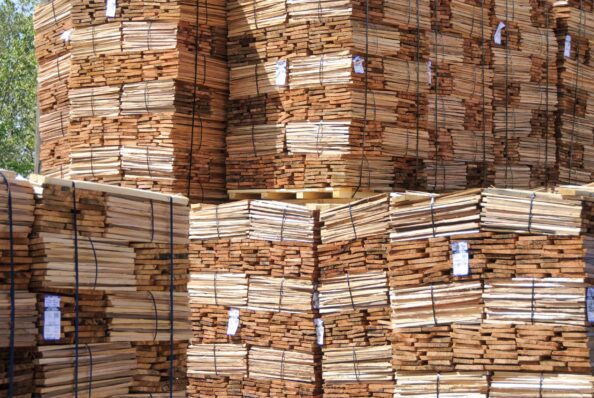 The BC Supreme Court has dismissed a lawsuit from Teal Cedar Products, a forestry company, which claimed it lost millions of dollars due to new timber rules in Haida Gwaii. The company argued that the new regulations unfairly devalued their forest tenures. The rule changes included reducing the amount of timber that could be harvested and implementing conservation measures. Teal, which owned forest licenses affected by the regulations, claimed these changes amounted to “constructive expropriation,” meaning the government’s actions took away the value of their property rights, without formally seizing the property. Chris Tollefson, a University of Victoria law professor and public interest lawyer who represented the Haida Gwaii Management Council, said private operators need to know rules evolve based on changing values and science, and companies aren’t owed compensation “where the change is bona fide, is not being used to discriminate or target them.”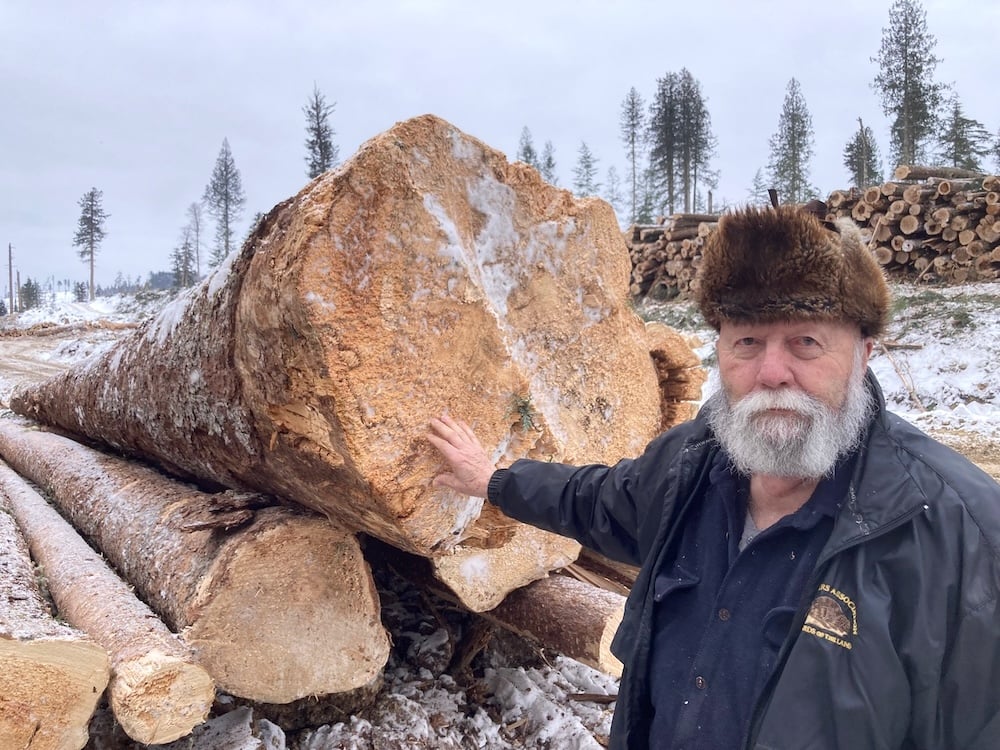

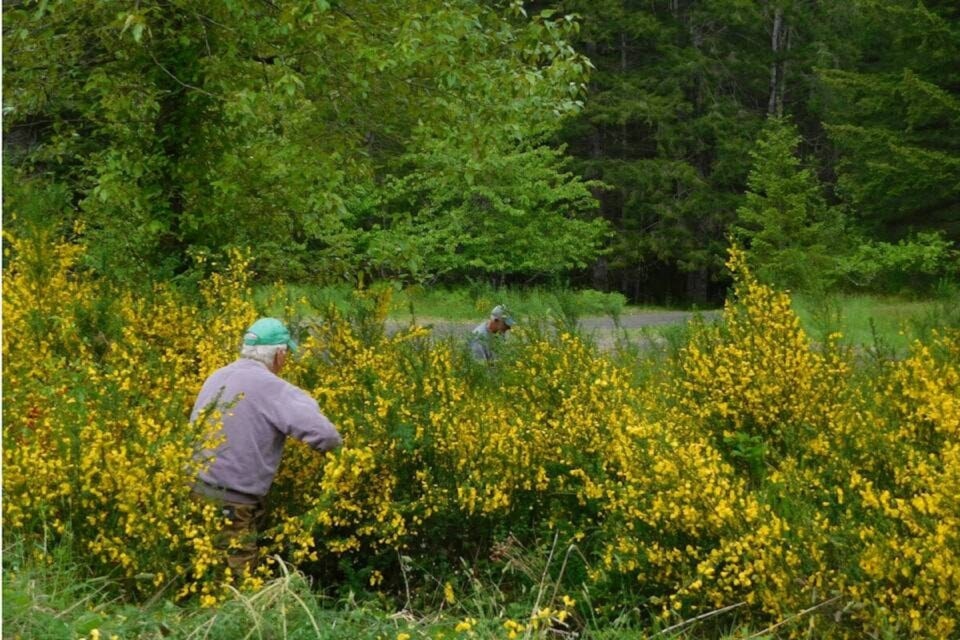

 The Osoyoos Indian Band (OIB) and American forestry company Weyerhaeuser have struck what they describe as a “landmark partnership” to manage a tree farm licence (TFL) east of OIB reserve land near Oliver. The OIB said stewardship of their traditional territory “is both a responsibility and an opportunity”. Through this partnership, OIB says it has taken a co-leadership role in managing TFL 59, an area of “profound cultural, ecological, and economic significance”. The two aim to raise the benchmark for sustainable forestry by balancing modern forestry practices with traditional knowledge… The tenure has a broad and ambitious set of management objectives, including reducing wildfire risk, protecting water resources, enhancing wildlife habitat, increasing forest resiliency and rehabilitating areas impacted by the devastating 2021 wildfires.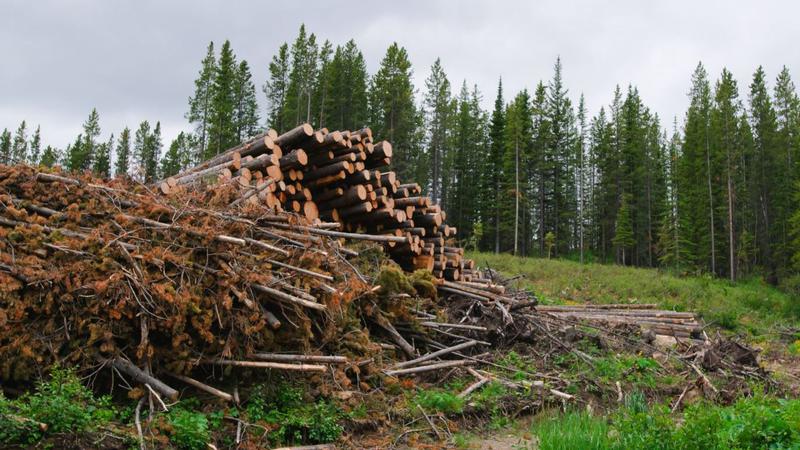
 Conservation groups are warning that a proposed Alberta government plan for a sub-region in west-central Alberta would wipe out two caribou populations if implemented. The draft plan for the Upper Smoky sub-region would enable the U.S.-based timber company Weyerhaeuser to entirely clearcut the last winter range forests… A Caribou Task Force, made up of Indigenous groups, industry, municipalities, various user groups and interest groups, had been established to advise the Alberta government on Upper Smoky sub-regional planning. These multi-stakeholder conversations were held from 2019 to 2021; however, none of the task force’s recommendations related to caribou conservation and recovery were reflected in the report. Public engagement runs until June 25


 There is still plenty of snow around, but today, April 1, marks the first day of the fire season. That means Ontario’s