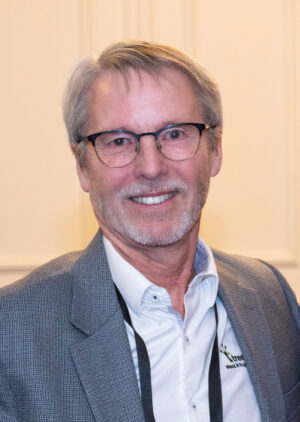
Kelly McCloskey

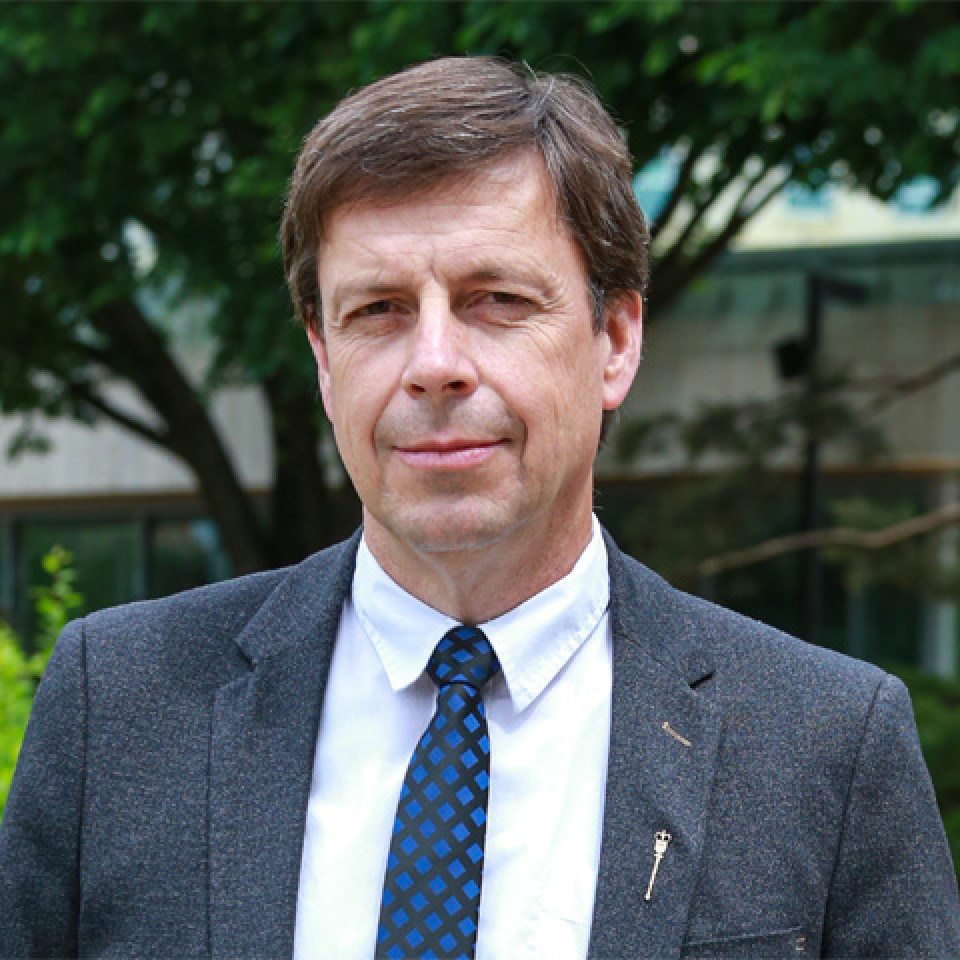
Robert McKellar
When we first reached out to political risk expert Robert McKellar in mid-2024, our goal was to spark a conversation the forest sector wasn’t yet having—about political risk and its growing influence on everything from trade policy to investment decisions. Robert’s op-ed in August, 2024 made the case that political risk is not just something that happens in volatile regions—it is the exposure of businesses to political forces, whether through government policies, trade dynamics, or geopolitical shifts. He identified major political forces impacting the Canadian forest sector—including the growing China-West rivalry and Canada-US trade friction—to help companies assess the relevance of political risk for themselves. In hindsight, his foresights were well placed.
After the election of President Trump and given how quickly the trade situation evolved, we reached out to Robert a few weeks ago to re-examine these dynamics. And given the complexities, we decided on a two-part approach. In Part I, in February 2025, Robert set the stage by looking at Trump’s leadership style and his approach to business, he outlined how forest product companies can assess and manage political risk, and then he focused on the most pressing risk to the sector—tariffs. The other risks—lumber duties, interference in Canadian-owned US-based industries, and the impact of US-China trade tensions on lumber sales—were left for Part II. In that this is a long read, in the “READ MORE document” are the following hyperlinked-titles—should you wish to proceed directly to a given section:
- Recap of Part I
- Is Trump toying with Canada or is there a plan?
- The latest on duties and tariffs
- Are Canadian US-subsidiaries at risk?
- US-China friction and lumber sales
- How to plan and manage for political risk
This isn’t a typical industry commentary. It’s not about what government should do, or where markets might go next. It’s about what companies can do now to better anticipate, adapt to, and, at times, even leverage political disruption. [full disclosure, Robert McKellar is Tree Frog co-editor Sandy McKellar’s brother]

 White House aides have drafted a proposal that would levy tariffs of roughly 20% on most imports, the Washington Post reported. The report cited three people familiar with the matter. It also said White House advisers cautioned that several options are still on the table, meaning the 20% tariffs may not come to pass. Another plan being considered is the country-by-country “reciprocal” approach, according to the Washington Post. The report comes a day before April 2, when President Donald Trump is set to announce his larger plans for global trade. The date has loomed over Wall Street, where stocks have been struggling in part due to uncertainty around rapidly changing global trade policy. Unlike the tariffs already announced by the Trump administration, the new plan is expected to be more widespread and permanent as opposed to targeting specific countries or industries.

 President Trump’s promised tariffs on softwood lumber risk disrupting the supply chain for something nobody wants to be caught without: toilet paper….While Trump advocates for new tariffs partly to bolster US manufacturing, they may also hit the availability of northern bleached softwood kraft pulp, or NBSK, a key component in making toilet paper and paper towels. NBSK constitutes about 30% of standard U.S. bathroom tissue and half of a typical paper towel, and is currently sourced primarily from Canada, said Brian McClay, chairman of TTOBMA. He added that the U.S. imported about 2 million tons of Canadian NBSK last year, highlighting the longstanding reliance of American paper-goods producers on pulp from their northern neighbour. …“If Canadian pulp mills close because they don’t have the fibre supply, I can’t think of any other option for them — they just can’t switch the recipe around,” he said. The scenario risks reviving painful memories of pandemic-era toilet paper shortages.
 Yesterday, we featured Part II of our in-depth Q&A with political risk expert Robert McKellar, a follow-up to an August
 As a federal election kicks off, the trade war with the US is casting a long shadow over voters’ choices, and whoever forms the next government will have the tall order of trying to draw this conflict to a close. …International trade experts say that will be much easier said than done. The two economies are more integrated than ever before, and President Donald Trump’s chaotic governing style makes it extremely difficult to know how to even begin to unravel this dispute. …Carney met with the country’s premiers and leaders from long-time allies in other countries to chart a short- and long-term response to the tariffs. He has conceded there’s a limit to how much Canada can do to respond. …Russell Williams at Memorial University said because Trump keeps threatening Canada’s existence, a political, rhetorical de-escalation is essential before any compromise on trade can be reached.
 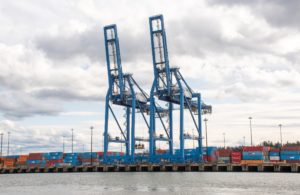 US President Donald Trump’s coming wave of tariffs is poised to be more targeted than the barrage he has threatened, aides and allies said. …The White House is narrowing its approach to take effect on April 2, likely omitting a set of industry-specific tariffs while applying reciprocal levies on a targeted set of nations that account for the bulk of foreign trade with the US. …The White House is still planning to unveil the reciprocal -tariff action on that day, though. …The fate of the sectoral tariffs, as well as tariffs on Canada and Mexico that Trump said were justified by fentanyl, remains uncertain. …The administration is now focusing on applying tariffs to about 15% of nations with persistent trade imbalances with the US… such as Australia, Brazil, Canada, China, the European Union, India, Japan, South Korea, Mexico, Russia, and Vietnam.
 Vancouver, BC — This week, the BC Council of Forest Industries (COFI) will welcome more than 600 industry, government, and Indigenous leaders to Prince George for a sold-out COFI 2025 Convention, running April 2-4. As one of the largest annual gatherings of the forest sector in Western Canada, the convention focuses on urgent challenges facing the industry—and the path forward. Attendees are set to explore how the sector can respond to rising US tariffs, global trade uncertainty and regulatory complexity. Discussions will center on strategies to improve industry competitiveness, strengthen partnerships with First Nations and sustain local jobs, while positioning BC as a global leader in sustainable forestry. … A highlight of the convention will be the release of a new study comparing international forest jurisdictions by Glen O’Kelly, CEO of O’Kelly Acumen, benchmarking BC’s performance against leading forestry regions—including Sweden, Finland, Austria, the US, and Brazil.
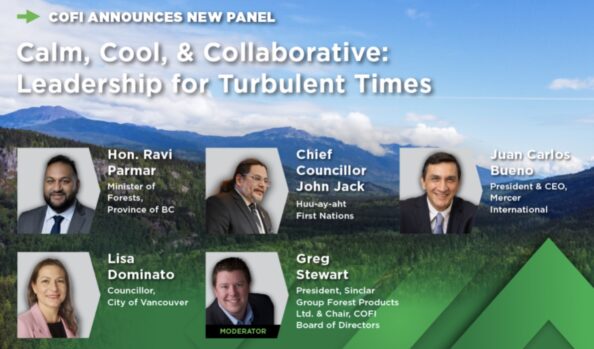 COFI 2025 – April 2-4 in Prince George, BC — As BC’s forest sector grapples with significant turbulence – including US tariffs, geopolitical uncertainty, and sector-wide challenges in BC – strong leadership and collaboration are essential to securing a sustainable and competitive future. The “Calm, Cool, & Collaborative: Leadership for Turbulent Times” panel at the 2025 COFI Convention will bring together senior decision-makers from industry, government, and First Nations. These influential voices will share their insights on navigating market uncertainty, shaping effective policies, and strengthening community resilience. Jon our panelists: Hon. Ravi Parmar, Minister of Forests, Province of BC; Chief Councillor John Jack, Huu-ay-aht First Nations; Juan Carlos Bueno, President & CEO, Mercer International; and Lisa Dominato, Councillor, City of Vancouver for a lively discussion moderated by Greg Stewart, President, Sinclar Group Forest Products Ltd. & Chair, COFI Board of Directors.
  COFI 2025 Convention: April 2-4, Prince George, BC — The global trade landscape is evolving rapidly. Economic uncertainty, shifting regulations, and geopolitical challenges are reshaping market access for Canadian forest products. Staying competitive requires a clear understanding of emerging risks and strategic opportunities. At the COFI 2025 Convention, a panel of industry experts will examine the forces shaping international trade and explore actionable strategies to enhance industry resilience. Presenter and Moderator Russ Taylor, President, Russ Taylor Global will lead the discussion with panelists: Kate Lindsay, Senior VP & Chief Sustainability Officer, Forest Products
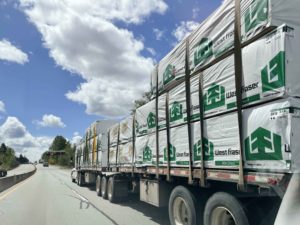 Flatbed trucking rates have surged over the past month as steel and lumber shippers hurry to stockpile inventory amid tariff whiplash threatening to roil their supply chains, experts say. A six-week increase in rates has led to the highest flatbed pricing to start a year since 2017, according to DAT, as freight repositioning combines with a typical seasonal pickup in construction and other industries. “Demand usually picks up in March and April as planti ng, building, construction, machinery imports, and nursery seasons gear up,” said DAT Principal Analyst Dean Croke. “…Last week, the average flatbed spot rate went up 4 cents to $2.13 per mile compared to the previous week. Meanwhile, the load-to-truck ratio for flatbed went up to 46.92 from 41.12 loads per truck.Shippers have pulled forward cargo imports such as machinery, lumber, metals and oversized flatbed freight to mitigate tariff uncertainty.
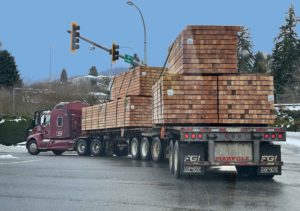 The ongoing trade spat between the U.S. and Canada is impacting BC’s construction sector in ways that could bring short-term gain and long-term pain. At first, there could be an oversupply of lumber if Canadian softwood is taken out of the U.S. equation, resulting in lower costs for B.C. builders and developers, said Padraic Kelly, Vancouver-based director with BTY Group. But costs would later rise significantly, he said. “The medium- and long-term pain would be that if the American market is choked out, mills would close, supply would be constrained and costs would ultimately go up,” Kelly said. The total levy on Canadian softwood lumber going into the U.S. could total between 45% and 55%, taking into account anti-dumping measures introduced by the Biden administration and scheduled to increase this August. Other big-ticket impacts to B.C. construction could be the mechanical and electrical divisions within construction budgets, he said.


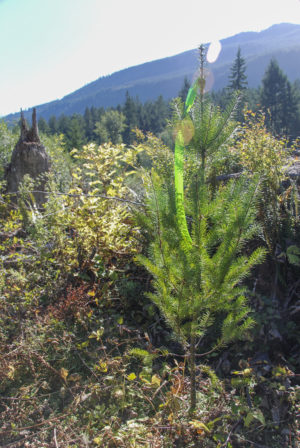 When it comes to reforesting areas made bare by natural causes, it’s the Ministry of Forests’ job to oversee the progress. “Wildfire…really is the biggest thing we’re focusing on,” said Shelley Barlow, the ministry’s regional silviculture specialist for the Cariboo. According to a February 2018 report by the Ministry of Forests, Lands, Natural Resource Operations and Rural Development, 80 per cent of the area affected by the 2017 wildfires in B.C. was in the Cariboo. About one million hectares of forests were burnt in the region, and 609,000 of those hectares were part of the Cariboo’s timber harvesting land base. Prior to 2017, the ministry was planting up to two million trees per year in the Williams Lake forestry district. Since then, Barlow said this number has at least tripled.
 In this newsletter, we are pleased to share great stories of the impactful work happening in communities throughout our province. As the world continues to navigate the challenges affiliated with climate change, British Columbia’s forestry sector is playing a key role to mitigate its impacts and contribute to a more sustainable future. We take pride in investing in projects that provide enduring economic and social benefits for our local communities and are helping take action on this global issue. Last month, in collaboration with the Provincial Government, we shared more specifics about 70 recently funded projects moving forward to help local communities, community forests, First Nations, and other project partners enhance their wildfire prevention efforts and/or expand fibre-recovery initiatives. …In years past, much wood waste from harvesting operations was piled and burned in slash piles. Today, we invest in projects that recover this waste and use it to make forest products and generate green energy.
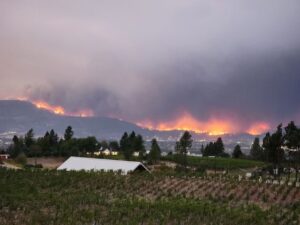 If you’ve noticed smoke on days it hasn’t been snowing or raining recently, it’s likely from a prescribed burn. Local governments across the Okanagan including the Westbank First Nation are working to finish as many of their prescribed burn operations as possible before the weather gets too hot and dry. A prescribed burn, sometimes called a controlled burn, is a planned and intentional use of fire on a specific land area to reduce wildfire risk, improve wildlife habitat, or restore ecosystems… The McDougall Creek wildfire was one of the most destructive local wildfires in recent memory, destroying 303 structures in West Kelowna, Westbank First Nation, Kelowna and the RDCO. The Insurance Bureau of Canada estimated the fire caused $480 million in insured damage.
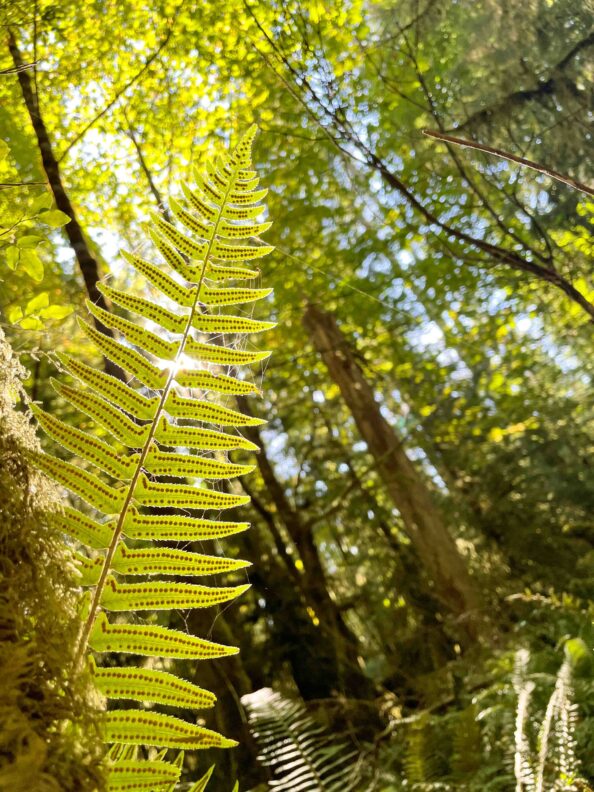 A draft co-management framework and plan to manage North Cowichan’s 5,000-hectare municipal forest reserve likely won’t be presented until sometime in 2026. The municipality and the Quw’utsun Nation (which consists of Cowichan Tribes, Halalt First Nation, Lyackson First Nation, Penelakut Tribe, and Stz’uminus First Nation) agreed in April, 2024, that they would work together to establish a co-management framework and plan for the forest reserve, and that work is still ongoing. North Cowichan’s communications director Barb Floden said the municipality and the Quw’utsun Nation issued a joint request for proposals to support the development of the co-management plan in February, which will be closing soon, and it is expected that the draft framework and plan will be ready next year. “The public will be kept informed of the process through joint statements and updates at council meetings,” Floden said.
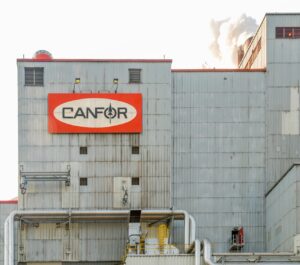 A Canfor operation in Prince George and three area First Nations have received federal funding to boost innovation in forestry. The $293,500 in local funding is part of more than $20 million the Canadian government is investing in 67 projects province-wide. The funds are part of a broader effort to enhance the competitiveness and resiliency of Canada’s forest industry, which has faced increasing trade barriers, particularly from the US. Among the recipients is Canadian Forest Products, or Canfor, which will receive up to $121,500 for a project aimed at producing innovative, formaldehyde-free and isocyanate-free wood adhesives. The company will explore extracting kraft lignin from black liquor at its Northwood mill in Prince George, converting it into a new, sustainable bioproduct. The project aims to determine the commercial viability of this process, which could open up new revenue streams and reduce reliance on harmful chemicals.
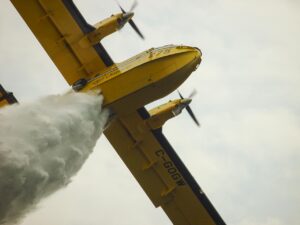 The Province of Ontario says it’s prepared for the fast-approaching 2025 wildland fire season. The new season starts on April 1, and preparations have included filling more than 100 new, permanent positions to help support forest fire fighting operations, said Chris Marchand, fire information officer with Aviation, Forest Fire and Emergency Services (AFFES). …Exactly how busy this season will be remains unknown, Marchand said, as it’s very difficult to predict how intense a fire season will be. …Marchand said the previous winter saw “somewhat normal” snowfall patterns across Ontario. …Marchand noted, however, that the 2024 fire season was slower than usual — 480 fires were reported, down from the 10-year, seasonal average of 700 fires. The Province of Ontario said it partnered with the federal government last year to invest $64 million in the provincial wil
 Ontario is ready to respond to this year’s wildland fire season, which lasts from April 1 until October 31. This year, the government has filled nearly 100 additional permanent positions to support the 2025 fire season and help ensure people and resources are in place to protect communities. “We are ready to protect people, communities and properties across Ontario from wildland fires,” said Mike Harris, Minister of Natural Resources. “When wildland fires hit, our brave and dedicated FireRangers, pilots and support staff are prepared to battle these fires and protect Ontarians.” Last year, the province partnered with the federal government to invest a total of $64 million in the wildland fire program. This investment has allowed Ontario to enhance its firefighting capacity for the 2025 fire season and includes funding for forest fire suppression equipment and technology, such as fuel systems, trucks and emergency management software.
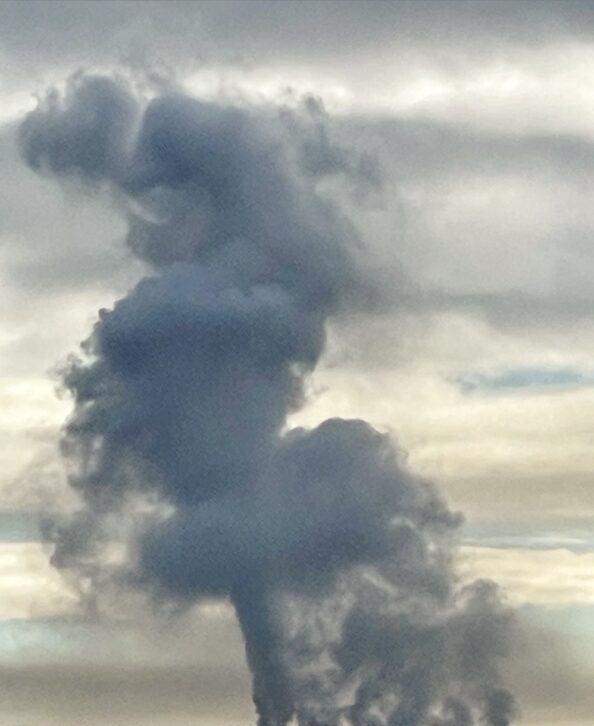 Apologies are in order if anyone blamed it on the dog. The Kruger pulp mill on Mission Flats Road says it is responsible for what some might have noticed was a stronger than usual odour in the air in Kamloops late Friday afternoon. According to Kruger spokesperson Paule Veilleux-Turcotte, the smell was the result of a failure in the mill’s odour control equipment. “The plant halted its operations to repair the equipment, but, despite shutting down, some residual levels of the gases would still have been noticeable within the community,” Veilleux-Turcotte said in an email to Castanet Kamloops. “Despite the equipment issues, operations remained in compliance with the site permit for the duration of the event.” Veilleux-Turcotte said the issue was fixed by about 10 p.m. on Friday night, and, upon confirmation of the repairs, the mill resumed operations. [END]