 In a move that NAHB has encouraged, President Trump signed an executive order that calls for a 25% increase in timber production from federal lands. NAHB has taken a leading role in urging the administration and Congress to increase the domestic supply of timber from federally owned lands in an environmentally responsible manner. …This new development will help the nation move in the direction of self-sufficiency. However, due to logistical issues and the long time to ramp up sawmill production, it is projected to take months, if not years, before the market feels any impact from this action. …Offsetting the good news to expand domestic timber output is the fact that tariffs on Canadian lumber shipments into the US are expected to more than double by September.
These duties are completely separate from the global reciprocal tariffs announced by President Trump last week. When the president made his announcement, NAHB scored an important win when Trump chose to continue current exemptions for Canadian and Mexican products, including a specific exemption for lumber from any new tariffs at this time. It’s clear we are not out of the woods yet on the possibility that Canadian lumber tariffs could run even higher than 34.5% later this year. The White House issued an executive order in March commanding the Commerce Department to investigate the national security impacts of imports of timber and lumber. NAHB has argued that housing is a critical component of national security and that no further lumber tariffs should be imposed. …For now, Canadian lumber tariffs stand at 14.5%, but members should be forewarned to expect higher tariffs later this year and plan accordingly.


 British Columbia’s forests are increasingly on fire—and the consequences are catastrophic. As we approach another fire season, communities, ecosystems, and livelihoods are at growing risk. In this crisis, BC is Burning, a new two part documentary, offers both a wake-up call and a beacon of hope. The film explores fuel loading, carbon emissions, proactive forest management and the need for a shift from suppression to increasing proactive prevention activities, offering solutions to reduce the mega-fires that are becoming all too common. … The core message of BC is Burning is the importance of active forest management. By managing forest landscapes… we can reduce fuel loads and prevent catastrophic fires. … BC is Burning is more than just a documentary—it calls for collective action. …become part of the conversation. Together, we can turn the tide on wildfires and ensure that our forests—and our future—remain safe and resilient.

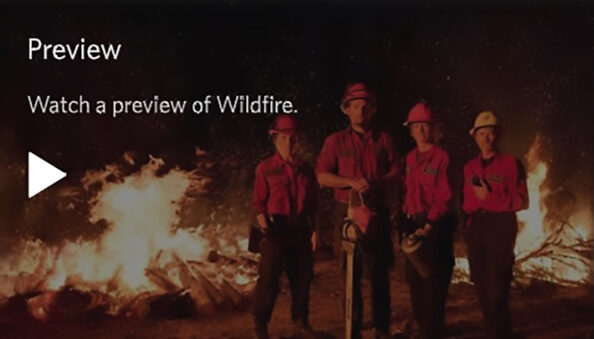



 At MacLeod Forest Services, our primary business focus is providing training and response services to a variety of customers. This includes our S100 Wildfire for Industry Program. Our aim is to provide timely, achievable, effective, up to date and cost-efficient wildfire instruction to all stakeholders that have the potential to be affected by a wildfire. By staying involved in response we can continually improve our products and services as changing conditions require. We have provided training to stakeholders from First Nations crews, the Forest, Agriculture, Outdoor Recreational and Construction Industries, Type 2 and 3 Wildfire Contractors, BC Wildfire Service crews as well as rural residents. The MacLeod S100 for Industry is a two-day BCWS S100 course enhanced to better prepare participants to be on their own until organized help arrives. Upon completion participants will be able to: assess wildfires accurately; develop an appropriate plan; and respond safely and effectively. Course runs April 29-30, 2025.

 A coalition representing part of the US lumber industry is firing a shot at BC’s Forests Minister, who has suggested the State-side industry is not willing to engage. “

 WASHINGTON — U.S. President Donald Trump partially reversed course Wednesday on his global trade war following days of market turmoil — but he’s not offering any changes to the tariffs hitting Canada. Trump immediately paused for 90 days the levies on nations slapped with the highest duties under his “reciprocal” tariff regime. A White House official later clarified that a 10 per cent baseline tariff will remain in place for all countries. The president has held fast to his plan to rapidly realign global trade through a benchmark “reciprocal” tariff — but his tariffs have spread chaos throughout global markets. …On social media, Trump said he made the decision after more than 75 countries called his administration “to negotiate a solution.” Later at the White House, the president said he lowered the levies because “people were jumping a little bit out of line.” “They were getting yippy, you know,” Trump said. “They were getting a little bit yippy, a little bit afraid.”
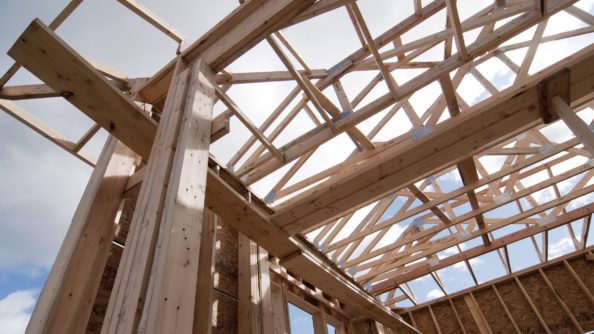 American consumers could be paying more to build new homes after the U.S. announced it will more than double existing duties on Canadian softwood lumber. “In the end, the U.S. consumer ends up paying additional money,” Supply-Build Canada president said on Tuesday. “It is an extra cost that is being passed on to the U.S. consumer and that’s not an ideal situation when you are looking for housing affordability.” Claiming that the Canadian lumber industry is unfairly subsidized, the U.S. Department of Commerce announced Friday that it planned to hike duties on Canadian softwood lumber from
 BURNABY, BC – The United Steelworkers union (USW) District 3 and the USW Wood Council locals in BC applaud the approach of Premier Eby in fighting for workers and federal government supports in light of the announcement by the US Department of Commerce that will increase the current tariff and countervailing duty average to 34.45% from 14%. “The continual application of tariffs and duties by the US on our USW membership in Canada is wrong and unwarranted,” said USW District 3 Director Scott Lunny. “Premier’s Eby’s approach in pressing the federal government in Ottawa for worker supports is key.” …“The Trump administration and the U.S. Department of Commerce continue to be subjected to the influence of the US Softwood Lumber Coalition, wrongfully claiming the Canadian industry is subsidized,” said Jeff Bromley, USW Wood Council Chair. …“It’s protectionism, pure and simple,” added Bromley.
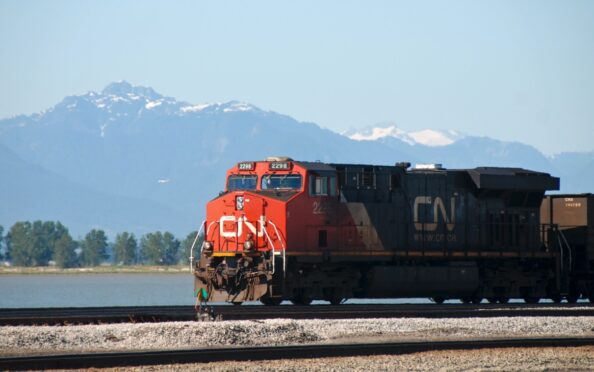 Canadian National train service employees represented by the Teamsters Canada Rail Conference will get a 3% annual raise under an arbitrator’s contract decision. Arbitrator William Kaplan released his decision Monday on the three-year contract, which runs from Jan. 1, 2024, through Dec. 31, 2026. When CN and the TCRC were unable to reach a negotiated settlement during their contract talks, the Canada Industrial Relations Board sent the matter to binding arbitration in August 2024 after a brief lockout. Kaplan urged the railway and union to iron out their differences regarding changes to work rules. “Both parties proposed detailed changes to work rules. And both parties described the proposals they sought as justified by demonstrated need, and the ones advanced by the other party as breakthroughs that would never be accepted in free collective bargaining,” Kaplan wrote.
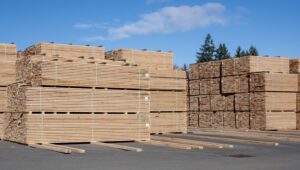 Premier David Eby cautioned last week that BC should not make too much of the appearance that the country “dodged a bullet” in the latest round of tariff fire from the US. …Eby’s fears were borne out, when the US announced a plan to more than double the duty against Canadian softwood. …Eby told the legislature that Forests Ministry staff are “working on a proposal to defer stumpage.” The tariff threat likely means a setback for the ambitious goal that Eby set for the forest minister, Ravi Parmar. He directed Parmar to “work toward…a harvest of 45 million cubic metres per year”. The increase would be 50 per cent greater than last year’s 30 million cubic metres harvest, but still well short of the almost 60 million harvested the year the New Democrats took office. …Though the industry welcomed the premier’s target for increasing the harvest, it remains privately skeptical that the NDP can make the necessary changes in regulation and permitting to bring about the increase.
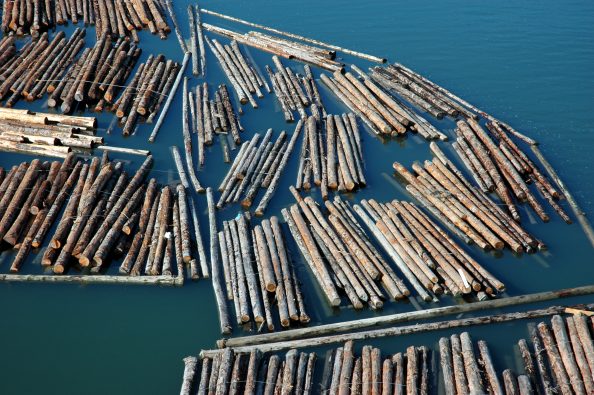 By raising duties on Canadian lumber, the United States is contending that the producers benefit from unfair subsidies and sell products below market value. However, British Columbia Premier David Eby called it an “attack on forest workers and British Columbians” on April 5. …Harry Nelson, an associate professor of forestry at the University of British Columbia, said the increase stems from Washington’s annual review of its trade remedy findings. “The main reason for the significant increase is that both rates went up, the antidumping especially so.” …Nelson said some companies such as Canfor face a nearly 50 percent tariff and could be unsustainable. “Lumber margins tend to be small — certainly not 50 percent, and it is hard to imagine how Canfor will be able to continue to operate,” he said. “I would expect a curtailment in production, where higher-cost firms may either take temporary downtime or permanently shutter some more mills.”
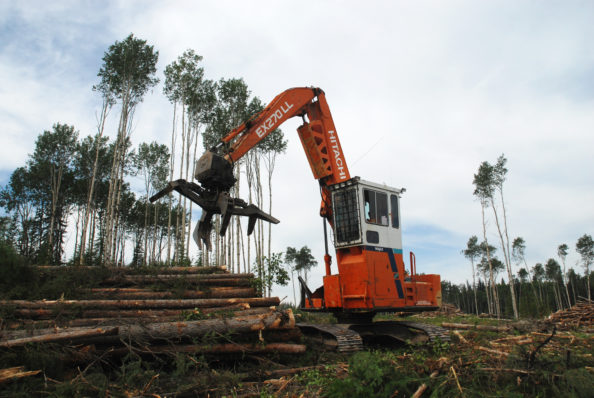 When forestry contractor Mike Egli heard the sawmill in Vanderhoof was closing, he was expecting the worst. Egli co-owns logging contractor Dalchako Transport with his brothers. As with many local forestry companies, Dalchako’s livelihood was tied to the Plateau sawmill, Vanderhoof’s largest employer. With more than 200 workers, the sawmill was integral to the local economy. It closed at the end of December 2024. Egli has found other contracts to keep working since December, but the mill’s closure has caused a massive upheaval. “We lost all that work there,” he said. …Meanwhile, workers in Vanderhoof are looking to other industries to make a living. It’s a shift many northern B.C. workers have had to make before. …Not all workers are leaving the industry. Mayor Moutray said local forestry contractors are commuting 200 kilometres to Quesnel, B.C., for work, or flying into remote work camps to stay in forestry.


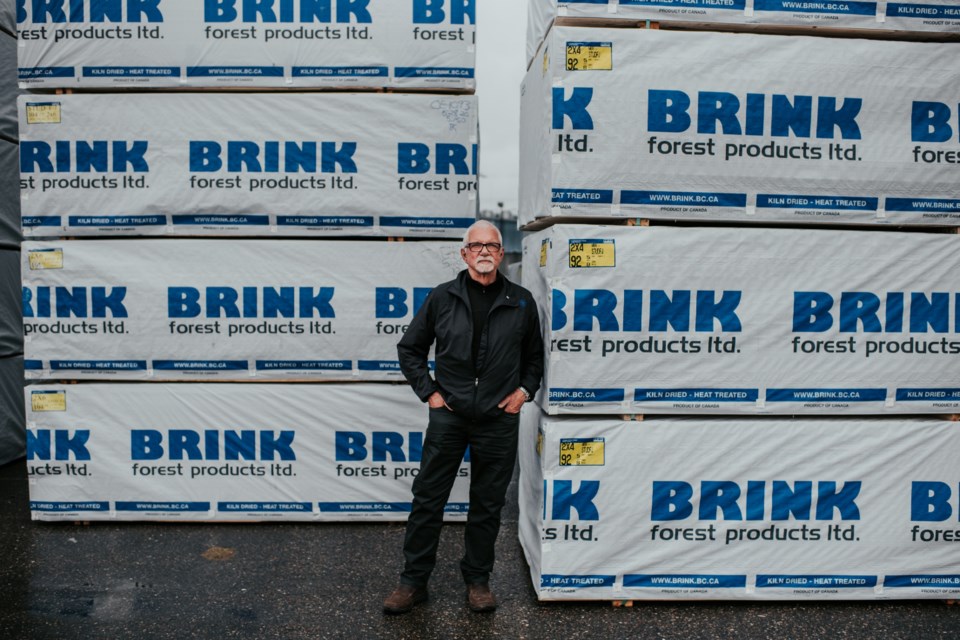 AUDIO STORY: John Brink, CEO of Brink Forest Products, talks to host Gloria Macarenko about the economic potential for value-added wood products in B.C. and the impact of higher duties and tariffs from the U.S.



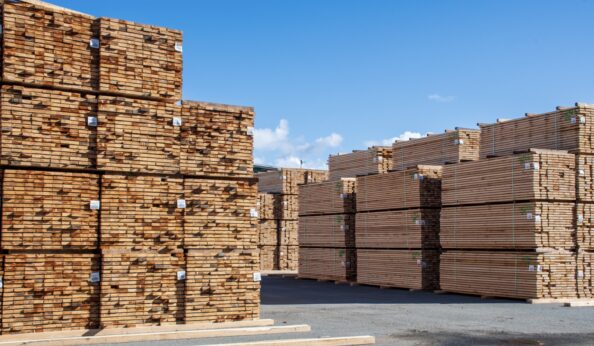 OTTAWA — Wholesale trade, excluding petroleum, petroleum products, and other hydrocarbons and excluding oilseed and grain, rose 0.3 per cent to $85.7 billion in February, Statistics Canada said Monday. The overall increase in sales came as just two of the seven subsectors posted gains. Statistics Canada said sales in the machinery, equipment and supplies subsector gained 7.1 per cent for the month to $19 billion. All four of the subsector’s industry groups climbed, with the computer and communications equipment and supplies industry group up 11.2 per cent, while the construction, forestry, mining, and industrial machinery, equipment and supplies industry group added 6.8 per cent.
 Lumber futures fell toward $580 per thousand board feet, sliding further from a two-and-a-half-year high of $685 on March 24th, reflecting a steep decline in construction demand amid disruptive trade policies. The US decision to raise duties on Canadian softwood lumber to roughly 34% has sparked significant uncertainty and raised homebuilding costs, prompting builders to delay projects. Concurrently, Canadian production has been restricted by widespread sawmill closures, diminished timber stocks due to the mountain pine beetle, and tightening forestry policies in key regions like British Columbia, resulting in a surplus that further drives down prices. While there is a gradual shift toward lower-cost Southern Yellow Pine from the US South, logistical and technical hurdles limit its ability to fully offset the reduced Canadian supply. Market participants are adjusting to lower demand expectations amid ongoing trade tensions and a slowing construction sector.
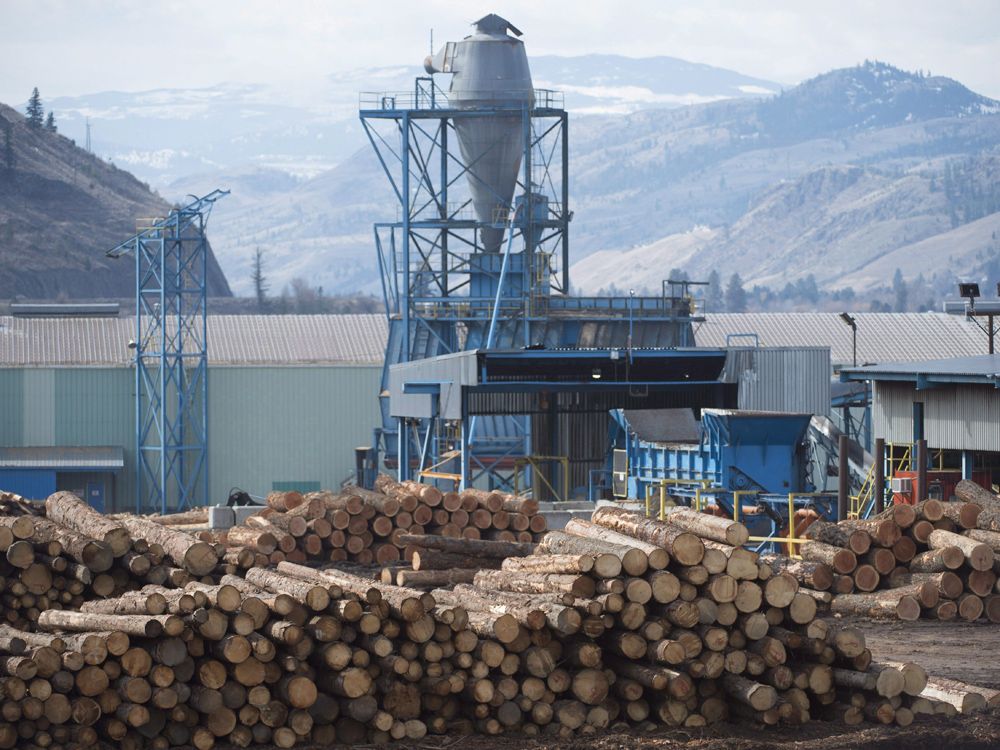
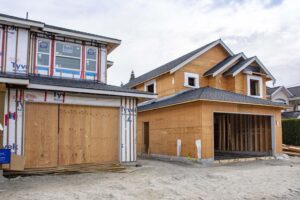 Homebuilder stocks plunged Monday following reports that the US is preparing to sharply increase tariffs on Canadian lumber, independent of President Donald Trump’s new “reciprocal” tariffs. …After reports of the new lumber duties emerged over the weekend, however, shares of homebuilders plunged swiftly Monday. …”Tariffs are the clear culprit for the stock market pullback and fears of recession,” says Realtor.com® Senior Economist Joel Berner. “Recession risk is especially poignant for builders.” …The latest round of tariffs, however, will likely increase materials costs for all homebuilders, to some extent, with a recent survey of builders finding that they expect an average cost increase of $9,200 per home as a result of tariffs. …Over the weekend, Moody’s Analytics Chief Economist Mark Zandi raised his outlook for the odds of a recession this year to 60%, up from just 15% a few months ago.
 Prince George city council took the first step in renewing its contract with Lakeland Mills Ltd. to supply fibre for the Downtown Renewable Energy System through 2026 with options to extend it through 2027 and 2028 at its Monday, April 7 meeting. From a central location near the intersection of Second Avenue and George Street, the system uses wood waste to power boilers that pump heated water to buildings across downtown Prince George like city hall, the Prince George Public Library, the Canfor Leisure Pool, the Ramada Hotel and more. The original contract with Lakeland Mills to supply the products used to power the boilers ran from 2012 to 2022. If the bylaw creating the new agreement eventually passes fourth reading, the new agreement would stretch retroactively from July 1, 2022 to Dec. 31, 2026 with options to extend it through 2027 and 2028.
 Hundreds of municipal, First Nations and BC Wildfire Service (BCWS) firefighters from across the province are coming together at the Wildfire Resiliency and Training Summit in Penticton to train, collaborate and learn about new technology and practices ahead of the 2025 wildfire season. “We don’t know exactly what this wildfire season will bring, but I want British Columbians to know that we are working hard every day to be ready,” said Ravi Parmar, Minister of Forests. …The Wildfire Resiliency and Training Summit brings together First Nations and local government representatives, emergency managers, wildfire mitigation specialists, and firefighters to collaborate and train with the BCWS and discuss the latest developments in wildfire technology, mitigation and prevention. The five-day event attracts more than 350 wildfire professionals and includes two days of collaborative training between structural fire departments from throughout the province and the BCWS.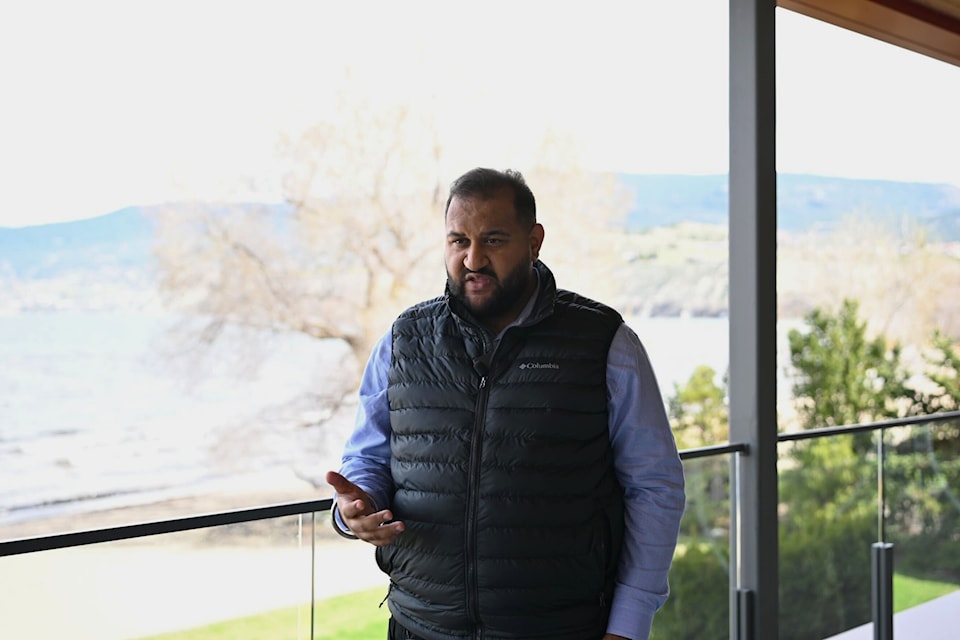

 On March 31, the Supreme Court of B.C. released its decision on a historic case with implications for the future of resource management in Canada. The judge sided with the Haida Gwaii Management Council and Province of British Columbia against logging giant Teal Cedar Products Inc., which argued its profitability had unjustly diminished due to the former’s sustainability regulations and improved forestry stewardship standards. In its defence, Haida Gwaii Management Council and the province pointed to Teal’s careless logging and business practices, which it continued despite expert, repeated advice from Haida and Crown governments. Proceedings involved numerous expert witnesses … in 2023. Almost exactly two years later, the judge dismissed Teal’s claims. …If corporations were to earn the power to sue governments any time they passed new legislation to uphold sustainable and ecologically sound practices, then we would witness a nation-wide proliferation of lawsuits arising from every sector.

 The Bow Valley—encompassing Banff National Park, the Town of Banff, Canmore, and MD of Bighorn—is at imminent risk of a catastrophic wildfire. Despite commendable efforts in localized fire prevention (e.g., firebreaks, fireguards, neighbourhood mitigation), it is our opinion no comprehensive measures are in place to address the risk of an extreme wildfire—the kind that devastated Fort McMurray (2016) and Jasper (2024). A fire of that scale in this region would be both a national tragedy and a global environmental disaster. …Our call for action for our federal candidates: Acknowledge the real and rising risk of a Class 6 wildfire in the Bow Valley; While working with the Province and Indigenous Peoples, support federal investment in a landscape-scale fire mitigation strategy for the Bow Valley; Advance policy reform recognizing forests as carbon assets requiring active stewardship; and Champion this initiative as a model for national wildfire and carbon management.
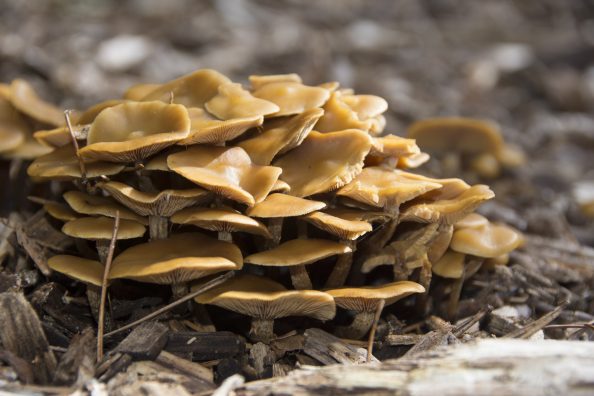 Officials in Fox Creek Alberta are trying to find ways to better protect the community from future fires. One option includes using fungi. …This summer, researchers from Lac La Biche, Alta.-based Portage College will go into the the boreal forest surrounding Fox Creek to collect local fungi. Spores from that fungi could later be used to inoculate wood in man-made slash piles. Forests are thinned to remove wood biomass so there is less material to burn during a wildfire. Wood that has been removed can be stored in massive slash piles, which can be fire risks themselves. Fungi could be used to break down the wood faster, returning them to soil, said Michael Schulz, research chair in environment and sustainability in the boreal forest at Portage College.






 The Workers Compensation Amendment Act, 2019 (Bill 18) expanded the definition of “firefighter” and changed the definition of “worker” in the Workers Compensation Act, resulting in implications for society fire brigades that engage volunteer firefighters. Our Policy, Regulation and Research Department is releasing a discussion paper with proposed amendments to policy in the Assessment Manual to provide guidance on how WorkSafeBC determines the employer of a volunteer firefighter, and to remove outdated language. The discussion paper and information on how to provide feedback can be found here:
  WorkSafeBC is releasing a discussion paper concerning changes made to policy on duration of benefits (retirement age). To reflect legislative amendments to the Workers Compensation Act, policy changes related to retirement age determinations were effective on January 1, 2021. After reviewing the implementation of the initial changes, WorkSafeBC’s Board of Directors approved further policy changes, effective January 1, 2024, on WorkSafeBC’s determination of whether a worker “would retire” after the retirement dates set out in the Workers Compensation Act. The Board of Directors approved these policy changes in advance of public consultation. Our Policy, Regulation and Research Department is now consulting on the 2024 changes to determine whether further changes are necessary. The discussion paper and information on how to provide feedback can be found here: