 Trump’s tariff policy and countermeasures will slow global economies—the International Monetary Fund warned. In other Business news: tariffs drive up homebuilding costs in Washington and Oregon; wood manufacturing is still important in rural Oregon; COFI’s Kim Haakstad opines on BC’s forestry future; and Domtar and Kruger are recognized for their sustainability credentials. Meanwhile: COFI is accepting applications for its 2025 scholarships; and the 18th annual International Biomass Conference wrapped up in Atlanta on Sunday.
In Forestry news: Colorado and Maine face spruce budworm challenges; a fungus targets the invasive spongy moth; and more on Trump’s effort to increase logging—will it help prevent wildfires, and what it means for US national forests. Meanwhile: BC Hydro trials fire-resistant pole wraps; and Trevor Hancock says the Canadian election is irrelevant—environmentally speaking.
Finally, on Earth Day—the Nature Conservancy on the significance of Canada’s forests.
Kelly McCloskey, Tree Frog News Editor
 The BCTS Review that was launched in January 2025, and co-chaired by Brian Frenkel, Lenny Joe and George Abbott, is nearing an end for public input intake. The BC government describes this initiative as a periodic review to ensure BCTS is evolving in an ever-changing marketplace while meeting its mandate commitments. The reality is that BCTS performance has been seriously impacted over the last few years. This review comes as the Premier seeks to meet his mandated target for a timber harvest of 45 million m3. Raising the BCTS harvest off its historic lows will help the Premier in his drive to 45!

 Canadian Forest Owners (CFO) reached out to the five federal political parties with current representation in parliament to ask how their party would support the thousands of rural communities across Canada where these forest owners live. Canadian Forest Owners represents 480,000 private forest owners from Prince Edward Island to Vancouver Island. These forest owners are largely family owned, small business, who own over a tenth of Canada’s managed forests, supporting every mill across the country, and accounting for nearly 20 percent of Canada’s total forest production. Private forest landowners provide solutions to climate change and real socio-economic development opportunities in rural communities from coast to coast. Here’s what they had to say…
 President Trump’s shifting trade policies are creating uncertainty for the Canadian forestry industry. Sean McLaren, CEO of West Fraser Timber, says the potential inflationary effects of tariffs could weigh on future demand. “Looking forward, we see considerable macroeconomic uncertainty, particularly stemming from the US’s evolving tariff policies”. He said the company is planning for multiple scenarios. …RBC’s Matthew McKellar said that the outlook for the paper and forest products industry is highly uncertain when it comes to demand. “All of this uncertainty is bad for business,” said Derek Nighbor, CEO of Forest Products Association of Canada. Nighbor added that any impact on Canadian lumber companies will also affect pulp and paper: “We’ve got all of these downstream industries that depend on those inputs.” …McKellar noted that companies like West Fraser, Interfor and Canfor are geographically diverse, meaning potential softening of demand could be the bigger concern.
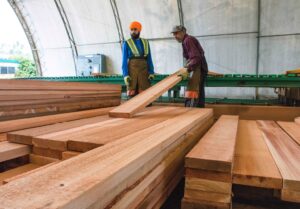 Major softwood producers with head offices in Canada say they have accounted for more than half of the growth in capacity in the US South over the past decade, highlighting their American investments as the Trump administration investigates lumber imports. The US South appeals to forestry companies because of the region’s abundant timber, the Canadian government said in a 57-page filing this month to the US Department of Commerce in a bid to avert potential tariffs. …In seeking to stave off tariffs, the Canadian government and several producers from Canada believe that the foray into the US South should be viewed as evidence of them being aligned with the Trump administration’s “America First” trade and investment agenda. …However, the U.S. Lumber Coalition is arguing that new tariffs are necessary. …Canadian producers are worried that if new lumber tariffs hit 25 per cent… total levies could reach nearly 60%. [to access the full story a Globe & Mail subscription is required]
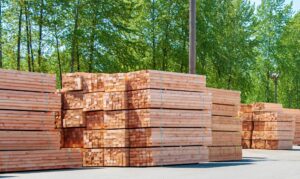 James Furney, mayor of Port McNeill, BC… is trying to stay upbeat, but his lumber town was already suffering before the threat of Trump’s trade war. …“To think that anyone is going to be insulated from what is going on with Trump would be delusional,” Furney said. “We are a forestry town and people around town are already watching their wallets and curtailing their spending, and businesses that should be ramping up now to hire summer students aren’t going to be hiring.” …In short, B.C. has plenty of wood and plenty of potential buyers for it, especially in the US, which was a $5.69-billion export market for the province in 2024, but not enough of that wood has been getting cut in recent years. That makes for gloomy days on the West Coast; a malaise that could spread to Ontario and Quebec and push the industry to the brink of collapse.
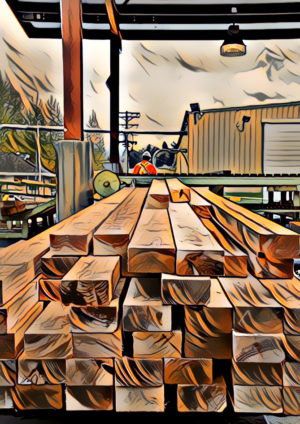 The BC Lumber Trade Council is warning that threatened US tariffs stacked on top of duties against Canadian softwood could lead to soaring costs for residential construction, including in American states seeking to rebuild after natural disasters. Hurricane Helene damaged or destroyed an estimated 73,000 homes in North Carolina last fall, and wildfires burned more than 15,000 structures in California in January, the BC council said in a submission this month to the US Department of Commerce. “Significant hurricane reconstruction efforts are also underway in Florida, Georgia, South Carolina, Virginia and Tennessee,” the council’s 55-page filing says. The submission was a response to a March 1 executive order… which also threatened new lumber tariffs, cited Section 232 of the Trade Expansion Act, allowing him to connect the softwood file with national security. The probe into softwood and other wood products is scheduled to be completed by the end of this year. [to access the full story a Globe and Mail subscription is required]
 New support for forestry-sector manufacturers in the province is creating sustainable jobs, strengthening local supply chains, establishing new made-in-B.C. products and reinforcing B.C.’s position as a leader in mass-timber innovation. …Through the BC Manufacturing Jobs Fund (BCMJF), the Government of B.C. is contributing as much as $11 million toward four forestry-sector capital projects in the province. The projects are helping B.C.-based forestry-product manufacturers grow their businesses by constructing new production facilities, purchasing new equipment and adding new high-value product lines, while creating and protecting hundreds of jobs.
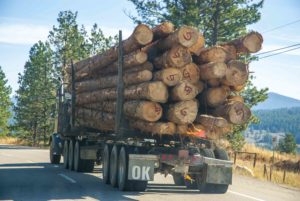 As of 2024 there are 2,500 sawmills in the U.S. and 850 in Canada. However, these numbers have to be looked at in context of housing starts in both countries. An interesting number: The rebuilding of 16,000 houses that burnt down in California require 4,300 fully loaded eight-axle trailer trucks with dimensioned lumber. We must be innovative and need more skilled workers. We should have a few smaller mills and/or machinery producing metric size timber for Europe and Japan. …We cannot change what is happening in the US, but despite an executive order from higher up, many mills in the US are suffering from a steady lack of timber supply and do not have the manpower or loggers required to steadily feed some of the mills. In Montana for example, 36 mills have closed over the last years because of a lack of timber supply, as well as a lack of loggers.
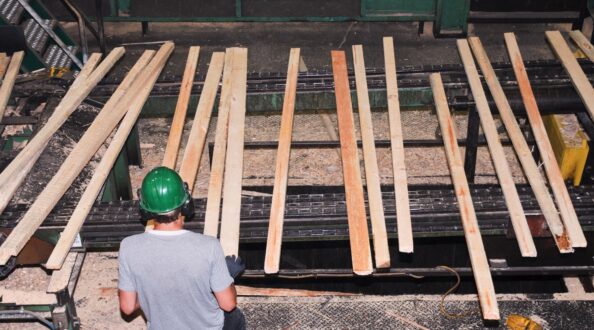 At the Council of Forest Industries convention, Premier David Eby underscored the provincial government’s commitment to forestry as a major project — and made it clear that forestry will be treated with the same focus and urgency, saying, “This is a shared project that we can get to that 45 million (cubic metre) target, which we all know is absolutely essential.” …Eby’s commitment to a “whole of government” approach is exactly what the sector needs. …We applaud Forest Minister Ravi Parmar’s recent announcements… Equally important is ensuring BCTS delivers its full potential. Consistently hitting 90 per cent or more of its annual harvest target is critical to a thriving wood products industry that supports communities and workers throughout the province. We also can’t lose sight of reconciliation. Increasing the distribution of stumpage fees to First Nations is one achievable step that would help advance shared prosperity and strengthen Indigenous participation in the sector.
 An appeal contesting a 12-month notice period awarded to an operations specialist who had been recruited from a long-term, secure position
  VANCOUVER, BC – West Fraser Timber reported first quarter results of 2025. …First quarter sales were $1.459 billion, compared to $1.405 billion in the fourth quarter of 2024. First quarter earnings were $42 million, compared to a loss of $62 million in the fourth quarter of 2024. The fourth quarter included a non-cash impairment loss of $70 million. …First quarter Adjusted EBITDA was $195 million compared to $140 million in the fourth quarter of 2024. ..The Lumber segment has experienced a slower than expected start to the year, owing to transportation and weather challenges that have influenced shipments as well as uncertainty related to demand impacts from the U.S. administration’s shifting tariff policies. …The global pulp market has begun to experience disruption with the economic impact of US tariffs creating considerable demand uncertainty in Chinese markets. As such, we anticipate NBSK pricing weakness over the near- to medium-term and a potentially significant adverse financial impact on our Pulp & Paper segment.
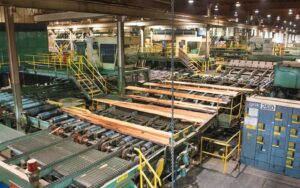 President Trump is reshaping America’s timber industry, directing federal agencies to boost domestic lumber production while investigating whether foreign imports pose a national security threat. The US construction market consumes more than 50 billion board feet of lumber annually, with domestic production currently meeting only 70% of demand. Canada fills most of the gap, supplying roughly a quarter of America’s lumber needs. …His executive order instructs the Forest Service and Department of Interior to increase timber sales from public lands. Industry experts, however, question the feasibility of such rapid transformation. Pete Stewart, of ResourceWise, points out significant challenges: “The U.S. would have to build 70 new sawmills to make up the difference.” The geographic reality also presents obstacles. While Southern forests from Virginia to eastern Texas grow 30% more trees than local sawmills demand, forests in the Northwest are already harvesting at capacity. …Critics also question the national security rationale.
 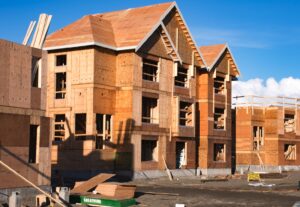 This is the USD 64,000 question. …What we currently know is that Canadian softwood lumber carries a 14.5% tariff rate, which could expand to 34.45% later in 2025. …If we split the difference between the NAHB’s and FEA’s estimates, the average sized new home consumes 34,000 bf of lumber. As such, should the tariff increase to 34.45%. …,Should the administration levy an additional 25% “immigration and Fentanyl tariff” on Canadian lumber (which is currently exempt), the cost/home would rise to approximately USD 1,100/home. …In reality, total wood usage in home construction includes a variety of wood types including softwood lumber, oriented strand board, engineered lumber and plywood. Each category has its own pricing and supply dynamics. One additional point… It is estimated that the repair and remodel (R&R) market accounts for 35-40% of lumber demand while single-family home construction accounts for an additional 35%. …For more on the latest real estate trends,
 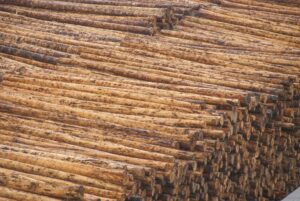 President Trump is forging ahead with his aggressive tariff campaign, moving on from “reciprocal” tariffs to the sector-specific tariffs he promised. To do so will involve Trump’s continued application of Section 232 of the Trade Expansion Act of 1962, which allows a president to impose tariffs to protect or bolster domestic industries if there are deemed potential national security threats. What used to be a rarely employed trade provision has been a favorite instrument. The Commerce Department previously launched Section 232 probes into copper and lumber. And earlier this month, the administration started investigating pharmaceuticals and semiconductors. …Softwood lumber is a critical and preferred ingredient for homebuilding, and 30% of it is imported by the US. Homebuilders warn that tariffs on softwood lumber and other materials could further exacerbate the housing affordability crisis. Higher costs of lumber imports could also affect other products, such as furniture and even toilet paper.
 The Bank of Canada held its benchmark interest rate steady at 2.75 per cent on Wednesday, ending a run of seven consecutive cuts. The decision, for which the market had given roughly even odds, comes following weakening inflation data published yesterday, and as Canadian and global economies contend with U.S. President Donald Trump’s twisting trade war. In its decision, the Bank noted various signs of the Canadian economy slowing, and outlined two possible scenarios that underline the uncertainty of the trade war. “Consumption, residential investment and business spending all look to have weakened in the first quarter,” the central bank said in a statement alongside the decision. “Trade tensions are also disrupting recovery in the labour market. Employment declined in March and businesses are reporting plans to slow their hiring. Wage growth continues to show signs of moderation.”
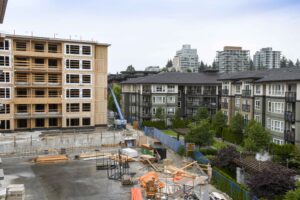 A BC economist says policy proposals from the federal parties do not measure up to the scope of Canada’s housing problem. “(Much) of the policy shift is shifting in the right direction. We still have the problem that the concrete policies on the table don’t match the scale of the housing crisis,” Alex Hemingway, with BC Society for Policy Solutions, said. …Hemingway said he vetted the platforms through two questions: what are plans doing to significantly increase the supply of more affordable housing in the non-market sector; and how to address exclusionary zoning that exists in the biggest, most expensive cities. …Despite all the funding promises, it is still difficult to increase density in areas currently zoned for single-family homes. …If Canada is looking for ways to reduce its economic dependence on the US, “dealing with these fundamental issues of housing and exclusionary zoning, should be an economic priority.”
 Tariff uncertainty continued to weigh on Vancouver’s housing market in March, deepening the slowdown in activity. Escalating US trade actions have fuelled fears of a recession, job losses and equity market volatility, pushing many potential buyers to the sidelines. The latest data from the Greater Vancouver and Fraser Valley real estate boards showed a deepening of the sales pullback in March. MLS sales fell 17.6% year over year. …The severe drop in home sales aligns with declining business confidence, which has plunged to record lows—a pretty good bet that weak confidence is playing out in housing. With sales held back, inventory has ballooned. Active listings were up 43% year over year and marching higher. …Meanwhile, after recording a surplus in merchandise trade balance for two consecutive months, Canada’s trade balance shifted to a deficit in February as exports retreated significantly following a frontloading of US imports.
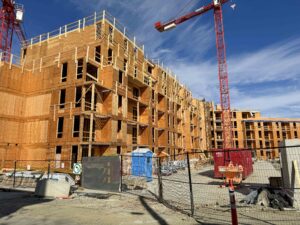 CALGARY — The one constant of Trump’s tariff plan seems to be that it is in a constant state of flux. “The time is now to start planning for what those impacts could possibly be and develop the mitigation strategies and tracking mechanisms…so that as they (tariffs) evolve in real time you are prepared to deal with them,” said Rick Moffat. Moffat moderated a webinar panel recently on legal and practical strategies for managing the impacts of the tariffs on construction projects in Canada. …Stressing the importance of detailed contingency plans that account for potential cost hikes caused by tariffs, Bulut Cinar said contractors would benefit by including “multiple scenarios” illustrating how their contingencies help manage their costs. …If contractors consider delay-causing tariffs a force majeure event, but the contract deals with tariffs differently they might be “precluding themselves” from compensation, he added.


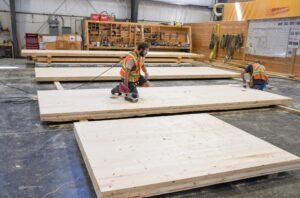 To reach Ontario’s bold goal of 1.5 million homes by 2031… we have a proven solution — and much of what we need, from innovative building techniques to mass timber and Canadian steel, is right here in Ontario’s backyard. …The Ontario Real Estate Association (OREA) released a new policy report, titled Building More, Building Faster, outlining the importance of embracing factory-built homes as a key part of the solution to address Ontario’s ongoing housing supply and affordability crisis. …Factory-built, or prefabricated housing, is a fast-growing area of homebuilding where homes are constructed in a factory — often using prefabricated 3D components — and assembled at their final address. …OREA’s new report highlights five policy recommendations that would cut red tape and create favourable conditions for investment to significantly boost factory-built housing construction with “Made-in-Ontario” solutions that can eventually scale nationally.
 The FSC Leadership Awards recognize excellence in the use of FSC-certified products, materials, and commitment to responsible forest management across industries, as well as in advocacy, conservation and individual leadership in the FSC community. Submissions are due Friday, July 25, 2025. Categories for submissions for people, organizations, and projects in the United States and Canada:

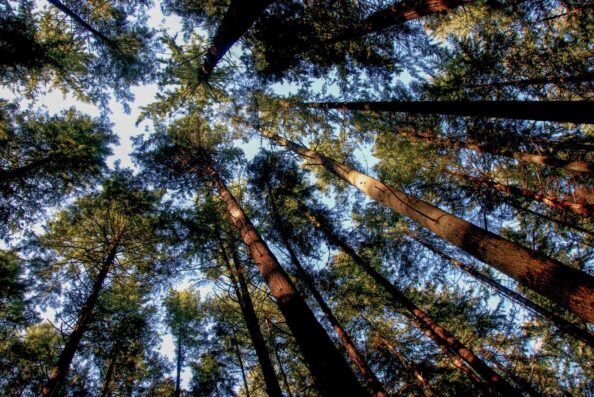 The Ancient Forest Alliance (AFA) and Endangered Ecosystems Alliance (EEA) are calling for better protection of old-growth forests from the BC Government. [They want the] province to refocus their measures, implement their draft biodiversity, and Ecosystem Health Framework to ensure a transition to a sustainable forest industry. Executive Director of EEA Ken Wu said there is two directions the government can go in response to tariff threats from the U.S. “Either take the easy but foolish route by falling back on the destructive status quo of old-growth logging and raw low exports, or instead take the opportunity to invest in a modernized, sustainable, value-added, second-growth forest industry that is the future of forestry in BC, while protecting the last old-growth forests.” …The groups are also issuing a warning which commercial logging must not be permitted in protected areas under the guise of wildfire risk reduction.
 The Sḵwx̱wú7mesh Úxwumixw (Squamish Nation) is calling for better education on Stanley Park’s Indigenous history after a First Nations group threw their connection into question during a logging protest earlier this month. A “sacred fire” lit March 15 was kept ablaze for over a month at Brockton Park’s totem poles by a woman who identified, according to protest group Save Stanley Park, as a “matriarch” of the land. The woman claimed to be a descendent of “Portuguese Joe”, an early B.C. settler with Musqueam lineage, and was in protest of the Vancouver Park Board’s ongoing project to remove hundreds of trees affected by the looper moth disease. Squamish Nation elected councillor Wilson Williams says the claims are still yet to be verified, and his own community is left reeling at the group’s failure to address the history of the Squamish people that dates back thousands of years within the park.
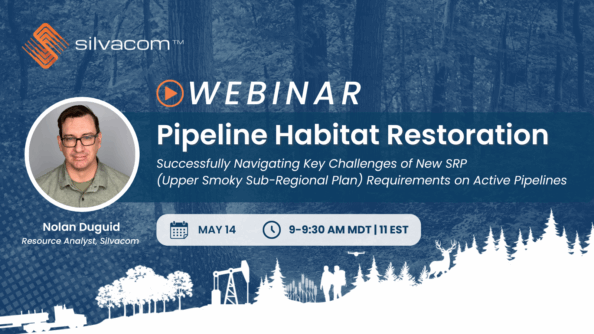 Silvacom is hosting a free webinar titled “Pipeline Habitat Restoration: Strategies and Innovations” MAY 14, 2025 9:00 AM MDT | 11 EST. This event will bring together industry experts, environmental scientists, and key stakeholders to discuss the latest developments and best practices in habitat restoration in areas affected by pipeline projects. Join Our Webinar on Pipeline Habitat Restoration: Successfully Navigating Key Challenges of New SRP Requirements on Active Pipelines (Upper Smoky Sub-Regional Plan). With Alberta’s Sub-Regional Planning Process introducing new regulatory requirements for caribou habitat restoration, the energy sector must adapt and implement habitat restoration on active pipeline corridors. Unlike decommissioned or abandoned pipelines, active right-of-ways (ROW) present unique operational, regulatory, and ecological challenges. This webinar will explore the complexities of meeting habitat restoration objectives while balancing: Ecological restoration goals; Operational efficiencies; Regulatory requirements; and Indigenous community and stakeholder values.

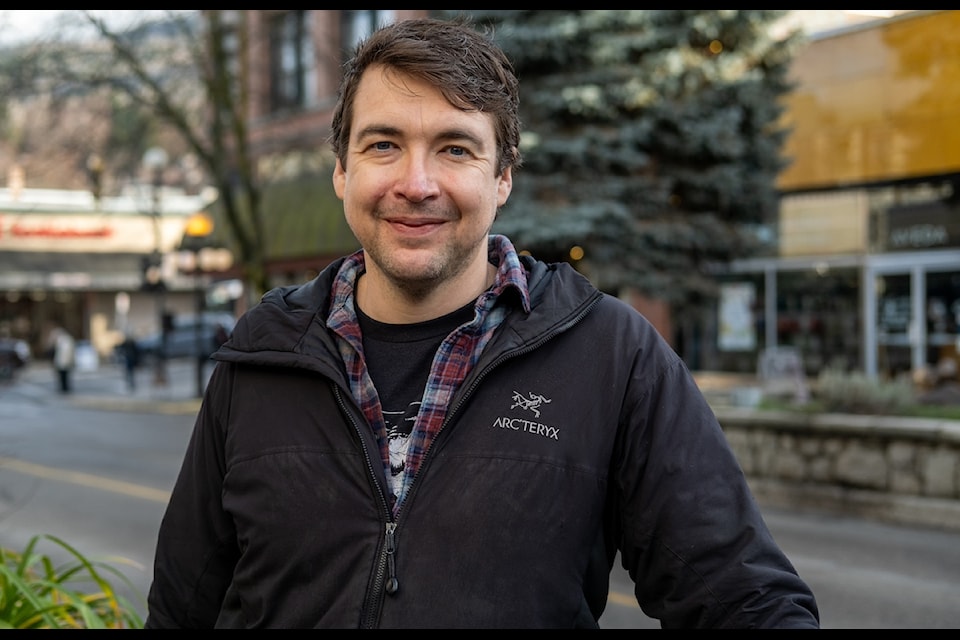
 The BC Council of Forest Industries (COFI) is now accepting applications for the 2025 Forestry Scholarships. As part of our commitment to supporting the next generation of forestry professionals, COFI will award 10 scholarships of $2,000 each to students from across British Columbia pursuing post-secondary studies or skilled trades training related to the forest sector. The scholarships are open to BC residents entering a forestry-related program at an accredited post-secondary institution in fall 2025 or spring 2026—whether you’re from a rural community, coastal town, or urban centre.
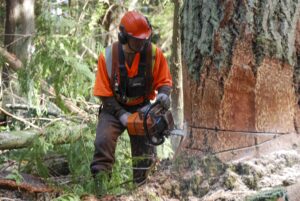 ʔakisq̓nuk First Nation is among communities that have taken a proactive approach to reducing risk ahead of B.C.’s next wildfire season, supported by Indigenous-owned resource management firm Nupqu and $365,000 from the Forest Enhancement Society of BC (FESBC). East of the Nation’s reserve and just north of Fairmont Hot Springs, work will continue through summer and into fall as the ʔakisq̓nuk community collaborates with foresters and the province to treat natural fire fuel and ensure a safer future for locals. It’s become a successful project, first proposed back in 2018. According to ʔakisq̓nuk Chief Donald Sam, fire suppression in these forests for more than a century has challenged and restricted the health of these ecosystems.
 A decision by the Supreme Court of British Columbia to reject a $75-million compensation claim made by a logging company that once operated on Haida Gwaii could have reverberations across the province as the government continues its reconciliation efforts with First Nations… A prime example is the $84 million in compensation that the B.C. government agreed to pay MacMillan Bloedel in 1999 after the government created a number of new parks on Vancouver Island. In seeking $75 million in compensation for alleged losses of portions of its logging tenures on Haida Gwaii, however, Teal Cedar Products Ltd., a subsidiary of the Teal-Jones Group, tried to argue something entirely different: that changes to where it could log, how it could log and when it could log amounted to a form of expropriation for which the company should be compensated millions in taxpayer dollars.

 GRAND FORKS – The Forest Practices Board has completed an investigation into a complaint about range practices and government enforcement in the Ingram-Boundary range unit. A resident of Midway submitted the complaint in January 2023, raising concerns about overgrazing, inadequate fencing to protect riparian areas and the spread of invasive plants. The investigation examined whether two range agreement holders followed legislative requirements during the 2023 grazing season. It also considered whether government enforcement had been appropriate. Board investigators visited the range unit in September 2023. The board determined that the range agreement holders complied with legal requirements when grazing livestock in the 2023 grazing season, and protected riparian and upland areas as required. However, investigators found the actions that deal with the spread of invasive plants in the range agreement holders’ range use plans were unmeasurable and could not be evaluated for compliance.
 It’s been hard to keep up with the impact of U.S. President Donald Trump’s tariff trade war on Canada. Punishing tariffs have been levied on steel, aluminum and automobiles and — critically for B.C. — softwood lumber. “Tariffs are the top election issue for workers,” Canadian Labour Congress president Bea Bruske said. “This uncertainty really has people very, very stressed out about the future of their jobs.” …The United Steelworkers union represents about 14,000 forestry workers across Canada. Wood Council chair Jeff Bromley said it’s still not clear what the tariffs will mean for members. …Bromley said the federal government can support forest workers by enhancing employment insurance and funding training support for workers who need to find work in other industries. But Bromley said the ultimate solution is a new softwood agreement.
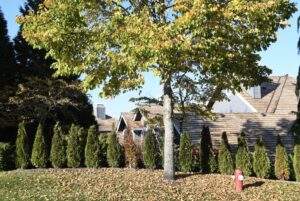 Proposed changes to Port Moody’s tree protection bylaw will adjust the requirements for developers and property owners to replace trees, afford greater protection to larger trees and establish a registry for significant landmark or legacy trees. In a report to be presented to council’s city initiatives and planning committee on Tuesday, April 15, Port Moody’s manager of policy planning, Mary De Paoli, said the new rules are consistent with council’s strategic goal to strengthen the city’s urban forest and enhance its natural assets. The revisions come more than five years after some councillors advocated for increased protection of Port Moody’s tree canopy. “It’s such and important part of our climate action plan,” said Coun. Amy Lubik. “It’s critical for keeping our community safe in these extreme climate events.”
 A Canadian carbon credit firm is seeking more than US$40 million in damages in a lawsuit against its former CEO and several ex-directors and associates over alleged unjust enrichment, fraud, and breach of fiduciary duty. A statement of claim filed in the Ontario Superior Court by Carbon Streaming Corporation describes diverted six-figure advisory fees, as well as lavish trips and retreats without a business purpose, over the span of multiple years. Toronto-based Carbon Streaming provides capital to carbon capture projects around the world via streaming or royalty agreements for carbon credits, which they sell to buyers looking to offset emissions, or other investors. …Last week, Carbon Streaming filed a lawsuit with the Ontario Superior Court of Justice against founder, former CEO and company director Justin Cochrane, as well as several other past executives, directors, consultants, and affiliated entities.