The Forest Products Association of Canada (FPAC) released a new national research report, titled Canada’s Forest Economy: An Analysis of the National Supply Chain and Community Investment Impact, which underscores the forest sector’s vital contributions to Canada’s economy, rural development, and urban sustainability. Produced with the expertise of iTOTEM Analytics and in partnership with BC Council of Forest Industries (COFI) – the report highlights how 19 leading forest products companies in Canada are sustaining a network of 30,000 vendors spanning approximately 1,595 municipalities nationwide.
Together, these partnerships generated $14.9 billion in supply chain expenditures in 2022 alone, demonstrating a compound annual growth rate of 9.5% since 2020. In alignment with the First Nations Major Projects Coalition Conference Valuing Reconciliation in Global Markets happening this week, the forestry sector is deeply invested in partnering with Indigenous communities across the country and learning more on how reconciliation strengthens both commercial success & project sustainability.
“The forest products sector touches every corner of Canada,” said FPAC President and CEO Derek Nighbor. …Beyond supply chain expenditures, the study also revealed that between 2020 and 2022, the forest sector made $39.2 million in community investments – supporting over 2,000 organizations across 380 communities with funding for health, education, public amenities, and Indigenous initiatives. “As our sector continues to evolve, this research helps shine a light on the outsized and interconnected role that Canada’s forest sector, along with our commitment to growing the economy and building strong partnerships across rural and urban communities alike, plays in Canada’s national economy,” added Nighbor.
 The BC Truck Loggers Association is pleased to share and invite you to access the newly developed B.C. Timber Harvest Rate Model. The tool was built using data provided by contractors as a joint project of the TLA, ILA and NWLA. The tool calculates the hourly rates for equipment used in BC’s forest industry. It’s designed to give contractors a baseline rate for a selected piece of equipment, serving as a starting point. The rates in the model reflect the required revenues of a contractor who runs a reasonably efficient operation; however, they may vary based on specific operations. The parameters (such as labour and fuel) can be adjusted in the model to calculate rates tailored to specific needs.






 NEW YORK, NY — Mercer International reported first quarter 2025 Operating EBITDA of $47.1 million, a decrease from $63.6 million in the same quarter of 2024 and $99.2 million in the fourth quarter of 2024. In the first quarter of 2025, net loss was $22.3 million compared to $16.7 million in the first quarter of 2024 and net income of $16.7 million in the fourth quarter of 2024. Mr. Juan Carlos Bueno, Chief Executive Officer, stated: “There was continued strength in pulp markets and an improving lumber pricing environment in the first quarter of 2025. However, our operating results in the quarter were negatively impacted by annual planned maintenance downtime at our Celgar mill and the impact of the weaker dollar against the euro.
 Statistics Canada says the Canadian economy shrunk in the month of February, but declines might not last long, as early signs for March point to moderate GDP growth. The agency says real gross domestic product decreased 0.2% in February. This follows previous growth in the month of January of 0.4% overall. While goods-producing industries pulled the economy up in January, Statistics Canada says it saw a decline of 0.6% overall for February. …Statistics Canada says 12 of the country’s 20 industrial sectors saw declines in February. But the manufacturing sector bucked the trend — that industry saw a 0.6% rise in February. …Advanced information from Statistics Canada indicates that real GDP increased by 0.1 per cent last month. The agency says the annualized growth rate for the first quarter of 2025 based on the March flash estimate is 1.5 per cent.
 Risks are high that the global economy will slip into recession this year, according to a majority of economists in a Reuters poll, in which scores said US President Donald Trump’s tariffs have damaged business sentiment. Just three months ago, the same group of economists covering nearly 50 economies had expected the global economy to grow at a strong, steady clip. …While Trump has suspended the heaviest tariffs imposed on almost all trading partners for a few months, a 10% blanket duty remains, as well as a 145% tariff on China, the United States’ largest trading partner. …Showing unusual unanimity… three-quarters of economists cut their 2025 global growth forecast, bringing the median to 2.7% from 3.0% in a January poll. …China and Russia were forecast to grow 4.5% and 1.7% respectively, outperforming the US. However, growth forecasts for Mexico and Canada were downgraded from January by some of the largest margins, to 0.2% and 1.2%.
 This newsletter includes:



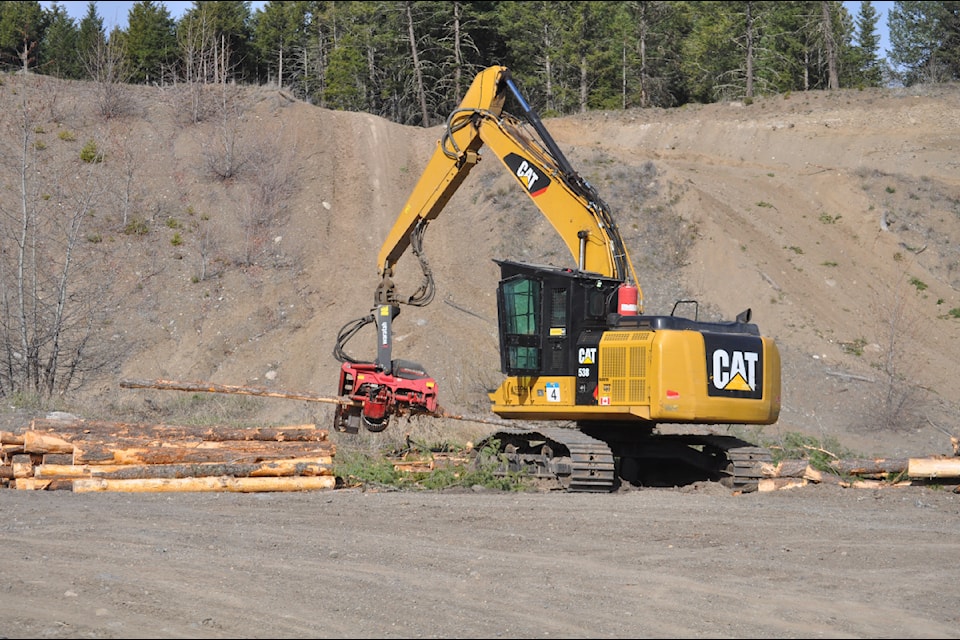


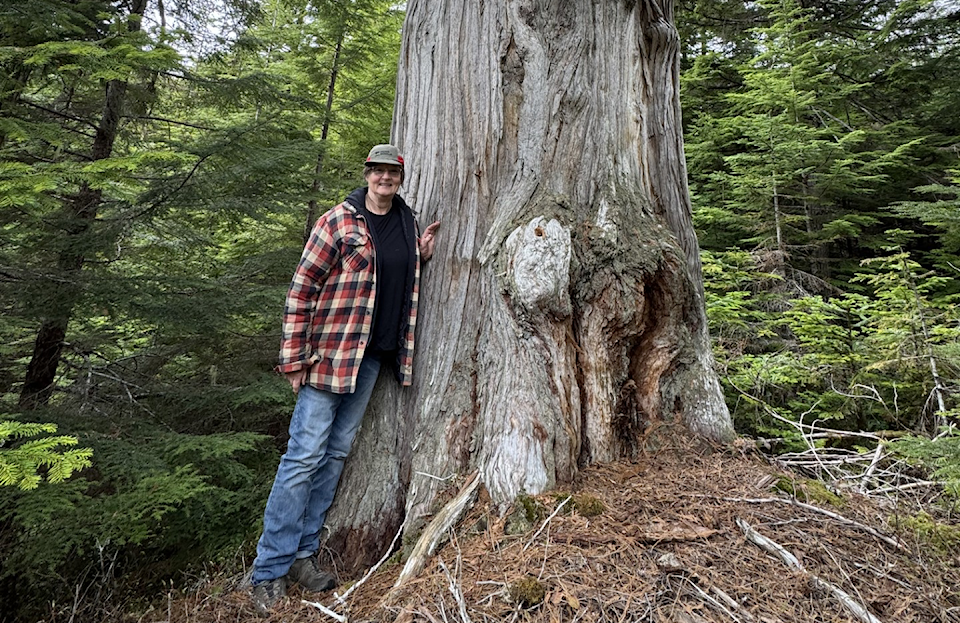
 May is Invasive Species Action Month and 33 organizations throughout BC will be able to continue their work fighting invasive plants, due in part to a funding boost. …Ravi Parmar, Minister of Forests said “No one person, group, agency or government can effectively control invasive plant species alone, and collaboration is critical to everyone’s success. The work these groups do is crucial in our fight to ensure BC’s environments remain healthy and vibrant.” …Nearly $3 million will go toward groups, such as regional invasive species committees, local governments, environmental groups, researchers and the Invasive Species Council of BC, to continue collaboration and support of invasive plant programs and management actions. …Gail Wallin, executive director, Invasive Species Council of British Columbia said, “Invasive plants are estimated to cost us over $2 billion in losses annually.”
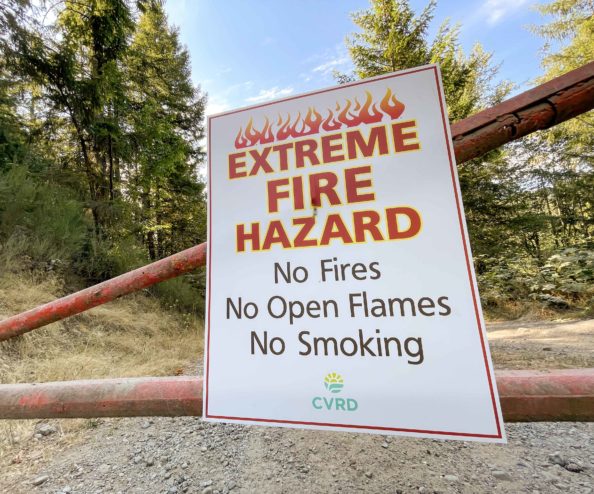 People are asked to use caution over the next several days as a combination of warm, dry conditions and strong winds in much of southern B.C. are adding to elevated wildfire danger. The BC Wildfire Service urges people to postpone any open burning until the windy conditions pass and to use extra caution when camping in the backcountry. “We are expecting active weather in the coming days that could set the stage for dangerous wildfire conditions across the province,” said Ravi Parmar, Minister of Forests. “This is the time of year when we’re at the most risk for human-caused wildfires in B.C., most of which are entirely preventable.” People planning to have campfires should do so safely, following any local prohibitions.
 With the Southern Interior’s hottest months just around the corner, FortisBC is putting important safety measures into place to help protect communities and its electricity system against wildfires, which includes adding extra precautions that could result in power outages. To further enhance its wildfire safety practices, FortisBC has introduced a Public Safety Power Shutoff (PSPS) policy, a new precautionary measure where electricity is proactively shut off in selected areas in advance of extreme weather. FortisBC is advising its customers to be prepared for these potential outages that help reduce potential ignition sources. …According to FortisBC, customers should always be prepared to be without electricity for at least 72 hours, especially during wildfire season.

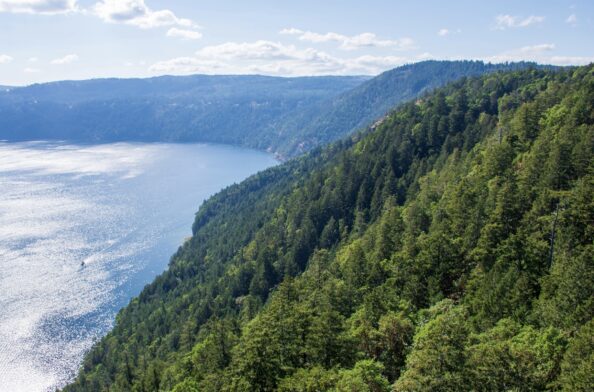 More than 80 per cent of the critical habitat for at-risk species in B.C. fails to meet federal protection standards, according to a government briefing document. The
 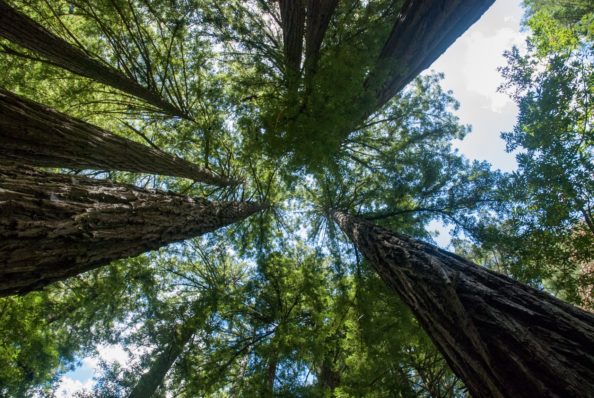 After we marked Earth Day last week, the significance of forests for conservation, community benefits and human health has never been more urgent to acknowledge. Forests play many critical roles for nature and people: they provide habitat for hundreds of species, act as water filters, reduce air pollution, and are places of community connection, recreation and refuge. However, many pressures, including severe storms and wildfires, invasive alien species and habitat loss threaten these ecosystems, the benefits they provide and the relationships they support. …The economic value of our forests is just as vital as their ecological importance. According to the Forest Products Association of Canada, more than 200,000 Canadians earn their livelihood directly from forestry, sustainable agriculture and eco-tourism, contributing an impressive $87 billion in annual revenue. …The call is clear: safeguarding Canada’s forests means safeguarding ourselves. Our natural resiliency, our economic prosperity and our health require us to do our part.
 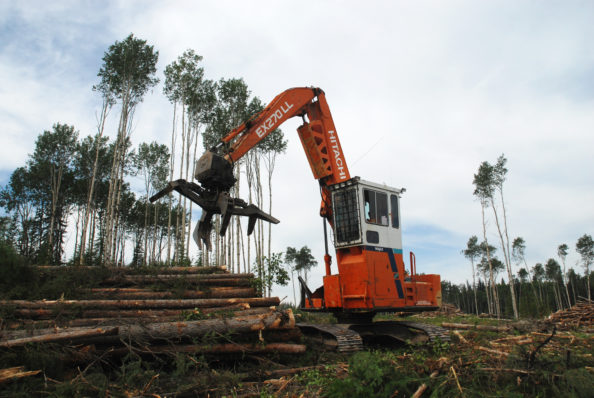 …As northern B.C. sawmills have closed over the past few years, a common refrain has been in each company press release. Punishing tariffs, high log costs, lack of access to B.C.’s plentiful timber and uncertainty in permitting processes… Is this the opening we need to dispense with the notion we need to begin turning B.C. into one big park for the world to enjoy? …Although B.C. has lost many of our lumber manufacturing facilities, our main ingredients are still here – our forests, its trees and a workforce, which when combined, provides for some of the best quality forest products in the world. Despite the economic hit our rural communities and residents have sustained with the loss of our forest industry, it is only a temporary setback, if we treat it as such, and do not let our governments succumb to the “end the forest industry” ideology that is so prevalent today.
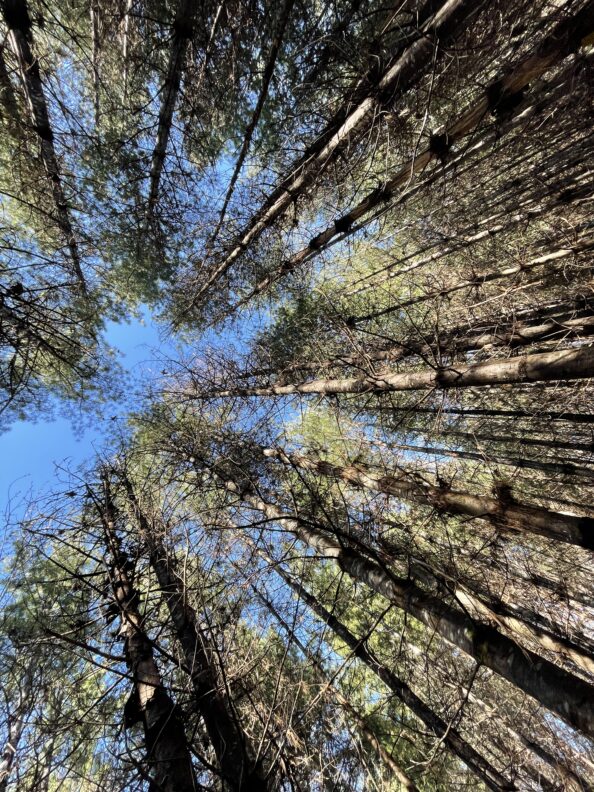 The Forest Enhancement Society of BC has given over $5 million for 18 projects in the Cariboo Region. Executive Director Jason Fisher said the Society distributes the money on behalf of the Province to invest in Forest Management activities related primarily to two major functions. “There’s the wildfire risk reduction, which involves going in and removing potentially some of the crown closure, removing some of the stems, some woody debris off the ground and making forest stands more resilient in the event of wildfire or less likely a wildfire that occurs in those stands would lead to more catastrophic wildfires.” Fisher said the other major function is wood recovery and utilization. In damaged stands, or post harvesting “we will help support applicants in going in, collecting that wood [debris] and bringing it to facilities like pulp mills or pellet plants to generate economic opportunities.”
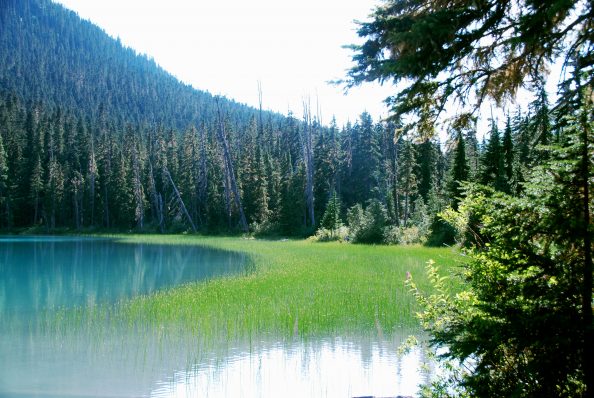 A temporary closure will take place at Pipi7íyekw/Joffre Lakes Park to provide time and space for members of the Líl̓wat Nation and N͛Quatqua to reconnect with the land and carry out cultural and spiritual practices. Pipi7íyekw/Joffre Lakes Park has become one of the busiest parks in the province. As more people go to the park, there is a need for enhanced visitor-use management, ensuring the park is not degraded by heavy use. Temporary closures to the park for recreational visitors will occur from April 25 until May 16, 2025. Beginning Saturday, May 17, adults and youth older than 12 will require a free day-use pass to visit the park. …The park is collaboratively managed with Líl̓wat Nation and N’Quatqua with the primary goal of maintaining the natural environment, and so the Nations can continue their cultural practices on their territory.
  Communities and workers throughout British Columbia are benefiting from 64 new Forest Enhancement Society of BC (FESBC) supported projects that reduce wildfire risk, enhance forest health and get more fibre into the hands of mills and energy producers. “The projects will remove almost 11,000 truckloads of flammable waste fibre from our forests,” said Ravi Parmar, Minister of Forests. “…This fibre that once would have been burned in slash piles will instead support workers and help keep communities safe.” With $19 million in provincial funding, projects will take place in all eight of the Province’s natural resource regions. This includes 31 led by First Nations and another 14 with First Nations involvement, demonstrating the critical leadership role First Nation communities are playing in restoring and protecting B.C.’s forests. This funding is part of the $90 million allocated in 2025 for wildfire-prevention initiatives through BC Wildfire Service, FireSmart initiatives and FESBC.
 MONTREAL – Academics at McGill University in Montreal are providing the U.S. scientific community a platform to protect climate research under attack. Six months ago, researchers at McGill University’s Desautels Faculty of Management launched the Sustainability Academic Network — SUSANHub.com — a database that centralizes climate research and data. “We initially created this platform to connect researchers and professionals in sustainable development and climate change,” said Juan Serpa, a professor at the Desautels Faculty of Management, describing the platform as a kind of “LinkedIn” for the field. But at a time when the administration of United States President Donald Trump is firing climate researchers, banning certain words from scientific articles, cutting funding for environmental research, threatening to withdraw financial support from universities, and deleting scientific reports from government websites, the McGill platform has taken on a different significance. “The goal is to protect scientific data against threats from the U.S. government,” Serpa said.
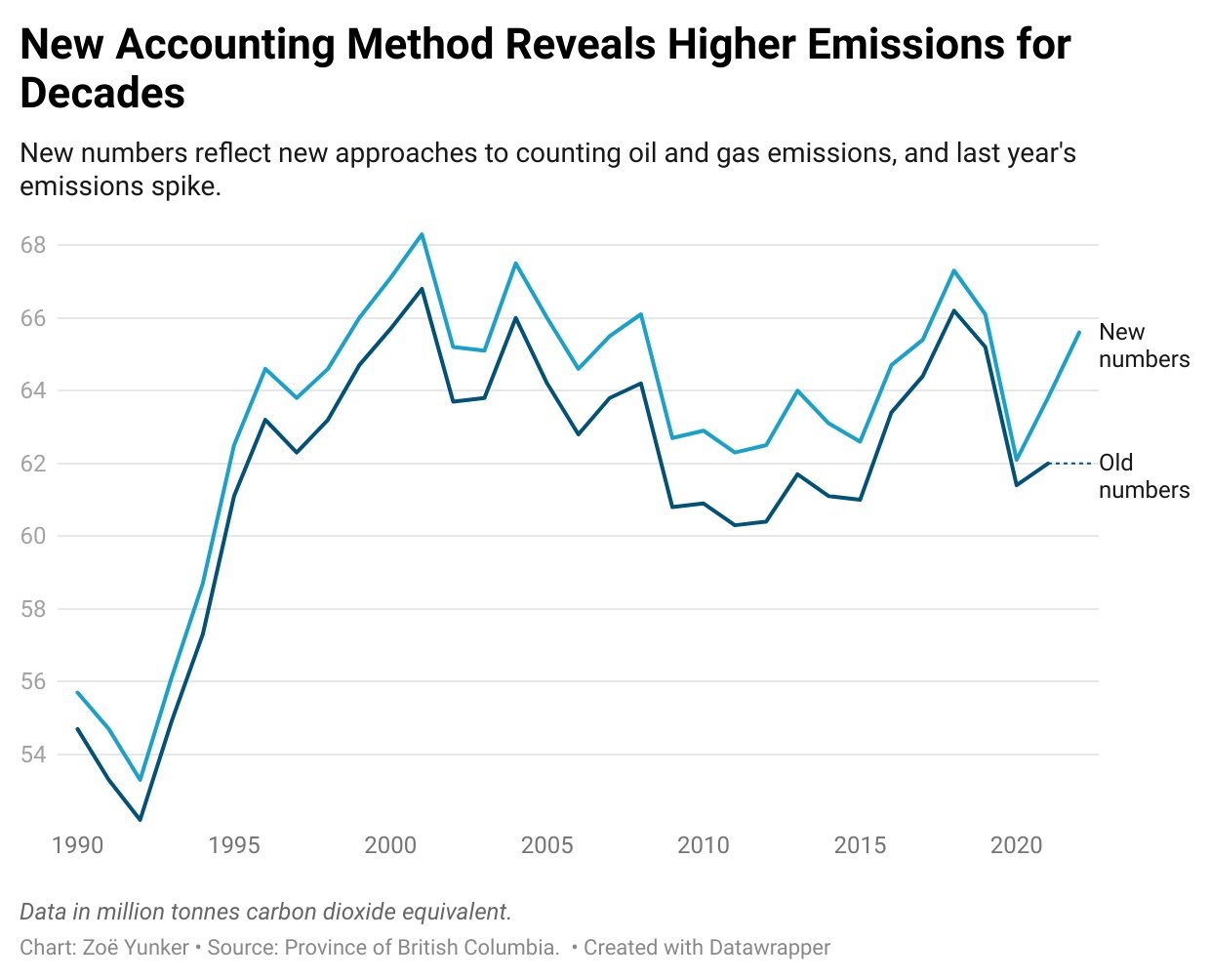

 The BC government says it will only meet half of its 2030 target to lower greenhouse gas emissions. In an annual
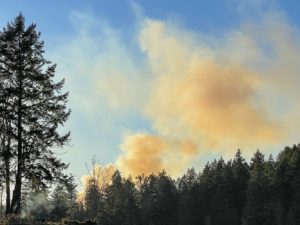 MOUNTAIN VIEW COUNTY, Alberta – Provincial officials elevated the wildfire danger rating to extreme across the Rocky Mountain House Forest Area Saturday after five new wildfires ignited in the area in recent days. Parts of Mountain View County are included in the forest area, namely west of Sundre and Bergen, covering Coal Camp and Bearberry west of Range Road 60 from Township Road 312 to the north boundary of the county. “The wildfire danger is now extreme in the Rocky Mountain House Forest Area,” the province said in its May 3 update for the forest protection area. “Dead and dry vegetation continues to be a major concern, as it is highly flammable and provides an easily available fuel source for wildfires.” …On Thursday, two wildfires were discovered in the Rocky Mountain House Forest Area while three more were discovered on Friday.
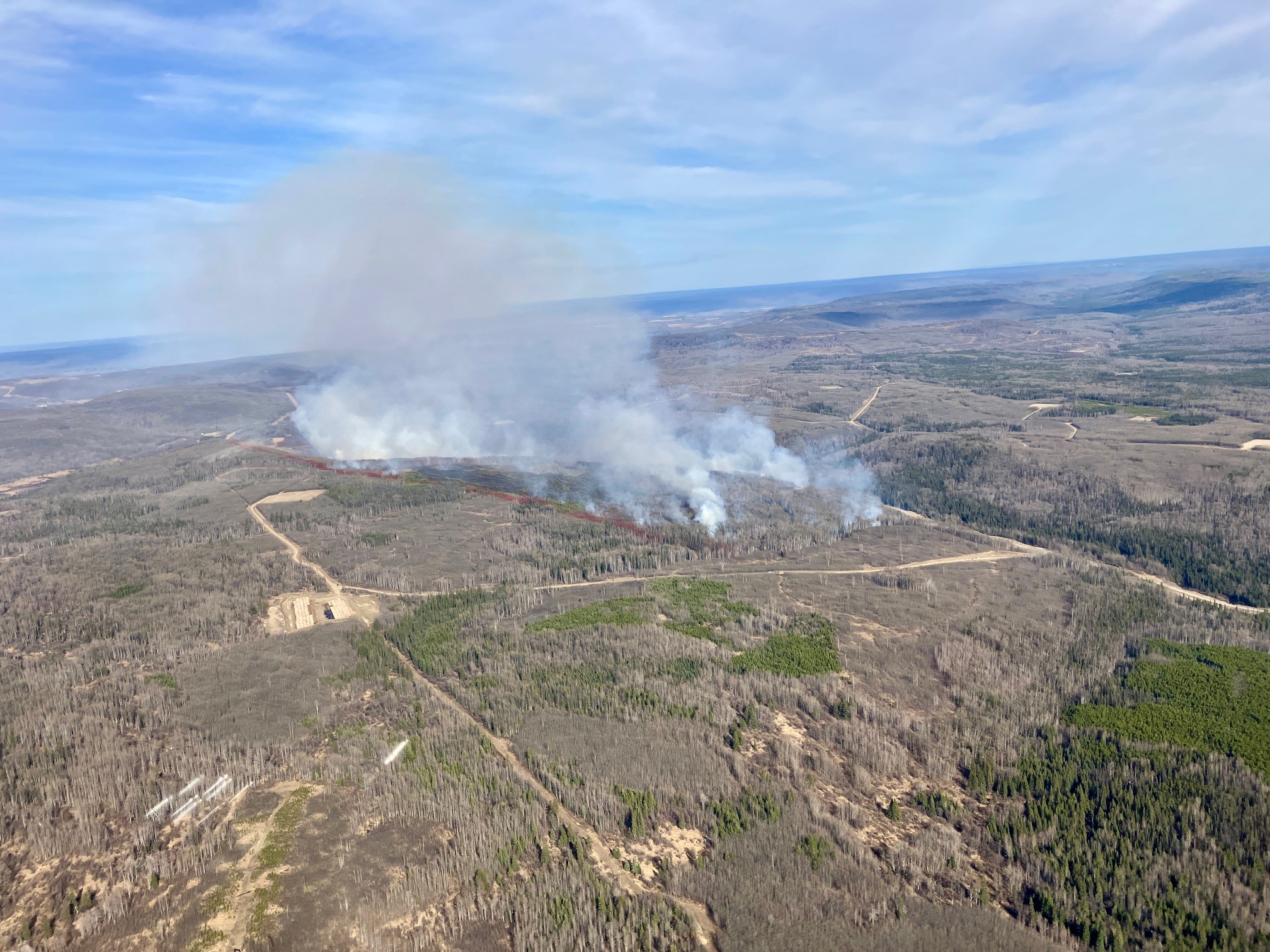
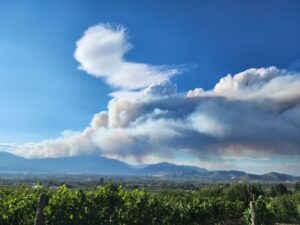 Firefighters from Fort St. John and the B.C. Wildfire Service were battling a blaze that prompted evacuations late Thursday, the city said. The fire is in the Fish Creek Community Forest on the northern outskirts of the city. …The wildfire service website indicates the out-of-control blaze was discovered Thursday and spanned an estimated 0.56 square kilometres — about four times the size of Granville Island in Vancouver — as of 7:32 p.m. The suspected cause of the fire is human activity. The fire is one of nearly two dozen active across BC on Thursday, as the provincial government warned that a combination of warm, dry conditions and strong winds would raise the fire risk in southern parts of B.C. It’s one of two blazes classified as burning out of control, the other being a 1.85-square-kilometre blaze that began as two separate fires about 30 kilometres southwest of Dawson Creek, which is south of Fort St. John.