An NDP government has had no small part in breaking B.C.’s forest industry… but can an NDP government now fix it? …Premier David Eby pledged to work towards an assured harvest of 45 million cubic metres annually, which would be an improvement of the current harvest levels, and last week, Forests Minister Ravi Parmar announced a new task force tasked with reforming BC Timber Sales, which manages 20% of the province’s AAC. …B.C.’s forest sector faces a plethora of challenges, including current softwood lumber duties, a threat of additional 25-per-cent tariffs on lumber exports and metastasizing government rules and regulations that have increasingly restricted access to timber, the supply of which had already been reduced by past pine beetle infestations and wildfires. More than a dozen sawmill and pulp mills have permanently shuttered in B.C. in the past four years. B.C. lumber producers face the prospect of softwood lumber duties doubling next year, and there’s now the added fear of 25% tariffs being imposed by the Donald Trump administration.
Domestically, the threat to B.C.’s struggling forest sector comes from federal and provincial policies that increasingly restrict access to the working forests. …Since coming to power in 2017, the BC NDP has implemented a rash of new policies and regulations crimping the timber supply, including old growth harvesting moratoria, new forest landscape plans, ecosystem-based land management, increasing parks and protected areas, shared land-use decision-making with First Nations and caribou habitat protection plans. …The shrinkage in the timber supply has not only put sawmills out of business, but has also affected secondary manufacturing, such as pulp and paper mills. …In an attempt to address some of concerns with access to fibre, Parmar last week announced a six-month review of BC Timber Sales. One of the goals of the review is to provide “predictable and reliable market access to fibre.”
 We’re proud to share that in 2024 the Tree Frog Forestry News readership surged by an impressive 44%, reaching 105,411 unique users (per Google Analytics)! This remarkable growth far outpaces our average annual increase of ~20% over the past decade. Even more, our audience is becoming increasingly continental: in 2020, 22% of our readers were US-based, but by 2024, that number climbed to 39%. Canada still leads at 51%, with the remaining 10% representing international readers from the UK, Australia, Japan, India, and beyond.

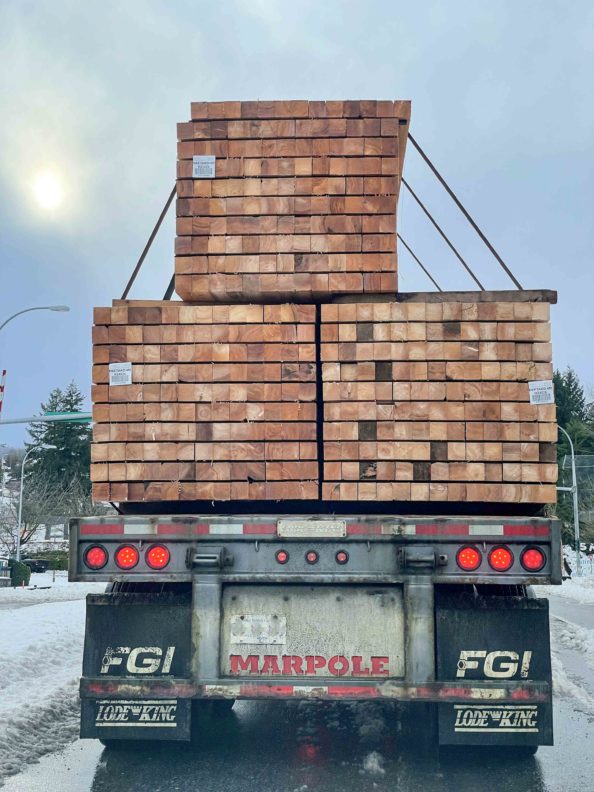 Recently, the Wall Street Journal’s editorial board published a piece titled “
 Having already forced Colombia to accept deportees by threatening a 25% tariff, President Donald Trump is readying the same move against Canada and Mexico as soon as Saturday. But this time, the stakes are higher and many economists surveying the possible damage doubt Trump would be comfortable with self-inflicted wounds from the tariffs. Trump has repeatedly insisted that tariffs on Canada and Mexico are about illegal border crossings and the smuggling of fentanyl. But the Republican president is also motivated by the idea that tariffs would force other countries to “respect” the US. …The economics division of the insurance company Nationwide estimated that Trump’s proposed tariffs on Canada and Mexico would increase inflation by as much as 0.5 percentage points and pull down growth by 0.7 percentage points. The analysis noted it did not “account for potential retaliatory tariffs from Canada or Mexico, which could amplify the deleterious impact.”
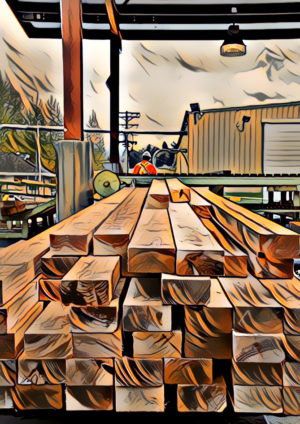 President Trump said, “We don’t need Canada to make our cars. We don’t need their lumber because we have our own forests,” he said. “We don’t need their oil and gas.” Mr. Trump is wrong on all three, but we’ll focus on lumber. The U.S. doesn’t produce enough lumber to meet domestic demand and thus imports about a third of the softwood used in home construction, mostly from Canada. …Mr. Trump’s tariff threat has created uncertainty for lumber wholesalers and contractors that could delay rebuilding. The U.S. can’t ramp up lumber production in the near term to meet domestic demand, so contractors will have to eat the tariff cost on lumber from Canada or import more from other countries, which would be expensive. If Mr. Trump wants to increase U.S. lumber production, he could open up more federal land for logging. …More tariffs will punish Americans trying to rebuild. [to access the full story a WSJ subscription is required]
 Premier David Eby is tasking a new cabinet committee with co-ordinating the whole-of-government approach to protect B.C.’s workers, businesses and economy against ongoing tariff threats from the United States. Ravi Kahlon, Minister of Housing and Municipal Affairs, will chair the committee, which will act as a day-to-day war room, co-ordinating actions across government to fight back on behalf of British Columbians and grow the province’s economy. “The proposed U.S. tariffs are a direct attack on B.C.’s families,” Premier Eby said. “This threat isn’t going away anytime soon – not while this president is in power. …Minister Kahlon brings deep experience in government to the table and is uniquely positioned to co-ordinate this work across government ministries.” The B.C. government has stepped up with a three-point strategy to fight back and protect British Columbians …The new committee will ensure that B.C.’s response is fast, tough and fully focused on protecting British Columbians.
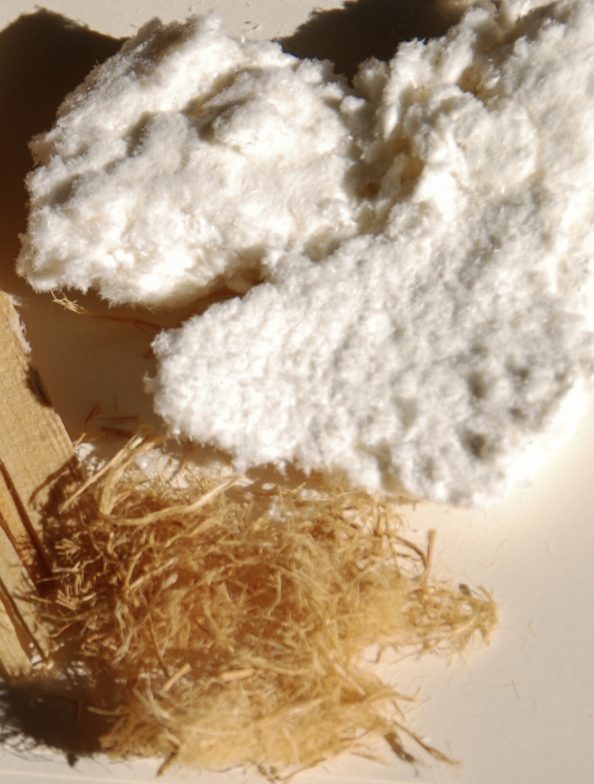 The B.C. government has turned down a petition to investigate Canada’s largest forestry company at a time when a federal probe into the firm faces the prospect of total collapse. On December 2, 2024, the national Standing Committee on Natural Resources unanimously passed a motion summoning Paper Excellence owner Jackson Wijaya to testify before lawmakers—an order that was enforceable with a legal subpoena if necessary. …Charlie Angus, the NDP’s natural resources critic and member of Parliament for Timmins–James Bay, said Wijaya’s expanded ownership over APP represents a break down in government oversight. …the probe came to a grinding halt when Prime Minister Justin Trudeau … prorogued Parliament. That act wiped out the work of all parliamentary committees, including the motion to summon Wijaya….When asked if B.C.’s Ministry of Forests would heed calls to launch its own investigation into Paper Excellence, a spokesperson deferred to the federal government.
  The Western Retail Lumber Association used its trade show, taking place now in Edmonton, as the platform for announcing a major rebranding initiative. After in-depth consultation with its members and board, partners, and key stakeholders, the WRLA has been renamed as Supply-Build Canada. The change is effective today. “As the association expands its advocacy efforts and external partnerships, the ‘Western Retail Lumber Association’ name became a misnomer,” says association president Liz Kovach. “The building supply industry encompasses building materials beyond lumber, and the association represents manufacturers, distributors, wholesalers, and other categories not represented by just retail.” Because many of the association’s members, especially on the supplier side, have offices and production outside of the West, the new name intends to capture that, “making a wholesale change of name both necessary and timely,” Kovach adds.
 The Ontario government is stepping up to protect Ontario workers in the face of potential American tariffs on Canadian goods by investing an additional $100 million in the province’s Skills Development Fund (SDF) Training Stream, bringing the total provincial investment in SDF to $1.5 billion. This investment will support workers in fields including manufacturing, construction, critical mineral extraction and other skilled trades, providing them with the skills and training they need to secure better jobs and bigger paycheques while protecting Ontario’s economy… “The Ontario Forest Industries Association welcomes additional investment in the Skills Development Fund,” said Ian Dunn, President & CEO. “This commitment will help ensure workers in Ontario’s forestry sector—and across the province—are equipped with the skills and training needed to thrive in an increasingly competitive global market. By investing in our forestry workforce, Premier Ford’s government is strengthening our economy and supporting industries that are vital to Ontario’s growth and resilience.”

 The Bank of Canada is being pulled in a few different directions ahead of its first interest rate decision of the year on Wednesday. On one hand, there are signs of trouble bubbling up in underlying inflation that could make an argument for keeping borrowing costs higher for longer. On the other: Donald Trump has reiterated threats to impose tariffs of 25% on Canadian goods that could be set to take effect mere days after the central bank’s rate decision. …A trade blow like that would normally push the Bank of Canada towards steeper rate cuts in a bid to salvage economic growth. But dropping rates too quickly at a time when the loonie is already struggling risks fuelling more inflation on imports from the US. Economists say they’re betting the Bank of Canada will go ahead with another cut.
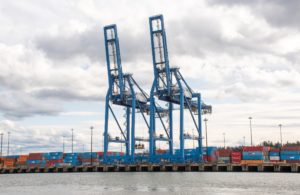 U.S. trade with Canada and Mexico is back in Trump’s crosshairs with the tariff threat. …Much of the focus has centered on autos but Canada is also the top trading partner of the U.S. for critical chemicals, an industry now bracing for the potential impact. …Mineral firms in Canada are considered domestic sources under Title III of the Defense Production Act and have received U.S. federal funding for critical minerals projects in Canada. …Canada is also the largest supplier of U.S. energy imports, including crude oil, natural gas, and electricity. …Rand Ghayad, chief economist at the Association of American Railroads, said the interconnected rail network between the U.S. and Canada is a cornerstone of North American trade, underpinning economic growth and supply chain resilience. …The inflationary effects from tariffs will take some time to materialize, as these costs will need to be passed through to end buyers.
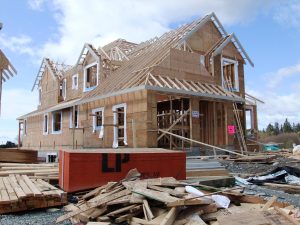 Calgary’s construction industry is hoping the threat of American tariffs doesn’t slow its momentum in 2025. …Bill Black, the head of the Calgary Construction Association, says when it comes to certain building materials, the tariffs could cause unrepairable damage. “Lumber suppliers selling are obviously going to feel a really significant impact on their volume that goes into the U.S.,” Black said. “The overall viability of the lumber business is based on a blend of the two markets, and if one market becomes unfeasible because of tariffs, that then puts pressure on the operating businesses. “That could impact their ability to service the Canadian market as well.” …The city has seen consecutive years of a record number of housing starts, and those in the sector don’t want to lose vital momentum. …Alberta’s forest ministry reiterated the importance of cross-border trade Friday, saying there’s still optimism a tariff-stopping solution can be found.
 Mattawa, ON – The Canadian Institute of Forestry (CIF-IFC) is excited to announce that the 2026 National Conference and 118th Annual General Meeting will take place in Calgary, Alberta, from October 5-8, 2026. This landmark event, hosted in collaboration with the Society of American Foresters (SAF) and the CIF-IFC Rocky Mountain Section, will unite forestry professionals, practitioners, and students from across North America and beyond under the theme, “Leading from where we are for a brighter future.” The event will showcase the leaders of today and empower the leaders of tomorrow to begin acting now to make the world they want to see. …The Conference will serve as a platform to address pressing issues such as climate change, biodiversity, and sustainable forestry and natural resources management while highlighting innovative approaches to ensure a vibrant and resilient future for forests globally.
 How FSC is using Google Earth Engine to monitor forest degradation and support EUDR compliance: The Forest Stewardship Council is leveraging cutting-edge technology to better monitor and protect the world’s forests.
 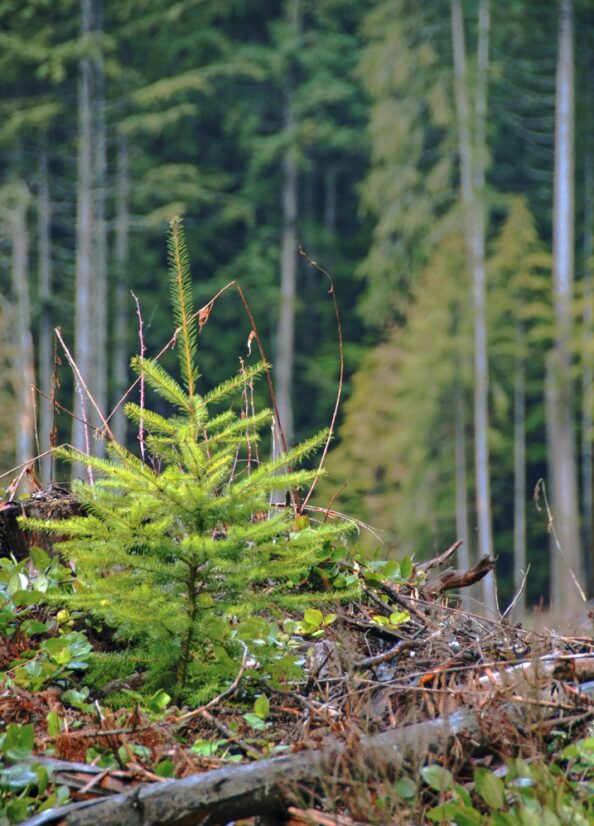 …changes in climate are expected to drive wildlife seeking refuge up mountains and further north. But for trees… the changes in climate are often coming too fast to get out of the way, especially when combined with pressures from logging, said Suzanne Simard, a professor in the University of British Columbia’s Faculty of Forestry. …In a new study published in Global Change Biology, Simard and her UBC colleagues took three-year-old interior Douglas fir seedlings from locations in southern B.C. and planted them as far north as Fort St. James, the northern limit of the species’ range … to find out how the trees would handle the human-assisted migration, and if they would do better in a colder climate. …As early as 2006, University of Alberta researcher Andreas Hamann published a study that concluded climate change could push the range of B.C.’s tree species north at a rate of 100 kilometres per decade.
  VICTORIA – The Forest Practices Board has completed its audit of BC Timber Sales (BCTS) and Timber Sale Licence (TSL) holders in the Haida Gwaii Natural Resource District. A compliance audit examined all forestry planning and activities carried out in the area between May 1, 2022, and May 31, 2024. The parties complied with most legislative requirements with two exceptions. Auditors found BCTS was not diligent in inspecting approximately 90 kilometres of its roads and structures in its Sewell Inlet operating area. …Following the audit, BCTS inspected these roads … and has committed to working with the Ministry of Forests and the Haida Nation to develop road deactivation plans as needed. …Auditors found all three TSL holders audited had abated fire hazards within the required period. However, two TSL holders did not complete the required number of fire-hazard assessments and did not conduct fuel-hazard assessments on time. This is considered an area requiring improvement…


 A new University of British Columbia study has pinpointed strategies to help local forests adapt to climate change. …the eight-year study found ways forest ecosystems can be better prepared for the climate threat, with a focus on mitigating the loss of the Douglas fir tree. …professor and co-author of the study Suzanne Simard, said the project looked at the process of relocating Douglas firs that are already adapted to dry, hot weather, further north. …Opting for a two-pronged approach, researchers also explored how various routes of harvesting and regenerating forests would affect the migrated seedlings’ attempt to grow in the face of climate change. Researchers tried various avenues, from clear-cutting to retaining larger densities of the tallest Douglas fir trees, said Simard.


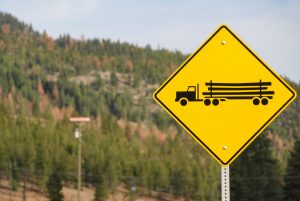 The B.C. government has tasked new Forest Minister Ravi Parmar with reviewing its lead timber agency, B.C. Timber Sales. The Jan. 15 news release announcing the review, and Premier David Eby’s mandate letter to Parmar, both downplay the environment in favour of the business side of forestry… There is no mention of watersheds, biodiversity, wildlife, and climate change in either the news release announcing the review or in the mandate letter, which mentions old growth once in passing. Asked why it is not mentioned in the above six reasons for the BCTS review, or in Eby’s mandate letter, Parmar said, “I’m fully committed to fulfilling my obligations on the old growth action plan. … Biodiversity, taking care of our lands, being good stewards of our land, is critical to me, and it’s going to be a huge part of this review.”
 MONTREAL – With wildfires increasing in frequency and severity across Canada — impacting our health, economies, communities and wildlife — the Governments of Canada and Quebec are supporting Canadians and residents of Quebec whose lives and livelihoods are at stake. Natural Resources Canada announced a joint investment of $64 million over three years through the Government of Canada’s Fighting and Managing Wildfires in a Changing Climate Program – Equipment Fund. This joint investment is supporting Quebec’s efforts to purchase wildfire firefighting equipment, such as vehicles, drones and telecommunications equipment. By buying and upgrading equipment and hiring and training more personnel, Quebec will be better prepared to respond to wildfires and provide support when other regions in Canada experience high fire activity.

 OTTAWA — Across the country, the impacts of climate change are becoming more severe and more frequent with extreme events like floods, wildfires and heatwaves on the rise. …Marc G. Serré, Parliamentary Secretary to the Honourable Jonathan Wilkinson, along with Member of Parliament Viviane Lapointe and Member of Parliament Anthony Rota, announced over $2.7 million in funding for five projects based in northern Ontario under Natural Resources Canada’s
  Here are some highlights from this months Safety News: