VANCOUVER — David Eby appears to be ready to put B.C. on a trade war footing in response to American tariff threats, with an arsenal that includes supporting federal taxes and bans on exports, like critical minerals, and bolstering B.C.’s energy and resource sector to make it more competitive by accelerating permitting for energy and resource projects, and reforming government programs like BC Timber Sales. No industry in Canada understands the negative impact of American duties and tariffs better than the B.C. forestry sector, which has been labouring under American duties on softwood lumber for nearly a decade now. Eby said he would encourage the Canadian government to respond to the tariffs with taxes and bans on key exports.
B.C. forestry companies already pay an average of 14.4% in duties on lumber exports to the U.S., and they could double next year. It’s unclear whether the 25 per cent tariffs Trump has threatened would be additive to existing duties. …Forestry companies in B.C. face an even stiffer tariff of sorts right here at home, in the form of regulatory burdens, including policies that have restricted access to timber, and stumpage charges that can make the available timber uneconomic to cut. …He suggested some relief may be on the way for resource industries in B.C. …One key reform will be to BC Timber Sales. Eby has struck a new task force with the mandate of overhauling it.
BC Timber Sales accounts for about 20% of the timber harvested from Crown lands, and uses auctioning to establish market pricing in order to set the rates (stumpage) charged to forestry companies to harvest timber on Crown lands. Forestry companies have complained that the rates are often too high, not responsive enough to lumber price swings, and can make it uneconomic to harvest timber, even when it is available for harvest. …“The elaborate process that we go through with B.C. Timber Sales in order to appease the Americans on softwood lumber duties has absolutely not done that,” he said. “The tariffs continue, the tariffs. …“Obviously, now, in the context of 25% across-the-board tariffs – we are in a trade war with the United States – that anxiety goes away.”



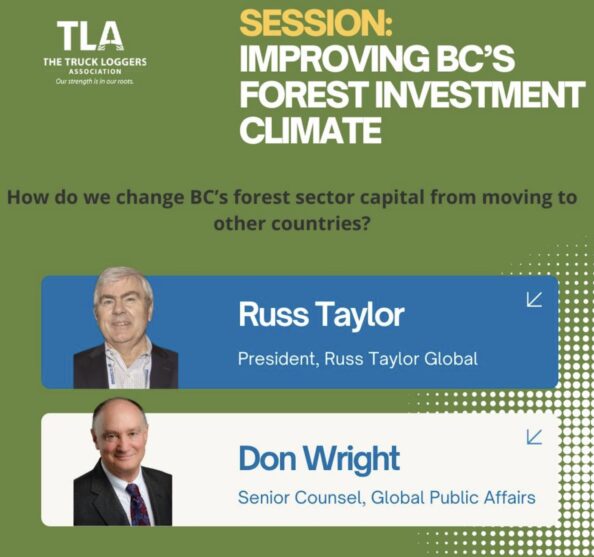 On Day 1 of the Truck Loggers Association 80th Annual Convention, Russ Taylor and Don Wright tackled the pressing question:
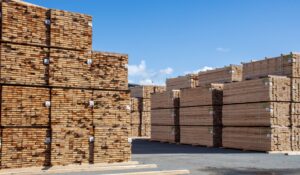 BC could face severe economic consequences from president-elect Donald Trump’s proposed 25% tariff on Canadian imports. The province projects a cumulative economic loss of $69 billion over four years, with real GDP potentially declining by 0.6% annually in 2025 and 2026. The BC. Ministry of Finance, estimates significant job losses and revenue reductions during this period, with the unemployment rate possibly increasing to 6.7% in 2025 and 7.1% in 2026. The tariff’s effects on the labor market could result in 124,000 job losses by 2028, with the most affected sectors being natural resources, manufacturing, transportation, and retail. Corporate profits could decrease annually by $3.6 billion to $6.1 billion. …Experts indicate that the tariffs could disrupt the US lumber supply chain. Rajan Parajuli, an NC State University professor, said that… US lumber producers might profit from higher prices, consumers would face increased costs if demand remains steady. The Peterson Institute for International Economics notes that these tariffs could extend beyond Canada, impacting the broader wood product sector.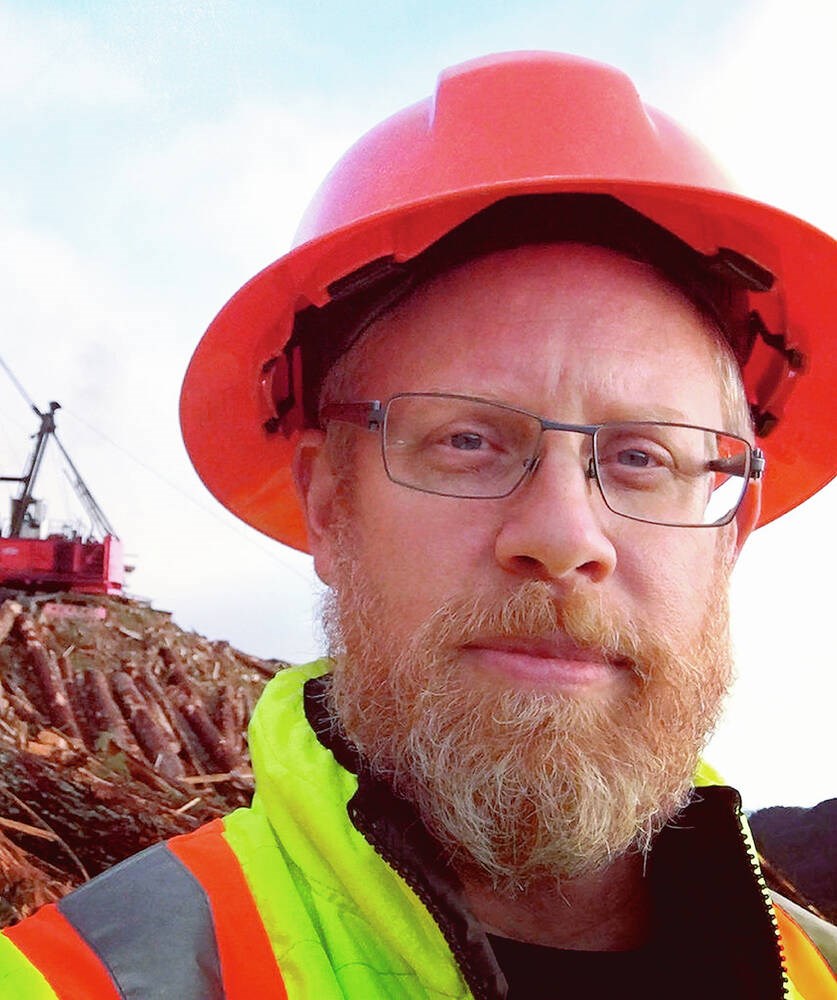
 VANCOUVER, BC – Western Forest Products announced that its hourly employees represented by United Steelworkers Local 1- 1937 have voted to ratify a new collective agreement. The new six-year collective agreement has a retroactive effective date of June 15, 2024, will expire June 14, 2030 and provides for the following general wage increases: Year 1 – 4%, Year 2 though Year 5 – 3%, and Year 6 – greater of 3% or the rate of inflation. The new agreement also includes enhancements to certain benefits and terms of mutual interest for the USW and the Company. …Western’s President and CEO Steven Hofer said: “We are pleased that our USW-represented team members have found it meets their interests and needs. …The BC forest sector is facing many challenges, and we look forward to working together with our union colleagues to build a brighter future for our company.”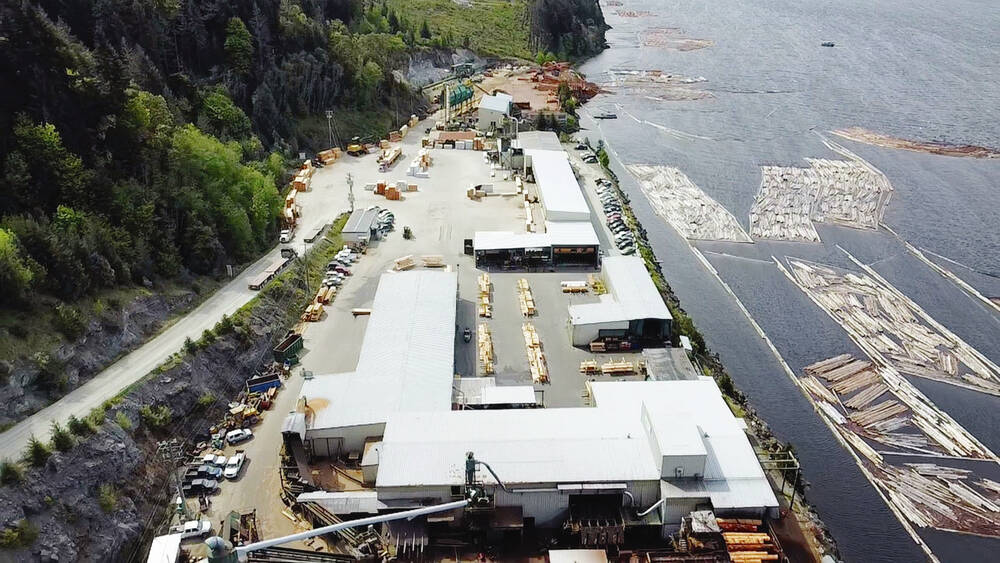

 OTTAWA — The Consumer Price Index (CPI) rose 1.8% on a year-over-year basis in December, down from a 1.9% increase in November. …The CPI excluding food rose 2.1% in December. A temporary GST/HST break on certain goods was introduced on December 14, 2024. …The shelter component grew at a slightly slower pace in December, rising 4.5% year over year following a 4.6% increase in November. Rent prices decelerated on a year-over-year basis in December (+7.1%) compared with November (+7.7%). However since December 2021, rent prices have increased 22.1%. The mortgage interest cost index decelerated for the 16th consecutive month, reaching 11.7% year over year in December 2024, the smallest increase since October 2022 (+11.4%) as interest rates continued to rise.
 Lumber prices remained above $590 per thousand board feet in January, hovering at eight-week highs as robust demand for building materials in the US compounded with dovish expectations for Federal Reserve policy. U.S. housing starts in December surged 15.8% from the previous month to a seasonally adjusted annual rate of 1.499 million units, the highest since February 2024 and well above market expectations of 1.32 million. Although building permits fell 0.7% to 1.483 million units, they exceeded forecasts of 1.46 million. At the same time, easing core inflation from the latest CPI report reinforced expectations of Federal Reserve rate cuts by mid-year, while mortgage applications jumped 33.3%, marking the largest weekly increase since 2020, as buyers sought to lock in borrowing costs despite rates exceeding 7%. Additionally, U.S. buyers stockpiled inventory ahead of a proposed 25% tariff on Canadian softwood lumber, while existing 14.4% duties further constrained supply. [END]
 Lumber prices surged to around $580 per thousand board feet in January, marking a six-week high, as uncertainty surrounding potential tariffs on Canadian softwood lumber imports to the U.S. stoked panic buying. The looming 25% tariff proposed by President-elect Trump has prompted U.S. buyers to rapidly secure inventories ahead of anticipated price hikes, further escalating demand. With Canadian lumber already subject to an average 14.4% import duty, the additional tariff is expected to push prices even higher. U.S. reliance on Canadian softwood lumber remains substantial, as Canada supplies a significant portion of the country’s lumber needs. While alternative suppliers, such as Germany and Sweden, may partially fill the gap, they lack the capacity to match Canada’s production in the long run. Meanwhile, domestic challenges, including workforce shortages and sawmill closures, are limiting U.S. production, contributing to ongoing supply constraints. [END]
 New support for forest-sector manufacturers throughout the province will create and protect jobs, strengthen local economies and diversify the range of fibre sources used to manufacture high-value, made-in-B.C. forest products. “The BC Manufacturing Jobs Fund is partnering with forestry companies throughout the province to grow and stabilize their operations and get the most out of our fibre supply, while producing more made-in-B.C. engineered wood products,” said Diana Gibson, Minister of Jobs, Economic Development and Innovation. Through the BC Manufacturing Jobs Fund (BCMJF), the Government of B.C. is contributing as much as $5.1 million toward seven forest-sector capital projects and five planning projects in communities throughout the province. Cedarland Forest Products Ltd. in Maple Ridge will receive as much as $1.3 million… Gilbert Smith Forest Products in Barriere will receive as much as $1.1 million…



 In British Columbia, wood remains the primary framing material, remarks Anthony Marks, who constructs fire resistant modular homes, but the fire resistant modular homes his company constructs are framed with steel. They also use wood sheathing coated with a fire retardant and fibrous cement board products for exterior cladding. …Anabela Bonada, manager and research associate at the University of Waterloo’s Intact Centre on Climate Adaptation says there are solutions at hand to reduce the risk of fire to homes — Canada just hasn’t demanded they be taken yet. …Canada’s National Building Code is geared toward protecting buildings and homes in cities and doesn’t refer to wildfires. …Most Canadian communities are lagging in responding to wildfire threats, Bonada said. …Referring to the National Research Council of Canada’s guide for wildland-urban interface fires, she said programs like


 Colorado wildlife officials say the capture of 15 grey wolves in British Columbia and their release in the U.S. state is complete, an operation they say led to unspecified threats against staff. The operation that began in B.C. on Jan. 10 and wrapped up on Saturday follows Colorado voters’ approval of a 2020 ballot initiative to reintroduce grey wolves to the state, where the animals are listed as endangered. But the program has stirred opposition, and a statement from Colorado Parks and Wildlife on Sunday says its staff have been threatened over the relocations. It says its officers were “watched” and were targeted by threatening phone calls and social media posts. The department says it did not share details while the wolf release was underway due to the “safety risk and security needs of our staff and the animals.” It adds that two of the 10 wolves reintroduced in Colorado in 2023 have been illegally shot.
 The provincial government is injecting cash into early-stage planning for a potential forestry project by Sḵwx̱wú7mesh Úxwumixw (Squamish Nation) and its economic development arm, Nch’Kay Development Corporation, it was announced last week. With $50,000 from the BC Manufacturing Jobs Fund, the Nation will conduct pre-construction engineering and site assessments to determine the potential for a future capital project… Though details of the project haven’t been finalized, it represents a larger push in the forestry sector to use resources more efficiently, shift away from old-growth timber reliance, and invest in high-value manufacturing. The BC Manufacturing Jobs Fund is partnering with forestry companies throughout the province to grow and stabilize their operations and get the most out of our fibre supply, while producing more made-in-B.C. engineered wood products.


 Rhonda Millikin, an award-winning ecologist who has questioned Whistler’s approach to wildfire mitigation, was issued a cease-and-desist letter last month from Forest Professionals British Columbia (FPBC), which said she is not certified to offer forestry advice. The FPBC said in its Dec. 14 letter that Millikin was unlawfully engaged in the reserved practice of professional forestry by providing advice and recommendations to the RMOW to limit or cease forest fuel-thinning efforts. “On principle, we don’t have an issue with people, whether a member of the public or someone from a different profession, researching or holding opinions or even talking about those opinions,” explained Casey Macaulay, the FPBC’s registrar and director of act compliance, who authored the cease-and-desist letter. “Where it’s an issue is when they start to advocate for a particular practice, and in this case, where that practice is so out of sync with the current science and the current practice of protecting communities from wildfires.”
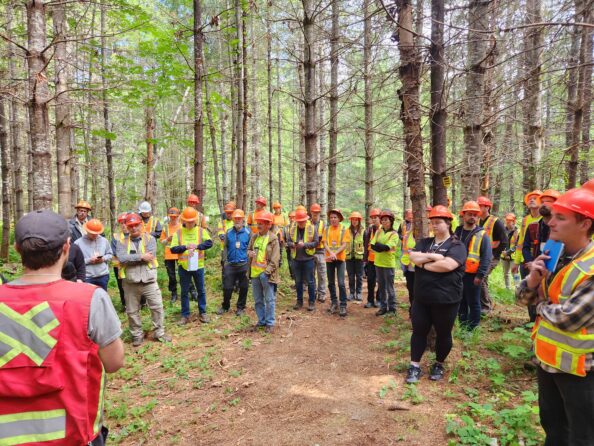 The Coast Silviculture Committee is an ad hoc organization of forest professionals whose prime objective is to disseminate current technical forest management and silvicultural information to all forest practitioners and the public in coastal British Columbia. Its membership includes corporate, government, and self-employed professional foresters and forest technologist, forestry educators, forest land owners, researchers, and tenure managers. Every year the CSC holds two meetings; a short, one or two day, information meeting in winter, and a slightly longer field based technical workshop in early to mid- June; summer meetings are held in a different part of the coast each year. All of the surplus funds from workshops go towards supporting development of silvicultural expertise in students at the post-secondary level through providing of awards. The Winter 2025 workshop is scheduled for February 19 at Vancouver Island University.
 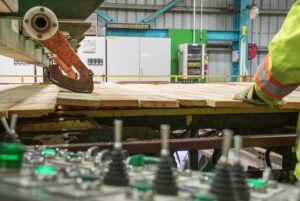 A lumber producer in Thessalon, Ont. that has been active for more than seven decades quietly shuttered its operations late last month — resulting in the layoff of roughly 40 employees in the weeks leading up to its impending closure. Midway Lumber Mills Ltd. first notified employees of plans to shut down the mill and lay off its workforce in October of last year, the soon-to-be former chair of USW Local 8748 told SooToday on Monday. “We got nine weeks advance notice that it was going to happen,” said Derrick Bookman, who has worked in a number of roles at the mill over the years. “They went above and beyond.”